

CONDITION MONITORING
 Condition monitoring (CM) is a process of monitoring a parameter of
condition in machinery eg . Vibration , temperature etc.
 It is a major component of Predictive Maintenance (PdM).
 Condition monitoring provides us the real time information about the
condition of the machine which gives us the ability to minimize or to
eliminate the factors responsible for occurrence of faults .
CONDITION MONITORING TECHNIQUES
A wide range of Condition monitoring techniques is available in the
industries over the world and some have become standards in many industries.
The "standard" techniques are:
1) Vibration Analysis
2) Oil Analysis
3) Thermal Analysis
4) Ultrasound Analysis
VIBRATION ANALYIS
Machine vibrations, also called chatter, correspond to the relative
movement between the work piece and the cutting tool.
The vibrations result in waves on the machine surface.
This affects typical machining processes, such as turning , milling ,
drilling, and grinding.
VIBRATION SENSOR
Accelerometers are transducers for measuring the dynamic acceleration of
a physical device.
The most common accelerometer measures acceleration only along a
single axis. This type is often used to measure mechanical vibration levels.
The second type is the triaxial accelerometer. This accelerometer is used to
determine the type of vibration or the direction of acceleration.
OIL ANALYSIS
Oil analysis (OA) is the laboratory analysis of a lubricant's properties, suspended
contaminants, and wear debris.
OA is performed during routine preventive maintenance to provide meaningful and
accurate information on lubricant and machine condition.
By tracking oil analysis sample results over the life of a particular machine, trends can
be established which can help eliminate costly repairs.
Oil analysis can be divided into three categories:
• analysis of oil properties including those of the base oil and its additives
• analysis of contaminants
• analysis of wear debris from machinery
ULTRA SOUND ANALYSIS
Ultrasound transducers are used to convert an electrical signal into ultrasonic
energy that can be transmitted into the object to be monitored, and to convert ultrasonic
energy reflected back from the object into an electrical signal.
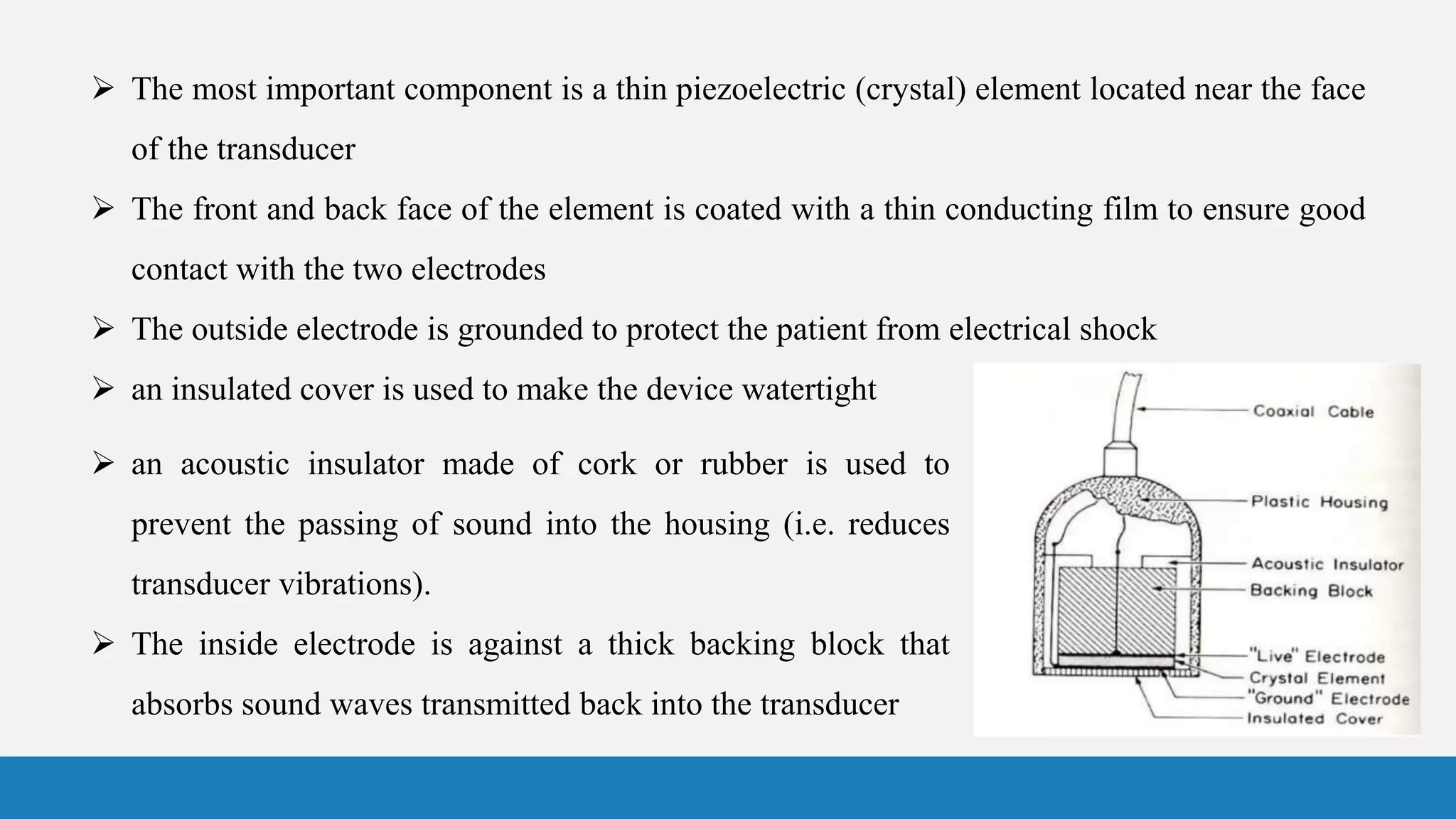
The general composition of an ultrasound transducer is
 The most important component is a thin piezoelectric (crystal) element located near the face
of the transducer
 The front and back face of the element is coated with a thin conducting film to ensure good
contact with the two electrodes
 The outside electrode is grounded to protect the patient from electrical shock
 an insulated cover is used to make the device watertight
 an acoustic insulator made of cork or rubber is used to
prevent the passing of sound into the housing (i.e. reduces
transducer vibrations).
 The inside electrode is against a thick backing block that
absorbs sound waves transmitted back into the transducer
THERMAL ANALYSIS
Thermal images, are actually visual displays of the amount of infrared energy emitted,
transmitted, and reflected by an object.
The image shows the viewer an approximation of the temperature at which the object is
operating, the camera is actually using multiple sources of data based on the areas surrounding the
object to determine that value rather than detecting the actual temperature.
This phenomenon may become clearer upon consideration of the formula
Incident Energy = Emitted Energy + Transmitted Energy + Reflected Energy
 Incident Energy is the energy profile when viewed through a thermal imaging camera.
 Emitted Energy is generally what is intended to be measured.
 Transmitted Energy is the energy that passes through the subject from a remote thermal source
 Reflected Energy is the amount of energy that reflects off the surface of the object from a remote
thermal source.
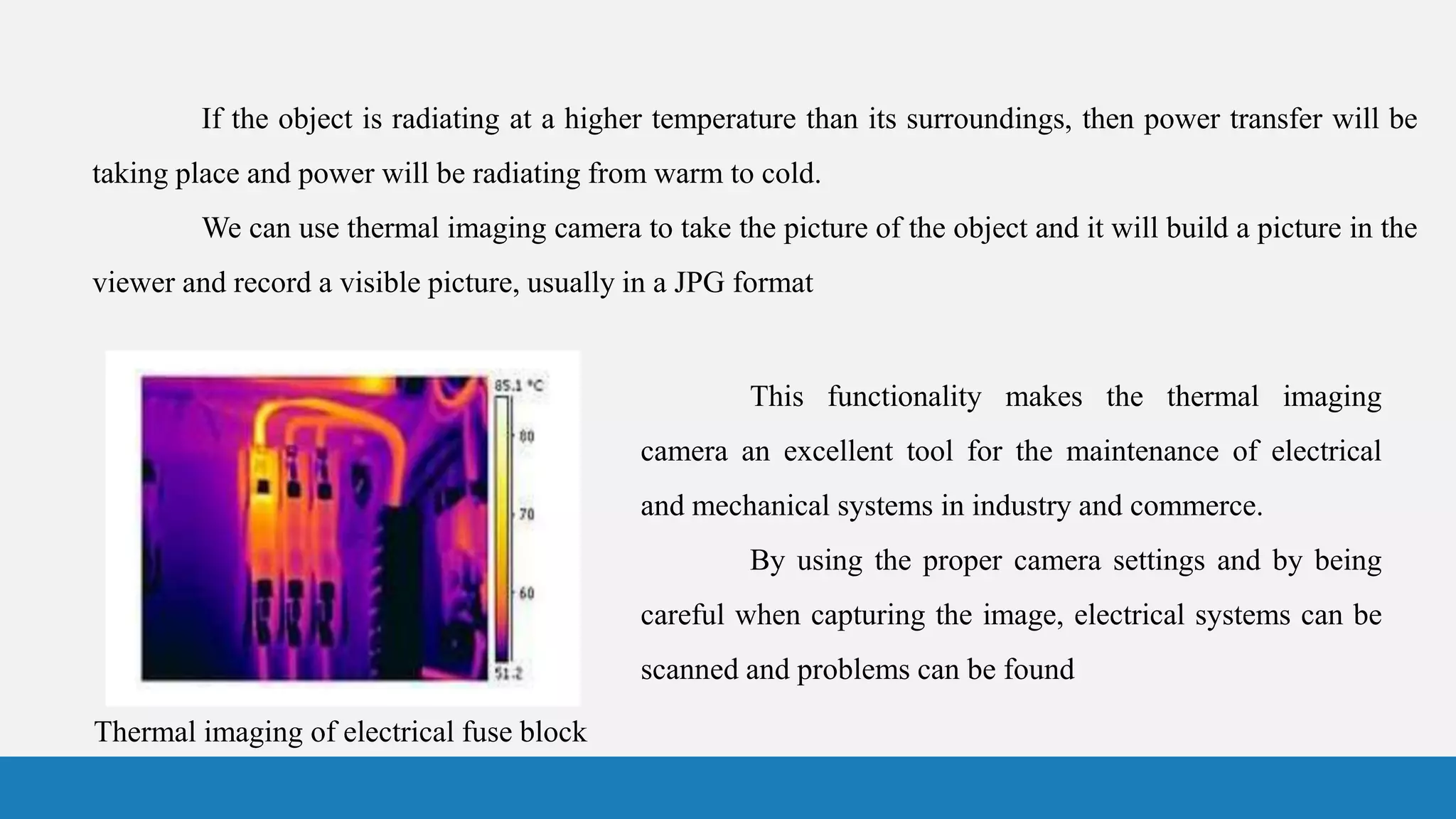
Thermal imaging of electrical fuse block
This functionality makes the thermal imaging
camera an excellent tool for the maintenance of electrical
and mechanical systems in industry and commerce.
By using the proper camera settings and by being
careful when capturing the image, electrical systems can be
scanned and problems can be found
If the object is radiating at a higher temperature than its surroundings, then power transfer will be
taking place and power will be radiating from warm to cold.
We can use thermal imaging camera to take the picture of the object and it will build a picture in the
viewer and record a visible picture, usually in a JPG format
ADVANTAGES :
 Reduces Maintenance Labor Costs.
 Minimize The Cost Of Spare Parts.
 Eliminates Manufacturing Interruptions.
 Produces Maximum Quality Of Products.
 Increases Machine Life Span.
DISADVANTAGES :
 Consumes Too Many Resources.
 Maintenance Department May Find It Difficult To Manage Condition monitoring
And Breakdowns At Same Time.
 There Is Not Enough Time And Manpower To Manage Condition Monitoring And
Other Important Daily Maintenance Tasks.
 It Takes Long To See The Results
Condition monitoring and its techniques

Condition monitoring and its techniques

  • 2.
    CONDITION MONITORING  Conditionmonitoring (CM) is a process of monitoring a parameter of condition in machinery eg . Vibration , temperature etc.  It is a major component of Predictive Maintenance (PdM).  Condition monitoring provides us the real time information about the condition of the machine which gives us the ability to minimize or to eliminate the factors responsible for occurrence of faults .
  • 3.
    CONDITION MONITORING TECHNIQUES Awide range of Condition monitoring techniques is available in the industries over the world and some have become standards in many industries. The "standard" techniques are: 1) Vibration Analysis 2) Oil Analysis 3) Thermal Analysis 4) Ultrasound Analysis
  • 4.
    VIBRATION ANALYIS Machine vibrations,also called chatter, correspond to the relative movement between the work piece and the cutting tool. The vibrations result in waves on the machine surface. This affects typical machining processes, such as turning , milling , drilling, and grinding.
  • 5.
    VIBRATION SENSOR Accelerometers aretransducers for measuring the dynamic acceleration of a physical device. The most common accelerometer measures acceleration only along a single axis. This type is often used to measure mechanical vibration levels. The second type is the triaxial accelerometer. This accelerometer is used to determine the type of vibration or the direction of acceleration.
  • 6.
    OIL ANALYSIS Oil analysis(OA) is the laboratory analysis of a lubricant's properties, suspended contaminants, and wear debris. OA is performed during routine preventive maintenance to provide meaningful and accurate information on lubricant and machine condition. By tracking oil analysis sample results over the life of a particular machine, trends can be established which can help eliminate costly repairs. Oil analysis can be divided into three categories: • analysis of oil properties including those of the base oil and its additives • analysis of contaminants • analysis of wear debris from machinery
  • 7.
    ULTRA SOUND ANALYSIS Ultrasoundtransducers are used to convert an electrical signal into ultrasonic energy that can be transmitted into the object to be monitored, and to convert ultrasonic energy reflected back from the object into an electrical signal. The general composition of an ultrasound transducer is
  • 8.
     The mostimportant component is a thin piezoelectric (crystal) element located near the face of the transducer  The front and back face of the element is coated with a thin conducting film to ensure good contact with the two electrodes  The outside electrode is grounded to protect the patient from electrical shock  an insulated cover is used to make the device watertight  an acoustic insulator made of cork or rubber is used to prevent the passing of sound into the housing (i.e. reduces transducer vibrations).  The inside electrode is against a thick backing block that absorbs sound waves transmitted back into the transducer
  • 9.
    THERMAL ANALYSIS Thermal images,are actually visual displays of the amount of infrared energy emitted, transmitted, and reflected by an object. The image shows the viewer an approximation of the temperature at which the object is operating, the camera is actually using multiple sources of data based on the areas surrounding the object to determine that value rather than detecting the actual temperature. This phenomenon may become clearer upon consideration of the formula Incident Energy = Emitted Energy + Transmitted Energy + Reflected Energy  Incident Energy is the energy profile when viewed through a thermal imaging camera.  Emitted Energy is generally what is intended to be measured.  Transmitted Energy is the energy that passes through the subject from a remote thermal source  Reflected Energy is the amount of energy that reflects off the surface of the object from a remote thermal source.
  • 10.
    Thermal imaging ofelectrical fuse block This functionality makes the thermal imaging camera an excellent tool for the maintenance of electrical and mechanical systems in industry and commerce. By using the proper camera settings and by being careful when capturing the image, electrical systems can be scanned and problems can be found If the object is radiating at a higher temperature than its surroundings, then power transfer will be taking place and power will be radiating from warm to cold. We can use thermal imaging camera to take the picture of the object and it will build a picture in the viewer and record a visible picture, usually in a JPG format
  • 11.
    ADVANTAGES :  ReducesMaintenance Labor Costs.  Minimize The Cost Of Spare Parts.  Eliminates Manufacturing Interruptions.  Produces Maximum Quality Of Products.  Increases Machine Life Span.
  • 12.
    DISADVANTAGES :  ConsumesToo Many Resources.  Maintenance Department May Find It Difficult To Manage Condition monitoring And Breakdowns At Same Time.  There Is Not Enough Time And Manpower To Manage Condition Monitoring And Other Important Daily Maintenance Tasks.  It Takes Long To See The Results