






PROJECT
DATE CLIENT
OCTOBER 18, 2013  #TECHCON13
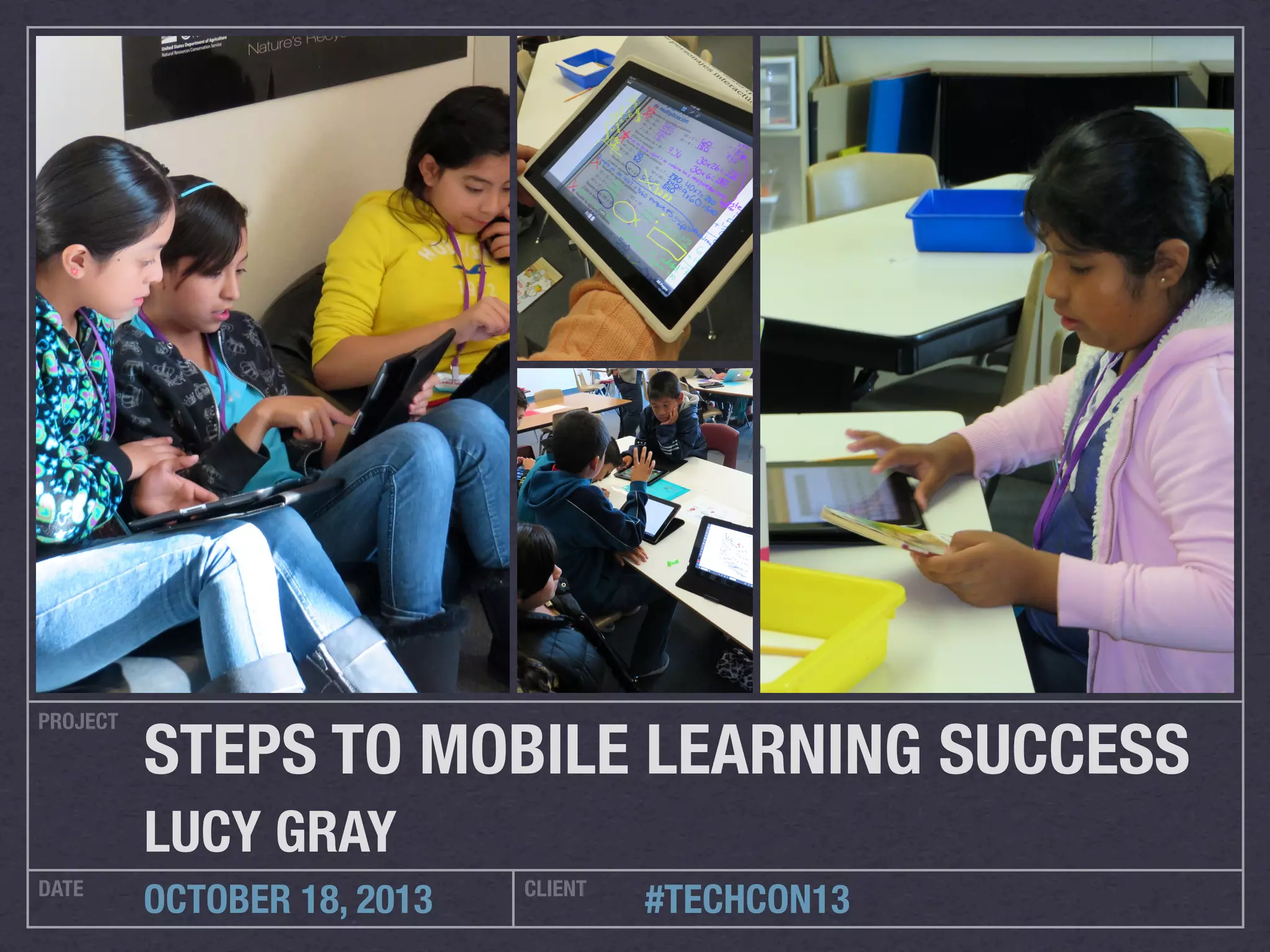
STEPS TO MOBILE LEARNING SUCCESS
LUCY GRAY
Project Director
CoSN
Leadership for Mobile Learning
http://www.cosn.org/MobileLead
Consultant
www.lucygrayconsulting.com
Mercy, CPS, Wireless Reach, D230
Presentation Materials
http://www.lucygray.org
Your burning questions
School stories
Current context
Planning and implementation steps
Resources for further exploration
Today’s Agenda
POLL
HTTP://WWW.POLLEVERYWHERE.COM/LUCYGRAY
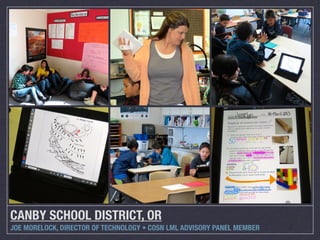
CANBY SCHOOL DISTRICT, OR
JOE MORELOCK, DIRECTOR OF TECHNOLOGY • COSN LML ADVISORY PANEL MEMBER
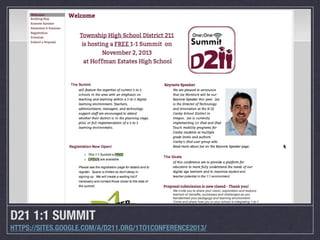
D21 1:1 SUMMIT
HTTPS://SITES.GOOGLE.COM/A/D211.ORG/1TO1CONFERENCE2013/
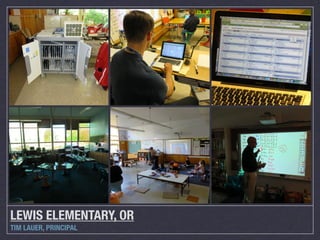
LEWIS ELEMENTARY, OR
TIM LAUER, PRINCIPAL
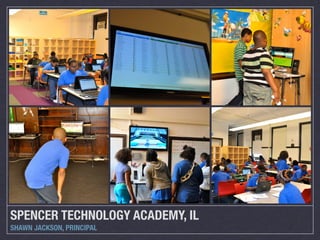
SPENCER TECHNOLOGY ACADEMY, IL
SHAWN JACKSON, PRINCIPAL
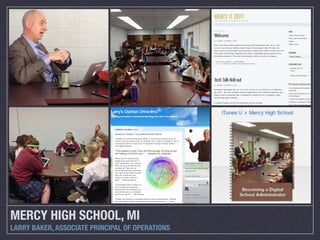
MERCY HIGH SCHOOL, MI	
LARRY BAKER, ASSOCIATE PRINCIPAL OF OPERATIONS
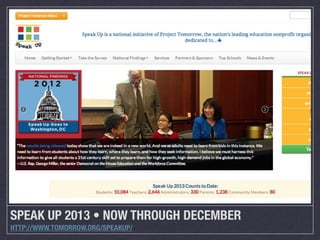
SPEAK UP 2013 • NOW THROUGH DECEMBER
HTTP://WWW.TOMORROW.ORG/SPEAKUP/
“LEARNING A VARIETY OF CONTENT AND SKILLS
ANYTIME, ANY PLACE WITH A SMALL DEVICE
LIGHT ENOUGH TO BE CARRIED IN ONE HAND.”
CHRIS DEDE
TIMOTHY E. WIRTH PROFESSOR IN LEARNING TECHNOLOGIES
HARVARD UNIVERSITY
TAKING IT MOBILE: UNTETHERED LEARNING FOR 21ST CENTURY
STUDENTS
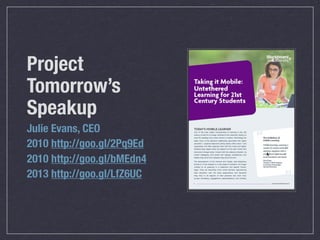
Julie Evans, CEO
2010 http://goo.gl/2Pq9Ed
2010 http://goo.gl/bMEdn4
2013 http://goo.gl/LfZ6UC
Project
Tomorrow’s
Speakup
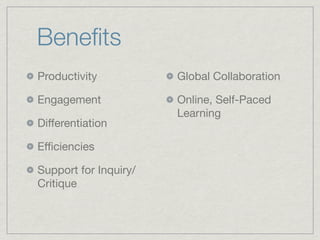
Benefits
Productivity
Engagement
Differentiation
Efficiencies
Support for Inquiry/
Critique
Global Collaboration
Online, Self-Paced
Learning
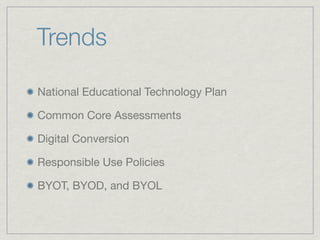
Trends
National Educational Technology Plan
Common Core Assessments
Digital Conversion
Responsible Use Policies
BYOT, BYOD, and BYOL
NATIONAL EDUCATIONAL TECHNOLOGY PLAN
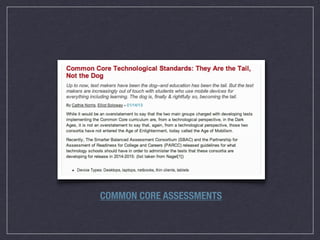
COMMON CORE ASSESSMENTS
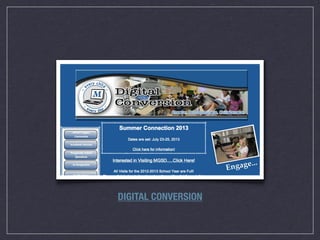
DIGITAL CONVERSION
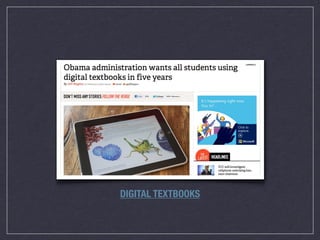
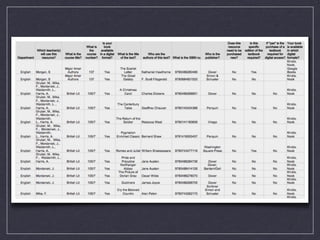
DIGITAL TEXTBOOKS
DIGITAL TEXTBOOK PLAYBOOK
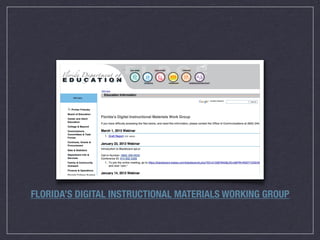
FLORIDA’S DIGITAL INSTRUCTIONAL MATERIALS WORKING GROUP
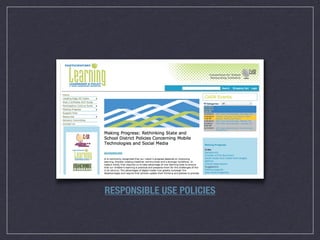
RESPONSIBLE USE POLICIES
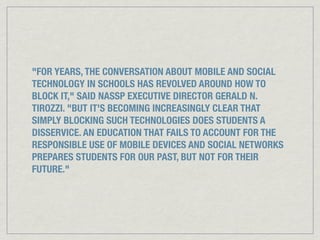
NASSP
"FOR YEARS, THE CONVERSATION ABOUT MOBILE AND SOCIAL
TECHNOLOGY IN SCHOOLS HAS REVOLVED AROUND HOW TO
BLOCK IT," SAID NASSP EXECUTIVE DIRECTOR GERALD N.
TIROZZI. "BUT IT'S BECOMING INCREASINGLY CLEAR THAT
SIMPLY BLOCKING SUCH TECHNOLOGIES DOES STUDENTS A
DISSERVICE. AN EDUCATION THAT FAILS TO ACCOUNT FOR THE
RESPONSIBLE USE OF MOBILE DEVICES AND SOCIAL NETWORKS
PREPARES STUDENTS FOR OUR PAST, BUT NOT FOR THEIR
FUTURE."
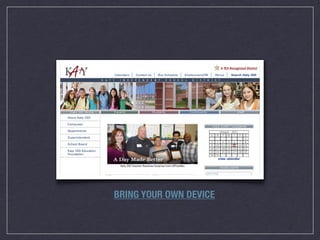
BRING YOUR OWN DEVICE
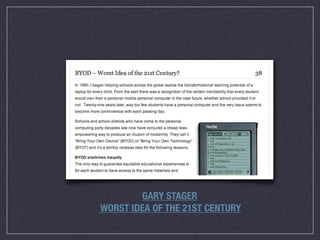
GARY STAGER
WORST IDEA OF THE 21ST CENTURY
Support Documentation
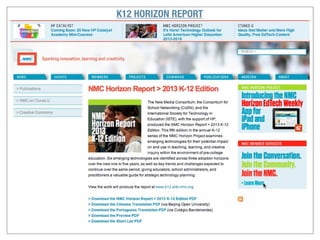
K12 HORIZON REPORT
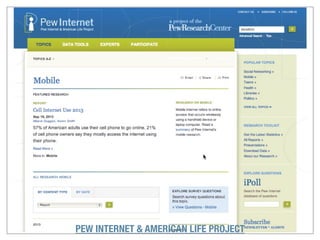
PEW INTERNET & AMERICAN LIFE PROJECT
Planning
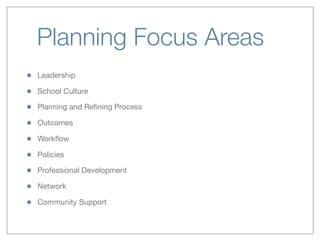
Planning Focus Areas
Leadership
School Culture
Planning and Refining Process
Outcomes
Workflow
Policies
Professional Development
Network
Community Support
Planning Template
Rough Draft
http://goo.gl/pOS3TY
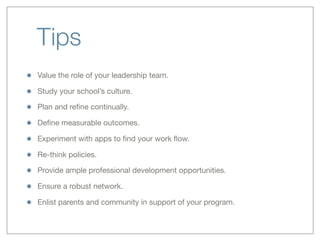
Tips
Value the role of your leadership team.
Study your school’s culture.
Plan and refine continually.
Define measurable outcomes.
Experiment with apps to find your work flow.
Re-think policies.
Provide ample professional development opportunities.
Ensure a robust network.
Enlist parents and community in support of your program.
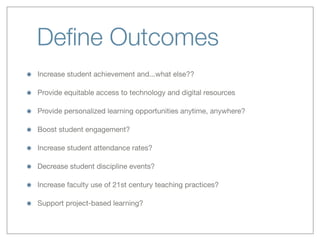
Define Outcomes
Increase student achievement and...what else??
Provide equitable access to technology and digital resources
Provide personalized learning opportunities anytime, anywhere?
Boost student engagement?
Increase student attendance rates?
Decrease student discipline events?
Increase faculty use of 21st century teaching practices?
Support project-based learning?
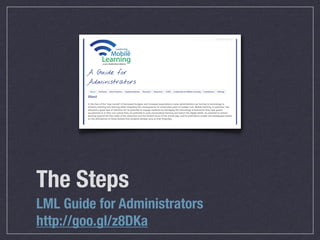
The Steps
LML Guide for Administrators
http://goo.gl/z8DKa
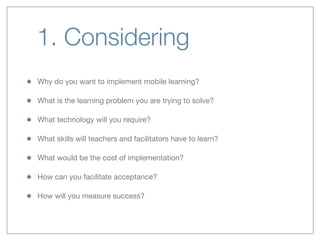
1. Considering
Why do you want to implement mobile learning? 
What is the learning problem you are trying to solve?
What technology will you require?
What skills will teachers and facilitators have to learn?
What would be the cost of implementation?
How can you facilitate acceptance?
How will you measure success?
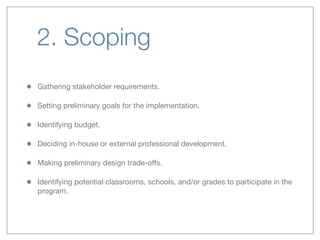
2. Scoping
Gathering stakeholder requirements.
Setting preliminary goals for the implementation.
Identifying budget.
Deciding in-house or external professional development.
Making preliminary design trade-offs.
Identifying potential classrooms, schools, and/or grades to participate in the
program.
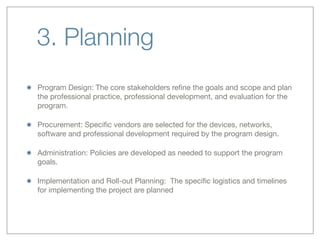
3. Planning
Program Design: The core stakeholders refine the goals and scope and plan
the professional practice, professional development, and evaluation for the
program.
Procurement: Specific vendors are selected for the devices, networks,
software and professional development required by the program design.
Administration: Policies are developed as needed to support the program
goals.
Implementation and Roll-out Planning:  The specific logistics and timelines
for implementing the project are planned
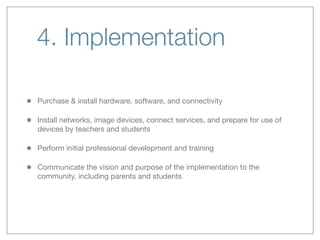
4. Implementation
Purchase & install hardware, software, and connectivity
Install networks, image devices, connect services, and prepare for use of
devices by teachers and students
Perform initial professional development and training
Communicate the vision and purpose of the implementation to the
community, including parents and students
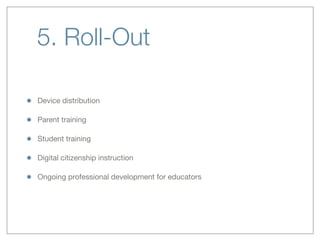
5. Roll-Out
Device distribution
Parent training
Student training
Digital citizenship instruction
Ongoing professional development for educators
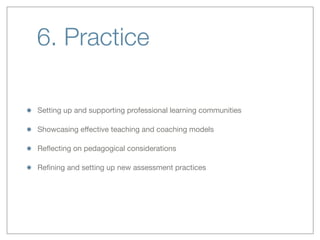
6. Practice
Setting up and supporting professional learning communities
Showcasing effective teaching and coaching models
Reflecting on pedagogical considerations
Refining and setting up new assessment practices
Additional Resources
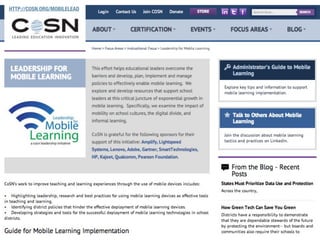
HTTP://COSN.ORG/MOBILELEAD
Wireless EdTech
Conference Recordings
http://goo.gl/aRnqld
Leadership for Mobile
Learning on Social Media
Google+: http://goo.gl/6LLrX
Diigo: http://goo.gl/VN0HB
LinkedIn: http://goo.gl/s62TD
Paper.li: http://goo.gl/wCkYG
hashtag #MobileLead on Twitter
Lucy Gray at lgray@cosn.org or
lucy@lucygrayconsulting.com
http://cosn.org/MobileLead
Twitter: elemenous
http://www.lucygray.org

Steps to Mobile Learning Success at #techcon13