Dr. A. Chandrasekaran, M.S. Ortho., Ph.D.,
Consultant Orthopaedic Surgeon,
Chennai Orthopaedic care and research centre
Chennai - acortho@gmail.com/9444464055
Acknowledgements
Sri Ramachandra University,
Dr. Solomon Paul, Ph.D.,
Dr. P. Venkatachalam, Ph.D.,
Dr. U Baraneedharan, Ph.D.,
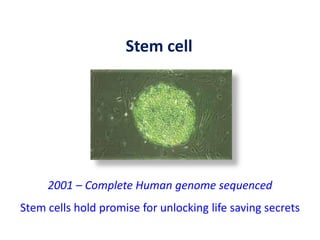
Stem cell
2001 – Complete Human genome sequenced
Stem cells hold promise for unlocking life saving secrets
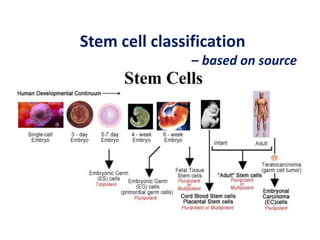
Stem cell classification
– based on source
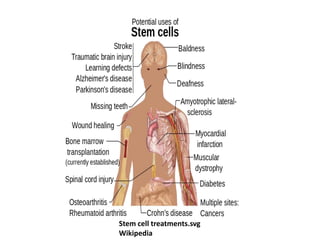
Stem cells possibilities
Stem cell treatments.svg
Wikipedia
iPS and ESC
As ethical and safety concerns currently
forbid application of iPS cells and ESCs in
patients we will focus on adult
mesenchymal stem cells
R. D. Robbins, N. Prasain, B. F.Maier, M. C. Yoder, and R. G.Mirmira, “Inducible
pluripotent stem cells: not quite ready for prime time?” Current Opinion in Organ
Transplantation, vol. 15, no. 1, pp. 61–67, 2010
Bone marrow derived cells
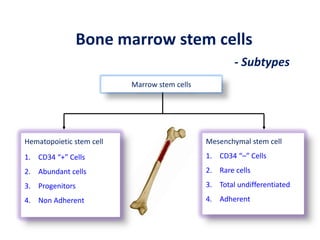
Marrow stem cells
Hematopoietic stem cell
1. CD34 “+” Cells
2. Abundant cells
3. Progenitors
4. Non Adherent
Mesenchymal stem cell
1. CD34 “–” Cells
2. Rare cells
3. Total undifferentiated
4. Adherent
Bone marrow stem cells
- Subtypes
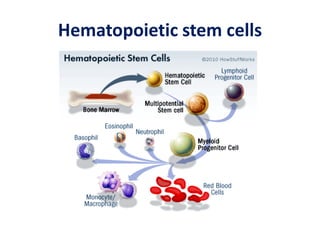
Hematopoietic stem cells
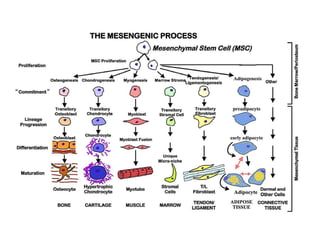
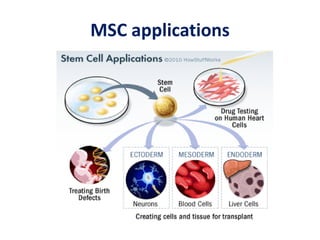
MSC applications
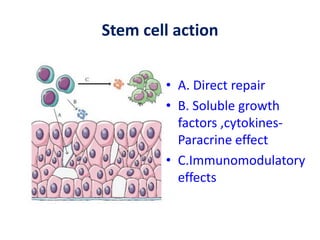
Stem cell action
• A. Direct repair
• B. Soluble growth
factors ,cytokines-
Paracrine effect
• C.Immunomodulatory
effects
Advantages of Mesenchymal Stem cells
• Autologous – harvested from the patient themselves
• No major ethical constraints – unlike embryonic stem cells
• Can be expanded in vitro – unlimited supply of therapeutic
cells.
• Does not express HLA II antigens
• Strong evidence for In Vitro and In Vivo differentiation
Stem cells
MSC Colony on day 05 Confluent Monolayer on day 15
Isolation and in vitro expansion of mesenchymal stem cells
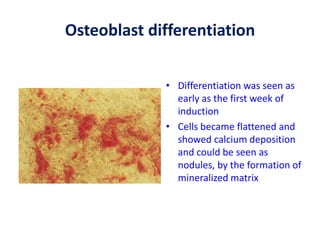
Alizarin Red Staining- 21 days
Control - Undifferentiated cells Differentiated cells - Nodulation
10 X 10 X
Osteoblast differentiation
• Differentiation was seen as
early as the first week of
induction
• Cells became flattened and
showed calcium deposition
and could be seen as
nodules, by the formation of
mineralized matrix
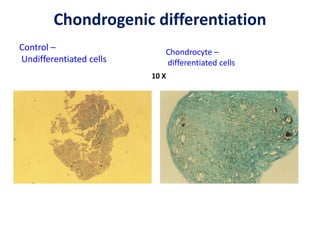
Chondrogenic differentiation
Control –
Undifferentiated cells
Chondrocyte –
differentiated cells
10 X
Adipogenic differentiation
Control –
Undifferentiated cells
Adipocytes –
differentiated cells
20 X
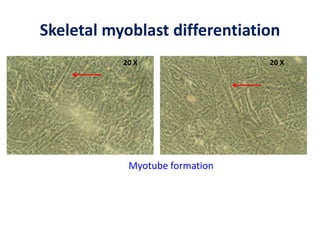
Skeletal myoblast differentiation
Myotube formation
20 X 20 X
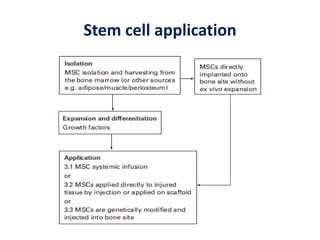
Stem cell application
Avascular necrosis
Critical bone defects and non-unions
Cartilage repair - acute
Spinal cord injury – acute / chronic
Intervertebral disc regeneration
Articular cartilage regeneration – Rheumatic and
Rheumatoid disorders
Inflammatory autoimmune disorders
Osteogenesis Imperfecta
Duchene Muscular Dystrophy
Stem cells in Orthopaedics
Role of mesenchymal stem cells in regenerative
medicine: application to bone and cartilage repair.
Granero-Molto F, Weis JA, Longobardi L, Spagnoli A.
Expert Opin Biol Ther. 2008 Mar;8(3):255-68.
MSC can migrate to injured tissues and some of their reparative
properties are mediated by paracrine mechanisms including
their immunomodulatory actions.
MSC possess a critical potential for the treatment of skeletal
diseases, such as osteoarthritis or fracture healing failure,
where treatments are partially effective or palliative.
Autologous MSCs were expanded ex vitro, embedded
in a collagen gel and re-implanted into areas of
articular cartilage defect in osteoarthritis patients.
Wakitani S, Imoto K, Yamamoto T, Saito M, Murata N, Yoneda M. Human autologous culture expanded
bone marrow mesenchymal cell transplantation for repair of cartilage defects in osteoarthritic knees.
Osteoarthritis Cartilage 2002;10:199-206.
MSCs in cartilage repair
Osteochondral Lesions of the Knee
Osteochondral Lesions of the Knee: A New One-Step Repair Technique with Bone-Marrow-Derived Cells.
By Roberto Buda, MD, Francesca Vannini, MD, PhD, Marco Cavallo, MD, Brunella Grigolo, PhD, Annarita
Cenacchi, MD, and Sandro Giannini, MD
J Bone Joint Surg Am. 2010;92 Suppl 2:2-11 d doi:10.2106/JBJS.J.00813
Mesenchymal stem cells represent 2% to 3% of the total
mononuclear cells in bone marrow and have the ability to
differentiate into various lineages, including osteoblasts and
chondroblasts. The rationale of the ‘‘one-step technique’’ is
based on the idea of transplanting the entire bone-marrow
cellular pool instead of isolated and expanded mesenchymal
stem Cells.
Mesenchymal stem cells in arthritic diseases
MSCs possess potent immunosuppression and anti-inflammation
effects through secretion of various soluble factors,
MSCs can influence the local tissue environment and exert
protective effects with an end result of effectively stimulating
regeneration in situ.
Can be used for therapeutic application in degenerative joint
diseases such as RA and OA.
Faye H Chen and Rocky S Tuan
Arthritis Research & Therapy 2008, 10:223 (doi:10.1186/ar2514)
Stem Cells in OA
ADS/ MSC in osteoarthritis
• Desando and co-workers report in Arthritis Research
& Therapy that intra-articular delivery of adipose-
derived stem cells attenuates progression of synovial
activation and joint destruction in Osteoarthritis.
• Mesenchymal stem cell therapy in osteoarthritis:
advanced tissue repair or intervention with
smouldering synovial activation
• Peter LEM van Lent* and Wim B van den Arthritis Research & Therapy 2013, 15:112
http://arthritis-research.com/content/15/2/112
Cell transplantation can potentially
increase proteoglycan production
induce disc regeneration or
slow the process of degeneration
Transplantation of autologous disc cells and
Chondrocyte derived from costal cartilage has been
demonstrated to slow disc degeneration
Brisby H, Tao H, Ma DD, Diwan AD. Cell therapy for disc degeneration: potentials and pitfalls. Orthop Clin
North Am 2004; 35:85-93.
Intervertebral disc
Autologous bone marrow transplantation in patients with
sub acute and chronic spinal cord injury.
Centre for Cell Therapy and Tissue Repair, Charles University, Prague, Czech Republic.
sykova@biomed.cas.cz
Syková E, Homola A, Mazanec R, Lachmann H, Konrádová SL, Kobylka P, Pádr R, Neuwirth J, Komrska V, Vávra V, Stulík J, Bojar M. Cell
Transplant. 2006;15(8-9):675-87.
20 patients with complete SCI who received transplants 10 to 467 days post injury. The
follow-up examinations were done at 3, 6, and 12 months after implantation by two
independent neurologists
We compared intra-arterial (via catheterization of a. vertebralis) versus intravenous
administration of all mononuclear cells in groups of acute (10-30 days post-SCI, n=7) and
chronic patients (2-17 months post injury, n=13).
Improvement in motor and/or sensory functions was observed within 3 months in 5 of
6 patients with intra-arterial application, in 5 of 7 acute, and in 1 of 13 chronic patients.
It is evident that transplantation within a therapeutic window of 3-4 weeks following
injury will play an important role in any type of stem cell SCI treatment.
Bone marrow aspirate concentrate
Autologus bone marrow
Connolly et al.1991 Atrophic Pseudarthrosis.
Percutaneous autologous bone marrow
injection 20 Healing capacity comparable to
autologous cancellous bone grafting
J. F. Connolly, R. Guse, J. Tiedeman, and R. Dehne, “Autologous marrow
injection as a substitute for operative grafting of tibial nonunions,”
Clinical Orthopaedics and Related Research, no. 266, pp. 259–270, 1991
BMAC in AVN hips
Hernigou andBeaujean2002 [*] Osteonecrosis femoral head. Injection of autologous
bone marrow concentrate116(189 hips)Very good results in early stages Injection
of greater number of progenitor cells transplanted had better outcomes.
Gangji et al.2004 [**]Osteonecrosis femoral head. Injection of autologous bone
marrow concentrate 13 (18 hips). Significant reduction of pain, progression and
improvement of function
Hernigou et al.2009 [***] Osteonecrosis femoral head. Injection of autologous bone
marrow concentrate 342(534 hips). High amount of progenitor cells as
predictor for successful outcome
*P. Hernigou and F. Beaujean, “Treatment of osteonecrosis with autologous bone marrow grafting,” Clinical Orthopaedics and
Related Research, no. 405, pp. 14–23, 2002
**V. Gangji, J. P. Hauzeur, C.Matos, V. deMaertelaer,M. Toungouz, and M. Lambermont, “Treatment of osteonecrosis of the femoral
head with implantation of autologous cells. A pilot study,” Journal of Bone and Joint Surgery: Series A, vol. 86, no. 6, pp. 1153–
1160, 2004.
***P. Hernigou, A. Poignard, S. Zilber, and H. Rouard, “Cell therapy of hip osteonecrosis with autologous bone marrow grafting,”
Indian Journal of Orthopaedics, vol. 43, no. 1, pp.
40–45, 2009.
342 patients (534 hips) with Avascular Osteonecrosis at
early stages (Stages I and II)
Treated with core decompression and autologous bone
marrow grafting obtained from the iliac crest
Patients were followed up from 8 to 18 years.
69 hips with stage I osteonecrosis demonstrated total
resolution of osteonecrosis based on pre and
postoperative MRI studies
For the 371 other hips without collapse at the most
recent follow up (average 12 years), the abnormal
signal persisting was seen on T1 images as
intralesional area of low intensity signal with a
disappearance of marginal band like pattern.
THR was necessary in 94 hips
Best indication for the
procedure is symptomatic hips
with osteonecrosis without
collapse.
Patients who had the greater
number of progenitor cells
transplanted in their hips had
better outcomes.
Before
Surgery
4 weeks after core
Decompression / BMAC
Application
8 weeks after core
Decompression / BMAC
application
20 Years, Male – Pre operative
20 Years, Male – Pre operative MRI
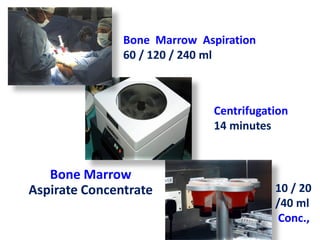
Bone Marrow Aspiration
60 / 120 / 240 ml
Centrifugation
14 minutes
10 / 20
/40 ml
Conc.,
Bone Marrow
Aspirate Concentrate
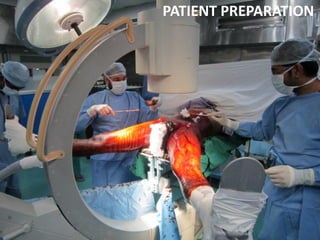
PATIENT PREPARATION
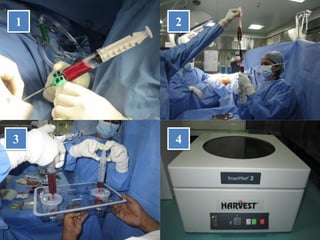
Marrow aspiration
1 2
3 4
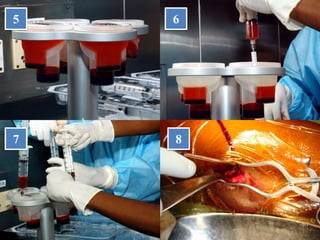
5 6
7 8
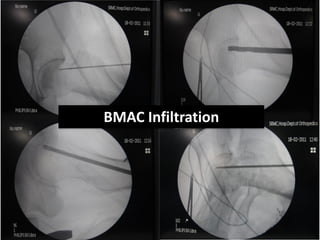
BMAC Infiltration
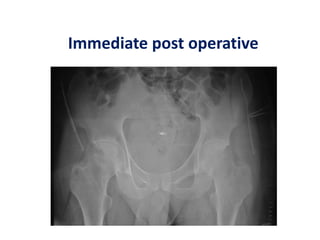
Immediate post operative
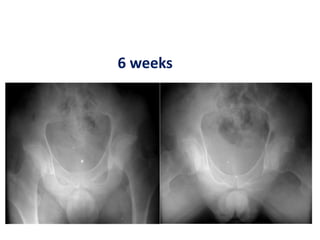
6 weeks
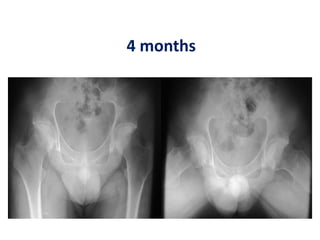
4 months
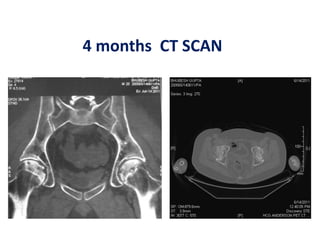
4 months CT SCAN
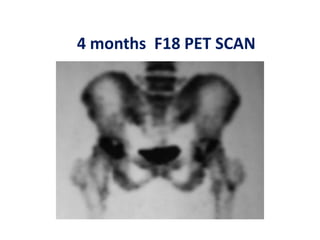
4 months F18 PET SCAN
Case 1 – 1year
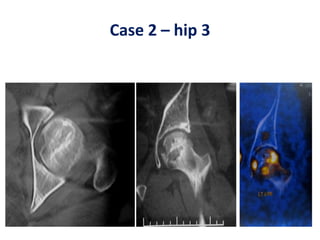
Case 2 – hip 3
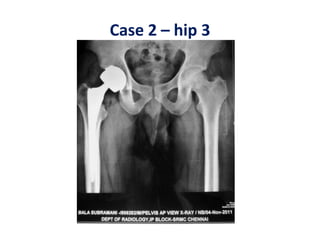
Case 2 – hip 3
Case 2 – hip 3
Case 2 – hip 3
Case 2 – hip 3
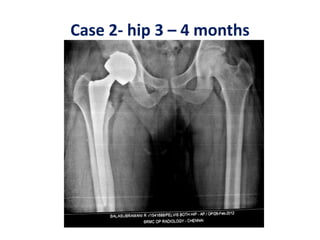
Case 2- hip 3 – 4 months
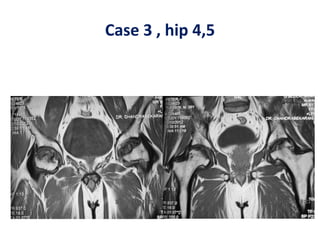
Case 3 , hip 4,5
Pre op Post op
Case 3 , hip 4,5
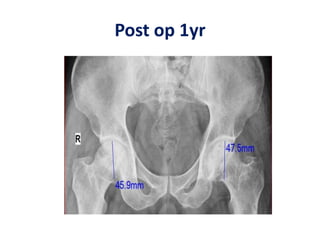
Post op 1yr
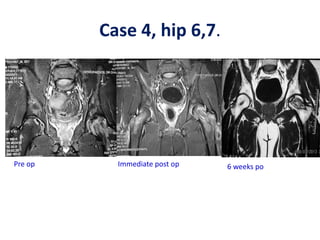
Case 4, hip 6,7
Case 4, hip 6,7.
Pre op Immediate post op 6 weeks po
Case 5- hips 8,9
Case 5- hips 8,9
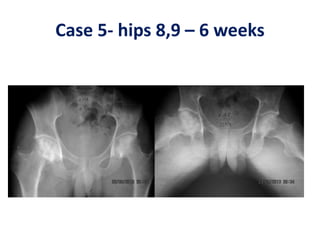
Case 5- hips 8,9 – 6 weeks
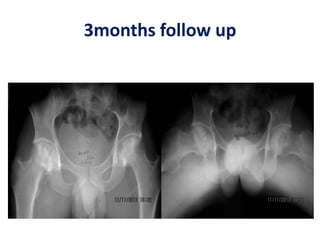
3months follow up
Bone Marrow Concentrate: A Novel
Strategy for Bone Defect Treatment
The local application of BMC / bone aspirate
in the treatment of bone deficiencies may be
a promising alternative to autogenous bone
grafting and help reduce donor site morbidity.
Current Stem Cell Research & Therapy, 2009, 4, 34-43
© 2009 Bentham Science Publishers Ltd.
Bone Marrow Concentrate: A Novel Strategy for Bone Defect Treatment
Marcus Jäger*,1, Eva M. Jelinek1, Kai M. Wess1, Axel Scharfstädt1, May Jacobson2, Sherwin
V. Kevy2 and Rüdiger Krauspe1
25 years male
Traffic accident 2.5 years back
Lost other limb above knee
Allograft failed
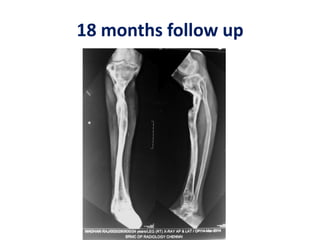
20 cm gap
Stem cells in a large gap non union
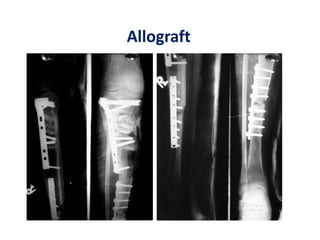
Allograft
After allograft removal
 20 cm gap
 Tibialisation of fibula
 Segmental transfer
Internal bone transportation
Rapid transportation
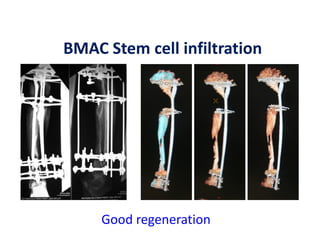
Good regeneration
BMAC Stem cell infiltration
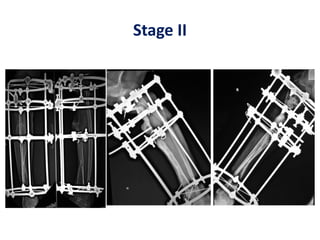
Stage II
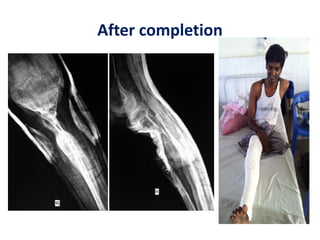
After completion
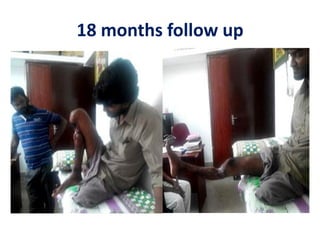
18 months follow up
18 months follow up
Number of cells
A graft needed to contain at least > 1000
MSCs per cm3 to achieve union.
Hernigou P, Poignard A, Beaujean F, Rouard H. Percutaneous autologous bone
marrow grafting for nonunions: influence of the number and concentration of
progenitor cells. J Bone Joint Surg [Am] 2005;87-A:1430-7.
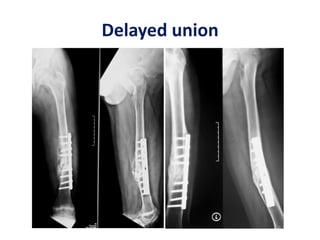
Delayed union
Non union
Animal experiment
Mesenchymal stem cells
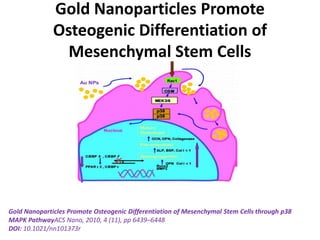
Gold Nanoparticles Promote
Osteogenic Differentiation of
Mesenchymal Stem Cells
Gold Nanoparticles Promote Osteogenic Differentiation of Mesenchymal Stem Cells through p38
MAPK PathwayACS Nano, 2010, 4 (11), pp 6439–6448
DOI: 10.1021/nn101373r
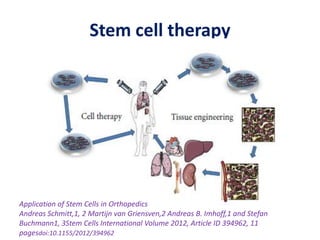
Stem cell therapy
Application of Stem Cells in Orthopedics
Andreas Schmitt,1, 2 Martijn van Griensven,2 Andreas B. Imhoff,1 and Stefan
Buchmann1, 3Stem Cells International Volume 2012, Article ID 394962, 11
pagesdoi:10.1155/2012/394962
Arthroscope and PRP in AVN
Arthroscopic management and platelet-rich plasma therapy for avascular necrosis of the hip
Jorge Guadilla • Nicolas Fiz • Isabel Andia •Mikel Sa´nchez
Knee Surg Sports Traumatol Arthrosc Springer-Verlag 2011
DOI 10.1007/s00167-011-1587-9
Arthroscopy and PRP in AVN
Arthroscopic management and platelet-rich plasma therapy for avascular necrosis of the hip
Jorge Guadilla • Nicolas Fiz • Isabel Andia •Mikel Sa´nchez
Knee Surg Sports Traumatol Arthrosc Springer-Verlag 2011
DOI 10.1007/s00167-011-1587-9
BMAC vs PRP
• Both human BMACs and PRP may provide
therapeutic benefits in bone tissue
engineering applications. These fractions
possess a similar ability to enhance early-
phase bone regeneration.
• In Vivo Comparison of the Bone Regeneration Capability of Human Bone Marrow Concentrates vs.
Platelet-Rich Plasma
• Weijian Zhong1,2, Yoshinori Sumita1, Seigo Ohba1, Takako Kawasaki1, Kazuhiro Nagai3, Guowu Ma2,
Izumi Asahina11 Department of Regenerative Oral Surgery, Graduate School of Biomedical Sciences, Nagasaki
University, Nagasaki, Japan, 2 Department of Oral and Maxillofacial Surgery, College of Stomatology, Dalian
Medical University, Dalian, Liaoning, China, 3 Transfusion and Cell Therapy Unit, Nagasaki University Hospital,
Nagasaki, Japan
• PLoS ONE | www.plosone.org 1 July 2012 | Volume 7 | Issue 7 | e40833
Platelet rich plasma
The hundreds of soluble proteins released from both
plasma and platelets include VEGF-A, PDGF, FGF, EGF,
HGF, and IGF. These angiogenic activators collectively
promote vessel wall permeability and recruitment,
growth and proliferation of endothelial cells .
Blair P, Flaumenhaft R (2009) Basic biology and clinical correlates.
Blood Rev 23:177–189
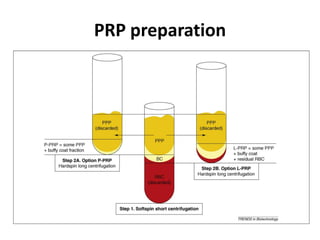
PRP preparation
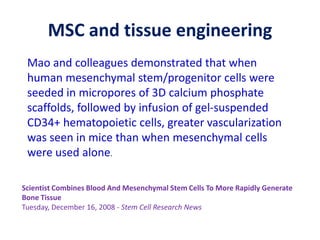
MSC and tissue engineering
Mao and colleagues demonstrated that when
human mesenchymal stem/progenitor cells were
seeded in micropores of 3D calcium phosphate
scaffolds, followed by infusion of gel-suspended
CD34+ hematopoietic cells, greater vascularization
was seen in mice than when mesenchymal cells
were used alone.
Scientist Combines Blood And Mesenchymal Stem Cells To More Rapidly Generate
Bone Tissue
Tuesday, December 16, 2008 - Stem Cell Research News
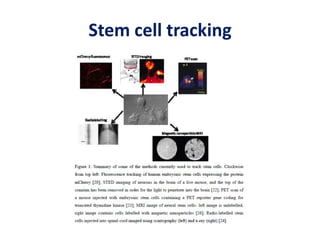
Stem cell tracking
Allogenic cell transfer
• Likely to form teratomas with injection of un
differentiated mesenchymal cells in knee
joints, cardiac and spinal cord.
• As ethical and safety concerns currently forbid
application of iPS cells and ESCs in patients
STAP cells
• Stimulus triggered acquisition of pluripotency (STAP)
is a cellular reprogramming phenomenon that was
recently reported in two papers (Obokata, Nature,
2014a,b).
• In this reprogramming process, upon strong external
stimuli, neonatal somatic cells are converted into cells
that express pluripotency-related genes, such as
Oct3/4,and acquire the ability to differentiate into
derivatives of all three germ layers in vitro and in vivo
• . Yamanaka takes issue with claims STAP cells are
safer than iPS option
Figure 1. Pre-Operative MRI
Amariglio N, Hirshberg A, Scheithauer BW, Cohen Y, et al. (2009) Donor-Derived Brain Tumor Following Neural Stem Cell Transplantation in an
Ataxia Telangiectasia Patient. PLoS Med 6(2): e1000029. doi:10.1371/journal.pmed.1000029
http://www.plosmedicine.org/article/info:doi/10.1371/journal.pmed.1000029
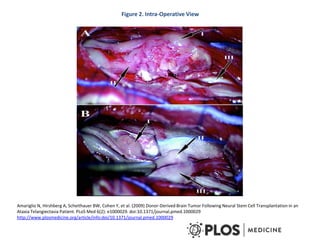
Figure 2. Intra-Operative View
Amariglio N, Hirshberg A, Scheithauer BW, Cohen Y, et al. (2009) Donor-Derived Brain Tumor Following Neural Stem Cell Transplantation in an
Ataxia Telangiectasia Patient. PLoS Med 6(2): e1000029. doi:10.1371/journal.pmed.1000029
http://www.plosmedicine.org/article/info:doi/10.1371/journal.pmed.1000029
Sentiments and religion
Research and application
Quote
• Blood grouping is done for transfusion,
• HLA typing is done for Organ transplant,
• Genome mapping for oncogenes and other
inheritable diseases will be required before
allogenic stem cell transfer.
Summary
• ips can cause teratomas and malignancy
• Allogenic cells can be used when their
genome is mapped
• Autologus expanded cells may be used
BMSCs is a very promising tool for regenerative
medicine
Further engineering such osteogenic cells in
scaffolds would allow us to repair bone defects
Cord blood is generally used for haemopoietic
disorders and not in musculoskeletal tissues
Conclusion
References
 ISSCR Guidelines for the Clinical Translation for Stem
Cells
 Patient Handbook on Stem Cell Therapies
provide the requisite information for the clinical use
of stem cells
International Society for Stem Cell Research. Guidelines for Clinical Translation of Stem Cells, 2008 Dec 3;
Available from:
 http://www.isscr.org/clinical_trans/
 56. International Society for Stem Cell Research. Patient Handbook on Stem Cell Therapies, 2008
Dec 3; Available from:
 http://www.isscr.org/clinical_trans

Stemcells in Orthopaedic suergery.

  • 1.
    Dr. A. Chandrasekaran,M.S. Ortho., Ph.D., Consultant Orthopaedic Surgeon, Chennai Orthopaedic care and research centre Chennai - acortho@gmail.com/9444464055
  • 2.
    Acknowledgements Sri Ramachandra University, Dr.Solomon Paul, Ph.D., Dr. P. Venkatachalam, Ph.D., Dr. U Baraneedharan, Ph.D.,
  • 3.
    Stem cell 2001 –Complete Human genome sequenced Stem cells hold promise for unlocking life saving secrets
  • 4.
  • 5.
  • 6.
  • 7.
    iPS and ESC Asethical and safety concerns currently forbid application of iPS cells and ESCs in patients we will focus on adult mesenchymal stem cells R. D. Robbins, N. Prasain, B. F.Maier, M. C. Yoder, and R. G.Mirmira, “Inducible pluripotent stem cells: not quite ready for prime time?” Current Opinion in Organ Transplantation, vol. 15, no. 1, pp. 61–67, 2010
  • 8.
  • 9.
    Marrow stem cells Hematopoieticstem cell 1. CD34 “+” Cells 2. Abundant cells 3. Progenitors 4. Non Adherent Mesenchymal stem cell 1. CD34 “–” Cells 2. Rare cells 3. Total undifferentiated 4. Adherent Bone marrow stem cells - Subtypes
  • 10.
  • 12.
  • 13.
    Stem cell action •A. Direct repair • B. Soluble growth factors ,cytokines- Paracrine effect • C.Immunomodulatory effects
  • 14.
    Advantages of MesenchymalStem cells • Autologous – harvested from the patient themselves • No major ethical constraints – unlike embryonic stem cells • Can be expanded in vitro – unlimited supply of therapeutic cells. • Does not express HLA II antigens • Strong evidence for In Vitro and In Vivo differentiation
  • 15.
    Stem cells MSC Colonyon day 05 Confluent Monolayer on day 15 Isolation and in vitro expansion of mesenchymal stem cells
  • 16.
    Alizarin Red Staining-21 days Control - Undifferentiated cells Differentiated cells - Nodulation 10 X 10 X
  • 17.
    Osteoblast differentiation • Differentiationwas seen as early as the first week of induction • Cells became flattened and showed calcium deposition and could be seen as nodules, by the formation of mineralized matrix
  • 18.
    Chondrogenic differentiation Control – Undifferentiatedcells Chondrocyte – differentiated cells 10 X
  • 19.
    Adipogenic differentiation Control – Undifferentiatedcells Adipocytes – differentiated cells 20 X
  • 20.
  • 21.
  • 22.
    Avascular necrosis Critical bonedefects and non-unions Cartilage repair - acute Spinal cord injury – acute / chronic Intervertebral disc regeneration Articular cartilage regeneration – Rheumatic and Rheumatoid disorders Inflammatory autoimmune disorders Osteogenesis Imperfecta Duchene Muscular Dystrophy Stem cells in Orthopaedics
  • 23.
    Role of mesenchymalstem cells in regenerative medicine: application to bone and cartilage repair. Granero-Molto F, Weis JA, Longobardi L, Spagnoli A. Expert Opin Biol Ther. 2008 Mar;8(3):255-68. MSC can migrate to injured tissues and some of their reparative properties are mediated by paracrine mechanisms including their immunomodulatory actions. MSC possess a critical potential for the treatment of skeletal diseases, such as osteoarthritis or fracture healing failure, where treatments are partially effective or palliative.
  • 24.
    Autologous MSCs wereexpanded ex vitro, embedded in a collagen gel and re-implanted into areas of articular cartilage defect in osteoarthritis patients. Wakitani S, Imoto K, Yamamoto T, Saito M, Murata N, Yoneda M. Human autologous culture expanded bone marrow mesenchymal cell transplantation for repair of cartilage defects in osteoarthritic knees. Osteoarthritis Cartilage 2002;10:199-206. MSCs in cartilage repair
  • 25.
    Osteochondral Lesions ofthe Knee Osteochondral Lesions of the Knee: A New One-Step Repair Technique with Bone-Marrow-Derived Cells. By Roberto Buda, MD, Francesca Vannini, MD, PhD, Marco Cavallo, MD, Brunella Grigolo, PhD, Annarita Cenacchi, MD, and Sandro Giannini, MD J Bone Joint Surg Am. 2010;92 Suppl 2:2-11 d doi:10.2106/JBJS.J.00813 Mesenchymal stem cells represent 2% to 3% of the total mononuclear cells in bone marrow and have the ability to differentiate into various lineages, including osteoblasts and chondroblasts. The rationale of the ‘‘one-step technique’’ is based on the idea of transplanting the entire bone-marrow cellular pool instead of isolated and expanded mesenchymal stem Cells.
  • 26.
    Mesenchymal stem cellsin arthritic diseases MSCs possess potent immunosuppression and anti-inflammation effects through secretion of various soluble factors, MSCs can influence the local tissue environment and exert protective effects with an end result of effectively stimulating regeneration in situ. Can be used for therapeutic application in degenerative joint diseases such as RA and OA. Faye H Chen and Rocky S Tuan Arthritis Research & Therapy 2008, 10:223 (doi:10.1186/ar2514)
  • 27.
  • 28.
    ADS/ MSC inosteoarthritis • Desando and co-workers report in Arthritis Research & Therapy that intra-articular delivery of adipose- derived stem cells attenuates progression of synovial activation and joint destruction in Osteoarthritis. • Mesenchymal stem cell therapy in osteoarthritis: advanced tissue repair or intervention with smouldering synovial activation • Peter LEM van Lent* and Wim B van den Arthritis Research & Therapy 2013, 15:112 http://arthritis-research.com/content/15/2/112
  • 29.
    Cell transplantation canpotentially increase proteoglycan production induce disc regeneration or slow the process of degeneration Transplantation of autologous disc cells and Chondrocyte derived from costal cartilage has been demonstrated to slow disc degeneration Brisby H, Tao H, Ma DD, Diwan AD. Cell therapy for disc degeneration: potentials and pitfalls. Orthop Clin North Am 2004; 35:85-93. Intervertebral disc
  • 30.
    Autologous bone marrowtransplantation in patients with sub acute and chronic spinal cord injury. Centre for Cell Therapy and Tissue Repair, Charles University, Prague, Czech Republic. sykova@biomed.cas.cz Syková E, Homola A, Mazanec R, Lachmann H, Konrádová SL, Kobylka P, Pádr R, Neuwirth J, Komrska V, Vávra V, Stulík J, Bojar M. Cell Transplant. 2006;15(8-9):675-87. 20 patients with complete SCI who received transplants 10 to 467 days post injury. The follow-up examinations were done at 3, 6, and 12 months after implantation by two independent neurologists We compared intra-arterial (via catheterization of a. vertebralis) versus intravenous administration of all mononuclear cells in groups of acute (10-30 days post-SCI, n=7) and chronic patients (2-17 months post injury, n=13). Improvement in motor and/or sensory functions was observed within 3 months in 5 of 6 patients with intra-arterial application, in 5 of 7 acute, and in 1 of 13 chronic patients. It is evident that transplantation within a therapeutic window of 3-4 weeks following injury will play an important role in any type of stem cell SCI treatment.
  • 31.
  • 32.
    Autologus bone marrow Connollyet al.1991 Atrophic Pseudarthrosis. Percutaneous autologous bone marrow injection 20 Healing capacity comparable to autologous cancellous bone grafting J. F. Connolly, R. Guse, J. Tiedeman, and R. Dehne, “Autologous marrow injection as a substitute for operative grafting of tibial nonunions,” Clinical Orthopaedics and Related Research, no. 266, pp. 259–270, 1991
  • 33.
    BMAC in AVNhips Hernigou andBeaujean2002 [*] Osteonecrosis femoral head. Injection of autologous bone marrow concentrate116(189 hips)Very good results in early stages Injection of greater number of progenitor cells transplanted had better outcomes. Gangji et al.2004 [**]Osteonecrosis femoral head. Injection of autologous bone marrow concentrate 13 (18 hips). Significant reduction of pain, progression and improvement of function Hernigou et al.2009 [***] Osteonecrosis femoral head. Injection of autologous bone marrow concentrate 342(534 hips). High amount of progenitor cells as predictor for successful outcome *P. Hernigou and F. Beaujean, “Treatment of osteonecrosis with autologous bone marrow grafting,” Clinical Orthopaedics and Related Research, no. 405, pp. 14–23, 2002 **V. Gangji, J. P. Hauzeur, C.Matos, V. deMaertelaer,M. Toungouz, and M. Lambermont, “Treatment of osteonecrosis of the femoral head with implantation of autologous cells. A pilot study,” Journal of Bone and Joint Surgery: Series A, vol. 86, no. 6, pp. 1153– 1160, 2004. ***P. Hernigou, A. Poignard, S. Zilber, and H. Rouard, “Cell therapy of hip osteonecrosis with autologous bone marrow grafting,” Indian Journal of Orthopaedics, vol. 43, no. 1, pp. 40–45, 2009.
  • 34.
    342 patients (534hips) with Avascular Osteonecrosis at early stages (Stages I and II) Treated with core decompression and autologous bone marrow grafting obtained from the iliac crest Patients were followed up from 8 to 18 years.
  • 35.
    69 hips withstage I osteonecrosis demonstrated total resolution of osteonecrosis based on pre and postoperative MRI studies For the 371 other hips without collapse at the most recent follow up (average 12 years), the abnormal signal persisting was seen on T1 images as intralesional area of low intensity signal with a disappearance of marginal band like pattern. THR was necessary in 94 hips
  • 36.
    Best indication forthe procedure is symptomatic hips with osteonecrosis without collapse. Patients who had the greater number of progenitor cells transplanted in their hips had better outcomes.
  • 37.
    Before Surgery 4 weeks aftercore Decompression / BMAC Application 8 weeks after core Decompression / BMAC application
  • 38.
    20 Years, Male– Pre operative
  • 39.
    20 Years, Male– Pre operative MRI
  • 40.
    Bone Marrow Aspiration 60/ 120 / 240 ml Centrifugation 14 minutes 10 / 20 /40 ml Conc., Bone Marrow Aspirate Concentrate
  • 41.
  • 42.
  • 43.
  • 44.
  • 45.
  • 46.
  • 47.
  • 48.
  • 49.
  • 50.
    4 months F18PET SCAN
  • 51.
    4 months F18PET SCAN
  • 52.
    4 months F18PET SCAN
  • 53.
    4 months F18PET SCAN
  • 54.
    4 months F18PET SCAN
  • 55.
    4 months F18PET SCAN
  • 56.
  • 57.
  • 58.
  • 59.
  • 60.
  • 61.
  • 62.
    Case 2- hip3 – 4 months
  • 63.
    Case 3 ,hip 4,5 Pre op Post op
  • 64.
    Case 3 ,hip 4,5
  • 65.
  • 66.
  • 67.
    Case 4, hip6,7. Pre op Immediate post op 6 weeks po
  • 68.
  • 69.
  • 70.
    Case 5- hips8,9 – 6 weeks
  • 71.
  • 72.
    Bone Marrow Concentrate:A Novel Strategy for Bone Defect Treatment The local application of BMC / bone aspirate in the treatment of bone deficiencies may be a promising alternative to autogenous bone grafting and help reduce donor site morbidity. Current Stem Cell Research & Therapy, 2009, 4, 34-43 © 2009 Bentham Science Publishers Ltd. Bone Marrow Concentrate: A Novel Strategy for Bone Defect Treatment Marcus Jäger*,1, Eva M. Jelinek1, Kai M. Wess1, Axel Scharfstädt1, May Jacobson2, Sherwin V. Kevy2 and Rüdiger Krauspe1
  • 73.
    25 years male Trafficaccident 2.5 years back Lost other limb above knee Allograft failed 20 cm gap Stem cells in a large gap non union
  • 74.
  • 75.
    After allograft removal 20 cm gap  Tibialisation of fibula  Segmental transfer
  • 76.
  • 77.
  • 78.
    Good regeneration BMAC Stemcell infiltration
  • 79.
  • 80.
  • 81.
  • 82.
  • 83.
    Number of cells Agraft needed to contain at least > 1000 MSCs per cm3 to achieve union. Hernigou P, Poignard A, Beaujean F, Rouard H. Percutaneous autologous bone marrow grafting for nonunions: influence of the number and concentration of progenitor cells. J Bone Joint Surg [Am] 2005;87-A:1430-7.
  • 84.
  • 85.
  • 86.
  • 87.
  • 88.
    Gold Nanoparticles Promote OsteogenicDifferentiation of Mesenchymal Stem Cells Gold Nanoparticles Promote Osteogenic Differentiation of Mesenchymal Stem Cells through p38 MAPK PathwayACS Nano, 2010, 4 (11), pp 6439–6448 DOI: 10.1021/nn101373r
  • 89.
    Stem cell therapy Applicationof Stem Cells in Orthopedics Andreas Schmitt,1, 2 Martijn van Griensven,2 Andreas B. Imhoff,1 and Stefan Buchmann1, 3Stem Cells International Volume 2012, Article ID 394962, 11 pagesdoi:10.1155/2012/394962
  • 90.
    Arthroscope and PRPin AVN Arthroscopic management and platelet-rich plasma therapy for avascular necrosis of the hip Jorge Guadilla • Nicolas Fiz • Isabel Andia •Mikel Sa´nchez Knee Surg Sports Traumatol Arthrosc Springer-Verlag 2011 DOI 10.1007/s00167-011-1587-9
  • 91.
    Arthroscopy and PRPin AVN Arthroscopic management and platelet-rich plasma therapy for avascular necrosis of the hip Jorge Guadilla • Nicolas Fiz • Isabel Andia •Mikel Sa´nchez Knee Surg Sports Traumatol Arthrosc Springer-Verlag 2011 DOI 10.1007/s00167-011-1587-9
  • 92.
    BMAC vs PRP •Both human BMACs and PRP may provide therapeutic benefits in bone tissue engineering applications. These fractions possess a similar ability to enhance early- phase bone regeneration. • In Vivo Comparison of the Bone Regeneration Capability of Human Bone Marrow Concentrates vs. Platelet-Rich Plasma • Weijian Zhong1,2, Yoshinori Sumita1, Seigo Ohba1, Takako Kawasaki1, Kazuhiro Nagai3, Guowu Ma2, Izumi Asahina11 Department of Regenerative Oral Surgery, Graduate School of Biomedical Sciences, Nagasaki University, Nagasaki, Japan, 2 Department of Oral and Maxillofacial Surgery, College of Stomatology, Dalian Medical University, Dalian, Liaoning, China, 3 Transfusion and Cell Therapy Unit, Nagasaki University Hospital, Nagasaki, Japan • PLoS ONE | www.plosone.org 1 July 2012 | Volume 7 | Issue 7 | e40833
  • 93.
    Platelet rich plasma Thehundreds of soluble proteins released from both plasma and platelets include VEGF-A, PDGF, FGF, EGF, HGF, and IGF. These angiogenic activators collectively promote vessel wall permeability and recruitment, growth and proliferation of endothelial cells . Blair P, Flaumenhaft R (2009) Basic biology and clinical correlates. Blood Rev 23:177–189
  • 94.
  • 96.
    MSC and tissueengineering Mao and colleagues demonstrated that when human mesenchymal stem/progenitor cells were seeded in micropores of 3D calcium phosphate scaffolds, followed by infusion of gel-suspended CD34+ hematopoietic cells, greater vascularization was seen in mice than when mesenchymal cells were used alone. Scientist Combines Blood And Mesenchymal Stem Cells To More Rapidly Generate Bone Tissue Tuesday, December 16, 2008 - Stem Cell Research News
  • 97.
  • 98.
    Allogenic cell transfer •Likely to form teratomas with injection of un differentiated mesenchymal cells in knee joints, cardiac and spinal cord. • As ethical and safety concerns currently forbid application of iPS cells and ESCs in patients
  • 99.
    STAP cells • Stimulustriggered acquisition of pluripotency (STAP) is a cellular reprogramming phenomenon that was recently reported in two papers (Obokata, Nature, 2014a,b). • In this reprogramming process, upon strong external stimuli, neonatal somatic cells are converted into cells that express pluripotency-related genes, such as Oct3/4,and acquire the ability to differentiate into derivatives of all three germ layers in vitro and in vivo • . Yamanaka takes issue with claims STAP cells are safer than iPS option
  • 100.
    Figure 1. Pre-OperativeMRI Amariglio N, Hirshberg A, Scheithauer BW, Cohen Y, et al. (2009) Donor-Derived Brain Tumor Following Neural Stem Cell Transplantation in an Ataxia Telangiectasia Patient. PLoS Med 6(2): e1000029. doi:10.1371/journal.pmed.1000029 http://www.plosmedicine.org/article/info:doi/10.1371/journal.pmed.1000029
  • 101.
    Figure 2. Intra-OperativeView Amariglio N, Hirshberg A, Scheithauer BW, Cohen Y, et al. (2009) Donor-Derived Brain Tumor Following Neural Stem Cell Transplantation in an Ataxia Telangiectasia Patient. PLoS Med 6(2): e1000029. doi:10.1371/journal.pmed.1000029 http://www.plosmedicine.org/article/info:doi/10.1371/journal.pmed.1000029
  • 102.
  • 103.
  • 104.
    Quote • Blood groupingis done for transfusion, • HLA typing is done for Organ transplant, • Genome mapping for oncogenes and other inheritable diseases will be required before allogenic stem cell transfer.
  • 105.
    Summary • ips cancause teratomas and malignancy • Allogenic cells can be used when their genome is mapped • Autologus expanded cells may be used
  • 106.
    BMSCs is avery promising tool for regenerative medicine Further engineering such osteogenic cells in scaffolds would allow us to repair bone defects Cord blood is generally used for haemopoietic disorders and not in musculoskeletal tissues Conclusion
  • 107.
    References  ISSCR Guidelinesfor the Clinical Translation for Stem Cells  Patient Handbook on Stem Cell Therapies provide the requisite information for the clinical use of stem cells International Society for Stem Cell Research. Guidelines for Clinical Translation of Stem Cells, 2008 Dec 3; Available from:  http://www.isscr.org/clinical_trans/  56. International Society for Stem Cell Research. Patient Handbook on Stem Cell Therapies, 2008 Dec 3; Available from:  http://www.isscr.org/clinical_trans