Stem Cell and Tissue
Renewal
Supervisor:
Prof. Dr. dr. Ismail Hadisoebroto Dilogo, SpOT(K)
Presentan
Aslambotilangih
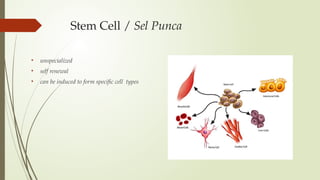
Stem Cell / Sel Punca
โ€ข unspecialized
โ€ข self renewal
โ€ข can be induced to form specific cell types
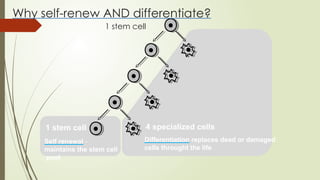
1 stem cell
Self renewal -
maintains the stem cell
pool
4 specialized cells
Differentiation replaces dead or damaged
cells throught the life
Why self-renew AND differentiate?
1 stem cell
Properties of stem cell
Clonogenic, a single ES cell gives rise to a colony of genetically identical cells, which have
the same properties as the original cell
Expresses the transcription factor Oct-4 Can be induced to continue
proliferating or to differentiate
Lacks the G1 checkpoint in the cell cycle
ES cells spend most of their life cycle in S phase
Donโ€™t show X inactivation
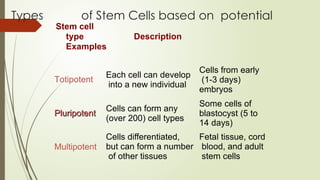
Types of Stem Cells based on potential
Stem cell
type Description
Examples
Totipotent
Each cell can develop
into a new individual
Pluripotent
Pluripotent
Cells can form any
(over 200) cell types
Multipotent
Cells differentiated,
but can form a number
of other tissues
Cells from early
(1-3 days)
embryos
Some cells of
blastocyst (5 to
14 days)
Fetal tissue, cord
blood, and adult
stem cells
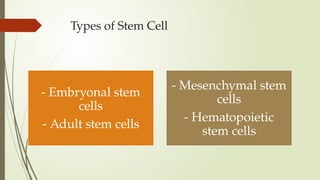
Types of Stem Cell
- Embryonal stem
cells
- Adult stem cells
- Mesenchymal stem
cells
- Hematopoietic
stem cells
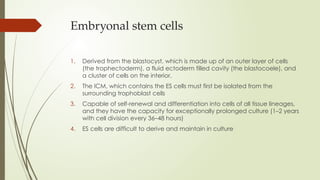
Embryonal stem cells
1. Derived from the blastocyst, which is made up of an outer layer of cells
(the trophectoderm), a fluid ectoderm filled cavity (the blastocoele), and
a cluster of cells on the interior.
2. The ICM, which contains the ES cells must first be isolated from the
surrounding trophoblast cells
3. Capable of self-renewal and differentiation into cells of all tissue lineages,
and they have the capacity for exceptionally prolonged culture (1โ€“2 years
with cell division every 36โ€“48 hours)
4. ES cells are difficult to derive and maintain in culture
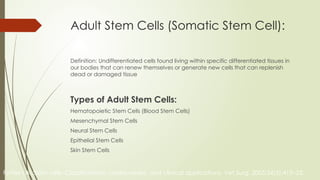
Adult Stem Cells (Somatic Stem Cell):
Definition: Undifferentiated cells found living within specific differentiated tissues in
our bodies that can renew themselves or generate new cells that can replenish
dead or damaged tissue
Types of Adult Stem Cells:
Hematopoietic Stem Cells (Blood Stem Cells)
Mesenchymal Stem Cells
Neural Stem Cells
Epithelial Stem Cells
Skin Stem Cells
Fortier LA. Stem cells: Classifications, controversies, and clinical applications. Vet Surg. 2005;34(5):415โ€“23.
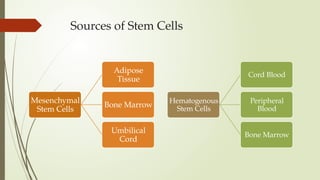
Sources of Stem Cells
Mesenchymal
Stem Cells
Adipose
Tissue
Bone Marrow
Umbilical
Cord
Hematogenous
Stem Cells
Cord Blood
Peripheral
Blood
Bone Marrow
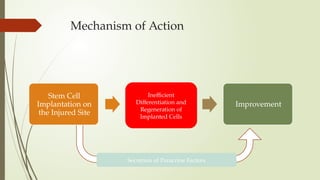
Mechanism of Action
Stem Cell
Implantation on
the Injured Site
Cell
Differentiation
and Regeneration
Improvement
Inefficient
Differentiation and
Regeneration of
Implanted Cells
Secretion of Paracrine Factors
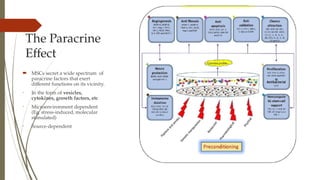
The Paracrine
Effect
๏‚ด MSCs secret a wide spectrum of
paracrine factors that exert
different functions on its vicinity.
- In the form of vesicles,
cytokines, growth factors, etc
- Microenvironment dependent
(Eg. stress-induced, molecular
stimulated)
- Source-dependent
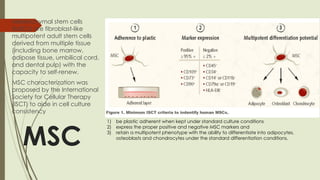
MSC
- Mesenchymal stem cells
(MSCs) are fibroblast-like
multipotent adult stem cells
derived from multiple tissue
(including bone marrow,
adipose tissue, umbilical cord,
and dental pulp) with the
capacity to self-renew.
- MSC characterization was
proposed by the International
Society for Cellular Therapy
(ISCT) to aide in cell culture
consistency
1) be plastic adherent when kept under standard culture conditions
2) express the proper positive and negative MSC markers and
3) retain a multipotent phenotype with the ability to differentiate into adipocytes,
osteoblasts and chondrocytes under the standard differentiation conditions.
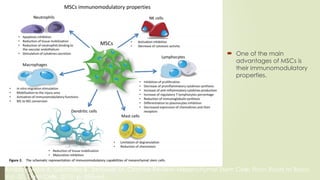
๏‚ด One of the main
advantages of MSCs is
their immunomodulatory
properties.
Andrzejewska A, Lukomska B, Janowski M. Concise Review: Mesenchymal Stem Cells: From Roots to Boost.
Vol. 37, Stem Cells. 2019. p. 855โ€“64.
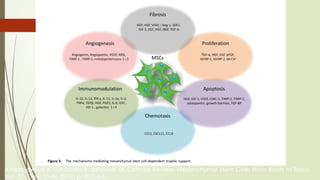
Andrzejewska A, Lukomska B, Janowski M. Concise Review: Mesenchymal Stem Cells: From Roots to Boost.
Vol. 37, Stem Cells. 2019. p. 855โ€“64.
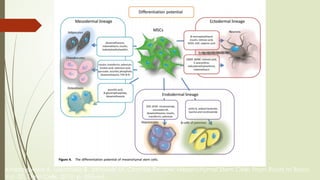
Andrzejewska A, Lukomska B, Janowski M. Concise Review: Mesenchymal Stem Cells: From Roots to Boost.
Vol. 37, Stem Cells. 2019. p. 855โ€“64.
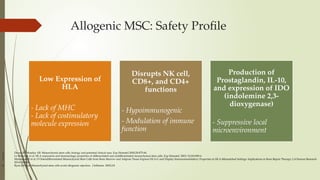
Allogenic MSC: Safety Profile
1) Poor expression of Human Leukocyte Antigen (HLA-II)
2) Undifferentiated & differentiated MSC do not elicit alloreactive lymphocyte
proliferative responses & modulate immune responses.
3) MSC hypoimmunogenic & suppress T cell alloproliferation in mixed lymphocyte
reactions.
Allogenic MSC: Safety Profile
1. Deans RJ, Moseley AB. Mesenchymal stem cells: biology and potential clinical uses. Exp Hematol 2000;28:875-84.
2. Le Blanck K et al. HLA expression and immunologic properties of differentiated and undifferentiated mesenchymal stem cells. Exp Hematol. 2003; 31(10):890-6
3. Montespan F et al. O Osteodifferentiated Mesenchymal Stem Cells from Bone Marrow and Adipose Tissue Express HLA-G and Display Immunomodulatory Properties in HLA-Mismatched Settings: Implications in Bone Repair Therapy. J of Immun Research
2014:230346
4. Ryan JM et al. Mesenchymal stem cells avoid allogeneic rejection. J Inflamm 2005,2:8
Low Expression of
HLA
- Lack of MHC
- Lack of costimulatory
molecule expression
Disrupts NK cell,
CD8+, and CD4+
functions
- Hypoimmunogenic
- Modulation of immune
function
Production of
Prostaglandin, IL-10,
and expression of IDO
(indolemine 2,3-
dioxygenase)
- Suppressive local
microenvironment
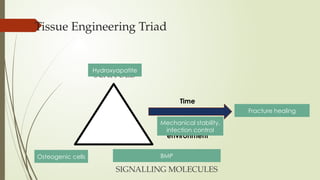
Tissue Engineering Triad
SCAFFOLD
SIGNALLING MOLECULES
CELLS
IMPROVEMENT
Time
Appropriate
environment
Hydroxyapatite
Osteogenic cells BMP
Mechanical stability,
infection control
Fracture healing
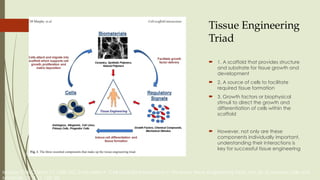
Tissue Engineering
Triad
๏‚ด 1. A scaffold that provides structure
and substrate for tissue growth and
development
๏‚ด 2. A source of cells to facilitate
required tissue formation
๏‚ด 3. Growth factors or biophysical
stimuli to direct the growth and
differentiation of cells within the
scaffold
๏‚ด However, not only are these
components individually important,
understanding their interactions is
key for successful tissue engineering
Murphy CM, Oโ€™Brien FJ, Little DG, Schindeler A. Cell-scaffold interactions in the bone tissue engineering triad. Vol. 26, European Cells and
Materials. 2013. p. 120โ€“32.
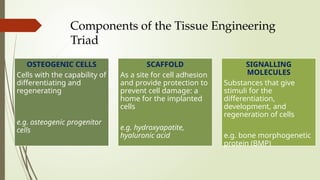
Components of the Tissue Engineering
Triad
OSTEOGENIC CELLS
Cells with the capability of
differentiating and
regenerating
e.g. osteogenic progenitor
cells
SCAFFOLD
As a site for cell adhesion
and provide protection to
prevent cell damage: a
home for the implanted
cells
e.g. hydroxyapatite,
hyaluronic acid
SIGNALLING
MOLECULES
Substances that give
stimuli for the
differentiation,
development, and
regeneration of cells
e.g. bone morphogenetic
protein (BMP)
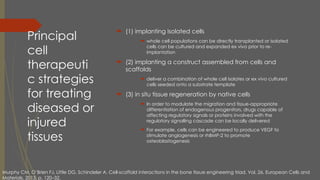
Principal
cell
therapeuti
c strategies
for treating
diseased or
injured
tissues
๏‚ด (1) implanting isolated cells
๏‚ด whole cell populations can be directly transplanted or isolated
cells can be cultured and expanded ex vivo prior to re-
implantation
๏‚ด (2) implanting a construct assembled from cells and
scaffolds
๏‚ด deliver a combination of whole cell isolates or ex vivo cultured
cells seeded onto a substrate template
๏‚ด (3) in situ tissue regeneration by native cells
๏‚ด In order to modulate the migration and tissue-appropriate
differentiation of endogenous progenitors, drugs capable of
affecting regulatory signals or proteins involved with the
regulatory signalling cascade can be locally delivered
๏‚ด For example, cells can be engineered to produce VEGF to
stimulate angiogenesis or rhBMP-2 to promote
osteoblastogenesis
Murphy CM, Oโ€™Brien FJ, Little DG, Schindeler A. Cell-scaffold interactions in the bone tissue engineering triad. Vol. 26, European Cells and
Materials. 2013. p. 120โ€“32.
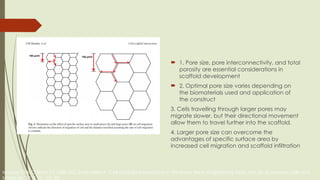
๏‚ด 1. Pore size, pore interconnectivity, and total
porosity are essential considerations in
scaffold development
๏‚ด 2. Optimal pore size varies depending on
the biomaterials used and application of
the construct
3. Cells travelling through larger pores may
migrate slower, but their directional movement
allow them to travel further into the scaffold.
4. Larger pore size can overcome the
advantages of specific surface area by
increased cell migration and scaffold infiltration
Murphy CM, Oโ€™Brien FJ, Little DG, Schindeler A. Cell-scaffold interactions in the bone tissue engineering triad. Vol. 26, European Cells and
Materials. 2013. p. 120โ€“32.
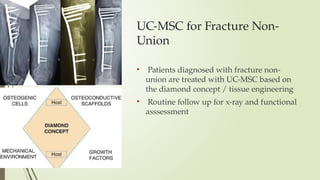
UC-MSC for Fracture Non-
Union
โ€ข Patients diagnosed with fracture non-
union are treated with UC-MSC based on
the diamond concept / tissue engineering
โ€ข Routine follow up for x-ray and functional
asssessment
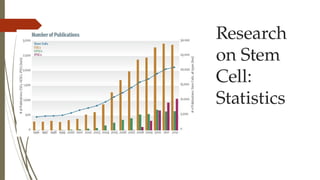
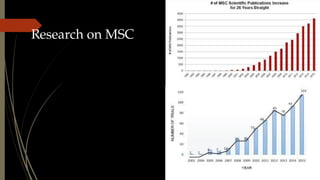
Research
on Stem
Cell:
Statistics
Research on MSC
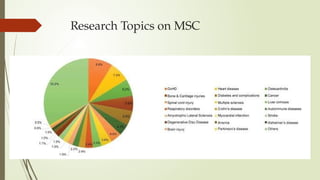
Research Topics on MSC
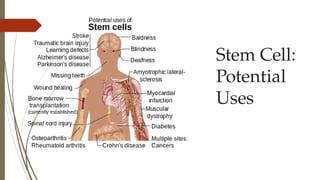
Stem Cell:
Potential
Uses
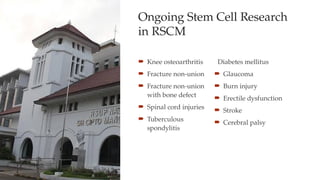
Ongoing Stem Cell Research
in RSCM
๏‚ด Knee osteoarthritis
๏‚ด Fracture non-union
with bone defect
๏‚ด Spinal cord injuries
๏‚ด Tuberculous
spondylitis
Diabetes mellitus
๏‚ด Glaucoma
๏‚ด Burn injury
๏‚ด Erectile dysfunction
๏‚ด Stroke
๏‚ด Cerebral palsy
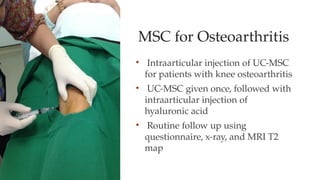
MSC for Osteoarthritis
โ€ข Intraarticular injection of UC-MSC
for patients with knee osteoarthritis
โ€ข UC-MSC given once, followed with
intraarticular injection of
hyaluronic acid
โ€ข Routine follow up using
questionnaire, x-ray, and MRI T2
map
Comparison with Other Studies
โ€ข In this study, we also noted that the greatest improvement of knee function was
observed after 6 months of follow-up. This finding is in line with previous studies,
which found that the maximum results were achieved at 6 months of follow-up but
decline afterwards.
โ€ข Centeno, in May 2008, administered MSC in one subject with knee OA and
obtained satisfactory result in the 6th
month.
โ€ข A trial by Emadedin in 2012 reported MSC transplantation in 6 patients with knee
OA. The result was satisfactory on the 6th
month, but, slight decline was found on
the 12th
month. However, the patients experienced improvement when compared
to the baseline.
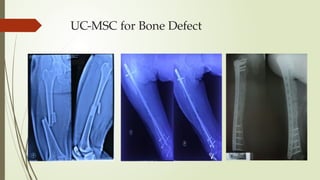
UC-MSC for Bone Defect
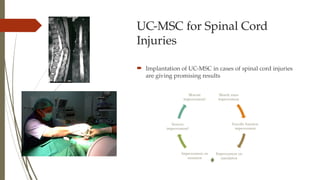
UC-MSC for Spinal Cord
Injuries
๏‚ด Implantation of UC-MSC in cases of spinal cord injuries
are giving promising results
Muscle mass
improvement
Erectile function
improvement
Improvement on
ejaculation
Improvement on
sensation
Sensory
improvement?
Motoric
improvement?
OBSTACLES TO CLINICAL APPLICATIONS
1. Immunorejection by Recipient
๏ถ One of the commonly cited advantages of the use of MSCs compared to ES cells is the
use of autogenous cells, and therefore avoidance of immune rejection by the recipient.
๏ถ Allogenous MSCs appear to be immunoprivileged and could provide a readily
available source of MSCs, but they would also carry the risks of disease transmission
from donor to recipient
1. Engraftment
๏ถ The issue of localization of stem cells to injured tissues becomes important when
considering the application of stem cell therapy to areas or tissues not amenable to
direct injection
๏ถ One of the fundamental questions regarding stem cell engraftment is the importance
of the actual number or percentage of donor stem cells in the recipient tissue.
Conclusion
โ€ข Stem cell treatment yields promising
results in various cases
โ€ข We still have a long way to go; research
on stem cell is still developing
Thank you

The Stem Cell in Orthopaedic surgery.pptx

  • 1.
    Stem Cell andTissue Renewal Supervisor: Prof. Dr. dr. Ismail Hadisoebroto Dilogo, SpOT(K) Presentan Aslambotilangih
  • 2.
    Stem Cell /Sel Punca โ€ข unspecialized โ€ข self renewal โ€ข can be induced to form specific cell types
  • 3.
    1 stem cell Selfrenewal - maintains the stem cell pool 4 specialized cells Differentiation replaces dead or damaged cells throught the life Why self-renew AND differentiate? 1 stem cell
  • 4.
    Properties of stemcell Clonogenic, a single ES cell gives rise to a colony of genetically identical cells, which have the same properties as the original cell Expresses the transcription factor Oct-4 Can be induced to continue proliferating or to differentiate Lacks the G1 checkpoint in the cell cycle ES cells spend most of their life cycle in S phase Donโ€™t show X inactivation
  • 5.
    Types of StemCells based on potential Stem cell type Description Examples Totipotent Each cell can develop into a new individual Pluripotent Pluripotent Cells can form any (over 200) cell types Multipotent Cells differentiated, but can form a number of other tissues Cells from early (1-3 days) embryos Some cells of blastocyst (5 to 14 days) Fetal tissue, cord blood, and adult stem cells
  • 6.
    Types of StemCell - Embryonal stem cells - Adult stem cells - Mesenchymal stem cells - Hematopoietic stem cells
  • 7.
    Embryonal stem cells 1.Derived from the blastocyst, which is made up of an outer layer of cells (the trophectoderm), a fluid ectoderm filled cavity (the blastocoele), and a cluster of cells on the interior. 2. The ICM, which contains the ES cells must first be isolated from the surrounding trophoblast cells 3. Capable of self-renewal and differentiation into cells of all tissue lineages, and they have the capacity for exceptionally prolonged culture (1โ€“2 years with cell division every 36โ€“48 hours) 4. ES cells are difficult to derive and maintain in culture
  • 8.
    Adult Stem Cells(Somatic Stem Cell): Definition: Undifferentiated cells found living within specific differentiated tissues in our bodies that can renew themselves or generate new cells that can replenish dead or damaged tissue Types of Adult Stem Cells: Hematopoietic Stem Cells (Blood Stem Cells) Mesenchymal Stem Cells Neural Stem Cells Epithelial Stem Cells Skin Stem Cells Fortier LA. Stem cells: Classifications, controversies, and clinical applications. Vet Surg. 2005;34(5):415โ€“23.
  • 9.
    Sources of StemCells Mesenchymal Stem Cells Adipose Tissue Bone Marrow Umbilical Cord Hematogenous Stem Cells Cord Blood Peripheral Blood Bone Marrow
  • 10.
    Mechanism of Action StemCell Implantation on the Injured Site Cell Differentiation and Regeneration Improvement Inefficient Differentiation and Regeneration of Implanted Cells Secretion of Paracrine Factors
  • 11.
    The Paracrine Effect ๏‚ด MSCssecret a wide spectrum of paracrine factors that exert different functions on its vicinity. - In the form of vesicles, cytokines, growth factors, etc - Microenvironment dependent (Eg. stress-induced, molecular stimulated) - Source-dependent
  • 12.
    MSC - Mesenchymal stemcells (MSCs) are fibroblast-like multipotent adult stem cells derived from multiple tissue (including bone marrow, adipose tissue, umbilical cord, and dental pulp) with the capacity to self-renew. - MSC characterization was proposed by the International Society for Cellular Therapy (ISCT) to aide in cell culture consistency 1) be plastic adherent when kept under standard culture conditions 2) express the proper positive and negative MSC markers and 3) retain a multipotent phenotype with the ability to differentiate into adipocytes, osteoblasts and chondrocytes under the standard differentiation conditions.
  • 13.
    ๏‚ด One ofthe main advantages of MSCs is their immunomodulatory properties. Andrzejewska A, Lukomska B, Janowski M. Concise Review: Mesenchymal Stem Cells: From Roots to Boost. Vol. 37, Stem Cells. 2019. p. 855โ€“64.
  • 14.
    Andrzejewska A, LukomskaB, Janowski M. Concise Review: Mesenchymal Stem Cells: From Roots to Boost. Vol. 37, Stem Cells. 2019. p. 855โ€“64.
  • 15.
    Andrzejewska A, LukomskaB, Janowski M. Concise Review: Mesenchymal Stem Cells: From Roots to Boost. Vol. 37, Stem Cells. 2019. p. 855โ€“64.
  • 16.
    Allogenic MSC: SafetyProfile 1) Poor expression of Human Leukocyte Antigen (HLA-II) 2) Undifferentiated & differentiated MSC do not elicit alloreactive lymphocyte proliferative responses & modulate immune responses. 3) MSC hypoimmunogenic & suppress T cell alloproliferation in mixed lymphocyte reactions.
  • 17.
    Allogenic MSC: SafetyProfile 1. Deans RJ, Moseley AB. Mesenchymal stem cells: biology and potential clinical uses. Exp Hematol 2000;28:875-84. 2. Le Blanck K et al. HLA expression and immunologic properties of differentiated and undifferentiated mesenchymal stem cells. Exp Hematol. 2003; 31(10):890-6 3. Montespan F et al. O Osteodifferentiated Mesenchymal Stem Cells from Bone Marrow and Adipose Tissue Express HLA-G and Display Immunomodulatory Properties in HLA-Mismatched Settings: Implications in Bone Repair Therapy. J of Immun Research 2014:230346 4. Ryan JM et al. Mesenchymal stem cells avoid allogeneic rejection. J Inflamm 2005,2:8 Low Expression of HLA - Lack of MHC - Lack of costimulatory molecule expression Disrupts NK cell, CD8+, and CD4+ functions - Hypoimmunogenic - Modulation of immune function Production of Prostaglandin, IL-10, and expression of IDO (indolemine 2,3- dioxygenase) - Suppressive local microenvironment
  • 18.
    Tissue Engineering Triad SCAFFOLD SIGNALLINGMOLECULES CELLS IMPROVEMENT Time Appropriate environment Hydroxyapatite Osteogenic cells BMP Mechanical stability, infection control Fracture healing
  • 19.
    Tissue Engineering Triad ๏‚ด 1.A scaffold that provides structure and substrate for tissue growth and development ๏‚ด 2. A source of cells to facilitate required tissue formation ๏‚ด 3. Growth factors or biophysical stimuli to direct the growth and differentiation of cells within the scaffold ๏‚ด However, not only are these components individually important, understanding their interactions is key for successful tissue engineering Murphy CM, Oโ€™Brien FJ, Little DG, Schindeler A. Cell-scaffold interactions in the bone tissue engineering triad. Vol. 26, European Cells and Materials. 2013. p. 120โ€“32.
  • 20.
    Components of theTissue Engineering Triad OSTEOGENIC CELLS Cells with the capability of differentiating and regenerating e.g. osteogenic progenitor cells SCAFFOLD As a site for cell adhesion and provide protection to prevent cell damage: a home for the implanted cells e.g. hydroxyapatite, hyaluronic acid SIGNALLING MOLECULES Substances that give stimuli for the differentiation, development, and regeneration of cells e.g. bone morphogenetic protein (BMP)
  • 21.
    Principal cell therapeuti c strategies for treating diseasedor injured tissues ๏‚ด (1) implanting isolated cells ๏‚ด whole cell populations can be directly transplanted or isolated cells can be cultured and expanded ex vivo prior to re- implantation ๏‚ด (2) implanting a construct assembled from cells and scaffolds ๏‚ด deliver a combination of whole cell isolates or ex vivo cultured cells seeded onto a substrate template ๏‚ด (3) in situ tissue regeneration by native cells ๏‚ด In order to modulate the migration and tissue-appropriate differentiation of endogenous progenitors, drugs capable of affecting regulatory signals or proteins involved with the regulatory signalling cascade can be locally delivered ๏‚ด For example, cells can be engineered to produce VEGF to stimulate angiogenesis or rhBMP-2 to promote osteoblastogenesis Murphy CM, Oโ€™Brien FJ, Little DG, Schindeler A. Cell-scaffold interactions in the bone tissue engineering triad. Vol. 26, European Cells and Materials. 2013. p. 120โ€“32.
  • 22.
    ๏‚ด 1. Poresize, pore interconnectivity, and total porosity are essential considerations in scaffold development ๏‚ด 2. Optimal pore size varies depending on the biomaterials used and application of the construct 3. Cells travelling through larger pores may migrate slower, but their directional movement allow them to travel further into the scaffold. 4. Larger pore size can overcome the advantages of specific surface area by increased cell migration and scaffold infiltration Murphy CM, Oโ€™Brien FJ, Little DG, Schindeler A. Cell-scaffold interactions in the bone tissue engineering triad. Vol. 26, European Cells and Materials. 2013. p. 120โ€“32.
  • 23.
    UC-MSC for FractureNon- Union โ€ข Patients diagnosed with fracture non- union are treated with UC-MSC based on the diamond concept / tissue engineering โ€ข Routine follow up for x-ray and functional asssessment
  • 24.
  • 25.
  • 26.
  • 27.
  • 28.
    Ongoing Stem CellResearch in RSCM ๏‚ด Knee osteoarthritis ๏‚ด Fracture non-union ๏‚ด Fracture non-union with bone defect ๏‚ด Spinal cord injuries ๏‚ด Tuberculous spondylitis Diabetes mellitus ๏‚ด Glaucoma ๏‚ด Burn injury ๏‚ด Erectile dysfunction ๏‚ด Stroke ๏‚ด Cerebral palsy
  • 29.
    MSC for Osteoarthritis โ€ขIntraarticular injection of UC-MSC for patients with knee osteoarthritis โ€ข UC-MSC given once, followed with intraarticular injection of hyaluronic acid โ€ข Routine follow up using questionnaire, x-ray, and MRI T2 map
  • 30.
    Comparison with OtherStudies โ€ข In this study, we also noted that the greatest improvement of knee function was observed after 6 months of follow-up. This finding is in line with previous studies, which found that the maximum results were achieved at 6 months of follow-up but decline afterwards. โ€ข Centeno, in May 2008, administered MSC in one subject with knee OA and obtained satisfactory result in the 6th month. โ€ข A trial by Emadedin in 2012 reported MSC transplantation in 6 patients with knee OA. The result was satisfactory on the 6th month, but, slight decline was found on the 12th month. However, the patients experienced improvement when compared to the baseline.
  • 31.
  • 32.
    UC-MSC for SpinalCord Injuries ๏‚ด Implantation of UC-MSC in cases of spinal cord injuries are giving promising results Muscle mass improvement Erectile function improvement Improvement on ejaculation Improvement on sensation Sensory improvement? Motoric improvement?
  • 33.
    OBSTACLES TO CLINICALAPPLICATIONS 1. Immunorejection by Recipient ๏ถ One of the commonly cited advantages of the use of MSCs compared to ES cells is the use of autogenous cells, and therefore avoidance of immune rejection by the recipient. ๏ถ Allogenous MSCs appear to be immunoprivileged and could provide a readily available source of MSCs, but they would also carry the risks of disease transmission from donor to recipient 1. Engraftment ๏ถ The issue of localization of stem cells to injured tissues becomes important when considering the application of stem cell therapy to areas or tissues not amenable to direct injection ๏ถ One of the fundamental questions regarding stem cell engraftment is the importance of the actual number or percentage of donor stem cells in the recipient tissue.
  • 34.
    Conclusion โ€ข Stem celltreatment yields promising results in various cases โ€ข We still have a long way to go; research on stem cell is still developing
  • 35.

Editor's Notes

  • #16ย Speakerโ€™s Note: (2). Flow cytometry showed that undifferentiated MSC express HLA class I but not class II, although HLA class II was present intracellularly as detected by Western blot. Addition of interferon gamma (IFN-gamma) for 48 hours induced greater than 90% of cells to express HLA class II. No lymphocyte response was induced by allogeneic irradiated MSC as stimulators. Results were similar using MSC pretreated with IFN-gamma. After growth of cells in medium to induce differentiation to bone, cartilage, or adipose for 6 or 12 days, the expression of HLA class I increased but no class II was detected on the cell surface. The ability to upregulate HLA class II on the cell surface after exposure to IFN-gamma for 48 hours was clearly diminished after the cells had been cultured in differentiation medium for 6 or 12 days, with only 10% of cells expressing HLA class II. Using MSC grown in osteogenic, chondrogenic, or adipogenic medium as stimulator cells, no lymphocyte alloreactivity was seen, even if differentiated MSC had been pretreated with IFN-gamma. MSC inhibit mixed lymphocyte cultures, particularly after osteogenic differentiation. This suppression was further enhanced by IFN-gamma. Undifferentiated and differentiated MSC do not elicit alloreactive lymphocyte proliferative responses and modulate immune responses. The findings support that MSC can be transplantable between HLA-incompatible individuals.
  • #17ย Speakerโ€™s Note: Major histocompatibility complex-II (MHC-II) molecules found on dendritic cells, mononuclear cells, B cells. Indoleamine 2,3-disoxygenase (IDO) immunomodulatory enzyme which can halth growth of microbes as well as T cells. (3) MSCs display immunomodulatory properties through the expression of soluble factors including HLA-G. Both MSCs and osteodifferentiated MSCs are hypoimmunogenic and exert immunomodulatory properties in HLA-mismatched settings as they suppress T cell alloproliferation in mixed lymphocyte reactions.