自體幹細胞治療
退化性關節炎
高雄醫學大學 骨科教授
骨科學研究中心主任
大同醫院骨科主任
陳崇桓
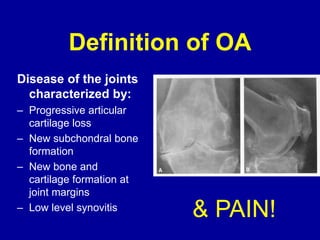
Disease of the joints
characterized by:
– Progressive articular
cartilage loss
– New subchondral bone
formation
– New bone and
cartilage formation at
joint margins
– Low level synovitis
Definition of OA
& PAIN!
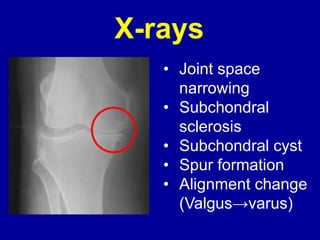
X-rays
• Joint space
narrowing
• Subchondral
sclerosis
• Subchondral cyst
• Spur formation
• Alignment change
(Valgus→varus)
7
7
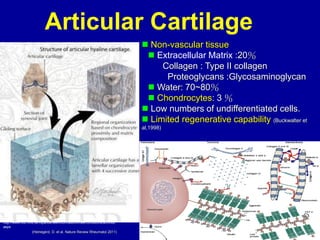
◼ Non-vascular tissue
◼ Extracellular Matrix :20%
Collagen : Type II collagen
Proteoglycans :Glycosaminoglycan
◼ Water: 70~80%
◼ Chondrocytes: 3 %
◼ Low numbers of undifferentiated cells.
◼ Limited regenerative capability (Buckwalter et
al,1998)
Articular Cartilage
http://www.noc.nhs.uk/hipandknee/information/knee/conditions/arthritis.
aspx
7
(Heinegård, D. et al. Nature Review Rheumatol 2011)
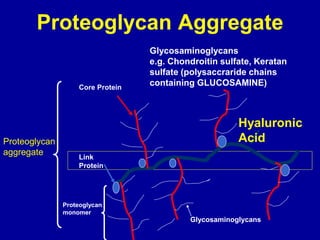
Core Protein
Glycosaminoglycans
Link
Protein
Hyaluronic
Acid
Proteoglycan
monomer
Proteoglycan
aggregate
Proteoglycan Aggregate
Glycosaminoglycans
e.g. Chondroitin sulfate, Keratan
sulfate (polysaccraride chains
containing GLUCOSAMINE)
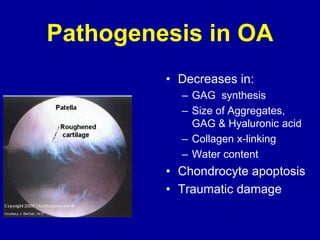
Pathogenesis in OA
• Decreases in:
– GAG synthesis
– Size of Aggregates,
GAG & Hyaluronic acid
– Collagen x-linking
– Water content
• Chondrocyte apoptosis
• Traumatic damage
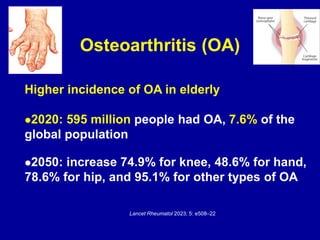
Osteoarthritis (OA)
Higher incidence of OA in elderly
⚫2020: 595 million people had OA, 7.6% of the
global population
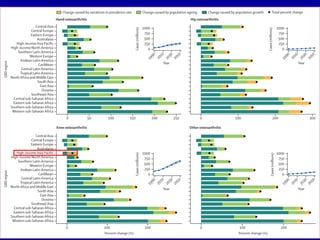
⚫2050: increase 74.9% for knee, 48.6% for hand,
78.6% for hip, and 95.1% for other types of OA
Lancet Rheumatol 2023; 5: e508–22
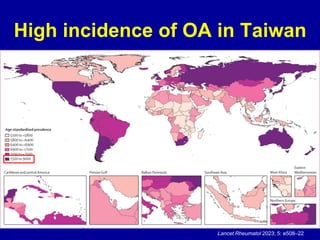
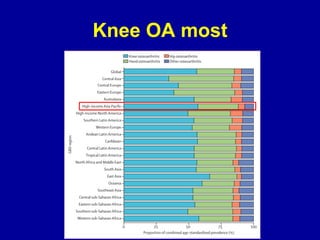
High incidence of OA in Taiwan
Lancet Rheumatol 2023; 5: e508–22
Knee OA most
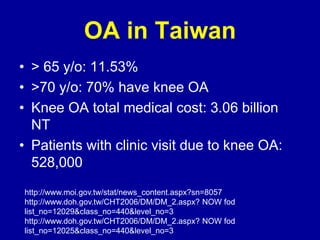
OA in Taiwan
• > 65 y/o: 11.53%
• >70 y/o: 70% have knee OA
• Knee OA total medical cost: 3.06 billion
NT
• Patients with clinic visit due to knee OA:
528,000
http://www.moi.gov.tw/stat/news_content.aspx?sn=8057
http://www.doh.gov.tw/CHT2006/DM/DM_2.aspx? NOW fod
list_no=12029&class_no=440&level_no=3
http://www.doh.gov.tw/CHT2006/DM/DM_2.aspx? NOW fod
list_no=12025&class_no=440&level_no=3
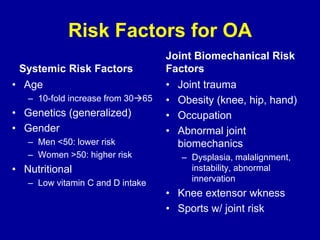
Risk Factors for OA
Systemic Risk Factors
• Age
– 10-fold increase from 30→65
• Genetics (generalized)
• Gender
– Men <50: lower risk
– Women >50: higher risk
• Nutritional
– Low vitamin C and D intake
Joint Biomechanical Risk
Factors
• Joint trauma
• Obesity (knee, hip, hand)
• Occupation
• Abnormal joint
biomechanics
– Dysplasia, malalignment,
instability, abnormal
innervation
• Knee extensor wkness
• Sports w/ joint risk
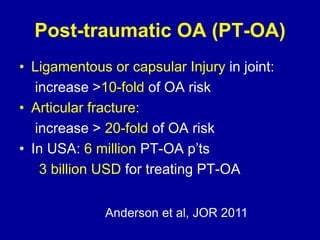
Post-traumatic OA (PT-OA)
• Ligamentous or capsular Injury in joint:
increase >10-fold of OA risk
• Articular fracture:
increase > 20-fold of OA risk
• In USA: 6 million PT-OA p’ts
3 billion USD for treating PT-OA
Anderson et al, JOR 2011
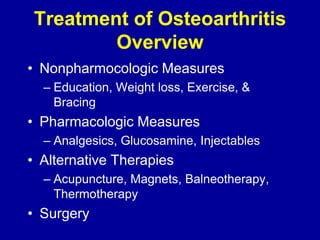
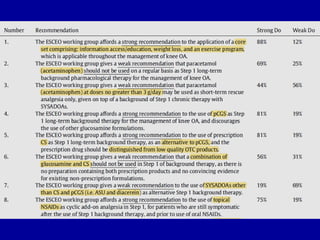
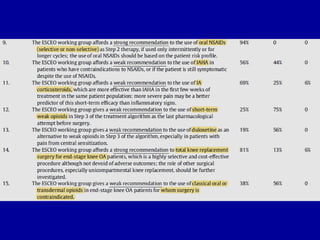
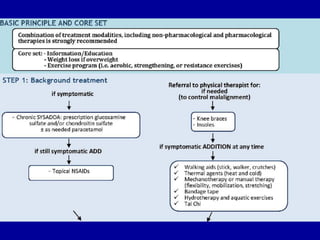
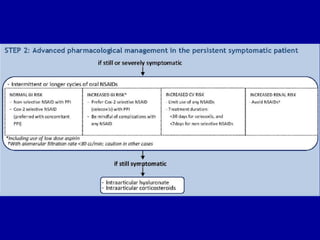
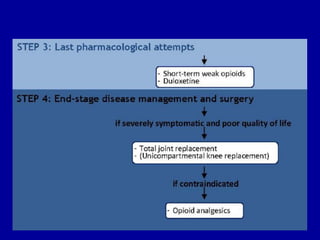
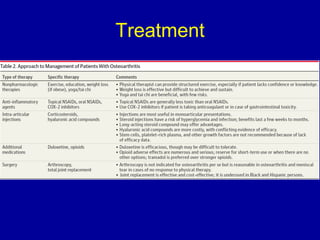
• Nonpharmocologic Measures
– Education, Weight loss, Exercise, &
Bracing
• Pharmacologic Measures
– Analgesics, Glucosamine, Injectables
• Alternative Therapies
– Acupuncture, Magnets, Balneotherapy,
Thermotherapy
• Surgery
Treatment of Osteoarthritis
Overview
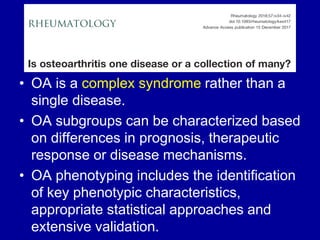
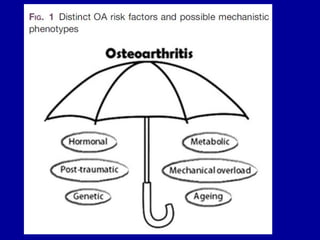
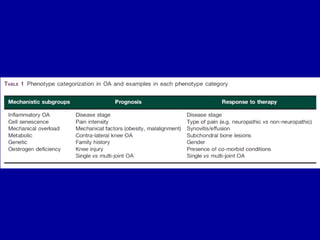
• OA is a complex syndrome rather than a
single disease.
• OA subgroups can be characterized based
on differences in prognosis, therapeutic
response or disease mechanisms.
• OA phenotyping includes the identification
of key phenotypic characteristics,
appropriate statistical approaches and
extensive validation.
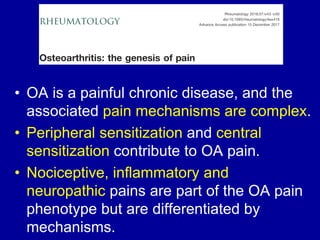
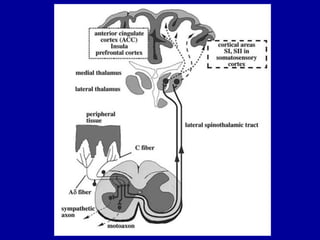
• OA is a painful chronic disease, and the
associated pain mechanisms are complex.
• Peripheral sensitization and central
sensitization contribute to OA pain.
• Nociceptive, inflammatory and
neuropathic pains are part of the OA pain
phenotype but are differentiated by
mechanisms.
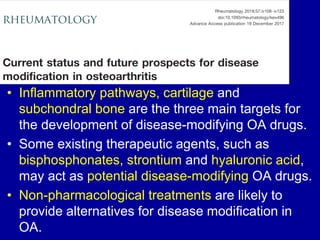
• Inflammatory pathways, cartilage and
subchondral bone are the three main targets for
the development of disease-modifying OA drugs.
• Some existing therapeutic agents, such as
bisphosphonates, strontium and hyaluronic acid,
may act as potential disease-modifying OA drugs.
• Non-pharmacological treatments are likely to
provide alternatives for disease modification in
OA.
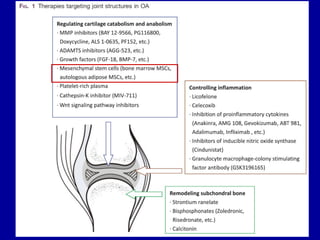
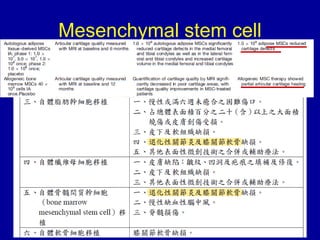
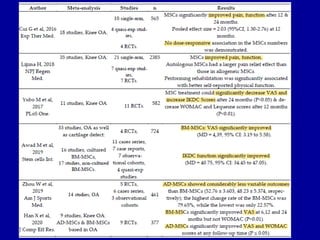
Mesenchymal stem cell
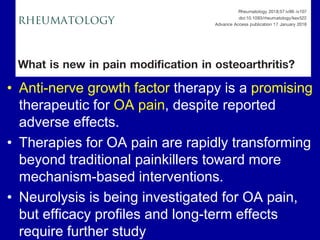
• Anti-nerve growth factor therapy is a promising
therapeutic for OA pain, despite reported
adverse effects.
• Therapies for OA pain are rapidly transforming
beyond traditional painkillers toward more
mechanism-based interventions.
• Neurolysis is being investigated for OA pain,
but efficacy profiles and long-term effects
require further study
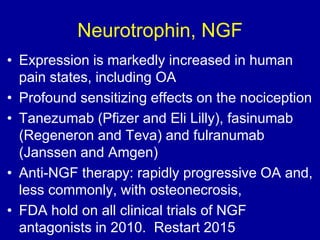
Neurotrophin, NGF
• Expression is markedly increased in human
pain states, including OA
• Profound sensitizing effects on the nociception
• Tanezumab (Pfizer and Eli Lilly), fasinumab
(Regeneron and Teva) and fulranumab
(Janssen and Amgen)
• Anti-NGF therapy: rapidly progressive OA and,
less commonly, with osteonecrosis,
• FDA hold on all clinical trials of NGF
antagonists in 2010. Restart 2015
2019 OARSI guideline
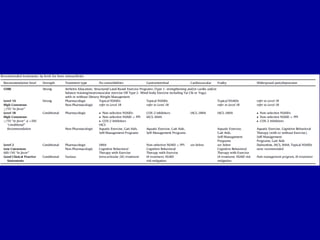
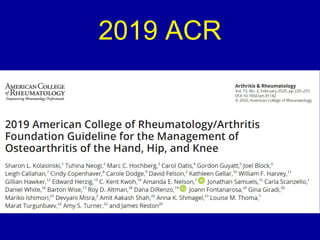
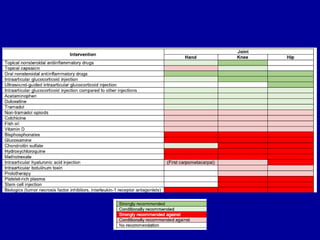
2019 ACR
46
JAMA. 2021;325(6):568-578.
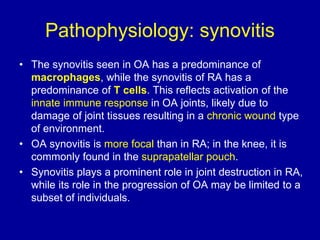
Pathophysiology: synovitis
• The synovitis seen in OA has a predominance of
macrophages, while the synovitis of RA has a
predominance of T cells. This reflects activation of the
innate immune response in OA joints, likely due to
damage of joint tissues resulting in a chronic wound type
of environment.
• OA synovitis is more focal than in RA; in the knee, it is
commonly found in the suprapatellar pouch.
• Synovitis plays a prominent role in joint destruction in RA,
while its role in the progression of OA may be limited to a
subset of individuals.
Treatment
Stem Cell therapy
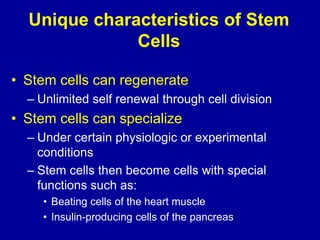
Unique characteristics of Stem
Cells
• Stem cells can regenerate
– Unlimited self renewal through cell division
• Stem cells can specialize
– Under certain physiologic or experimental
conditions
– Stem cells then become cells with special
functions such as:
• Beating cells of the heart muscle
• Insulin-producing cells of the pancreas
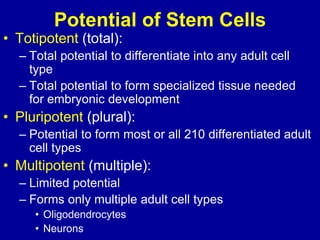
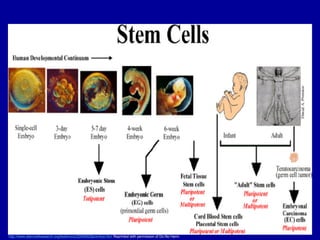
Potential of Stem Cells
• Totipotent (total):
– Total potential to differentiate into any adult cell
type
– Total potential to form specialized tissue needed
for embryonic development
• Pluripotent (plural):
– Potential to form most or all 210 differentiated adult
cell types
• Multipotent (multiple):
– Limited potential
– Forms only multiple adult cell types
• Oligodendrocytes
• Neurons
http://www.stemcellresearch.org/testimony/20040929prentice.htm Reprinted with permission of Do No Harm.
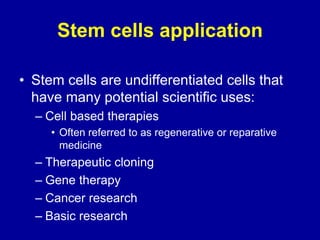
Stem cells application
• Stem cells are undifferentiated cells that
have many potential scientific uses:
– Cell based therapies
• Often referred to as regenerative or reparative
medicine
– Therapeutic cloning
– Gene therapy
– Cancer research
– Basic research
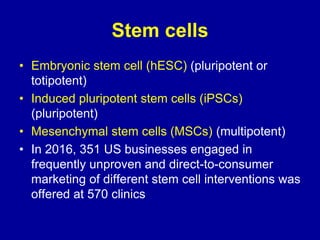
Stem cells
• Embryonic stem cell (hESC) (pluripotent or
totipotent)
• Induced pluripotent stem cells (iPSCs)
(pluripotent)
• Mesenchymal stem cells (MSCs) (multipotent)
• In 2016, 351 US businesses engaged in
frequently unproven and direct-to-consumer
marketing of different stem cell interventions was
offered at 570 clinics
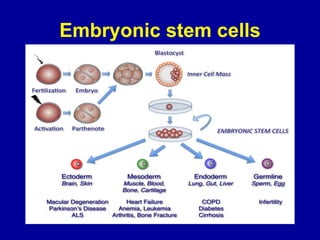
Embryonic stem cells
Ethical issues
(Embryo Destruction)
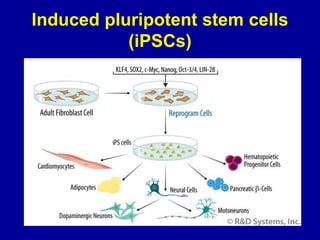
Induced pluripotent stem cells
(iPSCs)
Safety issues regarding iPSC-
based therapy
Undifferentiated iPSCs are not safe
• As for hESCs the main safety issue regarding iPSC-
based therapy is the risk of teratoma formation which
can happened if patient receive iPSC-derived cells that
contain undifferentiated Ipsc
• Uncontrolled proliferation and differentiation of
transplanted undifferentiated iPSCs may result in
generation of tumors and/or undesired differentiation of
iPSCs in broad range of somatic cells
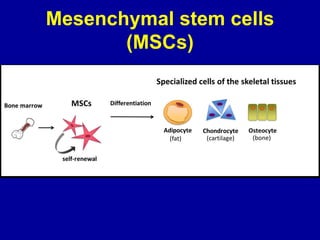
Mesenchymal stem cells
(MSCs)
Safety issues regarding MSCs-
based therapy
• Despite these promising results, safety issues
regarding MSCs-based therapy are still a matter
of debate, especially in the long-term follow up
• The primary concern is unwanted differentiation
of the transplanted MSCs and their potential to
suppress anti-tumor immune response and
generate new blood vessels that may promote
tumor growth and metastasis.
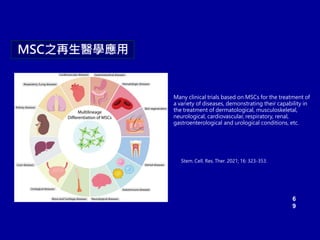
MSC之再生醫學應用
6
9
Stem. Cell. Res. Ther. 2021; 16: 323-353.
Many clinical trials based on MSCs for the treatment of
a variety of diseases, demonstrating their capability in
the treatment of dermatological, musculoskeletal,
neurological, cardiovascular, respiratory, renal,
gastroenterological and urological conditions, etc.
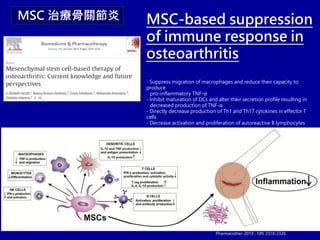
MSC 治療骨關節炎 MSC-based suppression
of immune response in
osteoarthritis
- Suppress migration of macrophages and reduce their capacity to
produce
pro-inflammatory TNF-α
- Inhibit maturation of DCs and alter their secretion profile resulting in
decreased production of TNF-α
- Directly decrease production of Th1 and Th17 cytokines in effector T
cells
- Decrease activation and proliferation of autoreactive B lymphocytes
Pharmacother. 2019 ; 109: 2318-2326.
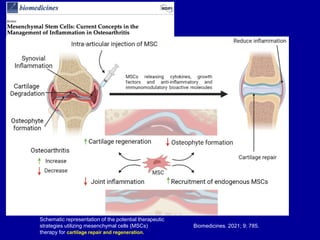
Schematic representation of the potential therapeutic
strategies utilizing mesenchymal cells (MSCs)
therapy for cartilage repair and regeneration.
Biomedicines. 2021; 9: 785.
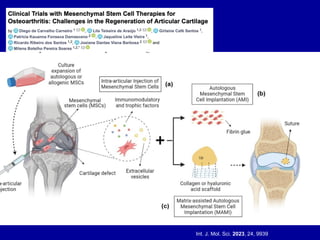
Int. J. Mol. Sci. 2023, 24, 9939
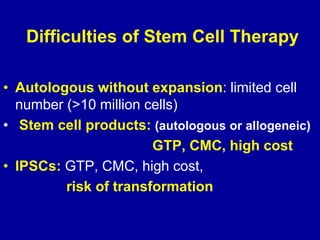
Difficulties of Stem Cell Therapy
• Autologous without expansion: limited cell
number (>10 million cells)
• Stem cell products: (autologous or allogeneic)
GTP, CMC, high cost
• IPSCs: GTP, CMC, high cost,
risk of transformation
Int. J. Mol. Sci. 2023, 24, 9939
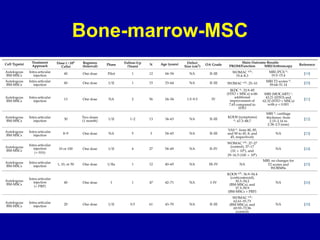
Bone-marrow-MSC
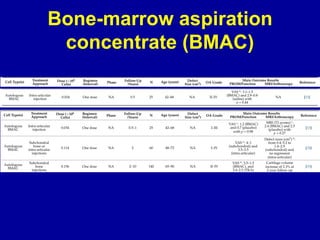
Bone-marrow aspiration
concentrate (BMAC)
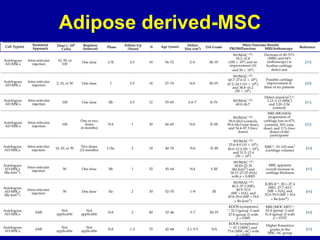
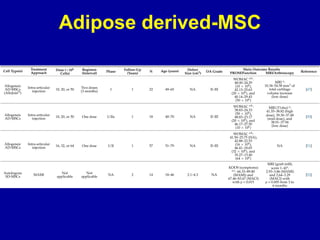
Adipose derived-MSC
Adipose derived-MSC
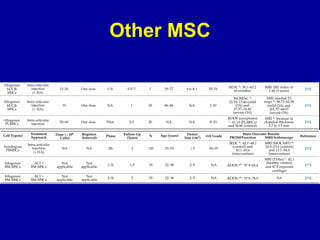
Other MSC
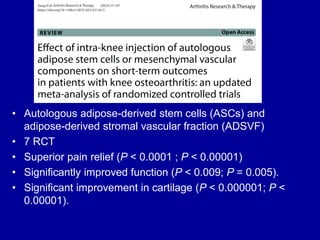
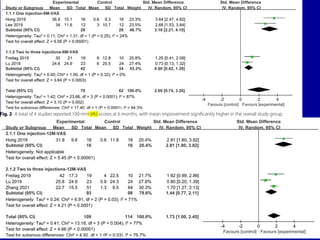
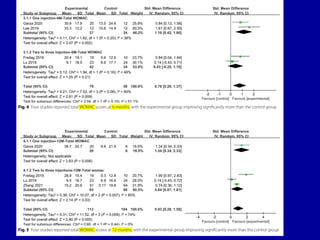
• Autologous adipose-derived stem cells (ASCs) and
adipose-derived stromal vascular fraction (ADSVF)
• 7 RCT
• Superior pain relief (P < 0.0001 ; P < 0.00001)
• Significantly improved function (P < 0.009; P = 0.005).
• Significant improvement in cartilage (P < 0.000001; P <
0.00001).
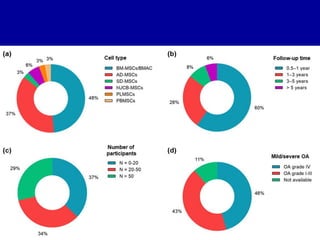
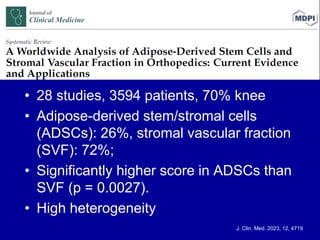
• 28 studies, 3594 patients, 70% knee
• Adipose-derived stem/stromal cells
(ADSCs): 26%, stromal vascular fraction
(SVF): 72%;
• Significantly higher score in ADSCs than
SVF (p = 0.0027).
• High heterogeneity
J. Clin. Med. 2023, 12, 4719
85
特管法及細胞產
品製造實驗室規
格
86
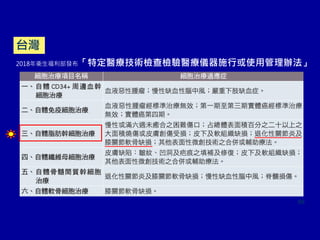
2018年衛生福利部發布「特定醫療技術檢查檢驗醫療儀器施行或使用管理辦法」
台灣
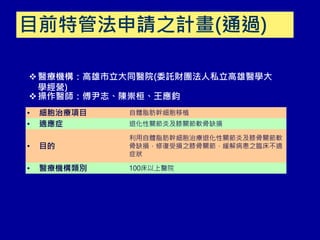
❖醫療機構:高雄市立大同醫院(委託財團法人私立高雄醫學大
學經營)
❖操作醫師:傅尹志、陳崇桓、王應鈞
• 細胞治療項目 自體脂肪幹細胞移植
• 適應症 退化性關節炎及膝關節軟骨缺損
• 目的
利用自體脂肪幹細胞治療退化性關節炎及膝骨關節軟
骨缺損,修復受損之膝骨關節,緩解病患之臨床不適
症狀
• 醫療機構類別 100床以上醫院
目前特管法申請之計畫(通過)
88
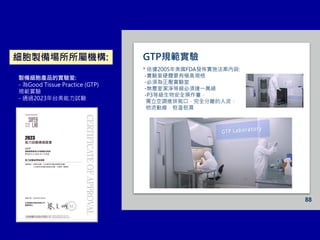
* 依據2005年美國FDA發佈實施法案內容:
-實驗室硬體要有極高規格
-必須為正壓實驗室
-無塵室潔淨等級必須達一萬級
-P3等級生物安全操作臺,
獨立空調進排氣口,完全分離的人流、
物流動線,恒溫恒濕
GTP規範實驗
製備細胞產品的實驗室:
- 為Good Tissue Practice (GTP)
規範實驗
- 通過2023年台美能力試驗
細胞製備場所所屬機構:
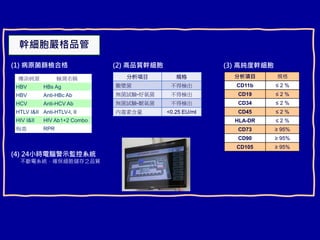
分析項目 規格
黴漿菌 不得檢出
無菌試驗-好氧菌 不得檢出
無菌試驗-厭氧菌 不得檢出
內毒素含量 <0.25 EU/ml
傳染病源 檢測名稱
HBV HBs Ag
HBV Anti-HBc Ab
HCV Anti-HCV Ab
HTLV I&II Anti-HTLV-I, II
HIV I&II HIV Ab1+2 Combo
梅毒 RPR
(1) 病原菌篩檢合格 (3) 高純度幹細胞
分析項目 規格
CD11b ≤ 2 %
CD19 ≤ 2 %
CD34 ≤ 2 %
CD45 ≤ 2 %
HLA-DR ≤ 2 %
CD73 ≥ 95%
CD90 ≥ 95%
CD105 ≥ 95%
(2) 高品質幹細胞
幹細胞嚴格品管
(4) 24小時電腦警示監控系統
不斷電系統,確保細胞儲存之品質
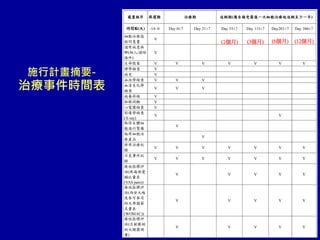
施行計畫摘要-
治療事件時間表
(1個月) (3個月) (6個月) (12個月)
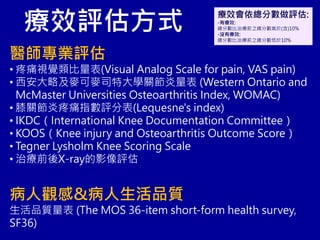
療效評估方式
醫師專業評估
• 疼痛視覺類比量表(Visual Analog Scale for pain, VAS pain)
• 西安大略及麥可麥司特大學關節炎量表 (Western Ontario and
McMaster Universities Osteoarthritis Index, WOMAC)
• 膝關節炎疼痛指數評分表(Lequesne's index)
• IKDC(International Knee Documentation Committee)
• KOOS(Knee injury and Osteoarthritis Outcome Score)
• Tegner Lysholm Knee Scoring Scale
• 治療前後X-ray的影像評估
病人觀感&病人生活品質
生活品質量表 (The MOS 36-item short-form health survey,
SF36)
療效會依總分數做評估:
-有療效:
總分數比治療前之總分數高於(含)10%
-沒有療效:
總分數比治療前之總分數低於10%
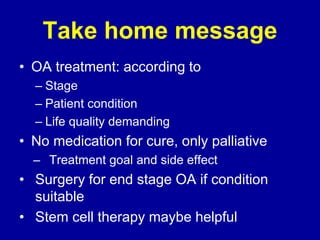
Take home message
• OA treatment: according to
– Stage
– Patient condition
– Life quality demanding
• No medication for cure, only palliative
– Treatment goal and side effect
• Surgery for end stage OA if condition
suitable
• Stem cell therapy maybe helpful
Thanks for your attention

1120908-自體幹細胞治療退化性關節炎.pdf

  • 1.
  • 2.
    Disease of thejoints characterized by: – Progressive articular cartilage loss – New subchondral bone formation – New bone and cartilage formation at joint margins – Low level synovitis Definition of OA & PAIN!
  • 3.
    X-rays • Joint space narrowing •Subchondral sclerosis • Subchondral cyst • Spur formation • Alignment change (Valgus→varus)
  • 4.
    7 7 ◼ Non-vascular tissue ◼Extracellular Matrix :20% Collagen : Type II collagen Proteoglycans :Glycosaminoglycan ◼ Water: 70~80% ◼ Chondrocytes: 3 % ◼ Low numbers of undifferentiated cells. ◼ Limited regenerative capability (Buckwalter et al,1998) Articular Cartilage http://www.noc.nhs.uk/hipandknee/information/knee/conditions/arthritis. aspx 7 (Heinegård, D. et al. Nature Review Rheumatol 2011)
  • 5.
  • 6.
    Pathogenesis in OA •Decreases in: – GAG synthesis – Size of Aggregates, GAG & Hyaluronic acid – Collagen x-linking – Water content • Chondrocyte apoptosis • Traumatic damage
  • 7.
    Osteoarthritis (OA) Higher incidenceof OA in elderly ⚫2020: 595 million people had OA, 7.6% of the global population ⚫2050: increase 74.9% for knee, 48.6% for hand, 78.6% for hip, and 95.1% for other types of OA Lancet Rheumatol 2023; 5: e508–22
  • 8.
    High incidence ofOA in Taiwan Lancet Rheumatol 2023; 5: e508–22
  • 9.
  • 11.
    OA in Taiwan •> 65 y/o: 11.53% • >70 y/o: 70% have knee OA • Knee OA total medical cost: 3.06 billion NT • Patients with clinic visit due to knee OA: 528,000 http://www.moi.gov.tw/stat/news_content.aspx?sn=8057 http://www.doh.gov.tw/CHT2006/DM/DM_2.aspx? NOW fod list_no=12029&class_no=440&level_no=3 http://www.doh.gov.tw/CHT2006/DM/DM_2.aspx? NOW fod list_no=12025&class_no=440&level_no=3
  • 12.
    Risk Factors forOA Systemic Risk Factors • Age – 10-fold increase from 30→65 • Genetics (generalized) • Gender – Men <50: lower risk – Women >50: higher risk • Nutritional – Low vitamin C and D intake Joint Biomechanical Risk Factors • Joint trauma • Obesity (knee, hip, hand) • Occupation • Abnormal joint biomechanics – Dysplasia, malalignment, instability, abnormal innervation • Knee extensor wkness • Sports w/ joint risk
  • 13.
    Post-traumatic OA (PT-OA) •Ligamentous or capsular Injury in joint: increase >10-fold of OA risk • Articular fracture: increase > 20-fold of OA risk • In USA: 6 million PT-OA p’ts 3 billion USD for treating PT-OA Anderson et al, JOR 2011
  • 14.
    • Nonpharmocologic Measures –Education, Weight loss, Exercise, & Bracing • Pharmacologic Measures – Analgesics, Glucosamine, Injectables • Alternative Therapies – Acupuncture, Magnets, Balneotherapy, Thermotherapy • Surgery Treatment of Osteoarthritis Overview
  • 15.
    • OA isa complex syndrome rather than a single disease. • OA subgroups can be characterized based on differences in prognosis, therapeutic response or disease mechanisms. • OA phenotyping includes the identification of key phenotypic characteristics, appropriate statistical approaches and extensive validation.
  • 18.
    • OA isa painful chronic disease, and the associated pain mechanisms are complex. • Peripheral sensitization and central sensitization contribute to OA pain. • Nociceptive, inflammatory and neuropathic pains are part of the OA pain phenotype but are differentiated by mechanisms.
  • 20.
    • Inflammatory pathways,cartilage and subchondral bone are the three main targets for the development of disease-modifying OA drugs. • Some existing therapeutic agents, such as bisphosphonates, strontium and hyaluronic acid, may act as potential disease-modifying OA drugs. • Non-pharmacological treatments are likely to provide alternatives for disease modification in OA.
  • 22.
  • 24.
    • Anti-nerve growthfactor therapy is a promising therapeutic for OA pain, despite reported adverse effects. • Therapies for OA pain are rapidly transforming beyond traditional painkillers toward more mechanism-based interventions. • Neurolysis is being investigated for OA pain, but efficacy profiles and long-term effects require further study
  • 25.
    Neurotrophin, NGF • Expressionis markedly increased in human pain states, including OA • Profound sensitizing effects on the nociception • Tanezumab (Pfizer and Eli Lilly), fasinumab (Regeneron and Teva) and fulranumab (Janssen and Amgen) • Anti-NGF therapy: rapidly progressive OA and, less commonly, with osteonecrosis, • FDA hold on all clinical trials of NGF antagonists in 2010. Restart 2015
  • 26.
  • 35.
  • 38.
  • 39.
    Pathophysiology: synovitis • Thesynovitis seen in OA has a predominance of macrophages, while the synovitis of RA has a predominance of T cells. This reflects activation of the innate immune response in OA joints, likely due to damage of joint tissues resulting in a chronic wound type of environment. • OA synovitis is more focal than in RA; in the knee, it is commonly found in the suprapatellar pouch. • Synovitis plays a prominent role in joint destruction in RA, while its role in the progression of OA may be limited to a subset of individuals.
  • 42.
  • 46.
  • 47.
    Unique characteristics ofStem Cells • Stem cells can regenerate – Unlimited self renewal through cell division • Stem cells can specialize – Under certain physiologic or experimental conditions – Stem cells then become cells with special functions such as: • Beating cells of the heart muscle • Insulin-producing cells of the pancreas
  • 48.
    Potential of StemCells • Totipotent (total): – Total potential to differentiate into any adult cell type – Total potential to form specialized tissue needed for embryonic development • Pluripotent (plural): – Potential to form most or all 210 differentiated adult cell types • Multipotent (multiple): – Limited potential – Forms only multiple adult cell types • Oligodendrocytes • Neurons
  • 49.
  • 50.
    Stem cells application •Stem cells are undifferentiated cells that have many potential scientific uses: – Cell based therapies • Often referred to as regenerative or reparative medicine – Therapeutic cloning – Gene therapy – Cancer research – Basic research
  • 51.
    Stem cells • Embryonicstem cell (hESC) (pluripotent or totipotent) • Induced pluripotent stem cells (iPSCs) (pluripotent) • Mesenchymal stem cells (MSCs) (multipotent) • In 2016, 351 US businesses engaged in frequently unproven and direct-to-consumer marketing of different stem cell interventions was offered at 570 clinics
  • 52.
  • 53.
  • 54.
  • 55.
    Safety issues regardingiPSC- based therapy Undifferentiated iPSCs are not safe • As for hESCs the main safety issue regarding iPSC- based therapy is the risk of teratoma formation which can happened if patient receive iPSC-derived cells that contain undifferentiated Ipsc • Uncontrolled proliferation and differentiation of transplanted undifferentiated iPSCs may result in generation of tumors and/or undesired differentiation of iPSCs in broad range of somatic cells
  • 56.
  • 57.
    Safety issues regardingMSCs- based therapy • Despite these promising results, safety issues regarding MSCs-based therapy are still a matter of debate, especially in the long-term follow up • The primary concern is unwanted differentiation of the transplanted MSCs and their potential to suppress anti-tumor immune response and generate new blood vessels that may promote tumor growth and metastasis.
  • 58.
    MSC之再生醫學應用 6 9 Stem. Cell. Res.Ther. 2021; 16: 323-353. Many clinical trials based on MSCs for the treatment of a variety of diseases, demonstrating their capability in the treatment of dermatological, musculoskeletal, neurological, cardiovascular, respiratory, renal, gastroenterological and urological conditions, etc.
  • 59.
    MSC 治療骨關節炎 MSC-basedsuppression of immune response in osteoarthritis - Suppress migration of macrophages and reduce their capacity to produce pro-inflammatory TNF-α - Inhibit maturation of DCs and alter their secretion profile resulting in decreased production of TNF-α - Directly decrease production of Th1 and Th17 cytokines in effector T cells - Decrease activation and proliferation of autoreactive B lymphocytes Pharmacother. 2019 ; 109: 2318-2326.
  • 60.
    Schematic representation ofthe potential therapeutic strategies utilizing mesenchymal cells (MSCs) therapy for cartilage repair and regeneration. Biomedicines. 2021; 9: 785.
  • 61.
    Int. J. Mol.Sci. 2023, 24, 9939
  • 62.
    Difficulties of StemCell Therapy • Autologous without expansion: limited cell number (>10 million cells) • Stem cell products: (autologous or allogeneic) GTP, CMC, high cost • IPSCs: GTP, CMC, high cost, risk of transformation
  • 63.
    Int. J. Mol.Sci. 2023, 24, 9939
  • 64.
  • 65.
  • 66.
  • 67.
  • 68.
  • 70.
    • Autologous adipose-derivedstem cells (ASCs) and adipose-derived stromal vascular fraction (ADSVF) • 7 RCT • Superior pain relief (P < 0.0001 ; P < 0.00001) • Significantly improved function (P < 0.009; P = 0.005). • Significant improvement in cartilage (P < 0.000001; P < 0.00001).
  • 73.
    • 28 studies,3594 patients, 70% knee • Adipose-derived stem/stromal cells (ADSCs): 26%, stromal vascular fraction (SVF): 72%; • Significantly higher score in ADSCs than SVF (p = 0.0027). • High heterogeneity J. Clin. Med. 2023, 12, 4719
  • 74.
  • 75.
  • 76.
    ❖醫療機構:高雄市立大同醫院(委託財團法人私立高雄醫學大 學經營) ❖操作醫師:傅尹志、陳崇桓、王應鈞 • 細胞治療項目 自體脂肪幹細胞移植 •適應症 退化性關節炎及膝關節軟骨缺損 • 目的 利用自體脂肪幹細胞治療退化性關節炎及膝骨關節軟 骨缺損,修復受損之膝骨關節,緩解病患之臨床不適 症狀 • 醫療機構類別 100床以上醫院 目前特管法申請之計畫(通過)
  • 77.
  • 78.
    分析項目 規格 黴漿菌 不得檢出 無菌試驗-好氧菌不得檢出 無菌試驗-厭氧菌 不得檢出 內毒素含量 <0.25 EU/ml 傳染病源 檢測名稱 HBV HBs Ag HBV Anti-HBc Ab HCV Anti-HCV Ab HTLV I&II Anti-HTLV-I, II HIV I&II HIV Ab1+2 Combo 梅毒 RPR (1) 病原菌篩檢合格 (3) 高純度幹細胞 分析項目 規格 CD11b ≤ 2 % CD19 ≤ 2 % CD34 ≤ 2 % CD45 ≤ 2 % HLA-DR ≤ 2 % CD73 ≥ 95% CD90 ≥ 95% CD105 ≥ 95% (2) 高品質幹細胞 幹細胞嚴格品管 (4) 24小時電腦警示監控系統 不斷電系統,確保細胞儲存之品質
  • 79.
  • 80.
    療效評估方式 醫師專業評估 • 疼痛視覺類比量表(Visual AnalogScale for pain, VAS pain) • 西安大略及麥可麥司特大學關節炎量表 (Western Ontario and McMaster Universities Osteoarthritis Index, WOMAC) • 膝關節炎疼痛指數評分表(Lequesne's index) • IKDC(International Knee Documentation Committee) • KOOS(Knee injury and Osteoarthritis Outcome Score) • Tegner Lysholm Knee Scoring Scale • 治療前後X-ray的影像評估 病人觀感&病人生活品質 生活品質量表 (The MOS 36-item short-form health survey, SF36) 療效會依總分數做評估: -有療效: 總分數比治療前之總分數高於(含)10% -沒有療效: 總分數比治療前之總分數低於10%
  • 81.
    Take home message •OA treatment: according to – Stage – Patient condition – Life quality demanding • No medication for cure, only palliative – Treatment goal and side effect • Surgery for end stage OA if condition suitable • Stem cell therapy maybe helpful
  • 82.
    Thanks for yourattention