Steam generating Unit
(A Boiler)
 Boiler:
 A boiler is a closed vessel in which water or other fluid is heated.
 The fuel doesn’t necessarily boil
 Boiler:
 A fuel –burning apparatus or container for heating water, in particular.
 A household device providing a hot –water supply or serving a central heating
system.
 A tank for generating steam under presence in a steam engine.
 Properties of a boiler:
 The heated or vaporized fluid exits the boiler for use in various processes or heating
applications, including water heating, central heating, boiler –based power
generation, cooking & sanitation.
 Steam Generating Unit:
 A boiler is a closed vessel in which steam is produced from water by combustion of
fuel.
 How does a boiler work?
 Water is pumped into the boiler at operating pressure
 Heat of flue gases vaporizes water to form steam.
 Steam formed is passed into steam space above the water space
 Application of steam generators:
 Integral components of steam turbines used as prime mover to drive generators
to produce electricity
 Used in various industries including cement production, textiles
 Used to produce distilled water for medicines, pharmaceuticals and others
 Used for heating large buildings, in agriculture
 Principal components of a Boiler:
 Boiler drums, tubes, furnace
 Boiler mountings
 Boiler accessories
Boiler Mountings:
Devices that are required for proper operation, safety and control.
Example: Water level indicator, pressure gauge, steam stop valve, safety valves, fusible plug,
feed check valve etc.
 Boiler accessories:
 Devices used to increase the efficiency
 Example: Pre –heater, Economizer, Super heater, Faced Pump or injector, Baffler
etc.
 Classification of boiler:
1) Tube content
 Fire tube boiler
 Water tube boiler
2) Axis of Shell
 Horizontal
 Vertical
 Inclined
3) Location of furnace
 Externally fixed
 Internally fixed
4) Method of Circulation:
 Natural
 Forced
5) Mobility:
 Stationary
 Portable
6) Usage:
 Packaged
 Unpackaged
7) Pressure:
 High
 low
8) Tubes:
 Single –tube
 Multi –tube
 Now we briefly discuss about Fire –tube boiler & Water –tube boiler:
 Fire –tube boiler:
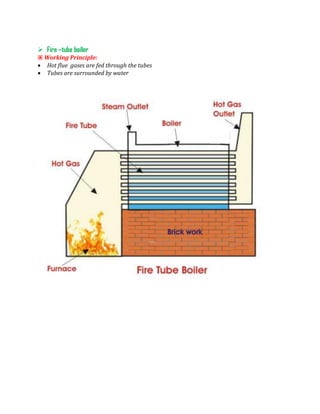
In fire –tube boiler there are numbers of tubes through which hot gases are passed and water
surrounds these tubes.
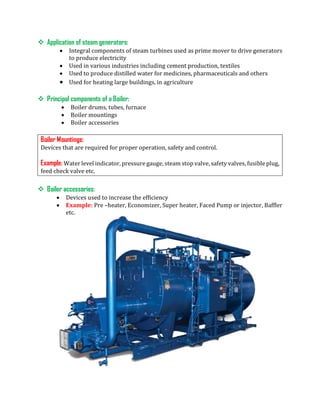
Figure: 1:- Cochran Boiler
 Fire –tube boiler
 Working Principle:
 Hot flue gases are fed through the tubes
 Tubes are surrounded by water
 Water –tube boiler:
In water tube boiler the water is heated inside tubes and hot gases surround these tubes.
“Water –tube boiler is reverse of the Fire –tube boiler”
 Water –tube boiler
 Working Principle:
 Small parallel tubes contain water connected to drum with header
 Gases pass outside the tubes contained water
 Fire –tube boiler VS Water –tube boiler:
Fire –tube boiler Water –tube boiler
 Hot flue gases are fed through the tubes
 Tubes are surrounded by water
 Small parallel tubes contain water connected
to drum with header
 Gases pass outside the tubes contained water
 Low initial cost  High initial cost
 Efficiency 70-75% (up to 80%)  Higher efficiency (up to 92%)
 Capacity 20kg/hr – 3000kg/hr
(up to 10000kg/hr)
 High pressures and capacity (50000 kg/hr)
 Furnace location: internal  Furnace location: external
 Floor area: small  Floor are: large
 Evaporation: slow  Evaporation: fast
 Water treatment: No  Water treatment: yes
 Suitable for fluctuating loads  Suitable for power plant
 Boiler Efficiency:
The ratio of the quantity of the heat utilized actually by water and steam to the quantity of
the heat supplied.
 Boiler Capacity:
The amount of steam of a boiler can supply per hour.
 Boiler Pressure:
The designated operating pressure of a boiler at which it can safely deliver the steam.
 Function of boiler Mountings:
 Water level indicator: indicate the safety level of water
 Pressure gauge: indicate the steam pressure
 Steam stop valve: to regulate the supply of steam to turbine
 Fusible plug: to stop the boiler if it gets try to prevent damage
 Safety valve: to release the internal boiler pressure whenever necessary
 Function of boiler accessories:
 Air pre –heater: utilize the waste of chimney to preheat the furnace air
 Economizer: utilize the waste heat of chimney to preheat the boiler feed water
 Super –heater: Utilize the waste heat to dry and /or super heat the steam leaving
the boiler (to increase steam quality and boiler efficiency)
 Baffles: help feed water in extracting heat from the flue gases
@shohel, MEE’16, SUST

Steam generating unit

  • 1.
    Steam generating Unit (ABoiler)  Boiler:  A boiler is a closed vessel in which water or other fluid is heated.  The fuel doesn’t necessarily boil  Boiler:  A fuel –burning apparatus or container for heating water, in particular.  A household device providing a hot –water supply or serving a central heating system.  A tank for generating steam under presence in a steam engine.  Properties of a boiler:  The heated or vaporized fluid exits the boiler for use in various processes or heating applications, including water heating, central heating, boiler –based power generation, cooking & sanitation.  Steam Generating Unit:  A boiler is a closed vessel in which steam is produced from water by combustion of fuel.  How does a boiler work?  Water is pumped into the boiler at operating pressure  Heat of flue gases vaporizes water to form steam.  Steam formed is passed into steam space above the water space
  • 2.
     Application ofsteam generators:  Integral components of steam turbines used as prime mover to drive generators to produce electricity  Used in various industries including cement production, textiles  Used to produce distilled water for medicines, pharmaceuticals and others  Used for heating large buildings, in agriculture  Principal components of a Boiler:  Boiler drums, tubes, furnace  Boiler mountings  Boiler accessories Boiler Mountings: Devices that are required for proper operation, safety and control. Example: Water level indicator, pressure gauge, steam stop valve, safety valves, fusible plug, feed check valve etc.  Boiler accessories:  Devices used to increase the efficiency  Example: Pre –heater, Economizer, Super heater, Faced Pump or injector, Baffler etc.
  • 3.
     Classification ofboiler: 1) Tube content  Fire tube boiler  Water tube boiler 2) Axis of Shell  Horizontal  Vertical  Inclined 3) Location of furnace  Externally fixed  Internally fixed 4) Method of Circulation:  Natural  Forced 5) Mobility:  Stationary  Portable 6) Usage:  Packaged  Unpackaged 7) Pressure:  High  low 8) Tubes:  Single –tube  Multi –tube
  • 4.
     Now webriefly discuss about Fire –tube boiler & Water –tube boiler:  Fire –tube boiler: In fire –tube boiler there are numbers of tubes through which hot gases are passed and water surrounds these tubes. Figure: 1:- Cochran Boiler
  • 5.
     Fire –tubeboiler  Working Principle:  Hot flue gases are fed through the tubes  Tubes are surrounded by water
  • 6.
     Water –tubeboiler: In water tube boiler the water is heated inside tubes and hot gases surround these tubes. “Water –tube boiler is reverse of the Fire –tube boiler”
  • 7.
     Water –tubeboiler  Working Principle:  Small parallel tubes contain water connected to drum with header  Gases pass outside the tubes contained water
  • 8.
     Fire –tubeboiler VS Water –tube boiler: Fire –tube boiler Water –tube boiler  Hot flue gases are fed through the tubes  Tubes are surrounded by water  Small parallel tubes contain water connected to drum with header  Gases pass outside the tubes contained water  Low initial cost  High initial cost  Efficiency 70-75% (up to 80%)  Higher efficiency (up to 92%)  Capacity 20kg/hr – 3000kg/hr (up to 10000kg/hr)  High pressures and capacity (50000 kg/hr)  Furnace location: internal  Furnace location: external  Floor area: small  Floor are: large  Evaporation: slow  Evaporation: fast  Water treatment: No  Water treatment: yes  Suitable for fluctuating loads  Suitable for power plant  Boiler Efficiency: The ratio of the quantity of the heat utilized actually by water and steam to the quantity of the heat supplied.  Boiler Capacity: The amount of steam of a boiler can supply per hour.  Boiler Pressure: The designated operating pressure of a boiler at which it can safely deliver the steam.  Function of boiler Mountings:  Water level indicator: indicate the safety level of water  Pressure gauge: indicate the steam pressure  Steam stop valve: to regulate the supply of steam to turbine  Fusible plug: to stop the boiler if it gets try to prevent damage  Safety valve: to release the internal boiler pressure whenever necessary  Function of boiler accessories:  Air pre –heater: utilize the waste of chimney to preheat the furnace air  Economizer: utilize the waste heat of chimney to preheat the boiler feed water  Super –heater: Utilize the waste heat to dry and /or super heat the steam leaving the boiler (to increase steam quality and boiler efficiency)  Baffles: help feed water in extracting heat from the flue gases @shohel, MEE’16, SUST