Staphylococcus
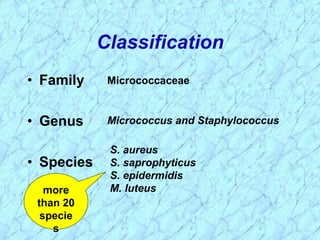
Classification
• Family
• Genus
• Species
Micrococcaceae
Micrococcus and Staphylococcus
S. aureus
S. saprophyticus
S. epidermidis
M. luteus
more
than 20
specie
s
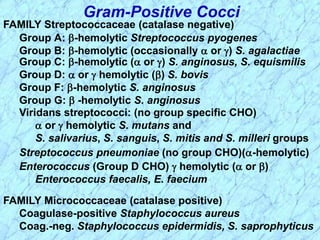
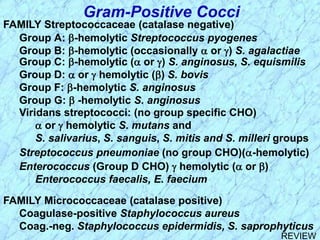
Gram-Positive Cocci
Enterococcus (Group D CHO)  hemolytic ( or )
Enterococcus faecalis, E. faecium
FAMILY Micrococcaceae (catalase positive)
Coagulase-positive Staphylococcus aureus
Coag.-neg. Staphylococcus epidermidis, S. saprophyticus
FAMILY Streptococcaceae (catalase negative)
Group A: -hemolytic Streptococcus pyogenes
Group B: -hemolytic (occasionally  or ) S. agalactiae
Group C: -hemolytic ( or ) S. anginosus, S. equismilis
Group D:  or  hemolytic () S. bovis
Group F: -hemolytic S. anginosus
Group G:  -hemolytic S. anginosus
Viridans streptococci: (no group specific CHO)
 or  hemolytic S. mutans and
S. salivarius, S. sanguis, S. mitis and S. milleri groups
Streptococcus pneumoniae (no group CHO)(-hemolytic)
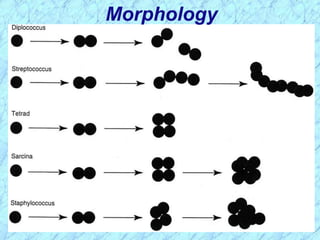
Morphology
Morphology
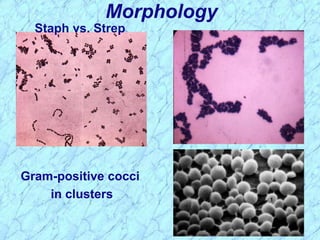
Staph vs. Strep
Gram-positive cocci
in clusters
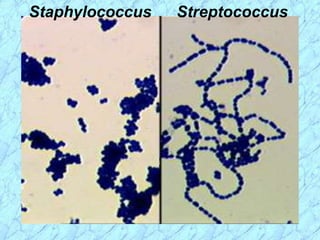
Streptococcus
Staphylococcus
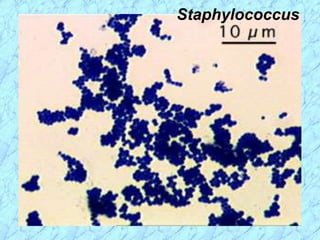
Staphylococcus
See Overheads
~~~~~~~~~~
TSS
Foodborne Intoxication
~~~~~~~~~~
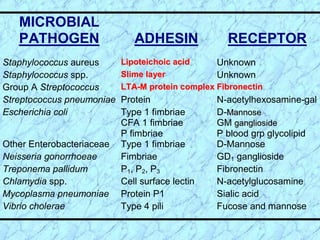
MICROBIAL
PATHOGEN ADHESIN RECEPTOR
Staphylococcus aureus L
Li
ip
po
ot
te
ei
ic
ch
ho
oi
ic
c a
ac
ci
id
d Unknown
Staphylococcus spp. S
Sl
li
im
me
e l
la
ay
ye
er
r Unknown
Group A Streptococcus L
LT
TA
A-
-M
M p
pr
ro
ot
te
ei
in
n c
co
om
mp
pl
le
ex
x F
Fi
ib
br
ro
on
ne
ec
ct
ti
in
n
Streptococcus pneumoniae Protein N-acetylhexosamine-gal
Escherichia coli Type 1 fimbriae
CFA 1 fimbriae
P fimbriae
D-M
Ma
an
nn
no
os
se
e
GM g
ga
an
ng
gl
li
io
os
si
id
de
e
P blood grp glycolipid
Other Enterobacteriaceae Type 1 fimbriae D-Mannose
Neisseria gonorrhoeae Fimbriae GD1 ganglioside
Treponema pallidum P1, P2, P3 Fibronectin
Chlamydia spp. Cell surface lectin N-acetylglucosamine
Mycoplasma pneumoniae Protein P1 Sialic acid
Vibrio cholerae Type 4 pili Fucose and mannose
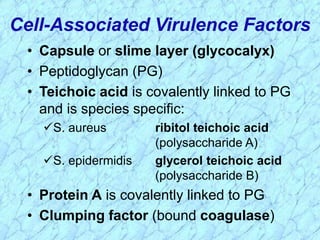
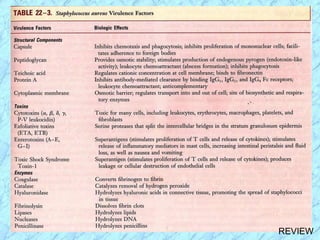
Cell-Associated Virulence Factors
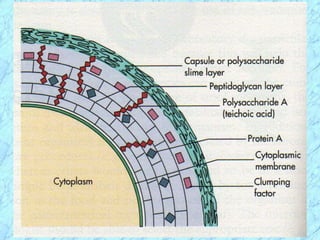
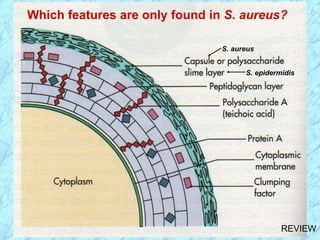
• Capsule or slime layer (glycocalyx)
• Peptidoglycan (PG)
• Teichoic acid is covalently linked to PG
and is species specific:
S. aureus ribitol teichoic acid
(polysaccharide A)
S. epidermidis glycerol teichoic acid
(polysaccharide B)
• Protein A is covalently linked to PG
• Clumping factor (bound coagulase)
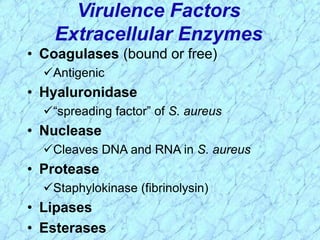
Virulence Factors
Extracellular Enzymes
• Coagulases (bound or free)
Antigenic
• Hyaluronidase
“spreading factor” of S. aureus
• Nuclease
Cleaves DNA and RNA in S. aureus
• Protease
Staphylokinase (fibrinolysin)
• Lipases
• Esterases
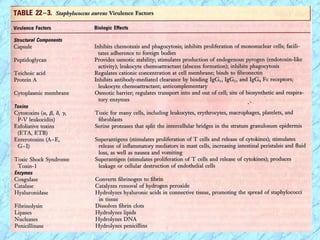
Virulence Factors: Exotoxins
• Cytolytic (cytotoxins; cytolysins)
 Alpha toxin - hemolysin
• Reacts with RBCs
 Beta toxin
• Sphingomyelinase
 Gamma toxin
• Hemolytic activity
 Delta toxin
• Cytopathic for:
– RBCs
– Macrophages
– Lymphocytes
– Neutrophils
– Platelets
• Enterotoxic activity
 Leukocidin
• Enterotoxin
• Exfoliative toxin (epidermolytic toxin)
• Pyrogenic exotoxins
Virulence Factors: Exotoxins
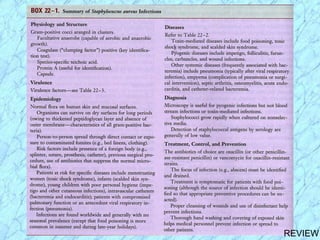
Pathogenesis
• Pass skin – first line of defense
 Benign infection
• Phagocytosis
• Antibody
• Inflammatory response
Chronic infections
• Delayed hypersensitivity
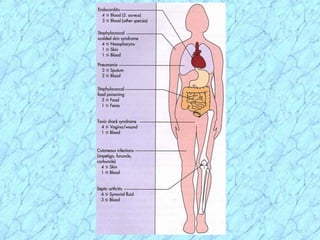
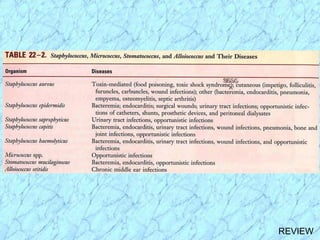
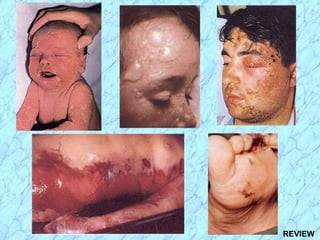
Clinical Manifestations/Disease
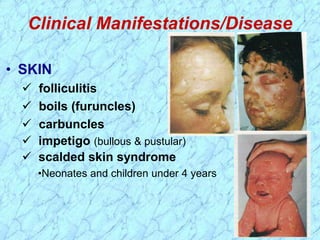
• SKIN
 folliculitis
 boils (furuncles)
 carbuncles
 impetigo (bullous & pustular)
 scalded skin syndrome
•Neonates and children under 4 years
Clinical Manifestations/Disease
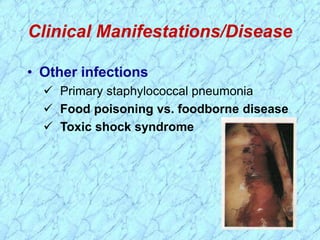
• Other infections
 Primary staphylococcal pneumonia
 Food poisoning vs. foodborne disease
 Toxic shock syndrome
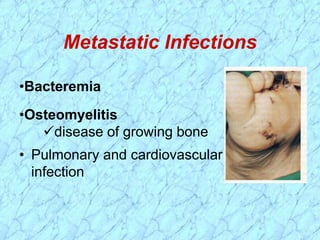
Metastatic Infections
•Bacteremia
•Osteomyelitis
disease of growing bone
• Pulmonary and cardiovascular
infection
Coagulase-Negative Staphylococci
• Staphylococcus epidermidis
• S. saprophyticus
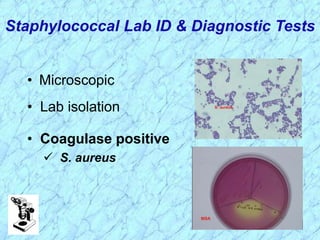
Staphylococcal Lab ID & Diagnostic Tests
• Microscopic
• Lab isolation
• Coagulase positive
 S. aureus
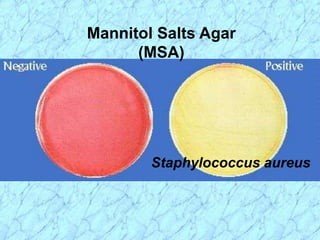
Mannitol Salts Agar
(MSA)
Staphylococcus aureus
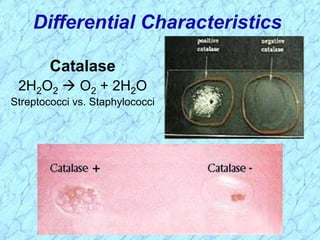
Catalase
2H2O2  O2 + 2H2O
Streptococci vs. Staphylococci
Differential Characteristics
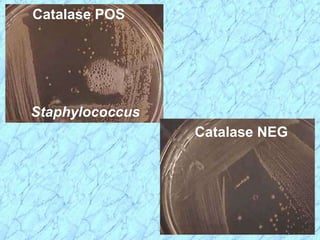
Catalase POS
Staphylococcus
Catalase NEG
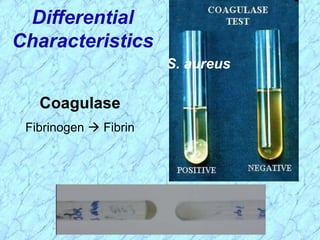
S. aureus
Coagulase
Fibrinogen  Fibrin
Differential
Characteristics
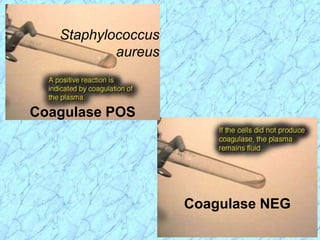
Coagulase NEG
Coagulase POS
Staphylococcus
aureus
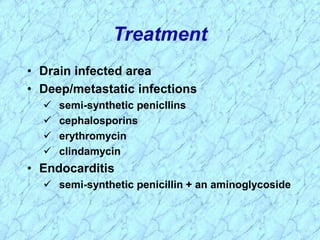
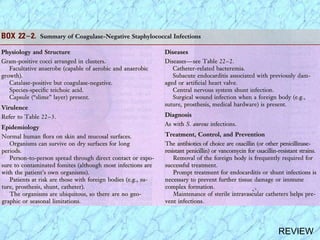
Treatment
• Drain infected area
• Deep/metastatic infections
 semi-synthetic penicllins
 cephalosporins
 erythromycin
 clindamycin
• Endocarditis
 semi-synthetic penicillin + an aminoglycoside
Prevention
• Carrier status prevents complete control
• Proper hygiene, segregation of carrier
from highly susceptible individuals
• Good aseptic techniques when
handling surgical instruments
• Control of nosocomial infections
REVIEW
Gram-Positive Cocci
Enterococcus (Group D CHO)  hemolytic ( or )
Enterococcus faecalis, E. faecium
FAMILY Micrococcaceae (catalase positive)
Coagulase-positive Staphylococcus aureus
Coag.-neg. Staphylococcus epidermidis, S. saprophyticus
FAMILY Streptococcaceae (catalase negative)
Group A: -hemolytic Streptococcus pyogenes
Group B: -hemolytic (occasionally  or ) S. agalactiae
Group C: -hemolytic ( or ) S. anginosus, S. equismilis
Group D:  or  hemolytic () S. bovis
Group F: -hemolytic S. anginosus
Group G:  -hemolytic S. anginosus
Viridans streptococci: (no group specific CHO)
 or  hemolytic S. mutans and
S. salivarius, S. sanguis, S. mitis and S. milleri groups
Streptococcus pneumoniae (no group CHO)(-hemolytic)
REVIEW
REVIEW
Which features are only found in S. aureus?
S. epidermidis
S. aureus
REVIEW
REVIEW
REVIEW
REVIEW
REVIEW
staphylococcus

staphylococcus

  • 2.
  • 3.
    Classification • Family • Genus •Species Micrococcaceae Micrococcus and Staphylococcus S. aureus S. saprophyticus S. epidermidis M. luteus more than 20 specie s
  • 4.
    Gram-Positive Cocci Enterococcus (GroupD CHO)  hemolytic ( or ) Enterococcus faecalis, E. faecium FAMILY Micrococcaceae (catalase positive) Coagulase-positive Staphylococcus aureus Coag.-neg. Staphylococcus epidermidis, S. saprophyticus FAMILY Streptococcaceae (catalase negative) Group A: -hemolytic Streptococcus pyogenes Group B: -hemolytic (occasionally  or ) S. agalactiae Group C: -hemolytic ( or ) S. anginosus, S. equismilis Group D:  or  hemolytic () S. bovis Group F: -hemolytic S. anginosus Group G:  -hemolytic S. anginosus Viridans streptococci: (no group specific CHO)  or  hemolytic S. mutans and S. salivarius, S. sanguis, S. mitis and S. milleri groups Streptococcus pneumoniae (no group CHO)(-hemolytic)
  • 5.
  • 6.
  • 7.
  • 8.
  • 12.
  • 14.
    MICROBIAL PATHOGEN ADHESIN RECEPTOR Staphylococcusaureus L Li ip po ot te ei ic ch ho oi ic c a ac ci id d Unknown Staphylococcus spp. S Sl li im me e l la ay ye er r Unknown Group A Streptococcus L LT TA A- -M M p pr ro ot te ei in n c co om mp pl le ex x F Fi ib br ro on ne ec ct ti in n Streptococcus pneumoniae Protein N-acetylhexosamine-gal Escherichia coli Type 1 fimbriae CFA 1 fimbriae P fimbriae D-M Ma an nn no os se e GM g ga an ng gl li io os si id de e P blood grp glycolipid Other Enterobacteriaceae Type 1 fimbriae D-Mannose Neisseria gonorrhoeae Fimbriae GD1 ganglioside Treponema pallidum P1, P2, P3 Fibronectin Chlamydia spp. Cell surface lectin N-acetylglucosamine Mycoplasma pneumoniae Protein P1 Sialic acid Vibrio cholerae Type 4 pili Fucose and mannose
  • 15.
    Cell-Associated Virulence Factors •Capsule or slime layer (glycocalyx) • Peptidoglycan (PG) • Teichoic acid is covalently linked to PG and is species specific: S. aureus ribitol teichoic acid (polysaccharide A) S. epidermidis glycerol teichoic acid (polysaccharide B) • Protein A is covalently linked to PG • Clumping factor (bound coagulase)
  • 16.
    Virulence Factors Extracellular Enzymes •Coagulases (bound or free) Antigenic • Hyaluronidase “spreading factor” of S. aureus • Nuclease Cleaves DNA and RNA in S. aureus • Protease Staphylokinase (fibrinolysin) • Lipases • Esterases
  • 17.
    Virulence Factors: Exotoxins •Cytolytic (cytotoxins; cytolysins)  Alpha toxin - hemolysin • Reacts with RBCs  Beta toxin • Sphingomyelinase  Gamma toxin • Hemolytic activity  Delta toxin • Cytopathic for: – RBCs – Macrophages – Lymphocytes – Neutrophils – Platelets • Enterotoxic activity  Leukocidin
  • 18.
    • Enterotoxin • Exfoliativetoxin (epidermolytic toxin) • Pyrogenic exotoxins Virulence Factors: Exotoxins
  • 19.
    Pathogenesis • Pass skin– first line of defense  Benign infection • Phagocytosis • Antibody • Inflammatory response Chronic infections • Delayed hypersensitivity
  • 20.
    Clinical Manifestations/Disease • SKIN folliculitis  boils (furuncles)  carbuncles  impetigo (bullous & pustular)  scalded skin syndrome •Neonates and children under 4 years
  • 21.
    Clinical Manifestations/Disease • Otherinfections  Primary staphylococcal pneumonia  Food poisoning vs. foodborne disease  Toxic shock syndrome
  • 22.
    Metastatic Infections •Bacteremia •Osteomyelitis disease ofgrowing bone • Pulmonary and cardiovascular infection
  • 24.
  • 27.
    Staphylococcal Lab ID& Diagnostic Tests • Microscopic • Lab isolation • Coagulase positive  S. aureus
  • 28.
  • 29.
    Catalase 2H2O2  O2+ 2H2O Streptococci vs. Staphylococci Differential Characteristics
  • 30.
  • 31.
    S. aureus Coagulase Fibrinogen Fibrin Differential Characteristics
  • 32.
  • 33.
    Treatment • Drain infectedarea • Deep/metastatic infections  semi-synthetic penicllins  cephalosporins  erythromycin  clindamycin • Endocarditis  semi-synthetic penicillin + an aminoglycoside
  • 34.
    Prevention • Carrier statusprevents complete control • Proper hygiene, segregation of carrier from highly susceptible individuals • Good aseptic techniques when handling surgical instruments • Control of nosocomial infections
  • 36.
  • 37.
    Gram-Positive Cocci Enterococcus (GroupD CHO)  hemolytic ( or ) Enterococcus faecalis, E. faecium FAMILY Micrococcaceae (catalase positive) Coagulase-positive Staphylococcus aureus Coag.-neg. Staphylococcus epidermidis, S. saprophyticus FAMILY Streptococcaceae (catalase negative) Group A: -hemolytic Streptococcus pyogenes Group B: -hemolytic (occasionally  or ) S. agalactiae Group C: -hemolytic ( or ) S. anginosus, S. equismilis Group D:  or  hemolytic () S. bovis Group F: -hemolytic S. anginosus Group G:  -hemolytic S. anginosus Viridans streptococci: (no group specific CHO)  or  hemolytic S. mutans and S. salivarius, S. sanguis, S. mitis and S. milleri groups Streptococcus pneumoniae (no group CHO)(-hemolytic) REVIEW
  • 38.
    REVIEW Which features areonly found in S. aureus? S. epidermidis S. aureus
  • 39.
  • 40.
  • 41.
  • 42.
  • 43.