FOUNDATION
FOUNDATION 
• A foundation is that part of the structure 
which is in direct contact with transmits loads 
to the ground. 
• It is mainly classified as two 
1. Shallow foundation 
2. Deep foundation
• Shallow foundation 
It is foundation which is laid for short 
depth or the depth of the foundation is less 
than its width 
• Deep foundation 
It is foundation which laid for large 
depth 
depth > 3m
Selection of foundation 
Before the construction work is being 
started the soil must be tested for the 
strength 
In the result of the testing there must be 
see the value of the following topics 
1. bearing capacity 
2.
APPARATUS REQUIRED 
• Drilling equipment - any drilling equipment is 
acceptable that provides a reasonably clean 
• hole, which is at least 5 mm larger than the 
sampler or sampling rods, and less than 170 
• mm diameter. 
• Sampling rods - steel A-rod is used to connect 
the sampler to the drive weight assembly. 
• A-rod should be used unless otherwise 
directed.
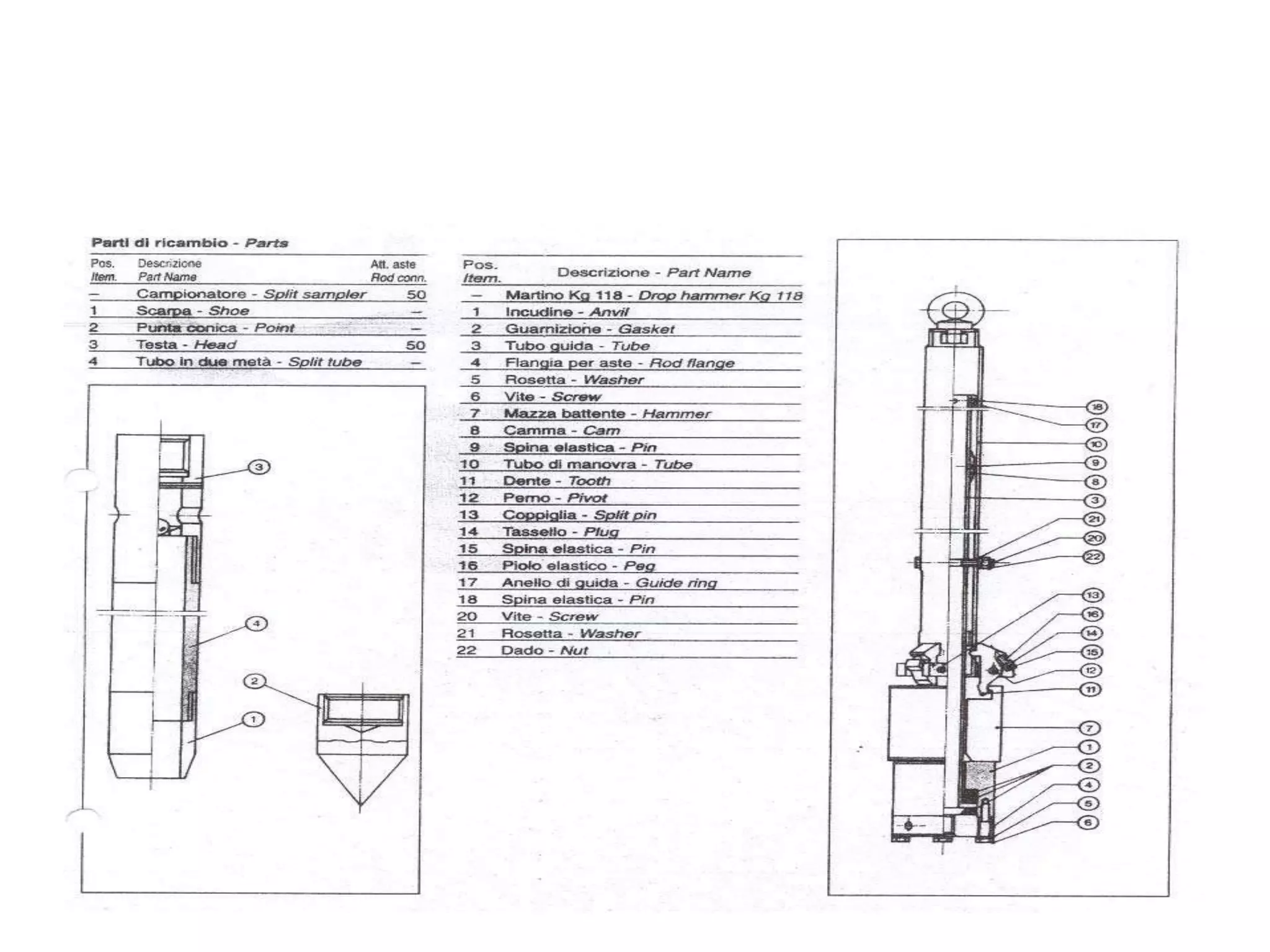
• Split-barrel sampler - consists of 3 main parts; 
head, split-barrel and shoe, as shown in 
• Figure 240-6-1. A core catcher should be 
installed to prevent loss of sample. Shoes 
• which have been damaged should be replaced 
or repaired. 
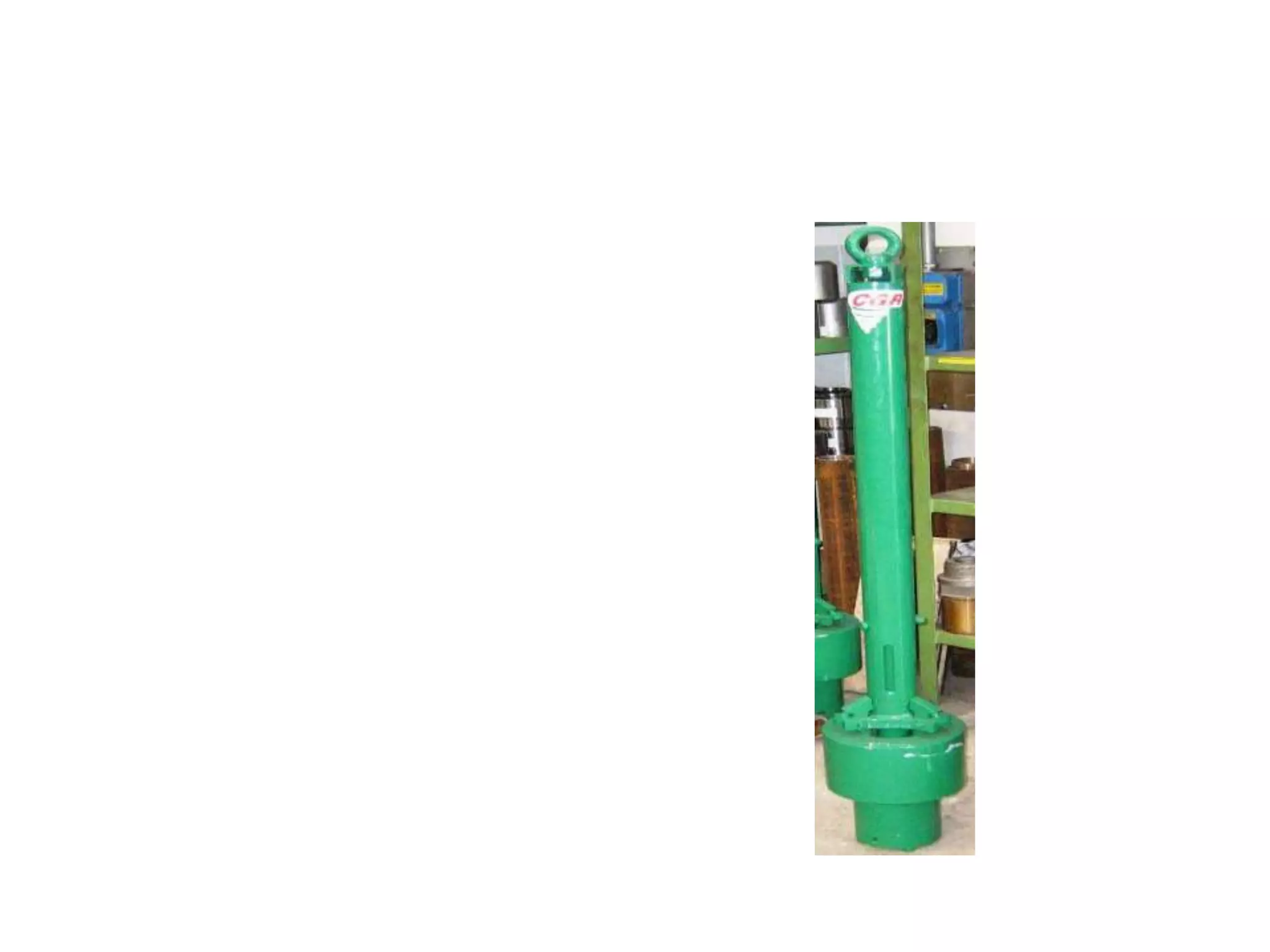
• Drive-weight assembly - consisting of a 63.5 kg 
weight (hammer), a driving head (anvil)
• and a guide permitting free fall of 0.76 m and 
an over lift capability of at least 100 mm as 
• shown in Figure 
• 240-6-2. 
• Cathead operating at approximately 100 rpm, 
equipped with suitable rope and overhead 
• sheave for lifting drive-weight.
PROCEDURE 
• 3.1. Test Procedure 
• 3.1.1. Test Hole 
• Drill the hole to the desired sampling depth 
and clean out all disturbed material. 
• If a wet drill is used, flush out all cuttings. 
• 3.1.2. Assembling Equipment 
• Attach the split-barrel sampler to the A-rod 
and lower into the hole until it is
• Attach the drive weight assembly. 
• Lift the 63.5 kg hammer approximately 0.76 m 
and allow it to fall on the anvil 
• delivering one seating blow. 
• sitting on the undisturbed material. 
• Mark the drill rod in 3 successive .15 m 
increments to observe penetration. 
• Mark the drive weight assembly to indicate a 
0.76 m hammer lift.
• Penetration Testing 
• Raise and drop the hammer 0.76 m 
successively by means of the rope and 
• cathead, using no more than 2 1/4 wraps 
around the cathead. The hammer should 
• be operated between 40 and 60 blows per 
minute and should drop freely. 
• Continue the driving until either 0.45 m has 
been penetrated or 100 blows has 
• been applied. 
• .
• Record the number of blows for each .15 m of 
the penetration. The first 0.15 m 
• increment is the "seating" drive. The sum of 
the blows for second and third 
• increment of 0.15 m penetration is termed 
"penetration resistance or "N-value". 
• If the blow count exceeds 100 in total, 
terminate the test and record the number of 
• blIf less than 0.30 m is penetrated in 100 
blows, record the depth penetrated and the
• blow count. 
• If the sampler advances below the bottom of the 
hole under its own weight, note 
• this condition on the log.ows for the last 0.30 m 
of penetration as the N-value 
• Handling Sample 
• Bring the sampler to the surface and open it. 
Remove any obvious contamination 
• from the ends or sides and drain excess water. 
Carefully scrape or slice along one 
• side to expose fresh material and any 
stratification.
• Record the length, composition, colour, 
stratification and condition of sample. 
• Remove sample and wrap it or seal in a plastic 
bag to retain moisture. If the 
• sample can be removed relatively intact, wrap 
it in several layers of plastic to 
• strengthen it and seal ends with tape. Mark 
the sample "top" and "bottom" if 
• applicable and label it with an identification 
number.
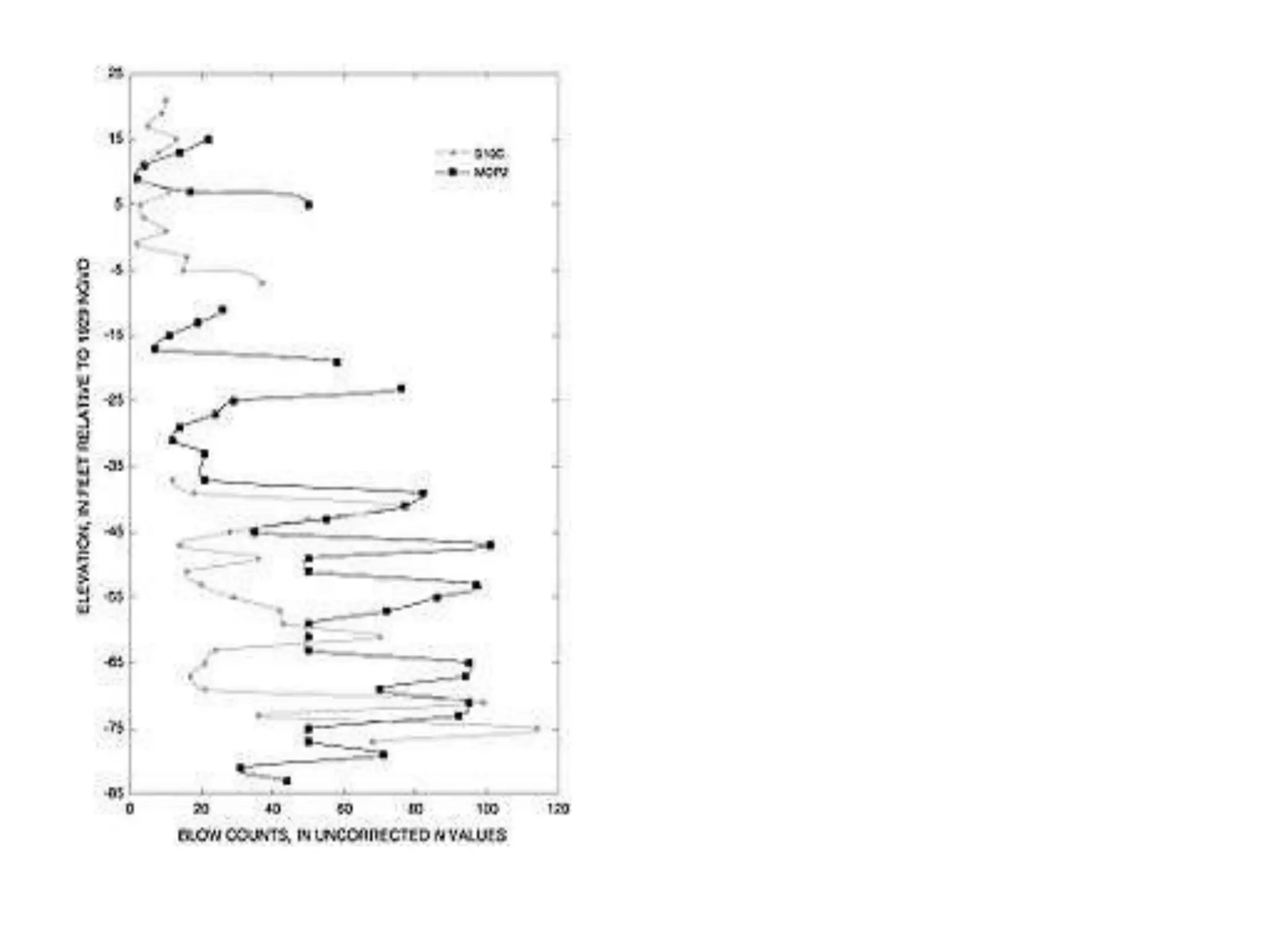
Standard penetration test

Standard penetration test

  • 1.
  • 2.
    FOUNDATION • Afoundation is that part of the structure which is in direct contact with transmits loads to the ground. • It is mainly classified as two 1. Shallow foundation 2. Deep foundation
  • 3.
    • Shallow foundation It is foundation which is laid for short depth or the depth of the foundation is less than its width • Deep foundation It is foundation which laid for large depth depth > 3m
  • 4.
    Selection of foundation Before the construction work is being started the soil must be tested for the strength In the result of the testing there must be see the value of the following topics 1. bearing capacity 2.
  • 5.
    APPARATUS REQUIRED •Drilling equipment - any drilling equipment is acceptable that provides a reasonably clean • hole, which is at least 5 mm larger than the sampler or sampling rods, and less than 170 • mm diameter. • Sampling rods - steel A-rod is used to connect the sampler to the drive weight assembly. • A-rod should be used unless otherwise directed.
  • 6.
    • Split-barrel sampler- consists of 3 main parts; head, split-barrel and shoe, as shown in • Figure 240-6-1. A core catcher should be installed to prevent loss of sample. Shoes • which have been damaged should be replaced or repaired. • Drive-weight assembly - consisting of a 63.5 kg weight (hammer), a driving head (anvil)
  • 7.
    • and aguide permitting free fall of 0.76 m and an over lift capability of at least 100 mm as • shown in Figure • 240-6-2. • Cathead operating at approximately 100 rpm, equipped with suitable rope and overhead • sheave for lifting drive-weight.
  • 8.
    PROCEDURE • 3.1.Test Procedure • 3.1.1. Test Hole • Drill the hole to the desired sampling depth and clean out all disturbed material. • If a wet drill is used, flush out all cuttings. • 3.1.2. Assembling Equipment • Attach the split-barrel sampler to the A-rod and lower into the hole until it is
  • 9.
    • Attach thedrive weight assembly. • Lift the 63.5 kg hammer approximately 0.76 m and allow it to fall on the anvil • delivering one seating blow. • sitting on the undisturbed material. • Mark the drill rod in 3 successive .15 m increments to observe penetration. • Mark the drive weight assembly to indicate a 0.76 m hammer lift.
  • 10.
    • Penetration Testing • Raise and drop the hammer 0.76 m successively by means of the rope and • cathead, using no more than 2 1/4 wraps around the cathead. The hammer should • be operated between 40 and 60 blows per minute and should drop freely. • Continue the driving until either 0.45 m has been penetrated or 100 blows has • been applied. • .
  • 11.
    • Record thenumber of blows for each .15 m of the penetration. The first 0.15 m • increment is the "seating" drive. The sum of the blows for second and third • increment of 0.15 m penetration is termed "penetration resistance or "N-value". • If the blow count exceeds 100 in total, terminate the test and record the number of • blIf less than 0.30 m is penetrated in 100 blows, record the depth penetrated and the
  • 12.
    • blow count. • If the sampler advances below the bottom of the hole under its own weight, note • this condition on the log.ows for the last 0.30 m of penetration as the N-value • Handling Sample • Bring the sampler to the surface and open it. Remove any obvious contamination • from the ends or sides and drain excess water. Carefully scrape or slice along one • side to expose fresh material and any stratification.
  • 13.
    • Record thelength, composition, colour, stratification and condition of sample. • Remove sample and wrap it or seal in a plastic bag to retain moisture. If the • sample can be removed relatively intact, wrap it in several layers of plastic to • strengthen it and seal ends with tape. Mark the sample "top" and "bottom" if • applicable and label it with an identification number.