Standard Audit File for
Tax
www.pwc.com
26.01.2016
PwC
Agenda
2PwC
1. Standard Audit File for Tax – basic issues
2. What hides inside the SAF-T structures?
3. How to adjust to the new requirements?
4. Doubts and questions about SAF-T
PwC
Standard Audit File for Tax – basic
issues
3
PwC
Standard Audit File for Tax – basic issues
4
The goal of introducing SAF-T is to improve anddeepen the process of tax and
treasury audit andto identify main areas of non-compliance in tax reporting.
SAF-T brought significantbenefits to the tax authorities in countries in which this
solution has been already implemented. The biggest benefits were observedin
such areas as:
• reduction of costs andduration of audit (ability to conduct audit remotely);
• abnormalities specified on the whole sample – increased effectiveness;
• ability to conduct audit of few taxes at once (eg. CIT-VAT comparision)
The idea of SAF-T works worldwide in two models – on demand andas
compulsory, periodic data handling to the tax authorities.
Technologically SAF-T is based on a file in .xml form (according to OECDSAF-T
2.0 standard).
Taxpayers will sendfile to Ministry of Finance Gateway or, in case of big volumes
of data, give it to the tax authorities on an external data storage medium (eg. DVD,
pendrive).
Why?
How?
?? ?
?
?
?
? ?
?
?
?
PwC
Standard Audit File for Tax
– basic issues
5
Duty of generating SAF-T will apply to:
From 1.07.2016 ≥ 250 or > 50 mln EUR
From 1.07.2018 ≥ 9 or > 2 mln EUR
Reporting will concern taxpayer’s tax books.
Term „tax books”shall mean:accounting books, revenue and expense ledger,
records andregisters which must be kept by taxpayers on the legal basis forthe tax
purposes
SAF-T was introducedwith amendment to tax ordinance – new art. 193a
Who?
Legal
basis?
What?
?
?
?
?
?
PwC
Standard Audit File fot Tax
- What hides inside the SAF-T
structures?
6
PwC
Standard Audit File fot Tax
– structures
7
On 23.12.2015 test version of SAF-T appeared on the Ministryof Finance webstie. Test formula
of SAF-T consists of 7 structures:
Structure 1– Accounting books
Structure 2 – Bank statements
Structure 3– Warehouses
Structure 4 – VAT evidence
Structure 5 – VAT invoices
Structure 6 – Tax revenue and expense
ledger
Structure 7 – Record of revenue
Types
of SAF-T
sections
Headline
Repeatablesectioncontainingdata
concerningsystemprovider,period
for whichthefileis prepared, etc.
Substantive
positions
Positions concerningvalues
from
tax booksandaccounting
evidences.
Control sums
Allfiles containcontrol
valueswhichare calculatedas
a number of recordsand
one or two valuesof
sum characteristic for
eachdocument
type.
PwC
Standard Audit File fot Tax
– VAT evidence
VAT evidence structure contains
information concerning transactions
included in records kept for the VAT
purposes – not only data which
usually can be found in VAT registers.
Some doubts have risen about the
following fields:
- Amount of non-taxable purchase
- Receipt of invoice date
- Invoice number
8
PwC
Standard Audit File fot Tax
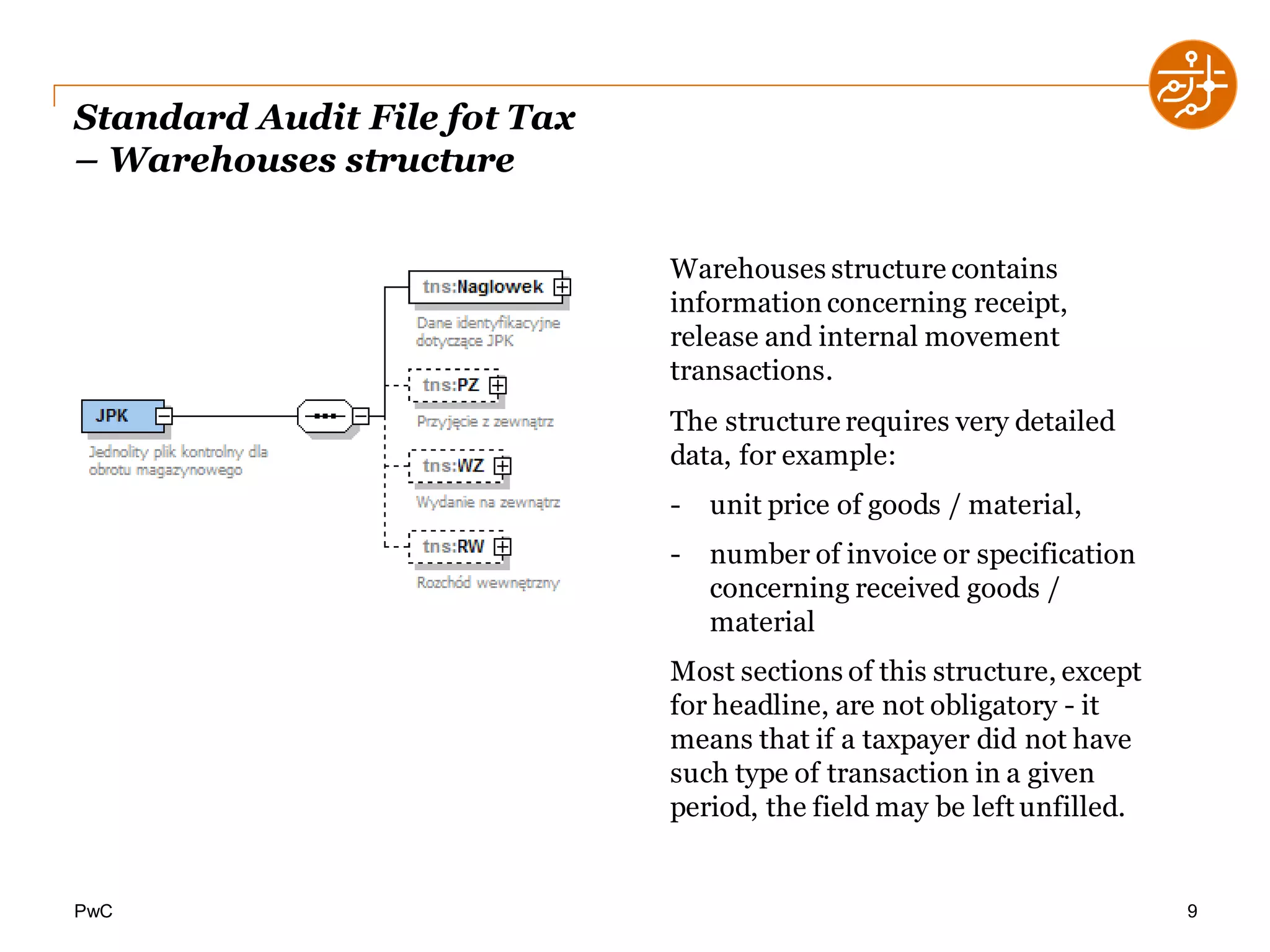
– Warehouses structure
9
Warehouses structure contains
information concerning receipt,
release and internal movement
transactions.
The structure requires very detailed
data, for example:
- unit price of goods / material,
- number of invoice or specification
concerning received goods /
material
Most sections of this structure, except
for headline, are not obligatory - it
means that if a taxpayer did not have
such type of transaction in a given
period, the field may be left unfilled.
PwC
Standard Audit File fot Tax
– VAT invoices structure
10
This structure will be used to
reporting information concerning sale
invoices for a given period.
Doubts and questions concern:
- Data concerning vechicles mileage
and number of workhours of new
means of transport in case of intra-
community supply of goods
- Lack of information concerning
corrective invoices and documents
equated with invoices
PwC
Standard Audit File fot Tax
– Bank statements structure
11
This structure includes bank
statements balances along with
detailed records from taxpayer’s
accounts.
PwC
Standard Audit File fot Tax
– Accounting books structure
12
Accounting books structure includes
information concerning mainly trial
balance and journal of general ledger.
Transactional data on single transaction
level should be placed in this file.
Transactional data should balance with
accounts of the trial balance included in
the file.
Doubts and questions concern such fields
as:
- Transaction date and Evidence date
- Description of the transaction vs.
desciption of the transaction on debit
(credit) side
PwC
Standard Audit File fot Tax
- How to adjust to the new
requirements?
13
PwC
1 2 3 4 5
Standard Audit File fot Tax
- How to adjust to the new requirements?
14
IT systems
identification
Creatinglist of
systemsand
data
Mapping Data testing
• Make list ofsystems
and assignSAF-Tdata
to them.
• Test data in regardto
their completeness and
substantivecorrectness
on readySAF-T.
• Identify systemsin
regardto datacontent
from theperspectiveof
individual structures.
• Build SAF-Treporting
concept.
• Decideifyou will
modify system/systems
or use external solution.
• Prepare SAF-Tfields to
systemdatamapping.
• Idenitify reports/
extracts which canbe
used to acquire
requireddata.
Generating
SAF-T
PwC
Doubts and questions concerning SAF-T
15
PwC
Standard Audit File fot Tax
– Doubts and questions concerning SAF-T
jpk@mf.gov.pl
16
26.01.2016
PwC
Standard Audit File fot Tax
– Doubts and questions concerning SAF-T
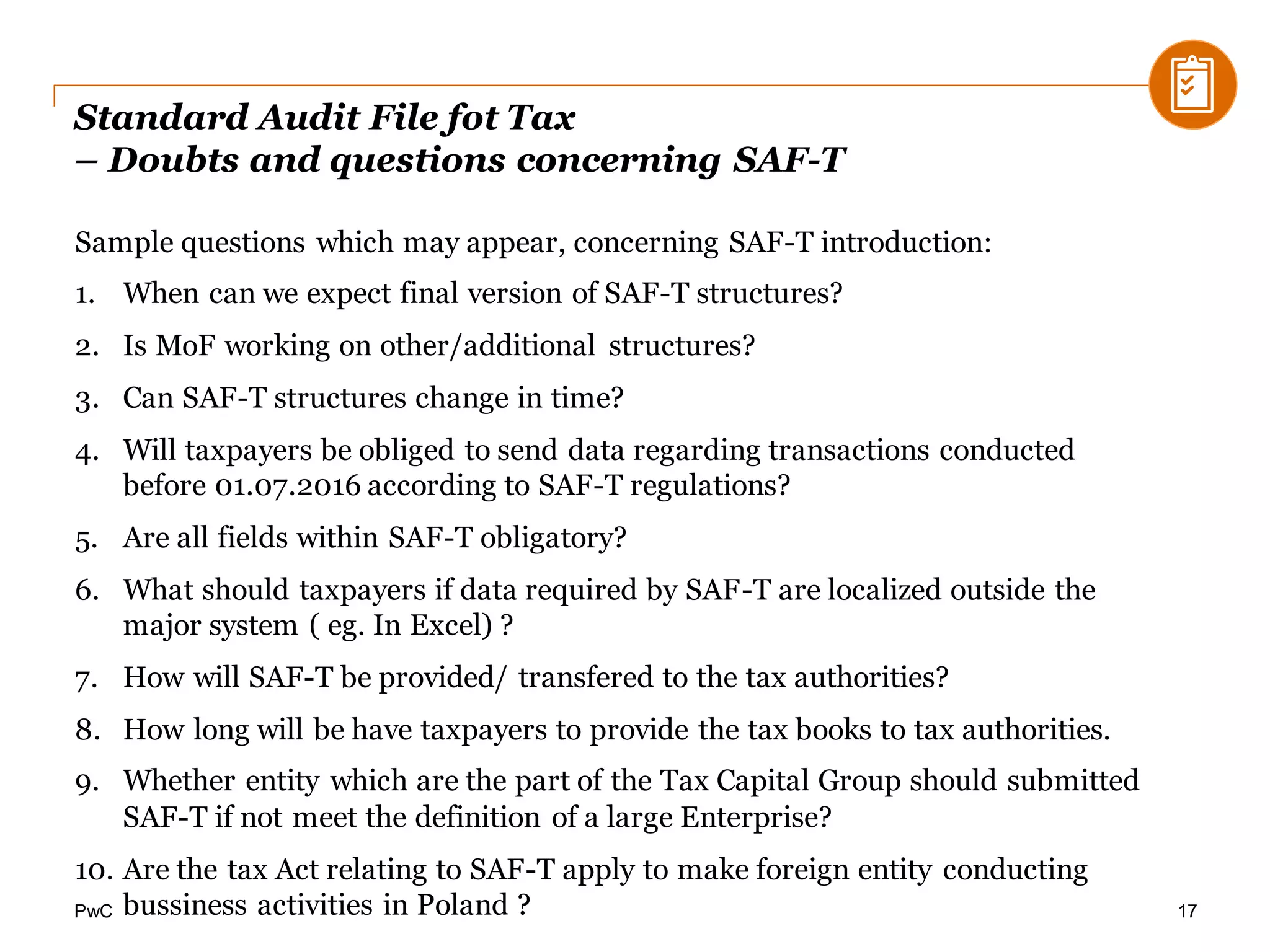
Sample questions which may appear, concernin SAF-T introduction:
1. When can we expect final version of SAF-T structures?
2. Is MoF working on other/additional structures?
3. Can SAF-T structureschange in time?
4. Will taxpayers be obliged to send data regarding transactions conducted before 01.07.2016
according to SAF-T regulations?
5. Are all fields within SAF-T obligatory?
6. What happens if part of data needed in SAF-T is outside of the system (eg.in Excel)?
7. How will SAF-T be handedto tax authorities?
8. How many times will the taxpayer have to present SAF-T files?
9. Should companies whichbelong to tax capital group but do not meet the definition of big
enterprise generate SAF-T files?
10. Are SAF-T rules applicable to branch of foreign entity conducting activity in Poland?
17
PwC
Contact
marcin.sidelnik@pl.pwc.com
+48 502 184 961
PwC
marcin.madej@pl.pwc.com
+48 502 184 296
Marcin Sidelnik
Director
Marcin Madej
Senior Manager
18
PwC 19
Thank You
© 2016 Pw C Polska Sp. z o.o.

Standard Audit File for Tax

  • 1.
    Standard Audit Filefor Tax www.pwc.com 26.01.2016
  • 2.
    PwC Agenda 2PwC 1. Standard AuditFile for Tax – basic issues 2. What hides inside the SAF-T structures? 3. How to adjust to the new requirements? 4. Doubts and questions about SAF-T
  • 3.
    PwC Standard Audit Filefor Tax – basic issues 3
  • 4.
    PwC Standard Audit Filefor Tax – basic issues 4 The goal of introducing SAF-T is to improve anddeepen the process of tax and treasury audit andto identify main areas of non-compliance in tax reporting. SAF-T brought significantbenefits to the tax authorities in countries in which this solution has been already implemented. The biggest benefits were observedin such areas as: • reduction of costs andduration of audit (ability to conduct audit remotely); • abnormalities specified on the whole sample – increased effectiveness; • ability to conduct audit of few taxes at once (eg. CIT-VAT comparision) The idea of SAF-T works worldwide in two models – on demand andas compulsory, periodic data handling to the tax authorities. Technologically SAF-T is based on a file in .xml form (according to OECDSAF-T 2.0 standard). Taxpayers will sendfile to Ministry of Finance Gateway or, in case of big volumes of data, give it to the tax authorities on an external data storage medium (eg. DVD, pendrive). Why? How? ?? ? ? ? ? ? ? ? ? ?
  • 5.
    PwC Standard Audit Filefor Tax – basic issues 5 Duty of generating SAF-T will apply to: From 1.07.2016 ≥ 250 or > 50 mln EUR From 1.07.2018 ≥ 9 or > 2 mln EUR Reporting will concern taxpayer’s tax books. Term „tax books”shall mean:accounting books, revenue and expense ledger, records andregisters which must be kept by taxpayers on the legal basis forthe tax purposes SAF-T was introducedwith amendment to tax ordinance – new art. 193a Who? Legal basis? What? ? ? ? ? ?
  • 6.
    PwC Standard Audit Filefot Tax - What hides inside the SAF-T structures? 6
  • 7.
    PwC Standard Audit Filefot Tax – structures 7 On 23.12.2015 test version of SAF-T appeared on the Ministryof Finance webstie. Test formula of SAF-T consists of 7 structures: Structure 1– Accounting books Structure 2 – Bank statements Structure 3– Warehouses Structure 4 – VAT evidence Structure 5 – VAT invoices Structure 6 – Tax revenue and expense ledger Structure 7 – Record of revenue Types of SAF-T sections Headline Repeatablesectioncontainingdata concerningsystemprovider,period for whichthefileis prepared, etc. Substantive positions Positions concerningvalues from tax booksandaccounting evidences. Control sums Allfiles containcontrol valueswhichare calculatedas a number of recordsand one or two valuesof sum characteristic for eachdocument type.
  • 8.
    PwC Standard Audit Filefot Tax – VAT evidence VAT evidence structure contains information concerning transactions included in records kept for the VAT purposes – not only data which usually can be found in VAT registers. Some doubts have risen about the following fields: - Amount of non-taxable purchase - Receipt of invoice date - Invoice number 8
  • 9.
    PwC Standard Audit Filefot Tax – Warehouses structure 9 Warehouses structure contains information concerning receipt, release and internal movement transactions. The structure requires very detailed data, for example: - unit price of goods / material, - number of invoice or specification concerning received goods / material Most sections of this structure, except for headline, are not obligatory - it means that if a taxpayer did not have such type of transaction in a given period, the field may be left unfilled.
  • 10.
    PwC Standard Audit Filefot Tax – VAT invoices structure 10 This structure will be used to reporting information concerning sale invoices for a given period. Doubts and questions concern: - Data concerning vechicles mileage and number of workhours of new means of transport in case of intra- community supply of goods - Lack of information concerning corrective invoices and documents equated with invoices
  • 11.
    PwC Standard Audit Filefot Tax – Bank statements structure 11 This structure includes bank statements balances along with detailed records from taxpayer’s accounts.
  • 12.
    PwC Standard Audit Filefot Tax – Accounting books structure 12 Accounting books structure includes information concerning mainly trial balance and journal of general ledger. Transactional data on single transaction level should be placed in this file. Transactional data should balance with accounts of the trial balance included in the file. Doubts and questions concern such fields as: - Transaction date and Evidence date - Description of the transaction vs. desciption of the transaction on debit (credit) side
  • 13.
    PwC Standard Audit Filefot Tax - How to adjust to the new requirements? 13
  • 14.
    PwC 1 2 34 5 Standard Audit File fot Tax - How to adjust to the new requirements? 14 IT systems identification Creatinglist of systemsand data Mapping Data testing • Make list ofsystems and assignSAF-Tdata to them. • Test data in regardto their completeness and substantivecorrectness on readySAF-T. • Identify systemsin regardto datacontent from theperspectiveof individual structures. • Build SAF-Treporting concept. • Decideifyou will modify system/systems or use external solution. • Prepare SAF-Tfields to systemdatamapping. • Idenitify reports/ extracts which canbe used to acquire requireddata. Generating SAF-T
  • 15.
    PwC Doubts and questionsconcerning SAF-T 15
  • 16.
    PwC Standard Audit Filefot Tax – Doubts and questions concerning SAF-T jpk@mf.gov.pl 16 26.01.2016
  • 17.
    PwC Standard Audit Filefot Tax – Doubts and questions concerning SAF-T Sample questions which may appear, concernin SAF-T introduction: 1. When can we expect final version of SAF-T structures? 2. Is MoF working on other/additional structures? 3. Can SAF-T structureschange in time? 4. Will taxpayers be obliged to send data regarding transactions conducted before 01.07.2016 according to SAF-T regulations? 5. Are all fields within SAF-T obligatory? 6. What happens if part of data needed in SAF-T is outside of the system (eg.in Excel)? 7. How will SAF-T be handedto tax authorities? 8. How many times will the taxpayer have to present SAF-T files? 9. Should companies whichbelong to tax capital group but do not meet the definition of big enterprise generate SAF-T files? 10. Are SAF-T rules applicable to branch of foreign entity conducting activity in Poland? 17
  • 18.
    PwC Contact marcin.sidelnik@pl.pwc.com +48 502 184961 PwC marcin.madej@pl.pwc.com +48 502 184 296 Marcin Sidelnik Director Marcin Madej Senior Manager 18
  • 19.
    PwC 19 Thank You ©2016 Pw C Polska Sp. z o.o.