Chapter 2
Standard 4
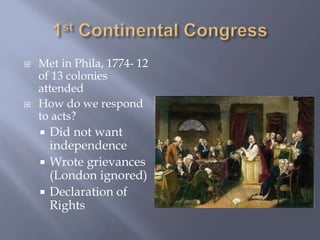
 Met in Phila, 1774- 12
of 13 colonies
attended
 How do we respond
to acts?
 Did not want
independence
 Wrote grievances
(London ignored)
 Declaration of
Rights
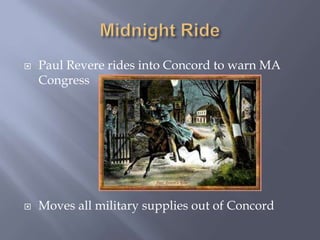
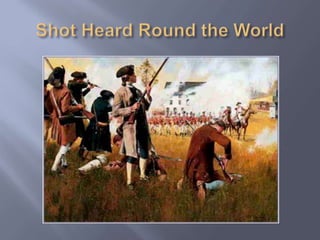
 Paul Revere rides into Concord to warn MA
Congress
 Moves all military supplies out of Concord
 After Lexington/Concord- leaders decide to
meet in Phila on May 10, 1775
 Still was not thinking of independence
 Sent grievances to king
 Plan on how to raise $$ for military
 Washington lead army
 CC did not have power to tax, so raising $$ to
build army very difficult
 Continental Army was mainly inexperienced,
local militia.
 Mainly used guerilla warfare
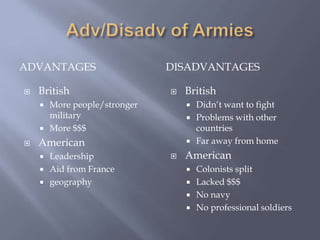
ADVANTAGES
 British
 More people/stronger
military
 More $$$
 American
 Leadership
 Aid from France
 geography
DISADVANTAGES
 British
 Didn’t want to fight
 Problems with other
countries
 Far away from home
 American
 Colonists split
 Lacked $$$
 No navy
 No professional soldiers
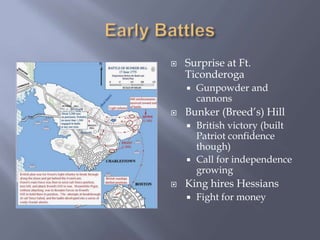
 Surprise at Ft.
Ticonderoga
 Gunpowder and
cannons
 Bunker (Breed’s) Hill
 British victory (built
Patriot confidence
though)
 Call for independence
growing
 King hires Hessians
 Fight for money
 Common Sense – influenced many to vote for
Independence
 July 4, 1776- Continental Congress issues the
Declaration of Independence
 Written by Thomas Jefferson
 Writings by John Locke influenced Jefferson
 All people have certain “natural rights”
 If gov’t failed to protect or violated rights, the people
have the right to overthrow gov’t
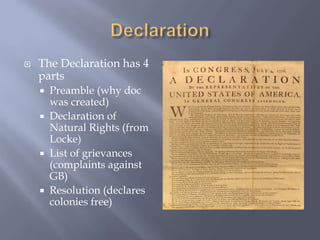
 The Declaration has 4
parts
 Preamble (why doc
was created)
 Declaration of
Natural Rights (from
Locke)
 List of grievances
(complaints against
GB)
 Resolution (declares
colonies free)
 1/3 of pop were Patriots (Whigs)
 1/3 were Loyalists (Tories)
 1/3 were neutral
 British could only control Loyalists.
 Used them as spies, soldiers, etc., but not much
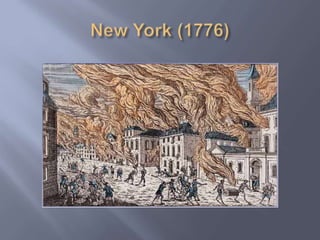
 Congress asks Washington to try and defend
NYC, but many fled
 British controlled it until end of war
 Next move go to Philadelphia, but British camp
in nearby Trenton, NJ
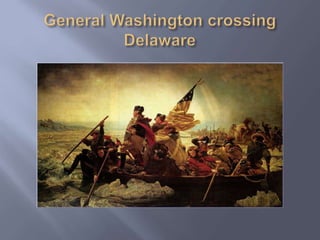
 Washington crossed Delaware river defeated
British on 12.26.1776
 Britain tried to capture Hudson River Valley
 Plan: Burgoyne move south and Howe move
north
 Howe goes to Phila instead
 Pushes Washington to Valley Forge for winter
 Frenchman Marquis de Lafayette and Prussian
Baron Friedrich von Steuben help train soldiers and
boost morale
 Burgoyne left and defeated at Saratoga
 Convinced France to help America
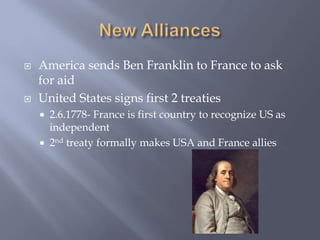
 America sends Ben Franklin to France to ask
for aid
 United States signs first 2 treaties
 2.6.1778- France is first country to recognize US as
independent
 2nd treaty formally makes USA and France allies
 Britain tries to defeat US by coming from South
 Charles Town falls, and Charles Cornwallis
becomes British General
 Cornwallis moves to Virginia, eventually to
Yorktown
 American and French surround Yorktown
 Force Cornwallis to surrender
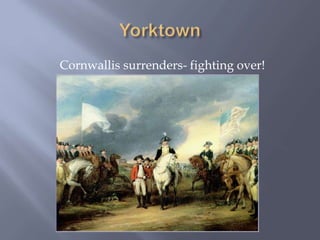
Cornwallis surrenders- fighting over!
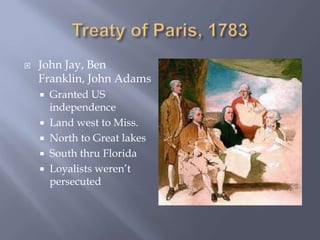
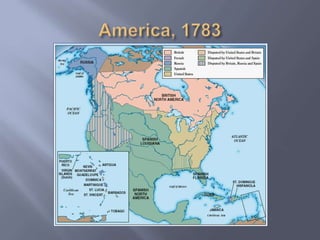
 John Jay, Ben
Franklin, John Adams
 Granted US
independence
 Land west to Miss.
 North to Great lakes
 South thru Florida
 Loyalists weren’t
persecuted
Standard 4

Standard 4

  • 1.
  • 2.
     Met inPhila, 1774- 12 of 13 colonies attended  How do we respond to acts?  Did not want independence  Wrote grievances (London ignored)  Declaration of Rights
  • 3.
     Paul Revererides into Concord to warn MA Congress  Moves all military supplies out of Concord
  • 5.
     After Lexington/Concord-leaders decide to meet in Phila on May 10, 1775  Still was not thinking of independence  Sent grievances to king  Plan on how to raise $$ for military  Washington lead army
  • 6.
     CC didnot have power to tax, so raising $$ to build army very difficult  Continental Army was mainly inexperienced, local militia.  Mainly used guerilla warfare
  • 7.
    ADVANTAGES  British  Morepeople/stronger military  More $$$  American  Leadership  Aid from France  geography DISADVANTAGES  British  Didn’t want to fight  Problems with other countries  Far away from home  American  Colonists split  Lacked $$$  No navy  No professional soldiers
  • 8.
     Surprise atFt. Ticonderoga  Gunpowder and cannons  Bunker (Breed’s) Hill  British victory (built Patriot confidence though)  Call for independence growing  King hires Hessians  Fight for money
  • 9.
     Common Sense– influenced many to vote for Independence  July 4, 1776- Continental Congress issues the Declaration of Independence  Written by Thomas Jefferson  Writings by John Locke influenced Jefferson  All people have certain “natural rights”  If gov’t failed to protect or violated rights, the people have the right to overthrow gov’t
  • 10.
     The Declarationhas 4 parts  Preamble (why doc was created)  Declaration of Natural Rights (from Locke)  List of grievances (complaints against GB)  Resolution (declares colonies free)
  • 11.
     1/3 ofpop were Patriots (Whigs)  1/3 were Loyalists (Tories)  1/3 were neutral  British could only control Loyalists.  Used them as spies, soldiers, etc., but not much
  • 13.
     Congress asksWashington to try and defend NYC, but many fled  British controlled it until end of war  Next move go to Philadelphia, but British camp in nearby Trenton, NJ  Washington crossed Delaware river defeated British on 12.26.1776
  • 15.
     Britain triedto capture Hudson River Valley  Plan: Burgoyne move south and Howe move north  Howe goes to Phila instead  Pushes Washington to Valley Forge for winter  Frenchman Marquis de Lafayette and Prussian Baron Friedrich von Steuben help train soldiers and boost morale  Burgoyne left and defeated at Saratoga  Convinced France to help America
  • 16.
     America sendsBen Franklin to France to ask for aid  United States signs first 2 treaties  2.6.1778- France is first country to recognize US as independent  2nd treaty formally makes USA and France allies
  • 17.
     Britain triesto defeat US by coming from South  Charles Town falls, and Charles Cornwallis becomes British General  Cornwallis moves to Virginia, eventually to Yorktown  American and French surround Yorktown  Force Cornwallis to surrender
  • 18.
  • 19.
     John Jay,Ben Franklin, John Adams  Granted US independence  Land west to Miss.  North to Great lakes  South thru Florida  Loyalists weren’t persecuted