





STAGES OF
MAN'S
CULTURE
Archeologists divided
the Stone Age
1. Old Stone Age or Paleolithic
(2million BCE-8000BCE)
2. Middle Stone Age or Mesolithic
Age(11,000-6,000BC)
3. New Stone Age or Neolithic Age
(6,800-3,2000BC)
Old Stone Age or
Paleolithic Age
 The term was coined by John
Lubbock in 1865
 Greek word palaios which means
"old" and lithos which means
"stone"
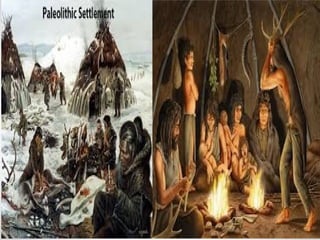
 People at this age who
inhabited the continents of
Europe, Asia, and Africa
 They lived by hunting and
fishing
 Skill with fire and stone tools
 They have vague religious ideas
such as offering sacrifices,
food, and ornaments to the dead
 Experts think this came about
when people began to hunt large
animals
 They needed to be able to give
out clear instructions
 They also learned how to make
fire
 Early people used fire to keepEarly people used fire to keep
themthem warmwarm
Middle Stone Age or
Mesolithic period
Involves the gradual
domestication of plants and
animals and the formation of
settled communities
 Dogs became valuable for
hunting and guarding property,
they were probably the first
animal to be domesticated
 Early people developed a
language, before they learned to
talk, early people simply made
sounds
 Hand signals were also
meaningful
 Gradually people developed
languages
New Stone Age or
Neolithic Period
 The term neolithic was derived
from greek word neolithikos
where neos means new and litos
means stone invented by John
Lubbock in 1865
 Two important discoveries
changed people from being good
gatherers to food producers
 First was learning to grow food
 Second learning to herd animals
 They also learned to use
animals in dragging their
primitive plow in transporting
their belongings
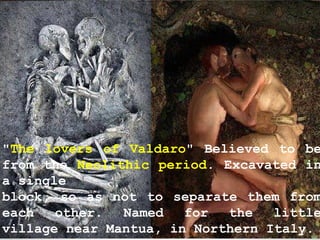
"The lovers of Valdaro" Believed to be
from the Neolithic period. Excavated in
a single
block, so as not to separate them from
each other. Named for the little
village near Mantua, in Northern Italy.
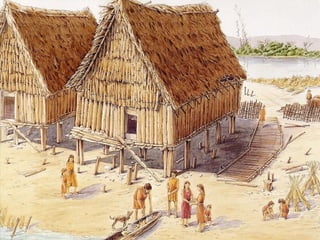
 Another step in man's
advancement was the building of
permanent homes
 Earliest known villages in the
world were found in Middle East
one of these is in Jericho in
Israel
 Another village was in Catal
Huyuk in present-day Turkey
The Age of Metals
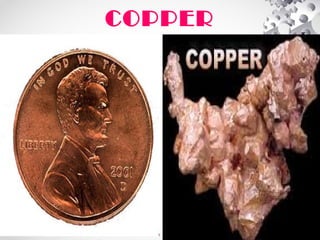
 Egyptians first to used copper
as early as 5, 000 BCE
 At about 2000 BCE, man
discovered that mixture of
copper and tin produced harder
metal bronze
 With this discovery, man
created stronger and better
tools, weapons, and utensils
COPPER
BRONZE
IRON
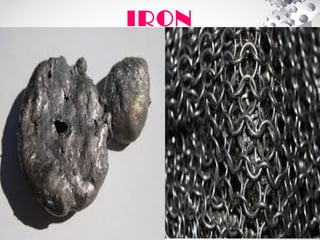
 Iron age started about 1,000
BCE it is more stronger and
durable compare to copper or
bronze
 As a result of this discovery ,
civilization leaped and bounced.
Transportation methods were
improved when iron made the
building of sturdier and faster
vehicles possible
 Civilization rose in the
valleys of the Nile River in
Egypt
 The Indus River in India
 Yellow or Huang Ho River in
China
Nile River in Egypt
Indus River in India
Yellow or Huang Ho
River in China
Emergence of
Civilization
 Five characteristics of
civilization
1. Advanced cities
2. Specialized workers
3. Complex institutions
4. Record keeping
5. Advanced technology
Advanced Cities
 Advanced cities were
birthplaces of civilizations.The
word "civilization" came from
latin word civitas which means
"city"
 A city is more than a large of
people living togeher, it is the
center of trade for large area.
Specialized Workers
 Such as traders, government
officials, and priests
 Specialization is the
enhancement of skills for a
specific kind of work
 Social organization in cities
became complex, people ranked
according to their jobs.
Complex Institutions
 The growing populations of
early cities made a system of
government necessary
 In civilization leaders emerged
to maintain order among people
and to establish laws
 The priests usually occupy the
top level in the society
 Below them are the few
merchants
 Followed by the artisans
 Those below are the majority of
the people
 Slaves are on te lowest level.
Record Keeping
 Was equally important as
government officials had to
document tax collections, the
passage of laws, and the storage
of grains and other products

Stages of man

  • 1.
  • 2.
    Archeologists divided the StoneAge 1. Old Stone Age or Paleolithic (2million BCE-8000BCE) 2. Middle Stone Age or Mesolithic Age(11,000-6,000BC) 3. New Stone Age or Neolithic Age (6,800-3,2000BC)
  • 3.
    Old Stone Ageor Paleolithic Age  The term was coined by John Lubbock in 1865  Greek word palaios which means "old" and lithos which means "stone"  People at this age who inhabited the continents of Europe, Asia, and Africa
  • 6.
     They livedby hunting and fishing  Skill with fire and stone tools  They have vague religious ideas such as offering sacrifices, food, and ornaments to the dead
  • 7.
     Experts thinkthis came about when people began to hunt large animals  They needed to be able to give out clear instructions  They also learned how to make fire  Early people used fire to keepEarly people used fire to keep themthem warmwarm
  • 8.
    Middle Stone Ageor Mesolithic period Involves the gradual domestication of plants and animals and the formation of settled communities  Dogs became valuable for hunting and guarding property, they were probably the first animal to be domesticated
  • 10.
     Early peopledeveloped a language, before they learned to talk, early people simply made sounds  Hand signals were also meaningful  Gradually people developed languages
  • 11.
    New Stone Ageor Neolithic Period  The term neolithic was derived from greek word neolithikos where neos means new and litos means stone invented by John Lubbock in 1865  Two important discoveries changed people from being good gatherers to food producers
  • 12.
     First waslearning to grow food  Second learning to herd animals  They also learned to use animals in dragging their primitive plow in transporting their belongings
  • 15.
    "The lovers ofValdaro" Believed to be from the Neolithic period. Excavated in a single block, so as not to separate them from each other. Named for the little village near Mantua, in Northern Italy.
  • 16.
     Another stepin man's advancement was the building of permanent homes  Earliest known villages in the world were found in Middle East one of these is in Jericho in Israel  Another village was in Catal Huyuk in present-day Turkey
  • 17.
    The Age ofMetals  Egyptians first to used copper as early as 5, 000 BCE  At about 2000 BCE, man discovered that mixture of copper and tin produced harder metal bronze  With this discovery, man created stronger and better tools, weapons, and utensils
  • 18.
  • 19.
  • 20.
  • 21.
     Iron agestarted about 1,000 BCE it is more stronger and durable compare to copper or bronze  As a result of this discovery , civilization leaped and bounced. Transportation methods were improved when iron made the building of sturdier and faster vehicles possible
  • 22.
     Civilization rosein the valleys of the Nile River in Egypt  The Indus River in India  Yellow or Huang Ho River in China
  • 23.
  • 24.
  • 25.
    Yellow or HuangHo River in China
  • 26.
    Emergence of Civilization  Fivecharacteristics of civilization 1. Advanced cities 2. Specialized workers 3. Complex institutions 4. Record keeping 5. Advanced technology
  • 27.
    Advanced Cities  Advancedcities were birthplaces of civilizations.The word "civilization" came from latin word civitas which means "city"  A city is more than a large of people living togeher, it is the center of trade for large area.
  • 28.
    Specialized Workers  Suchas traders, government officials, and priests  Specialization is the enhancement of skills for a specific kind of work  Social organization in cities became complex, people ranked according to their jobs.
  • 29.
    Complex Institutions  Thegrowing populations of early cities made a system of government necessary  In civilization leaders emerged to maintain order among people and to establish laws
  • 30.
     The priestsusually occupy the top level in the society  Below them are the few merchants  Followed by the artisans  Those below are the majority of the people  Slaves are on te lowest level.
  • 31.
    Record Keeping  Wasequally important as government officials had to document tax collections, the passage of laws, and the storage of grains and other products