Contents:› General concepts for SSRI

› Mechanism of action
› Indications
› Side effects

› Drug-drug interactions (DDI)
› Conclusion
General concepts for SSRI
› A class of drugs, such as fluoxetine or sertraline, that inhibit
the uptake of serotonin by neurons of the central nervous
system and are primarily used in the treatment of depression
and obsessive compulsive disorder.
› citalopram (Cipram, Seropram)
› escitalopram (Cipralex, Esertia)
› fluoxetine (Prozac, Evorex)
› fluvoxamin (Luvox, Faverin, Dumyrox)
› paroxetine (Paxil, Seroxat, Aropax)
› sertraline (Zoloft, Lustral, Serlain)
› zimelidine (Zelmid, Normud)
Mechanism of action
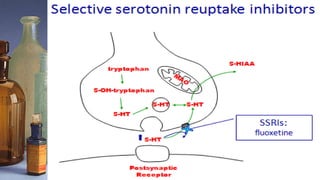
› Inhibit serotonin reuptake so increase synaptic
serotonin levels
› Many SSRIs affect other receptors especially at high
doses

› Clinical effect usually takes weeks so mechanism goes
beyond simply increasing synaptic serotonin levels
› Several serotonin (5-HT) receptor subtypes

› Serotonin receptors are located throughout the body
(especially GI tract)
Indications
The main indication for SSRIs is clinical depression.
SSRIs are frequently prescribed for
 anxiety disorders like social anxiety.
 panic disorders.

obsessive-compulsive disorder (OCD).
 eating disorders.
 chronic pain.
 premenstrual dysphoric disorder (PMDD).
Half-life

› Short: paroxetine & fluvoxamine (missed doses can
result in uncomfortable symptoms)
› Moderate: sertraline, citalopram, escitalopram
› Long: fluoxetine (good for people who may miss
doses)
Side effects
–Nausea is common

–Interfere with ejaculation
–Insomnia, dyskinesia, headache and diarrhoea

–Impairment of platelet function – epistaxis
–Serotonin Syndrome: Mental confusion, hallucinations,
sweating, hyperthermia, twitching of muscle, clonus
and convulsion.
Drug-drug interactions (DDI)
› Luvox > Prozac > Paxil > Zoloft > Celexa > Lexapro

› Interacting effects may be dose dependent (Zoloft)
› SSRI levels tend not to be altered by other drugs but
can potentially increase levels (inhibit metabolism) of
certain drugs
› Examples:
–paroxetine > ↑ risperidone
–fluoxetine > ↑ buspirone
–fluvoxamine > ↑ olanzapine
Conclusion
SSRIs have fewer antimuscarinic side-effects than the
older tricyclics and they are also less cardiotoxic in
overdosage
SSRIs are also preferred to tricyclic antidepressants
for depression in patients with diabetes.
 Fluoxetin is currently the most prescribed
antidepressant.
Ssri.ppt 2013

Ssri.ppt 2013

  • 2.
    Contents:› General conceptsfor SSRI › Mechanism of action › Indications › Side effects › Drug-drug interactions (DDI) › Conclusion
  • 3.
    General concepts forSSRI › A class of drugs, such as fluoxetine or sertraline, that inhibit the uptake of serotonin by neurons of the central nervous system and are primarily used in the treatment of depression and obsessive compulsive disorder. › citalopram (Cipram, Seropram) › escitalopram (Cipralex, Esertia) › fluoxetine (Prozac, Evorex) › fluvoxamin (Luvox, Faverin, Dumyrox) › paroxetine (Paxil, Seroxat, Aropax) › sertraline (Zoloft, Lustral, Serlain) › zimelidine (Zelmid, Normud)
  • 4.
    Mechanism of action ›Inhibit serotonin reuptake so increase synaptic serotonin levels › Many SSRIs affect other receptors especially at high doses › Clinical effect usually takes weeks so mechanism goes beyond simply increasing synaptic serotonin levels › Several serotonin (5-HT) receptor subtypes › Serotonin receptors are located throughout the body (especially GI tract)
  • 6.
    Indications The main indicationfor SSRIs is clinical depression. SSRIs are frequently prescribed for  anxiety disorders like social anxiety.  panic disorders. obsessive-compulsive disorder (OCD).  eating disorders.  chronic pain.  premenstrual dysphoric disorder (PMDD).
  • 7.
    Half-life › Short: paroxetine& fluvoxamine (missed doses can result in uncomfortable symptoms) › Moderate: sertraline, citalopram, escitalopram › Long: fluoxetine (good for people who may miss doses)
  • 8.
    Side effects –Nausea iscommon –Interfere with ejaculation –Insomnia, dyskinesia, headache and diarrhoea –Impairment of platelet function – epistaxis –Serotonin Syndrome: Mental confusion, hallucinations, sweating, hyperthermia, twitching of muscle, clonus and convulsion.
  • 9.
    Drug-drug interactions (DDI) ›Luvox > Prozac > Paxil > Zoloft > Celexa > Lexapro › Interacting effects may be dose dependent (Zoloft) › SSRI levels tend not to be altered by other drugs but can potentially increase levels (inhibit metabolism) of certain drugs › Examples: –paroxetine > ↑ risperidone –fluoxetine > ↑ buspirone –fluvoxamine > ↑ olanzapine
  • 10.
    Conclusion SSRIs have fewerantimuscarinic side-effects than the older tricyclics and they are also less cardiotoxic in overdosage SSRIs are also preferred to tricyclic antidepressants for depression in patients with diabetes.  Fluoxetin is currently the most prescribed antidepressant.