Updates on Antidepressant
Medications
BEDEER SABRY BEDEER ELSHERBINY
R.PH., MS, BCPS
PHARMACIST1-ZAFRANAH DIAGNOSTIC AND SCREENING CENTER-AHS-SEHA
Objectives
 What’s depression
 Pharmacotherapeutic Options
 Antidepressants Pharmacotherapy
 Antidepressant agents: SSRIs, SNRIs, atypical antidepressants, Serotonin
modulators, TCAs and MAOIs.
 Initiating, Adjusting, and Monitoring Antidepressant Therapy
 Antidepressant Combination Therapy
 Treatment-Resistant Depression (Augmentation Therapy)
 STAR*D study and Results
 References
What’s
depression
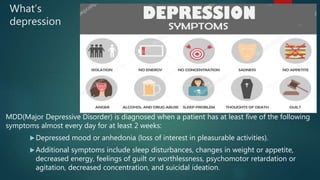
MDD(Major Depressive Disorder) is diagnosed when a patient has at least five of the following
symptoms almost every day for at least 2 weeks:
Depressed mood or anhedonia (loss of interest in pleasurable activities).
Additional symptoms include sleep disturbances, changes in weight or appetite,
decreased energy, feelings of guilt or worthlessness, psychomotor retardation or
agitation, decreased concentration, and suicidal ideation.
Pharmacotherapeutic Options
 Selection:
First-line medications:
SSRIs (Selective serotonin reuptake inhibitors),
SNRIs (serotonin-norepinephrine reuptake inhibitors)
Bupropion, and mirtazapine.
Consider possible drug-drug and drug-disease interactions, concurrent illnesses, prior
responses, family members’ prior responses, patient preference, and cost.
 Onset:
Physical symptoms (energy levels, sleep disturbances) improve before affective symptoms.
Symptoms responds in 2 weeks.
Full effect within 4–6 weeks.
Response within 8 weeks.
Remission may take up to 12 weeks.
 Adequate trial:
The correct drug for the patient and a therapeutic dose for an appropriate duration.
A therapeutic trial lasts 4–8 weeks (2010 APA practice guideline).
Pharmacotherapeutic Options
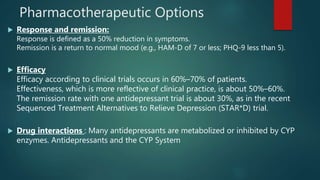
 Response and remission:
Response is defined as a 50% reduction in symptoms.
Remission is a return to normal mood (e.g., HAM-D of 7 or less; PHQ-9 less than 5).
 Efficacy
Efficacy according to clinical trials occurs in 60%–70% of patients.
Effectiveness, which is more reflective of clinical practice, is about 50%–60%.
The remission rate with one antidepressant trial is about 30%, as in the recent
Sequenced Treatment Alternatives to Relieve Depression (STAR*D) trial.
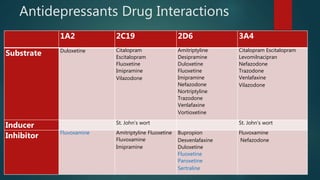
 Drug interactions : Many antidepressants are metabolized or inhibited by CYP
enzymes. Antidepressants and the CYP System
Antidepressants Drug Interactions
1A2 2C19 2D6 3A4
Substrate Duloxetine Citalopram
Escitalopram
Fluoxetine
Imipramine
Vilazodone
Amitriptyline
Desipramine
Duloxetine
Fluoxetine
Imipramine
Nefazodone
Nortriptyline
Trazodone
Venlafaxine
Vortioxetine
Citalopram Escitalopram
Levomilnacipran
Nefazodone
Trazodone
Venlafaxine
Vilazodone
Inducer St. John’s wort St. John’s wort
Inhibitor Fluvoxamine Amitriptyline Fluoxetine
Fluvoxamine
Imipramine
Bupropion
Desvenlafaxine
Duloxetine
Fluoxetine
Paroxetine
Sertraline
Fluvoxamine
Nefazodone
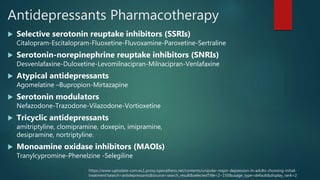
Antidepressants Pharmacotherapy
 Selective serotonin reuptake inhibitors (SSRIs)
Citalopram-Escitalopram-Fluoxetine-Fluvoxamine-Paroxetine-Sertraline
 Serotonin-norepinephrine reuptake inhibitors (SNRIs)
Desvenlafaxine-Duloxetine-Levomilnacipran-Milnacipran-Venlafaxine
 Atypical antidepressants
Agomelatine –Bupropion-Mirtazapine
 Serotonin modulators
Nefazodone-Trazodone-Vilazodone-Vortioxetine
 Tricyclic antidepressants
amitriptyline, clomipramine, doxepin, imipramine,
desipramine, nortriptyline.
 Monoamine oxidase inhibitors (MAOIs)
Tranylcypromine-Phenelzine -Selegiline
https://www-uptodate-com.eu1.proxy.openathens.net/contents/unipolar-major-depression-in-adults-choosing-initial-
treatment?search=antidepressants&source=search_result&selectedTitle=2~150&usage_type=default&display_rank=2
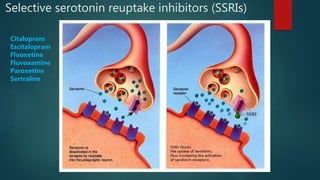
Selective serotonin reuptake inhibitors (SSRIs)
Citalopram
Escitalopram
Fluoxetine
Fluvoxamine
Paroxetine
Sertraline
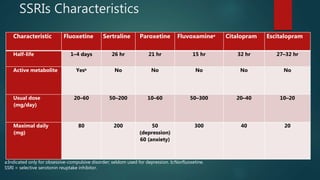
SSRIs Characteristics
Characteristic Fluoxetine Sertraline Paroxetine Fluvoxaminea Citalopram Escitalopram
Half-life 1–4 days 26 hr 21 hr 15 hr 32 hr 27–32 hr
Active metabolite Yesb No No No No No
Usual dose
(mg/day)
20–60 50–200 10–60 50–300 20–40 10–20
Maximal daily
(mg)
80 200 50
(depression)
60 (anxiety)
300 40 20
a:Indicated only for obsessive-compulsive disorder; seldom used for depression. b:Norfluoxetine.
SSRI = selective serotonin reuptake inhibitor.
Adverse Drug Effects of SSRIs
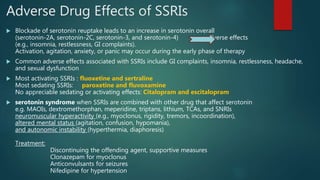
 Blockade of serotonin reuptake leads to an increase in serotonin overall
(serotonin-2A, serotonin-2C, serotonin-3, and serotonin-4) adverse effects
(e.g., insomnia, restlessness, GI complaints).
Activation, agitation, anxiety, or panic may occur during the early phase of therapy
 Common adverse effects associated with SSRIs include GI complaints, insomnia, restlessness, headache,
and sexual dysfunction
 Most activating SSRIs : fluoxetine and sertraline
Most sedating SSRIs: paroxetine and fluvoxamine
No appreciable sedating or activating effects: Citalopram and escitalopram
 serotonin syndrome when SSRIs are combined with other drug that affect serotonin
e.g. MAOIs, dextromethorphan, meperidine, triptans, lithium, TCAs, and SNRIs
neuromuscular hyperactivity (e.g., myoclonus, rigidity, tremors, incoordination),
altered mental status (agitation, confusion, hypomania),
and autonomic instability (hyperthermia, diaphoresis)
Treatment:
Discontinuing the offending agent, supportive measures
Clonazepam for myoclonus
Anticonvulsants for seizures
Nifedipine for hypertension
Adverse Drug Effects of SSRIs
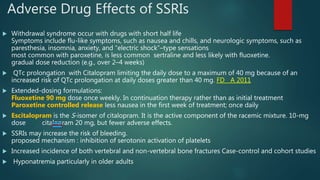
 Withdrawal syndrome occur with drugs with short half life
Symptoms include flu-like symptoms, such as nausea and chills, and neurologic symptoms, such as
paresthesia, insomnia, anxiety, and “electric shock”–type sensations
most common with paroxetine, is less common sertraline and less likely with fluoxetine.
gradual dose reduction (e.g., over 2–4 weeks)
 QTc prolongation with Citalopram limiting the daily dose to a maximum of 40 mg because of an
increased risk of QTc prolongation at daily doses greater than 40 mg. FD A 2011
 Extended-dosing formulations:
Fluoxetine 90 mg dose once weekly. In continuation therapy rather than as initial treatment
Paroxetine controlled release less nausea in the first week of treatment; once daily
 Escitalopram is the S-isomer of citalopram. It is the active component of the racemic mixture. 10-mg
dose citalopram 20 mg, but fewer adverse effects.
 SSRIs may increase the risk of bleeding.
proposed mechanism : inhibition of serotonin activation of platelets
 Increased incidence of both vertebral and non-vertebral bone fractures Case-control and cohort studies
 Hyponatremia particularly in older adults
SSRIs Induced sexual dysfunction
 incidence 15% to 80%
A 14-week, prospective observational study (Sequenced Treatment Alternatives to Relieve Depression [STAR*D]) of 1473
patients treated with citalopram found that
•Decreased libido occurred in 54 percent
•Difficulty achieving orgasm occurred in 36 percent
•Among the 574 males, erectile dysfunction occurred in 37 percent
Treatment options for patients who respond to SSRIs but suffer sexual dysfunction include :
1. Waiting for spontaneous remission of sexual impairment and decreasing the dose
2. Switching to a non-SSRI antidepressant or a different SSRI Bupropion
A network meta-analysis of 37 randomized trials (n >14,000 depressed patients) found that the incidence of sexual
dysfunction was less with bupropion than escitalopram, paroxetine, or sertraline
Sexual dysfunction that emerges during treatment with SSRIs may persist despite switching to bupropion. For these
patients, we suggest discontinuing bupropion and switching to Mirtazapine
meta-analysis of four randomized trials (n = 907 patients with major depression) that compared mirtazapine with
SSRIs (fluoxetine, paroxetine, or sertraline), and found that sexual dysfunction was less likely with mirtazapine (odds
ratio 0.3, 95% CI 0.1-0.7)
Other alternatives to mirtazapine include Agomelatine, Nefazodone
3. Augment with a second drug phosphodiesterase-5 inhibitors or bupropion
For men with erectile dysfunction, treatment with a phosphodiesterase-5 inhibitor, rather than bupropion .
For women with sexual dysfunction, add-on bupropion at higher doses rather than a phosphodiesterase-5 inhibitor
SNRIs: Serotonin-Norepinephrine Reuptake Inhibitors
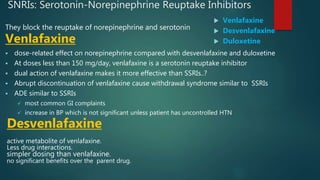
They block the reuptake of norepinephrine and serotonin
Venlafaxine
 dose-related effect on norepinephrine compared with desvenlafaxine and duloxetine
 At doses less than 150 mg/day, venlafaxine is a serotonin reuptake inhibitor
 dual action of venlafaxine makes it more effective than SSRIs..?
 Abrupt discontinuation of venlafaxine cause withdrawal syndrome similar to SSRIs
 ADE similar to SSRIs
 most common GI complaints
 increase in BP which is not significant unless patient has uncontrolled HTN
Desvenlafaxine
active metabolite of venlafaxine.
Less drug interactions.
simpler dosing than venlafaxine.
no significant benefits over the parent drug.
 Venlafaxine
 Desvenlafaxine
 Duloxetine
SNRIs: Serotonin-Norepinephrine Reuptake Inhibitors
Duloxetine
FDA approved for the treatment of
 diabetic peripheral neuropathy
 Fibromyalgia
 chronic musculoskeletal pain caused by chronic lower back pain or osteoarthritis pain
Interactions with CYP2D6 inhibitors
May increase blood pressure
Can cause liver toxicity, avoid in patients with hepatic insufficiency
Avoid in end-stage renal disease requiring dialysis, or severe renal impairment.
Atypical antidepressants
 Agomelatine
 Bupropion
 Mirtazapine
For patients who have inadequate responses or intolerable side effects during first-line treatment
Agomelatine
Structure is similar to melatonin agonist at melatonin receptors (MT1 and MT2).benefit in insomnia
Also block 5-HT2C receptor, so enhances release of dopamine and norepinephrine
Contraindicated in patients with liver disease
Contraindicated with medications that are potent inhibitors CYP 1A2 enzymes (e.g. Ciprofloxacin ,Fluvoxamine
) serum concentration of agomelatine will increase 60 fold
Agomelatine may be hepatotoxic and is avoided in patients with active liver disease
European Medicines Agency requires liver function tests at baseline; after 6, 12, and 24 weeks of treatment;
and when clinically indicated thereafter
Does not cause weight gain, gastrointestinal distress, cardiovascular toxicity, or sexual impairment
Agomelatine
Tolerability of agomelatine may be superior to SSRIs or Venlafaxine
A meta-analysis of nine randomized trials (3377 patients with major depression) compared agomelatine
with SSRIs (escitalopram, fluoxetine, paroxetine, or sertraline) and found that discontinuation of
treatment due to side effects occurred less often with agomelatine
(risk ratio 0.7, 95% CI 0.5-0.9) .
In addition, drop out due to side effects was less with agomelatine than venlafaxine
(two trials, 608 patients; risk ratio 0.3, 95% CI 0.2-0.6
Bupropion
Indicated for
major depression,
seasonal affective disorder,
attention deficit hyperactivity disorder
tobacco dependence
hypoactive sexual disorder
Obesity
Structurally related to amphetamine. Classified as a dopamine norepinephrine reuptake
inhibitor, because it inhibits presynaptic reuptake of dopamine and norepinephrine (with a
greater effect upon dopamine)
Available in immediate release, extended-release and sustained release formulations
The sustained- and extended-release products may also cause fewer adverse effects
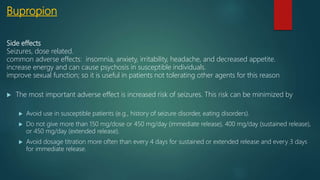
Bupropion
Side effects
Seizures, dose related.
common adverse effects: insomnia, anxiety, irritability, headache, and decreased appetite.
increase energy and can cause psychosis in susceptible individuals.
improve sexual function; so it is useful in patients not tolerating other agents for this reason
 The most important adverse effect is increased risk of seizures. This risk can be minimized by
 Avoid use in susceptible patients (e.g., history of seizure disorder, eating disorders).
 Do not give more than 150 mg/dose or 450 mg/day (immediate release), 400 mg/day (sustained release),
or 450 mg/day (extended release).
 Avoid dosage titration more often than every 4 days for sustained or extended release and every 3 days
for immediate release.
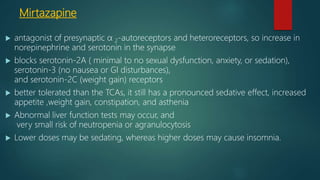
Mirtazapine
 antagonist of presynaptic α 2-autoreceptors and heteroreceptors, so increase in
norepinephrine and serotonin in the synapse
 blocks serotonin-2A ( minimal to no sexual dysfunction, anxiety, or sedation),
serotonin-3 (no nausea or GI disturbances),
and serotonin-2C (weight gain) receptors
 better tolerated than the TCAs, it still has a pronounced sedative effect, increased
appetite ,weight gain, constipation, and asthenia
 Abnormal liver function tests may occur, and
very small risk of neutropenia or agranulocytosis
 Lower doses may be sedating, whereas higher doses may cause insomnia.
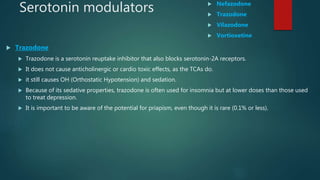
Serotonin modulators  Nefazodone
 Trazodone
 Vilazodone
 Vortioxetine
 Trazodone
 Trazodone is a serotonin reuptake inhibitor that also blocks serotonin-2A receptors.
 It does not cause anticholinergic or cardio toxic effects, as the TCAs do.
 it still causes OH (Orthostatic Hypotension) and sedation.
 Because of its sedative properties, trazodone is often used for insomnia but at lower doses than those used
to treat depression.
 It is important to be aware of the potential for priapism, even though it is rare (0.1% or less).
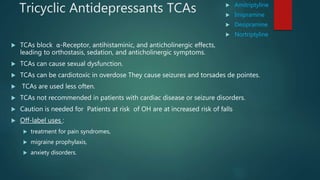
Tricyclic Antidepressants TCAs  Amitriptyline
 Imipramine
 Desipramine
 Nortriptyline
 TCAs block α-Receptor, antihistaminic, and anticholinergic effects,
leading to orthostasis, sedation, and anticholinergic symptoms.
 TCAs can cause sexual dysfunction.
 TCAs can be cardiotoxic in overdose They cause seizures and torsades de pointes.
 TCAs are used less often.
 TCAs not recommended in patients with cardiac disease or seizure disorders.
 Caution is needed for Patients at risk of OH are at increased risk of falls
 Off-label uses :
 treatment for pain syndromes,
 migraine prophylaxis,
 anxiety disorders.
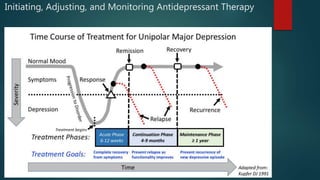
Initiating, Adjusting, and Monitoring Antidepressant Therapy
 Remission :
at least 3 weeks with no symptoms of depressed mood and anhedonia and no
more than three remaining symptoms of depression
 Adequate trial :
Antidepressant with full therapeutic doses for 6–8 weeks if no response we can
consider treatment failure If partial response, the trial can be extended to 12
weeks
 Treatment resistance:
failing to respond to two or more agents from different classes
need ECT, augmentation therapy, or combination therapy
 Antidepressants and Suicidality:
black box warning for all antidepressants
The FDA has required that package labels for antidepressants include a statement
to monitor patients suicidal thoughts and behaviors especially when
antidepressants are initiated.
Antidepressant Combination Therapy
 Many agents that can affect different systems
( serotonin, Norepinephrine, Dopamine).
 combinations with lower doses of each medication causes fewer
adverse effects.
 Second antidepressant may offset an adverse effect of another
(e.g., using trazodone to treat SSRI-induced insomnia)
 Adding bupropion SSRI therapy is a strategy for patients who do not
fully respond to the SSRI alone.
Treatment-Resistant Depression
(Augmentation Therapy)
 SGAs (second generation antipsychotic) as adjunct to antidepressant
FDA approval for this indication
Aripiprazole
Brexpiprazole
Quetiapine extended release
Olanzapine in combination with fluoxetine
 Ketamine infusions
 Others:
Lithium, liothyronine, modafinil, scopolamine, buspirone
STAR*D study
STAR*D study Results
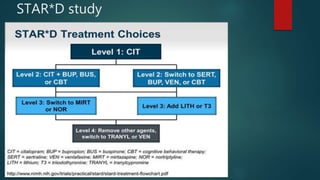
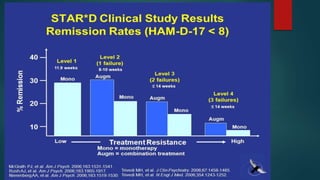
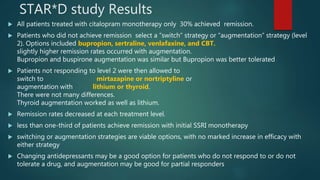
 All patients treated with citalopram monotherapy only 30% achieved remission.
 Patients who did not achieve remission select a “switch” strategy or “augmentation” strategy (level
2). Options included bupropion, sertraline, venlafaxine, and CBT.
slightly higher remission rates occurred with augmentation.
Bupropion and buspirone augmentation was similar but Bupropion was better tolerated
 Patients not responding to level 2 were then allowed to
switch to mirtazapine or nortriptyline or
augmentation with lithium or thyroid.
There were not many differences.
Thyroid augmentation worked as well as lithium.
 Remission rates decreased at each treatment level.
 less than one-third of patients achieve remission with initial SSRI monotherapy
 switching or augmentation strategies are viable options, with no marked increase in efficacy with
either strategy
 Changing antidepressants may be a good option for patients who do not respond to or do not
tolerate a drug, and augmentation may be good for partial responders
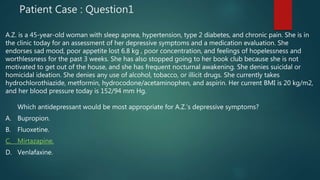
Patient Case : Question1
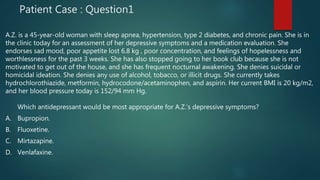
A.Z. is a 45-year-old woman with sleep apnea, hypertension, type 2 diabetes, and chronic pain. She is in
the clinic today for an assessment of her depressive symptoms and a medication evaluation. She
endorses sad mood, poor appetite lost 6.8 kg , poor concentration, and feelings of hopelessness and
worthlessness for the past 3 weeks. She has also stopped going to her book club because she is not
motivated to get out of the house, and she has frequent nocturnal awakening. She denies suicidal or
homicidal ideation. She denies any use of alcohol, tobacco, or illicit drugs. She currently takes
hydrochlorothiazide, metformin, hydrocodone/acetaminophen, and aspirin. Her current BMI is 20 kg/m2,
and her blood pressure today is 152/94 mm Hg.
Which antidepressant would be most appropriate for A.Z.’s depressive symptoms?
A. Bupropion.
B. Fluoxetine.
C. Mirtazapine.
D. Venlafaxine.
Patient Case : Question1
A.Z. is a 45-year-old woman with sleep apnea, hypertension, type 2 diabetes, and chronic pain. She is in
the clinic today for an assessment of her depressive symptoms and a medication evaluation. She
endorses sad mood, poor appetite lost 6.8 kg , poor concentration, and feelings of hopelessness and
worthlessness for the past 3 weeks. She has also stopped going to her book club because she is not
motivated to get out of the house, and she has frequent nocturnal awakening. She denies suicidal or
homicidal ideation. She denies any use of alcohol, tobacco, or illicit drugs. She currently takes
hydrochlorothiazide, metformin, hydrocodone/acetaminophen, and aspirin. Her current BMI is 20 kg/m2,
and her blood pressure today is 152/94 mm Hg.
Which antidepressant would be most appropriate for A.Z.’s depressive symptoms?
A. Bupropion.
B. Fluoxetine.
C. Mirtazapine.
D. Venlafaxine.
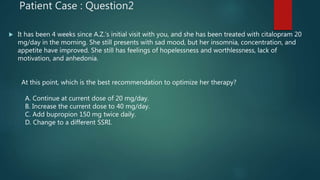
Patient Case : Question2
 It has been 4 weeks since A.Z.’s initial visit with you, and she has been treated with citalopram 20
mg/day in the morning. She still presents with sad mood, but her insomnia, concentration, and
appetite have improved. She still has feelings of hopelessness and worthlessness, lack of
motivation, and anhedonia.
At this point, which is the best recommendation to optimize her therapy?
A. Continue at current dose of 20 mg/day.
B. Increase the current dose to 40 mg/day.
C. Add bupropion 150 mg twice daily.
D. Change to a different SSRI.
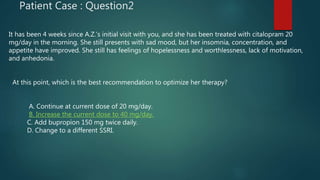
Patient Case : Question2
It has been 4 weeks since A.Z.’s initial visit with you, and she has been treated with citalopram 20
mg/day in the morning. She still presents with sad mood, but her insomnia, concentration, and
appetite have improved. She still has feelings of hopelessness and worthlessness, lack of motivation,
and anhedonia.
At this point, which is the best recommendation to optimize her therapy?
A. Continue at current dose of 20 mg/day.
B. Increase the current dose to 40 mg/day.
C. Add bupropion 150 mg twice daily.
D. Change to a different SSRI.
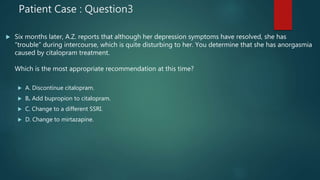
Patient Case : Question3
 Six months later, A.Z. reports that although her depression symptoms have resolved, she has
“trouble” during intercourse, which is quite disturbing to her. You determine that she has anorgasmia
caused by citalopram treatment.
Which is the most appropriate recommendation at this time?
 A. Discontinue citalopram.
 B. Add bupropion to citalopram.
 C. Change to a different SSRI.
 D. Change to mirtazapine.
Patient Case : Question3
 Six months later, A.Z. reports that although her depression symptoms have resolved, she has
“trouble” during intercourse, which is quite disturbing to her. You determine that she has anorgasmia
caused by citalopram treatment.
Which is the most appropriate recommendation at this time?
 A. Discontinue citalopram.
 B. Add bupropion to citalopram.
 C. Change to a different SSRI.
 D. Change to mirtazapine.
References
 https://www-uptodate-com.eu1.proxy.openathens.net/contents/unipolar-major-depression-in-adults-choosing-initial-
treatment?search=antidepressants&source=search_result&selectedTitle=2~150&usage_type=default&display_rank=2
 Sexual dysfunction associated with second-generation antidepressants in patients with major depressive disorder:
results from a systematic review with network meta-analysis.
Drug Saf. 2014 Jan;37(1):19-31. doi: 10.1007/s40264-013-0129-4.
 Mirtazapine versus other antidepressive agents for depression.
Cochrane Database Syst Rev. 2011 Dec 7;(12):CD006528. doi: 10.1002/14651858.CD006528.pub2.
 https://www.uptodate.com/contents/sexual-dysfunction-caused-by-selective-serotonin-reuptake-inhibitors-ssris-
management?search=antidepressants&topicRef=14675&source=see_link
 https://www.uptodate.com/contents/atypical-antidepressants-pharmacology-administration-and-side-
effects?topicRef=1725&source=see_link
 Agomelatine in the treatment of major depressive disorder: potential for clinical effectiveness
CNS Drugs. 2010 Jun;24(6):479-99. doi: 10.2165/11534420-000000000-00000.
 Agomelatine versus other antidepressive agents for major depression
Cochrane Database Syst Rev. 2013 Dec 17;(12):CD008851. doi: 10.1002/14651858.CD008851.pub2.
 ACCP Updates in Therapeutics® 2018: Pharmacotherapy Preparatory Review and Recertification Course
 STAR*D findings, see Am J Psychiatry 2006;163:1905-17.

Updates on antidepressant medications

  • 1.
    Updates on Antidepressant Medications BEDEERSABRY BEDEER ELSHERBINY R.PH., MS, BCPS PHARMACIST1-ZAFRANAH DIAGNOSTIC AND SCREENING CENTER-AHS-SEHA
  • 2.
    Objectives  What’s depression Pharmacotherapeutic Options  Antidepressants Pharmacotherapy  Antidepressant agents: SSRIs, SNRIs, atypical antidepressants, Serotonin modulators, TCAs and MAOIs.  Initiating, Adjusting, and Monitoring Antidepressant Therapy  Antidepressant Combination Therapy  Treatment-Resistant Depression (Augmentation Therapy)  STAR*D study and Results  References
  • 3.
    What’s depression MDD(Major Depressive Disorder)is diagnosed when a patient has at least five of the following symptoms almost every day for at least 2 weeks: Depressed mood or anhedonia (loss of interest in pleasurable activities). Additional symptoms include sleep disturbances, changes in weight or appetite, decreased energy, feelings of guilt or worthlessness, psychomotor retardation or agitation, decreased concentration, and suicidal ideation.
  • 4.
    Pharmacotherapeutic Options  Selection: First-linemedications: SSRIs (Selective serotonin reuptake inhibitors), SNRIs (serotonin-norepinephrine reuptake inhibitors) Bupropion, and mirtazapine. Consider possible drug-drug and drug-disease interactions, concurrent illnesses, prior responses, family members’ prior responses, patient preference, and cost.  Onset: Physical symptoms (energy levels, sleep disturbances) improve before affective symptoms. Symptoms responds in 2 weeks. Full effect within 4–6 weeks. Response within 8 weeks. Remission may take up to 12 weeks.  Adequate trial: The correct drug for the patient and a therapeutic dose for an appropriate duration. A therapeutic trial lasts 4–8 weeks (2010 APA practice guideline).
  • 5.
    Pharmacotherapeutic Options  Responseand remission: Response is defined as a 50% reduction in symptoms. Remission is a return to normal mood (e.g., HAM-D of 7 or less; PHQ-9 less than 5).  Efficacy Efficacy according to clinical trials occurs in 60%–70% of patients. Effectiveness, which is more reflective of clinical practice, is about 50%–60%. The remission rate with one antidepressant trial is about 30%, as in the recent Sequenced Treatment Alternatives to Relieve Depression (STAR*D) trial.  Drug interactions : Many antidepressants are metabolized or inhibited by CYP enzymes. Antidepressants and the CYP System
  • 6.
    Antidepressants Drug Interactions 1A22C19 2D6 3A4 Substrate Duloxetine Citalopram Escitalopram Fluoxetine Imipramine Vilazodone Amitriptyline Desipramine Duloxetine Fluoxetine Imipramine Nefazodone Nortriptyline Trazodone Venlafaxine Vortioxetine Citalopram Escitalopram Levomilnacipran Nefazodone Trazodone Venlafaxine Vilazodone Inducer St. John’s wort St. John’s wort Inhibitor Fluvoxamine Amitriptyline Fluoxetine Fluvoxamine Imipramine Bupropion Desvenlafaxine Duloxetine Fluoxetine Paroxetine Sertraline Fluvoxamine Nefazodone
  • 7.
    Antidepressants Pharmacotherapy  Selectiveserotonin reuptake inhibitors (SSRIs) Citalopram-Escitalopram-Fluoxetine-Fluvoxamine-Paroxetine-Sertraline  Serotonin-norepinephrine reuptake inhibitors (SNRIs) Desvenlafaxine-Duloxetine-Levomilnacipran-Milnacipran-Venlafaxine  Atypical antidepressants Agomelatine –Bupropion-Mirtazapine  Serotonin modulators Nefazodone-Trazodone-Vilazodone-Vortioxetine  Tricyclic antidepressants amitriptyline, clomipramine, doxepin, imipramine, desipramine, nortriptyline.  Monoamine oxidase inhibitors (MAOIs) Tranylcypromine-Phenelzine -Selegiline https://www-uptodate-com.eu1.proxy.openathens.net/contents/unipolar-major-depression-in-adults-choosing-initial- treatment?search=antidepressants&source=search_result&selectedTitle=2~150&usage_type=default&display_rank=2
  • 8.
    Selective serotonin reuptakeinhibitors (SSRIs) Citalopram Escitalopram Fluoxetine Fluvoxamine Paroxetine Sertraline
  • 9.
    SSRIs Characteristics Characteristic FluoxetineSertraline Paroxetine Fluvoxaminea Citalopram Escitalopram Half-life 1–4 days 26 hr 21 hr 15 hr 32 hr 27–32 hr Active metabolite Yesb No No No No No Usual dose (mg/day) 20–60 50–200 10–60 50–300 20–40 10–20 Maximal daily (mg) 80 200 50 (depression) 60 (anxiety) 300 40 20 a:Indicated only for obsessive-compulsive disorder; seldom used for depression. b:Norfluoxetine. SSRI = selective serotonin reuptake inhibitor.
  • 10.
    Adverse Drug Effectsof SSRIs  Blockade of serotonin reuptake leads to an increase in serotonin overall (serotonin-2A, serotonin-2C, serotonin-3, and serotonin-4) adverse effects (e.g., insomnia, restlessness, GI complaints). Activation, agitation, anxiety, or panic may occur during the early phase of therapy  Common adverse effects associated with SSRIs include GI complaints, insomnia, restlessness, headache, and sexual dysfunction  Most activating SSRIs : fluoxetine and sertraline Most sedating SSRIs: paroxetine and fluvoxamine No appreciable sedating or activating effects: Citalopram and escitalopram  serotonin syndrome when SSRIs are combined with other drug that affect serotonin e.g. MAOIs, dextromethorphan, meperidine, triptans, lithium, TCAs, and SNRIs neuromuscular hyperactivity (e.g., myoclonus, rigidity, tremors, incoordination), altered mental status (agitation, confusion, hypomania), and autonomic instability (hyperthermia, diaphoresis) Treatment: Discontinuing the offending agent, supportive measures Clonazepam for myoclonus Anticonvulsants for seizures Nifedipine for hypertension
  • 11.
    Adverse Drug Effectsof SSRIs  Withdrawal syndrome occur with drugs with short half life Symptoms include flu-like symptoms, such as nausea and chills, and neurologic symptoms, such as paresthesia, insomnia, anxiety, and “electric shock”–type sensations most common with paroxetine, is less common sertraline and less likely with fluoxetine. gradual dose reduction (e.g., over 2–4 weeks)  QTc prolongation with Citalopram limiting the daily dose to a maximum of 40 mg because of an increased risk of QTc prolongation at daily doses greater than 40 mg. FD A 2011  Extended-dosing formulations: Fluoxetine 90 mg dose once weekly. In continuation therapy rather than as initial treatment Paroxetine controlled release less nausea in the first week of treatment; once daily  Escitalopram is the S-isomer of citalopram. It is the active component of the racemic mixture. 10-mg dose citalopram 20 mg, but fewer adverse effects.  SSRIs may increase the risk of bleeding. proposed mechanism : inhibition of serotonin activation of platelets  Increased incidence of both vertebral and non-vertebral bone fractures Case-control and cohort studies  Hyponatremia particularly in older adults
  • 12.
    SSRIs Induced sexualdysfunction  incidence 15% to 80% A 14-week, prospective observational study (Sequenced Treatment Alternatives to Relieve Depression [STAR*D]) of 1473 patients treated with citalopram found that •Decreased libido occurred in 54 percent •Difficulty achieving orgasm occurred in 36 percent •Among the 574 males, erectile dysfunction occurred in 37 percent Treatment options for patients who respond to SSRIs but suffer sexual dysfunction include : 1. Waiting for spontaneous remission of sexual impairment and decreasing the dose 2. Switching to a non-SSRI antidepressant or a different SSRI Bupropion A network meta-analysis of 37 randomized trials (n >14,000 depressed patients) found that the incidence of sexual dysfunction was less with bupropion than escitalopram, paroxetine, or sertraline Sexual dysfunction that emerges during treatment with SSRIs may persist despite switching to bupropion. For these patients, we suggest discontinuing bupropion and switching to Mirtazapine meta-analysis of four randomized trials (n = 907 patients with major depression) that compared mirtazapine with SSRIs (fluoxetine, paroxetine, or sertraline), and found that sexual dysfunction was less likely with mirtazapine (odds ratio 0.3, 95% CI 0.1-0.7) Other alternatives to mirtazapine include Agomelatine, Nefazodone 3. Augment with a second drug phosphodiesterase-5 inhibitors or bupropion For men with erectile dysfunction, treatment with a phosphodiesterase-5 inhibitor, rather than bupropion . For women with sexual dysfunction, add-on bupropion at higher doses rather than a phosphodiesterase-5 inhibitor
  • 13.
    SNRIs: Serotonin-Norepinephrine ReuptakeInhibitors They block the reuptake of norepinephrine and serotonin Venlafaxine  dose-related effect on norepinephrine compared with desvenlafaxine and duloxetine  At doses less than 150 mg/day, venlafaxine is a serotonin reuptake inhibitor  dual action of venlafaxine makes it more effective than SSRIs..?  Abrupt discontinuation of venlafaxine cause withdrawal syndrome similar to SSRIs  ADE similar to SSRIs  most common GI complaints  increase in BP which is not significant unless patient has uncontrolled HTN Desvenlafaxine active metabolite of venlafaxine. Less drug interactions. simpler dosing than venlafaxine. no significant benefits over the parent drug.  Venlafaxine  Desvenlafaxine  Duloxetine
  • 14.
    SNRIs: Serotonin-Norepinephrine ReuptakeInhibitors Duloxetine FDA approved for the treatment of  diabetic peripheral neuropathy  Fibromyalgia  chronic musculoskeletal pain caused by chronic lower back pain or osteoarthritis pain Interactions with CYP2D6 inhibitors May increase blood pressure Can cause liver toxicity, avoid in patients with hepatic insufficiency Avoid in end-stage renal disease requiring dialysis, or severe renal impairment.
  • 15.
    Atypical antidepressants  Agomelatine Bupropion  Mirtazapine For patients who have inadequate responses or intolerable side effects during first-line treatment Agomelatine Structure is similar to melatonin agonist at melatonin receptors (MT1 and MT2).benefit in insomnia Also block 5-HT2C receptor, so enhances release of dopamine and norepinephrine Contraindicated in patients with liver disease Contraindicated with medications that are potent inhibitors CYP 1A2 enzymes (e.g. Ciprofloxacin ,Fluvoxamine ) serum concentration of agomelatine will increase 60 fold Agomelatine may be hepatotoxic and is avoided in patients with active liver disease European Medicines Agency requires liver function tests at baseline; after 6, 12, and 24 weeks of treatment; and when clinically indicated thereafter Does not cause weight gain, gastrointestinal distress, cardiovascular toxicity, or sexual impairment
  • 16.
    Agomelatine Tolerability of agomelatinemay be superior to SSRIs or Venlafaxine A meta-analysis of nine randomized trials (3377 patients with major depression) compared agomelatine with SSRIs (escitalopram, fluoxetine, paroxetine, or sertraline) and found that discontinuation of treatment due to side effects occurred less often with agomelatine (risk ratio 0.7, 95% CI 0.5-0.9) . In addition, drop out due to side effects was less with agomelatine than venlafaxine (two trials, 608 patients; risk ratio 0.3, 95% CI 0.2-0.6
  • 17.
    Bupropion Indicated for major depression, seasonalaffective disorder, attention deficit hyperactivity disorder tobacco dependence hypoactive sexual disorder Obesity Structurally related to amphetamine. Classified as a dopamine norepinephrine reuptake inhibitor, because it inhibits presynaptic reuptake of dopamine and norepinephrine (with a greater effect upon dopamine) Available in immediate release, extended-release and sustained release formulations The sustained- and extended-release products may also cause fewer adverse effects
  • 18.
    Bupropion Side effects Seizures, doserelated. common adverse effects: insomnia, anxiety, irritability, headache, and decreased appetite. increase energy and can cause psychosis in susceptible individuals. improve sexual function; so it is useful in patients not tolerating other agents for this reason  The most important adverse effect is increased risk of seizures. This risk can be minimized by  Avoid use in susceptible patients (e.g., history of seizure disorder, eating disorders).  Do not give more than 150 mg/dose or 450 mg/day (immediate release), 400 mg/day (sustained release), or 450 mg/day (extended release).  Avoid dosage titration more often than every 4 days for sustained or extended release and every 3 days for immediate release.
  • 19.
    Mirtazapine  antagonist ofpresynaptic α 2-autoreceptors and heteroreceptors, so increase in norepinephrine and serotonin in the synapse  blocks serotonin-2A ( minimal to no sexual dysfunction, anxiety, or sedation), serotonin-3 (no nausea or GI disturbances), and serotonin-2C (weight gain) receptors  better tolerated than the TCAs, it still has a pronounced sedative effect, increased appetite ,weight gain, constipation, and asthenia  Abnormal liver function tests may occur, and very small risk of neutropenia or agranulocytosis  Lower doses may be sedating, whereas higher doses may cause insomnia.
  • 20.
    Serotonin modulators Nefazodone  Trazodone  Vilazodone  Vortioxetine  Trazodone  Trazodone is a serotonin reuptake inhibitor that also blocks serotonin-2A receptors.  It does not cause anticholinergic or cardio toxic effects, as the TCAs do.  it still causes OH (Orthostatic Hypotension) and sedation.  Because of its sedative properties, trazodone is often used for insomnia but at lower doses than those used to treat depression.  It is important to be aware of the potential for priapism, even though it is rare (0.1% or less).
  • 21.
    Tricyclic Antidepressants TCAs Amitriptyline  Imipramine  Desipramine  Nortriptyline  TCAs block α-Receptor, antihistaminic, and anticholinergic effects, leading to orthostasis, sedation, and anticholinergic symptoms.  TCAs can cause sexual dysfunction.  TCAs can be cardiotoxic in overdose They cause seizures and torsades de pointes.  TCAs are used less often.  TCAs not recommended in patients with cardiac disease or seizure disorders.  Caution is needed for Patients at risk of OH are at increased risk of falls  Off-label uses :  treatment for pain syndromes,  migraine prophylaxis,  anxiety disorders.
  • 22.
    Initiating, Adjusting, andMonitoring Antidepressant Therapy
  • 23.
    Initiating, Adjusting, andMonitoring Antidepressant Therapy  Remission : at least 3 weeks with no symptoms of depressed mood and anhedonia and no more than three remaining symptoms of depression  Adequate trial : Antidepressant with full therapeutic doses for 6–8 weeks if no response we can consider treatment failure If partial response, the trial can be extended to 12 weeks  Treatment resistance: failing to respond to two or more agents from different classes need ECT, augmentation therapy, or combination therapy  Antidepressants and Suicidality: black box warning for all antidepressants The FDA has required that package labels for antidepressants include a statement to monitor patients suicidal thoughts and behaviors especially when antidepressants are initiated.
  • 24.
    Antidepressant Combination Therapy Many agents that can affect different systems ( serotonin, Norepinephrine, Dopamine).  combinations with lower doses of each medication causes fewer adverse effects.  Second antidepressant may offset an adverse effect of another (e.g., using trazodone to treat SSRI-induced insomnia)  Adding bupropion SSRI therapy is a strategy for patients who do not fully respond to the SSRI alone.
  • 25.
    Treatment-Resistant Depression (Augmentation Therapy) SGAs (second generation antipsychotic) as adjunct to antidepressant FDA approval for this indication Aripiprazole Brexpiprazole Quetiapine extended release Olanzapine in combination with fluoxetine  Ketamine infusions  Others: Lithium, liothyronine, modafinil, scopolamine, buspirone
  • 26.
  • 28.
    STAR*D study Results All patients treated with citalopram monotherapy only 30% achieved remission.  Patients who did not achieve remission select a “switch” strategy or “augmentation” strategy (level 2). Options included bupropion, sertraline, venlafaxine, and CBT. slightly higher remission rates occurred with augmentation. Bupropion and buspirone augmentation was similar but Bupropion was better tolerated  Patients not responding to level 2 were then allowed to switch to mirtazapine or nortriptyline or augmentation with lithium or thyroid. There were not many differences. Thyroid augmentation worked as well as lithium.  Remission rates decreased at each treatment level.  less than one-third of patients achieve remission with initial SSRI monotherapy  switching or augmentation strategies are viable options, with no marked increase in efficacy with either strategy  Changing antidepressants may be a good option for patients who do not respond to or do not tolerate a drug, and augmentation may be good for partial responders
  • 29.
    Patient Case :Question1 A.Z. is a 45-year-old woman with sleep apnea, hypertension, type 2 diabetes, and chronic pain. She is in the clinic today for an assessment of her depressive symptoms and a medication evaluation. She endorses sad mood, poor appetite lost 6.8 kg , poor concentration, and feelings of hopelessness and worthlessness for the past 3 weeks. She has also stopped going to her book club because she is not motivated to get out of the house, and she has frequent nocturnal awakening. She denies suicidal or homicidal ideation. She denies any use of alcohol, tobacco, or illicit drugs. She currently takes hydrochlorothiazide, metformin, hydrocodone/acetaminophen, and aspirin. Her current BMI is 20 kg/m2, and her blood pressure today is 152/94 mm Hg. Which antidepressant would be most appropriate for A.Z.’s depressive symptoms? A. Bupropion. B. Fluoxetine. C. Mirtazapine. D. Venlafaxine.
  • 30.
    Patient Case :Question1 A.Z. is a 45-year-old woman with sleep apnea, hypertension, type 2 diabetes, and chronic pain. She is in the clinic today for an assessment of her depressive symptoms and a medication evaluation. She endorses sad mood, poor appetite lost 6.8 kg , poor concentration, and feelings of hopelessness and worthlessness for the past 3 weeks. She has also stopped going to her book club because she is not motivated to get out of the house, and she has frequent nocturnal awakening. She denies suicidal or homicidal ideation. She denies any use of alcohol, tobacco, or illicit drugs. She currently takes hydrochlorothiazide, metformin, hydrocodone/acetaminophen, and aspirin. Her current BMI is 20 kg/m2, and her blood pressure today is 152/94 mm Hg. Which antidepressant would be most appropriate for A.Z.’s depressive symptoms? A. Bupropion. B. Fluoxetine. C. Mirtazapine. D. Venlafaxine.
  • 31.
    Patient Case :Question2  It has been 4 weeks since A.Z.’s initial visit with you, and she has been treated with citalopram 20 mg/day in the morning. She still presents with sad mood, but her insomnia, concentration, and appetite have improved. She still has feelings of hopelessness and worthlessness, lack of motivation, and anhedonia. At this point, which is the best recommendation to optimize her therapy? A. Continue at current dose of 20 mg/day. B. Increase the current dose to 40 mg/day. C. Add bupropion 150 mg twice daily. D. Change to a different SSRI.
  • 32.
    Patient Case :Question2 It has been 4 weeks since A.Z.’s initial visit with you, and she has been treated with citalopram 20 mg/day in the morning. She still presents with sad mood, but her insomnia, concentration, and appetite have improved. She still has feelings of hopelessness and worthlessness, lack of motivation, and anhedonia. At this point, which is the best recommendation to optimize her therapy? A. Continue at current dose of 20 mg/day. B. Increase the current dose to 40 mg/day. C. Add bupropion 150 mg twice daily. D. Change to a different SSRI.
  • 33.
    Patient Case :Question3  Six months later, A.Z. reports that although her depression symptoms have resolved, she has “trouble” during intercourse, which is quite disturbing to her. You determine that she has anorgasmia caused by citalopram treatment. Which is the most appropriate recommendation at this time?  A. Discontinue citalopram.  B. Add bupropion to citalopram.  C. Change to a different SSRI.  D. Change to mirtazapine.
  • 34.
    Patient Case :Question3  Six months later, A.Z. reports that although her depression symptoms have resolved, she has “trouble” during intercourse, which is quite disturbing to her. You determine that she has anorgasmia caused by citalopram treatment. Which is the most appropriate recommendation at this time?  A. Discontinue citalopram.  B. Add bupropion to citalopram.  C. Change to a different SSRI.  D. Change to mirtazapine.
  • 35.
    References  https://www-uptodate-com.eu1.proxy.openathens.net/contents/unipolar-major-depression-in-adults-choosing-initial- treatment?search=antidepressants&source=search_result&selectedTitle=2~150&usage_type=default&display_rank=2  Sexualdysfunction associated with second-generation antidepressants in patients with major depressive disorder: results from a systematic review with network meta-analysis. Drug Saf. 2014 Jan;37(1):19-31. doi: 10.1007/s40264-013-0129-4.  Mirtazapine versus other antidepressive agents for depression. Cochrane Database Syst Rev. 2011 Dec 7;(12):CD006528. doi: 10.1002/14651858.CD006528.pub2.  https://www.uptodate.com/contents/sexual-dysfunction-caused-by-selective-serotonin-reuptake-inhibitors-ssris- management?search=antidepressants&topicRef=14675&source=see_link  https://www.uptodate.com/contents/atypical-antidepressants-pharmacology-administration-and-side- effects?topicRef=1725&source=see_link  Agomelatine in the treatment of major depressive disorder: potential for clinical effectiveness CNS Drugs. 2010 Jun;24(6):479-99. doi: 10.2165/11534420-000000000-00000.  Agomelatine versus other antidepressive agents for major depression Cochrane Database Syst Rev. 2013 Dec 17;(12):CD008851. doi: 10.1002/14651858.CD008851.pub2.  ACCP Updates in Therapeutics® 2018: Pharmacotherapy Preparatory Review and Recertification Course  STAR*D findings, see Am J Psychiatry 2006;163:1905-17.