Pharmacotherapy of
depression
Dr Manish mohan
Junior resident
SRGMCFR,Trivandrum
Contents
• Introduction
• Pathophysiology
• Classification of antidepressants
• Pharmacokinetics and pharmacodynamics
• Adverse effects and drug interactions
• CYP enzymes and antidepressants
MAJOR DEPRESSIVE DISORDER
• SAD MOOD
• LOSS OF INTEREST
• LOW ENERGY
• GUILT
• PSYCHOMOTOR RETARDATION
• SUICIDAL THOUGHTS
• MELANCHOLIA
Pathophysiology of Major Depression
• Monoamine hypothesis
• Neurotrophic hypothesis
• Neuroendocrine Factors
Neurotrophic hypothesis
 Brain-derived neurotrophic factor (BDNF)
- neural plasticity
- resilience
- neurogenesis
 Tyrosine kinase receptor B in both neurons and glia
 BDNF - atrophic changes in hippocampus , medial frontal cortex and
anterior cingulate
Monoamine hypothesis
Deficiency - nor-adrenaline (NE) and dopamine (DA) and serotonin(5ht) in the
CNS
 Evidence – Reserpine, which has antihypertensive actions due to its
ability to deplete catecholamines (DA and NE) and 5HT from peripheral
sympathetic nerve endings, caused depression
Drugs that promote catecholamines and serotonin in the synapse relieved
depression
– MAOI – block metabolism of DA and NE
– TCA – block reuptake of NE and 5HT
Neuroendocrine Factors
 MDD-
- elevated cortisol levels
- no suppression of ACTH release in the dexamethasone
suppression test
- chronically elevated levels of corticotropin-releasing hormone
Abnormal thyroid function
ANTIDEPRESSANT CLASSIFICATION
• Selective Serotonin Reuptake Inhibitors
• Selective Serotonin And Noradrenaline Reuptake Inhibitors
• Tricyclic Antidepressants
• Tetracyclic and Unicyclic Antidepressants
• 5 –HT Receptor Modulators
• Monoamine Oxide Inhibitors
Selective Serotonin Reuptake Inhibitors
• Inhibition of the serotonin transporter (SERT)
• Fluoxetine was introduced in the United States in 1988
• Fluoxetine
• Paroxetine
• Sertraline
• Citalopram
• Escitalopram
• Dapoxetine
Pharmacokinetics
Selective Serotonin Reuptake Inhibitors
Pharmacodynamics
• Extracellular serotonin Receptors on the transporter
Serotonin, Na and cl- Conformational change
• SSRIs allosterically inhibit the transporter
• At therapeutic doses, about 80% of the activity of the transporter is
inhibited
Antidepressant dose ranges
Side Effects of SSRIs
• Nausea , diarrhea and emesis (5HT3)
• Insomnia, increased anxiety, irritability, and decreased libido (5HT2)
• Paroxetine ---weight gain
SSRI Discontinuation Syndrome
*SSRIs should NOT be stopped Abruptly
• Dizziness, nausea, fatigue, headache, insomnia, restlessness, unstable
gait and shock like sensations (rare)
• More apparent with short acting SSRIs
(paroxetine > fluvoxamine > sertraline > citalopram >> fluoxetine)
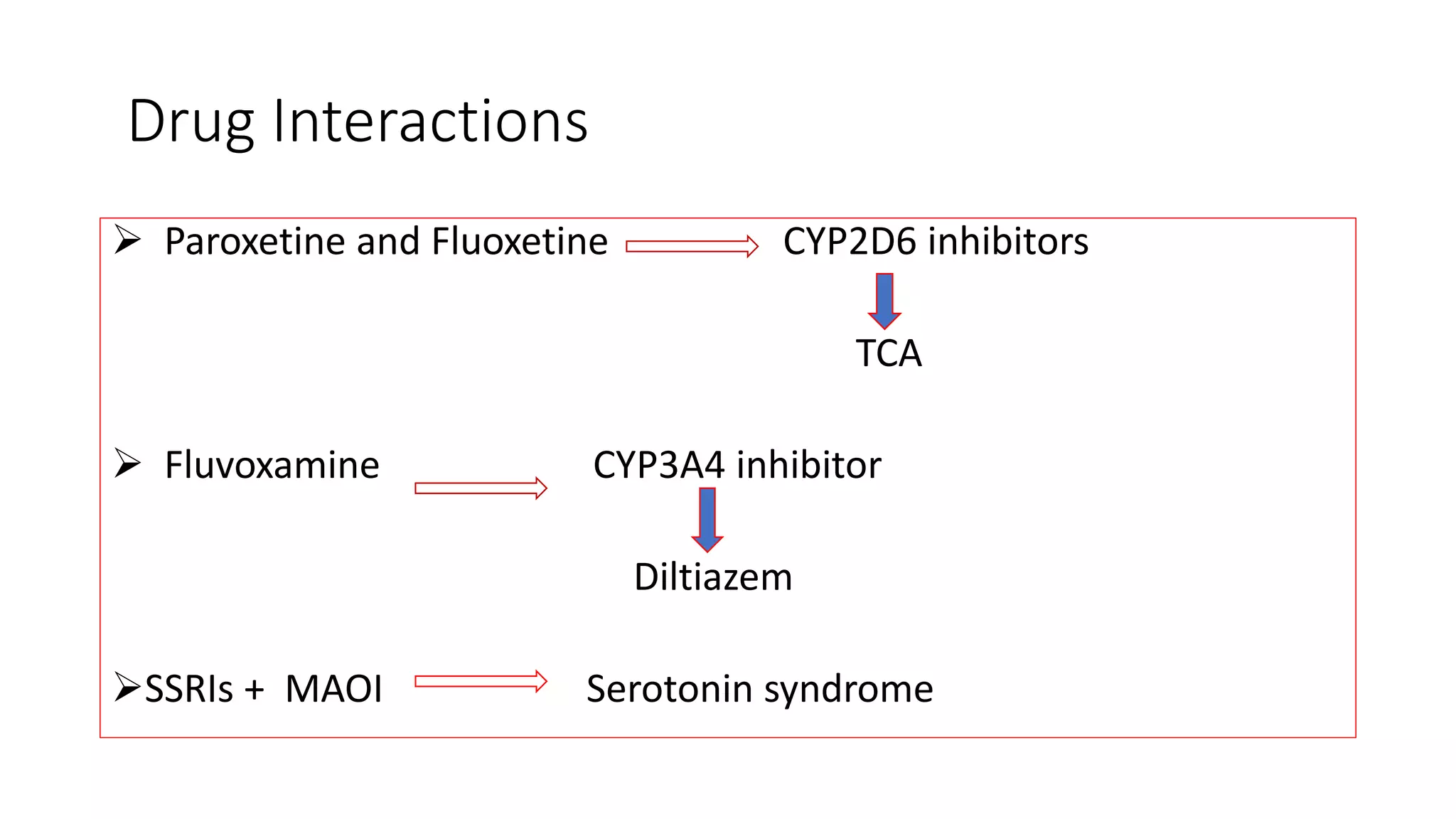
Drug Interactions
 Paroxetine and Fluoxetine CYP2D6 inhibitors
TCA
 Fluvoxamine CYP3A4 inhibitor
Diltiazem
SSRIs + MAOI Serotonin syndrome
Advantages of SSRIs
• Ease of use
• Better tolerability
• Produce little /no sedation
• Do not interfere with psychomotor function
• No anticholinergic side effects
• No alpha adrenergic blocking action
• Do not inhibit cardiac function
Serotonin-Norepinephrine Reuptake Inhibitors
• Selective Serotonin- Norepinephrine reuptake inhibitors (SNRIs)
• TCAs
SELECTIVE SEROTONIN-NOREPINEPHRINE
REUPTAKE INHIBITORS
• venlafaxine (bicyclic compound)
• Desvenlafaxine
• Duloxetine (3 ring structure )
• Milnacipran ( cyclopropane ring)
• Other uses - generalized anxiety
- stress
- urinary incontinence
- vasomotor symptoms of menopause.
Pharmacokinetics
CYP2D6
• Venlafaxine O -desmethylvenlafaxine
Pharmacodynamics
• NET - 12-transmembrane domain complex that allosterically binds NE
• Venlafaxine is a weak inhibitor of NET
• Desvenlafaxine
• Duloxetine NET + SERT
• Milnacipran
• SNRIs lack – antihistamine, alpha adrenergic blocking and anticholinergic
effects of TCA
DOSE RANGING
mg/day
ADVERSE EFFECTS
• Nausea, constipation, insomnia, headaches, and sexual dysfunction.
• Immediate-release formulation of venlafaxine
sustained diastolic hypertension(10-15%)
• Duloxetine ----hepatotoxic
• Discontinuation syndrome
Drug Interactions
Duloxetine (moderate inhibitor of CYP2D6 )
Elevate TCA
• Milnacipran----------CYP3A4---------KETOCONAZOLE
SNRIs are contraindicated in combination with MAOIs
Tricyclic antidepressants
Other uses for TCAs
• Treatment of pain conditions
• Enuresis
• Insomnia
MOA
• Antagonism of SERT and NET
• NET (desipramine, nortriptyline, protriptyline, amoxapine)
• SERT and NET (imipramine, amitriptyline, clomipramine ,doxepin)
• (H1 histamine, 5HT2, α1 adrenergic, and muscarinic cholinergic
receptors)
Pharmacokinetics
• well absorbed
• long half-lives
• Metabolism
- demethylation
- aromatic hydroxylation
- glucuronide conjugation
• Metabolism –CYP2D6
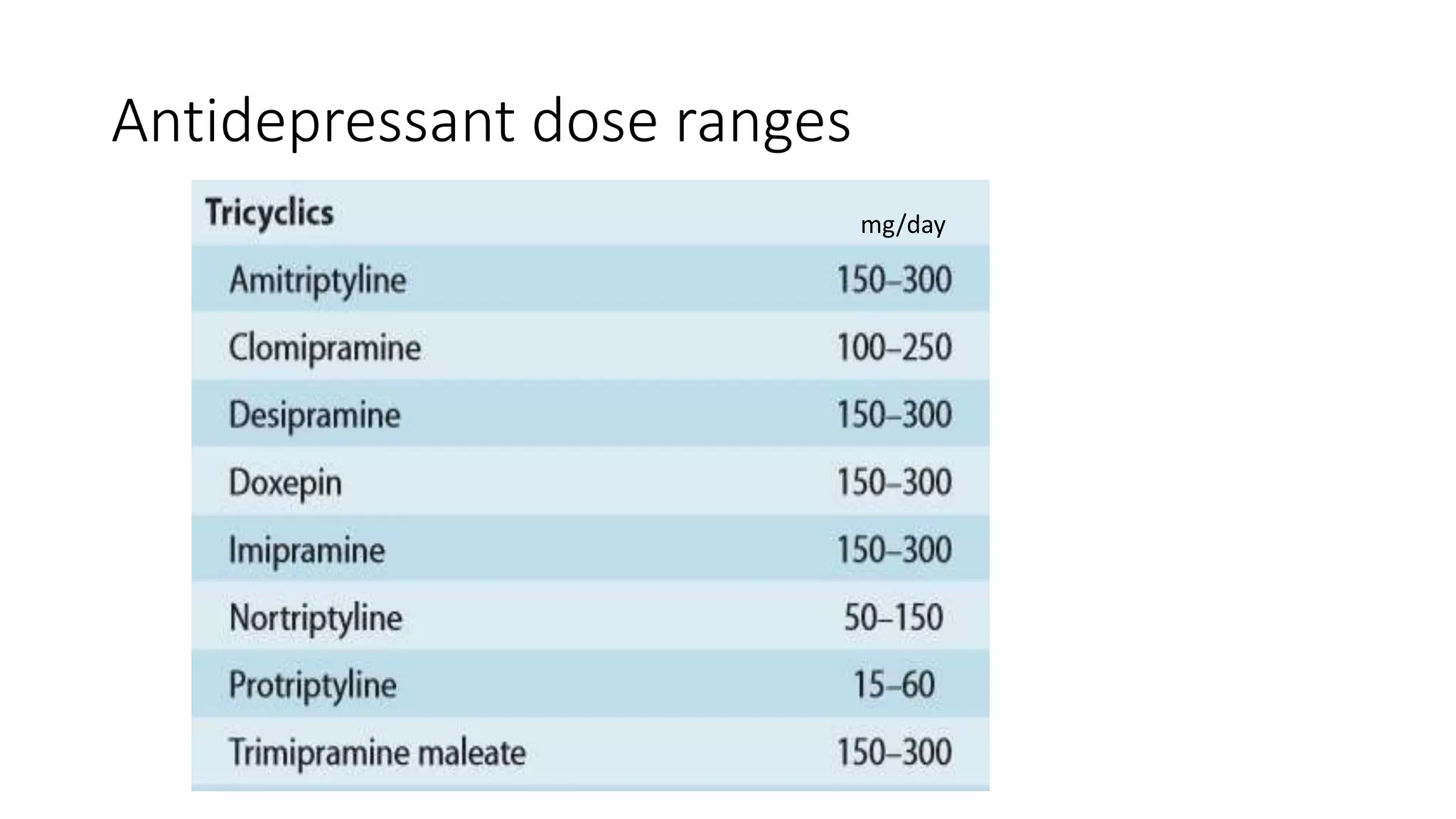
Antidepressant dose ranges
mg/day
Adverse effects
• Anticholinergic effects
(dry mouth, constipation, urinary retention, blurred vision, and confusion)
• α-blocking property orthostatic hypotension
• H 1 antagonism by the TCAs is associated with weight gain and sedation
• The TCAs are class 1A antiarrhythmic agents and arrhythmogenic at higher
doses
Drug Interactions
• CYP2D6 inhibitors elevate TCA
• MAOIS + TCA Serious toxicity
• TCAs potentiates CNS depressants (alcohol)
• Carbamazepine TCA metabolism
5-HT receptor modulators
Trazodone
m-chlorphenylpiperazine (m-cpp)
Nefazodone
hydroxynefazodone and m-cpp
CONT…….
Vortioxetine ------(newer agent )
5-HT3, 5-HT7,5-HT 1D receptor blocker
+
SERT BLOCKER
• MOA: blockade of the 5-HT receptor
• 5-HT 2A receptor is G protein coupled receptor
Neocortex
Pharmacokinetics
Nefazodone is a potent inhibitor of the CYP3A4
Vortioxetine (oxidation)--------CYP2D6
Pharmacodynamics
• Nefazodone is a weak inhibitor of SERT and NET
Potent antagonist of the postsynaptic 5-HT 2A receptor
• Trazodone - selective inhibitor of SERT
+
- presynaptic α-adrenergic–blocking property
+
- modest antagonist of the H 1 receptor
Dose range
mg/day
Adverse Effects
• sedation and gastrointestinal disturbances
• Trazodone- can induce priapism
• orthostatic hypotension
• Hepatotoxicity (Nefazodone )
Drug Interactions
• Triazolam levels are increased by concurrent administration of
nefazodone
Nefazodone with simvastatin
20-fold increase in plasma levels of simvastatin
ritonavir or ketoconazole ------ increases in trazodone
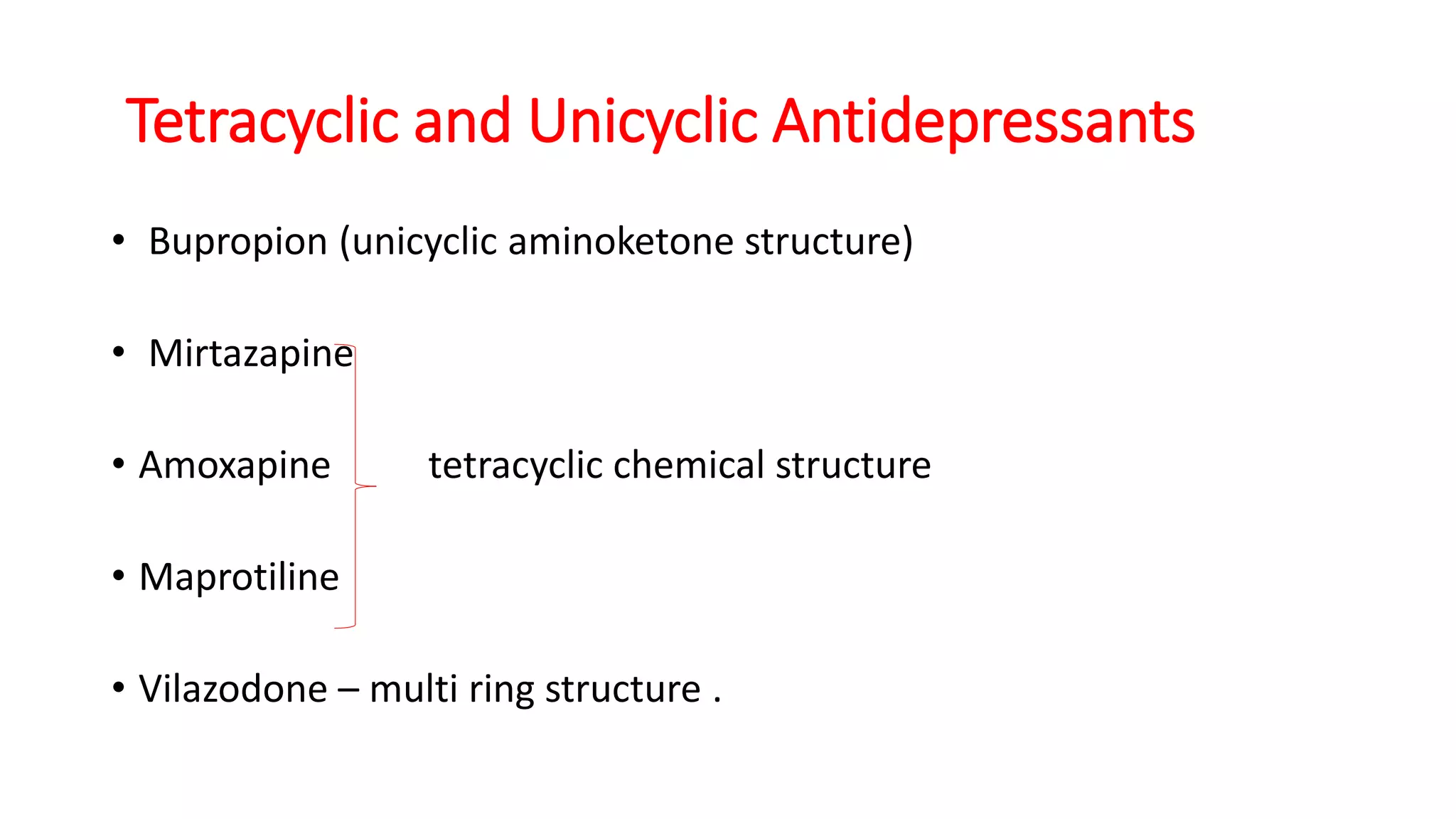
Tetracyclic and Unicyclic Antidepressants
• Bupropion (unicyclic aminoketone structure)
• Mirtazapine
• Amoxapine tetracyclic chemical structure
• Maprotiline
• Vilazodone – multi ring structure .
Pharmacokinetics
• Bupropion - rapidly absorbed
- protein binding of 85%
- undergoes extensive hepatic metabolism
- Bupropion has a biphasic elimination
Amoxapine 7-hydroxyamoxapine(D2 blocker)
vilazodone 72 25 ND ND ND
Pharmacodynamics
• Bupropion – moderate inhibitors of NE and 5-HT reuptake
- pre synaptic release of catecholamines
• Mirtazapine – antagonist of presynaptic alpha 2 auto receptor.
• Amoxapine and Maprotiline
Potent NET inhibitors
• Vilazodone is a potent serotonin reuptake inhibitor + partial agonist of 5 HT
1A receptor.
Dose range
mg/day
Adverse effects
• AMOXAPIN ---PARKINSONIAN SYNDROME
( D2 blocking action )
• Mirtazapine -----sedative effect
• Maprotiline -----seizures
• Bupropion -------agitation, insomnia and anorexia
• Vilazodone -----GI upset, diarrhea ,nausea
Drug interactions
• Bupropion -------------CYP2B6------------cyclophosphamide
(-)
Hydroxy bupropion --------------- ------ desipramine level
• ( -CYP2D6)
• Mirtazapine ( 2D6, 3A4, and 1A2)
Monoamine oxidase inhibitors
• Mitochondrial enzyme involved in the oxidative deamination of
biogenic amines
• MAOA metabolizes 5HT ,NE and DA
• MAOB ------- 5HT and DA
• Rarely used
( toxicity and drug interactions )
Cont……
• MAO-A
-Peripheral adrenergic nerve endings
-intestinal mucosa
-Human placenta
MAO-B
-Brain
-Platelets
Monoamine oxidase inhibitors
• Phenelzine
• Isocarboxazid
• Tranylcypromine
• Selegiline
• Moclobemide
Hydrazine derivatives
Non-hydrazine
• MAO-A ---------CLORGYLINE, MOCLOBEMIDE
• MAO-B-----SELIGILINE
Moclobemide
• Reversible inhibitor of MAO-A
• Lacks anticholinergic ,sedative, cognitive, psychomotor and
cardiovascular adverse effects
• Useful in social phobia
• s/e : nausea ,dizziness ,headache, insomnia
Pharmacokinetics
The MAOIs are metabolized by acetylation
Dose range
mg/day
Adverse effects
• Orthostatic hypotension
• Weight gain
• Confusion
• Sedative effect (Phenelzine)
• Discontinuation syndrome ( delirium like )
• Impotence
Cheese reaction
Certain varieties of cheese,beer,wines,pickled meat, and fish
Large quantity of tyramine and dopa
MAOI ------indirect sympathomimetic stimulation
Hypertensive crisis, cerebrovascular accidents
Drug interaction
MAOI vs SSRIs/SNRIs/TCA
Serotonin syndrome
MAOI vs Tyramine
Malignant hypertension
Stroke/ myocardial infarction
ATYPICAL ANTIDEPRESSANTS
1.MIANSERIN
-Block presynaptic alpha 2 receptor
-Antagonism of 5-HT 2, 5-HT 1c
Adverse effect- blood dyscrasias , liver dysfunction
2. TIANEPTIN
enhance 5-HT uptake
3.AMINEPTINE
Clinical Pharmacology Of
Antidepressants
1. Major depression
• SSRI/SNRIs
• Trial therapy – 8-12 weeks at therapeutic dose
• Goal- remission of all the symptoms
• Inadequate response ----(SSRI +SNRI) + atypical antidepressants
• Long term maintenance needed -----2 or more serious MDD in the previous
5 years or 3 or more serious episodes in the life time .
2. Anxiety disorders
• PTSD
• OCD ( clomipramine, fluvoxamine )
• Social anxiety disorder SSRI/SNRI + BZD
• GAD
• Panic disorder
3. Pain disorders
• Diabetic neuropathy -------Duloxetine
• Fibromyalgia
• Post herpetic neuralgia------amitriptyline
4.Premenstrual dysphoric disorder
• Sertraline
• Fluoxetine
5.Attention deficit hyperactivity disorder
• TCA -------Imipramine
Nortriptyline 1st line drugs
Amoxapine
6. Smoking cessation
• Bupropion
• Mechanism –unknown
• Nortriptyline
6.Enuresis
• Imipramine 25 mg at bed time
• 7.Migraine
• Amitriptyline
Some antidepressant–CYP450 drug
interactions
Summary
• Pathophysiology
• Classification of antidepressants
• Pharmacokinetics and pharmacodynamics
• Adverse effects and drug interactions
• CYP enzymes and antidepressants
Thank you

Pharmacotherapy of depression

Editor's Notes

  • #7  steroid -suppression of transcription of the BDNF gene Cyclic AMP responsive binding protein
  • #12  Fluoxetine, sertraline, and citalopram exist as isomers and are formulated in the racemic forms Escitalopram is the S enantiomer of citalopram Paroxetine and fluvoxamine are not optically active
  • #14  fluoxetine and paroxetine are potent inhibitors of the CYP2D6 fluvoxamine is an inhibitor of CYP3A4
  • #15 Fluoxetine to norfluoxetine
  • #16 SERT is a glycoprotein with 12 transmembrane regions embedded in the axon terminal and cell body membranes of serotonergic neurons.
  • #20 Agitation ,restlessness,rigidity,hyperthermia,delirium,twitching followed by convulsion
  • #26 CYP2D6,CYP1A2
  • #27 NET is structurally very similar to the 5-HT transporter
  • #31 TRICYCLIC CORE
  • #36 SEDATIVE EFFECT SO NIGHT TIME DOSE Therapuetic window ---50-200ng/ml imipramine,amitryptiline,nortryptiline
  • #39 Fluoxetine, paroxetine, duloxetine, hydroxybupropion, methadone
  • #40 2 antagonist. Trazodone was among the most commonly prescribed antidepressants until it was supplanted by the SSRIs in the late 1980s……..unlabeled hypnotic
  • #42 2A
  • #47 n efazodone is an inhibitor of the CYP3A4 isoenzyme
  • #48 Amoxapine is N –methylated metabolite of loxapine
  • #49 with the first phase lasting about 1 hour and the second phase lasting 14 hours
  • #51 MIRTAZAPINE ----NORADRENERGIC AND SPECIFIC SEROTONERGIC ANTIDEPRESSANT
  • #62 Psychosis, excitation, confusion
  • #63 Similar reaction can occur with ephedrine , SSRIs, SNRIs and levodopa
  • #68 Bupropion can be added
  • #70 Pregabalin ,gabapentin can be added to this group