Science and Math Links:
Research Based
Teaching Institute
Hin Doan
Pujan Shrestha
Introduction
• Science and scientists are
negatively portrayed in modern
society.
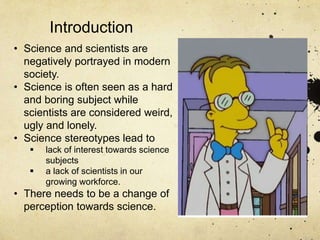
• Science is often seen as a hard
and boring subject while
scientists are considered weird,
ugly and lonely.
• Science stereotypes lead to
 lack of interest towards science
subjects
 a lack of scientists in our
growing workforce.
• There needs to be a change of
perception towards science.
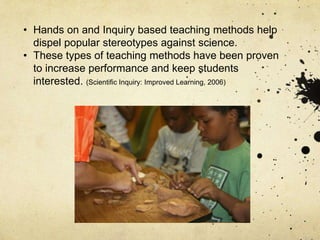
• Hands on and Inquiry based teaching methods help
dispel popular stereotypes against science.
• These types of teaching methods have been proven
to increase performance and keep students
interested. (Scientific Inquiry: Improved Learning, 2006)
Science Institute for
Teachers
60 local teachers participated
Faculty developed lesson plans for hands on and
inquiry based activities, linked to the Virginia SOL’s,
and introduced them to the teachers.
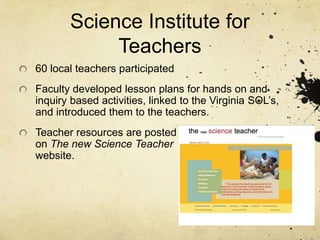
Teacher resources are posted
on The new Science Teacher
website.
Teachers went to a local governor school for the
SEMWOW program.
Science Institute provided the teachers with a stipend
and materials for the lesson plans.
Teachers and their students were asked to fill out a pre-
and a post- survey.
Jubilee Summer Camp
Four of the teachers from the institute volunteered at
the Jubilee Family Development Center Summer
Science Camp.
Participating children filled out a survey and then took
the DAST test
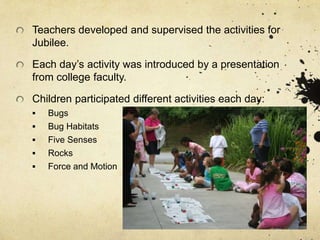
Teachers developed and supervised the activities for
Jubilee.
Each day’s activity was introduced by a presentation
from college faculty.
Children participated different activities each day:
 Bugs
 Bug Habitats
 Five Senses
 Rocks
 Force and Motion
DAST!!
Element of
Mystique
Working Alone
Magical Potions
Element of
Danger
Glasses, Wacky hair,
White lab coat
Not Attractive
Teachers’ Institute Feedbacks
69.1
74.1
65.5
74.5
0
10
20
30
40
50
60
70
80
90
100
Well-organized Objectives
clarity
Expectations
met
Helpfulness
ProgramExcellencytoTeachers
Surveys
Study the influence of Jubilee Science Camp on the
children.
Learn boys and girls’ different perception of their
abilities to study science
Results from surveys:
Students’ interests rose by 20%
They are 30% more likely to continue science
7 students like physics compared to 0 pre-test.
Survey results
Students’ opinions on their abilities after Jubilee
Boys do not expect to work hard for good results, while
girls expect to work extra hard for their desired result.
Teachers’ opinion on classroom’s gender discrimination:
30% teachers experienced discrimination as
students.
18% witnessed discrimination in their classrooms.
30% have used different methods to avoid
discrimination.
Limitations and recommendations
Time constraints affected DAST post-test.
Recommendations:
Ask for names for future surveys
Consider the age factor for teachers’ surveys
Conclusion
The Science Institute for teachers and the
Jubilee was successful.
The children loved the Jubilee Science Summer
camp.
The Summer Camp left a positive impression on
the students.
Student researchers were able to understand the
different mindset that boys and girls held towards
science.
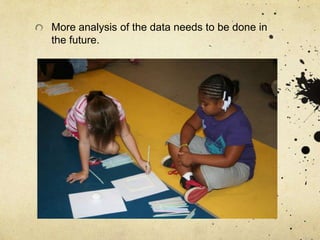
More analysis of the data needs to be done in
the future.
Acknowledgements
State Council of Higher Education of Virginia
(SCHEV)
Randolph College
References Cited
“Challenges New Science Teachers Face.”
Review of Educational Research 76.4 (2006) :
607-651.
“Scientific Inquiry: Improved Learning.” Academic
Exchange Quarterly (2009) : n. pag. Print.
“Rethinking the Content of Physics Courses.”
Physics Today 59.2 (2006) : 31-36.

SRP12 Poster sheldon comments

  • 1.
    Science and MathLinks: Research Based Teaching Institute Hin Doan Pujan Shrestha
  • 2.
    Introduction • Science andscientists are negatively portrayed in modern society. • Science is often seen as a hard and boring subject while scientists are considered weird, ugly and lonely. • Science stereotypes lead to  lack of interest towards science subjects  a lack of scientists in our growing workforce. • There needs to be a change of perception towards science.
  • 3.
    • Hands onand Inquiry based teaching methods help dispel popular stereotypes against science. • These types of teaching methods have been proven to increase performance and keep students interested. (Scientific Inquiry: Improved Learning, 2006)
  • 4.
    Science Institute for Teachers 60local teachers participated Faculty developed lesson plans for hands on and inquiry based activities, linked to the Virginia SOL’s, and introduced them to the teachers. Teacher resources are posted on The new Science Teacher website.
  • 5.
    Teachers went toa local governor school for the SEMWOW program. Science Institute provided the teachers with a stipend and materials for the lesson plans. Teachers and their students were asked to fill out a pre- and a post- survey.
  • 7.
    Jubilee Summer Camp Fourof the teachers from the institute volunteered at the Jubilee Family Development Center Summer Science Camp. Participating children filled out a survey and then took the DAST test
  • 8.
    Teachers developed andsupervised the activities for Jubilee. Each day’s activity was introduced by a presentation from college faculty. Children participated different activities each day:  Bugs  Bug Habitats  Five Senses  Rocks  Force and Motion
  • 9.
    DAST!! Element of Mystique Working Alone MagicalPotions Element of Danger Glasses, Wacky hair, White lab coat Not Attractive
  • 10.
    Teachers’ Institute Feedbacks 69.1 74.1 65.5 74.5 0 10 20 30 40 50 60 70 80 90 100 Well-organizedObjectives clarity Expectations met Helpfulness ProgramExcellencytoTeachers
  • 11.
    Surveys Study the influenceof Jubilee Science Camp on the children. Learn boys and girls’ different perception of their abilities to study science Results from surveys: Students’ interests rose by 20% They are 30% more likely to continue science 7 students like physics compared to 0 pre-test.
  • 12.
    Survey results Students’ opinionson their abilities after Jubilee Boys do not expect to work hard for good results, while girls expect to work extra hard for their desired result. Teachers’ opinion on classroom’s gender discrimination: 30% teachers experienced discrimination as students. 18% witnessed discrimination in their classrooms. 30% have used different methods to avoid discrimination.
  • 13.
    Limitations and recommendations Timeconstraints affected DAST post-test. Recommendations: Ask for names for future surveys Consider the age factor for teachers’ surveys
  • 14.
    Conclusion The Science Institutefor teachers and the Jubilee was successful. The children loved the Jubilee Science Summer camp. The Summer Camp left a positive impression on the students. Student researchers were able to understand the different mindset that boys and girls held towards science.
  • 15.
    More analysis ofthe data needs to be done in the future.
  • 16.
    Acknowledgements State Council ofHigher Education of Virginia (SCHEV) Randolph College
  • 17.
    References Cited “Challenges NewScience Teachers Face.” Review of Educational Research 76.4 (2006) : 607-651. “Scientific Inquiry: Improved Learning.” Academic Exchange Quarterly (2009) : n. pag. Print. “Rethinking the Content of Physics Courses.” Physics Today 59.2 (2006) : 31-36.