The Discovery Learning Space: Developing the Science Classroom of the Future Sofoklis A. Sotiriou Ellinogermaniki Agogi, Greece
In recent times fewer young people seem to be interested in science and technical subjects. Why is this?  Does the problem lie in wider socio-cultural changes, and the ways in which young people in developed countries now live and wish to shape their lives? Or is it due to failings within science education itself?
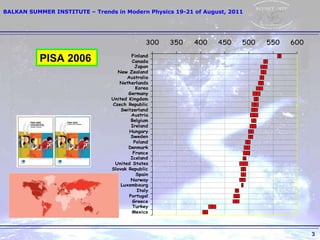
PISA 2006
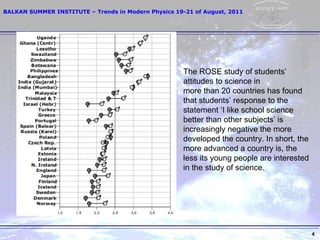
The ROSE study of students’ attitudes to science in more than 20 countries has found that students’ response to the statement ‘I like school science better than other subjects’ is increasingly negative the more developed the country. In short, the more advanced a country is, the less its young people are interested in the study of science.
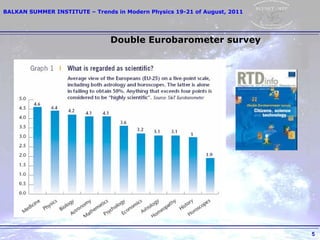
Double Eurobarometer survey
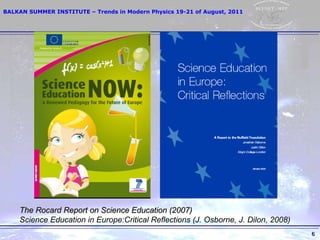
The Rocard Report on Science Education  (2007) Science Education   in Europe:Critical Reflections  (J. Osborne, J. Dilon, 2008)
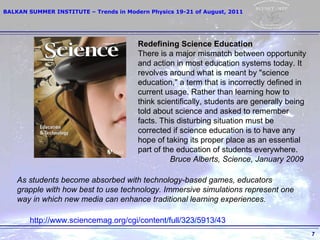
As students become absorbed with technology-based games, educators grapple with how best to use technology. Immersive simulations represent one way in which new media can enhance traditional learning experiences.   Redefining Science Education There is a major mismatch between opportunity and action in most education systems today. It revolves around what is meant by "science education," a term that is incorrectly defined in current usage. Rather than learning how to think scientifically, students are generally being told about science and asked to remember facts. This disturbing situation must be corrected if science education is to have any hope of taking its proper place as an essential part of the education of students everywhere.  Bruce Alberts, Science, January 2009 http://www.sciencemag.org/cgi/content/full/323/5913/43
Current Trends Science Education A reversal of school science-teaching pedagogy from mainly deductive to inquiry-based methods provides the means to increase interest in science.   Inquiry-based science education (IBSE) has proved its efficacy at both primary and  s econdary   levels in increasing children’s and students’ interest and   Attainments   levels while at the same   time stimulating teacher motivation. IBSE is effective with   all kinds of students from the weakest   to the most able and is fully compatible with   the ambition of excellence. Moreover IBSE is beneficial   to promoting girls’ interest   and participation in science activities. Finally, IBSE and traditional   deductive   approaches are not mutually exclusive and they should be combined in any science   classroom to accommodate different mindsets and age group preferences.
Renewed school’s science-teaching pedagogy   based on IBSE provides increased   opportunities   for cooperation between a ctors   in the formal and   informal   arenas. Due to the nature of its practices, IBSE pedagogy is   more likely to encourage relationships between   the   stakeholders of both formal and informal education.   And it creates opportunities for   involving firms, scientists, researchers, engineers, universities, local   actors such as cities, associations,   parents and other   kinds of local resources. Current Trends Science Education
Current Trends Science Education S cientific disciplines  in school have to be  enlarged.   The  introduction of  problem   oriented fields of studies instead O f  m ore   traditional disciplines would   attract  the interest of m ore   young people.
The role of teachers Teachers are key players in the renewal of science education. Among other methods, being art of a  network allows them to improve the quality of their  teaching and supports their motivation. Networks can be used as an effective component of teachers’ professional development, are complementary to  more traditional forms of in-service teacher training and  stimulate morale and motivation.
Re-imagine science education The message is clear.  There are shortcomings in curriculum, pedagogy and assessment, but the deeper problem is one of fundamental purpose. School science education  has never provided a satisfactory education for the majority . Now the evidence is that it is failing in its original purpose, to provide a route into science for future scientists.  The challenge therefore, is to  re-imagine science education : to consider how it can be made fit for the modern world and how it can meet the needs of all students; those who will go on to work in scientific and technical subjects, and those who will not.
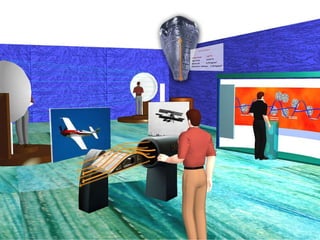
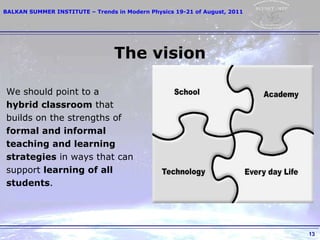
The vision We should point to a  hybrid classroom  that builds on the strengths of formal and informal teaching and learning strategies  in ways that can support  learning of all students .
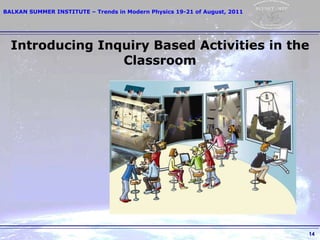
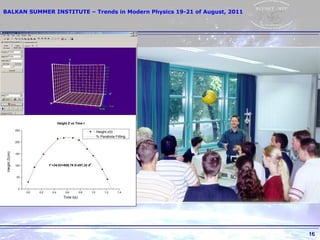
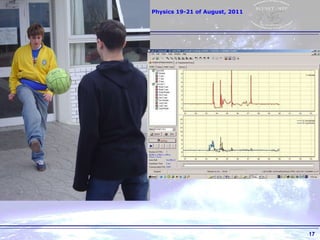
Introducing Inquiry Based Activities in the Classroom
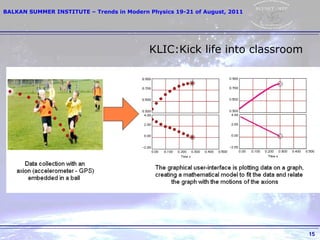
KLIC:Kick life into classroom
 
 
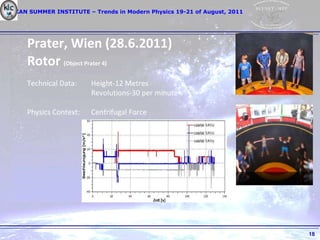
Prater, Wien (28.6.2011)  Rotor  (Object Prater 4) Technical Data: Height-12 Metres Revolutions-30 per minute Physics Context: Centrifugal Force
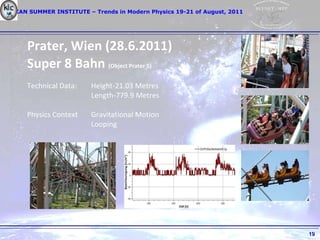
Prater, Wien (28.6.2011)  Super 8 Bahn  (Object Prater 5) Technical Data: Height-21.03 Metres Length-779.9 Metres   Physics Context Gravitational Motion Looping
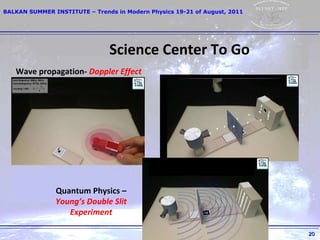
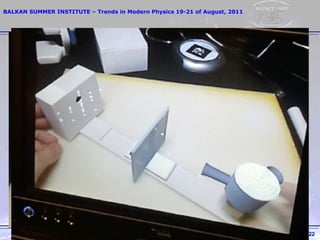
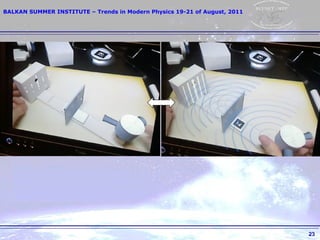
Science Center To Go Wave propagation-  Doppler Effect Quantum Physics –  Young’s Double Slit Experiment +
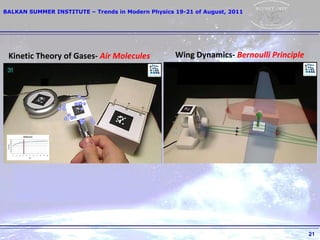
Kinetic Theory of Gases-  Air Molecules Wing Dynamics-  Bernoulli Principle


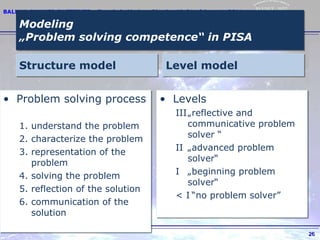
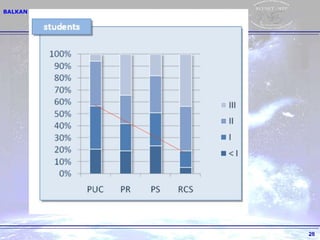
Modeling  „Problem solving competence“ in PISA Structure model Problem solving process understand the problem characterize the problem representation of the problem solving the problem reflection of the solution communication of the solution  Level model Levels III „reflective and communicative problem solver “ II „advanced problem solver“ I „beginning problem solver“ < I “no problem solver”
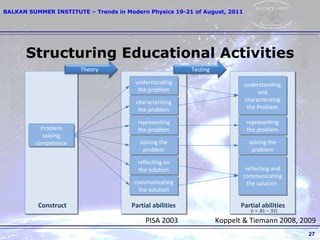
Structuring Educational Activities Partial abilities Testing Problem solving competence Theory (r = .81 – .92) PISA 2003 Koppelt & Tiemann 2008, 2009 understanding the problem characterizing the problem representing the problem solving the problem reflecting on the solution communicating the solution understanding and characterizing the Problem representing the problem solving the problem reflecting and communicating the solution  Partial abilities Construct
 
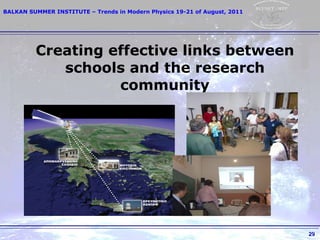
Creating effective links between schools and the research community
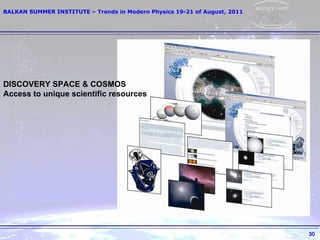
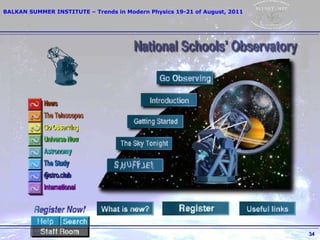
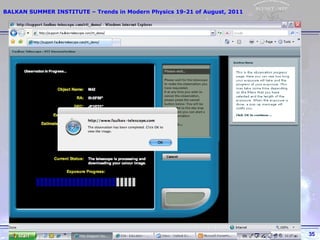
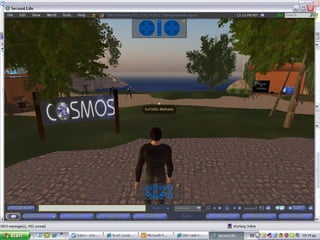
DISCOVERY SPACE & COSMOS Access to unique scientific resources
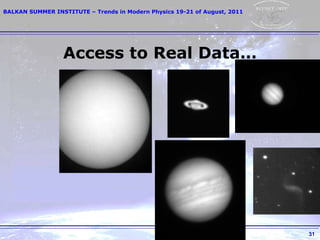
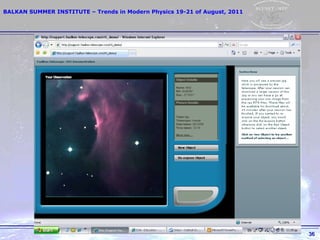
Access to Real Data…
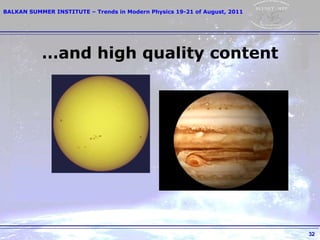
… and high quality content
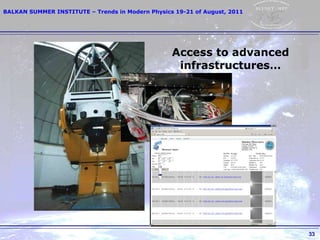
Access to advanced infrastructures…


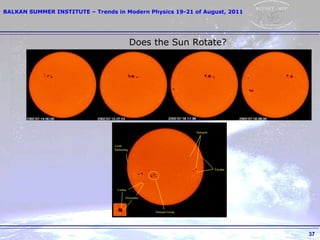
Does the Sun Rotate?
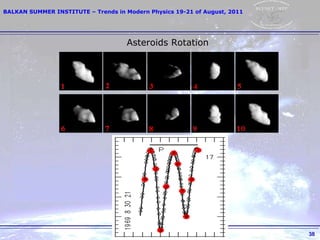
Asteroids Rotation


[email_address] Connecting Schools and Scientific Research effectively


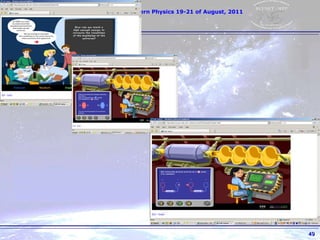
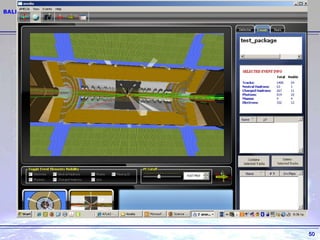
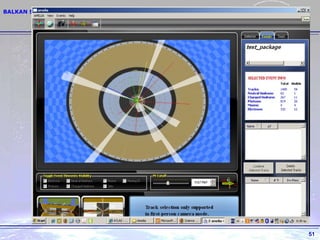
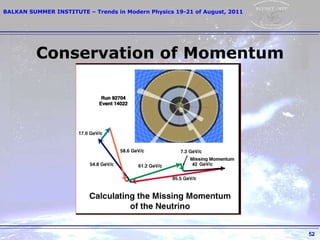
Conservation of Momentum
 
 
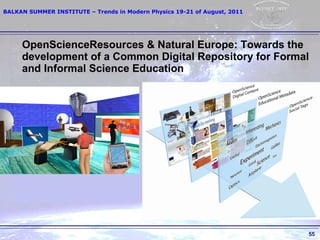
OpenScienceResources & Natural Europe: Towards the development of a Common Digital Repository for Formal and Informal Science Education
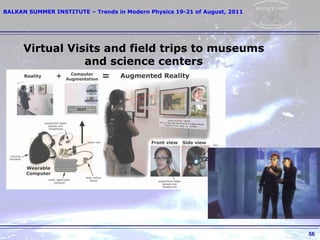
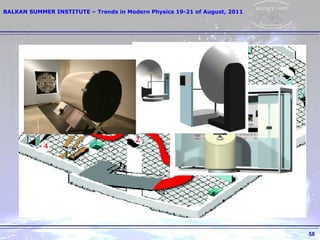
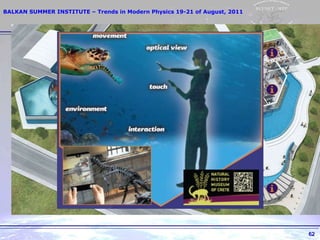
Virtual Visits and field trips to museums  and science centers
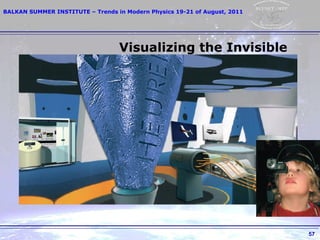
Visualizing the Invisible
 
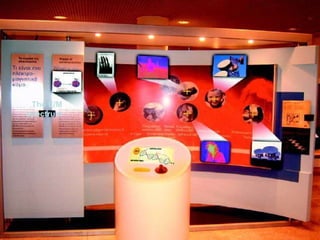
The E/M spectrum
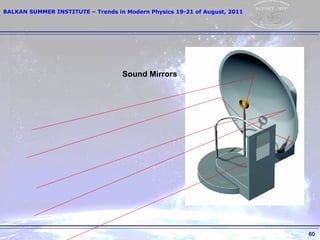
Sound Mirrors
 
 
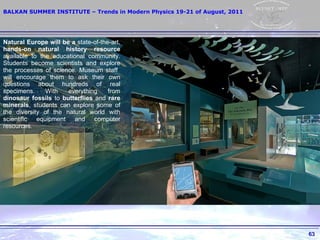
Natural Europe will be a  state-of-the-art,  hands-on natural history resource  available to the educational community. Students become scientists and explore the processes of science. Museum staff  will encourage them to ask their own questions about hundreds of real specimens. With everything from  dinosaur fossils  to  butterflies  and  rare minerals , students can explore some of the diversity of the natural world with scientific equipment and computer resources.
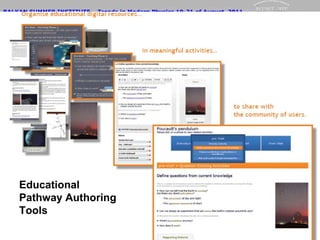
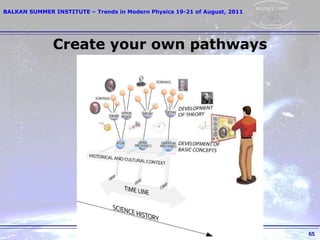
Educational Pathway Authoring Tools
Create your own pathways
 
Effective Community Building
 
 
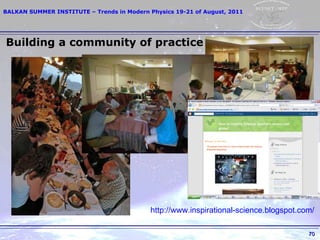
Building a community of practice http://www.inspirational-science.blogspot.com /
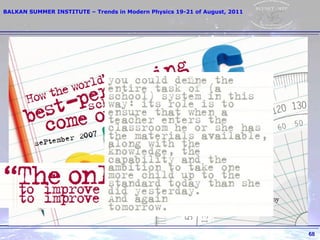
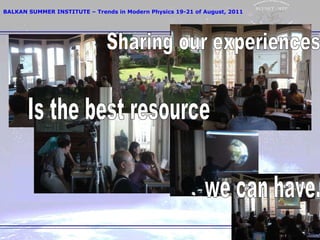
Sharing our experiences Is the best resource  we can have.
Info www.klic.eu   www.osrportal.eu www.learningwithatlas.eu www.schooloftomorrow.gr www.ea.gr Contact: sotiriou@ea.gr

The Discovery Learning Space: Developing the Science Classroom of the Future

  • 1.
    The Discovery LearningSpace: Developing the Science Classroom of the Future Sofoklis A. Sotiriou Ellinogermaniki Agogi, Greece
  • 2.
    In recent timesfewer young people seem to be interested in science and technical subjects. Why is this? Does the problem lie in wider socio-cultural changes, and the ways in which young people in developed countries now live and wish to shape their lives? Or is it due to failings within science education itself?
  • 3.
  • 4.
    The ROSE studyof students’ attitudes to science in more than 20 countries has found that students’ response to the statement ‘I like school science better than other subjects’ is increasingly negative the more developed the country. In short, the more advanced a country is, the less its young people are interested in the study of science.
  • 5.
  • 6.
    The Rocard Reporton Science Education (2007) Science Education in Europe:Critical Reflections (J. Osborne, J. Dilon, 2008)
  • 7.
    As students becomeabsorbed with technology-based games, educators grapple with how best to use technology. Immersive simulations represent one way in which new media can enhance traditional learning experiences. Redefining Science Education There is a major mismatch between opportunity and action in most education systems today. It revolves around what is meant by &quot;science education,&quot; a term that is incorrectly defined in current usage. Rather than learning how to think scientifically, students are generally being told about science and asked to remember facts. This disturbing situation must be corrected if science education is to have any hope of taking its proper place as an essential part of the education of students everywhere. Bruce Alberts, Science, January 2009 http://www.sciencemag.org/cgi/content/full/323/5913/43
  • 8.
    Current Trends ScienceEducation A reversal of school science-teaching pedagogy from mainly deductive to inquiry-based methods provides the means to increase interest in science. Inquiry-based science education (IBSE) has proved its efficacy at both primary and s econdary levels in increasing children’s and students’ interest and Attainments levels while at the same time stimulating teacher motivation. IBSE is effective with all kinds of students from the weakest to the most able and is fully compatible with the ambition of excellence. Moreover IBSE is beneficial to promoting girls’ interest and participation in science activities. Finally, IBSE and traditional deductive approaches are not mutually exclusive and they should be combined in any science classroom to accommodate different mindsets and age group preferences.
  • 9.
    Renewed school’s science-teachingpedagogy based on IBSE provides increased opportunities for cooperation between a ctors in the formal and informal arenas. Due to the nature of its practices, IBSE pedagogy is more likely to encourage relationships between the stakeholders of both formal and informal education. And it creates opportunities for involving firms, scientists, researchers, engineers, universities, local actors such as cities, associations, parents and other kinds of local resources. Current Trends Science Education
  • 10.
    Current Trends ScienceEducation S cientific disciplines in school have to be enlarged. The introduction of problem oriented fields of studies instead O f m ore traditional disciplines would attract the interest of m ore young people.
  • 11.
    The role ofteachers Teachers are key players in the renewal of science education. Among other methods, being art of a network allows them to improve the quality of their teaching and supports their motivation. Networks can be used as an effective component of teachers’ professional development, are complementary to more traditional forms of in-service teacher training and stimulate morale and motivation.
  • 12.
    Re-imagine science educationThe message is clear. There are shortcomings in curriculum, pedagogy and assessment, but the deeper problem is one of fundamental purpose. School science education has never provided a satisfactory education for the majority . Now the evidence is that it is failing in its original purpose, to provide a route into science for future scientists. The challenge therefore, is to re-imagine science education : to consider how it can be made fit for the modern world and how it can meet the needs of all students; those who will go on to work in scientific and technical subjects, and those who will not.
  • 13.
    The vision Weshould point to a hybrid classroom that builds on the strengths of formal and informal teaching and learning strategies in ways that can support learning of all students .
  • 14.
    Introducing Inquiry BasedActivities in the Classroom
  • 15.
  • 16.
  • 17.
  • 18.
    Prater, Wien (28.6.2011) Rotor (Object Prater 4) Technical Data: Height-12 Metres Revolutions-30 per minute Physics Context: Centrifugal Force
  • 19.
    Prater, Wien (28.6.2011) Super 8 Bahn (Object Prater 5) Technical Data: Height-21.03 Metres Length-779.9 Metres   Physics Context Gravitational Motion Looping
  • 20.
    Science Center ToGo Wave propagation- Doppler Effect Quantum Physics – Young’s Double Slit Experiment +
  • 21.
    Kinetic Theory ofGases- Air Molecules Wing Dynamics- Bernoulli Principle
  • 22.
  • 23.
  • 24.
  • 25.
  • 26.
    Modeling „Problemsolving competence“ in PISA Structure model Problem solving process understand the problem characterize the problem representation of the problem solving the problem reflection of the solution communication of the solution Level model Levels III „reflective and communicative problem solver “ II „advanced problem solver“ I „beginning problem solver“ < I “no problem solver”
  • 27.
    Structuring Educational ActivitiesPartial abilities Testing Problem solving competence Theory (r = .81 – .92) PISA 2003 Koppelt & Tiemann 2008, 2009 understanding the problem characterizing the problem representing the problem solving the problem reflecting on the solution communicating the solution understanding and characterizing the Problem representing the problem solving the problem reflecting and communicating the solution Partial abilities Construct
  • 28.
  • 29.
    Creating effective linksbetween schools and the research community
  • 30.
    DISCOVERY SPACE &COSMOS Access to unique scientific resources
  • 31.
  • 32.
    … and highquality content
  • 33.
    Access to advancedinfrastructures…
  • 34.
  • 35.
  • 36.
  • 37.
    Does the SunRotate?
  • 38.
  • 39.
  • 40.
  • 41.
  • 42.
  • 43.
  • 44.
    [email_address] Connecting Schoolsand Scientific Research effectively
  • 45.
  • 46.
  • 47.
  • 48.
  • 49.
  • 50.
  • 51.
  • 52.
  • 53.
  • 54.
  • 55.
    OpenScienceResources & NaturalEurope: Towards the development of a Common Digital Repository for Formal and Informal Science Education
  • 56.
    Virtual Visits andfield trips to museums and science centers
  • 57.
  • 58.
  • 59.
  • 60.
  • 61.
  • 62.
  • 63.
    Natural Europe willbe a state-of-the-art, hands-on natural history resource available to the educational community. Students become scientists and explore the processes of science. Museum staff will encourage them to ask their own questions about hundreds of real specimens. With everything from dinosaur fossils to butterflies and rare minerals , students can explore some of the diversity of the natural world with scientific equipment and computer resources.
  • 64.
  • 65.
  • 66.
  • 67.
  • 68.
  • 69.
  • 70.
    Building a communityof practice http://www.inspirational-science.blogspot.com /
  • 71.
    Sharing our experiencesIs the best resource we can have.
  • 72.
    Info www.klic.eu www.osrportal.eu www.learningwithatlas.eu www.schooloftomorrow.gr www.ea.gr Contact: sotiriou@ea.gr