
Download to read offline


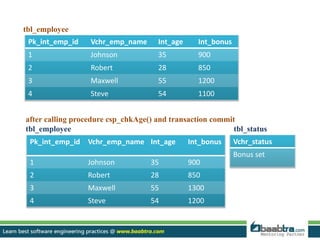
![Example: TRANSACTION IN STORED PROCEDURE.
[update bonus amount by 100 of employee whose age is greater than 50 and bonus>=1000]
DELIMITER //
CREATE PROCEDURE csp_chkAge()
BEGIN
DECLARE int_maxAge int; /* declare integer variable
int_maxAge */
START TRANSACTION; /*transaction starts here */
INSERT into tbl_status VALUES('Bonus set'); /*insert
‘Bonus set’ to tbl_status */
SELECT max(int_age) INTO int_maxAge FROM tbl_employee;
IF(int_maxAge>50) THEN
UPDATE tbl_employee SET int_bonus=int_bonus+100 WHERE
int_bonus>=1000; /*bonus increase by
1000 */
COMMIT;
ELSE
ROLLBACK; /* if age of employee less than 50 no change
will happen , transaction rollback, insertion in
tbl_status and updation in tbl_employee undo */](https://image.slidesharecdn.com/sqltransacation-150102011723-conversion-gate02/85/Sql-transacation-20-320.jpg)
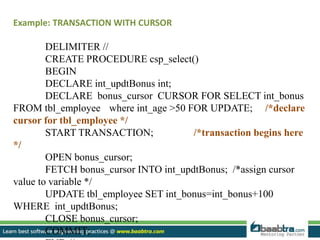


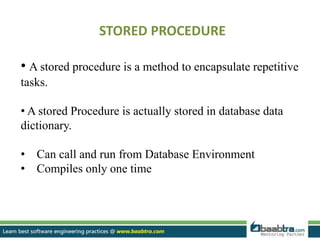
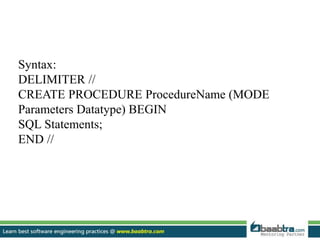
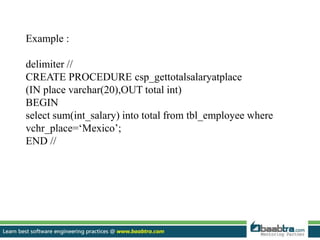
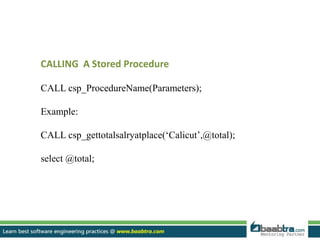
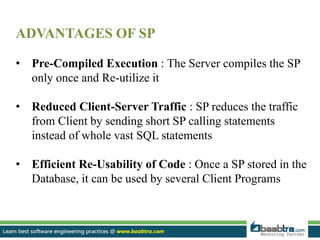
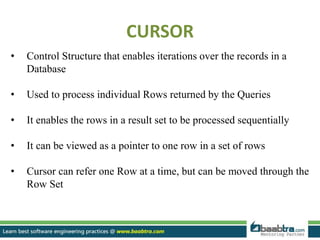
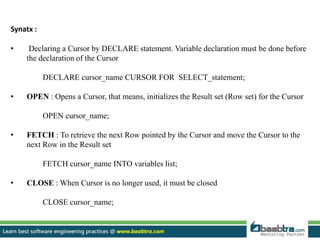
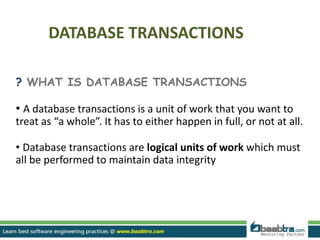
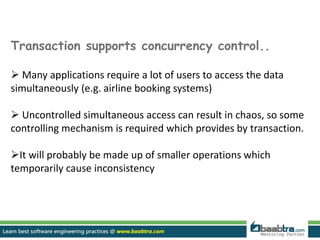
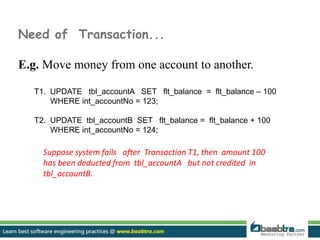
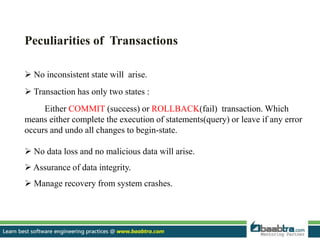
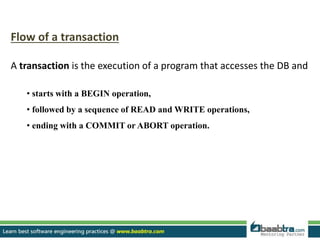
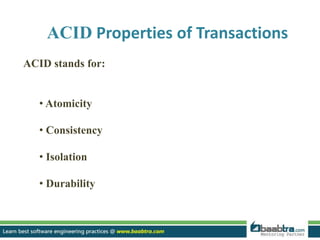
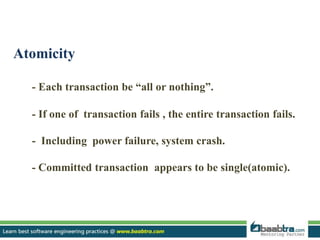
Stored procedures, cursors, and transactions in MySQL are discussed. Key points: - Stored procedures allow encapsulating repetitive tasks and are compiled only once for improved efficiency. Syntax and examples of creating and calling stored procedures are provided. - Cursors enable iterating over database records sequentially. Syntax for declaring, opening, fetching, and closing cursors is explained. - Transactions ensure data integrity by allowing a set of SQL statements to be treated as a single unit that must fully commit or roll back. The ACID properties of transactions - atomicity, consistency, isolation, and durability - are defined. Examples of using transactions with stored procedures and cursors are given.


