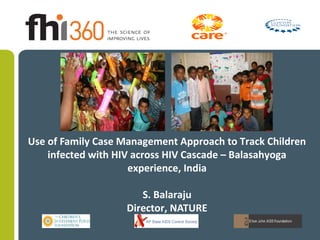
Use of Family Case Management Approach to Track Children
infected with HIV across HIV Cascade – Balasahyoga
experience, India
S. Balaraju
Director, NATURE
Context
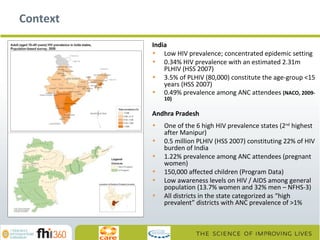
India
• Low HIV prevalence; concentrated epidemic setting
• 0.34% HIV prevalence with an estimated 2.31m
PLHIV (HSS 2007)
• 3.5% of PLHIV (80,000) constitute the age-group <15
years (HSS 2007)
• 0.49% prevalence among ANC attendees (NACO, 200910)

Andhra Pradesh
•
•
•
•
•
•

One of the 6 high HIV prevalence states (2nd highest
after Manipur)
0.5 million PLHIV (HSS 2007) constituting 22% of HIV
burden of India
1.22% prevalence among ANC attendees (pregnant
women)
150,000 affected children (Program Data)
Low awareness levels on HIV / AIDS among general
population (13.7% women and 32% men – NFHS-3)
All districts in the state categorized as “high
prevalent” districts with ANC prevalence of >1%
Issues
•

Issues affecting access to care and support for HIV affected children
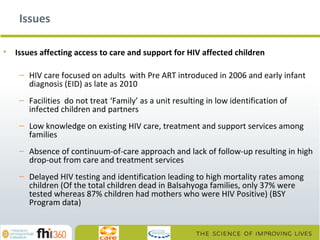
– HIV care focused on adults with Pre ART introduced in 2006 and early infant
diagnosis (EID) as late as 2010
– Facilities do not treat ‘Family’ as a unit resulting in low identification of
infected children and partners
– Low knowledge on existing HIV care, treatment and support services among
families
– Absence of continuum-of-care approach and lack of follow-up resulting in high
drop-out from care and treatment services
– Delayed HIV testing and identification leading to high mortality rates among
children (Of the total children dead in Balsahyoga families, only 37% were
tested whereas 87% children had mothers who were HIV Positive) (BSY
Program data)
The Project - Balasahyoga
•

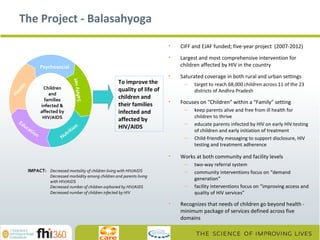
CIFF and EJAF funded; five-year project (2007-2012)

•

Largest and most comprehensive intervention for
children affected by HIV in the country

•

Saturated coverage in both rural and urban settings

He
al
th

Children
and
families
infected &
affected by
HIV/AIDS

Ed

uc
at
ion

Nu

et
Safety n

Psychosocial

on
iti
tr

To improve the
quality of life of
children and
their families
infected and
affected by
HIV/AIDS

–

•

Focuses on “Children” within a “Family” setting
–
–
–

•
Decreased morbidity among children and parents living
with HIV/AIDS
Decreased number of children orphaned by HIV/AIDS
Decreased number of children infected by HIV

–

•

keep parents alive and free from ill health for
children to thrive
educate parents infected by HIV on early HIV testing
of children and early initiation of treatment
Child-friendly messaging to support disclosure, HIV
testing and treatment adherence

Works at both community and facility levels
–
–

IMPACT: Decreased mortality of children living with HIV/AIDS

target to reach 68,000 children across 11 of the 23
districts of Andhra Pradesh

two-way referral system
community interventions focus on “demand
generation”
facility interventions focus on “improving access and
quality of HIV services”

Recognizes that needs of children go beyond health minimum package of services defined across five
domains
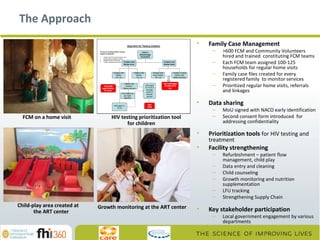
The Approach
•

Family Case Management
–
–
–
–

•
FCM on a home visit

Data sharing
–
–

HIV testing prioritization tool
for children

>600 FCM and Community Volunteers
hired and trained constituting FCM teams
Each FCM team assigned 100-125
households for regular home visits
Family case files created for every
registered family to monitor services
Prioritized regular home visits, referrals
and linkages
MoU signed with NACO early identification
Second consent form introduced for
addressing confidentiality

•

Prioritization tools for HIV testing and

•

Facility strengthening

treatment
–
–
–
–
–
–

Child-play area created at
the ART center

Growth monitoring at the ART center

•

Refurbishment – patient flow
management, child play
Data entry and cleaning
Child counseling
Growth monitoring and nutrition
supplementation
LFU tracking
Strengthening Supply Chain

Key stakeholder participation
–

Local government engagement by various
departments
Minimizing Loss to Follow Up Using HIV Testing &
Treatment Cascade
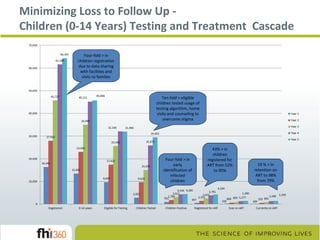
Minimizing Loss to Follow Up Children (0-14 Years) Testing and Treatment Cascade
Four-fold > in
children registration
due to data sharing
with facilities and
visits to families

Ten-fold > eligible
children tested usage of
testing algorithm, home
visits and counseling to
overcome stigma

Four-fold > in
early
identification of
infected
children

43% > in
children
registered for
ART from 52%
to 95%

19 % > In
retention on
ART to 98%
from 79%
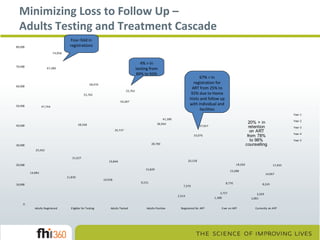
Minimizing Loss to Follow Up –
Adults Testing and Treatment Cascade
Four-fold in
registrations

80,000
74,958

70,000

4% > In
testing from
89% to 93%

67,280

67% > In
registration for
ART from 25% to
92% due to Home
Visits and follow up
with individual and
facilities

58,970

60,000

55,702
53,765
50,287
50,000

47,744

Year 1
41,380
38,964

38,568

40,000

35,737
33,076
28,780

30,000

Year 2

20% > in
retention
on ART
from 78%
to 98%
counselling

37,927

Year 3
Year 4
Year 5

25,592
21,627
20,000

20,158

19,846

18,260
15,829

14,083
11,830

10,558

10,000

9,151

17,935

15,288

8,770

7,370
2,314

3,757
1,388

14,967
8,245
3,269
1,081

0
Adults Registered

Eligible for Testing

Adults Tested

Adults Positive

Registered for ART

Ever on ART

Currently on ART
Lessons Learned
•

The HIV Testing and Treatment Algorithm was an useful tool for assessing eligibility of
children for HIV testing and treatment services.

•

Family Case Management Approach with individual and family counseling at home;
accompanied referrals to hospitals and tracking children across HIV testing and treatment
services was crucial.

•

Travel reimbursement for those who could not afford travel cost to HIV testing or ART
treatment facility.

•

Provision of supplementary nutrition at ART center was an added incentive for adherence to
ART treatment.

•

Data sharing arrangement was important strategy for minimizing loss to follow up (LFU) as
facility-based cases were tracked in communities through the FCM and Community
Volunteers.
Transition and Sustainability of Balasahyoga
- NATURE experience
•
•
•

•
•
•
•
•

Active Community Advisory Boards (CABs) and PLHIV Support Groups
Established Linkages with various Line Departments to continue support to
the PLHA’s Families / Children
Strengthen Integrated Child Protection Scheme (ICPS) and Juvenile Justice
Act / RTE Act, Structures - Child Welfare Committee, DLSA, District Child
Protection Unit (DCPU), linkage with Childline-1098, Orphan Homes, etc.
Strengthening of Civil Society Organization and District Level Child Rights
Networks
Children Club Federations / Consultations for Micro Level Advocacy
Providing Technical Assistance to Regional PLHIV Networks
Promotion and Strengthening of Community Level Peer Education for Drug
Adherence and Referral Services
Local Level integration with National Rural Health Mission (NRHM), DHS /
DAPCU and Integrated Child Development Scheme through Community
level Outreach Workers (ASHA, ANM and Anganwadi Worker)
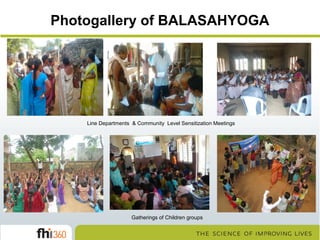
Photogallery of BALASAHYOGA

Line Departments & Community Level Sensitization Meetings

Gatherings of Children groups
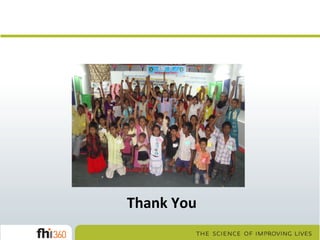
Thank You

Tracking HIV Positive Children in India Through Family Case Management

  • 1.
    Use of FamilyCase Management Approach to Track Children infected with HIV across HIV Cascade – Balasahyoga experience, India S. Balaraju Director, NATURE
  • 2.
    Context India • Low HIVprevalence; concentrated epidemic setting • 0.34% HIV prevalence with an estimated 2.31m PLHIV (HSS 2007) • 3.5% of PLHIV (80,000) constitute the age-group <15 years (HSS 2007) • 0.49% prevalence among ANC attendees (NACO, 200910) Andhra Pradesh • • • • • • One of the 6 high HIV prevalence states (2nd highest after Manipur) 0.5 million PLHIV (HSS 2007) constituting 22% of HIV burden of India 1.22% prevalence among ANC attendees (pregnant women) 150,000 affected children (Program Data) Low awareness levels on HIV / AIDS among general population (13.7% women and 32% men – NFHS-3) All districts in the state categorized as “high prevalent” districts with ANC prevalence of >1%
  • 3.
    Issues • Issues affecting accessto care and support for HIV affected children – HIV care focused on adults with Pre ART introduced in 2006 and early infant diagnosis (EID) as late as 2010 – Facilities do not treat ‘Family’ as a unit resulting in low identification of infected children and partners – Low knowledge on existing HIV care, treatment and support services among families – Absence of continuum-of-care approach and lack of follow-up resulting in high drop-out from care and treatment services – Delayed HIV testing and identification leading to high mortality rates among children (Of the total children dead in Balsahyoga families, only 37% were tested whereas 87% children had mothers who were HIV Positive) (BSY Program data)
  • 4.
    The Project -Balasahyoga • CIFF and EJAF funded; five-year project (2007-2012) • Largest and most comprehensive intervention for children affected by HIV in the country • Saturated coverage in both rural and urban settings He al th Children and families infected & affected by HIV/AIDS Ed uc at ion Nu et Safety n Psychosocial on iti tr To improve the quality of life of children and their families infected and affected by HIV/AIDS – • Focuses on “Children” within a “Family” setting – – – • Decreased morbidity among children and parents living with HIV/AIDS Decreased number of children orphaned by HIV/AIDS Decreased number of children infected by HIV – • keep parents alive and free from ill health for children to thrive educate parents infected by HIV on early HIV testing of children and early initiation of treatment Child-friendly messaging to support disclosure, HIV testing and treatment adherence Works at both community and facility levels – – IMPACT: Decreased mortality of children living with HIV/AIDS target to reach 68,000 children across 11 of the 23 districts of Andhra Pradesh two-way referral system community interventions focus on “demand generation” facility interventions focus on “improving access and quality of HIV services” Recognizes that needs of children go beyond health minimum package of services defined across five domains
  • 5.
    The Approach • Family CaseManagement – – – – • FCM on a home visit Data sharing – – HIV testing prioritization tool for children >600 FCM and Community Volunteers hired and trained constituting FCM teams Each FCM team assigned 100-125 households for regular home visits Family case files created for every registered family to monitor services Prioritized regular home visits, referrals and linkages MoU signed with NACO early identification Second consent form introduced for addressing confidentiality • Prioritization tools for HIV testing and • Facility strengthening treatment – – – – – – Child-play area created at the ART center Growth monitoring at the ART center • Refurbishment – patient flow management, child play Data entry and cleaning Child counseling Growth monitoring and nutrition supplementation LFU tracking Strengthening Supply Chain Key stakeholder participation – Local government engagement by various departments
  • 6.
    Minimizing Loss toFollow Up Using HIV Testing & Treatment Cascade
  • 7.
    Minimizing Loss toFollow Up Children (0-14 Years) Testing and Treatment Cascade Four-fold > in children registration due to data sharing with facilities and visits to families Ten-fold > eligible children tested usage of testing algorithm, home visits and counseling to overcome stigma Four-fold > in early identification of infected children 43% > in children registered for ART from 52% to 95% 19 % > In retention on ART to 98% from 79%
  • 8.
    Minimizing Loss toFollow Up – Adults Testing and Treatment Cascade Four-fold in registrations 80,000 74,958 70,000 4% > In testing from 89% to 93% 67,280 67% > In registration for ART from 25% to 92% due to Home Visits and follow up with individual and facilities 58,970 60,000 55,702 53,765 50,287 50,000 47,744 Year 1 41,380 38,964 38,568 40,000 35,737 33,076 28,780 30,000 Year 2 20% > in retention on ART from 78% to 98% counselling 37,927 Year 3 Year 4 Year 5 25,592 21,627 20,000 20,158 19,846 18,260 15,829 14,083 11,830 10,558 10,000 9,151 17,935 15,288 8,770 7,370 2,314 3,757 1,388 14,967 8,245 3,269 1,081 0 Adults Registered Eligible for Testing Adults Tested Adults Positive Registered for ART Ever on ART Currently on ART
  • 9.
    Lessons Learned • The HIVTesting and Treatment Algorithm was an useful tool for assessing eligibility of children for HIV testing and treatment services. • Family Case Management Approach with individual and family counseling at home; accompanied referrals to hospitals and tracking children across HIV testing and treatment services was crucial. • Travel reimbursement for those who could not afford travel cost to HIV testing or ART treatment facility. • Provision of supplementary nutrition at ART center was an added incentive for adherence to ART treatment. • Data sharing arrangement was important strategy for minimizing loss to follow up (LFU) as facility-based cases were tracked in communities through the FCM and Community Volunteers.
  • 10.
    Transition and Sustainabilityof Balasahyoga - NATURE experience • • • • • • • • Active Community Advisory Boards (CABs) and PLHIV Support Groups Established Linkages with various Line Departments to continue support to the PLHA’s Families / Children Strengthen Integrated Child Protection Scheme (ICPS) and Juvenile Justice Act / RTE Act, Structures - Child Welfare Committee, DLSA, District Child Protection Unit (DCPU), linkage with Childline-1098, Orphan Homes, etc. Strengthening of Civil Society Organization and District Level Child Rights Networks Children Club Federations / Consultations for Micro Level Advocacy Providing Technical Assistance to Regional PLHIV Networks Promotion and Strengthening of Community Level Peer Education for Drug Adherence and Referral Services Local Level integration with National Rural Health Mission (NRHM), DHS / DAPCU and Integrated Child Development Scheme through Community level Outreach Workers (ASHA, ANM and Anganwadi Worker)
  • 11.
    Photogallery of BALASAHYOGA LineDepartments & Community Level Sensitization Meetings Gatherings of Children groups
  • 12.