My Topic Name is
Speed Gun Radar
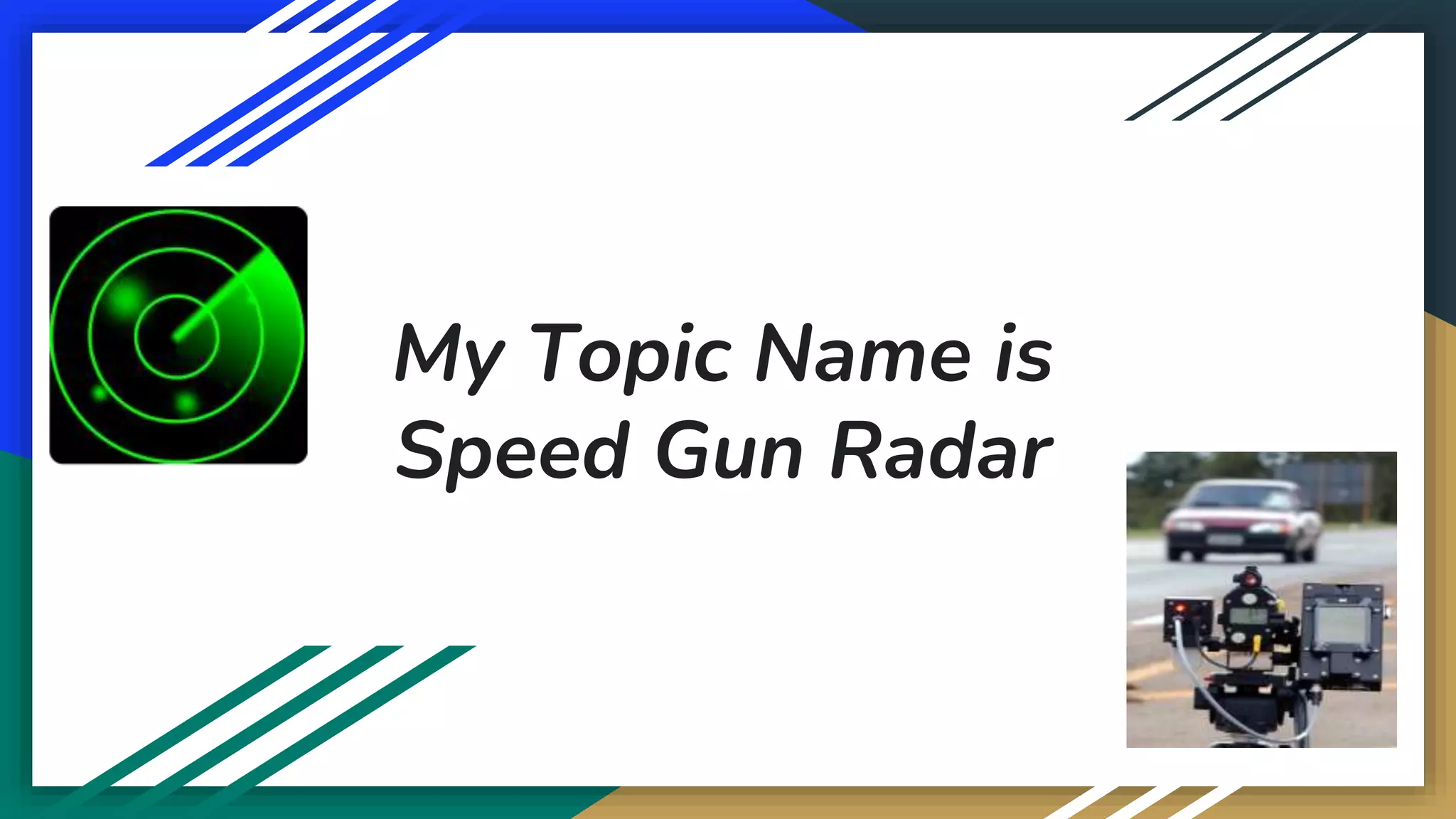
A radar speed gun (also radar gun and speed
trap gun) is a device used to measure the
speed of moving objects. It is used in law-
enforcement to measure the speed of moving
vehicles and is often used in professional
spectator sport, for things such as the
measurement of bowling speeds in cricket,
speed of pitched baseballs, and speed of
tennis serves.
A radar speed gun is a Doppler radar unit that
may be hand-held, vehicle-mounted or static. It
measures the speed of the objects at which it is
pointed by detecting a change in frequency of the
returned radar signal caused by the Doppler
effect, whereby the frequency of the returned
signal is increased in proportion to the object's
speed of approach if the object is approaching,
and lowered if the object is receding.
The Doppler effect or
Doppler shift is the
apparent change in
frequency of a wave in
relation to an observer
who is moving relative to
the wave source.It is
named after the Austrian
physicist Christian
Doppler, who described
the phenomenon in 1842.
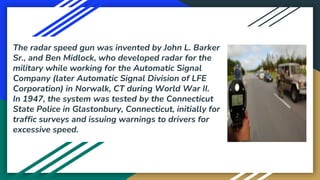
The radar speed gun was invented by John L. Barker
Sr., and Ben Midlock, who developed radar for the
military while working for the Automatic Signal
Company (later Automatic Signal Division of LFE
Corporation) in Norwalk, CT during World War II.
In 1947, the system was tested by the Connecticut
State Police in Glastonbury, Connecticut, initially for
traffic surveys and issuing warnings to drivers for
excessive speed.
Speed guns use Doppler radar to perform speed measurements.
Radar speed guns, like other types of radar, consist of a radio transmitter
and receiver. They send out a radio signal in a narrow beam, then receive
the same signal back after it bounces off the target object. Due to a
phenomenon called the Doppler effect, if the object is moving toward or
away from the gun, the frequency of the reflected radio waves when they
come back is different from the transmitted waves. When the object is
approaching the radar, the frequency of the return waves is higher than
the transmitted waves; when the object is moving away, the frequency is
lower. From that difference, the radar speed gun can calculate the speed
of the object from which the waves have been bounced.
WORKING
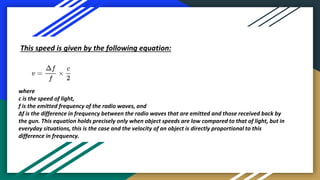
This speed is given by the following equation:
where
c is the speed of light,
f is the emitted frequency of the radio waves, and
Δf is the difference in frequency between the radio waves that are emitted and those received back by
the gun. This equation holds precisely only when object speeds are low compared to that of light, but in
everyday situations, this is the case and the velocity of an object is directly proportional to this
difference in frequency.
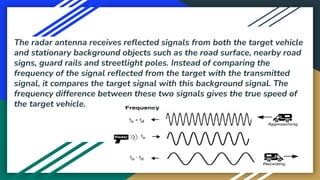
The radar antenna receives reflected signals from both the target vehicle
and stationary background objects such as the road surface, nearby road
signs, guard rails and streetlight poles. Instead of comparing the
frequency of the signal reflected from the target with the transmitted
signal, it compares the target signal with this background signal. The
frequency difference between these two signals gives the true speed of
the target vehicle.
THANKS FOR THE
WATCHING

Speed Gun Radar Ppt.pptx

  • 1.
    My Topic Nameis Speed Gun Radar
  • 2.
    A radar speedgun (also radar gun and speed trap gun) is a device used to measure the speed of moving objects. It is used in law- enforcement to measure the speed of moving vehicles and is often used in professional spectator sport, for things such as the measurement of bowling speeds in cricket, speed of pitched baseballs, and speed of tennis serves.
  • 3.
    A radar speedgun is a Doppler radar unit that may be hand-held, vehicle-mounted or static. It measures the speed of the objects at which it is pointed by detecting a change in frequency of the returned radar signal caused by the Doppler effect, whereby the frequency of the returned signal is increased in proportion to the object's speed of approach if the object is approaching, and lowered if the object is receding. The Doppler effect or Doppler shift is the apparent change in frequency of a wave in relation to an observer who is moving relative to the wave source.It is named after the Austrian physicist Christian Doppler, who described the phenomenon in 1842.
  • 4.
    The radar speedgun was invented by John L. Barker Sr., and Ben Midlock, who developed radar for the military while working for the Automatic Signal Company (later Automatic Signal Division of LFE Corporation) in Norwalk, CT during World War II. In 1947, the system was tested by the Connecticut State Police in Glastonbury, Connecticut, initially for traffic surveys and issuing warnings to drivers for excessive speed.
  • 5.
    Speed guns useDoppler radar to perform speed measurements. Radar speed guns, like other types of radar, consist of a radio transmitter and receiver. They send out a radio signal in a narrow beam, then receive the same signal back after it bounces off the target object. Due to a phenomenon called the Doppler effect, if the object is moving toward or away from the gun, the frequency of the reflected radio waves when they come back is different from the transmitted waves. When the object is approaching the radar, the frequency of the return waves is higher than the transmitted waves; when the object is moving away, the frequency is lower. From that difference, the radar speed gun can calculate the speed of the object from which the waves have been bounced. WORKING
  • 6.
    This speed isgiven by the following equation: where c is the speed of light, f is the emitted frequency of the radio waves, and Δf is the difference in frequency between the radio waves that are emitted and those received back by the gun. This equation holds precisely only when object speeds are low compared to that of light, but in everyday situations, this is the case and the velocity of an object is directly proportional to this difference in frequency.
  • 7.
    The radar antennareceives reflected signals from both the target vehicle and stationary background objects such as the road surface, nearby road signs, guard rails and streetlight poles. Instead of comparing the frequency of the signal reflected from the target with the transmitted signal, it compares the target signal with this background signal. The frequency difference between these two signals gives the true speed of the target vehicle.
  • 8.