Understanding Speech
Styles
A Guide to
Communication Styles
What Are Speech Styles?
• Speech styles refer to the
way people use language
in different contexts. They
vary based on the
audience, purpose, and
setting.
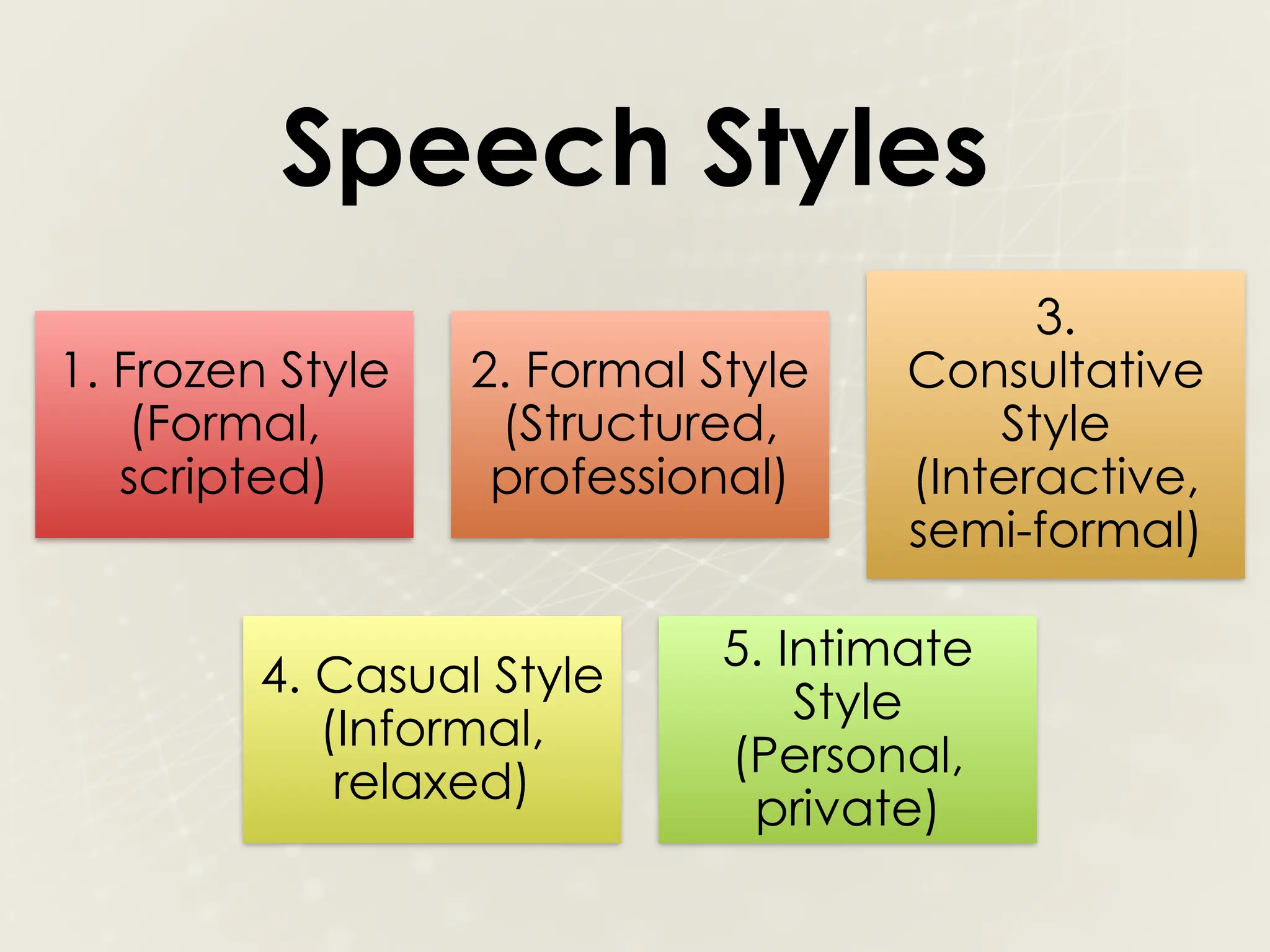
Speech Styles
1. Frozen Style
(Formal,
scripted)
2. Formal Style
(Structured,
professional)
3.
Consultative
Style
(Interactive,
semi-formal)
4. Casual Style
(Informal,
relaxed)
5. Intimate
Style
(Personal,
private)
Frozen Speech Style
- Highly formal and often written
in advance
- Used in ceremonies, legal
documents, and religious texts
- Example: "We the people..."
Formal Speech Style
- Structured and impersonal
- Used in academic papers,
business reports, and presentations
- Example: "In conclusion, the data
suggests..."
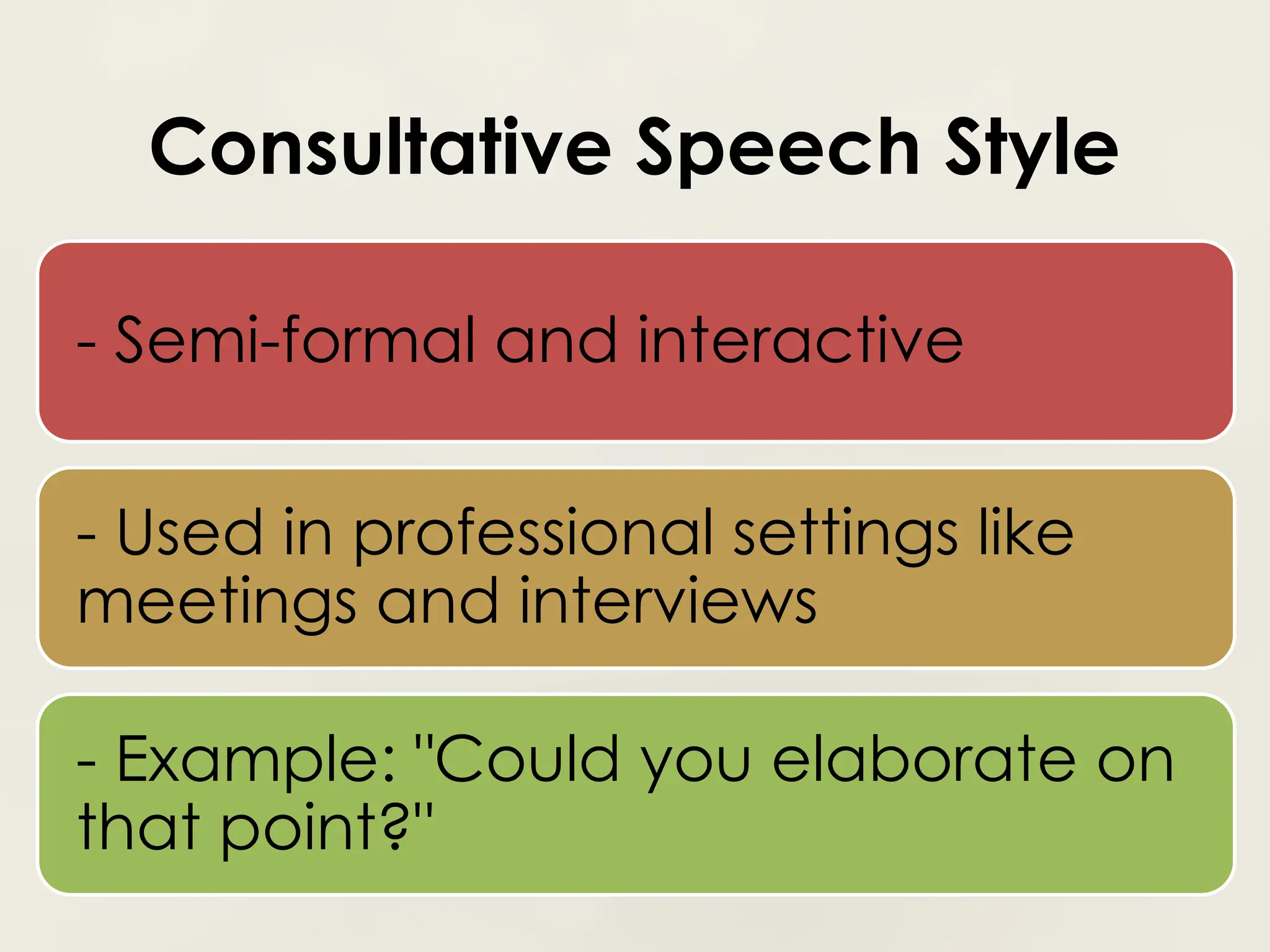
Consultative Speech Style
- Semi-formal and interactive
- Used in professional settings like
meetings and interviews
- Example: "Could you elaborate on
that point?"
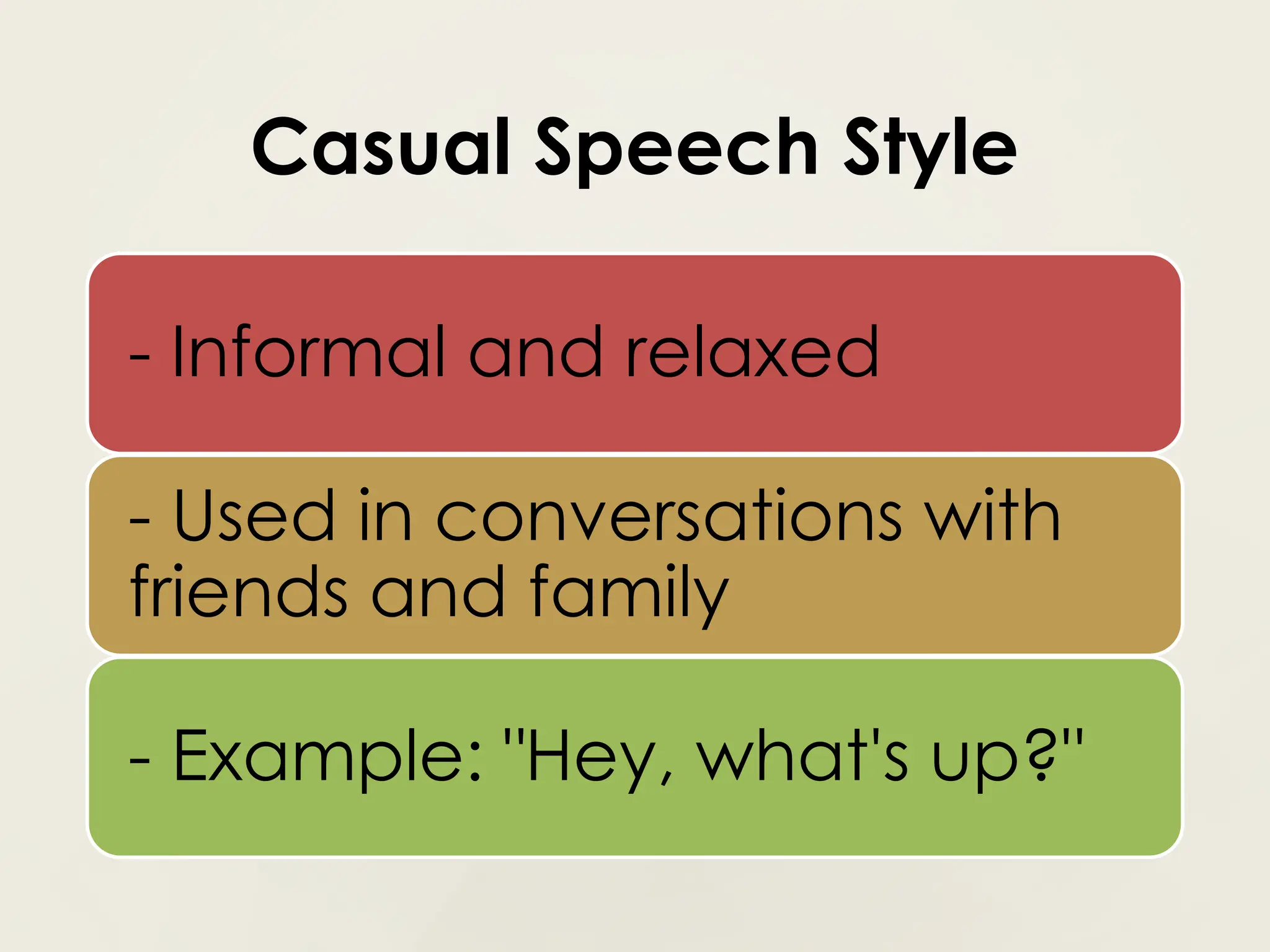
Casual Speech Style
- Informal and relaxed
- Used in conversations with
friends and family
- Example: "Hey, what's up?"
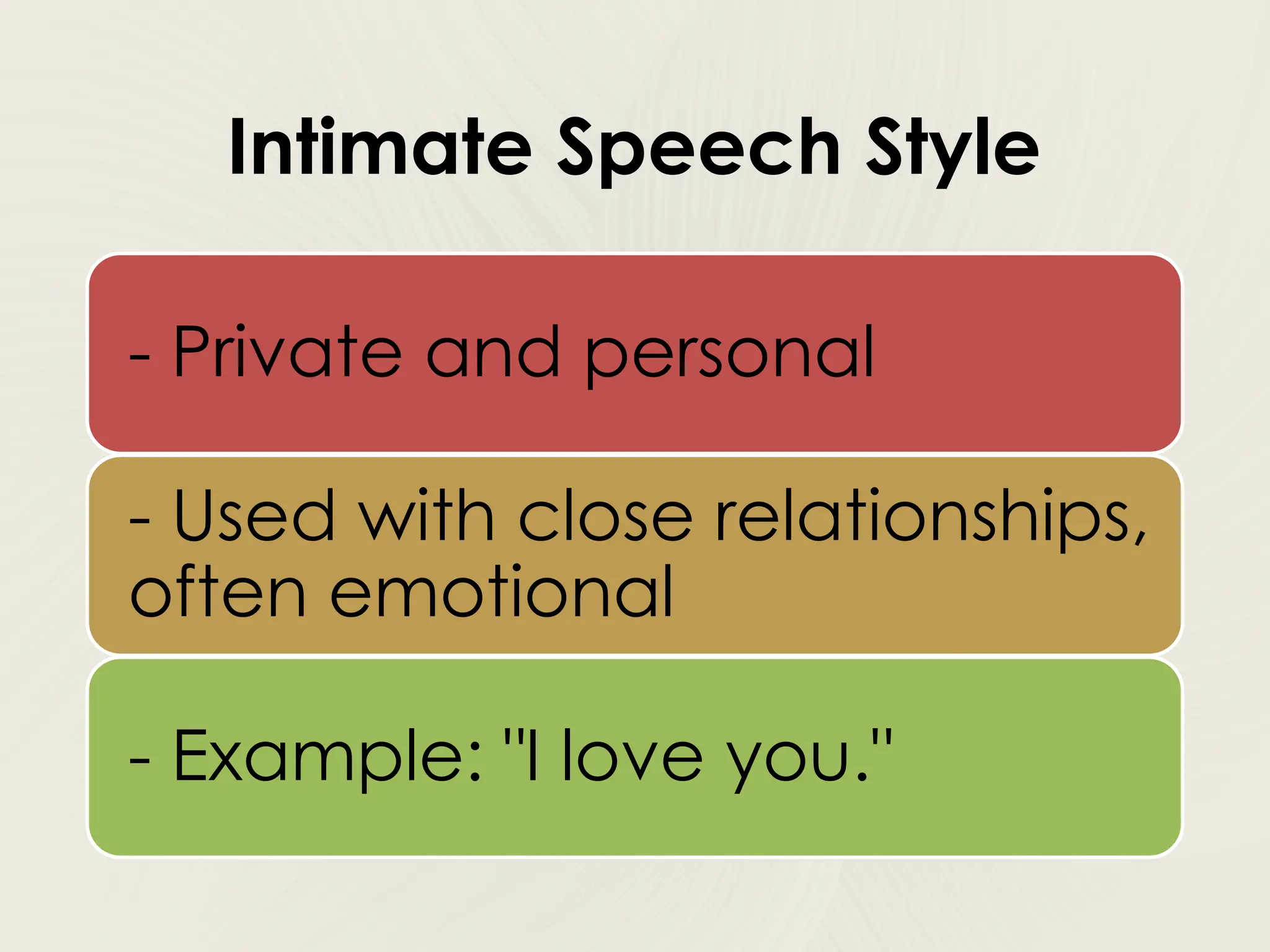
Intimate Speech Style
- Private and personal
- Used with close relationships,
often emotional
- Example: "I love you."
ANY QUESTIONS?
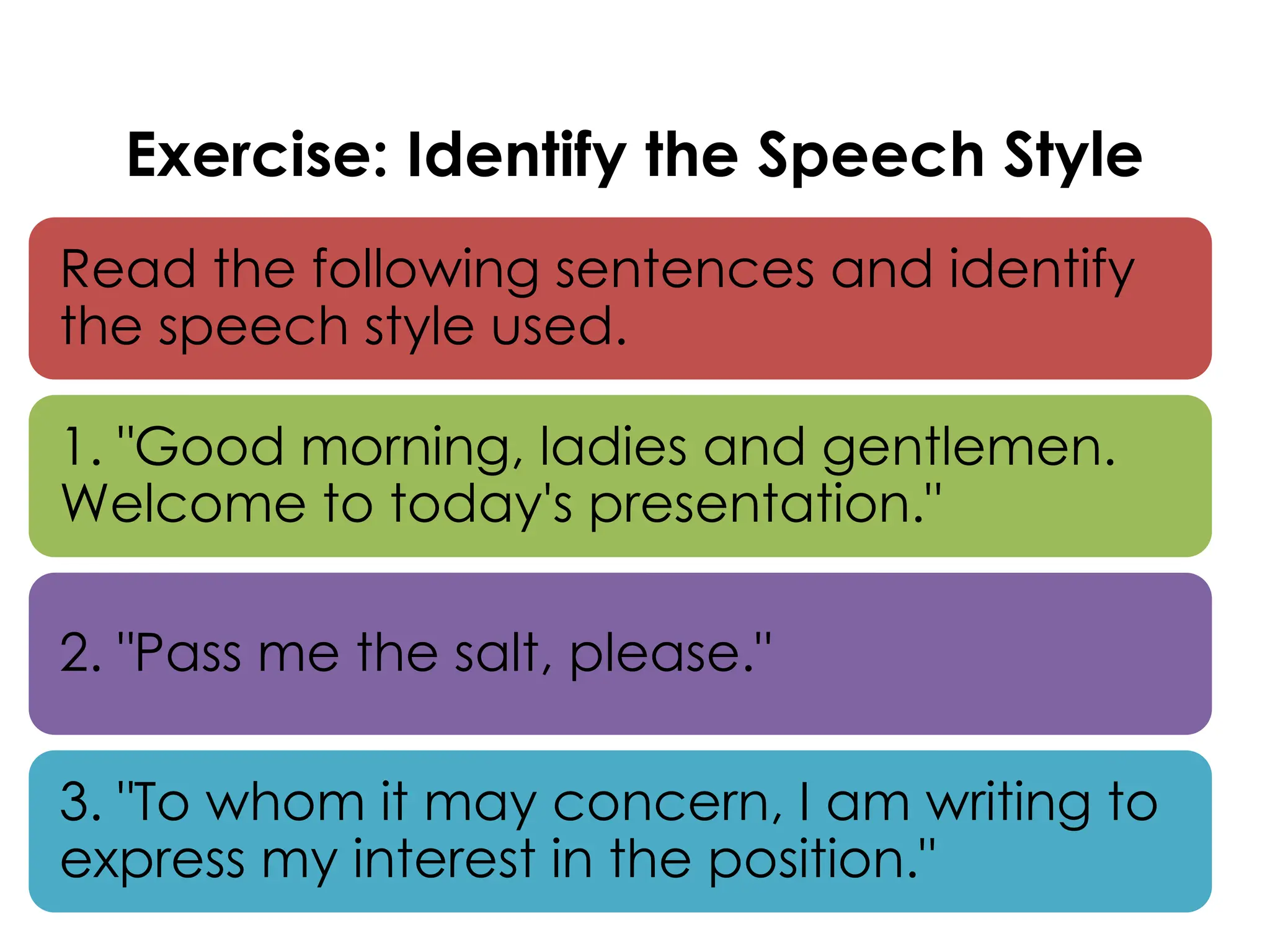
Exercise: Identify the Speech Style
Read the following sentences and identify
the speech style used.
1. "Good morning, ladies and gentlemen.
Welcome to today's presentation."
2. "Pass me the salt, please."
3. "To whom it may concern, I am writing to
express my interest in the position."
Exercise: Match the Context
Match the following contexts with the
appropriate speech style.
1. Wedding vows
2. Board meeting
3. Texting a friend
Conclusion
- Understanding and using
different speech styles can
improve communication.
- Tailoring speech to the
audience and context is
key.
Activity #4: In a group,
present a tableau
featuring the different
speech style. Provide a
brief explanation.
Exercise: Role Play
• Pair up with a partner and choose a scenario.
Role-play the conversation using the
appropriate speech style.
• 1. A job interview
• 2. Ordering food at a casual restaurant
• 3. A conversation between close friends
Discussion and Reflection
• - Discuss how speech styles affect
communication.
• - Reflect on situations where switching speech
styles may be necessary.

SPEECH STYLE GRADE 11 ORAL COMMUNICATION.pptx

  • 1.
    Understanding Speech Styles A Guideto Communication Styles
  • 2.
    What Are SpeechStyles? • Speech styles refer to the way people use language in different contexts. They vary based on the audience, purpose, and setting.
  • 3.
    Speech Styles 1. FrozenStyle (Formal, scripted) 2. Formal Style (Structured, professional) 3. Consultative Style (Interactive, semi-formal) 4. Casual Style (Informal, relaxed) 5. Intimate Style (Personal, private)
  • 4.
    Frozen Speech Style -Highly formal and often written in advance - Used in ceremonies, legal documents, and religious texts - Example: "We the people..."
  • 5.
    Formal Speech Style -Structured and impersonal - Used in academic papers, business reports, and presentations - Example: "In conclusion, the data suggests..."
  • 6.
    Consultative Speech Style -Semi-formal and interactive - Used in professional settings like meetings and interviews - Example: "Could you elaborate on that point?"
  • 7.
    Casual Speech Style -Informal and relaxed - Used in conversations with friends and family - Example: "Hey, what's up?"
  • 8.
    Intimate Speech Style -Private and personal - Used with close relationships, often emotional - Example: "I love you."
  • 9.
  • 10.
    Exercise: Identify theSpeech Style Read the following sentences and identify the speech style used. 1. "Good morning, ladies and gentlemen. Welcome to today's presentation." 2. "Pass me the salt, please." 3. "To whom it may concern, I am writing to express my interest in the position."
  • 11.
    Exercise: Match theContext Match the following contexts with the appropriate speech style. 1. Wedding vows 2. Board meeting 3. Texting a friend
  • 12.
    Conclusion - Understanding andusing different speech styles can improve communication. - Tailoring speech to the audience and context is key.
  • 13.
    Activity #4: Ina group, present a tableau featuring the different speech style. Provide a brief explanation.
  • 15.
    Exercise: Role Play •Pair up with a partner and choose a scenario. Role-play the conversation using the appropriate speech style. • 1. A job interview • 2. Ordering food at a casual restaurant • 3. A conversation between close friends
  • 16.
    Discussion and Reflection •- Discuss how speech styles affect communication. • - Reflect on situations where switching speech styles may be necessary.