Lets Imagine
 A 31-year-old man (Unconscious) was admitted to the hospital via
emergency medical services after suffering a severe closed-head injury
resulting from a car-vs-pedestrian collision.
 On further investigation there is marked increase in ICP, Deranged lab
investigations such as RFT and LFT i.e. particular increment in creatinine,
urea, ALT, AST.
So, What can be the possible medical and surgical
interventions to be carried out? 7/15/2023
1
ORGAN SUPPORT TECHNIQUES
Presenter:
Sushila hamal
M.Sc. Nursing 1st year
BPKIHS
7/15/2023
2
Contents
 Introduction of organ support techniques
 Objective of multiple organ support therapy
 Introduction of ICU
 Indication of ICU admission
 General Management during ICU stay
 Categories of organ support therapy
 Respiratory support therapy
 Circulatory support therapy
 Renal support therapy
 Hemodynamic monitoring or support therapy
 Neurological monitoring or support
7/15/2023
3
Life Support techniques
 Life support techniques refers to a variety of medical procedures
that aim to keep alive until body is functioning again.
 Life support replaces or supports a failing organ.
 Life support procedures include mechanical breathing
(ventilation), CPR, tube feeding, dialysis and more.
7/15/2023
4
Objective of multiple organ support
therapy
•Protect the organs before organ failure
• Restrict tissue hypoxia
• Reduce an excessive inflammatory response
• Protect against oxidant damage
• If multiple organ failure is already established, the cells
might need to be rested.
7/15/2023
5
Introduction of ICU
• The intensive care unit (ICU) is the hospital facility within which
the highest level of continuous patient care and treatment care are provided.
• ICU cases include a variety of severe cases due to major surgical
interventions, trauma, hemodynamic instability, sepsis and so on.
• All of these factors can easily lead to multiple organ dysfunction syndromes
(MODS).
• MODS are the leading cause of mortality in critically ill patients and is
responsible for a large amount of healthcare expenditure.
7/15/2023
6
Indication of ICU admission
A. Respiratory System
1. Acute respiratory failure requiring ventilator support
2. Acute pulmonary embolism with hemodynamic instability
3. Massive hemoptysis
4. Upper airway obstruction
7/15/2023
7
Indication of ICU admission Cont…
B. Cardiovascular System
1. Shock states
2. Life-threatening dysrhythmias
3. Dissecting aortic aneurysms
4. Hypertensive emergencies
7/15/2023
8
Indication of ICU admission Cont…
C. Gastrointestinal System
1. Life threatening gastrointestinal bleeding
2. Acute hepatic failure leading to coma, hemodynamic instability
D. Renal System
1. Requirement for acute renal replacement therapies in an unstable patient
2. Acute rhabdomyolysis with renal insufficiency
3. Severe acute pancreatitis
7/15/2023
9
Indication of ICU admission Cont…
E. Neurological System
1. Severe head trauma
2. Status epilepticus
3. Meningitis with altered mental status or respiratory compromise
4. Myasthenia gravis and Gullain-Barre syndrome
5. Brain dead or potentially brain dead
7/15/2023
10
Indication of ICU admission Cont…
E. Multi-system
1. Severe sepsis or septic shock
2. Multi-organ dysfunction syndrome
3. Polytrauma
7. Severe burns
7/15/2023
11
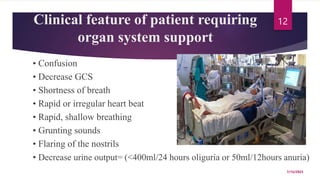
Clinical feature of patient requiring
organ system support
• Confusion
• Decrease GCS
• Shortness of breath
• Rapid or irregular heart beat
• Rapid, shallow breathing
• Grunting sounds
• Flaring of the nostrils
• Decrease urine output= (<400ml/24 hours oliguria or 50ml/12hours anuria)
7/15/2023
12
Investigations
 Echocardiography
 ECG (resting and exercise)
 Cardiac catheterization to rule out CAD
 ABG studies
 Liver function
 Renal function test
 Imaging
 Chest X-ray
 Computed tomography (CT), MRI & Positron-emission tomography (PET)
7/15/2023
13
General Management during ICU stay
 A- Assess, prevent and manage pain (Analgesic)
 B- Both spontaneous breathing and awakening trials
 C- Choice of sedation and analgesia
 D- Delirium assessment, prevention and management
 E- Early mobility and exercise
 F- Feeding, Family communication and involvement.
7/15/2023
14
General Management during ICU stay
 A- antibiotics Therapy
 T- thromboembolism prophylaxis
 H- head end up
 U- ulcer prophylaxis
 G- glucose control
 S- spontaneous breathing trial
 B- bowel regimen
 I- indwelling catheter
7/15/2023
15
Categories of organ support therapy
 Respiratory support therapy
 Circulatory support therapy
 Renal support therapy
 Hemodynamic monitoring or support therapy
 Neurological monitoring or support Therapy
7/15/2023
16
Respiratory support therapy
 Most patients admitted to intensive care require some form of
respiratory support.
 This is usually because of hypoxemia or ventilator failure, or both.
 The support offered ranges from oxygen therapy by face mask,
through non-invasive techniques such as continuous positive airways
pressure, to full ventilator support with endotracheal intubation.
7/15/2023
17
Types of respiratory support therapy
 Basic respiratory support therapy
 Advanced respiratory support therapy
7/15/2023
18
Basic respiratory support
 Oxygen Therapy
 Adequate fluid volume, and
nutritional support are important
 Bronchodilators
 Antibiotic Therapy
 Analgesics
 Corticosteroid Therapy
 Positioning (e.g. fowlers position)
 Suctioning
 Incentive spirometry
 Nebulization
 Intermittent Positive-pressure
breathing (IPPB)
 Chest tube drainage
 Chest physiotherapy (Postural
drainage, chest percussion,
breathing retraining)
7/15/2023
19
Advanced respiratory support
Non- invasive ventilation
 Continuous positive airway
pressure (CPAP)
 Bi-level positive airway
pressure (BPAP).
 Invasive ventilation
 Endotracheal intubation
 Tracheostomy
 Mechanical ventilation
7/15/2023
20
Circulatory support therapy
 Medical therapy including use of angiotensin converting
enzyme inhibitors, beta blockers, and aldosterone antagonists.
 Mechanical pumps designed to assist / replace the function of
either left/right/ both ventricles.
 It decreases the workload of the heart while maintaining
adequate flow and blood pressure.
7/15/2023
21
Supportive Management
 12 lead ECG
 Supplemental oxygen
 Nitroglycerin
 Antibiotic Therapy
 Analgesics: Morphine
 Thrombolytic Agents
 Anticoagulants
 Antiplatelet Therapy: Aspirin
 Beta - adrenergic blocking agents
 Digoxin, diuretics, beta blockers, salt
and fluid restriction in case of HF
7/15/2023
22
Hemodynamic support includes:
 Fluid resuscitation/Blood transfusion
 Use of vasoactive drugs like nitroglycerine, amlodipine, nitric
oxide, hydralazine.
 Hemodynamic monitoring: CVP monitoring, Pulmonary capillary
wedge pressure (PAWP) monitoring, Arterial Pressure Monitoring.
7/15/2023
23
Mechanical circulatory support
(MCS)
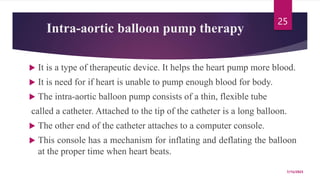
 MCS devices are indicated to provide hemodynamic support to
patients with cardiogenic shock or symptomatic advanced heart
failure (HF) refractory to guideline-directed medical care.
7/15/2023
24
Intra-aortic balloon pump therapy
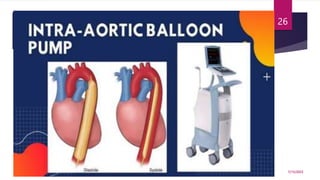
 It is a type of therapeutic device. It helps the heart pump more blood.
 It is need for if heart is unable to pump enough blood for body.
 The intra-aortic balloon pump consists of a thin, flexible tube
called a catheter. Attached to the tip of the catheter is a long balloon.
 The other end of the catheter attaches to a computer console.
 This console has a mechanism for inflating and deflating the balloon
at the proper time when heart beats.
7/15/2023
25
7/15/2023
26
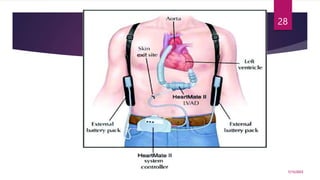
A ventricular assist device (VAD)
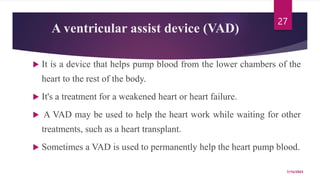
 It is a device that helps pump blood from the lower chambers of the
heart to the rest of the body.
 It's a treatment for a weakened heart or heart failure.
 A VAD may be used to help the heart work while waiting for other
treatments, such as a heart transplant.
 Sometimes a VAD is used to permanently help the heart pump blood.
7/15/2023
27
7/15/2023
28
7/15/2023
29
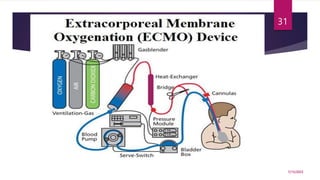
Extra corporeal membrane oxygenation
(ECMOS)
 It is a life support machine that replaces the functions of the
heart and lungs in which the blood is pumped outside the
body in a heart lung machine that removes carbon dioxide and
sends oxygen filled blood back to the tissues in the body.
7/15/2023
30
7/15/2023
31
7/15/2023
32
Some heart conditions in which ECMO
may be used include
 Heart attack (acute myocardial infarction)
 Heart muscle disease (decompensated cardiomyopathy)
 Inflammation of the heart muscle (myocarditis)
 Life-threatening response to infection (sepsis)
 Low body temperature (severe hypothermia)
 Post-transplant complications
 Cardiogenic shock
7/15/2023
33
Some lung (pulmonary) conditions in
which ECMO may be used include
 Acute respiratory distress syndrome (ARDS)
 Pulmonary embolism
 Coronavirus disease 2019 (COVID-19)
 Defect in the diaphragm (congenital diaphragmatic hernia)
 Fetus inhales waste products in the womb (meconium aspiration)
 High blood pressure in the lungs (pulmonary hypertension)
7/15/2023
34
Renal support therapy
 Acute renal replacement therapy: is a term used supporting to
encompass life- treatments for renal failure.
 It includes: hemodialysis, peritoneal dialysis and Renal Transplant.
7/15/2023
35
Supportive Therapy
 Salt and potassium should be restricted
 Protein intake is limited to 0.5g/kg/day
 Diuretics: to maintain fluid & electrolytes.
 Vasodilators: Dopamine
 Calcium channel blockers: Nefidipine
 Erythropoietin
 Blood transfusion: fresh blood, FFP.
 Calcium supplementation
7/15/2023
36
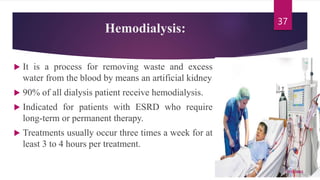
Hemodialysis:
 It is a process for removing waste and excess
water from the blood by means an artificial kidney
 90% of all dialysis patient receive hemodialysis.
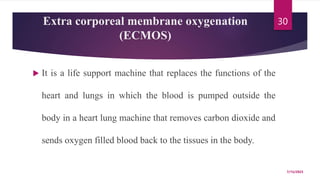
 Indicated for patients with ESRD who require
long-term or permanent therapy.
 Treatments usually occur three times a week for at
least 3 to 4 hours per treatment.
7/15/2023
37
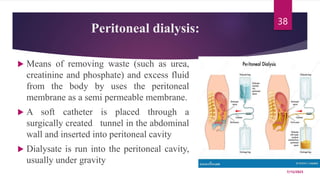
Peritoneal dialysis:
 Means of removing waste (such as urea,
creatinine and phosphate) and excess fluid
from the body by uses the peritoneal
membrane as a semi permeable membrane.
 A soft catheter is placed through a
surgically created tunnel in the abdominal
wall and inserted into peritoneal cavity
 Dialysate is run into the peritoneal cavity,
usually under gravity
7/15/2023
38
Indication of dialysis
 Oliguria (urine output <200 mL/12 h)
 Anuria/extreme oliguria (urine output <50 mL/12 h)
 Hyperkalemia (K >6.5 mEq/L)
 Severe acidemia (pH <7.1)
 Azotemia (urea >30 mg/dL)
 Pulmonary edema
7/15/2023
39
Liver support therapy
 Liver failure is defined as an insufficiency of any facet of liver
function to a degree that this insufficiency leads to secondary
organ failures and creates a life threatening situation if untreated.
 The Molecular Adsorbent Recirculation System (MARS) is an
example of artificial extracorporeal liver support.
7/15/2023
40
Supportive Therapy
 Intravenous fluids
 Administration of B- complex
vitamins and nutritional
supplements
 Avoidance of alcohol
 Antacids
 Potassium-sparing diuretics
(spironolactone)
 Antiemetic, Analgesia,
and antibiotic Therapy
 Low-fat diet
 High protein and
carbohydrate diet
 Paracentesis
7/15/2023
41
Molecular Adsorbent Recirculation
System (MARS)
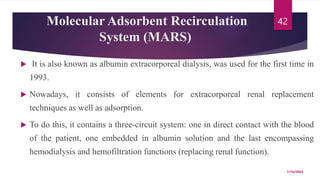
 It is also known as albumin extracorporeal dialysis, was used for the first time in
1993.
 Nowadays, it consists of elements for extracorporeal renal replacement
techniques as well as adsorption.
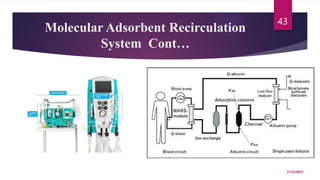
 To do this, it contains a three-circuit system: one in direct contact with the blood
of the patient, one embedded in albumin solution and the last encompassing
hemodialysis and hemofiltration functions (replacing renal function).
7/15/2023
42
Molecular Adsorbent Recirculation
System Cont…
7/15/2023
43
7/15/2023
44
Molecular Adsorbent Recirculation
System Cont…
 It therefore requires a standard dialysis machine to control the
dialysate circuit, and an extra device (monitor) to control and
monitor the closed-loop albumin circuit
 The MARS system combines the efficacy of sorbents to remove
albumin-bound toxins with the high selectivity of highly
biocompatible dialysis membranes.
7/15/2023
45
Mechanism of Action
 First step: Using heparin as an anticoagulant for the entire system,
the blood obtained from a venous access is dialyzed through an
albumin-impermeable membrane at a flow rate of 150-250 mL/min.
 The albumin circuit contains an albumin solution at 20-25% in a
closed circuit where a steady volume of the solution is being
recirculated.
7/15/2023
46
First step Cont…
 Albumin-ligated toxins are recruited by a concentration
gradient. The membrane is impermeable to substances with a
molecular weight over 50 kDa; therefore, albumin, α-1
glycoprotein, α-1 antitrypsin, α-2 macroglobulin, transferrin and
hormone transporter proteins circulate back to the patient.
7/15/2023
47
Second step:
 The ultra-filtrate obtained passes through the hemodialysis circuit,
where all the water-soluble toxins are removed, then returns to the
bloodstream of the patient.
 The dialysate passes through the third compartment containing a
bicarbonate-buffered dialysate, after which the flow continues to two
sequential columns: the first containing uncoated charcoal and the
second containing an anion exchange resin
7/15/2023
48
Indications
 Acute liver failure
 Acute-on-chronic liver failure
 Albumin-bound toxins
 Intractable pruritus due to cholestasis
 Post hepatectomy and post-liver transplant support
 Severe alcoholic steatohepatitis
 Overdoses/intoxication with protein-bound substances
7/15/2023
49
Neurological Support Therapy
Supportive Therapy
 Control of cerebral edema and ICP
 Careful administration of fluids and electrolytes and anti-
hypertensive medications.
 Inj Mannitol to reduce increased intracranial pressure.
 Anticholinesterase agents: such as pyridostigmine bromide and
neostigmine bromide
7/15/2023
50
Supportive Therapy Cont…
 Cytotoxic medications: azathioprine, cyclophosphamide
and cyclosporine
 Immunosuppressive therapy: Corticosteroids
 Antibiotics Therapy
 Corticosteroid Therapy
 Anti-seizure medication to control seizure
 NG tube insertion
7/15/2023
51
Intravenous immunoglobulin (IVIG)
 Concentrated antibodies is injected straight into a vein.
 The antibodies are extracted from healthy donors.
 Most effective if administered within two weeks of the onset of symptoms.
 IVIG contains the pooled immunoglobulin G (IgG) antibodies and may
reduce the severity of autoimmune
 Obtained from the plasma of approximately thousand or more blood donors
7/15/2023
52
Plasmapheresis
 The patient plasma and plasma components are removed through
a centrally placed
 The blood cells and antibody-containing plasma are separated
 The cells and a plasma substitute are reinfused
 Plasma exchange produces a temporary reduction in the titer of
circulating antibodies
 40-50 mL/kg plasma exchange (PE) can be administered 4 times
over a week
7/15/2023
53
Supportive Management
 Respiratory support: ventilation via ET or tracheostomy
 Pain management: NSAIDS, acetaminophen with
hydrocodone
 Nutritional support: enteral / parenteral feeding
 Close monitoring
7/15/2023
54
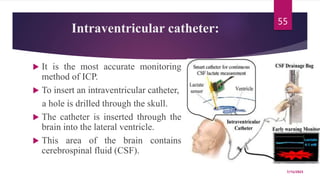
Intraventricular catheter:
 It is the most accurate monitoring
method of ICP.
 To insert an intraventricular catheter,
a hole is drilled through the skull.
 The catheter is inserted through the
brain into the lateral ventricle.
 This area of the brain contains
cerebrospinal fluid (CSF).
7/15/2023
55
Risks Associated with Intraventricular
Catheter:
 Infection
 Collapse of the ventricles/ rapid ventricular drainage,
 Increased potential for subdural hematoma,
 Subarachnoid hemorrhage.
7/15/2023
56
Rehabilitation
 Physiotherapy
 Occupational therapy
 Speech therapy
 Recreational therapy
7/15/2023
57
References
 Rangta N, Pandey R. Critical Care. 1st ed. New Delhi: Jaypee Brothers Medical
Publishers Pvt. Ltd; 2016.
 Mandal G.N. "Textbook of Medical Surgical Nursing". 6th ed. Baneshwor,
Kathmandu: Safal Publication House Pvt. Ltd; 2019.
 Sharma M, Kalpana P, Gautam R. "Essential Textbook of Medical Surgical
Nursing". 2nd ed. Ghattekulo Rautahadevi Marga, Kathmandu: Samiksha
Publication Pvt. Ltd; 2017.
 https://www.slideshare.net/rsmehta/5-organ-support-techniques-55768519
 Saliba F. The Molecular Adsorbent Recirculating System (MARS) in the
intensive care unit: a rescue therapy for patients with hepatic failure. Critical
Care. 2006 Feb; 10:1-3.
7/15/2023
58
References Cont...
 Boyle M, Kurtovic J, Bihari D, Riordan S, Steiner C. Equipment review: The molecular
adsorbents recirculating system (MARS). Critical Care. 2004 Aug; 8:1-7.
 Bhagat H, Dash HH, Chauhan RS, Khanna P, Bithal PK. Intensive care management of
Guillain-Barre syndrome: a retrospective outcome study and review of literature. Journal of
Neuroanaesthesiology and Critical Care. 2014 Dec;1(03):188-97.
 Mortada I, Farah R, Nabha S, Ojcius DM, Fares Y, Almawi WY, Sadier NS.
Immunotherapies for neurodegenerative diseases. Frontiers in Neurology. 2021 Jun 7;
12:654739.
 Salter BS, Gross CR, Weiner MM, Dukkipati SR, Serrao GW, Moss N, Anyanwu AC,
Burkhoff D, Lala A. Temporary mechanical circulatory support devices: practical
considerations for all stakeholders. Nature Reviews Cardiology. 2023 Apr;20(4):263-77.
7/15/2023
59
7/15/2023
60
7/15/2023
61
7/15/2023
62

Presentation1 organ support technique.pptx

  • 1.
    Lets Imagine  A31-year-old man (Unconscious) was admitted to the hospital via emergency medical services after suffering a severe closed-head injury resulting from a car-vs-pedestrian collision.  On further investigation there is marked increase in ICP, Deranged lab investigations such as RFT and LFT i.e. particular increment in creatinine, urea, ALT, AST. So, What can be the possible medical and surgical interventions to be carried out? 7/15/2023 1
  • 2.
    ORGAN SUPPORT TECHNIQUES Presenter: Sushilahamal M.Sc. Nursing 1st year BPKIHS 7/15/2023 2
  • 3.
    Contents  Introduction oforgan support techniques  Objective of multiple organ support therapy  Introduction of ICU  Indication of ICU admission  General Management during ICU stay  Categories of organ support therapy  Respiratory support therapy  Circulatory support therapy  Renal support therapy  Hemodynamic monitoring or support therapy  Neurological monitoring or support 7/15/2023 3
  • 4.
    Life Support techniques Life support techniques refers to a variety of medical procedures that aim to keep alive until body is functioning again.  Life support replaces or supports a failing organ.  Life support procedures include mechanical breathing (ventilation), CPR, tube feeding, dialysis and more. 7/15/2023 4
  • 5.
    Objective of multipleorgan support therapy •Protect the organs before organ failure • Restrict tissue hypoxia • Reduce an excessive inflammatory response • Protect against oxidant damage • If multiple organ failure is already established, the cells might need to be rested. 7/15/2023 5
  • 6.
    Introduction of ICU •The intensive care unit (ICU) is the hospital facility within which the highest level of continuous patient care and treatment care are provided. • ICU cases include a variety of severe cases due to major surgical interventions, trauma, hemodynamic instability, sepsis and so on. • All of these factors can easily lead to multiple organ dysfunction syndromes (MODS). • MODS are the leading cause of mortality in critically ill patients and is responsible for a large amount of healthcare expenditure. 7/15/2023 6
  • 7.
    Indication of ICUadmission A. Respiratory System 1. Acute respiratory failure requiring ventilator support 2. Acute pulmonary embolism with hemodynamic instability 3. Massive hemoptysis 4. Upper airway obstruction 7/15/2023 7
  • 8.
    Indication of ICUadmission Cont… B. Cardiovascular System 1. Shock states 2. Life-threatening dysrhythmias 3. Dissecting aortic aneurysms 4. Hypertensive emergencies 7/15/2023 8
  • 9.
    Indication of ICUadmission Cont… C. Gastrointestinal System 1. Life threatening gastrointestinal bleeding 2. Acute hepatic failure leading to coma, hemodynamic instability D. Renal System 1. Requirement for acute renal replacement therapies in an unstable patient 2. Acute rhabdomyolysis with renal insufficiency 3. Severe acute pancreatitis 7/15/2023 9
  • 10.
    Indication of ICUadmission Cont… E. Neurological System 1. Severe head trauma 2. Status epilepticus 3. Meningitis with altered mental status or respiratory compromise 4. Myasthenia gravis and Gullain-Barre syndrome 5. Brain dead or potentially brain dead 7/15/2023 10
  • 11.
    Indication of ICUadmission Cont… E. Multi-system 1. Severe sepsis or septic shock 2. Multi-organ dysfunction syndrome 3. Polytrauma 7. Severe burns 7/15/2023 11
  • 12.
    Clinical feature ofpatient requiring organ system support • Confusion • Decrease GCS • Shortness of breath • Rapid or irregular heart beat • Rapid, shallow breathing • Grunting sounds • Flaring of the nostrils • Decrease urine output= (<400ml/24 hours oliguria or 50ml/12hours anuria) 7/15/2023 12
  • 13.
    Investigations  Echocardiography  ECG(resting and exercise)  Cardiac catheterization to rule out CAD  ABG studies  Liver function  Renal function test  Imaging  Chest X-ray  Computed tomography (CT), MRI & Positron-emission tomography (PET) 7/15/2023 13
  • 14.
    General Management duringICU stay  A- Assess, prevent and manage pain (Analgesic)  B- Both spontaneous breathing and awakening trials  C- Choice of sedation and analgesia  D- Delirium assessment, prevention and management  E- Early mobility and exercise  F- Feeding, Family communication and involvement. 7/15/2023 14
  • 15.
    General Management duringICU stay  A- antibiotics Therapy  T- thromboembolism prophylaxis  H- head end up  U- ulcer prophylaxis  G- glucose control  S- spontaneous breathing trial  B- bowel regimen  I- indwelling catheter 7/15/2023 15
  • 16.
    Categories of organsupport therapy  Respiratory support therapy  Circulatory support therapy  Renal support therapy  Hemodynamic monitoring or support therapy  Neurological monitoring or support Therapy 7/15/2023 16
  • 17.
    Respiratory support therapy Most patients admitted to intensive care require some form of respiratory support.  This is usually because of hypoxemia or ventilator failure, or both.  The support offered ranges from oxygen therapy by face mask, through non-invasive techniques such as continuous positive airways pressure, to full ventilator support with endotracheal intubation. 7/15/2023 17
  • 18.
    Types of respiratorysupport therapy  Basic respiratory support therapy  Advanced respiratory support therapy 7/15/2023 18
  • 19.
    Basic respiratory support Oxygen Therapy  Adequate fluid volume, and nutritional support are important  Bronchodilators  Antibiotic Therapy  Analgesics  Corticosteroid Therapy  Positioning (e.g. fowlers position)  Suctioning  Incentive spirometry  Nebulization  Intermittent Positive-pressure breathing (IPPB)  Chest tube drainage  Chest physiotherapy (Postural drainage, chest percussion, breathing retraining) 7/15/2023 19
  • 20.
    Advanced respiratory support Non-invasive ventilation  Continuous positive airway pressure (CPAP)  Bi-level positive airway pressure (BPAP).  Invasive ventilation  Endotracheal intubation  Tracheostomy  Mechanical ventilation 7/15/2023 20
  • 21.
    Circulatory support therapy Medical therapy including use of angiotensin converting enzyme inhibitors, beta blockers, and aldosterone antagonists.  Mechanical pumps designed to assist / replace the function of either left/right/ both ventricles.  It decreases the workload of the heart while maintaining adequate flow and blood pressure. 7/15/2023 21
  • 22.
    Supportive Management  12lead ECG  Supplemental oxygen  Nitroglycerin  Antibiotic Therapy  Analgesics: Morphine  Thrombolytic Agents  Anticoagulants  Antiplatelet Therapy: Aspirin  Beta - adrenergic blocking agents  Digoxin, diuretics, beta blockers, salt and fluid restriction in case of HF 7/15/2023 22
  • 23.
    Hemodynamic support includes: Fluid resuscitation/Blood transfusion  Use of vasoactive drugs like nitroglycerine, amlodipine, nitric oxide, hydralazine.  Hemodynamic monitoring: CVP monitoring, Pulmonary capillary wedge pressure (PAWP) monitoring, Arterial Pressure Monitoring. 7/15/2023 23
  • 24.
    Mechanical circulatory support (MCS) MCS devices are indicated to provide hemodynamic support to patients with cardiogenic shock or symptomatic advanced heart failure (HF) refractory to guideline-directed medical care. 7/15/2023 24
  • 25.
    Intra-aortic balloon pumptherapy  It is a type of therapeutic device. It helps the heart pump more blood.  It is need for if heart is unable to pump enough blood for body.  The intra-aortic balloon pump consists of a thin, flexible tube called a catheter. Attached to the tip of the catheter is a long balloon.  The other end of the catheter attaches to a computer console.  This console has a mechanism for inflating and deflating the balloon at the proper time when heart beats. 7/15/2023 25
  • 26.
  • 27.
    A ventricular assistdevice (VAD)  It is a device that helps pump blood from the lower chambers of the heart to the rest of the body.  It's a treatment for a weakened heart or heart failure.  A VAD may be used to help the heart work while waiting for other treatments, such as a heart transplant.  Sometimes a VAD is used to permanently help the heart pump blood. 7/15/2023 27
  • 28.
  • 29.
  • 30.
    Extra corporeal membraneoxygenation (ECMOS)  It is a life support machine that replaces the functions of the heart and lungs in which the blood is pumped outside the body in a heart lung machine that removes carbon dioxide and sends oxygen filled blood back to the tissues in the body. 7/15/2023 30
  • 31.
  • 32.
  • 33.
    Some heart conditionsin which ECMO may be used include  Heart attack (acute myocardial infarction)  Heart muscle disease (decompensated cardiomyopathy)  Inflammation of the heart muscle (myocarditis)  Life-threatening response to infection (sepsis)  Low body temperature (severe hypothermia)  Post-transplant complications  Cardiogenic shock 7/15/2023 33
  • 34.
    Some lung (pulmonary)conditions in which ECMO may be used include  Acute respiratory distress syndrome (ARDS)  Pulmonary embolism  Coronavirus disease 2019 (COVID-19)  Defect in the diaphragm (congenital diaphragmatic hernia)  Fetus inhales waste products in the womb (meconium aspiration)  High blood pressure in the lungs (pulmonary hypertension) 7/15/2023 34
  • 35.
    Renal support therapy Acute renal replacement therapy: is a term used supporting to encompass life- treatments for renal failure.  It includes: hemodialysis, peritoneal dialysis and Renal Transplant. 7/15/2023 35
  • 36.
    Supportive Therapy  Saltand potassium should be restricted  Protein intake is limited to 0.5g/kg/day  Diuretics: to maintain fluid & electrolytes.  Vasodilators: Dopamine  Calcium channel blockers: Nefidipine  Erythropoietin  Blood transfusion: fresh blood, FFP.  Calcium supplementation 7/15/2023 36
  • 37.
    Hemodialysis:  It isa process for removing waste and excess water from the blood by means an artificial kidney  90% of all dialysis patient receive hemodialysis.  Indicated for patients with ESRD who require long-term or permanent therapy.  Treatments usually occur three times a week for at least 3 to 4 hours per treatment. 7/15/2023 37
  • 38.
    Peritoneal dialysis:  Meansof removing waste (such as urea, creatinine and phosphate) and excess fluid from the body by uses the peritoneal membrane as a semi permeable membrane.  A soft catheter is placed through a surgically created tunnel in the abdominal wall and inserted into peritoneal cavity  Dialysate is run into the peritoneal cavity, usually under gravity 7/15/2023 38
  • 39.
    Indication of dialysis Oliguria (urine output <200 mL/12 h)  Anuria/extreme oliguria (urine output <50 mL/12 h)  Hyperkalemia (K >6.5 mEq/L)  Severe acidemia (pH <7.1)  Azotemia (urea >30 mg/dL)  Pulmonary edema 7/15/2023 39
  • 40.
    Liver support therapy Liver failure is defined as an insufficiency of any facet of liver function to a degree that this insufficiency leads to secondary organ failures and creates a life threatening situation if untreated.  The Molecular Adsorbent Recirculation System (MARS) is an example of artificial extracorporeal liver support. 7/15/2023 40
  • 41.
    Supportive Therapy  Intravenousfluids  Administration of B- complex vitamins and nutritional supplements  Avoidance of alcohol  Antacids  Potassium-sparing diuretics (spironolactone)  Antiemetic, Analgesia, and antibiotic Therapy  Low-fat diet  High protein and carbohydrate diet  Paracentesis 7/15/2023 41
  • 42.
    Molecular Adsorbent Recirculation System(MARS)  It is also known as albumin extracorporeal dialysis, was used for the first time in 1993.  Nowadays, it consists of elements for extracorporeal renal replacement techniques as well as adsorption.  To do this, it contains a three-circuit system: one in direct contact with the blood of the patient, one embedded in albumin solution and the last encompassing hemodialysis and hemofiltration functions (replacing renal function). 7/15/2023 42
  • 43.
  • 44.
  • 45.
    Molecular Adsorbent Recirculation SystemCont…  It therefore requires a standard dialysis machine to control the dialysate circuit, and an extra device (monitor) to control and monitor the closed-loop albumin circuit  The MARS system combines the efficacy of sorbents to remove albumin-bound toxins with the high selectivity of highly biocompatible dialysis membranes. 7/15/2023 45
  • 46.
    Mechanism of Action First step: Using heparin as an anticoagulant for the entire system, the blood obtained from a venous access is dialyzed through an albumin-impermeable membrane at a flow rate of 150-250 mL/min.  The albumin circuit contains an albumin solution at 20-25% in a closed circuit where a steady volume of the solution is being recirculated. 7/15/2023 46
  • 47.
    First step Cont… Albumin-ligated toxins are recruited by a concentration gradient. The membrane is impermeable to substances with a molecular weight over 50 kDa; therefore, albumin, α-1 glycoprotein, α-1 antitrypsin, α-2 macroglobulin, transferrin and hormone transporter proteins circulate back to the patient. 7/15/2023 47
  • 48.
    Second step:  Theultra-filtrate obtained passes through the hemodialysis circuit, where all the water-soluble toxins are removed, then returns to the bloodstream of the patient.  The dialysate passes through the third compartment containing a bicarbonate-buffered dialysate, after which the flow continues to two sequential columns: the first containing uncoated charcoal and the second containing an anion exchange resin 7/15/2023 48
  • 49.
    Indications  Acute liverfailure  Acute-on-chronic liver failure  Albumin-bound toxins  Intractable pruritus due to cholestasis  Post hepatectomy and post-liver transplant support  Severe alcoholic steatohepatitis  Overdoses/intoxication with protein-bound substances 7/15/2023 49
  • 50.
    Neurological Support Therapy SupportiveTherapy  Control of cerebral edema and ICP  Careful administration of fluids and electrolytes and anti- hypertensive medications.  Inj Mannitol to reduce increased intracranial pressure.  Anticholinesterase agents: such as pyridostigmine bromide and neostigmine bromide 7/15/2023 50
  • 51.
    Supportive Therapy Cont… Cytotoxic medications: azathioprine, cyclophosphamide and cyclosporine  Immunosuppressive therapy: Corticosteroids  Antibiotics Therapy  Corticosteroid Therapy  Anti-seizure medication to control seizure  NG tube insertion 7/15/2023 51
  • 52.
    Intravenous immunoglobulin (IVIG) Concentrated antibodies is injected straight into a vein.  The antibodies are extracted from healthy donors.  Most effective if administered within two weeks of the onset of symptoms.  IVIG contains the pooled immunoglobulin G (IgG) antibodies and may reduce the severity of autoimmune  Obtained from the plasma of approximately thousand or more blood donors 7/15/2023 52
  • 53.
    Plasmapheresis  The patientplasma and plasma components are removed through a centrally placed  The blood cells and antibody-containing plasma are separated  The cells and a plasma substitute are reinfused  Plasma exchange produces a temporary reduction in the titer of circulating antibodies  40-50 mL/kg plasma exchange (PE) can be administered 4 times over a week 7/15/2023 53
  • 54.
    Supportive Management  Respiratorysupport: ventilation via ET or tracheostomy  Pain management: NSAIDS, acetaminophen with hydrocodone  Nutritional support: enteral / parenteral feeding  Close monitoring 7/15/2023 54
  • 55.
    Intraventricular catheter:  Itis the most accurate monitoring method of ICP.  To insert an intraventricular catheter, a hole is drilled through the skull.  The catheter is inserted through the brain into the lateral ventricle.  This area of the brain contains cerebrospinal fluid (CSF). 7/15/2023 55
  • 56.
    Risks Associated withIntraventricular Catheter:  Infection  Collapse of the ventricles/ rapid ventricular drainage,  Increased potential for subdural hematoma,  Subarachnoid hemorrhage. 7/15/2023 56
  • 57.
    Rehabilitation  Physiotherapy  Occupationaltherapy  Speech therapy  Recreational therapy 7/15/2023 57
  • 58.
    References  Rangta N,Pandey R. Critical Care. 1st ed. New Delhi: Jaypee Brothers Medical Publishers Pvt. Ltd; 2016.  Mandal G.N. "Textbook of Medical Surgical Nursing". 6th ed. Baneshwor, Kathmandu: Safal Publication House Pvt. Ltd; 2019.  Sharma M, Kalpana P, Gautam R. "Essential Textbook of Medical Surgical Nursing". 2nd ed. Ghattekulo Rautahadevi Marga, Kathmandu: Samiksha Publication Pvt. Ltd; 2017.  https://www.slideshare.net/rsmehta/5-organ-support-techniques-55768519  Saliba F. The Molecular Adsorbent Recirculating System (MARS) in the intensive care unit: a rescue therapy for patients with hepatic failure. Critical Care. 2006 Feb; 10:1-3. 7/15/2023 58
  • 59.
    References Cont...  BoyleM, Kurtovic J, Bihari D, Riordan S, Steiner C. Equipment review: The molecular adsorbents recirculating system (MARS). Critical Care. 2004 Aug; 8:1-7.  Bhagat H, Dash HH, Chauhan RS, Khanna P, Bithal PK. Intensive care management of Guillain-Barre syndrome: a retrospective outcome study and review of literature. Journal of Neuroanaesthesiology and Critical Care. 2014 Dec;1(03):188-97.  Mortada I, Farah R, Nabha S, Ojcius DM, Fares Y, Almawi WY, Sadier NS. Immunotherapies for neurodegenerative diseases. Frontiers in Neurology. 2021 Jun 7; 12:654739.  Salter BS, Gross CR, Weiner MM, Dukkipati SR, Serrao GW, Moss N, Anyanwu AC, Burkhoff D, Lala A. Temporary mechanical circulatory support devices: practical considerations for all stakeholders. Nature Reviews Cardiology. 2023 Apr;20(4):263-77. 7/15/2023 59
  • 60.
  • 61.
  • 62.

Editor's Notes

  • #2 Ventilation, intraventricular catheter, hemodialysis, Molecular Adsorbent Recirculation system (MARS)