Specialized Cells
• 50 – 75 Trillion cells in
your body
• 220 specialized cells
– Heart
– Nerve
– Blood
– Sperm
– Etc.
• Why different?
Specialized Cell
• A cell that has a particular structure and
performs a specific function
• Each type has unique shape, size and
features allowing it to do its job accurately
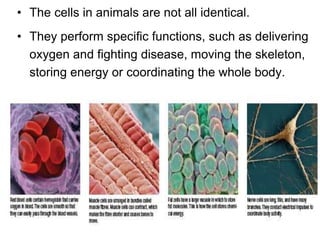
• The cells in animals are not all identical.
• They perform specific functions, such as delivering
oxygen and fighting disease, moving the skeleton,
storing energy or coordinating the whole body.
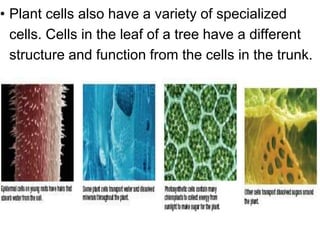
• Plant cells also have a variety of specialized
cells. Cells in the leaf of a tree have a different
structure and function from the cells in the trunk.
Example:
Trachea Cilia
(don’t copy into notes)
• Specialized cells have physical and chemical differences
that allow each type to perform one job very well.
• These cells help keep dirt out of the lungs.
– The orange goblet cells secrete mucus
– The hair-like extensions (called cilia) move the mucus along the
trachea to remove inhaled dust and dirt.
Examples:
1. Red Blood Cell
– Round edges to travel in blood vessels easier
– No nucleus = more room to carry O2 and CO2
2. Nerve Cell
– Long, skinny arms to send messages quickly
over long distances
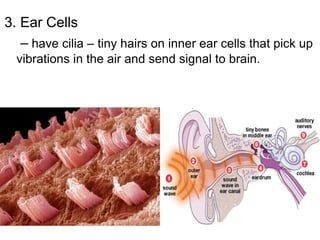
3. Ear Cells
– have cilia – tiny hairs on inner ear cells that pick up
vibrations in the air and send signal to brain.
4. Muscle Cell
– Long, skinny cells that lengthen and shorten to
move muscles
Stem Cells
• Unspecialized cells that divide quickly and
do not have a particular function yet.
Specialized Cells
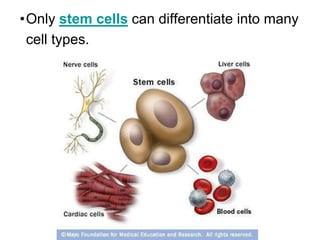
•Only stem cells can differentiate into many
cell types.
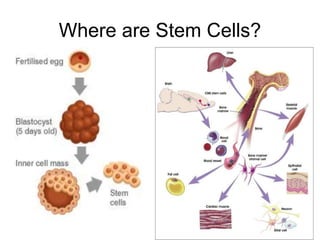
Where are Stem Cells?
Cord Blood Cell Banking?
• The blood found in an umbilical
cord immediately after the birth
of a child is a rich source of
stem cells.
• These stem cells can develop
into various kinds of blood
cells.
• The blood collected from the
cord can be banked (or stored)
in the event it is needed later in
the child’s or a sibling’s life.
How can Stem Cells be Used?
• For diseases such as leukemia,
stem cells collected from healthy
blood can be injected into a
patient’s blood after the diseased
cells have been killed.
• The healthy cells then grow in
the patient’s bone marrow and
produce healthy, cancer-free
blood cells.
• http://www.dnalc.org/resources/animations/stemcells.html
• http://youtu.be/O5r-T6ANKto
To Do Now:
• Draw 2 Different types of cells that you
find under the microscope.
To Do Now:
• Draw 2 Different types of cells that you find
under the microscope.
TO FOCUS MICROSCOPE:
• Start on smallest power lens, focus in on cell.
• Go to medium power and focus
• Go to high power and focus if possible.

specialized_cells.pptx

  • 1.
    Specialized Cells • 50– 75 Trillion cells in your body • 220 specialized cells – Heart – Nerve – Blood – Sperm – Etc. • Why different?
  • 2.
    Specialized Cell • Acell that has a particular structure and performs a specific function • Each type has unique shape, size and features allowing it to do its job accurately
  • 3.
    • The cellsin animals are not all identical. • They perform specific functions, such as delivering oxygen and fighting disease, moving the skeleton, storing energy or coordinating the whole body.
  • 4.
    • Plant cellsalso have a variety of specialized cells. Cells in the leaf of a tree have a different structure and function from the cells in the trunk.
  • 5.
    Example: Trachea Cilia (don’t copyinto notes) • Specialized cells have physical and chemical differences that allow each type to perform one job very well. • These cells help keep dirt out of the lungs. – The orange goblet cells secrete mucus – The hair-like extensions (called cilia) move the mucus along the trachea to remove inhaled dust and dirt.
  • 6.
    Examples: 1. Red BloodCell – Round edges to travel in blood vessels easier – No nucleus = more room to carry O2 and CO2
  • 7.
    2. Nerve Cell –Long, skinny arms to send messages quickly over long distances
  • 8.
    3. Ear Cells –have cilia – tiny hairs on inner ear cells that pick up vibrations in the air and send signal to brain.
  • 9.
    4. Muscle Cell –Long, skinny cells that lengthen and shorten to move muscles
  • 10.
    Stem Cells • Unspecializedcells that divide quickly and do not have a particular function yet.
  • 11.
  • 12.
    •Only stem cellscan differentiate into many cell types.
  • 13.
  • 14.
    Cord Blood CellBanking? • The blood found in an umbilical cord immediately after the birth of a child is a rich source of stem cells. • These stem cells can develop into various kinds of blood cells. • The blood collected from the cord can be banked (or stored) in the event it is needed later in the child’s or a sibling’s life.
  • 15.
    How can StemCells be Used? • For diseases such as leukemia, stem cells collected from healthy blood can be injected into a patient’s blood after the diseased cells have been killed. • The healthy cells then grow in the patient’s bone marrow and produce healthy, cancer-free blood cells. • http://www.dnalc.org/resources/animations/stemcells.html • http://youtu.be/O5r-T6ANKto
  • 16.
    To Do Now: •Draw 2 Different types of cells that you find under the microscope.
  • 18.
    To Do Now: •Draw 2 Different types of cells that you find under the microscope. TO FOCUS MICROSCOPE: • Start on smallest power lens, focus in on cell. • Go to medium power and focus • Go to high power and focus if possible.

Editor's Notes

  • #11 Day 10 – blastocyst, Day 22 – specialization of cells – heart cells to build a heart