Recap
Atomic Mass
Atomic Mass Unit
Molecular Mass
Formula Mass
Avogadro’s Number
Tower of Power
Fit it Right
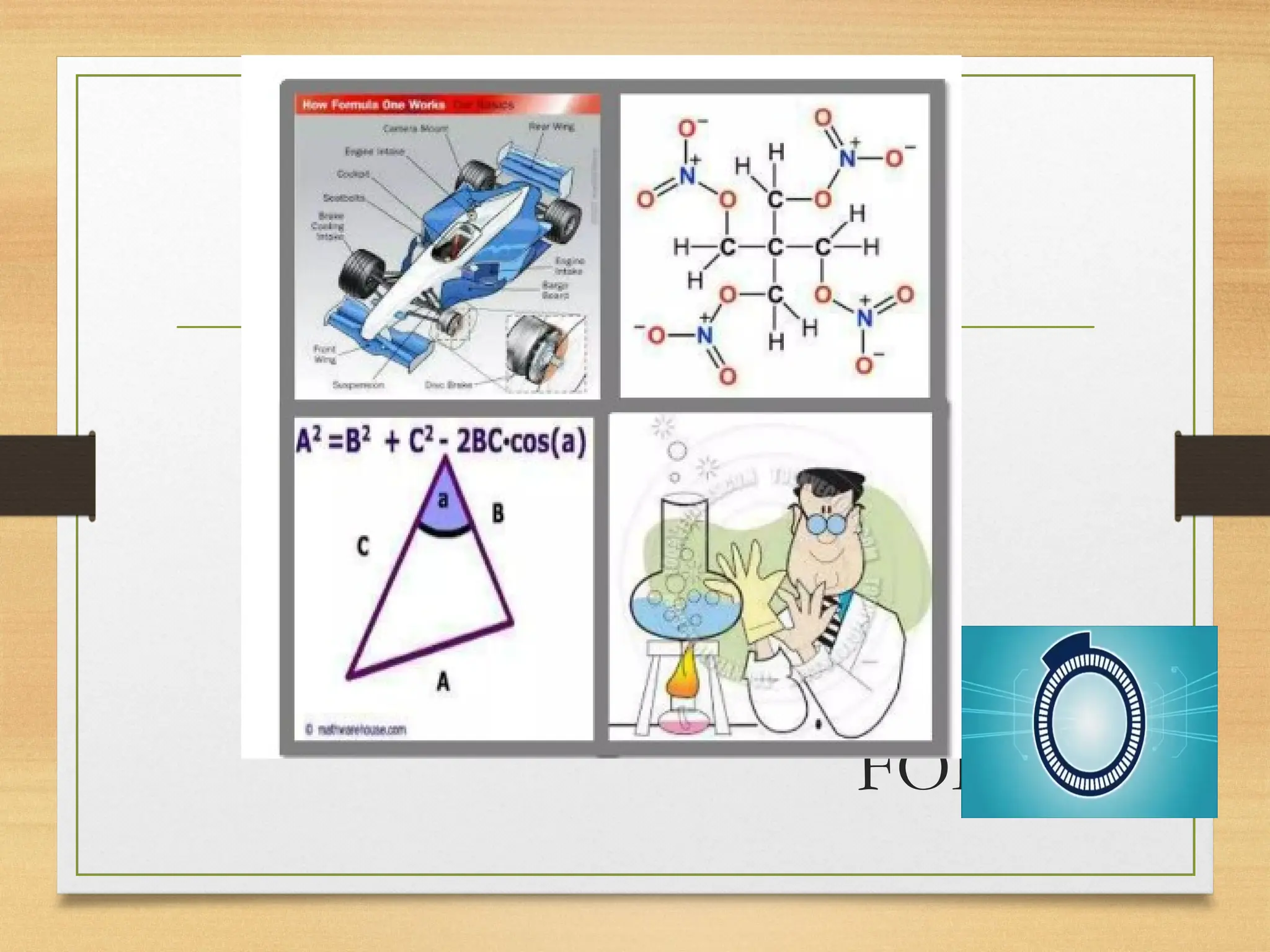
FORMULA
Equation
Balance
Balancing Chemical Equations
Physical Science Week 6
Objectives
Learning Competency
Learning Competency
Balance chemical equations
Identify parts of an equation
Determine the limiting reactant in a
reaction and calculate the amount of
product formed (S11/12PS-IIIh-27)
What is a chemical equation?
• Chemical equation - Describes a chemical change.
• Parts of an equation:
2Ag + H
2Ag + H2
2S
S Ag
Ag2
2S + H
S + H2
2
Reactant Product
Reactants and Products
•Reactant - The chemical(s) you start
with before the reaction.
• Written on left side of equation.
•Product - The new chemical(s) formed
by the reaction.
• Right side of equation.
Subscripts and Coefficients
• Subscript - shows how many atoms of an
element are in a molecule.
• EX: H2
O
• 2 atoms of hydrogen (H) ;
1 atom of oxygen (O)
• Coefficient - shows how many molecules there
are of a particular chemical.
• EX: 3 H2
O
• Means there are 3 water molecules.
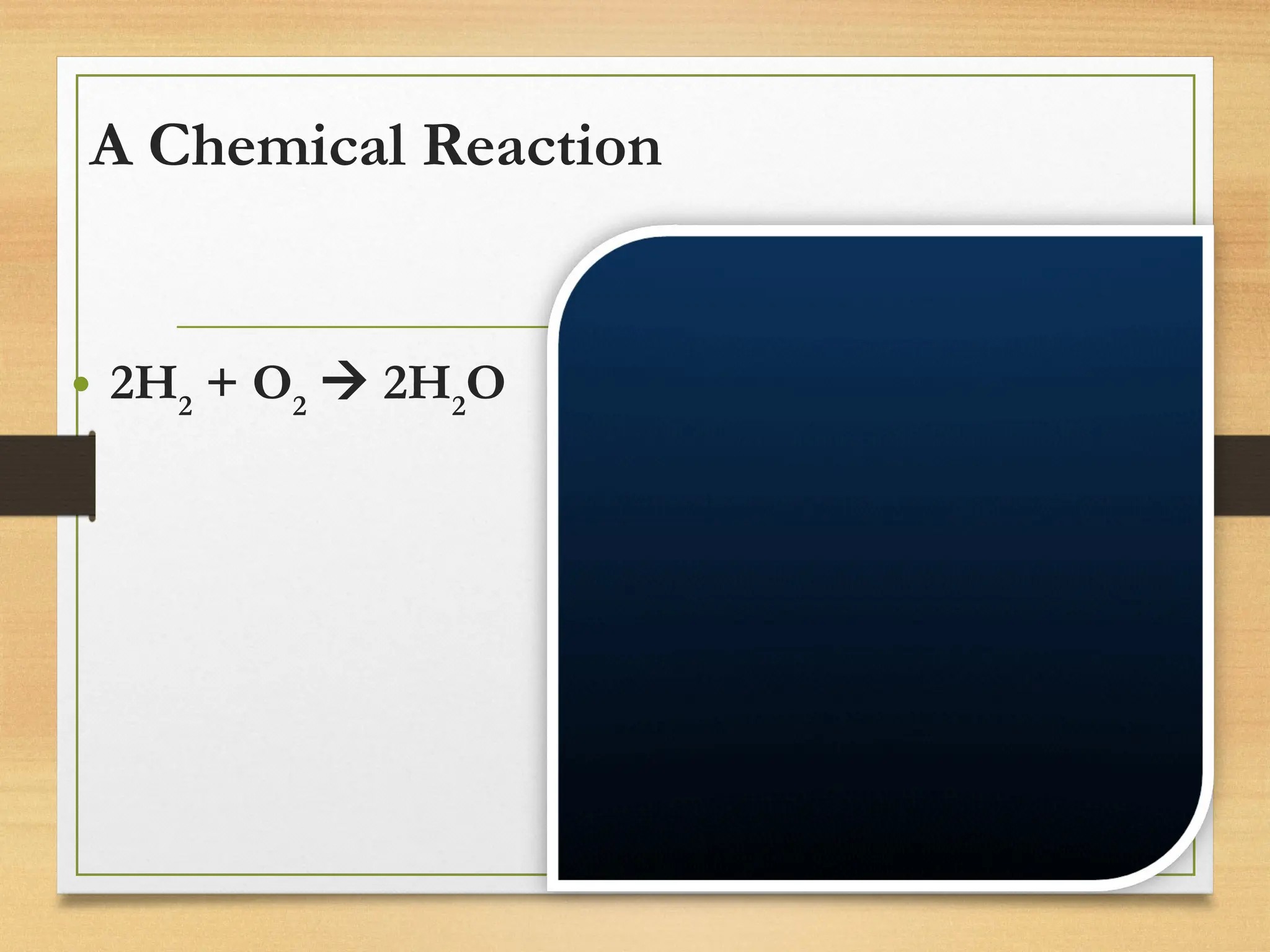
A Chemical Reaction
• 2H2
+ O2
 2H2
O
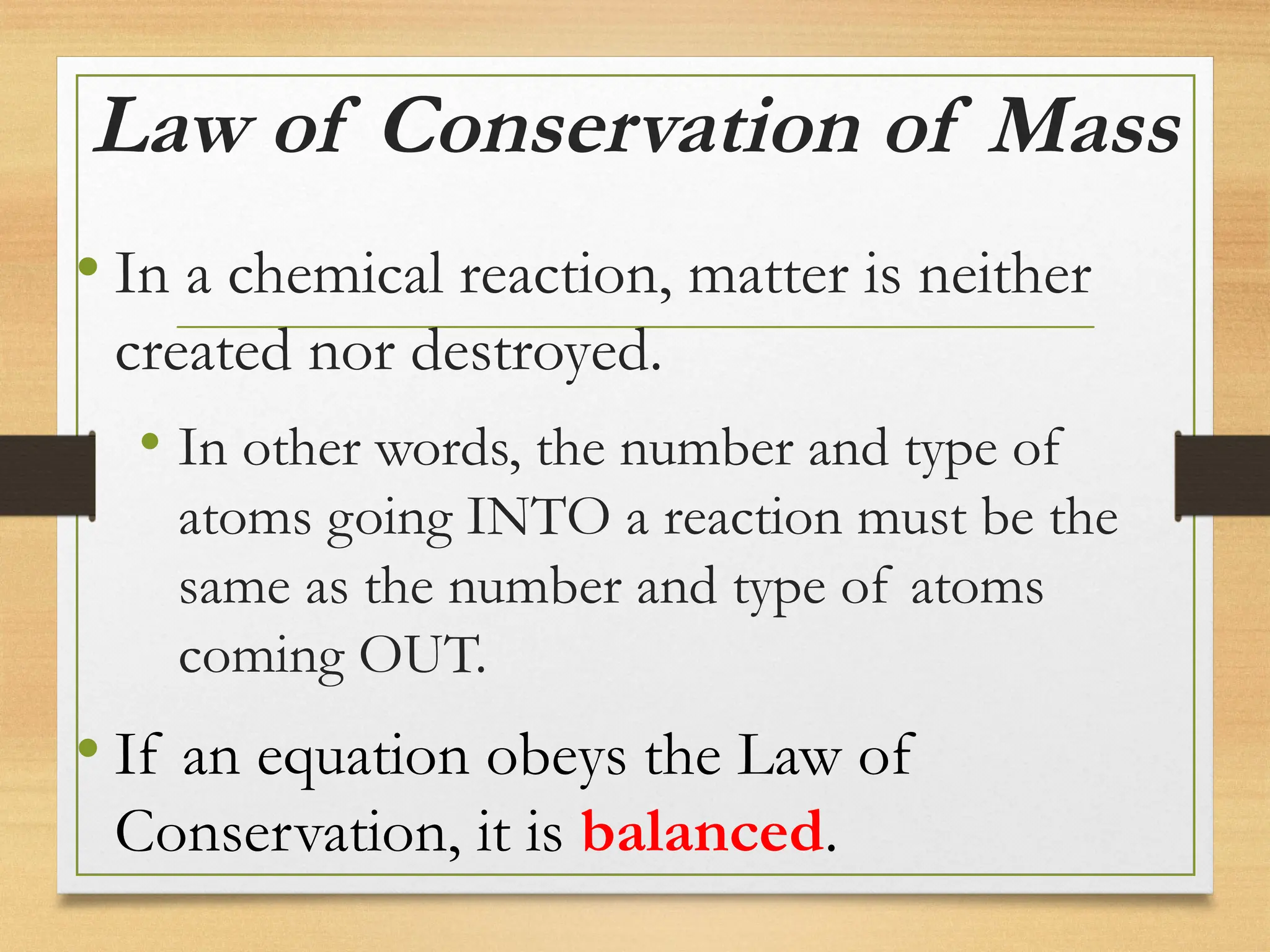
Law of Conservation of Mass
• In a chemical reaction, matter is neither
created nor destroyed.
• In other words, the number and type of
atoms going INTO a reaction must be the
same as the number and type of atoms
coming OUT.
• If an equation obeys the Law of
Conservation, it is balanced.
An Unbalanced Equation
• CH4 + O2  CO2 + H2O
Reactant Side Product Side
1 carbon atom
4 hydrogen atoms
2 oxygen atoms
1 carbon atom
2 hydrogen atoms
3 oxygen atoms
A Balanced Equation

CH4
+ 2O2
 CO2
+ 2H2
O
Reactant Side Product Side
1 carbon atom
4 hydrogen atoms
4 oxygen atoms
1 carbon atom
4 hydrogen atoms
4 oxygen atoms
Rules of the Game
1. Matter cannot be created or destroyed.
2. Subscripts cannot be added, removed,
or changed.
3. You can only change coefficients.
4. Coefficients can only go in front of
chemical formulas...NEVER in the middle
of a formula.
Extra Tips…
Try balancing big formulas first; save free
elements for last.
If the same polyatomic ion appears on
both sides of the equation, it’s usually okay
to treat it as one unit.
There is no one particular way to balance
equations. Some equations are harder to
balance than others and might require
some creativity to solve.
Balancing Equations
Balance the following equation by adjusting
coefficients.
reactants products
N
H
N
N2
2 + H
+ H2
2

 NH
NH3
3
2
2
1
3
2
2
2
6
3
3
6
Balancing Equations
• Balance the following equation by adjusting
coefficients.
KClO
KClO3
3

 KCl + O
KCl + O2
2
reactants products
K
Cl
O
1
1
1
1
3 2
3
3
2
2
2
2
6 6
2
2
2
2
Balancing Equations
•Balance the following equation:
• C2
H6
+ O2
 CO2
+ H2
O
4
4 6
6
7
7
2
2
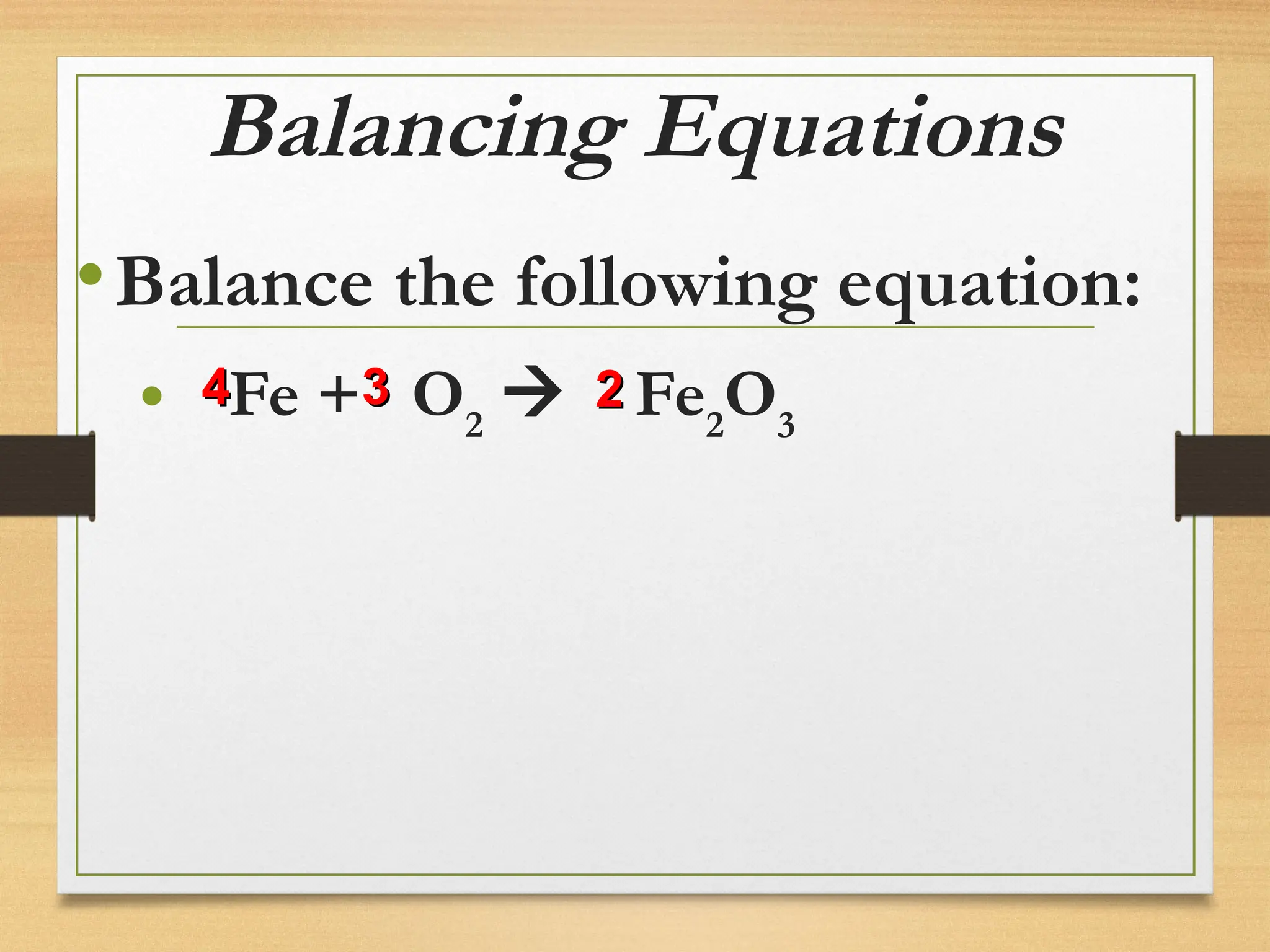
Balancing Equations
•Balance the following equation:
• Fe + O2
 Fe2
O3
2
2
3
3
4
4
Seatwork

Physical Science Balancing_Chemical_Equations.ppt

  • 1.
  • 2.
  • 3.
  • 4.
  • 5.
  • 6.
  • 7.
  • 8.
  • 9.
  • 10.
  • 11.
  • 12.
  • 13.
    Objectives Learning Competency Learning Competency Balancechemical equations Identify parts of an equation Determine the limiting reactant in a reaction and calculate the amount of product formed (S11/12PS-IIIh-27)
  • 14.
    What is achemical equation? • Chemical equation - Describes a chemical change. • Parts of an equation: 2Ag + H 2Ag + H2 2S S Ag Ag2 2S + H S + H2 2 Reactant Product
  • 15.
    Reactants and Products •Reactant- The chemical(s) you start with before the reaction. • Written on left side of equation. •Product - The new chemical(s) formed by the reaction. • Right side of equation.
  • 16.
    Subscripts and Coefficients •Subscript - shows how many atoms of an element are in a molecule. • EX: H2 O • 2 atoms of hydrogen (H) ; 1 atom of oxygen (O) • Coefficient - shows how many molecules there are of a particular chemical. • EX: 3 H2 O • Means there are 3 water molecules.
  • 17.
    A Chemical Reaction •2H2 + O2  2H2 O
  • 18.
    Law of Conservationof Mass • In a chemical reaction, matter is neither created nor destroyed. • In other words, the number and type of atoms going INTO a reaction must be the same as the number and type of atoms coming OUT. • If an equation obeys the Law of Conservation, it is balanced.
  • 19.
    An Unbalanced Equation •CH4 + O2  CO2 + H2O Reactant Side Product Side 1 carbon atom 4 hydrogen atoms 2 oxygen atoms 1 carbon atom 2 hydrogen atoms 3 oxygen atoms
  • 20.
    A Balanced Equation  CH4 +2O2  CO2 + 2H2 O Reactant Side Product Side 1 carbon atom 4 hydrogen atoms 4 oxygen atoms 1 carbon atom 4 hydrogen atoms 4 oxygen atoms
  • 21.
    Rules of theGame 1. Matter cannot be created or destroyed. 2. Subscripts cannot be added, removed, or changed. 3. You can only change coefficients. 4. Coefficients can only go in front of chemical formulas...NEVER in the middle of a formula.
  • 22.
    Extra Tips… Try balancingbig formulas first; save free elements for last. If the same polyatomic ion appears on both sides of the equation, it’s usually okay to treat it as one unit. There is no one particular way to balance equations. Some equations are harder to balance than others and might require some creativity to solve.
  • 23.
    Balancing Equations Balance thefollowing equation by adjusting coefficients. reactants products N H N N2 2 + H + H2 2   NH NH3 3 2 2 1 3 2 2 2 6 3 3 6
  • 24.
    Balancing Equations • Balancethe following equation by adjusting coefficients. KClO KClO3 3   KCl + O KCl + O2 2 reactants products K Cl O 1 1 1 1 3 2 3 3 2 2 2 2 6 6 2 2 2 2
  • 25.
    Balancing Equations •Balance thefollowing equation: • C2 H6 + O2  CO2 + H2 O 4 4 6 6 7 7 2 2
  • 26.
    Balancing Equations •Balance thefollowing equation: • Fe + O2  Fe2 O3 2 2 3 3 4 4
  • 27.