Special cells
Special cells The body is made up of millions of different cells. Each cell type has a different job to do. Because they have different jobs, they are all designed slightly differently.
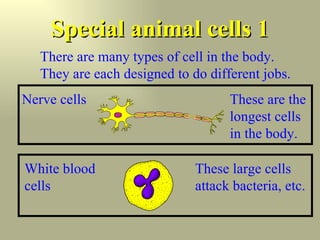
Special animal cells 1 These are the longest cells in the body.   Nerve cells There are many types of cell in the body. They are each designed to do different jobs. White blood cells These large cells attack bacteria, etc.
Nerve Cell
White Blood Cell
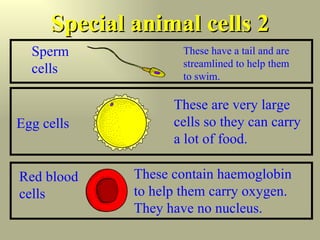
Special animal cells 2 Sperm cells These have a tail and are streamlined to help them to swim. Egg cells These are very large cells so they can carry a lot of food. Red blood cells These contain haemoglobin to help them carry oxygen. They have no nucleus.
Sperm meets Egg
Red Blood Cells
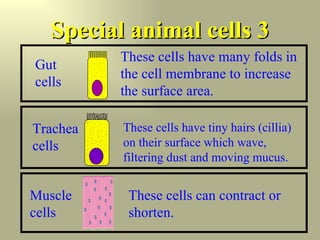
Special animal cells 3 Gut cells These cells have many folds in the cell membrane to increase the surface area. Trachea cells These cells have tiny hairs (cillia) on their surface which wave, filtering dust and moving mucus. Muscle cells These cells can contract or shorten.
Epithelial Cells
Muscle Cells (Heart)
Special plant cells 1 Root hair cells These cells have tiny hairs that help to collect water. Palisade cells These cells have a large surface area for efficient gas exchange. They have lots of chloroplasts to help make sugars.
 
Special plant cells 2 Guard cells These cells are mainly found on the lower surface of a leaf. They allow gases to enter and leave the cell. Xylem vessels These are dead cells. They form long thin tubes which carry water up the stem.
Plant Cells
 
Special cells quiz Which type of cell is large so can carry a lot of food? Which type of cell has a tail so it can swim? Which type of cell has tiny fingers on its surface to increase surface area? Which type of cell has tiny hairs on its surface which wave? How is a nerve cell adapted to do its job? How is a red blood cell adapted to do its job? How are guard cells adapted to do their job? What type of tissue is made from long thin cells which are dead? Why do root hair cells have tiny hairs? How is a palisade cell adapted to do its job?

ScienceShare.co.uk Shared Resource

  • 1.
  • 2.
    Special cells Thebody is made up of millions of different cells. Each cell type has a different job to do. Because they have different jobs, they are all designed slightly differently.
  • 3.
    Special animal cells1 These are the longest cells in the body. Nerve cells There are many types of cell in the body. They are each designed to do different jobs. White blood cells These large cells attack bacteria, etc.
  • 4.
  • 5.
  • 6.
    Special animal cells2 Sperm cells These have a tail and are streamlined to help them to swim. Egg cells These are very large cells so they can carry a lot of food. Red blood cells These contain haemoglobin to help them carry oxygen. They have no nucleus.
  • 7.
  • 8.
  • 9.
    Special animal cells3 Gut cells These cells have many folds in the cell membrane to increase the surface area. Trachea cells These cells have tiny hairs (cillia) on their surface which wave, filtering dust and moving mucus. Muscle cells These cells can contract or shorten.
  • 10.
  • 11.
  • 12.
    Special plant cells1 Root hair cells These cells have tiny hairs that help to collect water. Palisade cells These cells have a large surface area for efficient gas exchange. They have lots of chloroplasts to help make sugars.
  • 13.
  • 14.
    Special plant cells2 Guard cells These cells are mainly found on the lower surface of a leaf. They allow gases to enter and leave the cell. Xylem vessels These are dead cells. They form long thin tubes which carry water up the stem.
  • 15.
  • 16.
  • 17.
    Special cells quizWhich type of cell is large so can carry a lot of food? Which type of cell has a tail so it can swim? Which type of cell has tiny fingers on its surface to increase surface area? Which type of cell has tiny hairs on its surface which wave? How is a nerve cell adapted to do its job? How is a red blood cell adapted to do its job? How are guard cells adapted to do their job? What type of tissue is made from long thin cells which are dead? Why do root hair cells have tiny hairs? How is a palisade cell adapted to do its job?