Downloaded 597 times
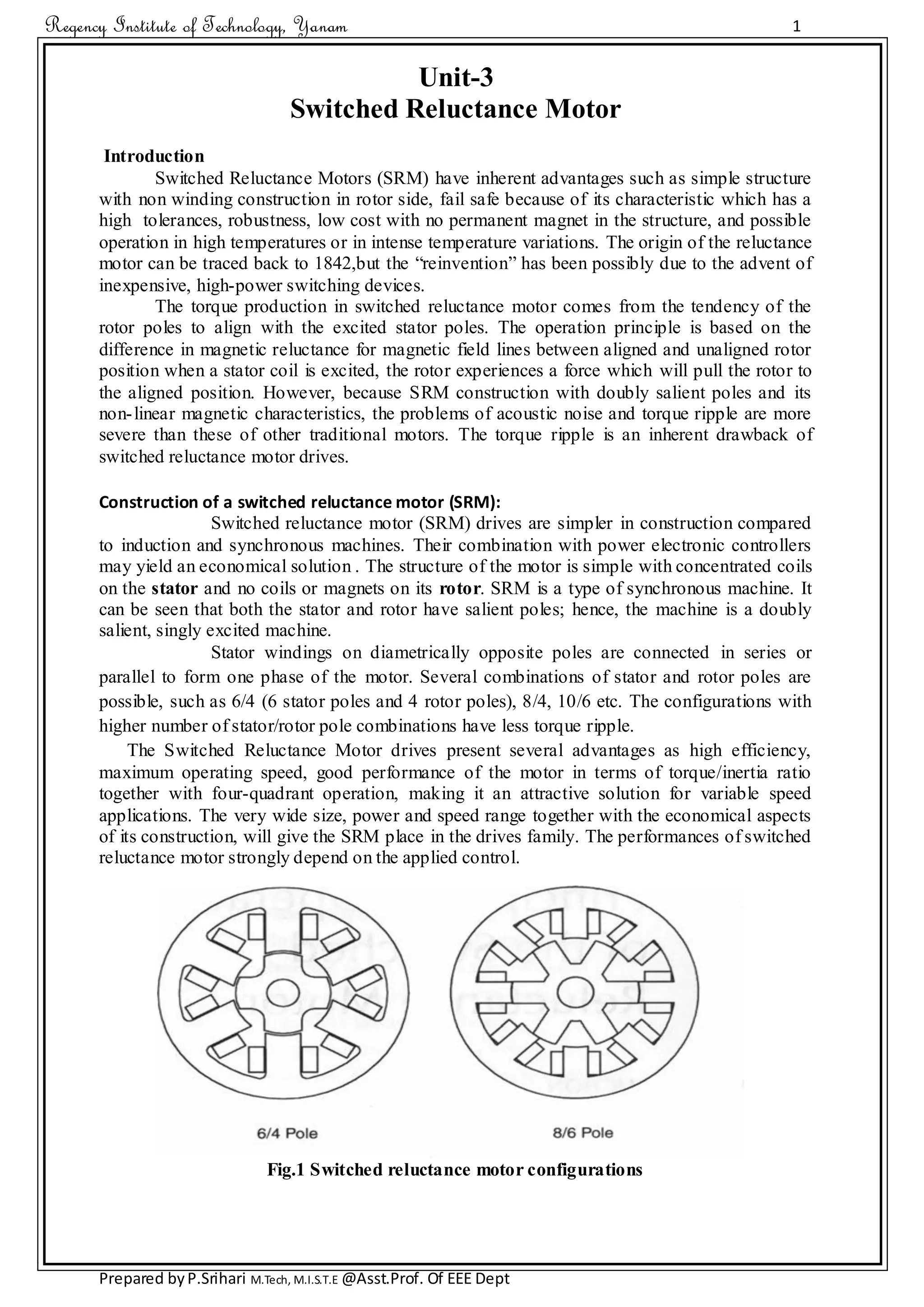
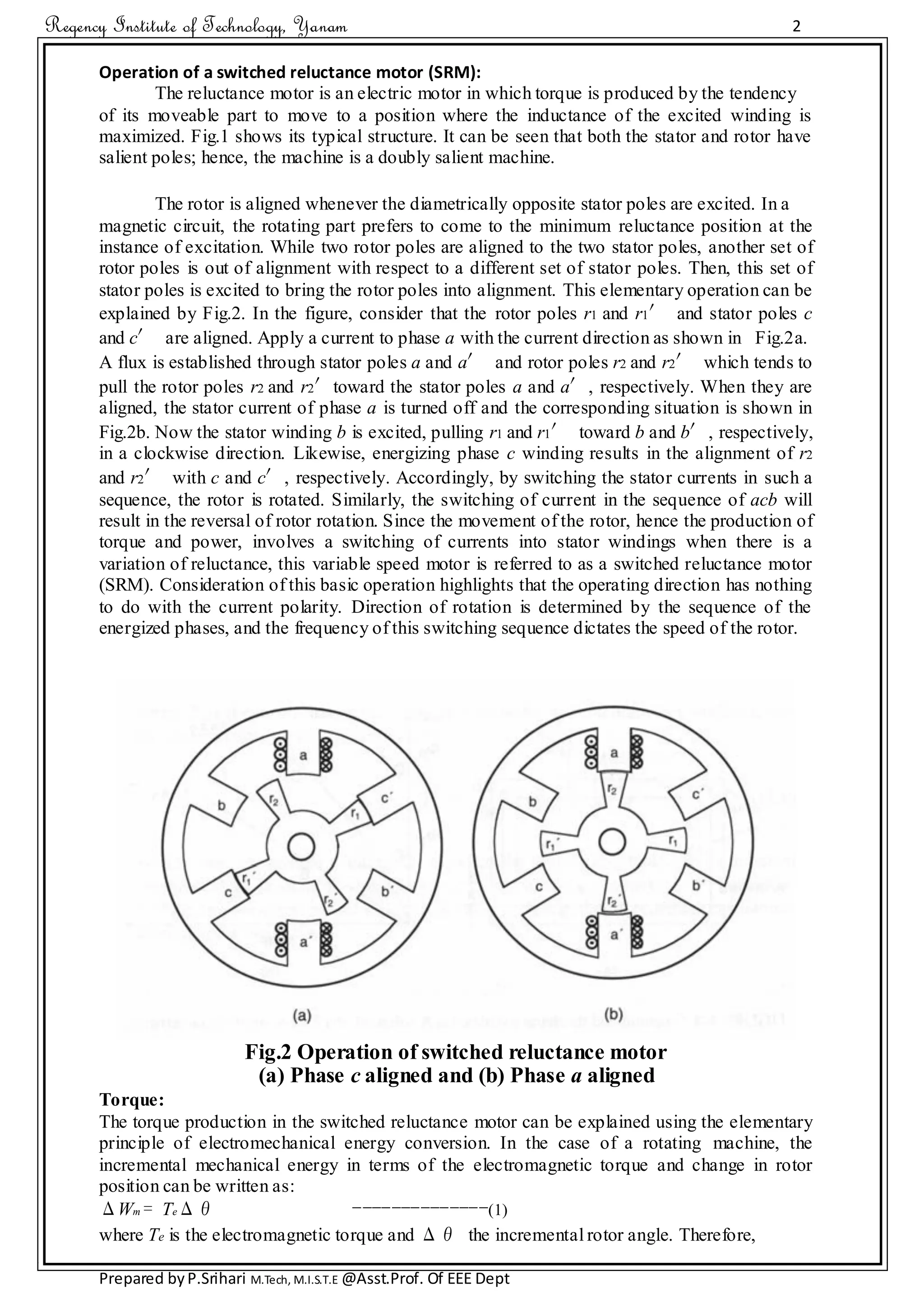
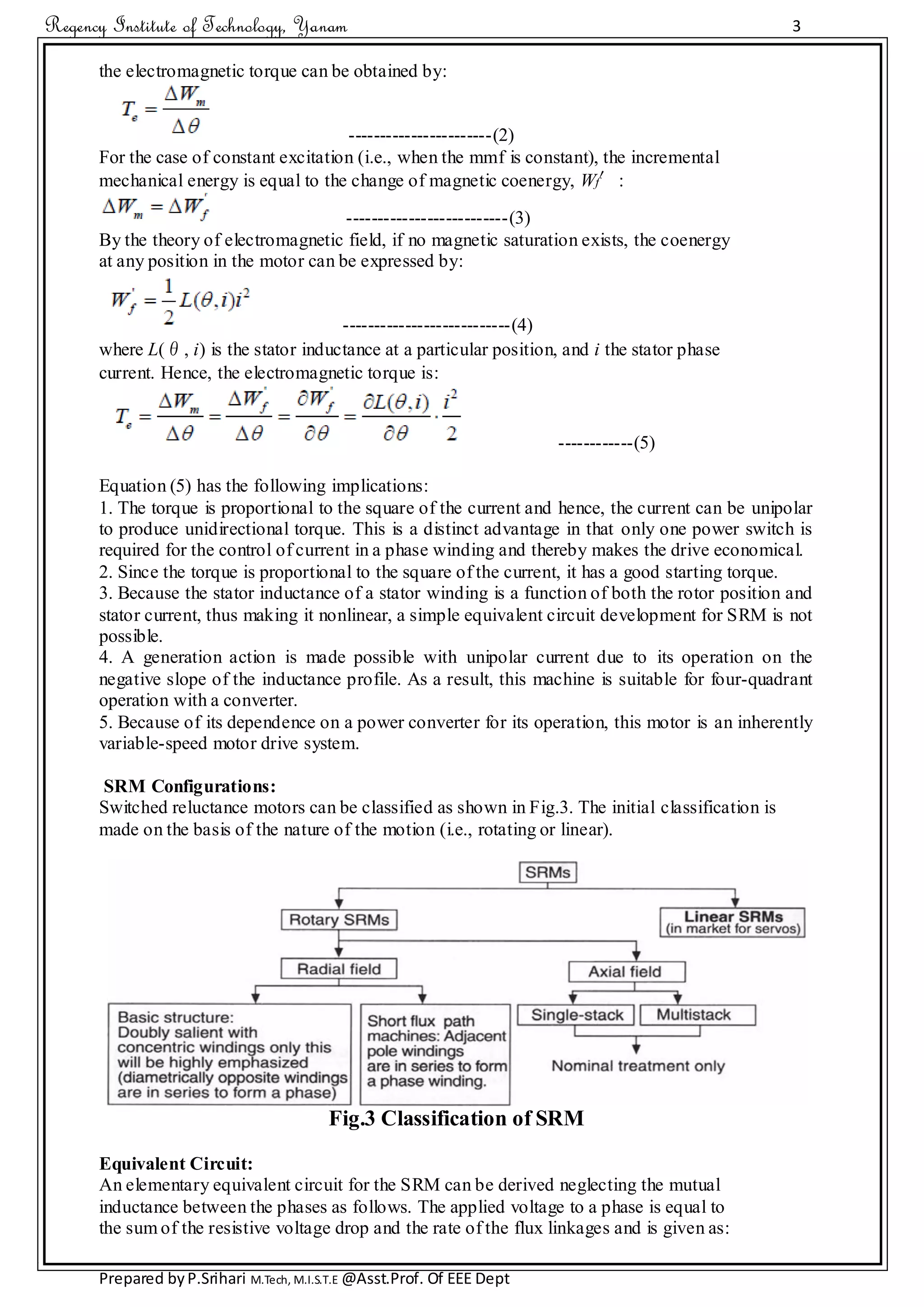
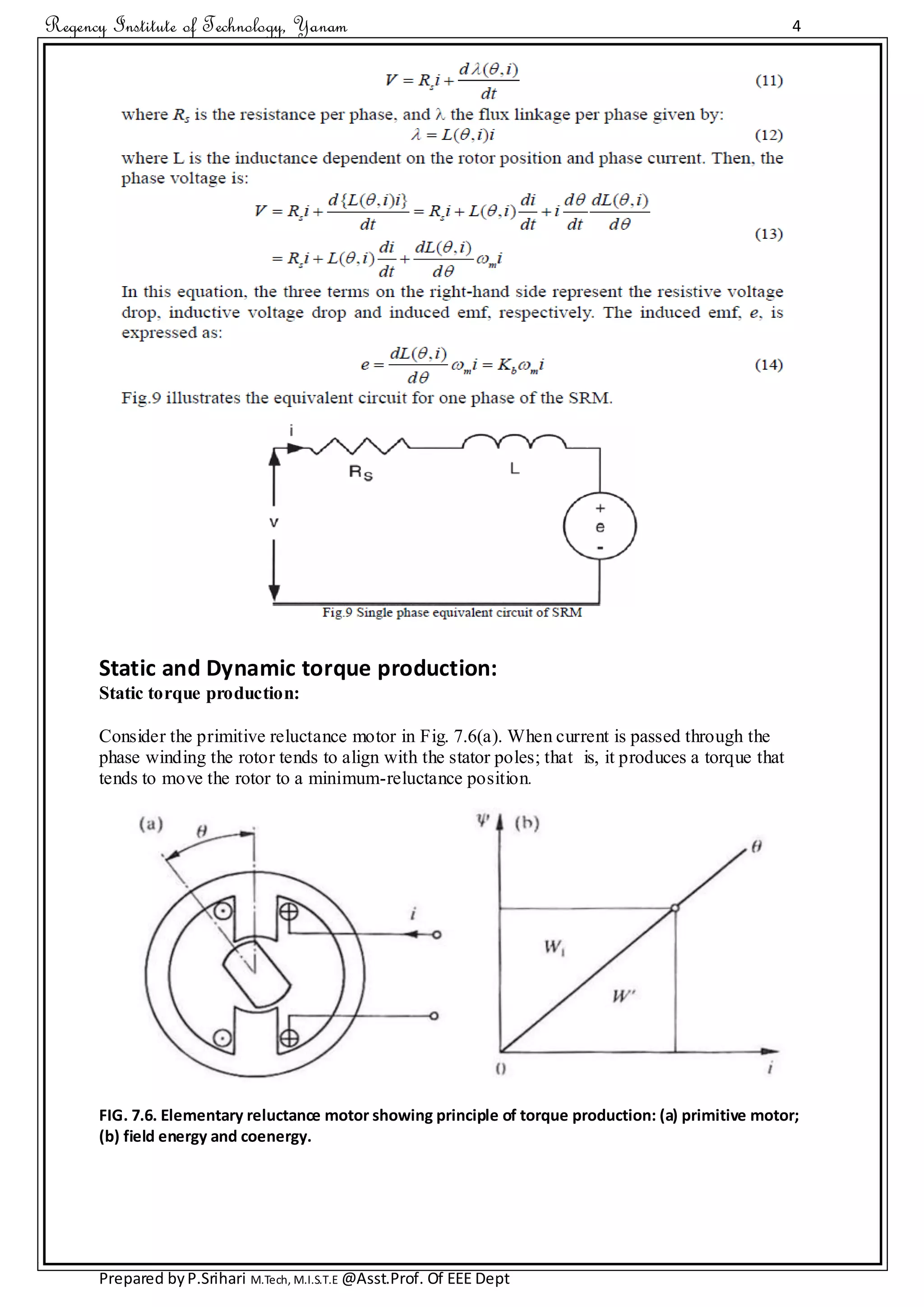
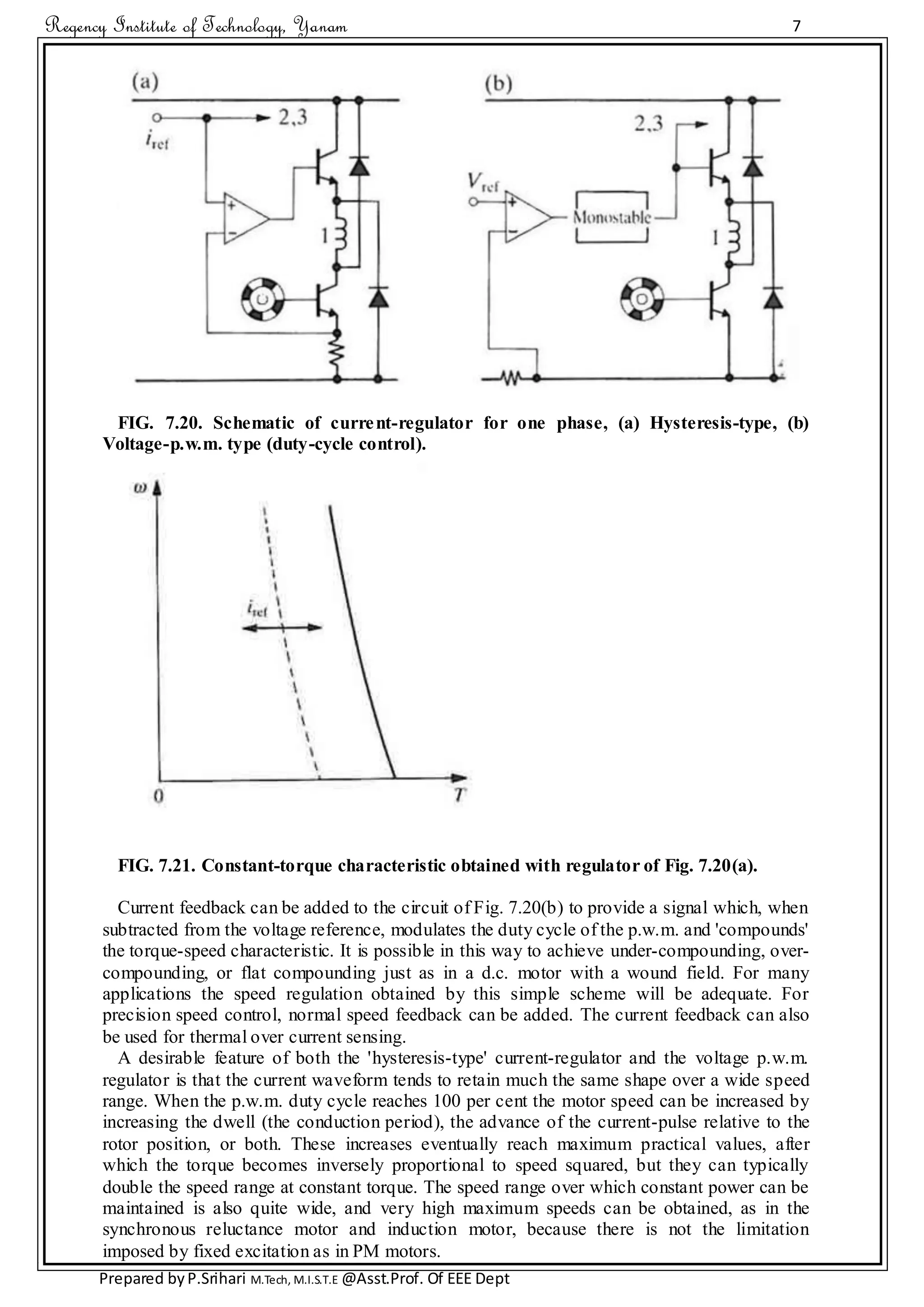
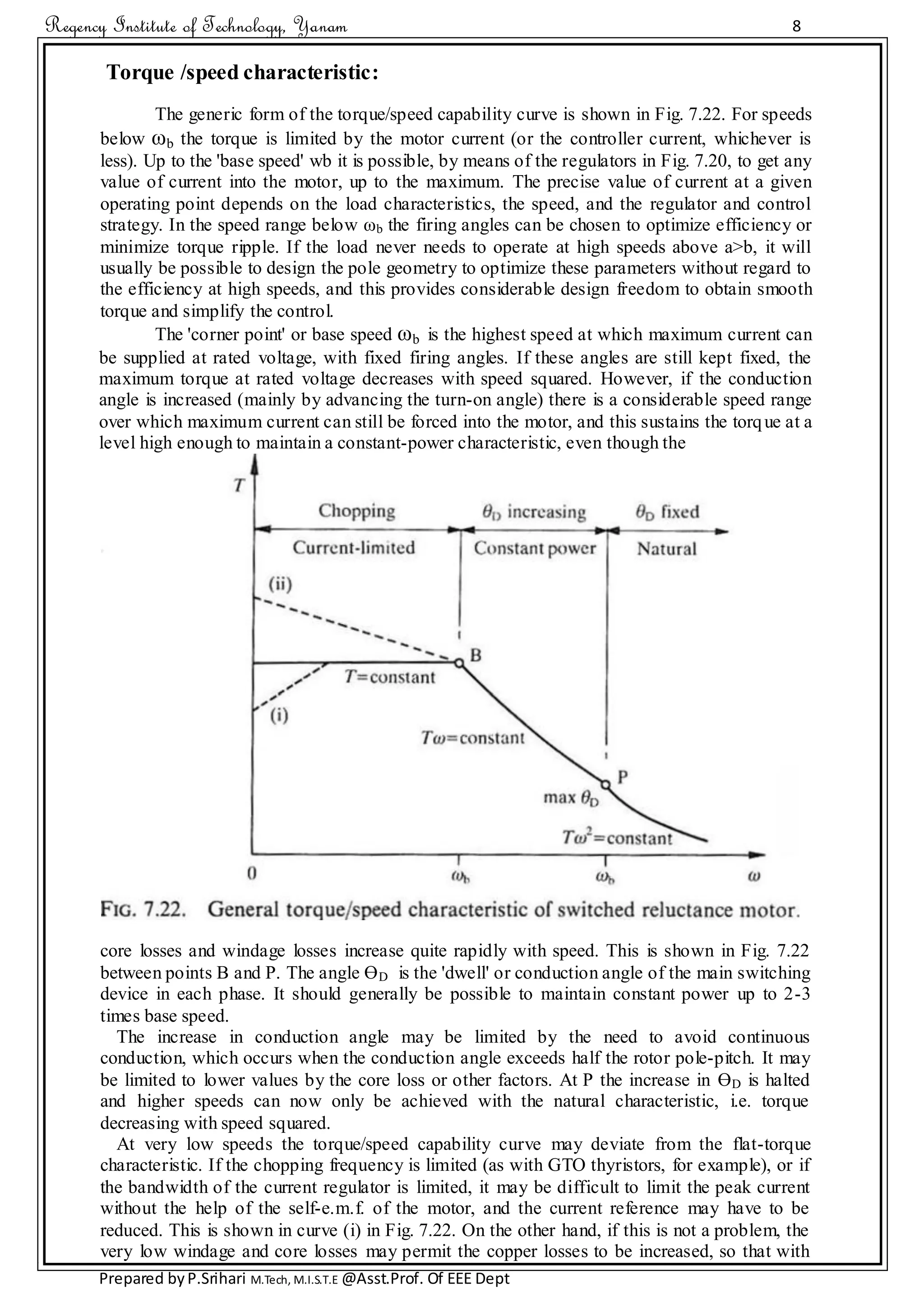
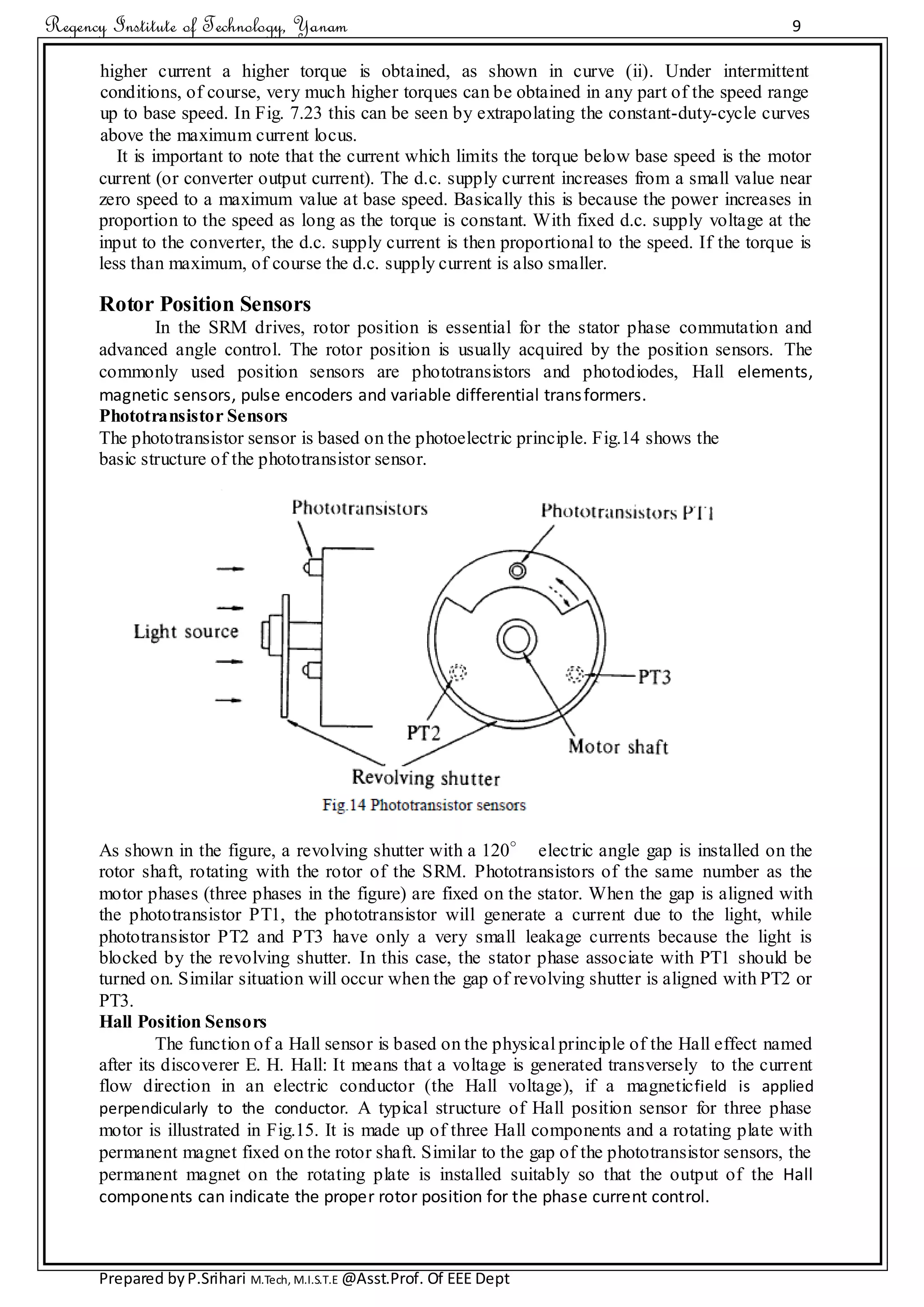
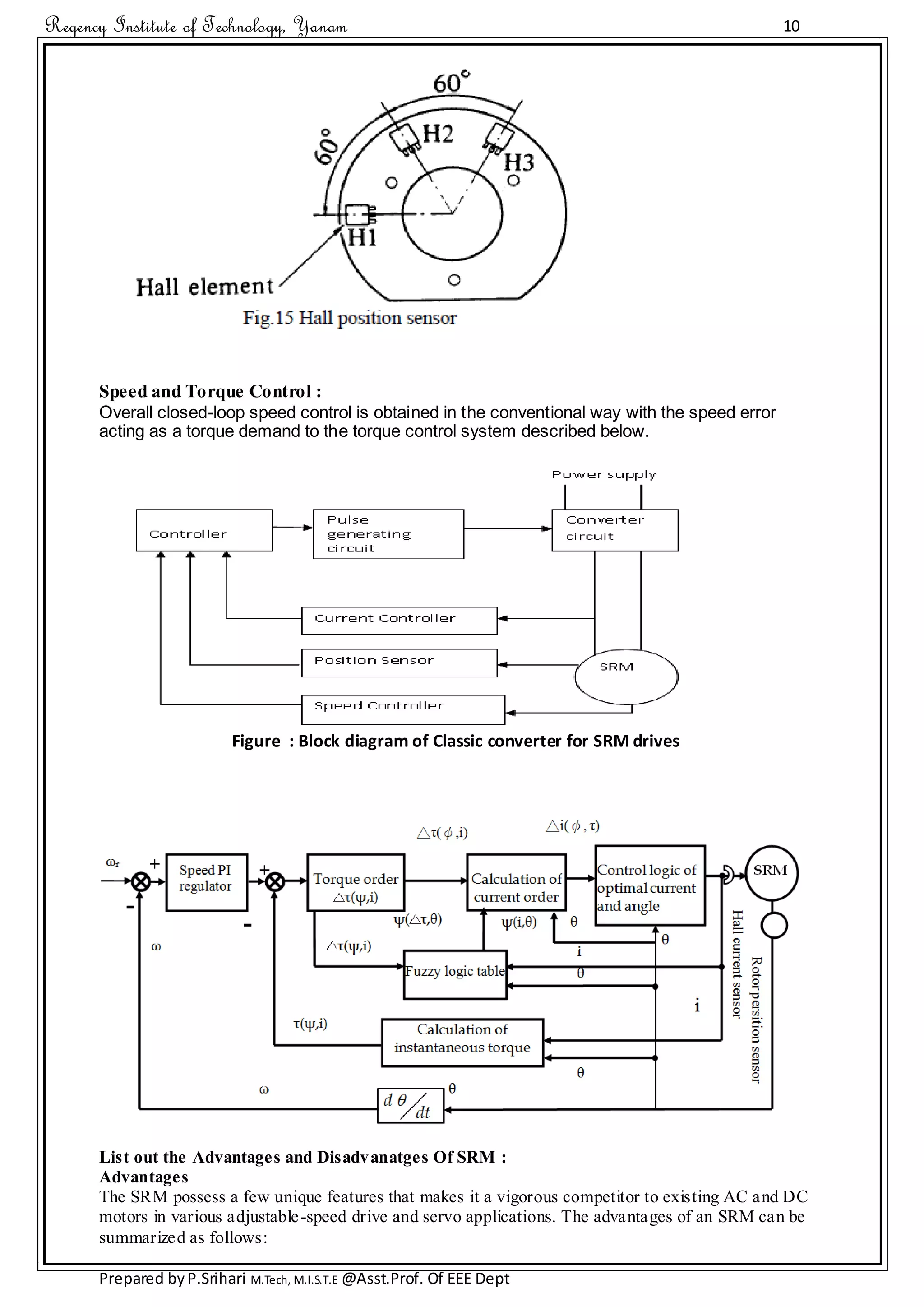
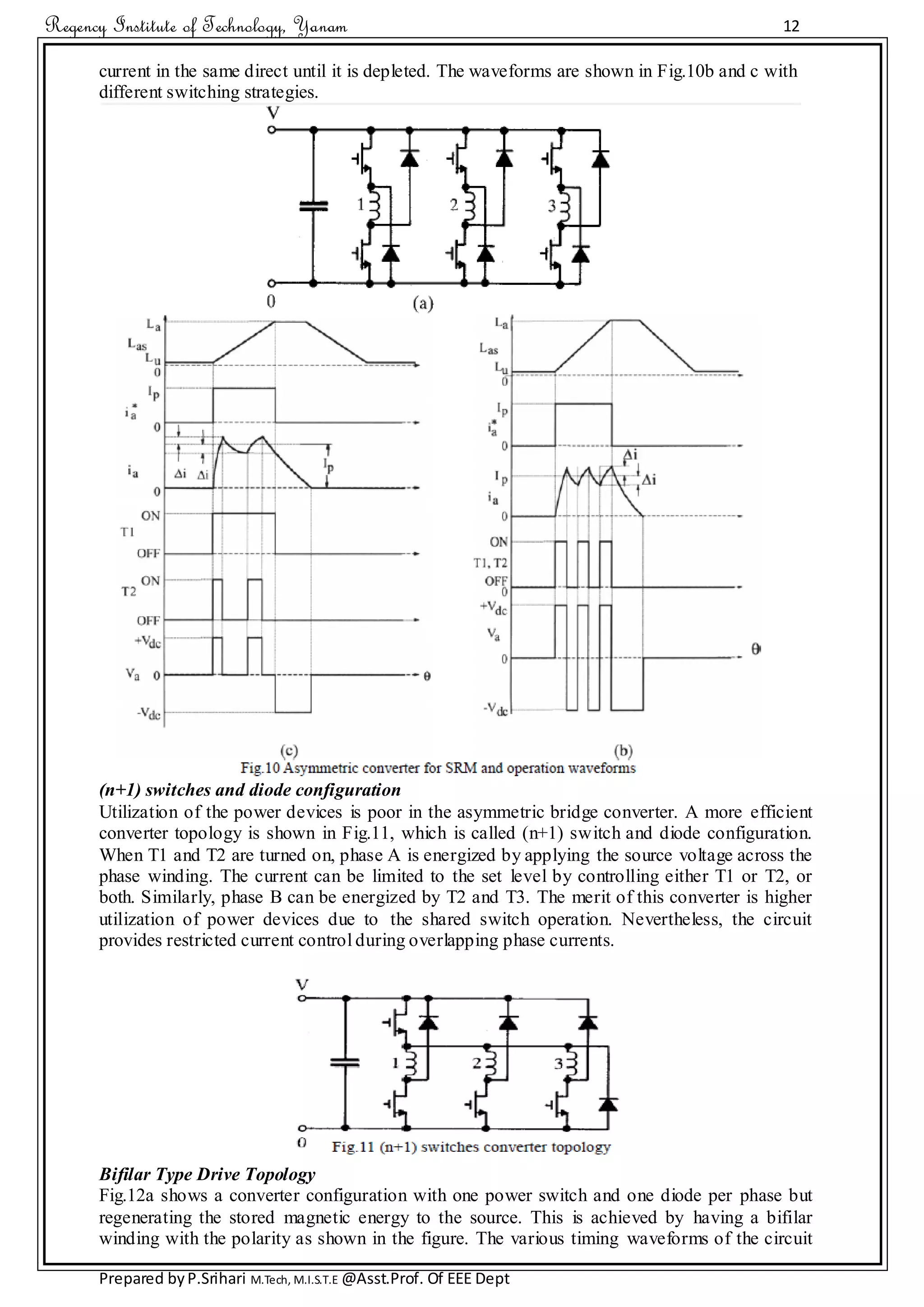

Switched reluctance motors have several advantages over traditional motors, including a simple and robust structure without windings or permanent magnets on the rotor. Torque is produced through the tendency of the rotor poles to align with excited stator poles. The motor has a doubly salient pole structure and nonlinear magnetic characteristics, which can cause torque ripple problems. The motor consists of concentrated stator coils and no coils or magnets on the rotor. Multiple stator/rotor pole combinations are possible. Torque is produced by controlling the timing of current pulses in the stator phases using power electronics. The motor can operate over a wide speed range at high efficiency using various control strategies to regulate the current pulses.


