Circulation Through Special
Regions
Objectives
• Define the special features of the circulation in the brain, coronary
vessels, skin, and fetus, and how these are regulated.
• Describe how cerebrospinal fluid (CSF) is formed and reabsorbed,
and its role in protecting the brain from injury.
• Understand how the blood–brain barrier impedes the entry of
specific substances into the brain.
• Delineate how the oxygen needs of the contracting myocardium are
met by the coronary arteries and the consequences of their
occlusion.
• List the vascular reactions of the skin and the reflexes that mediate
them.
• Understand how the fetus is supplied with oxygen and nutrients in
utero, and the circulatory events required for a transition to
independent life after birth.
Cerebral Circulation: Anatomical
Considerations
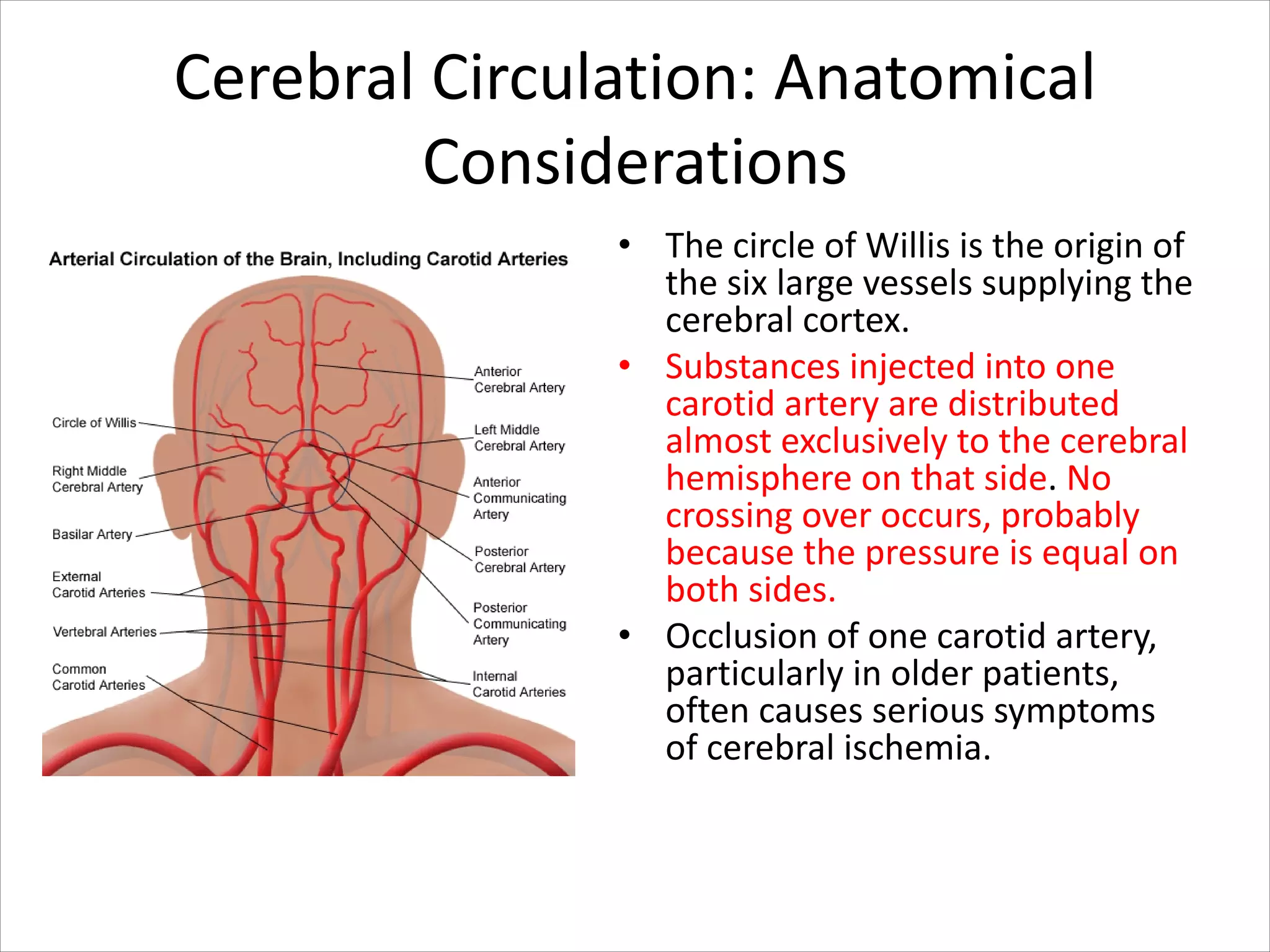
• The circle of Willis is the origin of
the six large vessels supplying the
cerebral cortex.
• Substances injected into one
carotid artery are distributed
almost exclusively to the cerebral
hemisphere on that side. No
crossing over occurs, probably
because the pressure is equal on
both sides.
• Occlusion of one carotid artery,
particularly in older patients,
often causes serious symptoms
of cerebral ischemia.
Cerebral Circulation: Anatomical
Considerations
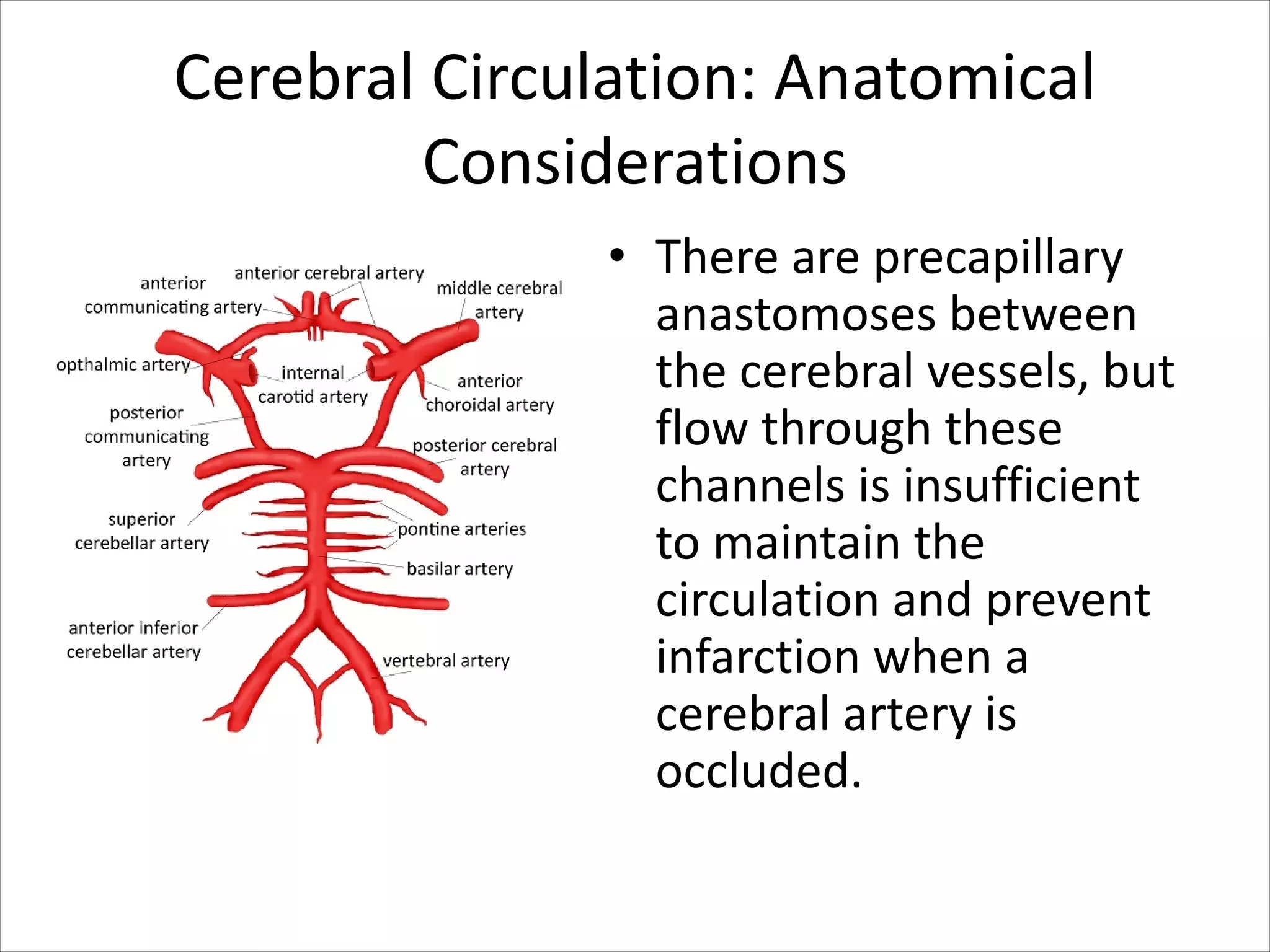
• There are precapillary
anastomoses between
the cerebral vessels, but
flow through these
channels is insufficient
to maintain the
circulation and prevent
infarction when a
cerebral artery is
occluded.
Cerebral Circulation: Anatomical
Considerations
• Venous drainage from the brain by way of the deep veins and dural
sinuses empties principally into the internal jugular veins in humans.
• A small amount of venous blood drains through the ophthalmic and
pterygoid venous plexuses, through emissary veins to the scalp, and
down the system of paravertebral veins in the spinal canal.
Cerebral Circulation: Anatomical
Considerations
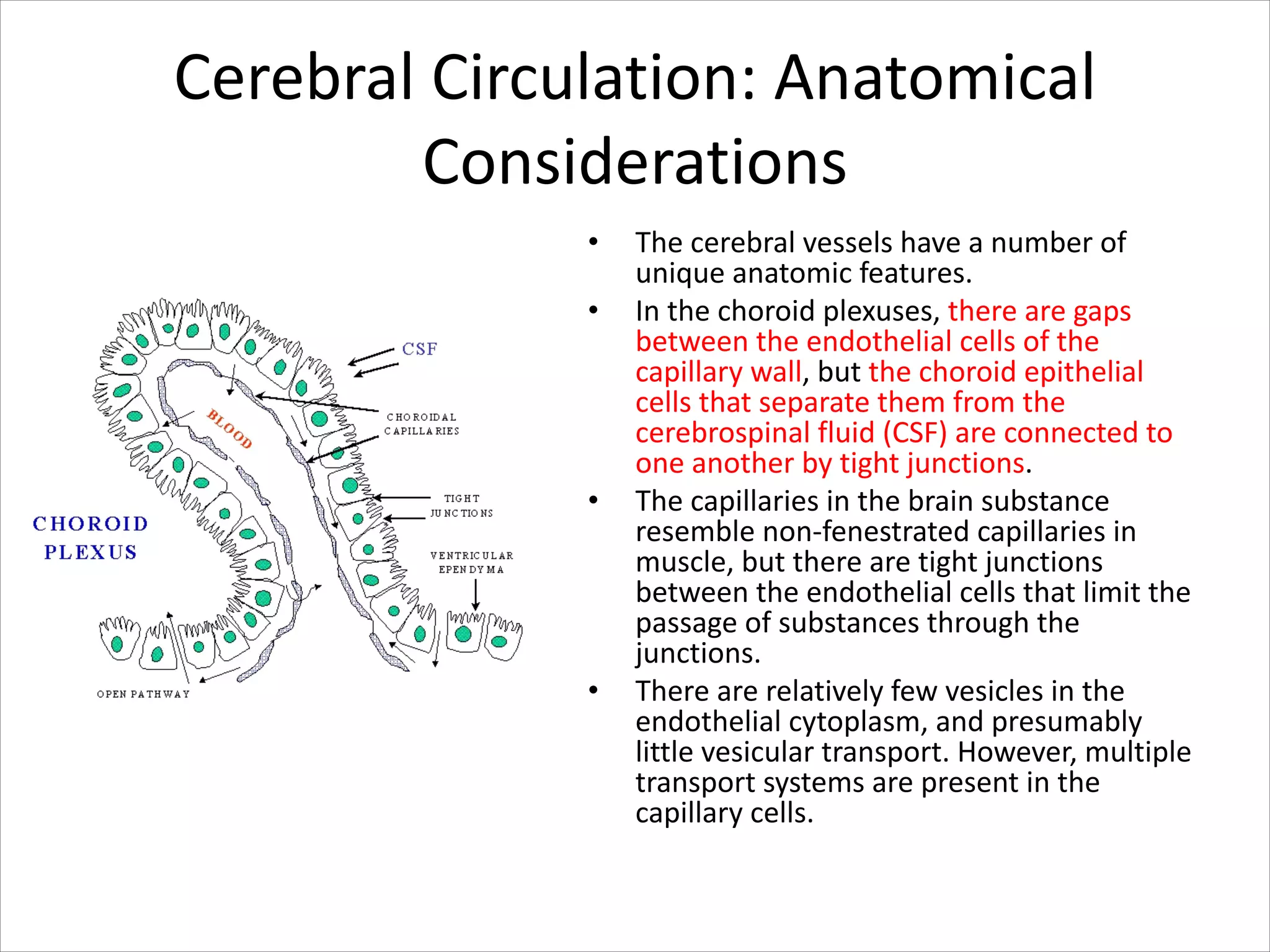
• The cerebral vessels have a number of
unique anatomic features.
• In the choroid plexuses, there are gaps
between the endothelial cells of the
capillary wall, but the choroid epithelial
cells that separate them from the
cerebrospinal fluid (CSF) are connected to
one another by tight junctions.
• The capillaries in the brain substance
resemble non-fenestrated capillaries in
muscle, but there are tight junctions
between the endothelial cells that limit the
passage of substances through the
junctions.
• There are relatively few vesicles in the
endothelial cytoplasm, and presumably
little vesicular transport. However, multiple
transport systems are present in the
capillary cells.
Cerebral Circulation: Anatomical
Considerations
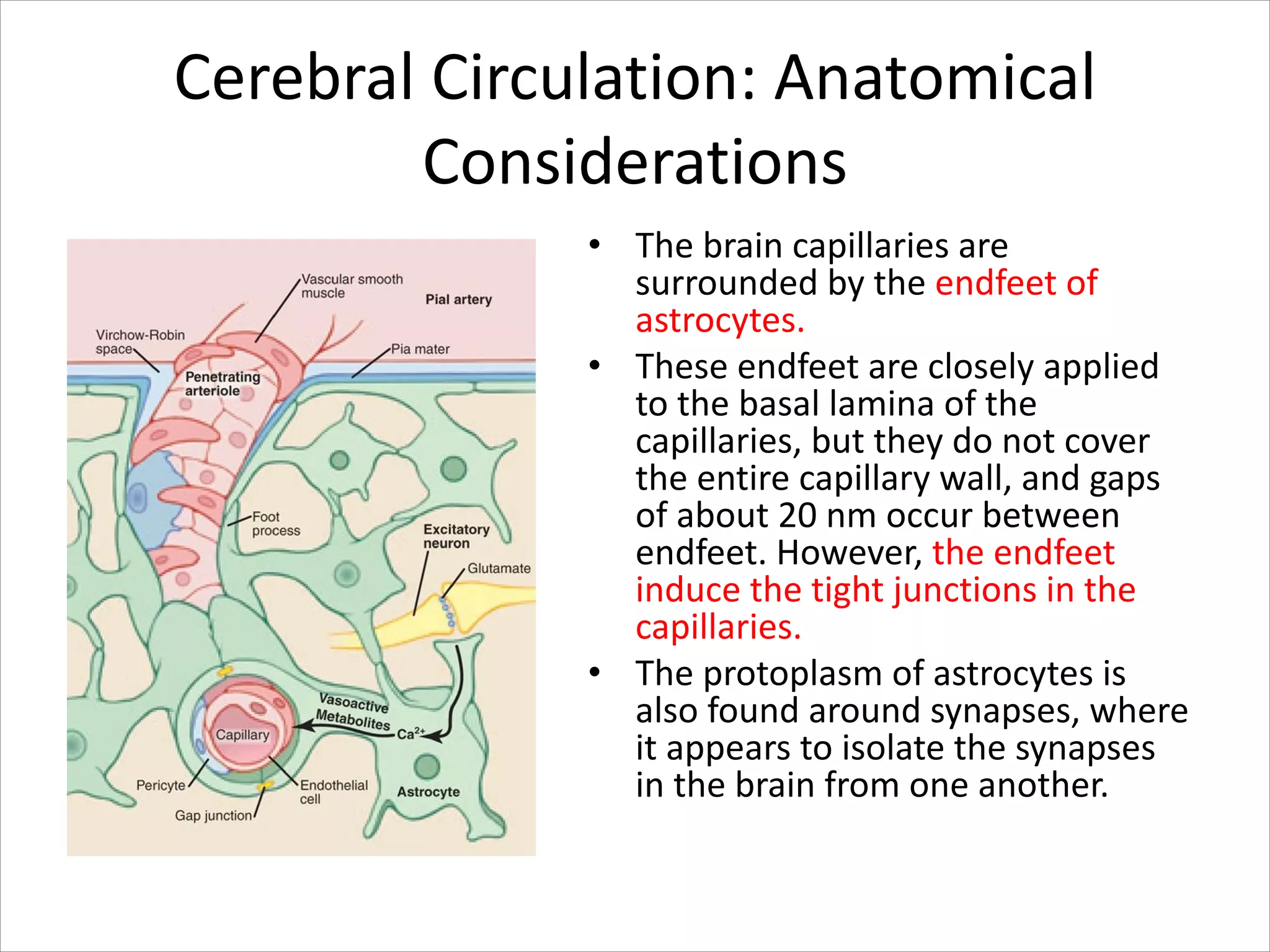
• The brain capillaries are
surrounded by the endfeet of
astrocytes.
• These endfeet are closely applied
to the basal lamina of the
capillaries, but they do not cover
the entire capillary wall, and gaps
of about 20 nm occur between
endfeet. However, the endfeet
induce the tight junctions in the
capillaries.
• The protoplasm of astrocytes is
also found around synapses, where
it appears to isolate the synapses
in the brain from one another.
Cerebral Circulation: Innervation
• Three systems of nerves innervate the cerebral blood vessels:
Postganglionic sympathetic neurons have their cell bodies in the superior
cervical ganglia, and their endings contain norepinephrine. Many also
contain neuropeptide Y.
• Cholinergic neurons that originate in the sphenopalatine ganglia also
innervate the cerebral vessels, and the postganglionic cholinergic neurons
on the blood vessels contain acetylcholine. Many also contain vasoactive
intestinal peptide (VIP) and peptide histidyl methionine (PHM-27). These
nerves end primarily on large arteries.
• Sensory nerves are found on more distal arteries. They have their cell
bodies in the trigeminal ganglia and contain substance P, neurokinin A, and
calcitonin gene-related peptide (CGRP).
-Substance P, CGRP, VIP, and peptide histidyl methionine
(PHM-27)
-neuropeptide Y
• Touching or pulling on the cerebral vessels causes pain.
Cerebrospinal Fluid
• CSF fills the ventricles and
subarachnoid space.
• In humans, the volume of CSF
is about 150 mL and the rate
of CSF production is about
550 mL/d. Thus the CSF turns
over about 3.7 times a day.
• It is estimated that 50–70%
of the CSF is formed in the
choroid plexuses and the
remainder is formed around
blood vessels and along
ventricular walls
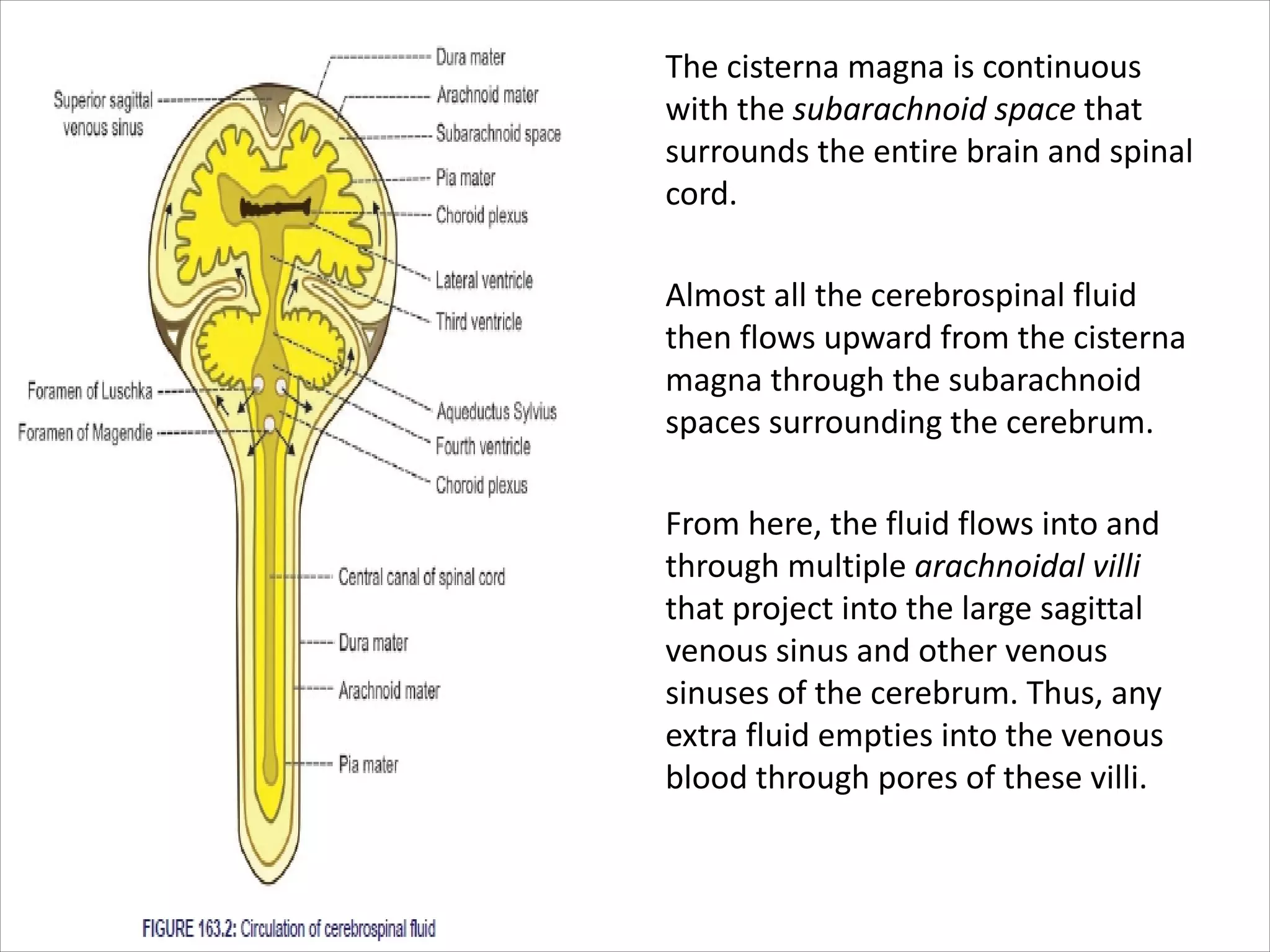
• Cerebrospinal fluid originates as
secretion from the choroid plexuses in
the four ventricles,mainly in the two
lateral ventricles.
• The fluid secreted in the lateral
ventricles passes first into the third
ventricle; It then flows downward along
the aqueduct of Sylvius into the fourth
ventricle
• Finally, the fluid passes out of the fourth
ventricle through three small openings,
two lateral foramina of Luschka and a
midline foramen of Magendie, entering
the cisterna magna, a fluid space that
lies behind the medulla and beneath the
cerebellum.
• The cisterna magna is continuous
with the subarachnoid space that
surrounds the entire brain and spinal
cord.
• Almost all the cerebrospinal fluid
then flows upward from the cisterna
magna through the subarachnoid
spaces surrounding the cerebrum.
• From here, the fluid flows into and
through multiple arachnoidal villi
that project into the large sagittal
venous sinus and other venous
sinuses of the cerebrum. Thus, any
extra fluid empties into the venous
blood through pores of these villi.
Cerebrospinal Fluid
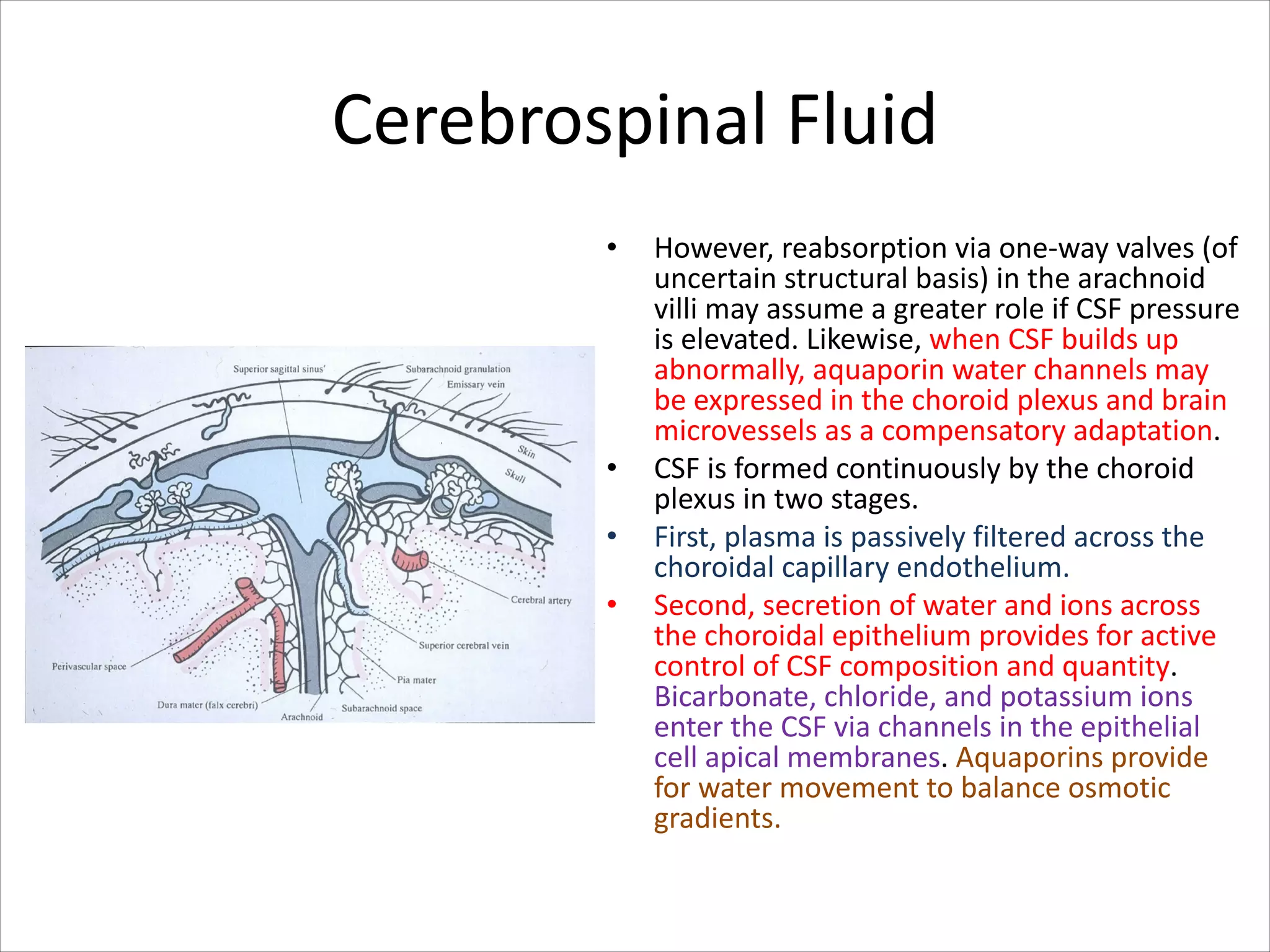
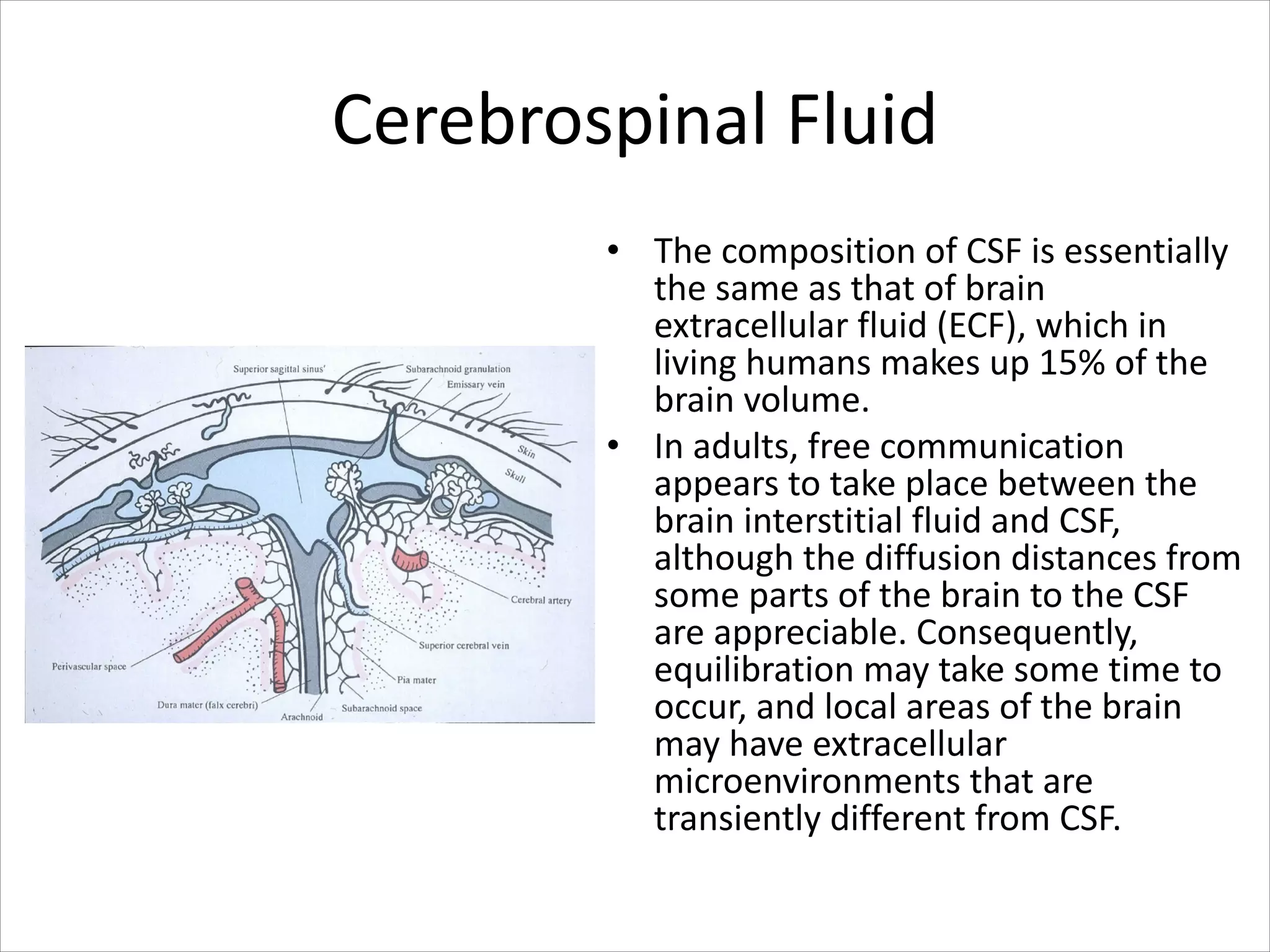
• The CSF in the ventricles flows through the
foramens of Magendie and Luschka to the
subarachnoid space and is absorbed through
the arachnoid villi into veins, primarily the
cerebral venous sinuses.
• The villi consist of projections of the fused
arachnoid membrane and endothelium of
the sinuses into the venous sinuses. Similar,
smaller villi project into veins around spinal
nerve routes.
• These projections may contribute to the
outflow of CSF into venous blood by a
process known as bulk flow, which is
unidirectional.
• Recent studies suggest a more important
route for CSF reabsorption into the
bloodstream in health is via the cribriform
plate above the nose and thence into the
cervical lymphatics.
Cerebrospinal Fluid
• However, reabsorption via one-way valves (of
uncertain structural basis) in the arachnoid
villi may assume a greater role if CSF pressure
is elevated. Likewise, when CSF builds up
abnormally, aquaporin water channels may
be expressed in the choroid plexus and brain
microvessels as a compensatory adaptation.
• CSF is formed continuously by the choroid
plexus in two stages.
• First, plasma is passively filtered across the
choroidal capillary endothelium.
• Second, secretion of water and ions across
the choroidal epithelium provides for active
control of CSF composition and quantity.
Bicarbonate, chloride, and potassium ions
enter the CSF via channels in the epithelial
cell apical membranes. Aquaporins provide
for water movement to balance osmotic
gradients.
Cerebrospinal Fluid
• The composition of CSF is essentially
the same as that of brain
extracellular fluid (ECF), which in
living humans makes up 15% of the
brain volume.
• In adults, free communication
appears to take place between the
brain interstitial fluid and CSF,
although the diffusion distances from
some parts of the brain to the CSF
are appreciable. Consequently,
equilibration may take some time to
occur, and local areas of the brain
may have extracellular
microenvironments that are
transiently different from CSF.
CSF Concentrations
Cerebrospinal Fluid
• Lumbar CSF pressure is normally 70 to 180 mm
H2O. Up to pressures well above this range, the
rate of CSF formation is independent of
intraventricular pressure. However, absorption is
proportional to the pressure.
• At a pressure of 112 mm H2O, which is the
average normal CSF pressure, filtration and
absorption are equal. Below a pressure of
approximately 68 mm H2O, absorption stops.
• Large amounts of fluid accumulate when the
capacity for CSF reabsorption is decreased
(external hydrocephalus, communicating
hydrocephalus).
• Fluid also accumulates proximal to the block and
distends the ventricles when the foramens of
Luschka and Magendie are blocked or there is
obstruction within the ventricular system
(internal hydrocephalus, noncommunicating
hydrocephalus).
Cerebrospinal Fluid
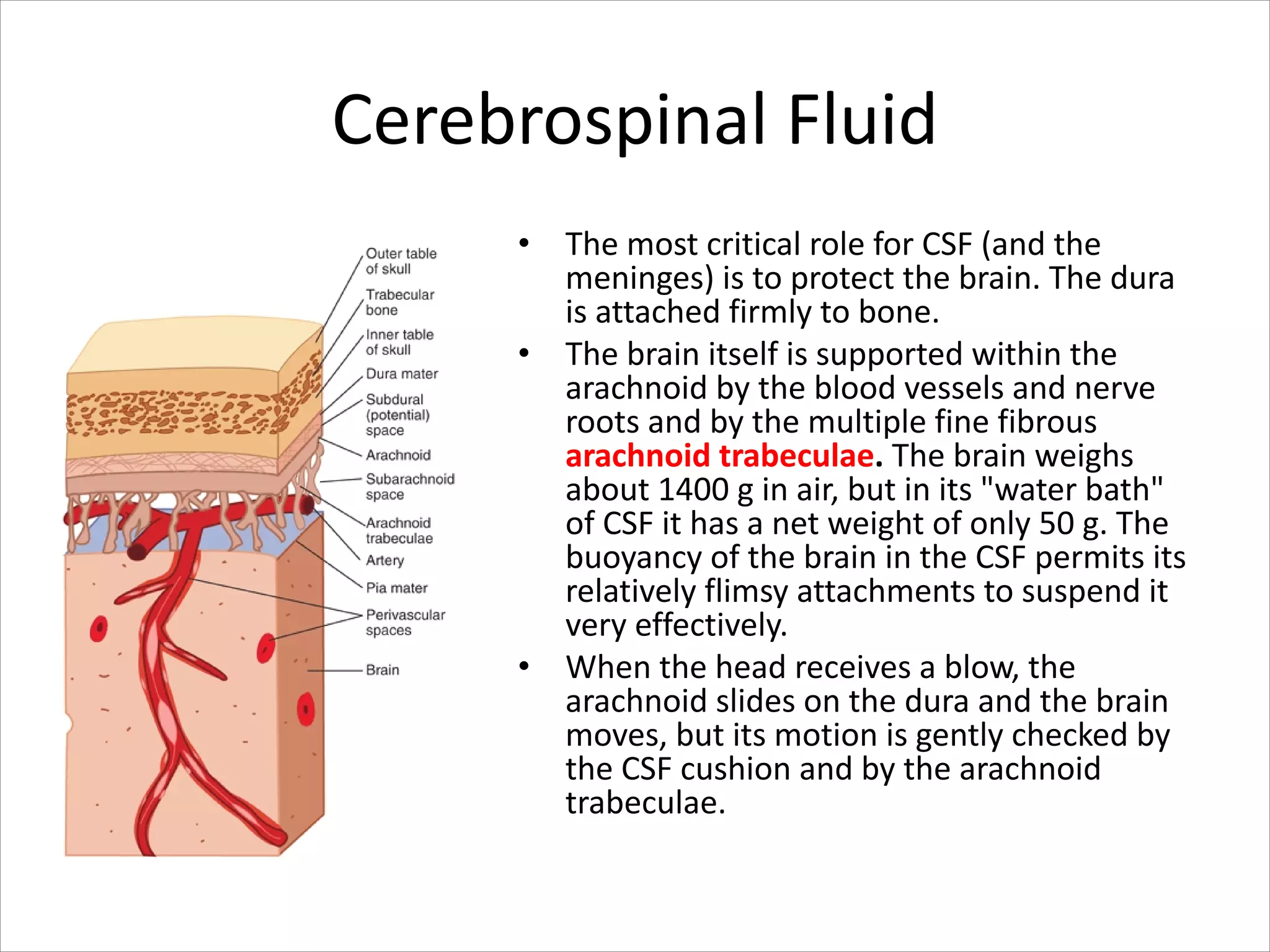
• The most critical role for CSF (and the
meninges) is to protect the brain. The dura
is attached firmly to bone.
• The brain itself is supported within the
arachnoid by the blood vessels and nerve
roots and by the multiple fine fibrous
arachnoid trabeculae. The brain weighs
about 1400 g in air, but in its "water bath"
of CSF it has a net weight of only 50 g. The
buoyancy of the brain in the CSF permits its
relatively flimsy attachments to suspend it
very effectively.
• When the head receives a blow, the
arachnoid slides on the dura and the brain
moves, but its motion is gently checked by
the CSF cushion and by the arachnoid
trabeculae.
Monro-Kellie Doctrine
• According to Monro-Kellie doctrine or principle,
though the cerebral arteries are compressed by
increased intracranial pressure or cerebrospinal
fluid pressure, the volume of brain tissue is not
affected. It is because the brain tissue is not
compressible
The Monroe-Kellie Doctrine
Parenchyma, Blood and CSF – 3 main masses in the
cranium
Cerebral Perfusion Pressure
= Mean Arterial Pressure – Intracranial Pressure (ICP)
Raised ICP
Causes impaired Cerebral Perfusion
May cause herniation
pressure
volume
The Blood Brain Barrier
• The tight junctions between capillary endothelial
cells in the brain and between the epithelial cells
in the choroid plexus effectively prevent proteins
from entering the brain in adults and slow the
penetration of some smaller molecules as well.
This uniquely limited exchange of substances into
the brain is referred to as the blood–brain barrier,
a term most commonly used to encompass this
barrier overall and more specifically the
barrier(tight junctions) in the choroid epithelium
between blood and CSF.
The Blood Brain Barrier
• Water, CO2, and O2 penetrate the brain with ease, as do the lipid-soluble
free forms of steroid hormones, whereas their protein-bound forms and,
in general, all proteins and polypeptides do not.
• Glucose is the major ultimate source of energy for nerve cells. Its diffusion
across the blood–brain barrier would be very slow, but the rate of
transport into the CSF is markedly enhanced by the presence of specific
transporters, including the glucose transporter 1 (GLUT 1).
• The brain contains two forms of GLUT 1: GLUT 1 55K and GLUT 1 45K. Both
are encoded by the same gene, but they differ in the extent to which they
are glycosylated. GLUT 1 55K is present in high concentration in brain
capillaries.
• Infants with congenital GLUT 1 deficiency develop low CSF glucose
concentrations in the presence of normal plasma glucose, and they have
seizures and delayed development.
• In addition, transporters for thyroid hormones; several organic acids;
choline; nucleic acid precursors; and neutral, basic, and acidic amino acids
are present at the blood–brain barrier.
The Blood Brain Barrier
• A variety of drugs and peptides actually cross the cerebral
capillaries but are promptly transported back into the blood
by a multidrug nonspecific transporter in the apical
membranes of the endothelial cells.
• This P-glycoprotein is a member of the family of adenosine
triphosphate (ATP) binding cassettes that transport various
proteins and lipids across cell membranes .
• If pharmacologic agents that inhibit this transporter can be
developed, they could be of value in the treatment of brain
tumors and other central nervous system (CNS) diseases in
which it is difficult to introduce adequate amounts of
therapeutic agents into the brain.
Circumventricular Organs
• When dyes that bind to proteins in the plasma are
injected, they stain many tissues but spare most of
the brain.
• However, four small areas in or near the brain stem
do take up the stain. These areas are:
– The posterior pituitary (neurohypophysis) and
the adjacent ventral part of the median
eminence of the hypothalamus
– The area postrema
– The organum vasculosum of the lamina
terminalis (OVLT, supraoptic crest)
– The subfornical organ (SFO).
• These areas are referred to collectively as the
circumventricular organs. All have fenestrated
capillaries, and because of their permeability they
are said to be "outside the blood–brain barrier."
Circumventricular Organs
• Some of them function as neurohemal organs;
areas in which polypeptides secreted by neurons
enter the circulation. Others contain receptors for
many different peptides and other substances, and
function as chemoreceptor zones in which
substances in the circulating blood can act to trigger
changes in brain function without penetrating the
blood–brain barrier.
• For Example, the area postrema is a chemoreceptor
trigger zone that initiates vomiting in response to
chemical changes in the plasma. It is also concerned
with cardiovascular control, and in many species
circulating angiotensin II acts on the area postrema
to produce a neurally mediated increase in blood
pressure.
Functions of the Blood Brain Barrier
• The blood–brain barrier strives to maintain the
constancy of the environment of the neurons in
the central nervous system. Even minor variations
in the concentrations of K+, Ca2+, Mg2+, H+, and
other ions can have far-reaching consequences
considering that cortical neurons are very
sensitive to ionic change.
• The BBB protects the brain from endogenous and
exogenous toxins in the blood
• and prevents escape of neurotransmitters into
the general circulation.
Regulation of Cerebral Blood Flow
• Average Blood Flow
54ml/100g/min
• Fick Principle and Kety
Method
• In spite of the marked local
fluctuations in brain blood
flow with neural activity, the
cerebral circulation is
regulated in such a way that
total blood flow remains
relatively constant.
• In the brain, auto regulation
maintains a normal cerebral
blood flow at arterial
pressures of 65 to 140 mm
Hg
Regulation of Cerebral Blood Flow
• O2 consumption by the human brain (cerebral
metabolic rate for O2, CMRO2) averages
approximately 20% of the total body resting O2
consumption.
• The brain is extremely sensitive to hypoxia, and
occlusion of its blood supply produces
unconsciousness in a period as short as 10 s.
• If blood flow to the brain becomes insufficient
to supply this needed amount of oxygen, there
is vasodilation, which returns the brain blood
flow and transport of oxygen to the cerebral
tissues to near normal.
• The vegetative structures in the brain stem are
more resistant to hypoxia than the cerebral
cortex, and patients may recover from accidents
such as cardiac arrest and other conditions
causing fairly prolonged hypoxia with normal
vegetative functions but severe, permanent
intellectual deficiencies.
• The basal ganglia use O2 at a very high rate, and
symptoms of Parkinson disease as well as
intellectual deficits can be produced by chronic
hypoxia.
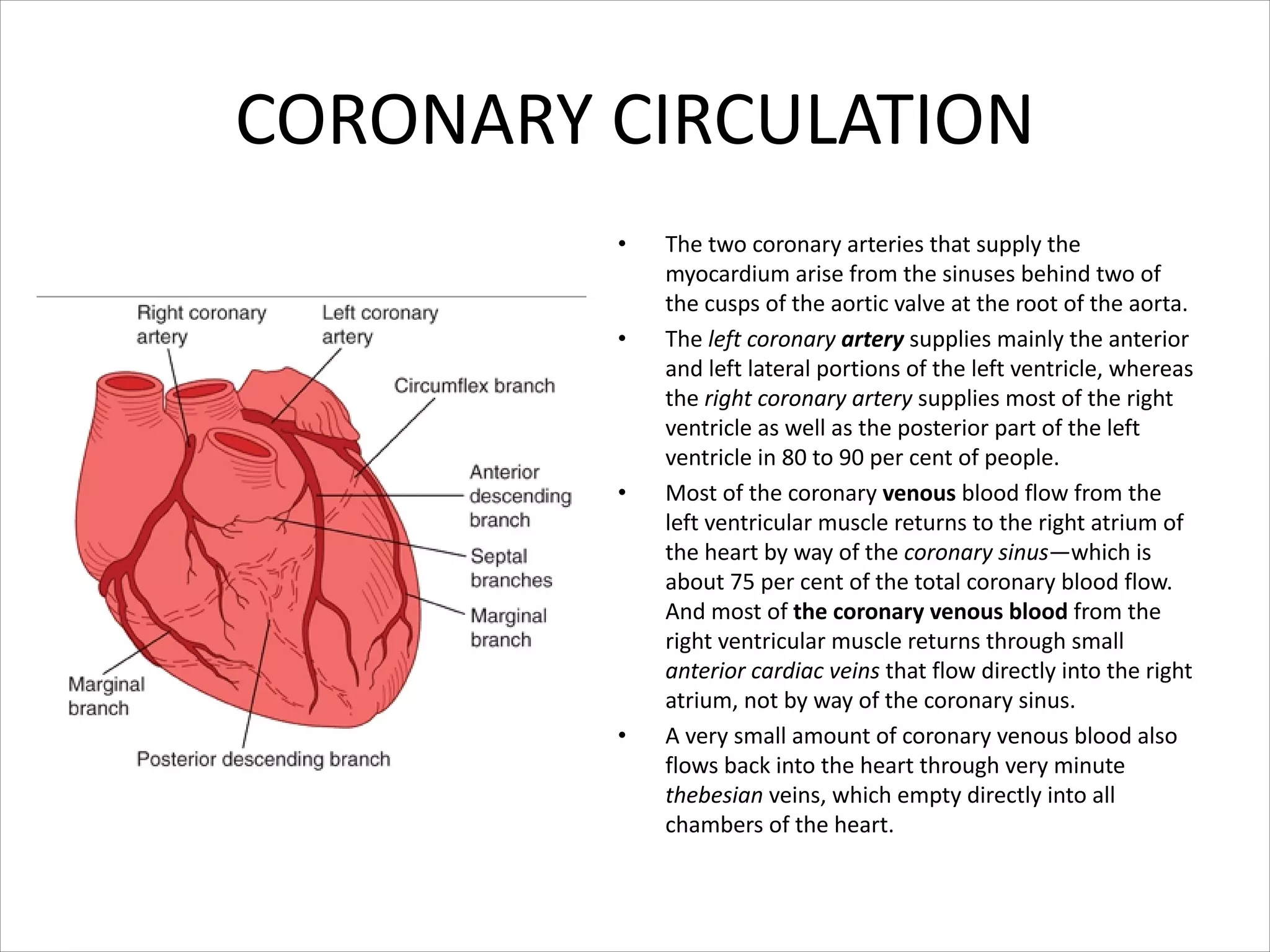
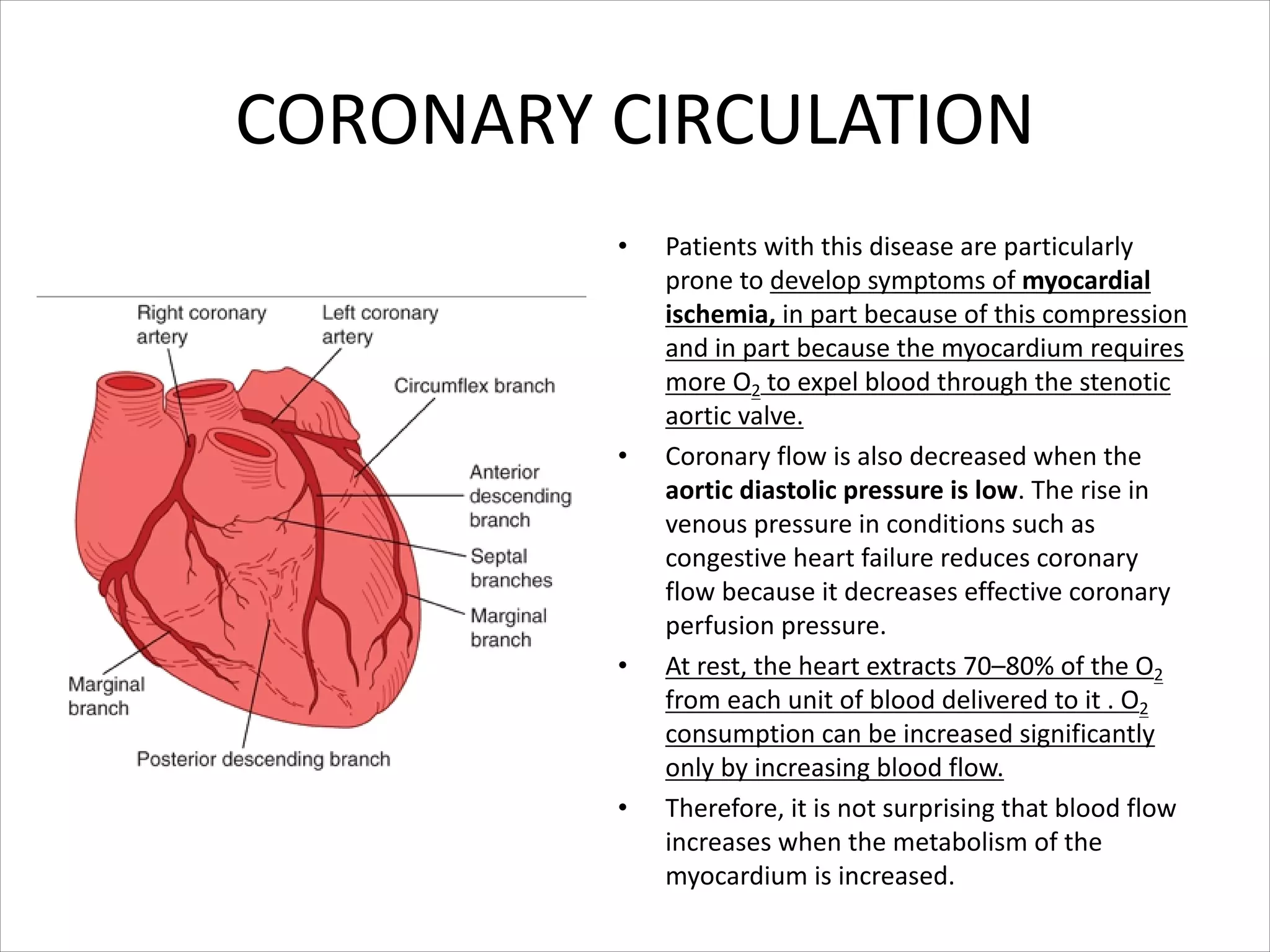
CORONARY CIRCULATION
• The two coronary arteries that supply the
myocardium arise from the sinuses behind two of
the cusps of the aortic valve at the root of the aorta.
• The left coronary artery supplies mainly the anterior
and left lateral portions of the left ventricle, whereas
the right coronary artery supplies most of the right
ventricle as well as the posterior part of the left
ventricle in 80 to 90 per cent of people.
• Most of the coronary venous blood flow from the
left ventricular muscle returns to the right atrium of
the heart by way of the coronary sinus—which is
about 75 per cent of the total coronary blood flow.
And most of the coronary venous blood from the
right ventricular muscle returns through small
anterior cardiac veins that flow directly into the right
atrium, not by way of the coronary sinus.
• A very small amount of coronary venous blood also
flows back into the heart through very minute
thebesian veins, which empty directly into all
chambers of the heart.
CORONARY CIRCULATION
• Eddy currents keep the valves away from
the orifices of the arteries, and they are
patent throughout the cardiac cycle. Most
of the venous blood returns to the heart
through the coronary sinus and anterior
cardiac veins, which drain into the right
atrium.
• In addition, there are other vessels that
empty directly into the heart chambers.
These include arteriosinusoidal vessels,
sinusoidal capillary-like vessels that
connect arterioles to the chambers;
thebesian veins that connect capillaries to
the chambers; and a few arterioluminal
vessels that are small arteries draining
directly into the chambers
CORONARY CIRCULATION
• The heart compresses its blood vessels
when it contracts.
• The pressure inside the left ventricle is
slightly higher than in the aorta during
systole
• Consequently, flow occurs in the arteries
supplying the subendocardial portion of
the left ventricle only during diastole,
although the force is sufficiently
dissipated in the more superficial
portions of the left ventricular
myocardium to permit some flow in this
region throughout the cardiac cycle.
• Because diastole is shorter when the
heart rate is high, left ventricular
coronary flow is reduced during
tachycardia.
CORONARY CIRCULATION
• On the other hand, the pressure differential
between the aorta and the right ventricle, and the
differential between the aorta and the atria, are
somewhat greater during systole than during
diastole. Consequently, coronary flow in those
parts of the heart is not appreciably reduced
during systole.
• Because no blood flow occurs during systole in the
subendocardial portion of the left ventricle, this
region is prone to ischemic damage and is the
most common site of myocardial infarction. Blood

flow from the left ventricle is decreased in patients
with stenotic aortic valves (narrowing of aortic
valves preventing the valve from opening fully and
obstructs blood flow from the left ventricle into
the aorta) because the pressure in the left
ventricle must be much higher than that in the
aorta to eject the blood. Consequently, the
coronary vessels are severely compressed during
systole.
CORONARY CIRCULATION
• Patients with this disease are particularly
prone to develop symptoms of myocardial
ischemia, in part because of this compression
and in part because the myocardium requires
more O2 to expel blood through the stenotic
aortic valve.
• Coronary flow is also decreased when the
aortic diastolic pressure is low. The rise in
venous pressure in conditions such as
congestive heart failure reduces coronary
flow because it decreases effective coronary
perfusion pressure.
• At rest, the heart extracts 70–80% of the O2
from each unit of blood delivered to it . O2
consumption can be increased significantly
only by increasing blood flow.
• Therefore, it is not surprising that blood flow
increases when the metabolism of the
myocardium is increased.
CORONARY CIRCULATION
• The caliber of the coronary vessels, and
consequently the rate of coronary blood flow,
is influenced not only by pressure changes in
the aorta but also by chemical and neural
factors. The coronary circulation also shows
considerable autoregulation.
• Oxygen demand plays a major role in local
coronary blood flow regulation
• The close relationship between coronary blood
flow and myocardial O2 consumption indicates
that one or more of the products of
metabolism cause coronary vasodilation.
Factors suspected of playing this role include
O2 lack and increased local concentrations of
CO2, H+, K+, lactate, prostaglandins, adenine
nucleotides, and adenosine.
• Increased metabolic activity of the heart
decreases coronary resistance by release of
vasodilators, whereas a reduction in cardiac
metabolism increases coronary resistance
CORONARY CIRCULATION
• Asphyxia, hypoxia, and intracoronary
injections of cyanide all increase coronary
blood flow 200–300% in denervated as well
as intact hearts, and the feature common to
these three stimuli is hypoxia of the
myocardial fibers. A similar increase in flow is
produced in the area supplied by a coronary
artery if the artery is occluded and then
released - Reactive Hyperraemia
• The coronary arterioles contain -adrenergic
receptors, which mediate vasoconstriction,
and -adrenergic receptors, which mediate
vasodilation. Activity in the noradrenergic
nerves to the heart and injections of
norepinephrine cause coronary vasodilation.
However, norepinephrine increases the heart
rate and the force of cardiac contraction, and
the vasodilation is due to production of
vasodilator metabolites in the myocardium
secondary to the increase in its activity.
CORONARY CIRCULATION
• When the systemic blood pressure falls, the
overall effect of the reflex increase in
noradrenergic discharge is increased coronary
blood flow secondary to the metabolic
changes in the myocardium at a time when
the cutaneous, renal, and splanchnic vessels
are constricted. In this way the circulation of
the heart, like that of the brain, is preserved
when flow to other organs is compromised.
• The coronary arterioles contain
• Alpha adrenergic receptors…vasoconstriction
• Beta adrenergic receptors…vasodilatin
ARTHEROSCLEROSIS
• In people with genetic predisposition to atherosclerosis,
who are overweight or obese and have a sedentary lifestyle,
or who have high blood pressure and damage to the
endothelial cells of the coronary blood vessels, large
quantities of cholesterol gradually become deposited
beneath the endothelium at many points in arteries
throughout the body.
• Gradually, these areas of deposit are invaded by fibrous
tissue and frequently become calcified. The net result is the
development of atherosclerotic plaques that actually
protrude into the vessel lumens and either block or
partially block blood flow. A common site for development
of atherosclerotic plaques is the first few centimeters of the
major coronary arteries
ACUTE CORONARY OCCLUSION
• Usually occurs in a person with under-lying
artherosclerosis.
• May be due to:
– Blood clot – thrombus or embolus
– Muscle spasm - The spasm might result from direct
irritation of the smooth muscle of the arterial wall by
the edges of an arteriosclerotic plaque, or it might
result from local nervous reflexes that cause excess
coronary vascular wall contraction. The spasm may
then lead to secondary thrombosis of the vessel
Blood Flow in Skeletal Muscle at
Rest and During Exercise
Rate of Blood Flow through Muscles
• At rest – 3-4ml/min per 100g of muscle
– Some capillaries have little or no flowing blood
• In exercise – up to 100-200ml/min per 100g of
muscle
• Flow increases and decreases with each
contraction
– In strong tetany – blood flow can stop
Control of Blood in Skeletal Muscles
• Increase in blood flow during exercise mostly due to
chemicals acting directly on the muscle arterioles
• Most important chemical – reduction of oxygen in the
muscle tissues
• Muscles use up oxygen
– Arteriolar walls cannot maintain contraction in the absence of
oxygen
– Oxygen deficiency also causes release of vasodilator substances
e.g. Adenosine
– Other vasodilator substances:
• Pottasium ions
• ATP
• Lactic acid
• Carbon dioxide
Control of Blood in Skeletal Muscles
• Nervous control
– Sympathetic vasoconstrictor nerves secrete
norepinephrine at rest – alpha adrenergic
receptor stimulation causes vasoconstriction –
reduced blood flow up to 1/3
– Important in circulatory shock
– Adrenal medulla secretes NE and E during
strenous exercise – NE causes vasoconstriction
but epinephrine has a slight vasodilator effect
because it excites beta- adrenergic receptors
Total Body Circulatory Re-Adjustment
• 3 major effects occur during exercise essential
for the circulatory system to supply great need
for blood by muscles:
i. Mass discharge of the sympathetic nervous
ii. Increase in arterial pressure
iii. Increase in cardiac output.
Mass Sympathetic Discharge
• At onset of exercise – signals to vasomotor centre to
initiate sympathetic discharge
• Effect:
– Increased rate and increased pumping strength of the heart
– Most of the arterioles of the peripheral circulation are strongly
contracted, except for the arterioles in the active muscles,
which are strongly vasodilated by the local vasodilator effects
in the muscles. Thus, blood flow through most non-muscular
areas of the body is temporarily reduced to support the
increased needs of the muscles
– The muscle walls of the veins and other capacitative areas of the
circulation are contracted , greatly increasing the mean systemic
filling pressure, increased venous return and improved cardiac
output
Increased Arterial Pressure
• Due to the effects of sympathetic stimulation
– Causes increased push of blood through the
tissue vessels
– The extra pressure also stretches the walls of the
vessels, and this effect, along with the locally
released vasodilators and higher blood pressure,
may increase muscle total flow to more than 20
times normal
Increased Cardiac Output
• The ability of the circulatory system to provide
increased cardiac output for delivery of
oxygen and other nutrients to the muscles
during exercise is equally as important as the
strength of the muscles themselves in setting
the limit for continued muscle work.
Pulmonary Circulation
• The lung has two circulations:
1. A high-pressure, low-flow circulation supplies systemic arterial
blood to the trachea, the bronchial tree including the terminal
bronchioles, the supporting tissues of the lung, and the outer
coats (adventia) of the pulmonary arteries and veins. The
bronchial arteries, which are branches of the thoracic aorta,
supply most of this systemic arterial blood at a pressure slightly
lower than the aortic pressure.
2. A low-pressure, high-flow circulation that supplies venous blood
from all parts of the body to the alveolar capillaries where
oxygen is added and carbon dioxide is removed. The pulmonary
artery, which receives blood from the right ventricle, and its
arterial branches carry blood to the alveolar capillaries for gas
exchange and the pulmonary veins then return the blood to the
left atrium to be pumped by the left ventricle though the systemic
circulation.
Pulmonary Circulation
The pulmonary artery extends only 5 centimeters beyond the apex of the
right ventricle and then divides into right and left main branches that supply
blood to the two respective lungs.
The pulmonary veins, like the pulmonary arteries, are also short. They
immediately empty their effluent blood into the left atrium.
Pulmonary Circulation
• The pulmonary artery extends 5cm beyond the apex of the
right ventricle and then divides into right and left main
branches that supply blood to the two respective lungs
• The pulmonary artery has a wall thickness one third that of
the aorta. The pulmonary arterial branches are very short,
and all the pulmonary arteries, even the smaller arteries
and arterioles, have larger diameters than their
counterpart systemic arteries. This, combined with the fact
that the vessels are thin and distensible, gives the
pulmonary arterial tree a large compliance, averaging
almost 7 ml/mm Hg.
• This large compliance allows the pulmonary arteries to
accommodate the stroke volume output of the right
ventricle.
Pulmonary Circulation
• Blood also flows to the lungs through small bronchial
arteries that originate from the systemic circulation,
amounting to about 1 to 2 percent of the total cardiac
output. This bronchial artery supplies the supporting
tissues of the lungs, including the connective tissue,
septa, and large and small bronchi. After this bronchial
and arterial blood has passed through the supporting
tissues, it empties into the pulmonary veins and
enters the left atrium, rather than passing back to the
right atrium. Therefore, the flow into the left atrium
and the left ventricular output are about 1 to 2 percent
greater than that of the right ventricular output.
Pulmonary Circulation
• Lymph vessels are present in all the supportive
tissues of the lung, beginning in the connective
tissue spaces that surround the terminal
bronchioles, coursing to the hilum of the lung,
and then mainly into the right thoracic lymph
duct. Particulate matter entering the alveoli is
partly removed by way of these channels, and
plasma protein leaking from the lung capillaries is
also removed from the lung tissues, thereby
helping to prevent pulmonary edema
Pulmonary Circulation
• The systolic pressure in the right
ventricle of the normal human being
averages about 25 mm Hg, and the
diastolic pressure averages about 0 to 1
mm Hg, values that are only one-fifth
those for the left ventricle.
• During systole, the pressure in the
pulmonary artery is essentially equal to
the pressure in the right ventricle.
However, after the pulmonary valve
closes at the end of systole, the
ventricular pressure falls precipitously,
whereas the pulmonary arterial pressure
falls more slowly as blood flows through
the capillaries of the lungs.
Pulmonary Circulation
• The blood volume of the lungs is about 450 mls,
about 9% of the total blood volume of the entire
circulatory system.
• Approximately 70 mls of this pulmonary blood
volume is in the pulmonary capillaries, and the
remainder is divided about equally between the
pulmonary arteries and the veins.
• The blood flow through the lungs is essentially
equal to the cardiac output
Pulmonary Circulation
• When the concentration of oxygen in the air of the alveoli
decreases below normal, especially when it falls below 70
% of normal (below 73 mm Hg Po2), the adjacent blood
vessels constrict, with the vascular resistance increasing
more than fivefold at extremely low oxygen levels.
• This effect of low oxygen on pulmonary vascular resistance
has an important function: to distribute blood flow where
it is most effective. That is, if some alveoli are poorly
ventilated so that their oxygen concentration becomes low,
the local vessels constrict. This causes the blood to flow
through other areas of the lungs that are better aerated,
thus providing an automatic control system for distributing
blood flow to the pulmonary areas in proportion to their
alveolar oxygen pressures.
Capillary Exchange of Fluid in the
Lungs
• The pulmonary capillary pressure is low, about 7 mm Hg, in
comparison with a considerably higher functional capillary pressure
in the peripheral tissues of about 17 mm Hg.
• The interstitial fluid pressure in the lung is slightly more negative
than that in the peripheral subcutaneous tissue.
• The pulmonary capillaries are relatively leaky to protein molecules,
so the colloid osmotic pressure of the pulmonary interstitial fluid is
about 14 mm Hg, in comparison with less than half this value in the
peripheral tissues.
• The alveolar walls are extremely thin, and the alveolar epithelium
covering the alveolar surfaces is so weak that it can be ruptured by
any positive pressure in the interstitial spaces greater than alveolar
air pressure (>0 mm Hg), which allows dumping of fluid from the
interstitial spaces into the alveoli.
Pulmonary Oedema
• Any factor that increases fluid filtration out of the pulmonary capillaries or
that impedes pulmonary lymphatic function and causes the pulmonary
interstitial fluid pressure to rise from the negative range into the positive
range will cause rapid filling of the pulmonary interstitial spaces and
alveoli with large amounts of free fluid.
• The most common causes of pulmonary edema are:
i. Left-sided heart failure or mitral valve disease, with consequent great
increases in pulmonary venous pressure and pulmonary capillary
pressure and flooding of the interstitial spaces and alveoli.
ii. Damage to the pulmonary blood capillary membranes caused by
infections such as pneumonia or by breathing noxious substances such
as chlorine gas or sulfur dioxide gas. Each of these causes rapid leakage
of both plasma proteins and fluid out of the capillaries and into both the
lung interstitial spaces and the alveoli.
Pleural Effusion
• The causes of the effusion include:
1. Blockage of lymphatic drainage from the
pleural cavity;
2. Cardiac failure, which causes excessively
high peripheral and pulmonary capillary
pressures, leading to excessive transudation
of fluid into the pleural cavity
3. Greatly reduced plasma colloid osmotic
pressure, thus allowing excessive
transudation of fluid
4. Infection or any other cause of
inflammation of the surfaces of the pleural
cavity, which breaks down the capillary
membranes and allows rapid dumping of
both plasma proteins and fluid into the
cavity.
FETAL CIRCULATION
Fetal Circulation
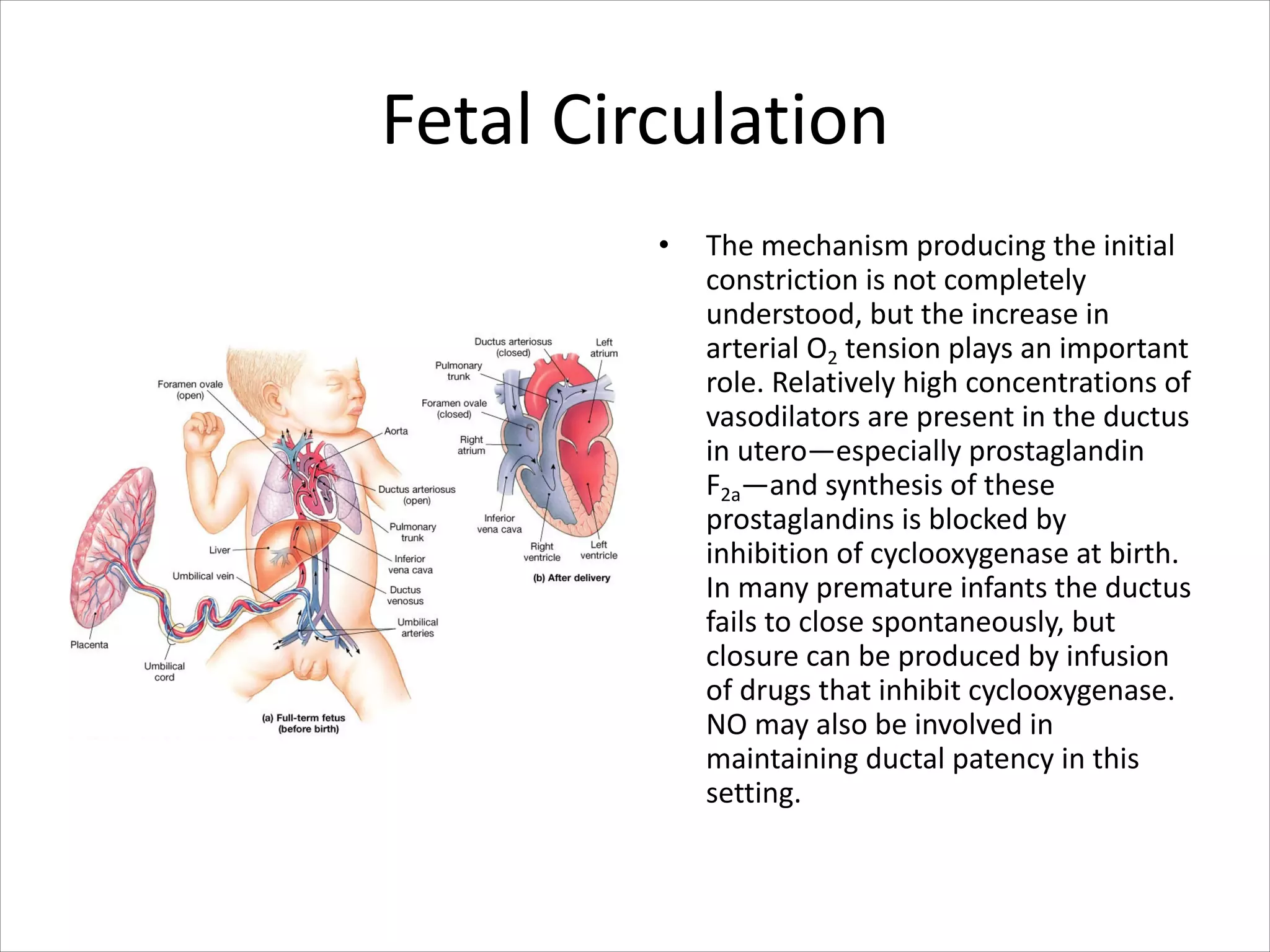
• Blood from the placenta is carried to
the fetus by the umbilical vein. Less
than a third of this enters the fetal
ductus venosus and is carried to the
inferior vena cava,[2] while the rest
enters the liver proper from the inferior
border of the liver.
• The branch of the umbilical vein that
supplies the right lobe of the liver first
joins with the portal vein. The blood
then moves to the right atrium of the
heart. In the fetus, there is an opening
between the right and left atrium (the
foramen ovale), and most of the blood
flows through this hole directly into the
left atrium from the right atrium, thus
bypassing pulmonary circulation.
Fetal Circulation
• The continuation of this blood flow is
into the left ventricle, and from there it
is pumped through the aorta into the
body. Some of the blood moves from
the aorta through the internal iliac
arteries to the umbilical arteries, and
re-enters the placenta, where carbon
dioxide and other waste products from
the fetus are taken up and enter the
maternal circulation.[1]
• Some of the blood entering the right
atrium does not pass directly to the left
atrium through the foramen ovale, but
enters the right ventricle and is pumped
into the pulmonary artery. In the fetus,
there is a special connection between
the pulmonary artery and the aorta,
called the ductus arteriosus, which
directs most of this blood away from
the lungs (which are not being used for
respiration at this point )
Fetal Circulation
• Because of the patent ductus arteriosus
and foramen ovale , the left heart and
right heart pump in parallel in the fetus
rather than in series as they do in the
adult.
• At birth, the placental circulation is cut
off and the peripheral resistance
suddenly rises. The pressure in the
aorta rises until it exceeds that in the
pulmonary artery. Meanwhile, because
the placental circulation has been cut
off, the infant becomes increasingly
asphyxial. Finally, the infant gasps
several times, and the lungs expand.
The markedly negative intrapleural
pressure (–30 to –50 mm Hg) during the
gasps contributes to the expansion of
the lungs, but other factors are likely
also involved.
Fetal Circulation
• The sucking action of the first breath
plus constriction of the umbilical veins
squeezes as much as 100 mL of blood
from the placenta (the "placental
transfusion").
• Once the lungs are expanded, the
pulmonary vascular resistance falls to
less than 20% of the value in utero, and
pulmonary blood flow increases
markedly. Blood returning from the
lungs raises the pressure in the left
atrium, closing the foramen ovale by
pushing the valve that guards it against
the interatrial septum. The ductus
arteriosus constricts within a few hours
after birth, producing functional closure,
and permanent anatomic closure
follows in the next 24–48 h due to
extensive intimal thickening.
Fetal Circulation
• The mechanism producing the initial
constriction is not completely
understood, but the increase in
arterial O2 tension plays an important
role. Relatively high concentrations of
vasodilators are present in the ductus
in utero—especially prostaglandin
F2a—and synthesis of these
prostaglandins is blocked by
inhibition of cyclooxygenase at birth.
In many premature infants the ductus
fails to close spontaneously, but
closure can be produced by infusion
of drugs that inhibit cyclooxygenase.
NO may also be involved in
maintaining ductal patency in this
setting.

Special circulation

  • 1.
  • 2.
    Objectives • Define thespecial features of the circulation in the brain, coronary vessels, skin, and fetus, and how these are regulated. • Describe how cerebrospinal fluid (CSF) is formed and reabsorbed, and its role in protecting the brain from injury. • Understand how the blood–brain barrier impedes the entry of specific substances into the brain. • Delineate how the oxygen needs of the contracting myocardium are met by the coronary arteries and the consequences of their occlusion. • List the vascular reactions of the skin and the reflexes that mediate them. • Understand how the fetus is supplied with oxygen and nutrients in utero, and the circulatory events required for a transition to independent life after birth.
  • 3.
    Cerebral Circulation: Anatomical Considerations •The circle of Willis is the origin of the six large vessels supplying the cerebral cortex. • Substances injected into one carotid artery are distributed almost exclusively to the cerebral hemisphere on that side. No crossing over occurs, probably because the pressure is equal on both sides. • Occlusion of one carotid artery, particularly in older patients, often causes serious symptoms of cerebral ischemia.
  • 4.
    Cerebral Circulation: Anatomical Considerations •There are precapillary anastomoses between the cerebral vessels, but flow through these channels is insufficient to maintain the circulation and prevent infarction when a cerebral artery is occluded.
  • 5.
    Cerebral Circulation: Anatomical Considerations •Venous drainage from the brain by way of the deep veins and dural sinuses empties principally into the internal jugular veins in humans. • A small amount of venous blood drains through the ophthalmic and pterygoid venous plexuses, through emissary veins to the scalp, and down the system of paravertebral veins in the spinal canal.
  • 6.
    Cerebral Circulation: Anatomical Considerations •The cerebral vessels have a number of unique anatomic features. • In the choroid plexuses, there are gaps between the endothelial cells of the capillary wall, but the choroid epithelial cells that separate them from the cerebrospinal fluid (CSF) are connected to one another by tight junctions. • The capillaries in the brain substance resemble non-fenestrated capillaries in muscle, but there are tight junctions between the endothelial cells that limit the passage of substances through the junctions. • There are relatively few vesicles in the endothelial cytoplasm, and presumably little vesicular transport. However, multiple transport systems are present in the capillary cells.
  • 7.
    Cerebral Circulation: Anatomical Considerations •The brain capillaries are surrounded by the endfeet of astrocytes. • These endfeet are closely applied to the basal lamina of the capillaries, but they do not cover the entire capillary wall, and gaps of about 20 nm occur between endfeet. However, the endfeet induce the tight junctions in the capillaries. • The protoplasm of astrocytes is also found around synapses, where it appears to isolate the synapses in the brain from one another.
  • 8.
    Cerebral Circulation: Innervation •Three systems of nerves innervate the cerebral blood vessels: Postganglionic sympathetic neurons have their cell bodies in the superior cervical ganglia, and their endings contain norepinephrine. Many also contain neuropeptide Y. • Cholinergic neurons that originate in the sphenopalatine ganglia also innervate the cerebral vessels, and the postganglionic cholinergic neurons on the blood vessels contain acetylcholine. Many also contain vasoactive intestinal peptide (VIP) and peptide histidyl methionine (PHM-27). These nerves end primarily on large arteries. • Sensory nerves are found on more distal arteries. They have their cell bodies in the trigeminal ganglia and contain substance P, neurokinin A, and calcitonin gene-related peptide (CGRP). -Substance P, CGRP, VIP, and peptide histidyl methionine (PHM-27) -neuropeptide Y • Touching or pulling on the cerebral vessels causes pain.
  • 9.
    Cerebrospinal Fluid • CSFfills the ventricles and subarachnoid space. • In humans, the volume of CSF is about 150 mL and the rate of CSF production is about 550 mL/d. Thus the CSF turns over about 3.7 times a day. • It is estimated that 50–70% of the CSF is formed in the choroid plexuses and the remainder is formed around blood vessels and along ventricular walls
  • 10.
    • Cerebrospinal fluidoriginates as secretion from the choroid plexuses in the four ventricles,mainly in the two lateral ventricles. • The fluid secreted in the lateral ventricles passes first into the third ventricle; It then flows downward along the aqueduct of Sylvius into the fourth ventricle • Finally, the fluid passes out of the fourth ventricle through three small openings, two lateral foramina of Luschka and a midline foramen of Magendie, entering the cisterna magna, a fluid space that lies behind the medulla and beneath the cerebellum.
  • 11.
    • The cisternamagna is continuous with the subarachnoid space that surrounds the entire brain and spinal cord. • Almost all the cerebrospinal fluid then flows upward from the cisterna magna through the subarachnoid spaces surrounding the cerebrum. • From here, the fluid flows into and through multiple arachnoidal villi that project into the large sagittal venous sinus and other venous sinuses of the cerebrum. Thus, any extra fluid empties into the venous blood through pores of these villi.
  • 12.
    Cerebrospinal Fluid • TheCSF in the ventricles flows through the foramens of Magendie and Luschka to the subarachnoid space and is absorbed through the arachnoid villi into veins, primarily the cerebral venous sinuses. • The villi consist of projections of the fused arachnoid membrane and endothelium of the sinuses into the venous sinuses. Similar, smaller villi project into veins around spinal nerve routes. • These projections may contribute to the outflow of CSF into venous blood by a process known as bulk flow, which is unidirectional. • Recent studies suggest a more important route for CSF reabsorption into the bloodstream in health is via the cribriform plate above the nose and thence into the cervical lymphatics.
  • 13.
    Cerebrospinal Fluid • However,reabsorption via one-way valves (of uncertain structural basis) in the arachnoid villi may assume a greater role if CSF pressure is elevated. Likewise, when CSF builds up abnormally, aquaporin water channels may be expressed in the choroid plexus and brain microvessels as a compensatory adaptation. • CSF is formed continuously by the choroid plexus in two stages. • First, plasma is passively filtered across the choroidal capillary endothelium. • Second, secretion of water and ions across the choroidal epithelium provides for active control of CSF composition and quantity. Bicarbonate, chloride, and potassium ions enter the CSF via channels in the epithelial cell apical membranes. Aquaporins provide for water movement to balance osmotic gradients.
  • 14.
    Cerebrospinal Fluid • Thecomposition of CSF is essentially the same as that of brain extracellular fluid (ECF), which in living humans makes up 15% of the brain volume. • In adults, free communication appears to take place between the brain interstitial fluid and CSF, although the diffusion distances from some parts of the brain to the CSF are appreciable. Consequently, equilibration may take some time to occur, and local areas of the brain may have extracellular microenvironments that are transiently different from CSF.
  • 15.
  • 16.
    Cerebrospinal Fluid • LumbarCSF pressure is normally 70 to 180 mm H2O. Up to pressures well above this range, the rate of CSF formation is independent of intraventricular pressure. However, absorption is proportional to the pressure. • At a pressure of 112 mm H2O, which is the average normal CSF pressure, filtration and absorption are equal. Below a pressure of approximately 68 mm H2O, absorption stops. • Large amounts of fluid accumulate when the capacity for CSF reabsorption is decreased (external hydrocephalus, communicating hydrocephalus). • Fluid also accumulates proximal to the block and distends the ventricles when the foramens of Luschka and Magendie are blocked or there is obstruction within the ventricular system (internal hydrocephalus, noncommunicating hydrocephalus).
  • 17.
    Cerebrospinal Fluid • Themost critical role for CSF (and the meninges) is to protect the brain. The dura is attached firmly to bone. • The brain itself is supported within the arachnoid by the blood vessels and nerve roots and by the multiple fine fibrous arachnoid trabeculae. The brain weighs about 1400 g in air, but in its "water bath" of CSF it has a net weight of only 50 g. The buoyancy of the brain in the CSF permits its relatively flimsy attachments to suspend it very effectively. • When the head receives a blow, the arachnoid slides on the dura and the brain moves, but its motion is gently checked by the CSF cushion and by the arachnoid trabeculae.
  • 18.
    Monro-Kellie Doctrine • Accordingto Monro-Kellie doctrine or principle, though the cerebral arteries are compressed by increased intracranial pressure or cerebrospinal fluid pressure, the volume of brain tissue is not affected. It is because the brain tissue is not compressible The Monroe-Kellie Doctrine Parenchyma, Blood and CSF – 3 main masses in the cranium Cerebral Perfusion Pressure = Mean Arterial Pressure – Intracranial Pressure (ICP) Raised ICP Causes impaired Cerebral Perfusion May cause herniation pressure volume
  • 19.
    The Blood BrainBarrier • The tight junctions between capillary endothelial cells in the brain and between the epithelial cells in the choroid plexus effectively prevent proteins from entering the brain in adults and slow the penetration of some smaller molecules as well. This uniquely limited exchange of substances into the brain is referred to as the blood–brain barrier, a term most commonly used to encompass this barrier overall and more specifically the barrier(tight junctions) in the choroid epithelium between blood and CSF.
  • 20.
    The Blood BrainBarrier • Water, CO2, and O2 penetrate the brain with ease, as do the lipid-soluble free forms of steroid hormones, whereas their protein-bound forms and, in general, all proteins and polypeptides do not. • Glucose is the major ultimate source of energy for nerve cells. Its diffusion across the blood–brain barrier would be very slow, but the rate of transport into the CSF is markedly enhanced by the presence of specific transporters, including the glucose transporter 1 (GLUT 1). • The brain contains two forms of GLUT 1: GLUT 1 55K and GLUT 1 45K. Both are encoded by the same gene, but they differ in the extent to which they are glycosylated. GLUT 1 55K is present in high concentration in brain capillaries. • Infants with congenital GLUT 1 deficiency develop low CSF glucose concentrations in the presence of normal plasma glucose, and they have seizures and delayed development. • In addition, transporters for thyroid hormones; several organic acids; choline; nucleic acid precursors; and neutral, basic, and acidic amino acids are present at the blood–brain barrier.
  • 21.
    The Blood BrainBarrier • A variety of drugs and peptides actually cross the cerebral capillaries but are promptly transported back into the blood by a multidrug nonspecific transporter in the apical membranes of the endothelial cells. • This P-glycoprotein is a member of the family of adenosine triphosphate (ATP) binding cassettes that transport various proteins and lipids across cell membranes . • If pharmacologic agents that inhibit this transporter can be developed, they could be of value in the treatment of brain tumors and other central nervous system (CNS) diseases in which it is difficult to introduce adequate amounts of therapeutic agents into the brain.
  • 22.
    Circumventricular Organs • Whendyes that bind to proteins in the plasma are injected, they stain many tissues but spare most of the brain. • However, four small areas in or near the brain stem do take up the stain. These areas are: – The posterior pituitary (neurohypophysis) and the adjacent ventral part of the median eminence of the hypothalamus – The area postrema – The organum vasculosum of the lamina terminalis (OVLT, supraoptic crest) – The subfornical organ (SFO). • These areas are referred to collectively as the circumventricular organs. All have fenestrated capillaries, and because of their permeability they are said to be "outside the blood–brain barrier."
  • 23.
    Circumventricular Organs • Someof them function as neurohemal organs; areas in which polypeptides secreted by neurons enter the circulation. Others contain receptors for many different peptides and other substances, and function as chemoreceptor zones in which substances in the circulating blood can act to trigger changes in brain function without penetrating the blood–brain barrier. • For Example, the area postrema is a chemoreceptor trigger zone that initiates vomiting in response to chemical changes in the plasma. It is also concerned with cardiovascular control, and in many species circulating angiotensin II acts on the area postrema to produce a neurally mediated increase in blood pressure.
  • 24.
    Functions of theBlood Brain Barrier • The blood–brain barrier strives to maintain the constancy of the environment of the neurons in the central nervous system. Even minor variations in the concentrations of K+, Ca2+, Mg2+, H+, and other ions can have far-reaching consequences considering that cortical neurons are very sensitive to ionic change. • The BBB protects the brain from endogenous and exogenous toxins in the blood • and prevents escape of neurotransmitters into the general circulation.
  • 25.
    Regulation of CerebralBlood Flow • Average Blood Flow 54ml/100g/min • Fick Principle and Kety Method • In spite of the marked local fluctuations in brain blood flow with neural activity, the cerebral circulation is regulated in such a way that total blood flow remains relatively constant. • In the brain, auto regulation maintains a normal cerebral blood flow at arterial pressures of 65 to 140 mm Hg
  • 26.
    Regulation of CerebralBlood Flow • O2 consumption by the human brain (cerebral metabolic rate for O2, CMRO2) averages approximately 20% of the total body resting O2 consumption. • The brain is extremely sensitive to hypoxia, and occlusion of its blood supply produces unconsciousness in a period as short as 10 s. • If blood flow to the brain becomes insufficient to supply this needed amount of oxygen, there is vasodilation, which returns the brain blood flow and transport of oxygen to the cerebral tissues to near normal. • The vegetative structures in the brain stem are more resistant to hypoxia than the cerebral cortex, and patients may recover from accidents such as cardiac arrest and other conditions causing fairly prolonged hypoxia with normal vegetative functions but severe, permanent intellectual deficiencies. • The basal ganglia use O2 at a very high rate, and symptoms of Parkinson disease as well as intellectual deficits can be produced by chronic hypoxia.
  • 27.
  • 28.
    CORONARY CIRCULATION • Thetwo coronary arteries that supply the myocardium arise from the sinuses behind two of the cusps of the aortic valve at the root of the aorta. • The left coronary artery supplies mainly the anterior and left lateral portions of the left ventricle, whereas the right coronary artery supplies most of the right ventricle as well as the posterior part of the left ventricle in 80 to 90 per cent of people. • Most of the coronary venous blood flow from the left ventricular muscle returns to the right atrium of the heart by way of the coronary sinus—which is about 75 per cent of the total coronary blood flow. And most of the coronary venous blood from the right ventricular muscle returns through small anterior cardiac veins that flow directly into the right atrium, not by way of the coronary sinus. • A very small amount of coronary venous blood also flows back into the heart through very minute thebesian veins, which empty directly into all chambers of the heart.
  • 29.
    CORONARY CIRCULATION • Eddycurrents keep the valves away from the orifices of the arteries, and they are patent throughout the cardiac cycle. Most of the venous blood returns to the heart through the coronary sinus and anterior cardiac veins, which drain into the right atrium. • In addition, there are other vessels that empty directly into the heart chambers. These include arteriosinusoidal vessels, sinusoidal capillary-like vessels that connect arterioles to the chambers; thebesian veins that connect capillaries to the chambers; and a few arterioluminal vessels that are small arteries draining directly into the chambers
  • 30.
    CORONARY CIRCULATION • Theheart compresses its blood vessels when it contracts. • The pressure inside the left ventricle is slightly higher than in the aorta during systole • Consequently, flow occurs in the arteries supplying the subendocardial portion of the left ventricle only during diastole, although the force is sufficiently dissipated in the more superficial portions of the left ventricular myocardium to permit some flow in this region throughout the cardiac cycle. • Because diastole is shorter when the heart rate is high, left ventricular coronary flow is reduced during tachycardia.
  • 31.
    CORONARY CIRCULATION • Onthe other hand, the pressure differential between the aorta and the right ventricle, and the differential between the aorta and the atria, are somewhat greater during systole than during diastole. Consequently, coronary flow in those parts of the heart is not appreciably reduced during systole. • Because no blood flow occurs during systole in the subendocardial portion of the left ventricle, this region is prone to ischemic damage and is the most common site of myocardial infarction. Blood flow from the left ventricle is decreased in patients with stenotic aortic valves (narrowing of aortic valves preventing the valve from opening fully and obstructs blood flow from the left ventricle into the aorta) because the pressure in the left ventricle must be much higher than that in the aorta to eject the blood. Consequently, the coronary vessels are severely compressed during systole.
  • 32.
    CORONARY CIRCULATION • Patientswith this disease are particularly prone to develop symptoms of myocardial ischemia, in part because of this compression and in part because the myocardium requires more O2 to expel blood through the stenotic aortic valve. • Coronary flow is also decreased when the aortic diastolic pressure is low. The rise in venous pressure in conditions such as congestive heart failure reduces coronary flow because it decreases effective coronary perfusion pressure. • At rest, the heart extracts 70–80% of the O2 from each unit of blood delivered to it . O2 consumption can be increased significantly only by increasing blood flow. • Therefore, it is not surprising that blood flow increases when the metabolism of the myocardium is increased.
  • 33.
    CORONARY CIRCULATION • Thecaliber of the coronary vessels, and consequently the rate of coronary blood flow, is influenced not only by pressure changes in the aorta but also by chemical and neural factors. The coronary circulation also shows considerable autoregulation. • Oxygen demand plays a major role in local coronary blood flow regulation • The close relationship between coronary blood flow and myocardial O2 consumption indicates that one or more of the products of metabolism cause coronary vasodilation. Factors suspected of playing this role include O2 lack and increased local concentrations of CO2, H+, K+, lactate, prostaglandins, adenine nucleotides, and adenosine. • Increased metabolic activity of the heart decreases coronary resistance by release of vasodilators, whereas a reduction in cardiac metabolism increases coronary resistance
  • 34.
    CORONARY CIRCULATION • Asphyxia,hypoxia, and intracoronary injections of cyanide all increase coronary blood flow 200–300% in denervated as well as intact hearts, and the feature common to these three stimuli is hypoxia of the myocardial fibers. A similar increase in flow is produced in the area supplied by a coronary artery if the artery is occluded and then released - Reactive Hyperraemia • The coronary arterioles contain -adrenergic receptors, which mediate vasoconstriction, and -adrenergic receptors, which mediate vasodilation. Activity in the noradrenergic nerves to the heart and injections of norepinephrine cause coronary vasodilation. However, norepinephrine increases the heart rate and the force of cardiac contraction, and the vasodilation is due to production of vasodilator metabolites in the myocardium secondary to the increase in its activity.
  • 35.
    CORONARY CIRCULATION • Whenthe systemic blood pressure falls, the overall effect of the reflex increase in noradrenergic discharge is increased coronary blood flow secondary to the metabolic changes in the myocardium at a time when the cutaneous, renal, and splanchnic vessels are constricted. In this way the circulation of the heart, like that of the brain, is preserved when flow to other organs is compromised. • The coronary arterioles contain • Alpha adrenergic receptors…vasoconstriction • Beta adrenergic receptors…vasodilatin
  • 36.
    ARTHEROSCLEROSIS • In peoplewith genetic predisposition to atherosclerosis, who are overweight or obese and have a sedentary lifestyle, or who have high blood pressure and damage to the endothelial cells of the coronary blood vessels, large quantities of cholesterol gradually become deposited beneath the endothelium at many points in arteries throughout the body. • Gradually, these areas of deposit are invaded by fibrous tissue and frequently become calcified. The net result is the development of atherosclerotic plaques that actually protrude into the vessel lumens and either block or partially block blood flow. A common site for development of atherosclerotic plaques is the first few centimeters of the major coronary arteries
  • 37.
    ACUTE CORONARY OCCLUSION •Usually occurs in a person with under-lying artherosclerosis. • May be due to: – Blood clot – thrombus or embolus – Muscle spasm - The spasm might result from direct irritation of the smooth muscle of the arterial wall by the edges of an arteriosclerotic plaque, or it might result from local nervous reflexes that cause excess coronary vascular wall contraction. The spasm may then lead to secondary thrombosis of the vessel
  • 38.
    Blood Flow inSkeletal Muscle at Rest and During Exercise
  • 39.
    Rate of BloodFlow through Muscles • At rest – 3-4ml/min per 100g of muscle – Some capillaries have little or no flowing blood • In exercise – up to 100-200ml/min per 100g of muscle • Flow increases and decreases with each contraction – In strong tetany – blood flow can stop
  • 40.
    Control of Bloodin Skeletal Muscles • Increase in blood flow during exercise mostly due to chemicals acting directly on the muscle arterioles • Most important chemical – reduction of oxygen in the muscle tissues • Muscles use up oxygen – Arteriolar walls cannot maintain contraction in the absence of oxygen – Oxygen deficiency also causes release of vasodilator substances e.g. Adenosine – Other vasodilator substances: • Pottasium ions • ATP • Lactic acid • Carbon dioxide
  • 41.
    Control of Bloodin Skeletal Muscles • Nervous control – Sympathetic vasoconstrictor nerves secrete norepinephrine at rest – alpha adrenergic receptor stimulation causes vasoconstriction – reduced blood flow up to 1/3 – Important in circulatory shock – Adrenal medulla secretes NE and E during strenous exercise – NE causes vasoconstriction but epinephrine has a slight vasodilator effect because it excites beta- adrenergic receptors
  • 42.
    Total Body CirculatoryRe-Adjustment • 3 major effects occur during exercise essential for the circulatory system to supply great need for blood by muscles: i. Mass discharge of the sympathetic nervous ii. Increase in arterial pressure iii. Increase in cardiac output.
  • 43.
    Mass Sympathetic Discharge •At onset of exercise – signals to vasomotor centre to initiate sympathetic discharge • Effect: – Increased rate and increased pumping strength of the heart – Most of the arterioles of the peripheral circulation are strongly contracted, except for the arterioles in the active muscles, which are strongly vasodilated by the local vasodilator effects in the muscles. Thus, blood flow through most non-muscular areas of the body is temporarily reduced to support the increased needs of the muscles – The muscle walls of the veins and other capacitative areas of the circulation are contracted , greatly increasing the mean systemic filling pressure, increased venous return and improved cardiac output
  • 44.
    Increased Arterial Pressure •Due to the effects of sympathetic stimulation – Causes increased push of blood through the tissue vessels – The extra pressure also stretches the walls of the vessels, and this effect, along with the locally released vasodilators and higher blood pressure, may increase muscle total flow to more than 20 times normal
  • 45.
    Increased Cardiac Output •The ability of the circulatory system to provide increased cardiac output for delivery of oxygen and other nutrients to the muscles during exercise is equally as important as the strength of the muscles themselves in setting the limit for continued muscle work.
  • 46.
  • 47.
    Pulmonary Circulation • Thelung has two circulations: 1. A high-pressure, low-flow circulation supplies systemic arterial blood to the trachea, the bronchial tree including the terminal bronchioles, the supporting tissues of the lung, and the outer coats (adventia) of the pulmonary arteries and veins. The bronchial arteries, which are branches of the thoracic aorta, supply most of this systemic arterial blood at a pressure slightly lower than the aortic pressure. 2. A low-pressure, high-flow circulation that supplies venous blood from all parts of the body to the alveolar capillaries where oxygen is added and carbon dioxide is removed. The pulmonary artery, which receives blood from the right ventricle, and its arterial branches carry blood to the alveolar capillaries for gas exchange and the pulmonary veins then return the blood to the left atrium to be pumped by the left ventricle though the systemic circulation.
  • 48.
    Pulmonary Circulation The pulmonaryartery extends only 5 centimeters beyond the apex of the right ventricle and then divides into right and left main branches that supply blood to the two respective lungs. The pulmonary veins, like the pulmonary arteries, are also short. They immediately empty their effluent blood into the left atrium.
  • 49.
    Pulmonary Circulation • Thepulmonary artery extends 5cm beyond the apex of the right ventricle and then divides into right and left main branches that supply blood to the two respective lungs • The pulmonary artery has a wall thickness one third that of the aorta. The pulmonary arterial branches are very short, and all the pulmonary arteries, even the smaller arteries and arterioles, have larger diameters than their counterpart systemic arteries. This, combined with the fact that the vessels are thin and distensible, gives the pulmonary arterial tree a large compliance, averaging almost 7 ml/mm Hg. • This large compliance allows the pulmonary arteries to accommodate the stroke volume output of the right ventricle.
  • 50.
    Pulmonary Circulation • Bloodalso flows to the lungs through small bronchial arteries that originate from the systemic circulation, amounting to about 1 to 2 percent of the total cardiac output. This bronchial artery supplies the supporting tissues of the lungs, including the connective tissue, septa, and large and small bronchi. After this bronchial and arterial blood has passed through the supporting tissues, it empties into the pulmonary veins and enters the left atrium, rather than passing back to the right atrium. Therefore, the flow into the left atrium and the left ventricular output are about 1 to 2 percent greater than that of the right ventricular output.
  • 51.
    Pulmonary Circulation • Lymphvessels are present in all the supportive tissues of the lung, beginning in the connective tissue spaces that surround the terminal bronchioles, coursing to the hilum of the lung, and then mainly into the right thoracic lymph duct. Particulate matter entering the alveoli is partly removed by way of these channels, and plasma protein leaking from the lung capillaries is also removed from the lung tissues, thereby helping to prevent pulmonary edema
  • 52.
    Pulmonary Circulation • Thesystolic pressure in the right ventricle of the normal human being averages about 25 mm Hg, and the diastolic pressure averages about 0 to 1 mm Hg, values that are only one-fifth those for the left ventricle. • During systole, the pressure in the pulmonary artery is essentially equal to the pressure in the right ventricle. However, after the pulmonary valve closes at the end of systole, the ventricular pressure falls precipitously, whereas the pulmonary arterial pressure falls more slowly as blood flows through the capillaries of the lungs.
  • 53.
    Pulmonary Circulation • Theblood volume of the lungs is about 450 mls, about 9% of the total blood volume of the entire circulatory system. • Approximately 70 mls of this pulmonary blood volume is in the pulmonary capillaries, and the remainder is divided about equally between the pulmonary arteries and the veins. • The blood flow through the lungs is essentially equal to the cardiac output
  • 54.
    Pulmonary Circulation • Whenthe concentration of oxygen in the air of the alveoli decreases below normal, especially when it falls below 70 % of normal (below 73 mm Hg Po2), the adjacent blood vessels constrict, with the vascular resistance increasing more than fivefold at extremely low oxygen levels. • This effect of low oxygen on pulmonary vascular resistance has an important function: to distribute blood flow where it is most effective. That is, if some alveoli are poorly ventilated so that their oxygen concentration becomes low, the local vessels constrict. This causes the blood to flow through other areas of the lungs that are better aerated, thus providing an automatic control system for distributing blood flow to the pulmonary areas in proportion to their alveolar oxygen pressures.
  • 55.
    Capillary Exchange ofFluid in the Lungs • The pulmonary capillary pressure is low, about 7 mm Hg, in comparison with a considerably higher functional capillary pressure in the peripheral tissues of about 17 mm Hg. • The interstitial fluid pressure in the lung is slightly more negative than that in the peripheral subcutaneous tissue. • The pulmonary capillaries are relatively leaky to protein molecules, so the colloid osmotic pressure of the pulmonary interstitial fluid is about 14 mm Hg, in comparison with less than half this value in the peripheral tissues. • The alveolar walls are extremely thin, and the alveolar epithelium covering the alveolar surfaces is so weak that it can be ruptured by any positive pressure in the interstitial spaces greater than alveolar air pressure (>0 mm Hg), which allows dumping of fluid from the interstitial spaces into the alveoli.
  • 56.
    Pulmonary Oedema • Anyfactor that increases fluid filtration out of the pulmonary capillaries or that impedes pulmonary lymphatic function and causes the pulmonary interstitial fluid pressure to rise from the negative range into the positive range will cause rapid filling of the pulmonary interstitial spaces and alveoli with large amounts of free fluid. • The most common causes of pulmonary edema are: i. Left-sided heart failure or mitral valve disease, with consequent great increases in pulmonary venous pressure and pulmonary capillary pressure and flooding of the interstitial spaces and alveoli. ii. Damage to the pulmonary blood capillary membranes caused by infections such as pneumonia or by breathing noxious substances such as chlorine gas or sulfur dioxide gas. Each of these causes rapid leakage of both plasma proteins and fluid out of the capillaries and into both the lung interstitial spaces and the alveoli.
  • 57.
    Pleural Effusion • Thecauses of the effusion include: 1. Blockage of lymphatic drainage from the pleural cavity; 2. Cardiac failure, which causes excessively high peripheral and pulmonary capillary pressures, leading to excessive transudation of fluid into the pleural cavity 3. Greatly reduced plasma colloid osmotic pressure, thus allowing excessive transudation of fluid 4. Infection or any other cause of inflammation of the surfaces of the pleural cavity, which breaks down the capillary membranes and allows rapid dumping of both plasma proteins and fluid into the cavity.
  • 58.
  • 59.
    Fetal Circulation • Bloodfrom the placenta is carried to the fetus by the umbilical vein. Less than a third of this enters the fetal ductus venosus and is carried to the inferior vena cava,[2] while the rest enters the liver proper from the inferior border of the liver. • The branch of the umbilical vein that supplies the right lobe of the liver first joins with the portal vein. The blood then moves to the right atrium of the heart. In the fetus, there is an opening between the right and left atrium (the foramen ovale), and most of the blood flows through this hole directly into the left atrium from the right atrium, thus bypassing pulmonary circulation.
  • 60.
    Fetal Circulation • Thecontinuation of this blood flow is into the left ventricle, and from there it is pumped through the aorta into the body. Some of the blood moves from the aorta through the internal iliac arteries to the umbilical arteries, and re-enters the placenta, where carbon dioxide and other waste products from the fetus are taken up and enter the maternal circulation.[1] • Some of the blood entering the right atrium does not pass directly to the left atrium through the foramen ovale, but enters the right ventricle and is pumped into the pulmonary artery. In the fetus, there is a special connection between the pulmonary artery and the aorta, called the ductus arteriosus, which directs most of this blood away from the lungs (which are not being used for respiration at this point )
  • 61.
    Fetal Circulation • Becauseof the patent ductus arteriosus and foramen ovale , the left heart and right heart pump in parallel in the fetus rather than in series as they do in the adult. • At birth, the placental circulation is cut off and the peripheral resistance suddenly rises. The pressure in the aorta rises until it exceeds that in the pulmonary artery. Meanwhile, because the placental circulation has been cut off, the infant becomes increasingly asphyxial. Finally, the infant gasps several times, and the lungs expand. The markedly negative intrapleural pressure (–30 to –50 mm Hg) during the gasps contributes to the expansion of the lungs, but other factors are likely also involved.
  • 62.
    Fetal Circulation • Thesucking action of the first breath plus constriction of the umbilical veins squeezes as much as 100 mL of blood from the placenta (the "placental transfusion"). • Once the lungs are expanded, the pulmonary vascular resistance falls to less than 20% of the value in utero, and pulmonary blood flow increases markedly. Blood returning from the lungs raises the pressure in the left atrium, closing the foramen ovale by pushing the valve that guards it against the interatrial septum. The ductus arteriosus constricts within a few hours after birth, producing functional closure, and permanent anatomic closure follows in the next 24–48 h due to extensive intimal thickening.
  • 63.
    Fetal Circulation • Themechanism producing the initial constriction is not completely understood, but the increase in arterial O2 tension plays an important role. Relatively high concentrations of vasodilators are present in the ductus in utero—especially prostaglandin F2a—and synthesis of these prostaglandins is blocked by inhibition of cyclooxygenase at birth. In many premature infants the ductus fails to close spontaneously, but closure can be produced by infusion of drugs that inhibit cyclooxygenase. NO may also be involved in maintaining ductal patency in this setting.