CSF and Blood-Brain Barriers
- CSF formation and flow
- Main functions of CSF
- Intracranial pressure, Brain edema and Hydrocephalus.
- Composition of CSF
- Blood-Brain Barrier (BBB)
Cerebrospinal Fluid
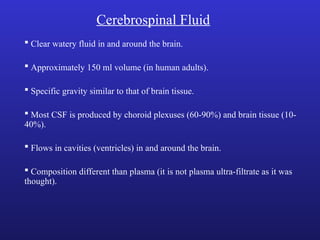
 Clear watery fluid in and around the brain.
 Approximately 150 ml volume (in human adults).
 Specific gravity similar to that of brain tissue.
 Most CSF is produced by choroid plexuses (60-90%) and brain tissue (10-
40%).
 Flows in cavities (ventricles) in and around the brain.
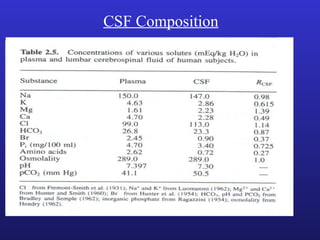
 Composition different than plasma (it is not plasma ultra-filtrate as it was
thought).
Functions of CSF
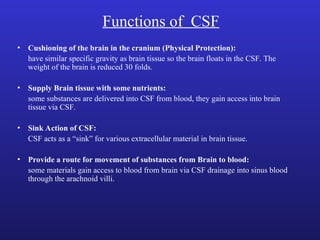
• Cushioning of the brain in the cranium (Physical Protection):
have similar specific gravity as brain tissue so the brain floats in the CSF. The
weight of the brain is reduced 30 folds.
• Supply Brain tissue with some nutrients:
some substances are delivered into CSF from blood, they gain access into brain
tissue via CSF.
• Sink Action of CSF:
CSF acts as a “sink” for various extracellular material in brain tissue.
• Provide a route for movement of substances from Brain to blood:
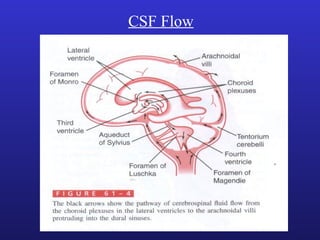
some materials gain access to blood from brain via CSF drainage into sinus blood
through the arachnoid villi.
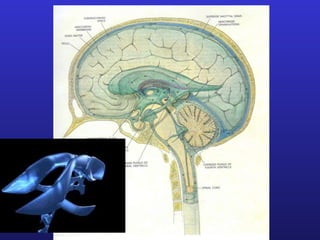
CSF Flow
CSF Composition
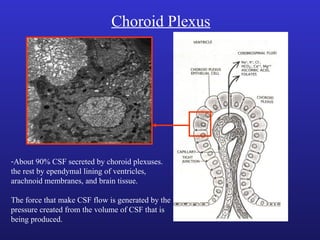
Choroid Plexus
-About 90% CSF secreted by choroid plexuses.
the rest by ependymal lining of ventricles,
arachnoid membranes, and brain tissue.
The force that make CSF flow is generated by the
pressure created from the volume of CSF that is
being produced.
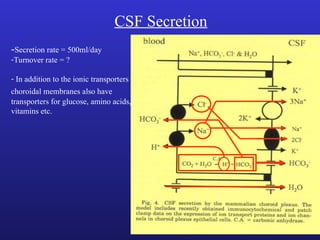
CSF Secretion
-Secretion rate = 500ml/day
-Turnover rate = ?
- In addition to the ionic transporters
choroidal membranes also have
transporters for glucose, amino acids,
vitamins etc.
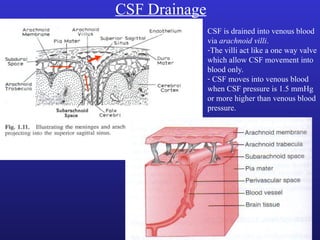
CSF Drainage
CSF is drained into venous blood
via arachnoid villi.
-The villi act like a one way valve
which allow CSF movement into
blood only.
- CSF moves into venous blood
when CSF pressure is 1.5 mmHg
or more higher than venous blood
pressure.
CSF Pressure
- The unit for CSF pressure measurement is usually in cmH2O.
- Normal CSF pressure is about 130 cmH2O in lying position.
- However it can vary between 65 to 195 cmH2O. But normally CSF pressure is kept
relatively constant by balancing between “production” and “drainage”.
- Pathological conditions causing rise in CSF pressure:
- Brain tumors can compress on the ducts in which CSF flows and block CSF flow,
this will lead to the increase in CSF pressure (CSF pressure can rise to several times
above normal).
- Brain hemorrhage, cause RBCs & WBCs to appear in CSF which can block CSF drainage.
- Inborn defect in CSF drainage through arachnoid villi.
Hydrocephalus
- Hydrocephalus means excess water in cranial vault. It results from blockage of CSF flow.
-There are two types:
1- Communicating hydrocephalus: the blockage is at the level of subarachnoid space or at
the arachnoid villi.
2- Noncommunicating hydrocephalus: blockage is at the ducts communicating between the
ventricles. Such as the blockage of the aqueduct of Sylvius.
Barriers Between Brain and Blood
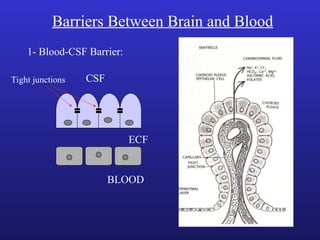
1- Blood-CSF Barrier:
CSF
ECF
BLOOD
Tight junctions
Barriers Between Brain and Blood
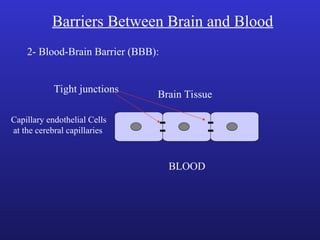
2- Blood-Brain Barrier (BBB):
BLOOD
Capillary endothelial Cells
at the cerebral capillaries
Brain Tissue
Tight junctions
Barriers Between Brain and Blood
Brain Edema
-Excess fluid in the brain tissue which can be the result of:
1- Server Hypertension which can cause increased capillary blood
pressure which may lead to BBB opening.
OR
2- Trauma which causes damage to capillary wall which also disrupts
the BBB.
- Once BBB is disrupted high and low molecular weight molecules
escape into brain tissue from blood and water will follow.
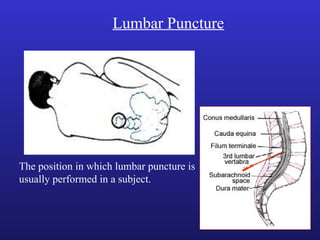
Lumbar Puncture
The position in which lumbar puncture is
usually performed in a subject.
cereberal spinal fluid power point presentation

cereberal spinal fluid power point presentation

  • 1.
    CSF and Blood-BrainBarriers - CSF formation and flow - Main functions of CSF - Intracranial pressure, Brain edema and Hydrocephalus. - Composition of CSF - Blood-Brain Barrier (BBB)
  • 3.
    Cerebrospinal Fluid  Clearwatery fluid in and around the brain.  Approximately 150 ml volume (in human adults).  Specific gravity similar to that of brain tissue.  Most CSF is produced by choroid plexuses (60-90%) and brain tissue (10- 40%).  Flows in cavities (ventricles) in and around the brain.  Composition different than plasma (it is not plasma ultra-filtrate as it was thought).
  • 4.
    Functions of CSF •Cushioning of the brain in the cranium (Physical Protection): have similar specific gravity as brain tissue so the brain floats in the CSF. The weight of the brain is reduced 30 folds. • Supply Brain tissue with some nutrients: some substances are delivered into CSF from blood, they gain access into brain tissue via CSF. • Sink Action of CSF: CSF acts as a “sink” for various extracellular material in brain tissue. • Provide a route for movement of substances from Brain to blood: some materials gain access to blood from brain via CSF drainage into sinus blood through the arachnoid villi.
  • 5.
  • 6.
  • 7.
    Choroid Plexus -About 90%CSF secreted by choroid plexuses. the rest by ependymal lining of ventricles, arachnoid membranes, and brain tissue. The force that make CSF flow is generated by the pressure created from the volume of CSF that is being produced.
  • 8.
    CSF Secretion -Secretion rate= 500ml/day -Turnover rate = ? - In addition to the ionic transporters choroidal membranes also have transporters for glucose, amino acids, vitamins etc.
  • 9.
    CSF Drainage CSF isdrained into venous blood via arachnoid villi. -The villi act like a one way valve which allow CSF movement into blood only. - CSF moves into venous blood when CSF pressure is 1.5 mmHg or more higher than venous blood pressure.
  • 10.
    CSF Pressure - Theunit for CSF pressure measurement is usually in cmH2O. - Normal CSF pressure is about 130 cmH2O in lying position. - However it can vary between 65 to 195 cmH2O. But normally CSF pressure is kept relatively constant by balancing between “production” and “drainage”. - Pathological conditions causing rise in CSF pressure: - Brain tumors can compress on the ducts in which CSF flows and block CSF flow, this will lead to the increase in CSF pressure (CSF pressure can rise to several times above normal). - Brain hemorrhage, cause RBCs & WBCs to appear in CSF which can block CSF drainage. - Inborn defect in CSF drainage through arachnoid villi.
  • 11.
    Hydrocephalus - Hydrocephalus meansexcess water in cranial vault. It results from blockage of CSF flow. -There are two types: 1- Communicating hydrocephalus: the blockage is at the level of subarachnoid space or at the arachnoid villi. 2- Noncommunicating hydrocephalus: blockage is at the ducts communicating between the ventricles. Such as the blockage of the aqueduct of Sylvius.
  • 12.
    Barriers Between Brainand Blood 1- Blood-CSF Barrier: CSF ECF BLOOD Tight junctions
  • 13.
    Barriers Between Brainand Blood 2- Blood-Brain Barrier (BBB): BLOOD Capillary endothelial Cells at the cerebral capillaries Brain Tissue Tight junctions
  • 14.
  • 15.
    Brain Edema -Excess fluidin the brain tissue which can be the result of: 1- Server Hypertension which can cause increased capillary blood pressure which may lead to BBB opening. OR 2- Trauma which causes damage to capillary wall which also disrupts the BBB. - Once BBB is disrupted high and low molecular weight molecules escape into brain tissue from blood and water will follow.
  • 16.
    Lumbar Puncture The positionin which lumbar puncture is usually performed in a subject.