Sensory Processing  Disorder
More Complex Senses  * Balance  * Body Awareness Seven Senses of Learning
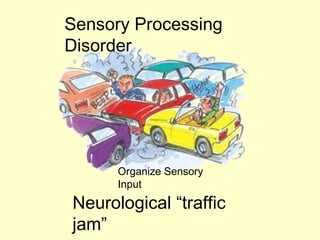
Neurological “traffic jam” Sensory Processing Disorder Organize Sensory Input
Possible Causes Premature Births Prenatal and Postnatal environments Birth Trauma Lack of sensory experiences  after birth Genetic
Ethan
Runs, swings, spins, paces excessively, or flaps hands when excited   Difficulty following directions, or sequencing the steps of an activity. Has difficulties interacting with peers, Their play is often immature Difficulty focusing attention, or being over-focused  Falls apart or loses control easily.  Often during transition times.  Is restless, inattentive, and disruptive; May not like to participate in group time. Easily distracted by visual or auditory stimuli
Strong dislike of baths, haircuts, or nail cutting Extreme sensitivity to texture and temperature of food Distressed by seams in socks and tags in his clothes  Lack of enjoyment in age-appropriate motor activities.  Swinging, climbing, sports, riding bike  Overly sensitive to touch, or wants to be touched all the time Cry or covers their ears with every load sound.  Picky eater
Misdiagnosed & Inappropriately medicated for ADD & ADHD
Teacher = Child Advocate
Developing a greater awareness of sensory  Processing disorder  Analyze and record the behavior Behavior is communication ~ Ask yourself ~  What is the child trying to say?  Don’t be tempted to simply judge and move on. Be empathetic with parents  Inform and educate parents on the alternatives to medications Occupational Therapist Be sensory detectives
 

SPD

  • 1.
  • 2.
    More Complex Senses * Balance * Body Awareness Seven Senses of Learning
  • 3.
    Neurological “traffic jam”Sensory Processing Disorder Organize Sensory Input
  • 4.
    Possible Causes PrematureBirths Prenatal and Postnatal environments Birth Trauma Lack of sensory experiences after birth Genetic
  • 5.
  • 6.
    Runs, swings, spins,paces excessively, or flaps hands when excited Difficulty following directions, or sequencing the steps of an activity. Has difficulties interacting with peers, Their play is often immature Difficulty focusing attention, or being over-focused Falls apart or loses control easily. Often during transition times. Is restless, inattentive, and disruptive; May not like to participate in group time. Easily distracted by visual or auditory stimuli
  • 7.
    Strong dislike ofbaths, haircuts, or nail cutting Extreme sensitivity to texture and temperature of food Distressed by seams in socks and tags in his clothes Lack of enjoyment in age-appropriate motor activities. Swinging, climbing, sports, riding bike Overly sensitive to touch, or wants to be touched all the time Cry or covers their ears with every load sound. Picky eater
  • 8.
    Misdiagnosed & Inappropriatelymedicated for ADD & ADHD
  • 9.
  • 10.
    Developing a greaterawareness of sensory Processing disorder Analyze and record the behavior Behavior is communication ~ Ask yourself ~ What is the child trying to say? Don’t be tempted to simply judge and move on. Be empathetic with parents Inform and educate parents on the alternatives to medications Occupational Therapist Be sensory detectives
  • 11.

Editor's Notes

  • #3 We learn by the information we receive through our senses.
  • #4 Children With SPD find it difficult to process info through their senses. Most children with SPD are just as intelligent as their class mates their brains are just wired different
  • #6 When I first learned about SPD it really hit home. My son Ethan., From the time he was about 1 yr old he showed all the classic signs of ADD ADHD. And with all the hype circulating about the 2 kind of scared me.
  • #7 Many off these symptoms Ethan had point to ADD or ADHD
  • #9 So many people today reach for pills to solve all their problems. Studies have shown that