Living in Two Spaces
Effect of Attention on
Perception of Haptic Space
Rachel Franz & Siyan Zhao
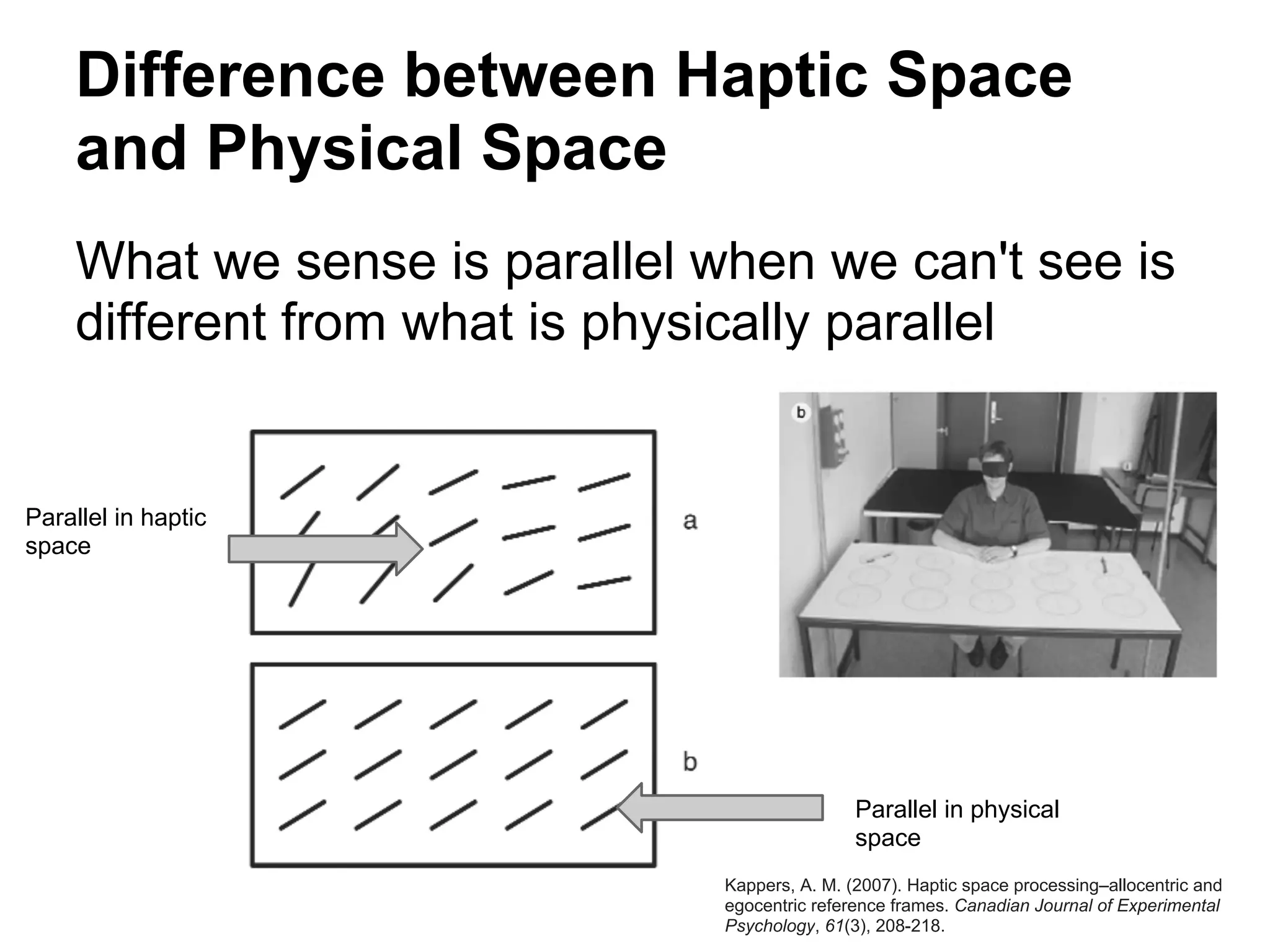
Difference between Haptic Space
and Physical Space
What we sense is parallel when we can't see is
different from what is physically parallel
Parallel in haptic
space
Parallel in physical
space
Kappers, A. M. (2007). Haptic space processing–allocentric and
egocentric reference frames. Canadian Journal of Experimental
Psychology, 61(3), 208-218.
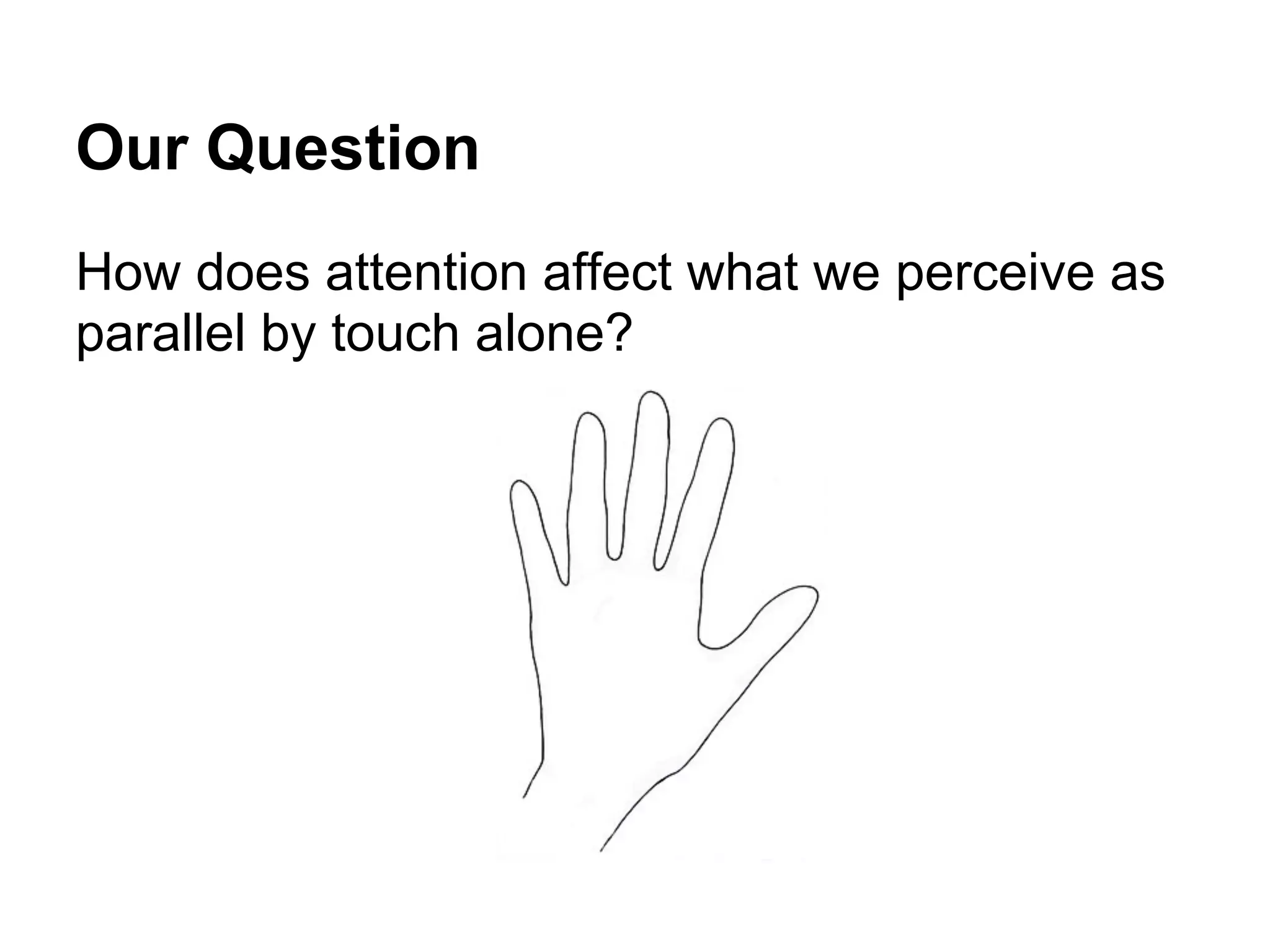
Our Question
How does attention affect what we perceive as
parallel by touch alone?
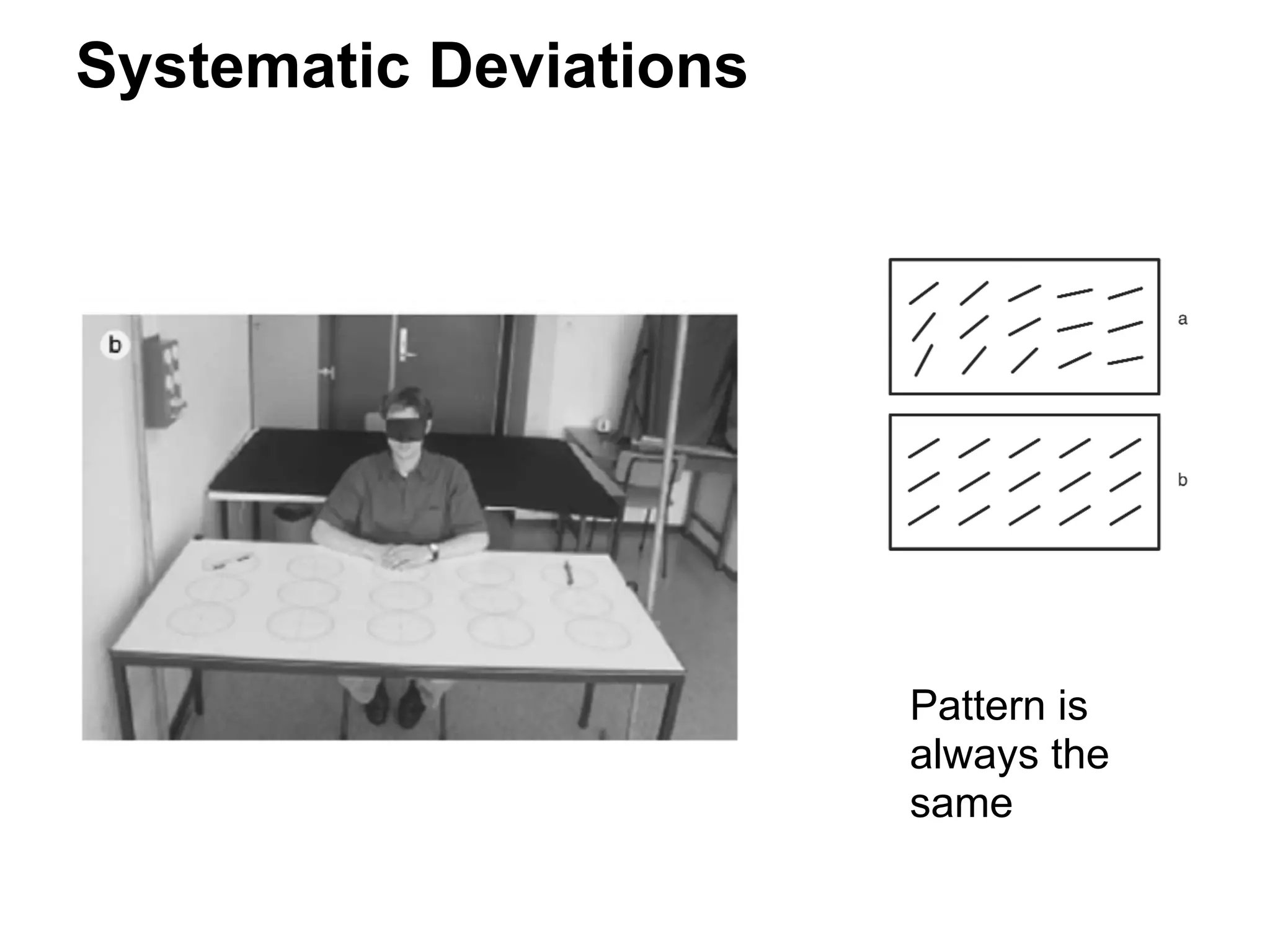
Systematic Deviations
Pattern is
always the
same
Why do we see this pattern?
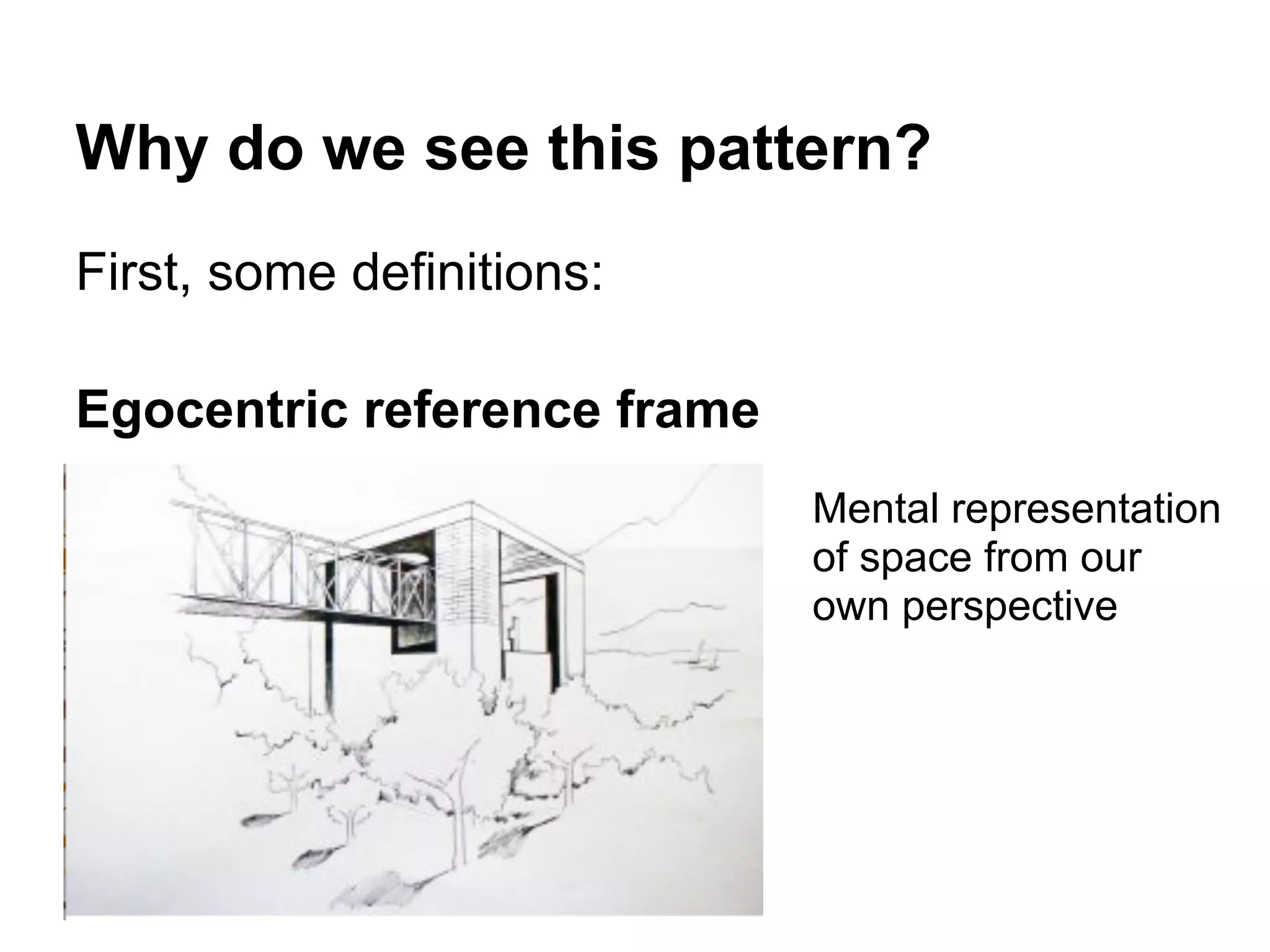
First, some definitions:
Egocentric reference frame
Mental representation
of space from our
own perspective
Why do we see this pattern?
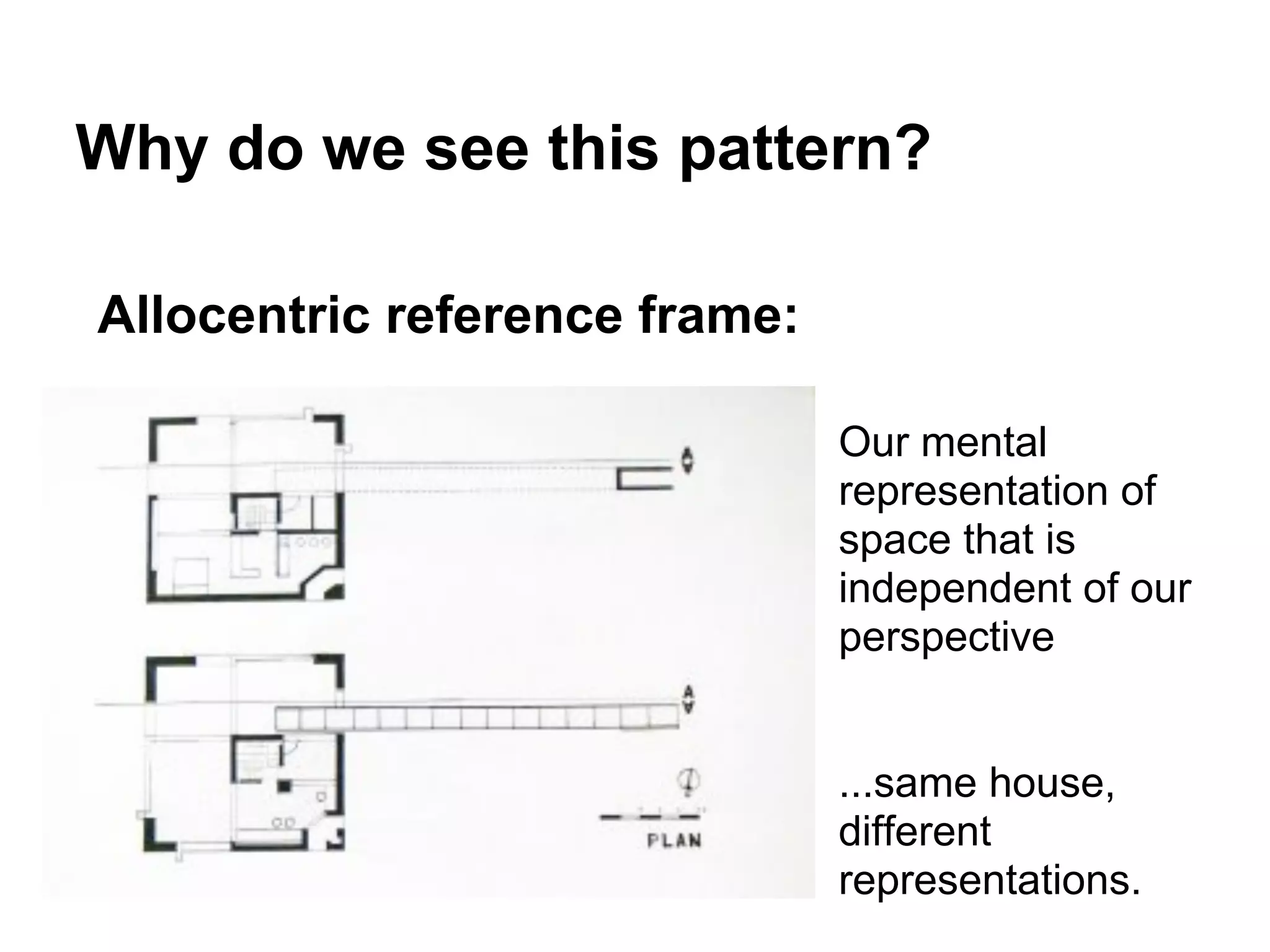
Allocentric reference frame:
Our mental
representation of
space that is
independent of our
perspective
...same house,
different
representations.
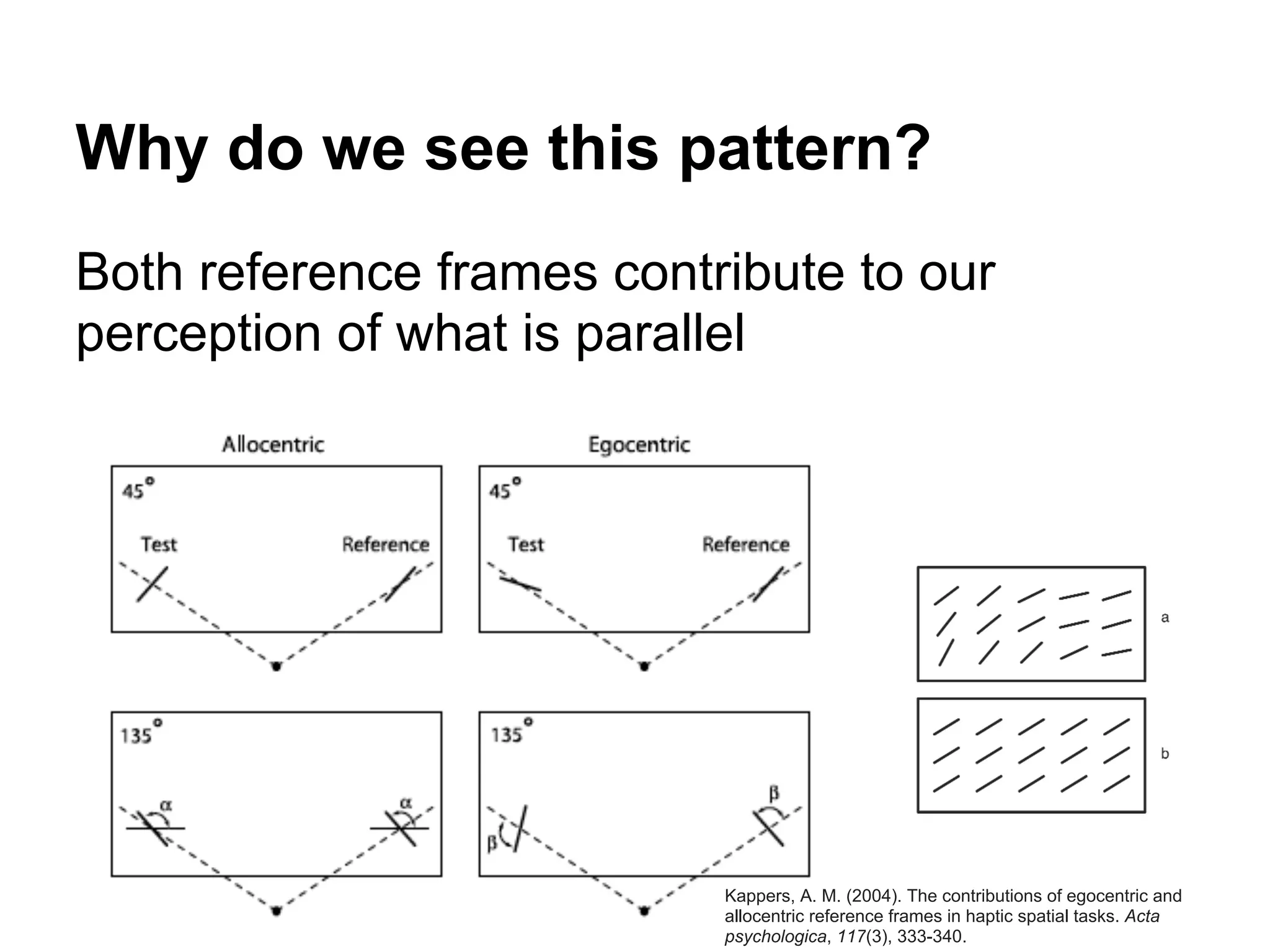
Both reference frames contribute to our
perception of what is parallel
Why do we see this pattern?
Kappers, A. M. (2004). The contributions of egocentric and
allocentric reference frames in haptic spatial tasks. Acta
psychologica, 117(3), 333-340.
Why do we see this pattern?
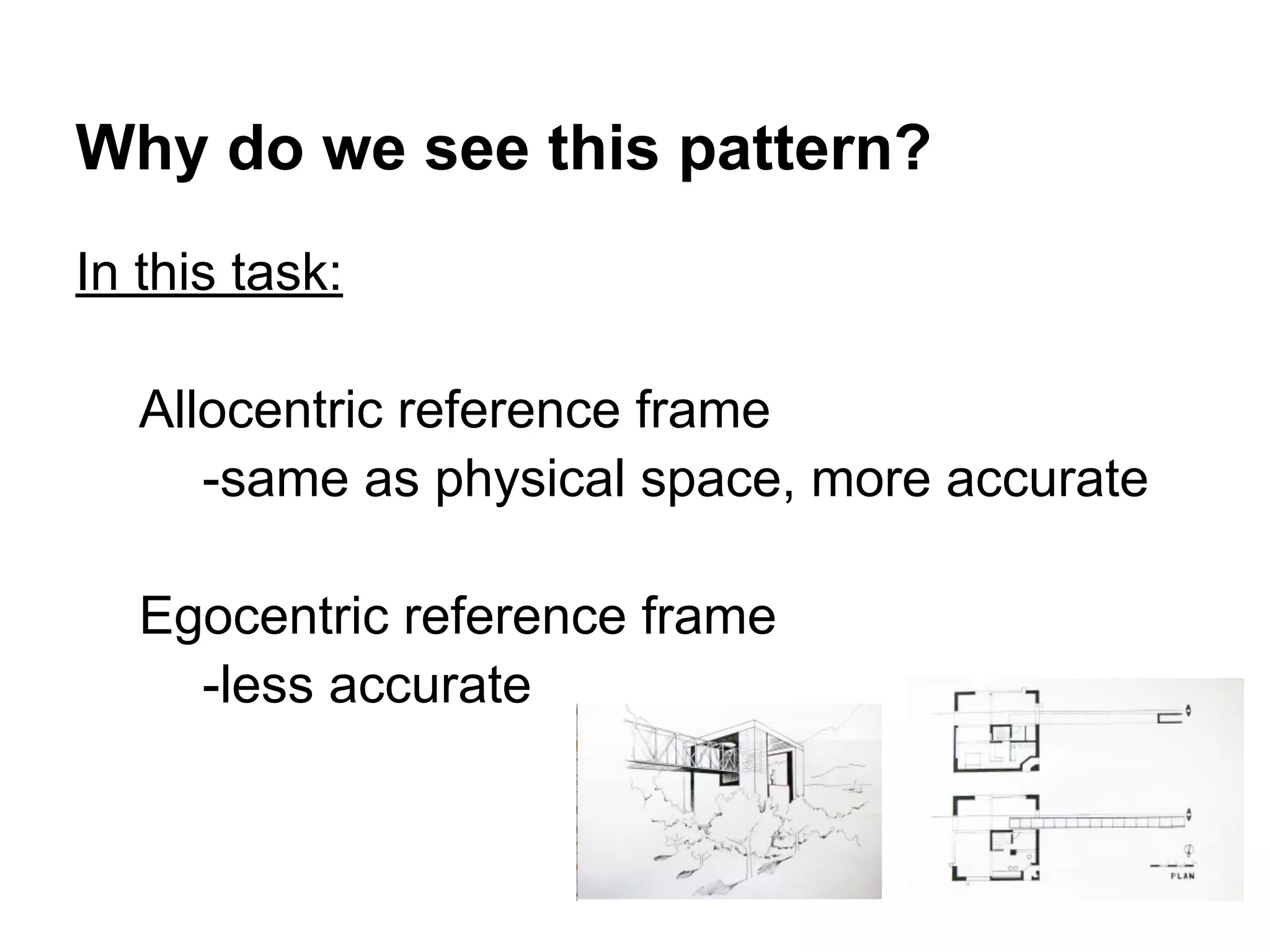
In this task:
Allocentric reference frame
-same as physical space, more accurate
Egocentric reference frame
-less accurate
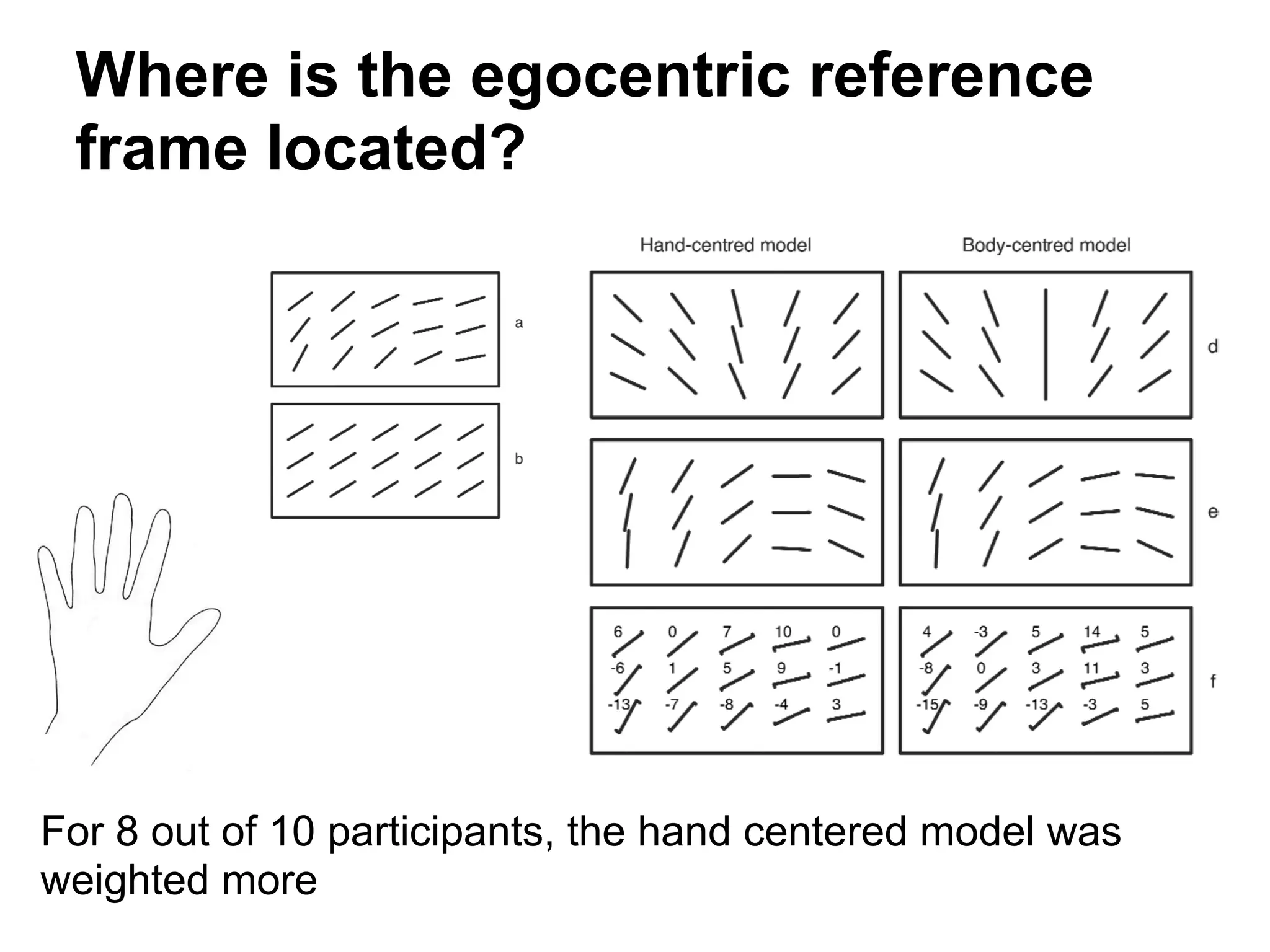
Where is the egocentric reference
frame located?
For 8 out of 10 participants, the hand centered model was
weighted more
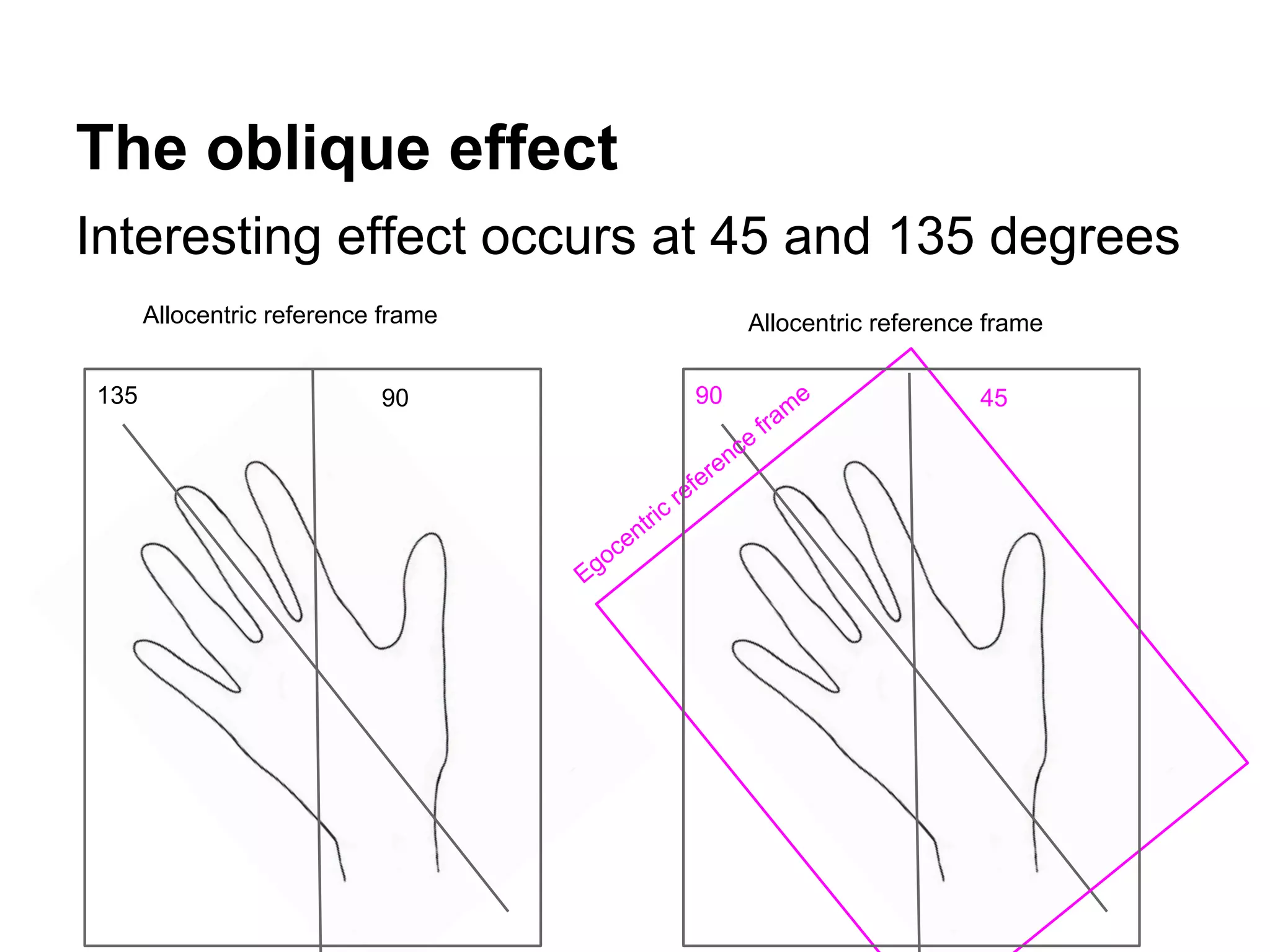
The oblique effect
Interesting effect occurs at 45 and 135 degrees
90135
Allocentric reference frame
4590
Egocentric reference
fram
e
Allocentric reference frame
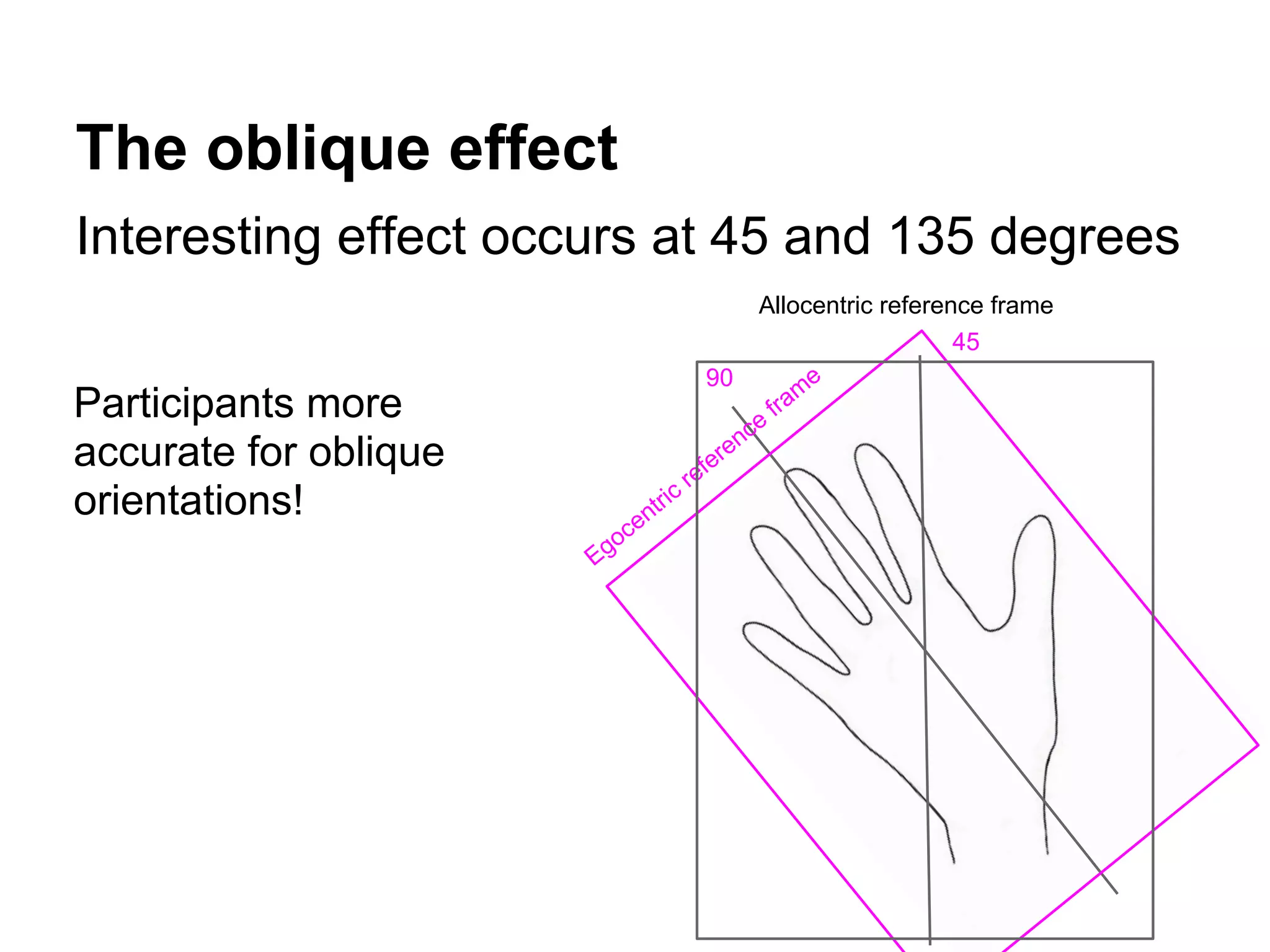
The oblique effect
Interesting effect occurs at 45 and 135 degrees
Participants more
accurate for oblique
orientations!
45
90
Egocentric reference
fram
e
Allocentric reference frame
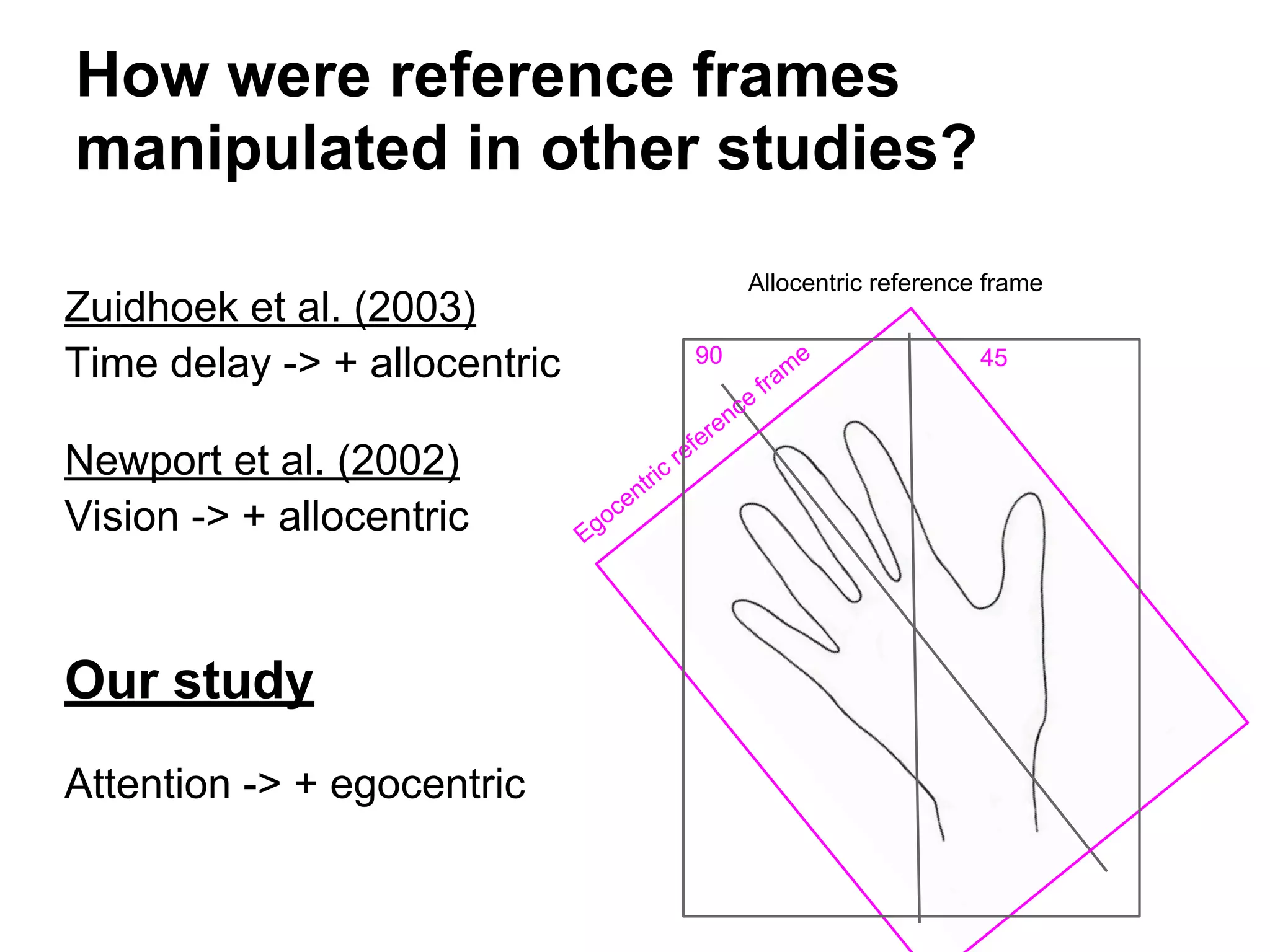
How were reference frames
manipulated in other studies?
Zuidhoek et al. (2003)
Time delay -> + allocentric
Newport et al. (2002)
Vision -> + allocentric
Our study
Attention -> + egocentric
4590
Egocentric reference
fram
e
Allocentric reference frame
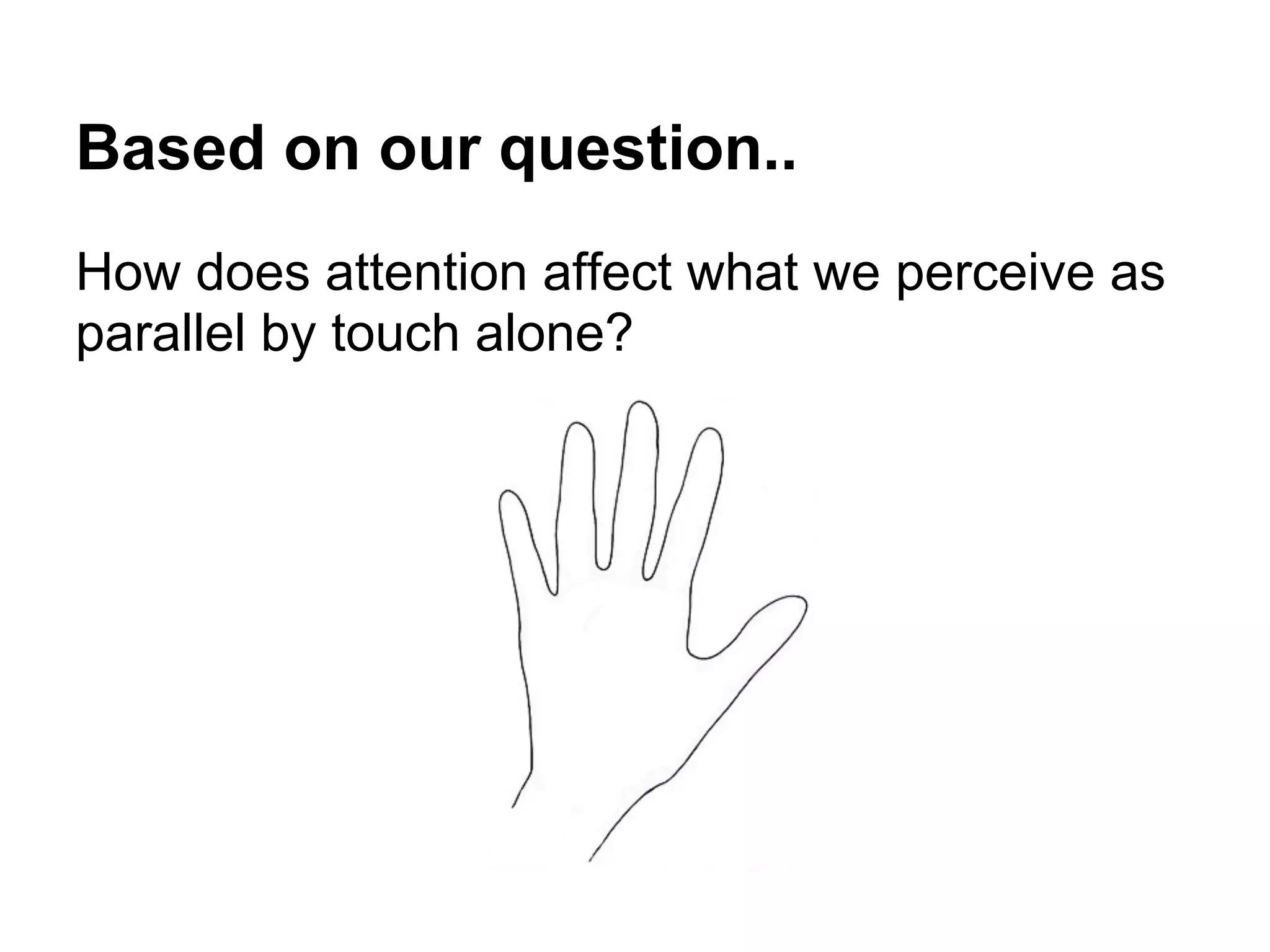
Based on our question..
How does attention affect what we perceive as
parallel by touch alone?
Hypothesis
● Attention causes subjects to place more
importance on their egocentric reference
frame
Method - IV, DV
● Within-subject design
● Independent Variable: Attention
● Dependent Variable: Weight of allocentric
and egocentric reference frame
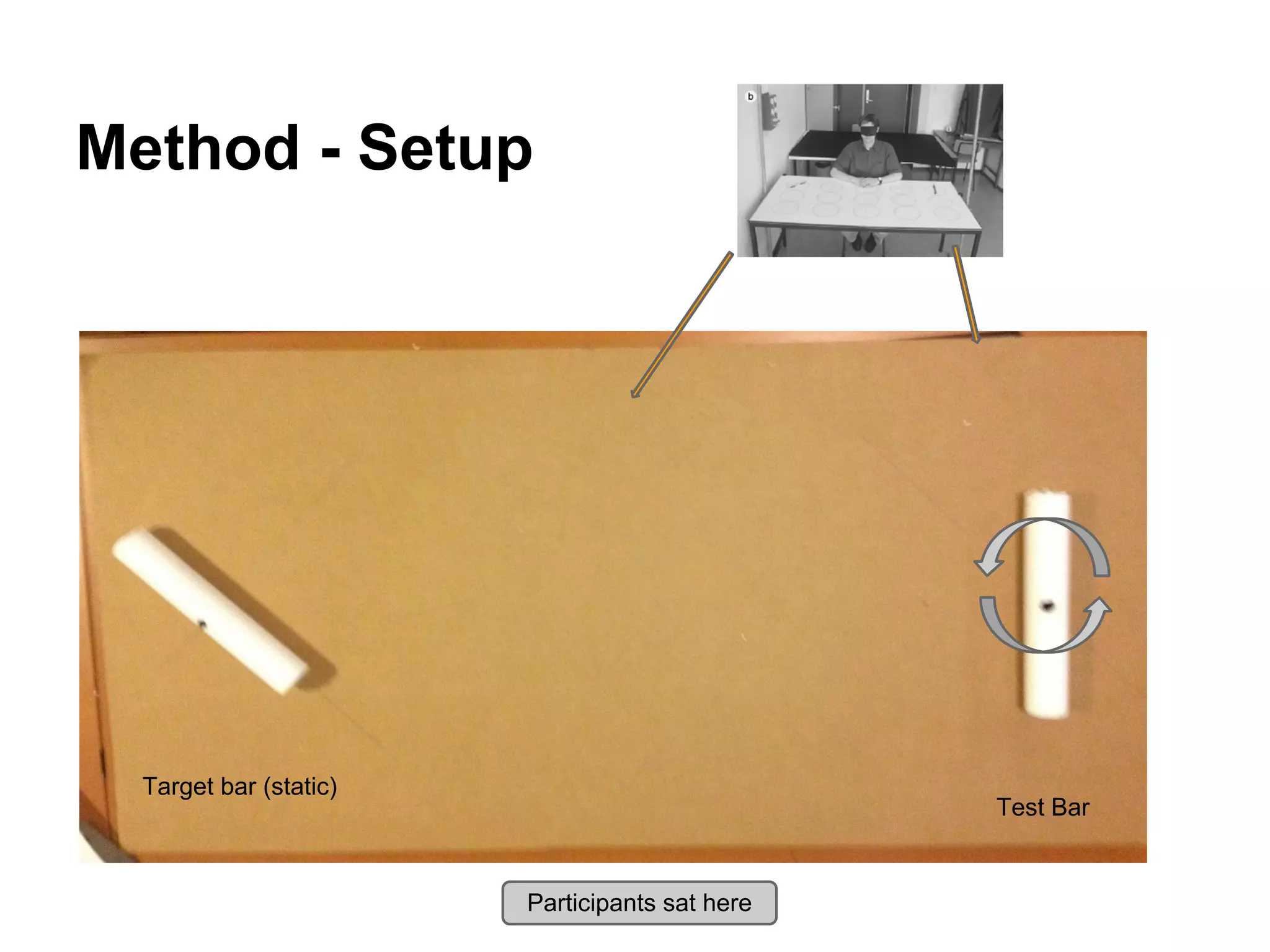
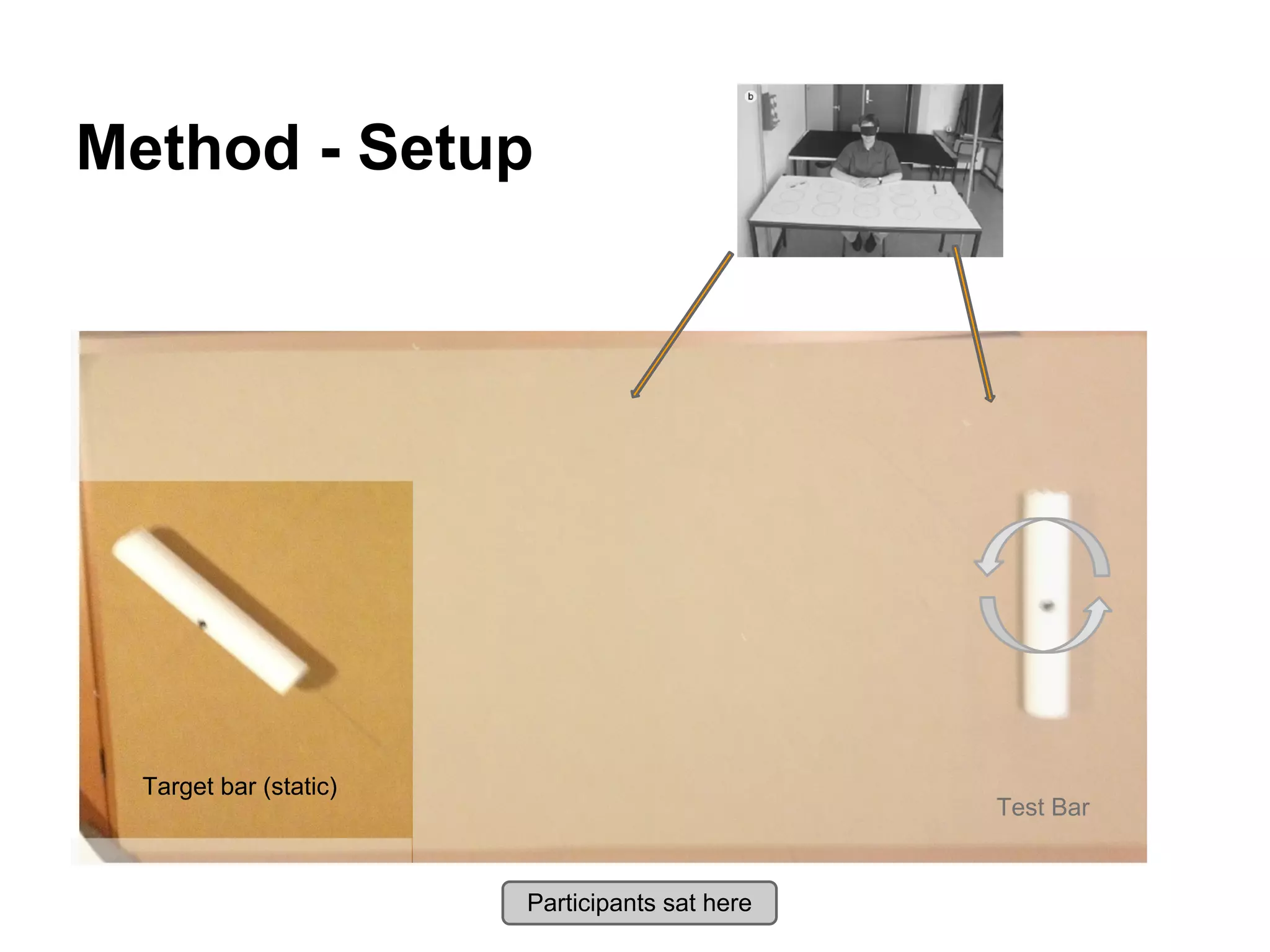
Method - Setup
Target bar (static)
Test Bar
Participants sat here
Method - Setup
Target bar (static)
Test Bar
Participants sat here
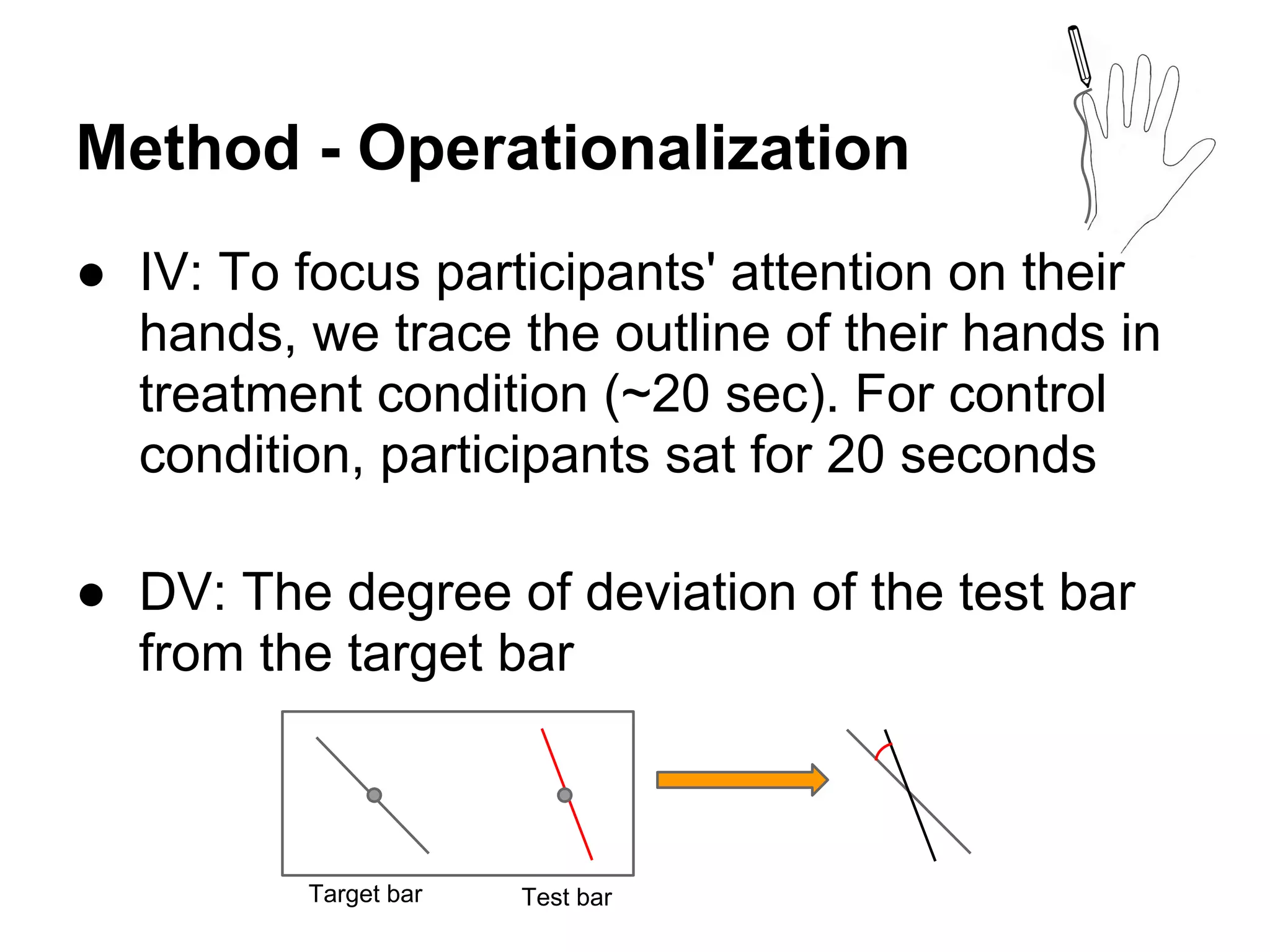
Method - Operationalization
● IV: To focus participants' attention on their
hands, we trace the outline of their hands in
treatment condition (~20 sec). For control
condition, participants sat for 20 seconds
● DV: The degree of deviation of the test bar
from the target bar
Target bar Test bar
Method - Participants
19 Carnegie Mellon University Students:
12 were from a Research Method class
7 outside of the class
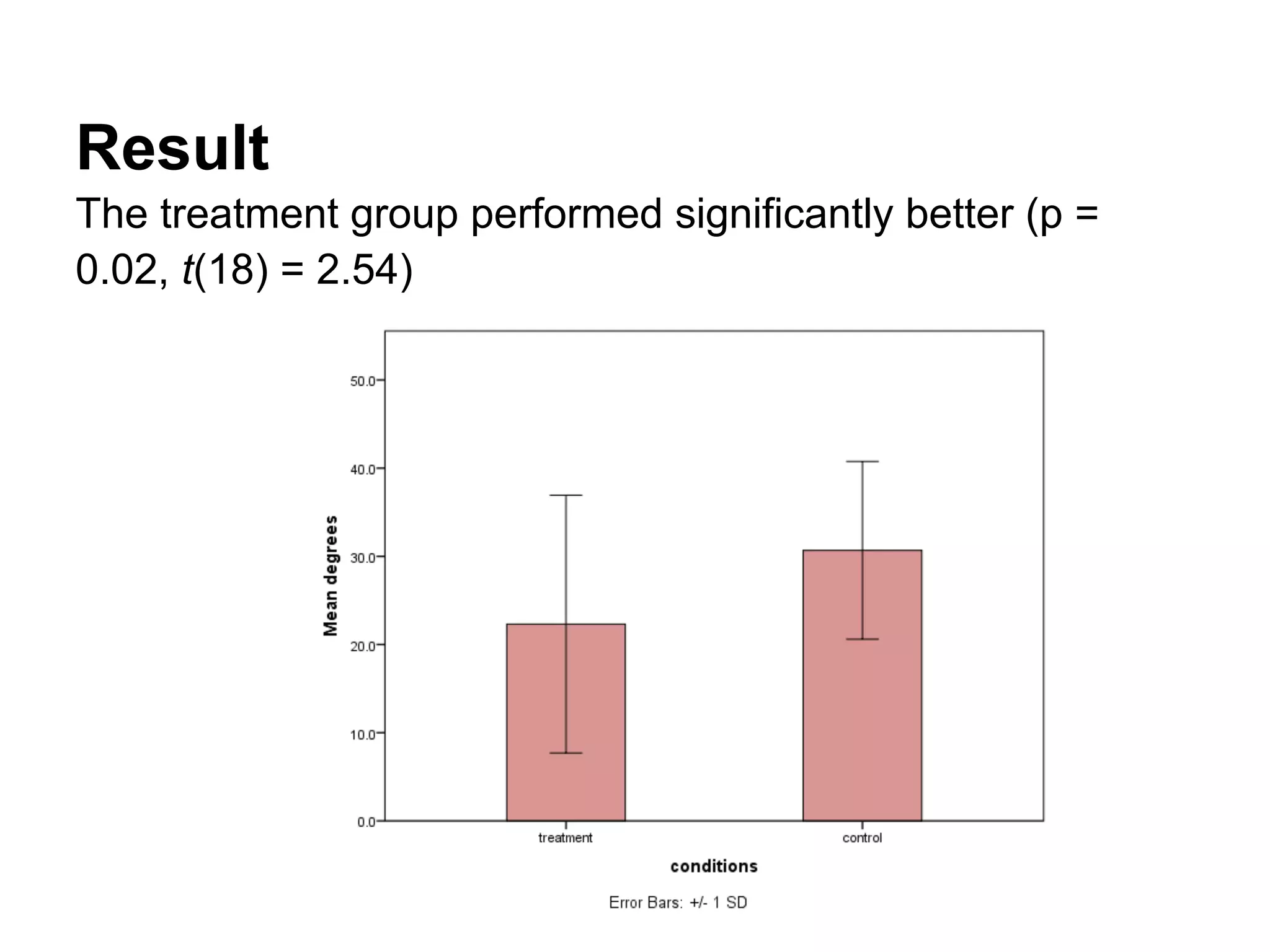
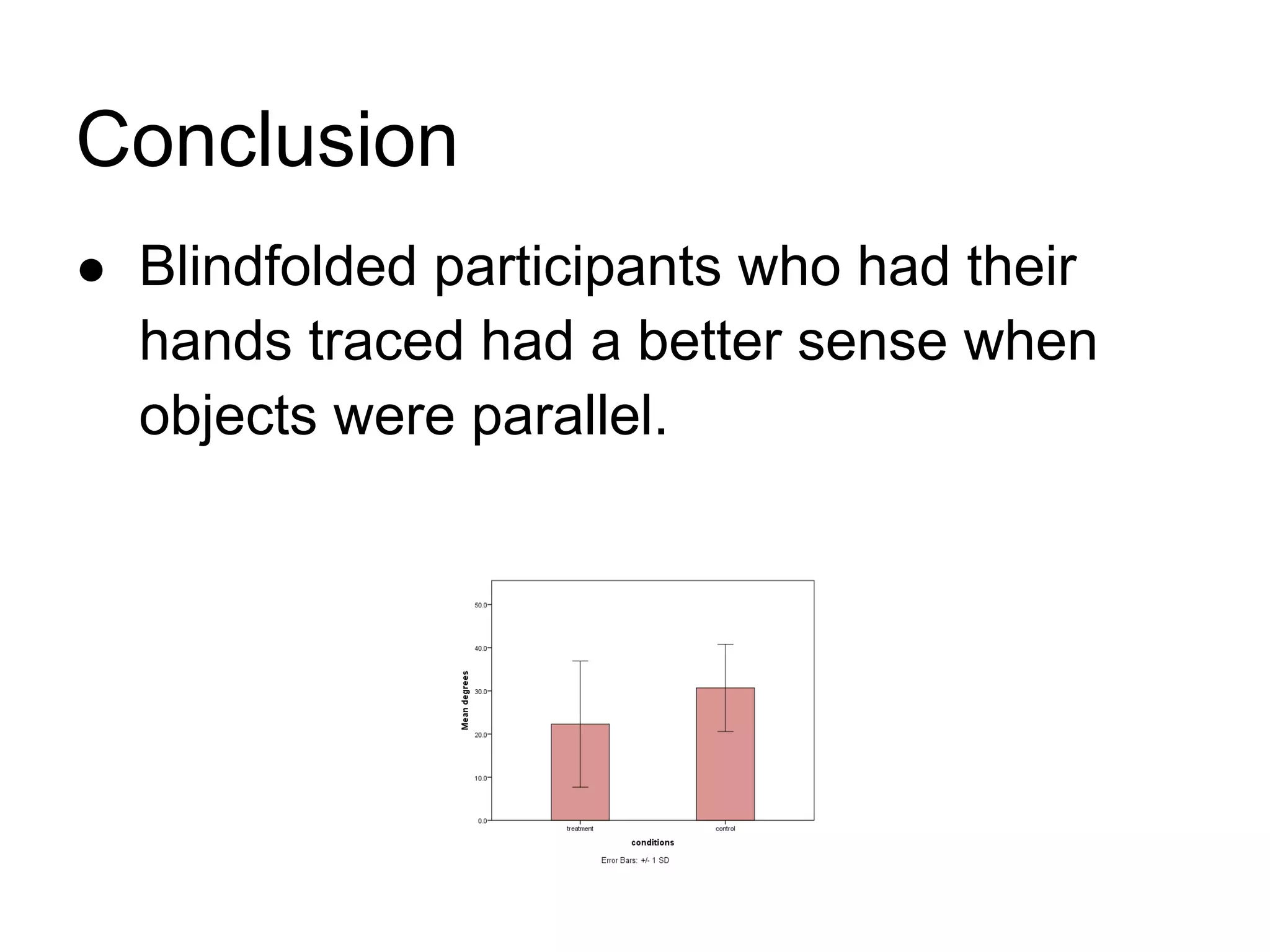
Result
The treatment group performed significantly better (p =
0.02, t(18) = 2.54)
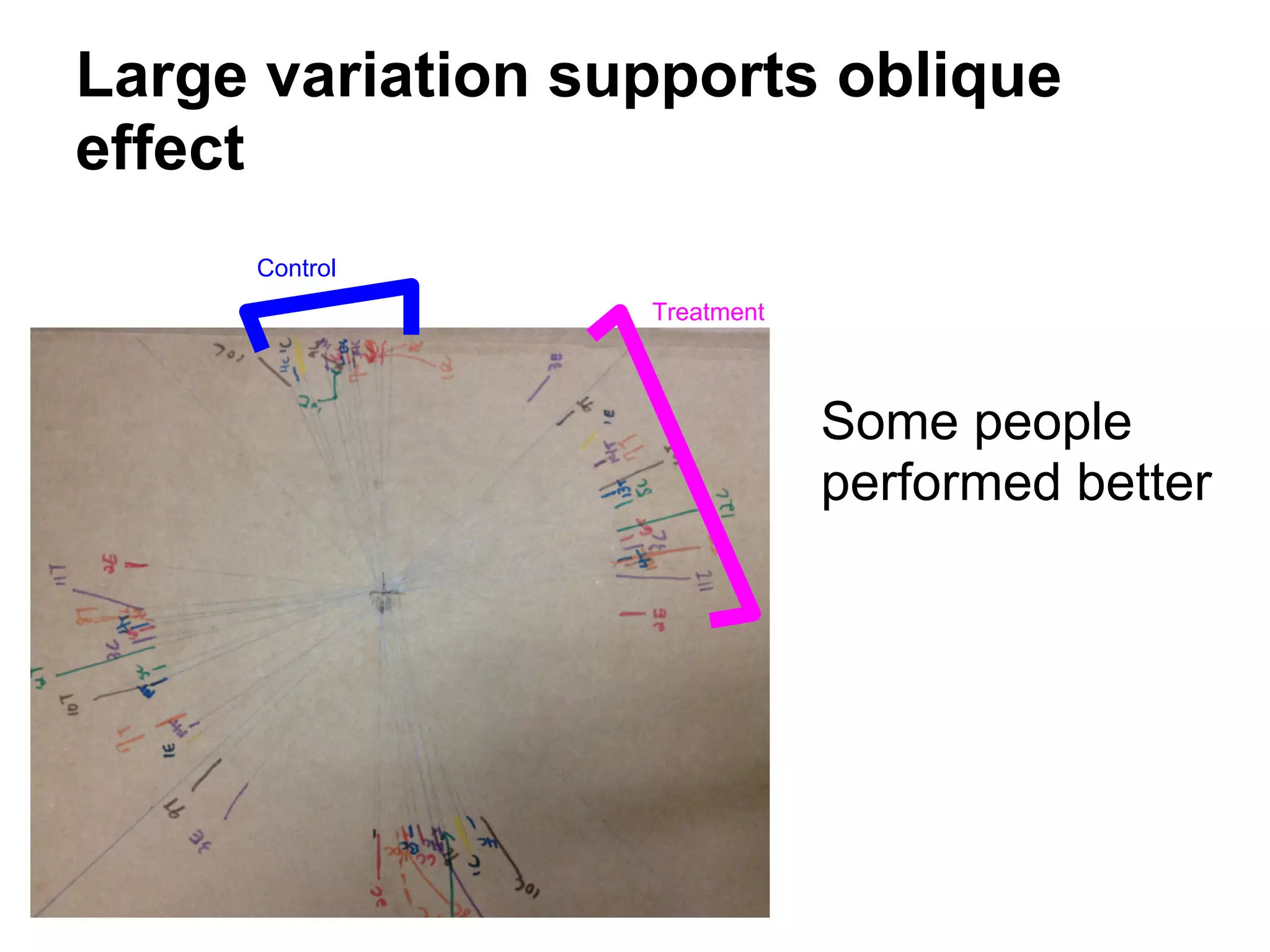
Large variation supports oblique
effect
Some people
performed better
Treatment
Control
Conclusion
● Blindfolded participants who had their
hands traced had a better sense when
objects were parallel.
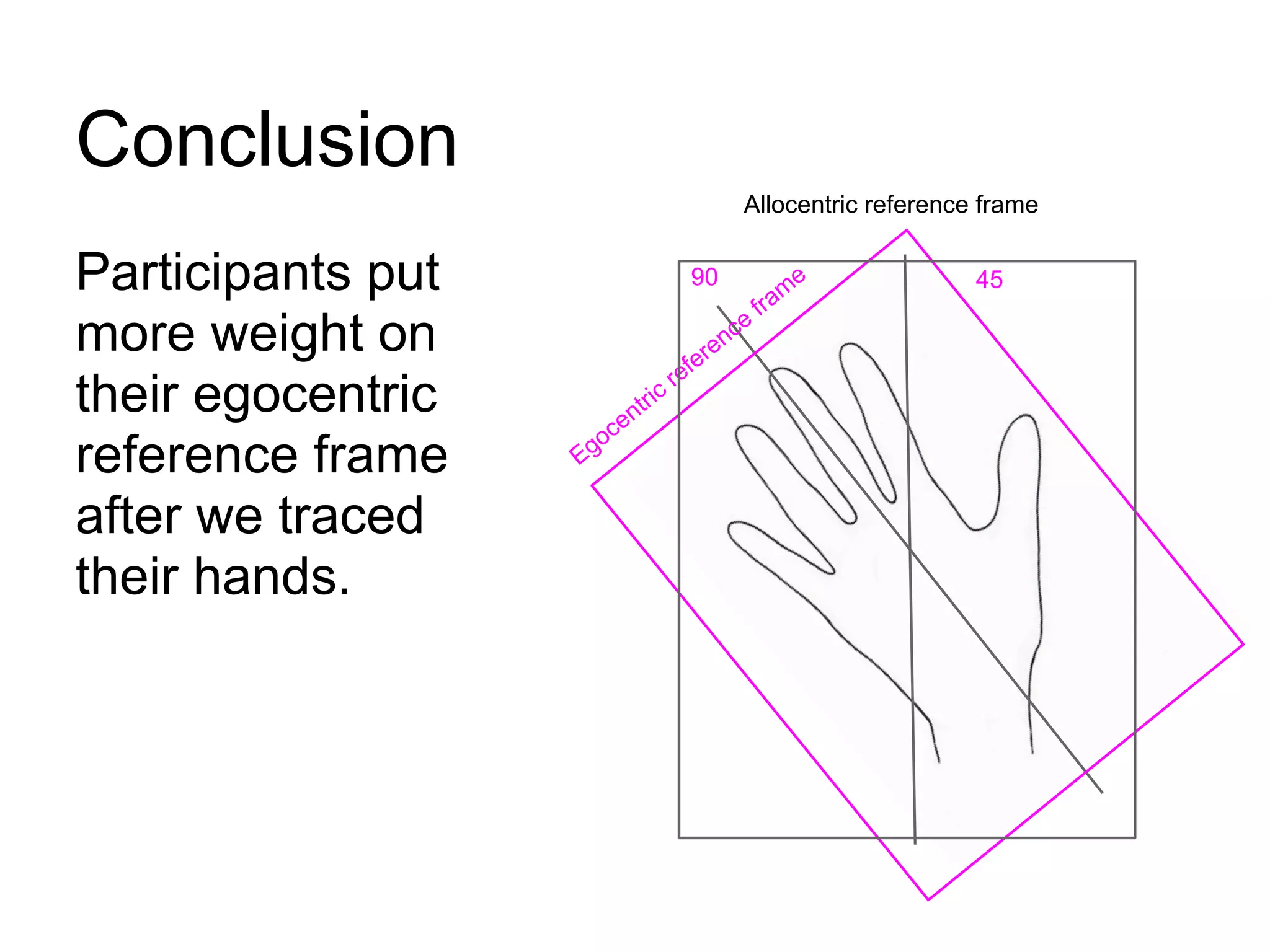
Conclusion
Participants put
more weight on
their egocentric
reference frame
after we traced
their hands.
4590
Egocentric reference
fram
e
Allocentric reference frame
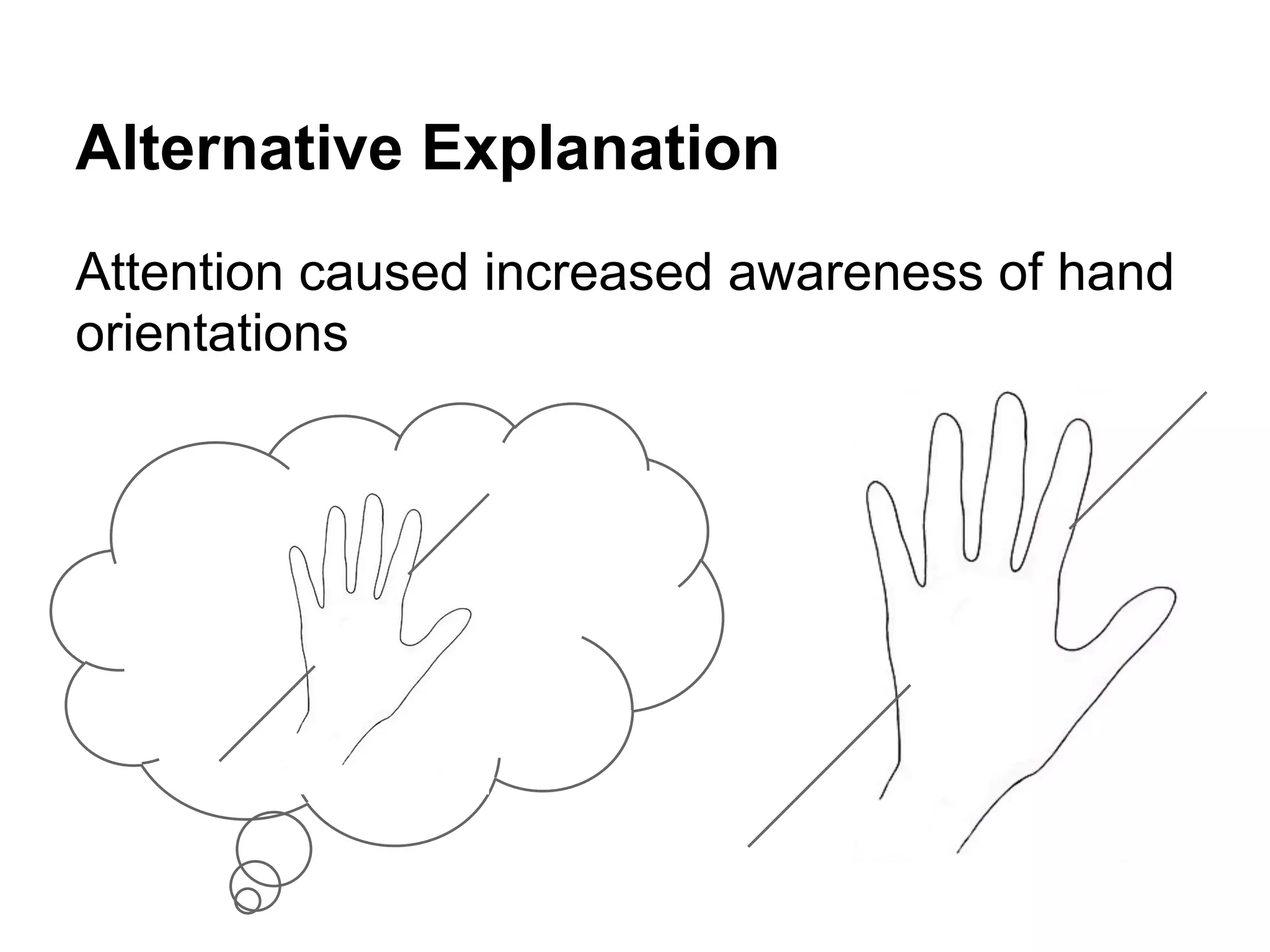
Alternative Explanation
Attention caused increased awareness of hand
orientations
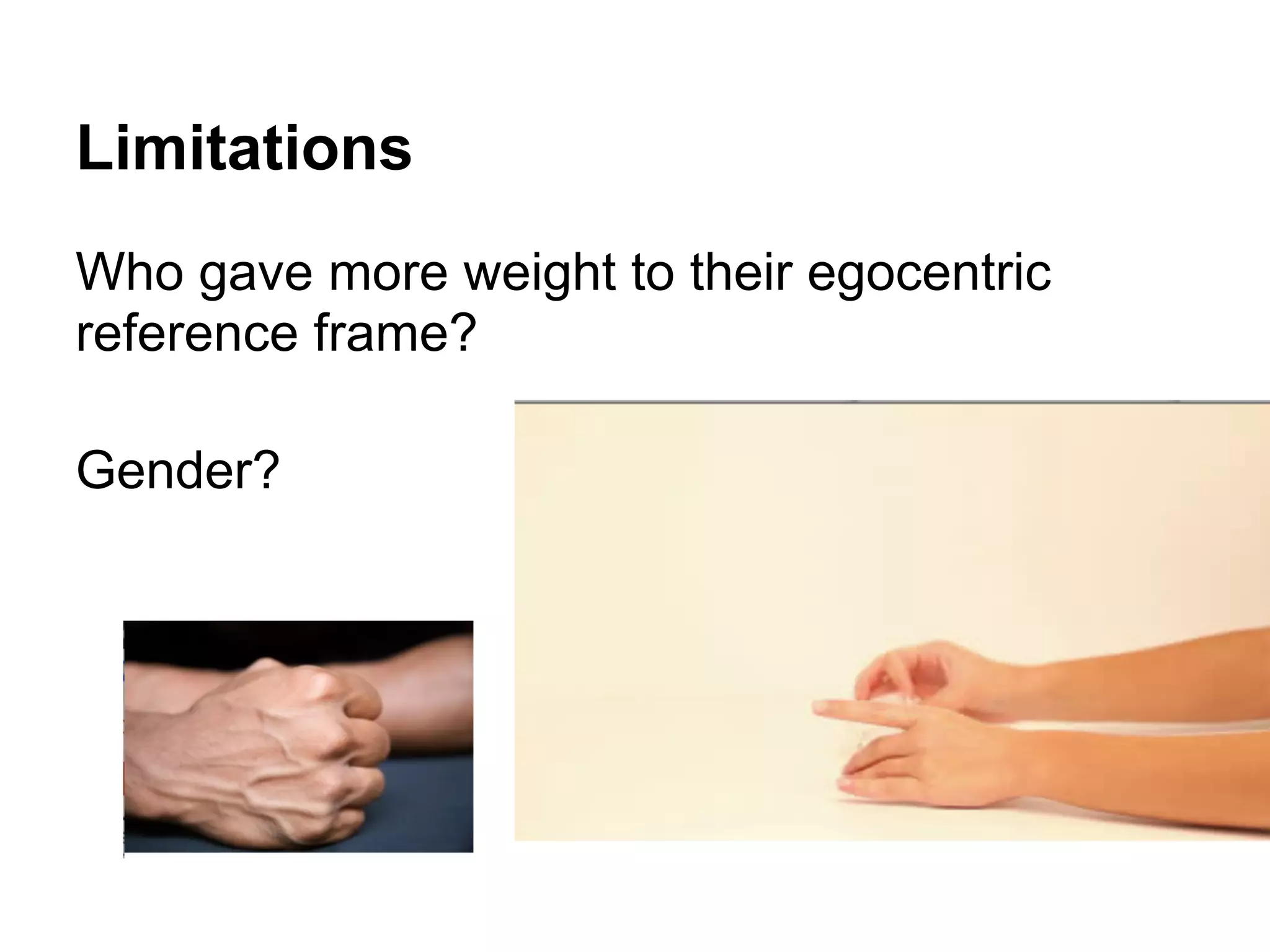
Limitations
Who gave more weight to their egocentric
reference frame?
Gender?
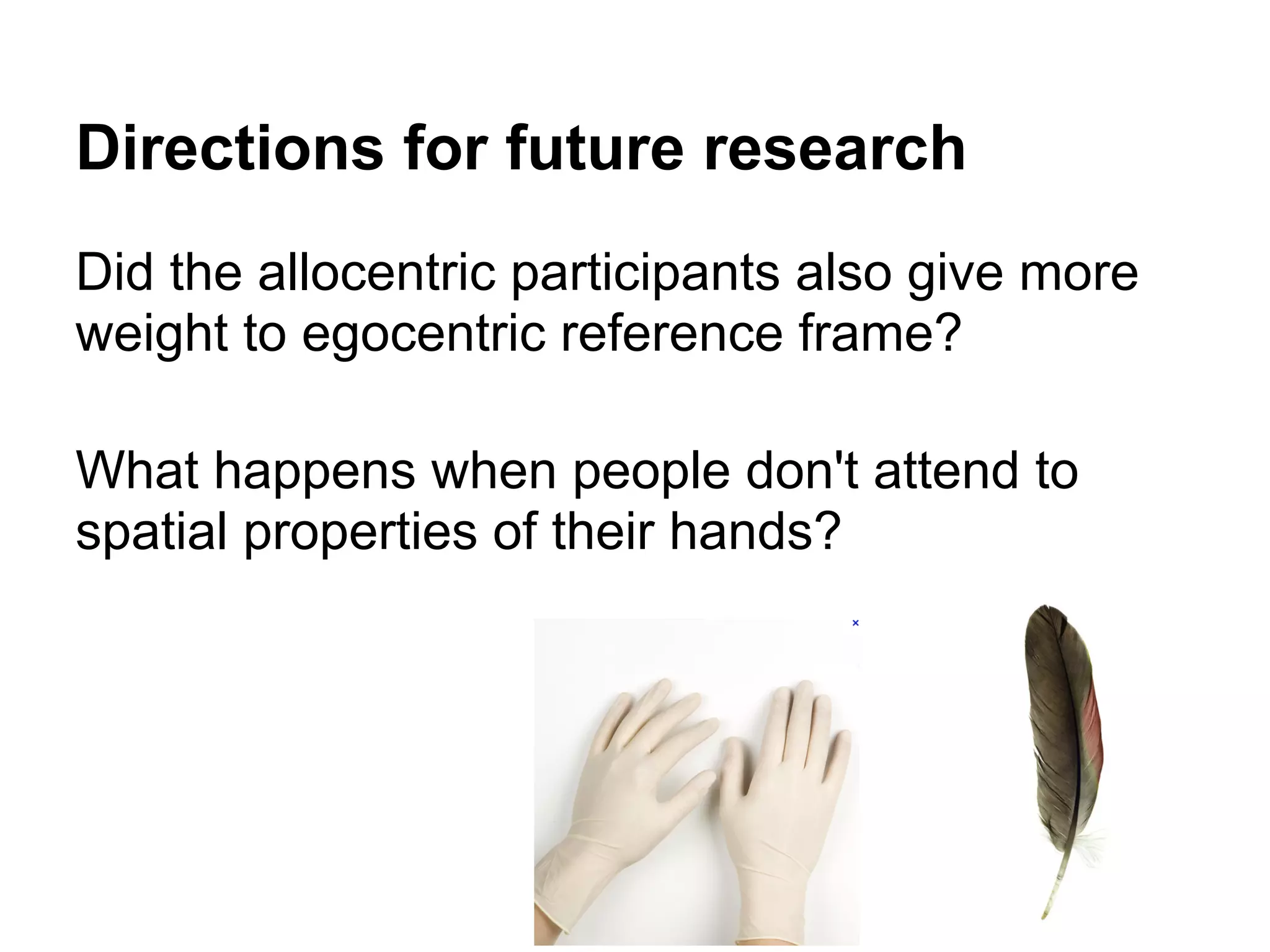
Directions for future research
Did the allocentric participants also give more
weight to egocentric reference frame?
What happens when people don't attend to
spatial properties of their hands?
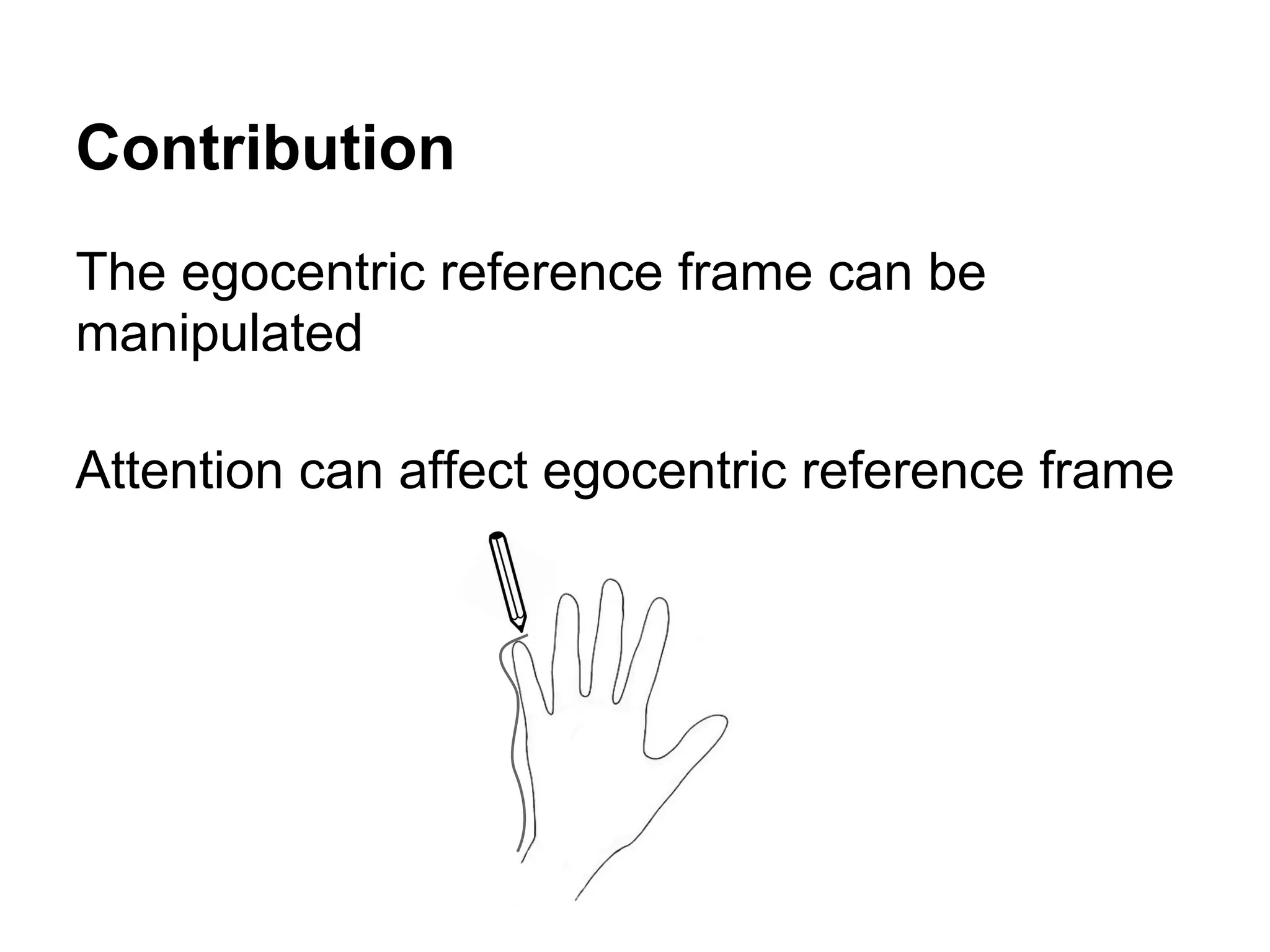
Contribution
The egocentric reference frame can be
manipulated
Attention can affect egocentric reference frame

Spatial perception presentation

  • 1.
    Living in TwoSpaces Effect of Attention on Perception of Haptic Space Rachel Franz & Siyan Zhao
  • 2.
    Difference between HapticSpace and Physical Space What we sense is parallel when we can't see is different from what is physically parallel Parallel in haptic space Parallel in physical space Kappers, A. M. (2007). Haptic space processing–allocentric and egocentric reference frames. Canadian Journal of Experimental Psychology, 61(3), 208-218.
  • 3.
    Our Question How doesattention affect what we perceive as parallel by touch alone?
  • 4.
  • 5.
    Why do wesee this pattern? First, some definitions: Egocentric reference frame Mental representation of space from our own perspective
  • 6.
    Why do wesee this pattern? Allocentric reference frame: Our mental representation of space that is independent of our perspective ...same house, different representations.
  • 7.
    Both reference framescontribute to our perception of what is parallel Why do we see this pattern? Kappers, A. M. (2004). The contributions of egocentric and allocentric reference frames in haptic spatial tasks. Acta psychologica, 117(3), 333-340.
  • 8.
    Why do wesee this pattern? In this task: Allocentric reference frame -same as physical space, more accurate Egocentric reference frame -less accurate
  • 9.
    Where is theegocentric reference frame located? For 8 out of 10 participants, the hand centered model was weighted more
  • 10.
    The oblique effect Interestingeffect occurs at 45 and 135 degrees 90135 Allocentric reference frame 4590 Egocentric reference fram e Allocentric reference frame
  • 11.
    The oblique effect Interestingeffect occurs at 45 and 135 degrees Participants more accurate for oblique orientations! 45 90 Egocentric reference fram e Allocentric reference frame
  • 12.
    How were referenceframes manipulated in other studies? Zuidhoek et al. (2003) Time delay -> + allocentric Newport et al. (2002) Vision -> + allocentric Our study Attention -> + egocentric 4590 Egocentric reference fram e Allocentric reference frame
  • 13.
    Based on ourquestion.. How does attention affect what we perceive as parallel by touch alone?
  • 14.
    Hypothesis ● Attention causessubjects to place more importance on their egocentric reference frame
  • 15.
    Method - IV,DV ● Within-subject design ● Independent Variable: Attention ● Dependent Variable: Weight of allocentric and egocentric reference frame
  • 16.
    Method - Setup Targetbar (static) Test Bar Participants sat here
  • 17.
    Method - Setup Targetbar (static) Test Bar Participants sat here
  • 18.
    Method - Operationalization ●IV: To focus participants' attention on their hands, we trace the outline of their hands in treatment condition (~20 sec). For control condition, participants sat for 20 seconds ● DV: The degree of deviation of the test bar from the target bar Target bar Test bar
  • 19.
    Method - Participants 19Carnegie Mellon University Students: 12 were from a Research Method class 7 outside of the class
  • 20.
    Result The treatment groupperformed significantly better (p = 0.02, t(18) = 2.54)
  • 21.
    Large variation supportsoblique effect Some people performed better Treatment Control
  • 22.
    Conclusion ● Blindfolded participantswho had their hands traced had a better sense when objects were parallel.
  • 23.
    Conclusion Participants put more weighton their egocentric reference frame after we traced their hands. 4590 Egocentric reference fram e Allocentric reference frame
  • 24.
    Alternative Explanation Attention causedincreased awareness of hand orientations
  • 25.
    Limitations Who gave moreweight to their egocentric reference frame? Gender?
  • 26.
    Directions for futureresearch Did the allocentric participants also give more weight to egocentric reference frame? What happens when people don't attend to spatial properties of their hands?
  • 27.
    Contribution The egocentric referenceframe can be manipulated Attention can affect egocentric reference frame