
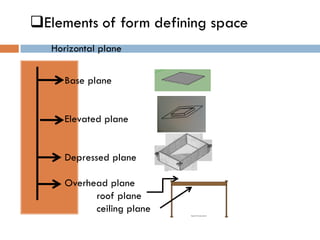
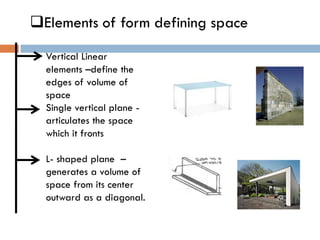
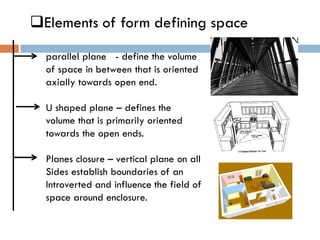
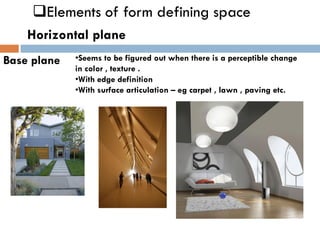
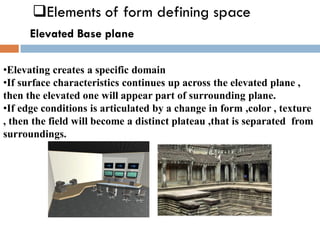
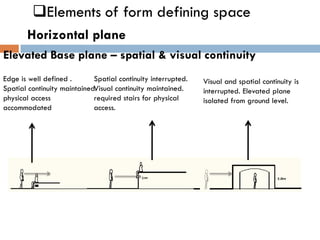
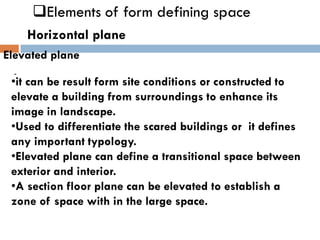
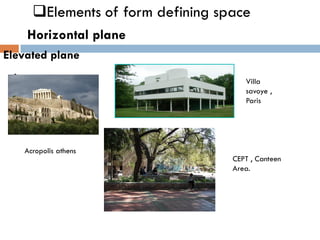
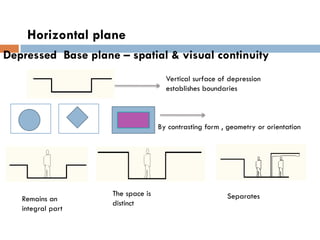
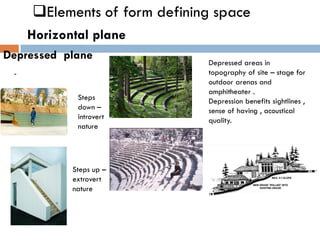

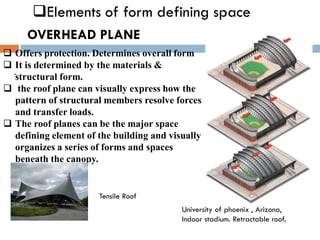
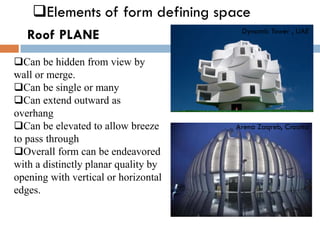
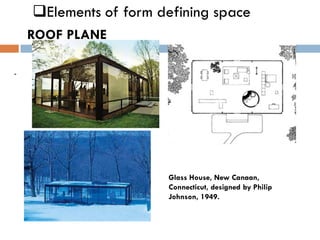
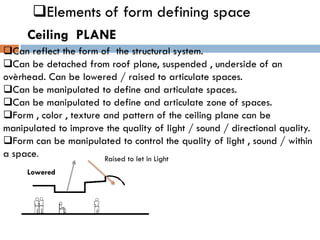
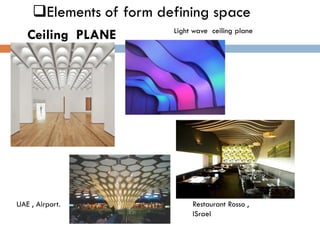
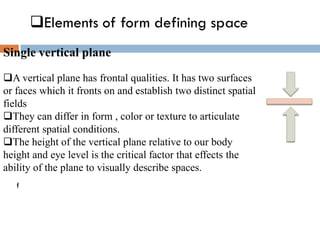
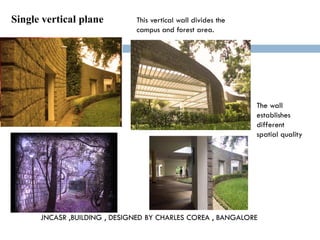
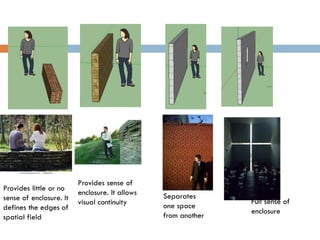
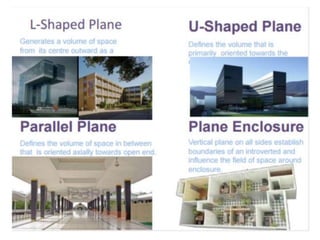
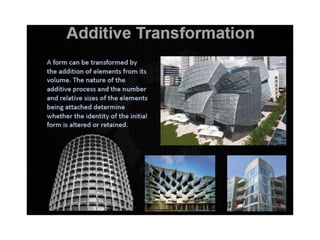
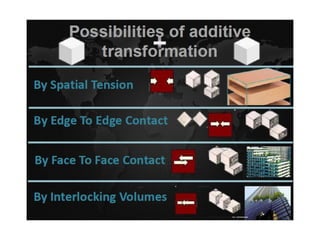
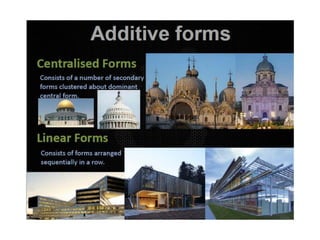
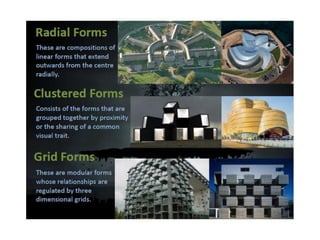
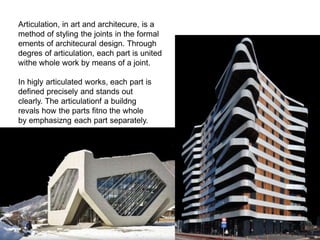
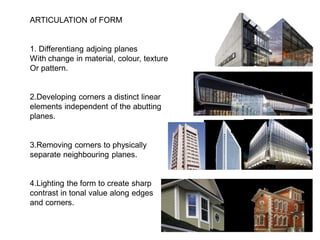
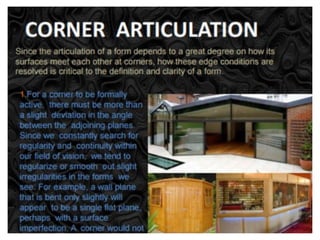
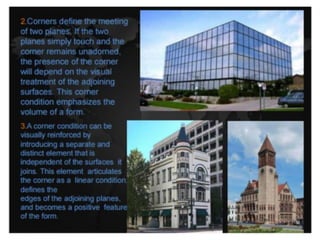
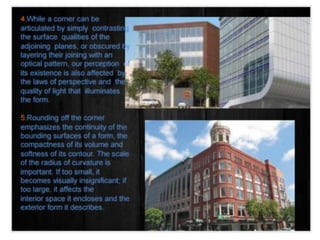
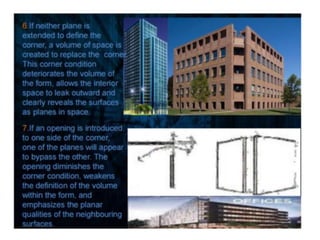
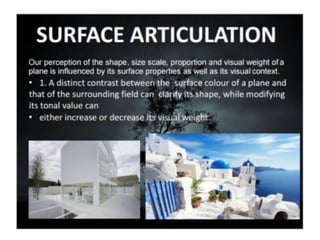
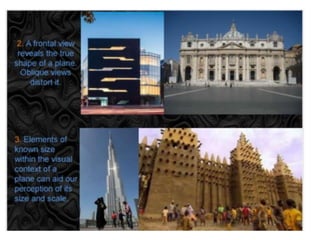
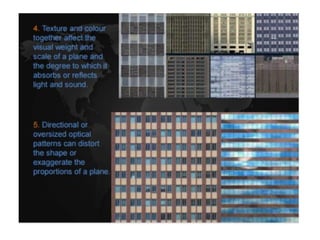


The document discusses elements of architectural form that define space, including horizontal planes (such as base planes, elevated planes, and depressed planes), vertical planes, overhead planes (such as roof and ceiling planes), and how they are articulated. It provides examples of how different configurations of these planes are used to define interior and exterior spaces, provide enclosure, and visually establish spatial boundaries and fields. Articulation of architectural form involves differentiating adjoining planes through changes in materials, color, texture, or pattern, developing corners as distinct linear elements, and using lighting to create tonal contrasts along edges.


