
Space Based Solar Power
The Way of the Future
Space-Based Solar
Power
(SBSP)
PRESENTED BY: HARUNNUR RASID
Electrical & Electronic Engineer
B.Sc in ELECTRICAL AND ELECTRONIC
ENGINEERING
Outline
• The Energetic Future
• The Alternatives
• Space Based Solar Power
• History
• Working principal
• The Benefits
• The Costs
• Conclusion
• Works Cited
The Energetic Future
• By 2050, the populationwill reach 9 billion
• Energy consumptionwill rise by 53% between
2008 and 2035
• Some estimate an increase of 300% by 2100
• Current methods will not be enough
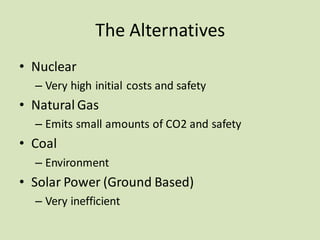
The Alternatives
• Nuclear
– Very high initial costs and safety
• Natural Gas
– Emits small amounts of CO2 and safety
• Coal
– Environment
• Solar Power (Ground Based)
– Very inefficient
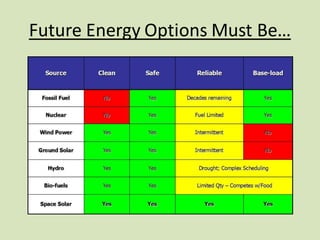
Future Energy Options Must Be…
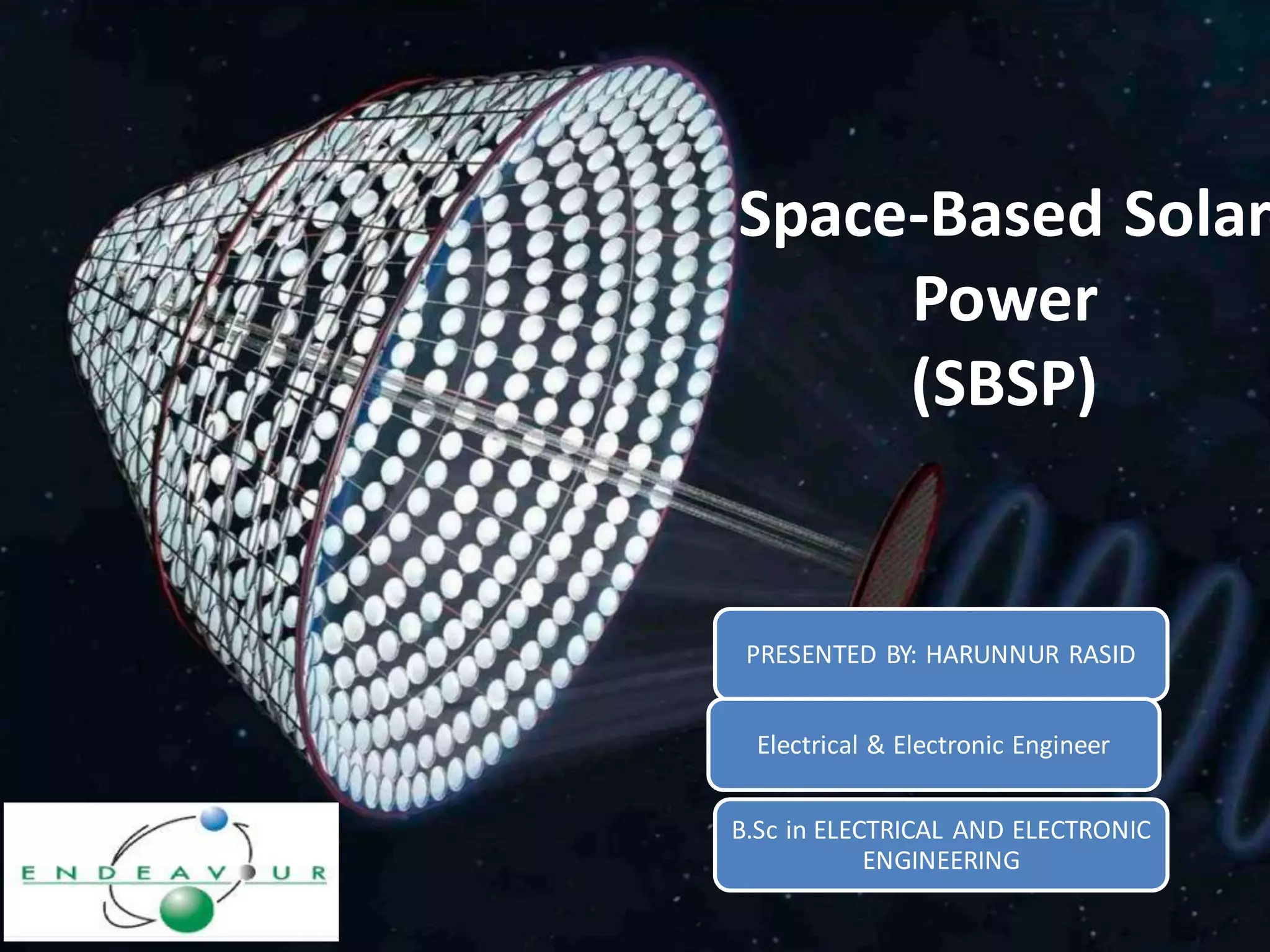
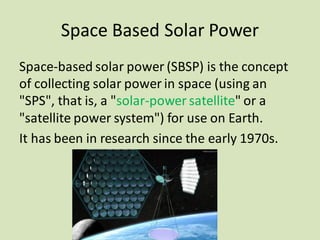
Space-based solar power (SBSP) is the concept
of collecting solar power in space (using an
"SPS", that is, a "solar-power satellite" or a
"satellite power system") for use on Earth.
It has been in research since the early 1970s.
Space Based Solar Power
• Originally known as satellite solar-power system (SSPS), was first
described in November 1968.
• In 1973 Peter Glaser was granted U.S. patent for his method of
transmitting power over long distances using microwaves from a very
large antenna (up to one square kilometer) on the satellite to a much
larger one, now known as a rectenna, on the ground.
• Between 1978 and 1981, the US Congress authorized the Department
of Energy (DoE) and NASA to jointly investigate the concept.
• In 1997 NASA conducted its "Fresh Look" study to examine the modern
state of SBSP feasibility.
• On Nov 2, 2012, China proposed space collaboration with India in SBSP
History
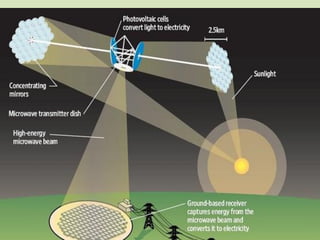
Space Based Solar Power
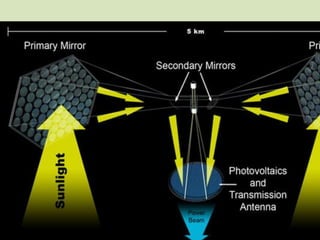
• Energy concentratorMirror
• The satatlite
• Power then “beamed” to Earth by Rectenna
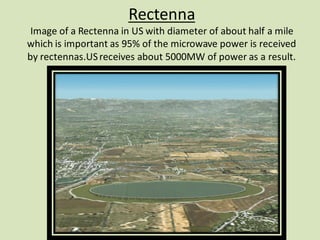
Rectenna
Image of a Rectenna in US with diameter of about half a mile
which is important as 95% of the microwave power is received
by rectennas.USreceives about 5000MW of power as a result.
Benefits
• No atmospheric effects
• Almost always in the light
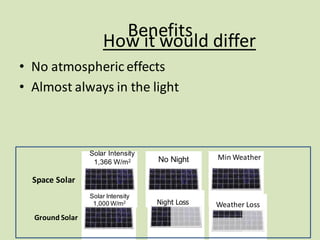
How it would differ
Solar Intensity
1,366 W/m2 No Night Min Weather
Solar Intensity
1,000 W/m2 Night Loss Weather Loss
Space Solar
Ground Solar
Costs
• Have to get materials into space
• Incredibly expensive
• Infrastructure needs to be updated
Beaming Power
• Lasers or Microwaves
• Efficiency
• Special Receivers
• Safety
• Environmental Concerns
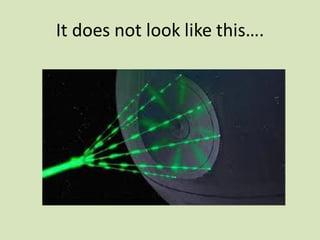
It does not look like this….
Conclusion
• In the future, the globe will need more energy.
• The solar energy available in space is literally
billions of times greater than we use today.
• Space solar power can completely solve our
energy problems long term.
• The sooner we start and the harder we work,
the shorter "long term" will be.
Parting Thought
• “We make the world we live in and shape our
own environment.” –Orison Swett Marden
• We need to act soon, but sometimes our little
actions that seem to do nothing make big
differences.
.
• .

Space based solar power generation

  • 1.
    Space Based SolarPower The Way of the Future Space-Based Solar Power (SBSP) PRESENTED BY: HARUNNUR RASID Electrical & Electronic Engineer B.Sc in ELECTRICAL AND ELECTRONIC ENGINEERING
  • 2.
    Outline • The EnergeticFuture • The Alternatives • Space Based Solar Power • History • Working principal • The Benefits • The Costs • Conclusion • Works Cited
  • 3.
    The Energetic Future •By 2050, the populationwill reach 9 billion • Energy consumptionwill rise by 53% between 2008 and 2035 • Some estimate an increase of 300% by 2100 • Current methods will not be enough
  • 4.
    The Alternatives • Nuclear –Very high initial costs and safety • Natural Gas – Emits small amounts of CO2 and safety • Coal – Environment • Solar Power (Ground Based) – Very inefficient
  • 5.
  • 6.
    Space-based solar power(SBSP) is the concept of collecting solar power in space (using an "SPS", that is, a "solar-power satellite" or a "satellite power system") for use on Earth. It has been in research since the early 1970s. Space Based Solar Power
  • 7.
    • Originally knownas satellite solar-power system (SSPS), was first described in November 1968. • In 1973 Peter Glaser was granted U.S. patent for his method of transmitting power over long distances using microwaves from a very large antenna (up to one square kilometer) on the satellite to a much larger one, now known as a rectenna, on the ground. • Between 1978 and 1981, the US Congress authorized the Department of Energy (DoE) and NASA to jointly investigate the concept. • In 1997 NASA conducted its "Fresh Look" study to examine the modern state of SBSP feasibility. • On Nov 2, 2012, China proposed space collaboration with India in SBSP History
  • 8.
    Space Based SolarPower • Energy concentratorMirror • The satatlite • Power then “beamed” to Earth by Rectenna
  • 10.
    Rectenna Image of aRectenna in US with diameter of about half a mile which is important as 95% of the microwave power is received by rectennas.USreceives about 5000MW of power as a result.
  • 11.
    Benefits • No atmosphericeffects • Almost always in the light How it would differ Solar Intensity 1,366 W/m2 No Night Min Weather Solar Intensity 1,000 W/m2 Night Loss Weather Loss Space Solar Ground Solar
  • 12.
    Costs • Have toget materials into space • Incredibly expensive • Infrastructure needs to be updated
  • 13.
    Beaming Power • Lasersor Microwaves • Efficiency • Special Receivers • Safety • Environmental Concerns
  • 14.
    It does notlook like this….
  • 16.
    Conclusion • In thefuture, the globe will need more energy. • The solar energy available in space is literally billions of times greater than we use today. • Space solar power can completely solve our energy problems long term. • The sooner we start and the harder we work, the shorter "long term" will be.
  • 17.
    Parting Thought • “Wemake the world we live in and shape our own environment.” –Orison Swett Marden • We need to act soon, but sometimes our little actions that seem to do nothing make big differences.
  • 18.