SOLAR
POWER
SATELLITE
(SPS)
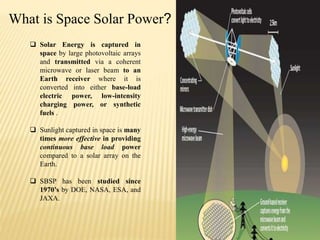
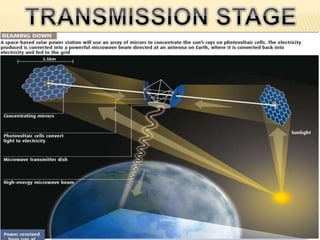
 Solar Energy is captured in
space by large photovoltaic arrays
and transmitted via a coherent
microwave or laser beam to an
Earth receiver where it is
converted into either base-load
electric power, low-intensity
charging power, or synthetic
fuels .
 Sunlight captured in space is many
times more effective in providing
continuous base load power
compared to a solar array on the
Earth.
 SBSP has been studied since
1970’s by DOE, NASA, ESA, and
JAXA.
What is Space Solar Power?
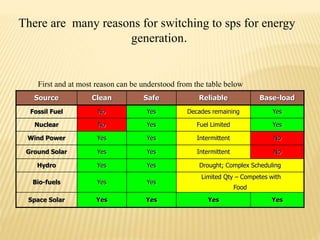
There are many reasons for switching to sps for energy
generation.
First and at most reason can be understood from the table below
Source Clean Safe Reliable Base-load
Fossil Fuel No Yes Decades remaining Yes
Nuclear No Yes Fuel Limited Yes
Wind Power Yes Yes Intermittent No
Ground Solar Yes Yes Intermittent No
Hydro Yes Yes Drought; Complex Scheduling
Bio-fuels Yes Yes
Limited Qty – Competes with
Food
Space Solar Yes Yes Yes Yes
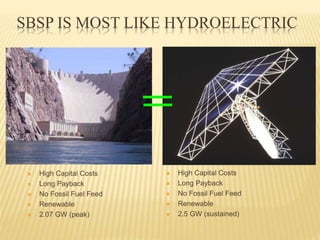
SBSP IS MOST LIKE HYDROELECTRIC
 High Capital Costs
 Long Payback
 No Fossil Fuel Feed
 Renewable
 2.07 GW (peak)
 High Capital Costs
 Long Payback
 No Fossil Fuel Feed
 Renewable
 2.5 GW (sustained)
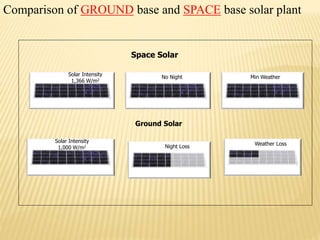
Comparison of GROUND base and SPACE base solar plant
No Night Min Weather
Ground Solar
Space Solar
Solar Intensity
1,366 W/m2
Solar Intensity
1,000 W/m2 Night Loss
Weather Loss
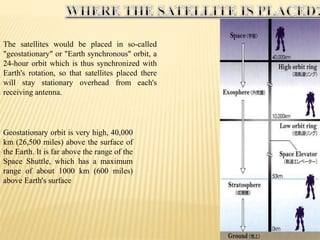
Geostationary orbit is very high, 40,000
km (26,500 miles) above the surface of
the Earth. It is far above the range of the
Space Shuttle, which has a maximum
range of about 1000 km (600 miles)
above Earth's surface
The satellites would be placed in so-called
"geostationary" or "Earth synchronous" orbit, a
24-hour orbit which is thus synchronized with
Earth's rotation, so that satellites placed there
will stay stationary overhead from each's
receiving antenna.
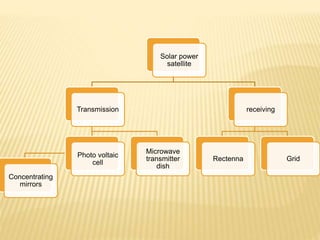
Solar power
satellite
Transmission
Concentrating
mirrors
Photo voltaic
cell
Microwave
transmitter
dish
receiving
Rectenna Grid
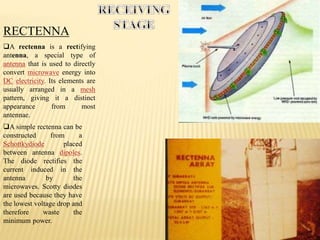
RECTENNA
A rectenna is a rectifying
antenna, a special type of
antenna that is used to directly
convert microwave energy into
DC electricity. Its elements are
usually arranged in a mesh
pattern, giving it a distinct
appearance from most
antennae.
A simple rectenna can be
constructed from a
Schottkydiode placed
between antenna dipoles.
The diode rectifies the
current induced in the
antenna by the
microwaves. Scotty diodes
are used because they have
the lowest voltage drop and
therefore waste the
minimum power.
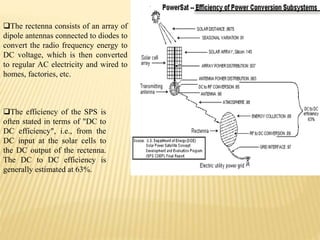
The rectenna consists of an array of
dipole antennas connected to diodes to
convert the radio frequency energy to
DC voltage, which is then converted
to regular AC electricity and wired to
homes, factories, etc.
The efficiency of the SPS is
often stated in terms of "DC to
DC efficiency", i.e., from the
DC input at the solar cells to
the DC output of the rectenna.
The DC to DC efficiency is
generally estimated at 63%.
The SPS beam is basically a radio beam
The SPS will operate at a frequency designed to NOT be absorbed
by water in the atmosphere, and to pass through clouds and rain.
Microwave frequencies are harmlessly used in communications,
using different microwave frequencies which avoid absorption by
water in the atmosphere so that they travel a long distance. The SPS
beam will use a frequency tuned for minimal absorption by the
atmosphere, clouds and storms.
Reason why microwave "radiation" is safer is that it is of much
lower frequency or energy than the ultraviolet light you receive
from sunlight outdoors, and from the x-rays coming from your TV
and computer screen. X-ray and ultraviolet radiation are ionizing
radiation which can disrupt molecules in the body. Microwave
radiation by the SPS is even less potent than infra-red radiation
from heaters and stoves.
The SPS beam falls within the UHF band ,with a frequency of 2.45GHZ.
There will be a small disturbance do to this microwave on the communication
waves which fall under that frequency
With the SPS, problems such as daylight and bad-weather conditions, which one
might have to deal with , when using solar panels, do not exist.
The energy received by the rectennas on earth is ten times more than that received by
solar panels of the same surface.
The solar panels used on the surface of the earth prevent sun beams to go through
them and consequently prevent any kind of cultivation of the earth under them. But
with SPS the photo voltaic cells are in space, so we have no problem with the area
needed. In addition the rectennas on earth are semi-transparent allowing sun light to go
through them and making possible the cultivation of the soil
There is no variation of power supply during the course of the day and night, or from
season to season
High development cost. Yes, space solar power
development costs will be very large, although
much smaller than American military presence in
the Persian Gulf or the costs of global warming,
climate change, or carbon sequestration. The cost
of space solar power development always needs
to be compared to the cost of not developing
space solar power
From all the reasons above we can conclude that SPS is the major way to face
the demand of electricity FOR FUTURE. If we develop this project we need
not bother about the exhaustment of natural resources which are used in
generation of power. If this project succeeds it will become boon to the next
generations.
Solar power satellite

Solar power satellite

  • 1.
  • 2.
     Solar Energyis captured in space by large photovoltaic arrays and transmitted via a coherent microwave or laser beam to an Earth receiver where it is converted into either base-load electric power, low-intensity charging power, or synthetic fuels .  Sunlight captured in space is many times more effective in providing continuous base load power compared to a solar array on the Earth.  SBSP has been studied since 1970’s by DOE, NASA, ESA, and JAXA. What is Space Solar Power?
  • 4.
    There are manyreasons for switching to sps for energy generation. First and at most reason can be understood from the table below Source Clean Safe Reliable Base-load Fossil Fuel No Yes Decades remaining Yes Nuclear No Yes Fuel Limited Yes Wind Power Yes Yes Intermittent No Ground Solar Yes Yes Intermittent No Hydro Yes Yes Drought; Complex Scheduling Bio-fuels Yes Yes Limited Qty – Competes with Food Space Solar Yes Yes Yes Yes
  • 5.
    SBSP IS MOSTLIKE HYDROELECTRIC  High Capital Costs  Long Payback  No Fossil Fuel Feed  Renewable  2.07 GW (peak)  High Capital Costs  Long Payback  No Fossil Fuel Feed  Renewable  2.5 GW (sustained)
  • 6.
    Comparison of GROUNDbase and SPACE base solar plant No Night Min Weather Ground Solar Space Solar Solar Intensity 1,366 W/m2 Solar Intensity 1,000 W/m2 Night Loss Weather Loss
  • 7.
    Geostationary orbit isvery high, 40,000 km (26,500 miles) above the surface of the Earth. It is far above the range of the Space Shuttle, which has a maximum range of about 1000 km (600 miles) above Earth's surface The satellites would be placed in so-called "geostationary" or "Earth synchronous" orbit, a 24-hour orbit which is thus synchronized with Earth's rotation, so that satellites placed there will stay stationary overhead from each's receiving antenna.
  • 8.
  • 10.
    RECTENNA A rectenna isa rectifying antenna, a special type of antenna that is used to directly convert microwave energy into DC electricity. Its elements are usually arranged in a mesh pattern, giving it a distinct appearance from most antennae. A simple rectenna can be constructed from a Schottkydiode placed between antenna dipoles. The diode rectifies the current induced in the antenna by the microwaves. Scotty diodes are used because they have the lowest voltage drop and therefore waste the minimum power.
  • 11.
    The rectenna consistsof an array of dipole antennas connected to diodes to convert the radio frequency energy to DC voltage, which is then converted to regular AC electricity and wired to homes, factories, etc. The efficiency of the SPS is often stated in terms of "DC to DC efficiency", i.e., from the DC input at the solar cells to the DC output of the rectenna. The DC to DC efficiency is generally estimated at 63%.
  • 12.
    The SPS beamis basically a radio beam The SPS will operate at a frequency designed to NOT be absorbed by water in the atmosphere, and to pass through clouds and rain. Microwave frequencies are harmlessly used in communications, using different microwave frequencies which avoid absorption by water in the atmosphere so that they travel a long distance. The SPS beam will use a frequency tuned for minimal absorption by the atmosphere, clouds and storms. Reason why microwave "radiation" is safer is that it is of much lower frequency or energy than the ultraviolet light you receive from sunlight outdoors, and from the x-rays coming from your TV and computer screen. X-ray and ultraviolet radiation are ionizing radiation which can disrupt molecules in the body. Microwave radiation by the SPS is even less potent than infra-red radiation from heaters and stoves. The SPS beam falls within the UHF band ,with a frequency of 2.45GHZ. There will be a small disturbance do to this microwave on the communication waves which fall under that frequency
  • 13.
    With the SPS,problems such as daylight and bad-weather conditions, which one might have to deal with , when using solar panels, do not exist. The energy received by the rectennas on earth is ten times more than that received by solar panels of the same surface. The solar panels used on the surface of the earth prevent sun beams to go through them and consequently prevent any kind of cultivation of the earth under them. But with SPS the photo voltaic cells are in space, so we have no problem with the area needed. In addition the rectennas on earth are semi-transparent allowing sun light to go through them and making possible the cultivation of the soil There is no variation of power supply during the course of the day and night, or from season to season
  • 14.
    High development cost.Yes, space solar power development costs will be very large, although much smaller than American military presence in the Persian Gulf or the costs of global warming, climate change, or carbon sequestration. The cost of space solar power development always needs to be compared to the cost of not developing space solar power
  • 15.
    From all thereasons above we can conclude that SPS is the major way to face the demand of electricity FOR FUTURE. If we develop this project we need not bother about the exhaustment of natural resources which are used in generation of power. If this project succeeds it will become boon to the next generations.