Just the facts!
About adjectives in Spanish.
OK, so what’s the
scoop on adjectives
You know that nouns in
Spanish have gender.
masculine
el libro
el muchacho
feminine
la casa
la muchacha
They also have number.
singular
el libro
la muchacha
plural
los libros
las muchachas
Well, here’s the way it
is...adjectives have to
agree with whatever
they tell about!
The noun is
masculine, then the
adjective is
masculine
The noun is
feminine, then the
adjective is feminine
The noun is
singular, then the
adjective is singular.
The noun is plural,
then the adjective is
plural.
What if the noun is
feminine
AND
plural?
Then the adjective
is feminine and
plural.
Are you telling me
that this is like an
equation in math?
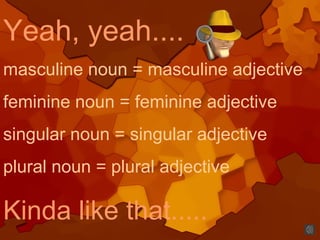
Yeah, yeah....
masculine noun = masculine adjective
feminine noun = feminine adjective
singular noun = singular adjective
plural noun = plural adjective
Kinda like that.....
OK, give me some
more facts.
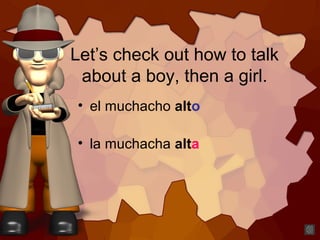
Let’s check out how to talk
about a boy, then a girl.
• el muchacho alto
• la muchacha alta
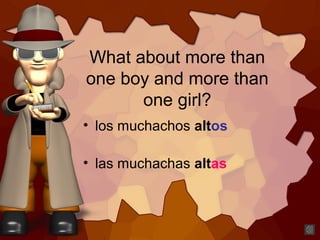
What about more than
one boy and more than
one girl?
• los muchachos altos
• las muchachas altas
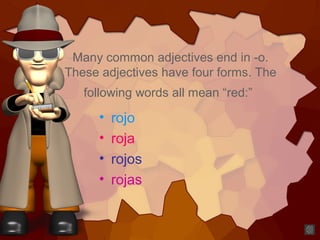
Many common adjectives end in -o.
These adjectives have four forms. The
following words all mean “red:”
• rojo
• roja
• rojos
• rojas
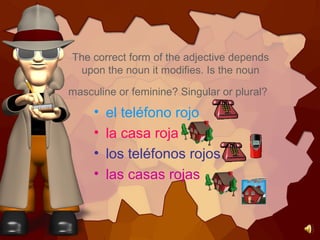
The correct form of the adjective depends
upon the noun it modifies. Is the noun
masculine or feminine? Singular or plural?
• el teléfono rojo
• la casa roja
• los teléfonos rojos
• las casas rojas
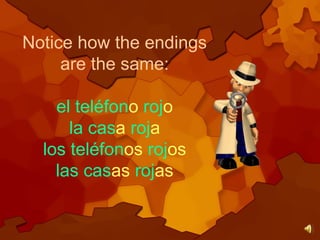
Notice how the endings
are the same:
el teléfono rojo
la casa roja
los teléfonos rojos
las casas rojas
What about adjectives
that end in e...
like inteligente?
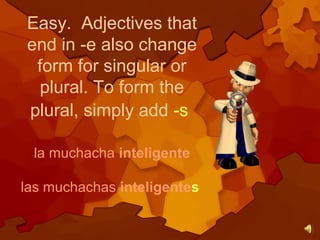
Easy. Adjectives that
end in -e also change
form for singular or
plural. To form the
plural, simply add -s
la muchacha inteligente
las muchachas inteligentes
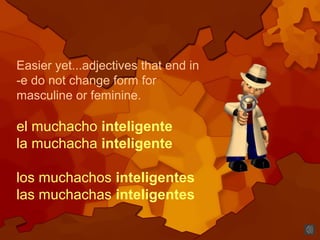
Easier yet...adjectives that end in
-e do not change form for
masculine or feminine.
el muchacho inteligente
la muchacha inteligente
los muchachos inteligentes
las muchachas inteligentes
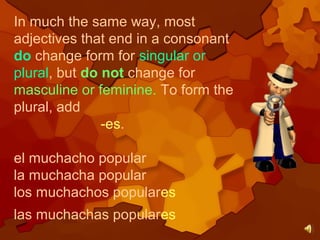
In much the same way, most
adjectives that end in a consonant
do change form for singular or
plural, but do not change for
masculine or feminine. To form the
plural, add
-es.
el muchacho popular
la muchacha popular
los muchachos populares
las muchachas populares
OK...let’s wrap up this
story.
Give me the 411.
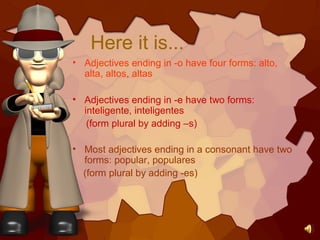
Here it is...
• Adjectives ending in -o have four forms: alto,
alta, altos, altas
• Adjectives ending in -e have two forms:
inteligente, inteligentes
(form plural by adding –s)
• Most adjectives ending in a consonant have two
forms: popular, populares
(form plural by adding -es)

agreement of adjectives

  • 1.
    Just the facts! Aboutadjectives in Spanish.
  • 2.
    OK, so what’sthe scoop on adjectives
  • 3.
    You know thatnouns in Spanish have gender. masculine el libro el muchacho feminine la casa la muchacha
  • 4.
    They also havenumber. singular el libro la muchacha plural los libros las muchachas
  • 5.
    Well, here’s theway it is...adjectives have to agree with whatever they tell about!
  • 6.
    The noun is masculine,then the adjective is masculine
  • 7.
    The noun is feminine,then the adjective is feminine
  • 8.
    The noun is singular,then the adjective is singular.
  • 9.
    The noun isplural, then the adjective is plural.
  • 10.
    What if thenoun is feminine AND plural?
  • 11.
    Then the adjective isfeminine and plural.
  • 12.
    Are you tellingme that this is like an equation in math?
  • 13.
    Yeah, yeah.... masculine noun= masculine adjective feminine noun = feminine adjective singular noun = singular adjective plural noun = plural adjective Kinda like that.....
  • 14.
    OK, give mesome more facts.
  • 15.
    Let’s check outhow to talk about a boy, then a girl. • el muchacho alto • la muchacha alta
  • 16.
    What about morethan one boy and more than one girl? • los muchachos altos • las muchachas altas
  • 17.
    Many common adjectivesend in -o. These adjectives have four forms. The following words all mean “red:” • rojo • roja • rojos • rojas
  • 18.
    The correct formof the adjective depends upon the noun it modifies. Is the noun masculine or feminine? Singular or plural? • el teléfono rojo • la casa roja • los teléfonos rojos • las casas rojas
  • 19.
    Notice how theendings are the same: el teléfono rojo la casa roja los teléfonos rojos las casas rojas
  • 20.
    What about adjectives thatend in e... like inteligente?
  • 21.
    Easy. Adjectives that endin -e also change form for singular or plural. To form the plural, simply add -s la muchacha inteligente las muchachas inteligentes
  • 22.
    Easier yet...adjectives thatend in -e do not change form for masculine or feminine. el muchacho inteligente la muchacha inteligente los muchachos inteligentes las muchachas inteligentes
  • 23.
    In much thesame way, most adjectives that end in a consonant do change form for singular or plural, but do not change for masculine or feminine. To form the plural, add -es. el muchacho popular la muchacha popular los muchachos populares las muchachas populares
  • 24.
    OK...let’s wrap upthis story. Give me the 411.
  • 25.
    Here it is... •Adjectives ending in -o have four forms: alto, alta, altos, altas • Adjectives ending in -e have two forms: inteligente, inteligentes (form plural by adding –s) • Most adjectives ending in a consonant have two forms: popular, populares (form plural by adding -es)