Las reglas de concordancia para los adjetivos
                                 Español I


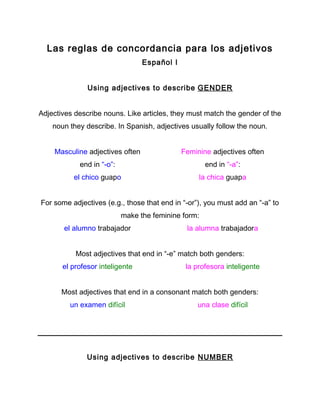
               Using adjectives to describe GENDER


Adjectives describe nouns. Like articles, they must match the gender of the
    noun they describe. In Spanish, adjectives usually follow the noun.


    Masculine adjectives often               Feminine adjectives often
            end in “-o”:                             end in “-a”:
          el chico guapo                          la chica guapa


For some adjectives (e.g., those that end in “-or”), you must add an “-a” to
                           make the feminine form:
       el alumno trabajador                   la alumna trabajadora


           Most adjectives that end in “-e” match both genders:
       el profesor inteligente                la profesora inteligente


       Most adjectives that end in a consonant match both genders:
         un examen difícil                        una clase difícil


               Using adjectives to describe NUMBER
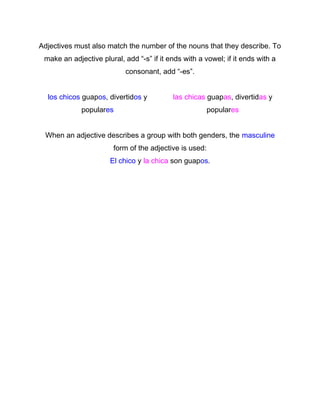
Adjectives must also match the number of the nouns that they describe. To
 make an adjective plural, add “-s” if it ends with a vowel; if it ends with a
                            consonant, add “-es”.


  los chicos guapos, divertidos y          las chicas guapas, divertidas y
             populares                                   populares


 When an adjective describes a group with both genders, the masculine
                        form of the adjective is used:
                      El chico y la chica son guapos.

Adjectives agreement rules

  • 1.
    Las reglas deconcordancia para los adjetivos Español I Using adjectives to describe GENDER Adjectives describe nouns. Like articles, they must match the gender of the noun they describe. In Spanish, adjectives usually follow the noun. Masculine adjectives often Feminine adjectives often end in “-o”: end in “-a”: el chico guapo la chica guapa For some adjectives (e.g., those that end in “-or”), you must add an “-a” to make the feminine form: el alumno trabajador la alumna trabajadora Most adjectives that end in “-e” match both genders: el profesor inteligente la profesora inteligente Most adjectives that end in a consonant match both genders: un examen difícil una clase difícil Using adjectives to describe NUMBER
  • 2.
    Adjectives must alsomatch the number of the nouns that they describe. To make an adjective plural, add “-s” if it ends with a vowel; if it ends with a consonant, add “-es”. los chicos guapos, divertidos y las chicas guapas, divertidas y populares populares When an adjective describes a group with both genders, the masculine form of the adjective is used: El chico y la chica son guapos.