Digital Learners Digital Citizens Glenview Values April 13, 2009
1,000,000,000,000+
Digital Learners Always On Always Learning Geeking Out
Using The Internet Young Instant Messaging Games Wireless Dating Housing New Jobs Create Content P2P Services Cultural Information Rating Things Adult Content Gen X / Boomers Transactions Get news / political info Health Job-related information Info for new jobs New housing Religious information Seniors Email Weather Use government web sites Get maps / directions News Research travel
 
33%  of online teens share their own creations online, such as artwork, photos, stories or videos.
Over 50%  have created content for the internet, using existing content they’ve found on the web.
 
“ Because they have been using digital technology all their lives, our children feel they have authority over it.” “ But technology cannot teach them how to reflect upon and evaluate the information they are gathering online.” -- Rose Luckin
Source: Online Behavior of Youth Survey   Cox Communication Over  61%   of teens have a profile on a site such as MySpace or Facebook.
Social Networking
 
 
MASH UP Photos Blogs Chat Email News Videos Contacts ?
 
20%  of young people report that it is safe to share personal information on a public site. 37%  said that they are “not concerned” about someone using information that they’ve posted. Source: Online Behavior of Youth Survey  Cox Communication
71%  have received messages online from someone they  don’t know . 30%  have considered meeting someone that they’ve  only talked to online. 14%  have  actually met someone. Source: Online Behavior of Youth Survey  Cox Communication
33%  of fourth through sixth graders said they were completely unsupervised online. Among 2nd and 3rd graders,  20%  reported that someone had been mean to them online within the last year.
Cyberbullying:  Use of the internet, cell phones or other technology to hurt or embarrass another person.
Four  in  Ten  teens Have experienced cyberbullying  in the past year Source: Harris Interactive Youth Survey, 2007
Types of Cyberbullying
Flaming Flaming
Exclusion
Harassment / Denigration
Impersonation
How  Students  Deal  Change their email address Digitally block the bully Refuse to pass along messages Tell their friends - disconnect the bully  from the network Talk to their parents / teachers Source: Harris Interactive Youth Survey, 2007
Young people  who have  talked to their parents about internet safety: Are less likely to have public photos of themselves online. Are more likely to question messages from unfamiliar people. Are less likely to forge relationships with strangers. Are more likely to report a problem if it happens.
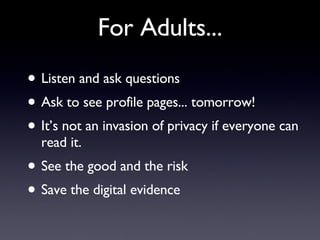
For Adults... Listen and ask questions Ask to see profile pages... tomorrow! It’s not an invasion of privacy if everyone can read it. See the good and the risk Save the digital evidence
For Young Users Help kids understand the value of their personal information from an early age. Familiarize yourself with the internet by spending time online together.  Learn how young people use the internet and acknowledge their world.
Information on the web is  permanent . It may not even be  your property  anymore...


Glenview Values Presentation - Digital Citizens

  • 1.
    Digital Learners DigitalCitizens Glenview Values April 13, 2009
  • 2.
  • 3.
    Digital Learners AlwaysOn Always Learning Geeking Out
  • 4.
    Using The InternetYoung Instant Messaging Games Wireless Dating Housing New Jobs Create Content P2P Services Cultural Information Rating Things Adult Content Gen X / Boomers Transactions Get news / political info Health Job-related information Info for new jobs New housing Religious information Seniors Email Weather Use government web sites Get maps / directions News Research travel
  • 5.
  • 6.
    33% ofonline teens share their own creations online, such as artwork, photos, stories or videos.
  • 7.
    Over 50% have created content for the internet, using existing content they’ve found on the web.
  • 8.
  • 9.
    “ Because theyhave been using digital technology all their lives, our children feel they have authority over it.” “ But technology cannot teach them how to reflect upon and evaluate the information they are gathering online.” -- Rose Luckin
  • 10.
    Source: Online Behaviorof Youth Survey Cox Communication Over 61% of teens have a profile on a site such as MySpace or Facebook.
  • 11.
  • 12.
  • 13.
  • 14.
    MASH UP PhotosBlogs Chat Email News Videos Contacts ?
  • 15.
  • 16.
    20% ofyoung people report that it is safe to share personal information on a public site. 37% said that they are “not concerned” about someone using information that they’ve posted. Source: Online Behavior of Youth Survey Cox Communication
  • 17.
    71% havereceived messages online from someone they don’t know . 30% have considered meeting someone that they’ve only talked to online. 14% have actually met someone. Source: Online Behavior of Youth Survey Cox Communication
  • 18.
    33% offourth through sixth graders said they were completely unsupervised online. Among 2nd and 3rd graders, 20% reported that someone had been mean to them online within the last year.
  • 19.
    Cyberbullying: Useof the internet, cell phones or other technology to hurt or embarrass another person.
  • 20.
    Four in Ten teens Have experienced cyberbullying in the past year Source: Harris Interactive Youth Survey, 2007
  • 21.
  • 22.
  • 23.
  • 24.
  • 25.
  • 26.
    How Students Deal Change their email address Digitally block the bully Refuse to pass along messages Tell their friends - disconnect the bully from the network Talk to their parents / teachers Source: Harris Interactive Youth Survey, 2007
  • 27.
    Young people who have talked to their parents about internet safety: Are less likely to have public photos of themselves online. Are more likely to question messages from unfamiliar people. Are less likely to forge relationships with strangers. Are more likely to report a problem if it happens.
  • 28.
    For Adults... Listenand ask questions Ask to see profile pages... tomorrow! It’s not an invasion of privacy if everyone can read it. See the good and the risk Save the digital evidence
  • 29.
    For Young UsersHelp kids understand the value of their personal information from an early age. Familiarize yourself with the internet by spending time online together. Learn how young people use the internet and acknowledge their world.
  • 30.
    Information on theweb is permanent . It may not even be your property anymore...
  • 31.
  • 32.
  • 33.
  • 34.
  • 35.
  • 36.