Derek Wenmoth Director, eLearning Core Education Ltd [email_address] Preparing learners for their future, not our past
Where were you?
Phoenix Mars Lander
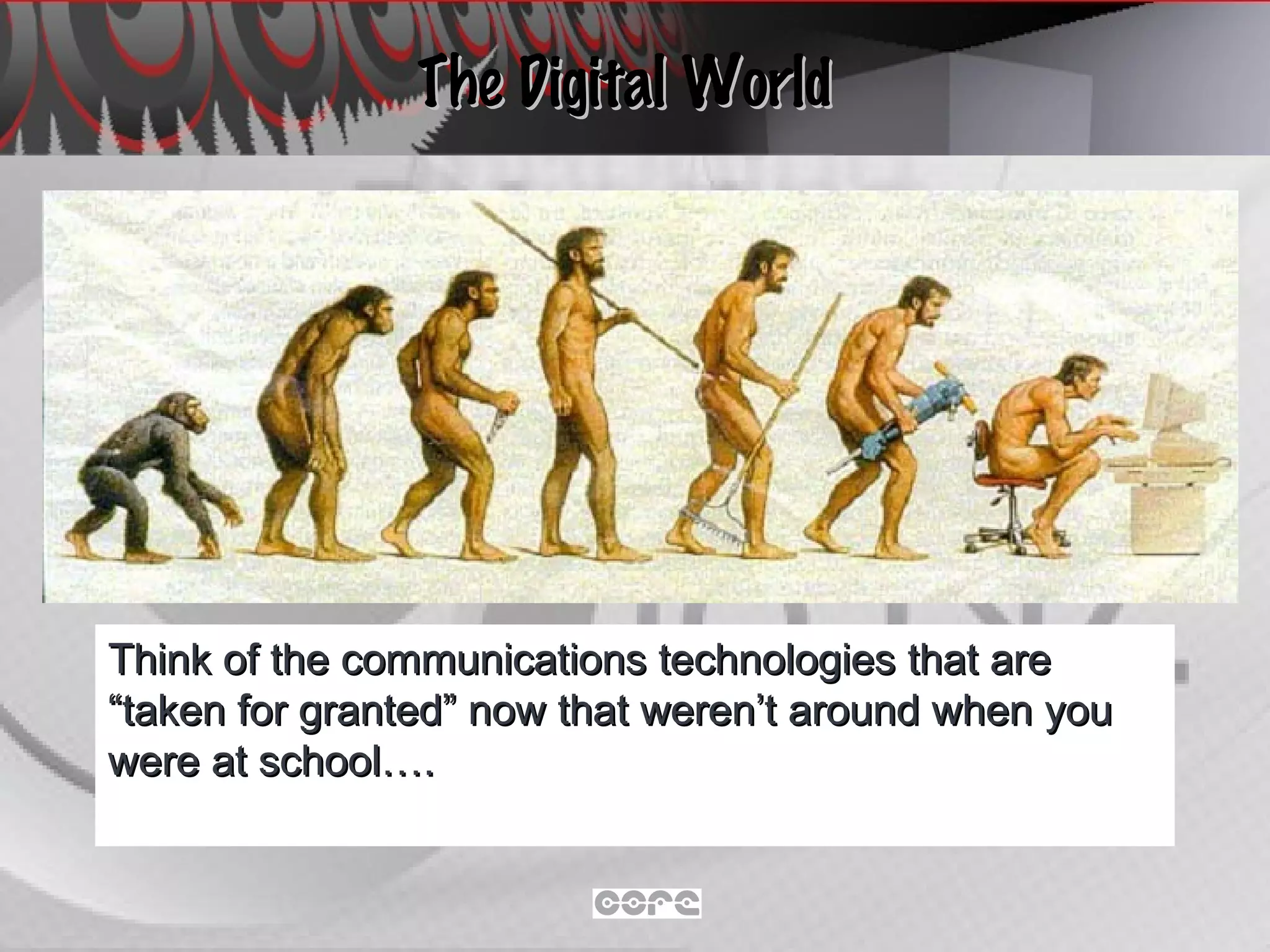
The Digital World Think of the communications technologies that are “taken for granted” now that weren’t around when you were at school….
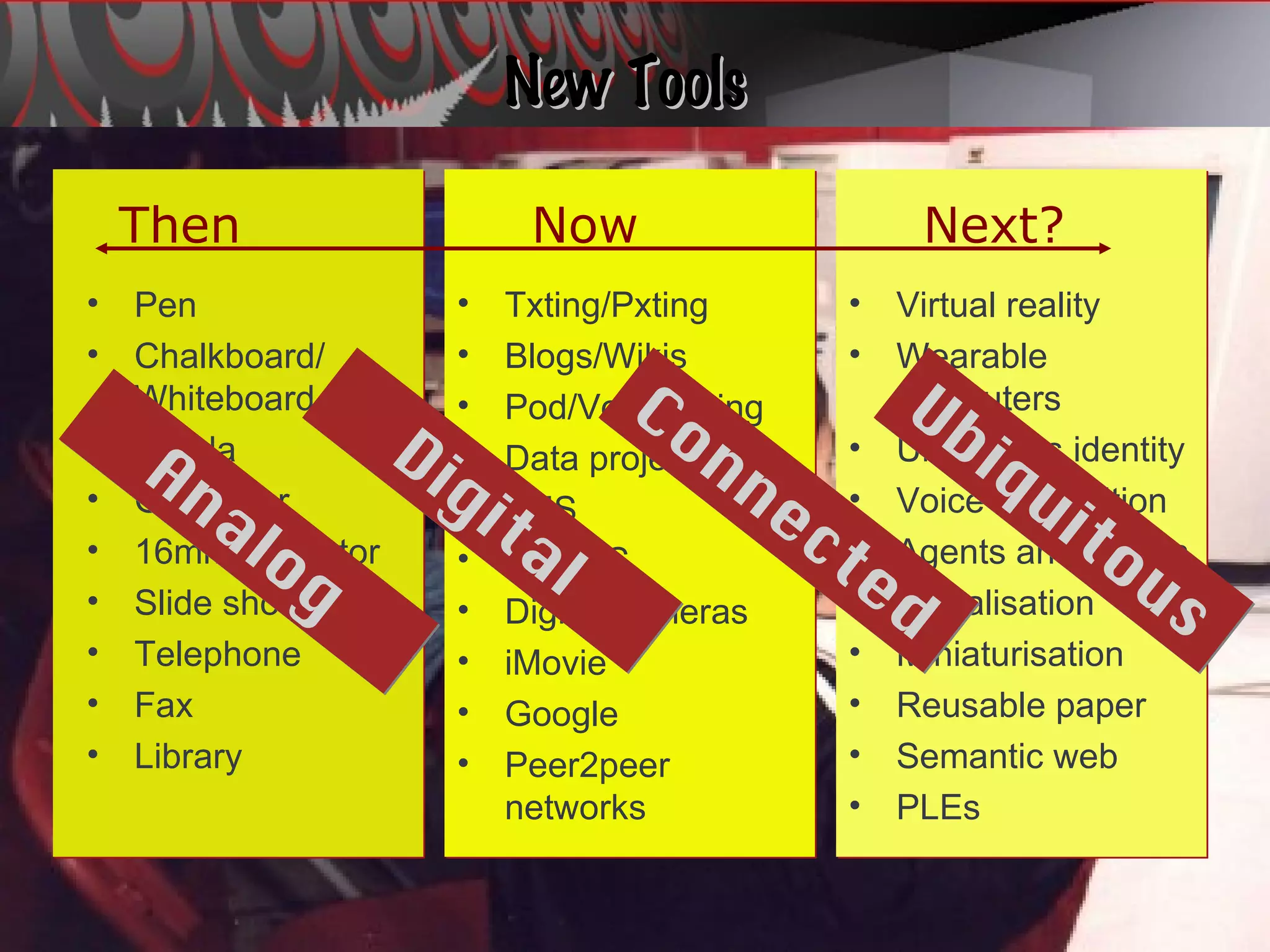
New Tools Pen Chalkboard/ Whiteboard Banda Gestetner 16mm projector Slide shows Telephone Fax Library Then Now Next? Txting/Pxting Blogs/Wikis Pod/Vod-casting Data projector LMS IM/SMS Digital cameras iMovie Google Peer2peer networks Virtual reality Wearable computers Ubiquitous identity Voice recognition Agents and avitars Visualisation Miniaturisation Reusable paper Semantic web PLEs Analog Digital Connected Ubiquitous
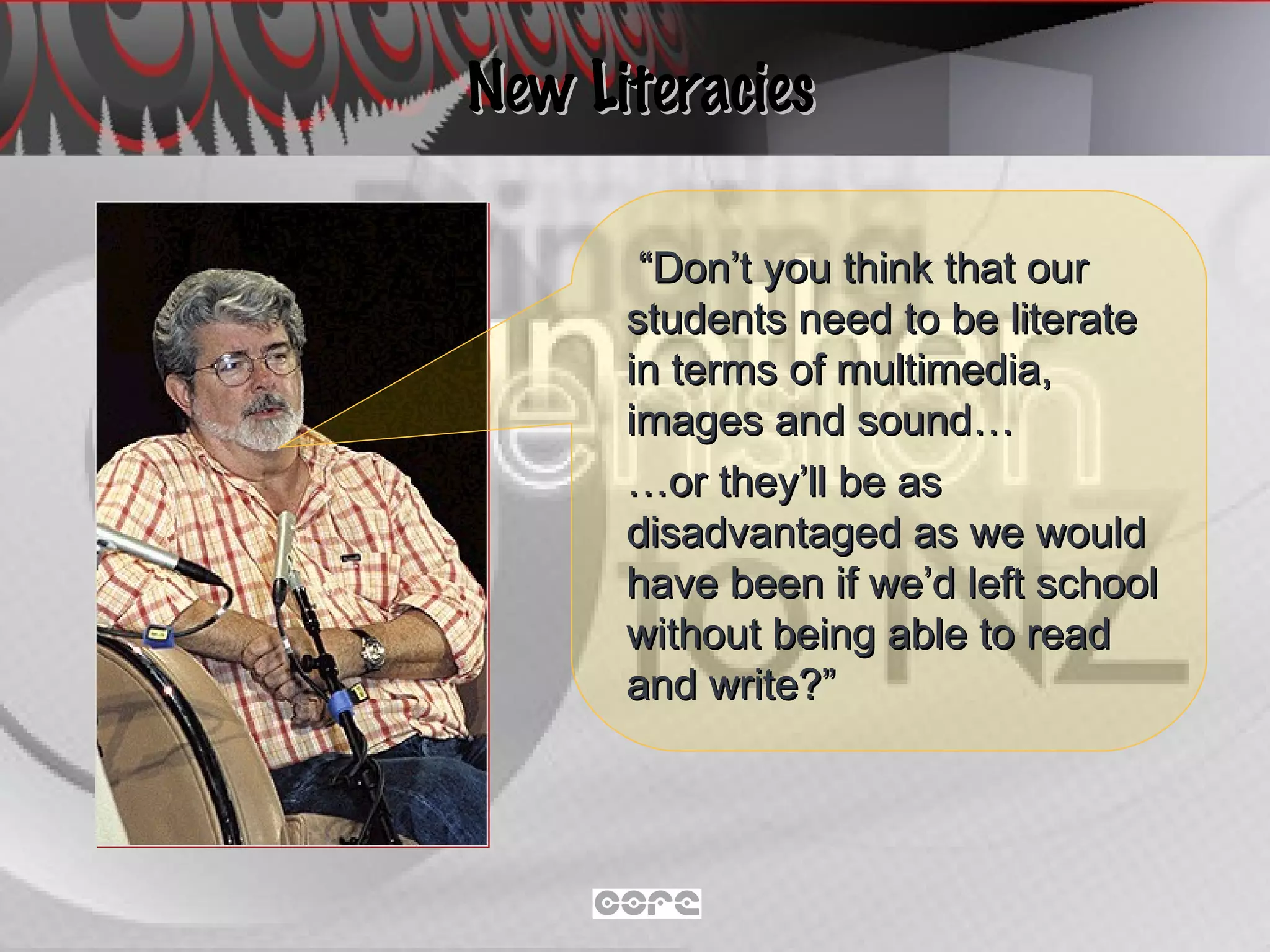
New Literacies “ Don’t you think that our students need to be literate in terms of multimedia, images and sound… … or they’ll be as disadvantaged as we would have been if we’d left school without being able to read and write?”
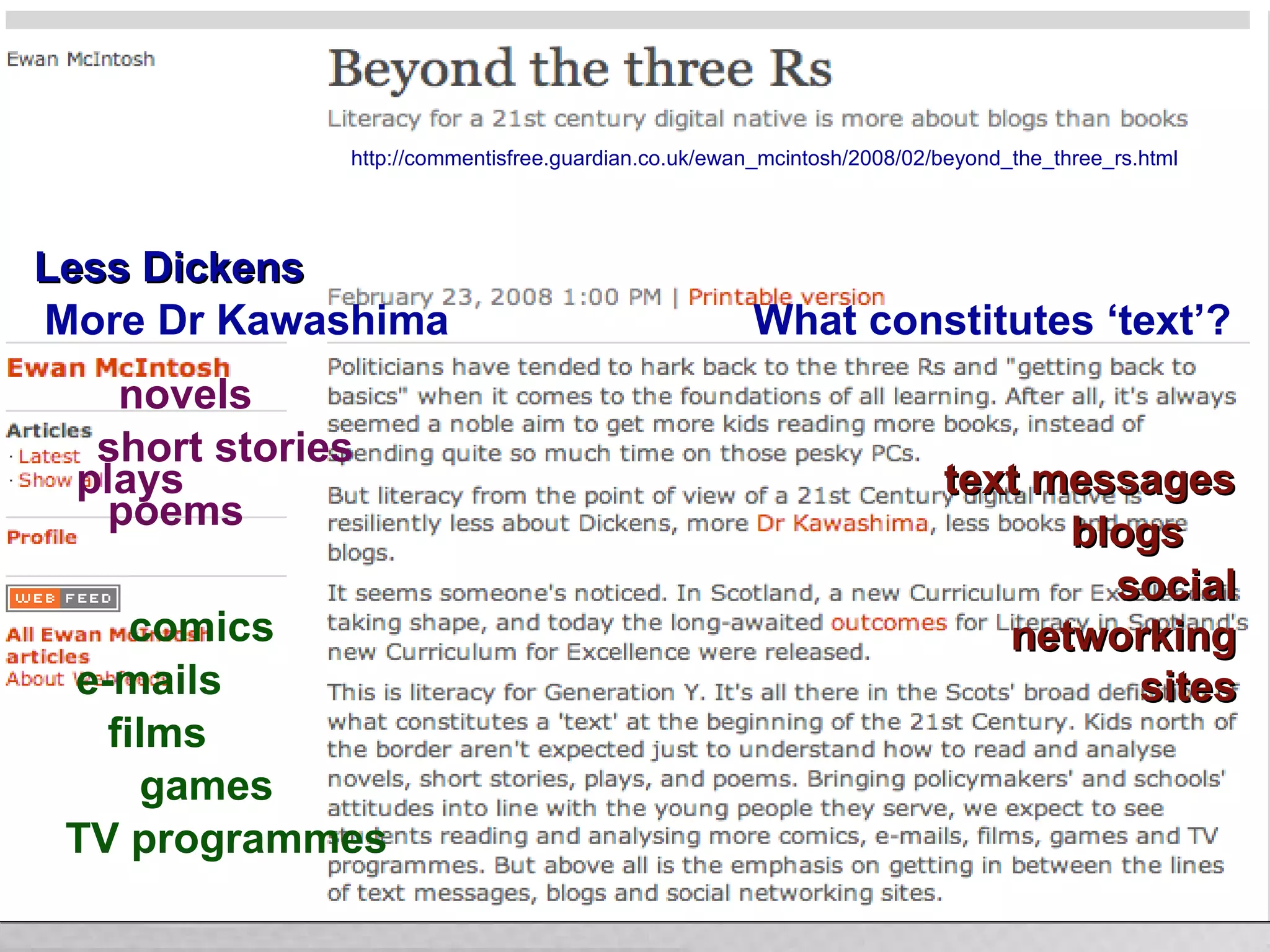
Comment is Free Less Dickens http://commentisfree.guardian.co.uk/ewan_mcintosh/2008/02/beyond_the_three_rs.html   More Dr Kawashima What constitutes ‘text’? novels short stories plays poems comics e-mails films games TV programmes text messages blogs social networking sites
Responses http://commentisfree.guardian.co.uk/ewan_mcintosh/2008/02/beyond_the_three_rs.html
Touch typing…?
You’ll be needing this…
What we want for our young people Confident   Positive in their own identity Motivated and reliable Resourceful Enterprising and entrepreneurial Resilient Connected : Able to relate well to others Effective users of communications tools Connected to the land and environment Members of communities International citizens Actively Involved   Participants in a range of life contexts Contributors to the well being of NZ Lifelong Learners: Literate and numerate Critical and creative thinkers Active seekers, users and creators of knowledge Informed decision makers
NZ Key Competencies Thinking Using language, symbols, and texts Managing self Relating to others Participating and contributing http://nzcurriculum.tki.org.nz/the_new_zealand_curriculum/key_competencies
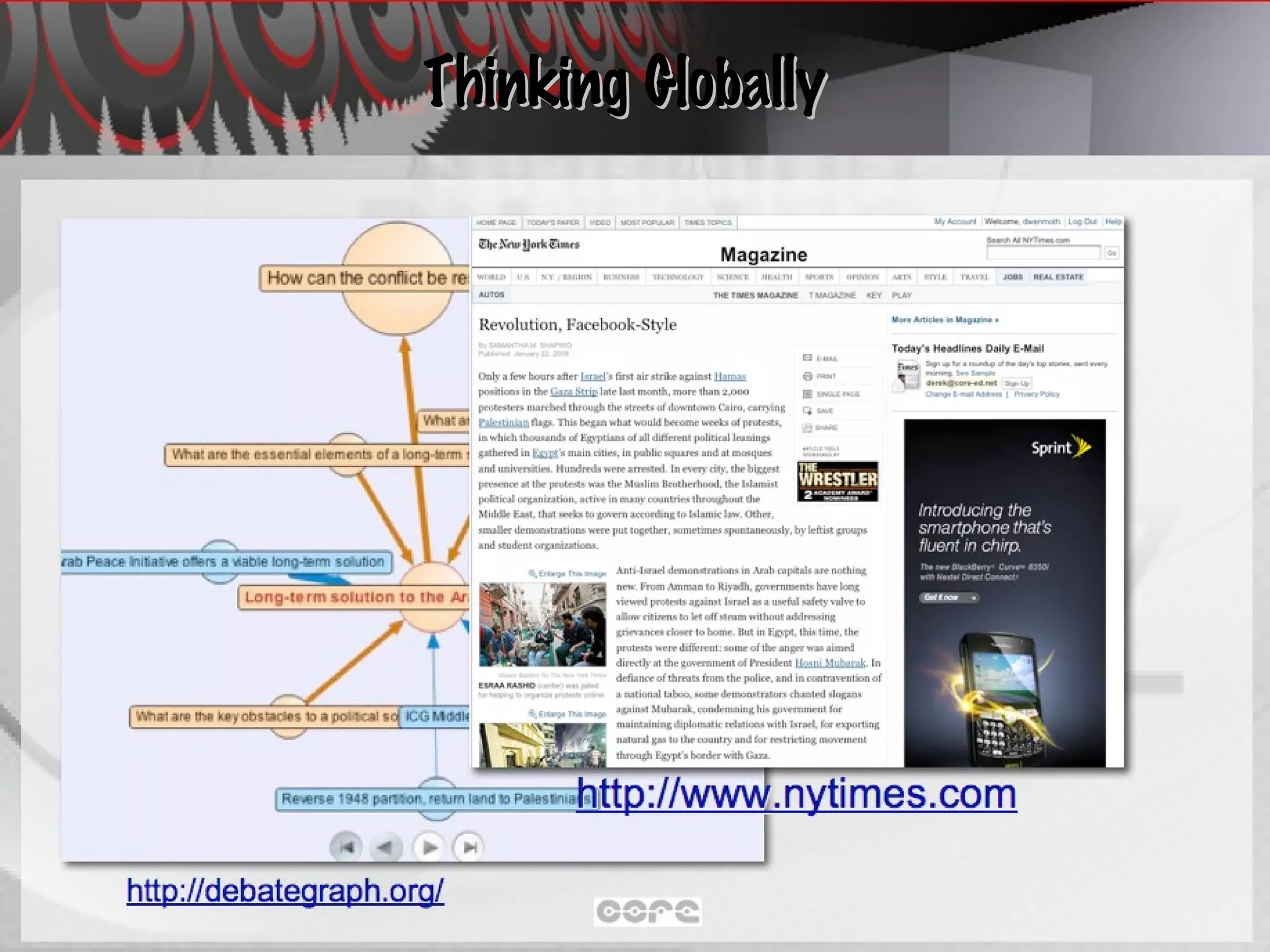
Thinking Using creative, critical and metacognitive processes to make sense of information, experiences and ideas Developing understandings Making decisions Shaping actions Constructing knowledge Inquiry is key…
Thinking Globally
Inquiry is key… There are over 2.7 billion searches on Google each month To whom were these questions directed before Google?
Using Language Working with and making meaning of the codes in which knowledge is expressed text graphics movies audio games web pages
New Ways of Reading Interactive books http://www.youtube.com/watch?v=tNMljw0F-aw   Magic Paddle
Managing Self Enterprising, resourceful, reliable and resilient NetVibes PageFlakes MyYahoo iGoogle Flock Del.icio.us Bloglines Tagging
RSS Aggregators
Social Bookmarking
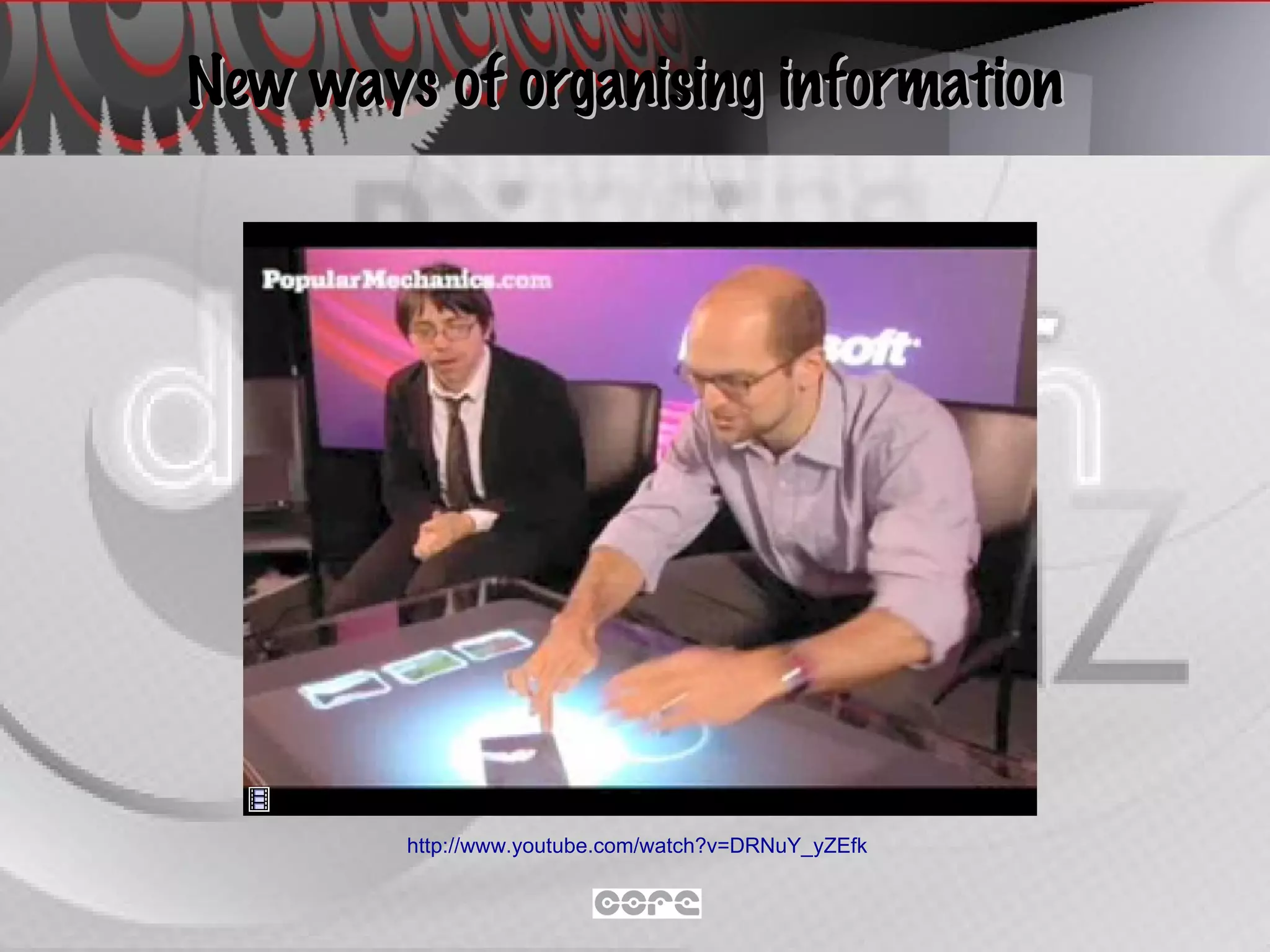
New ways of organising information http://www.youtube.com/watch?v=DRNuY_yZEfk
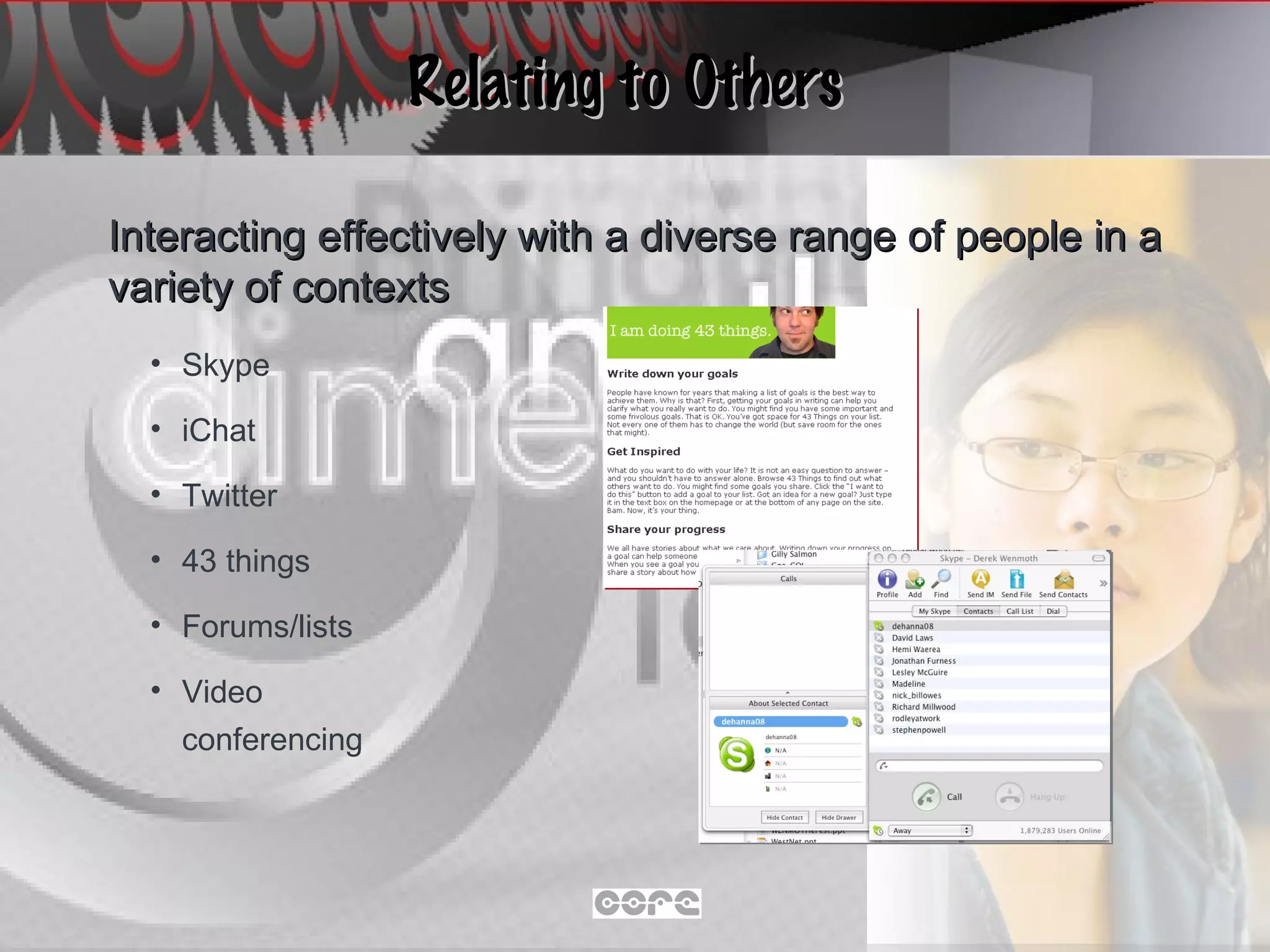
Relating to Others Interacting effectively with a diverse range of people in a variety of contexts Skype iChat Twitter 43 things Forums/lists Video conferencing
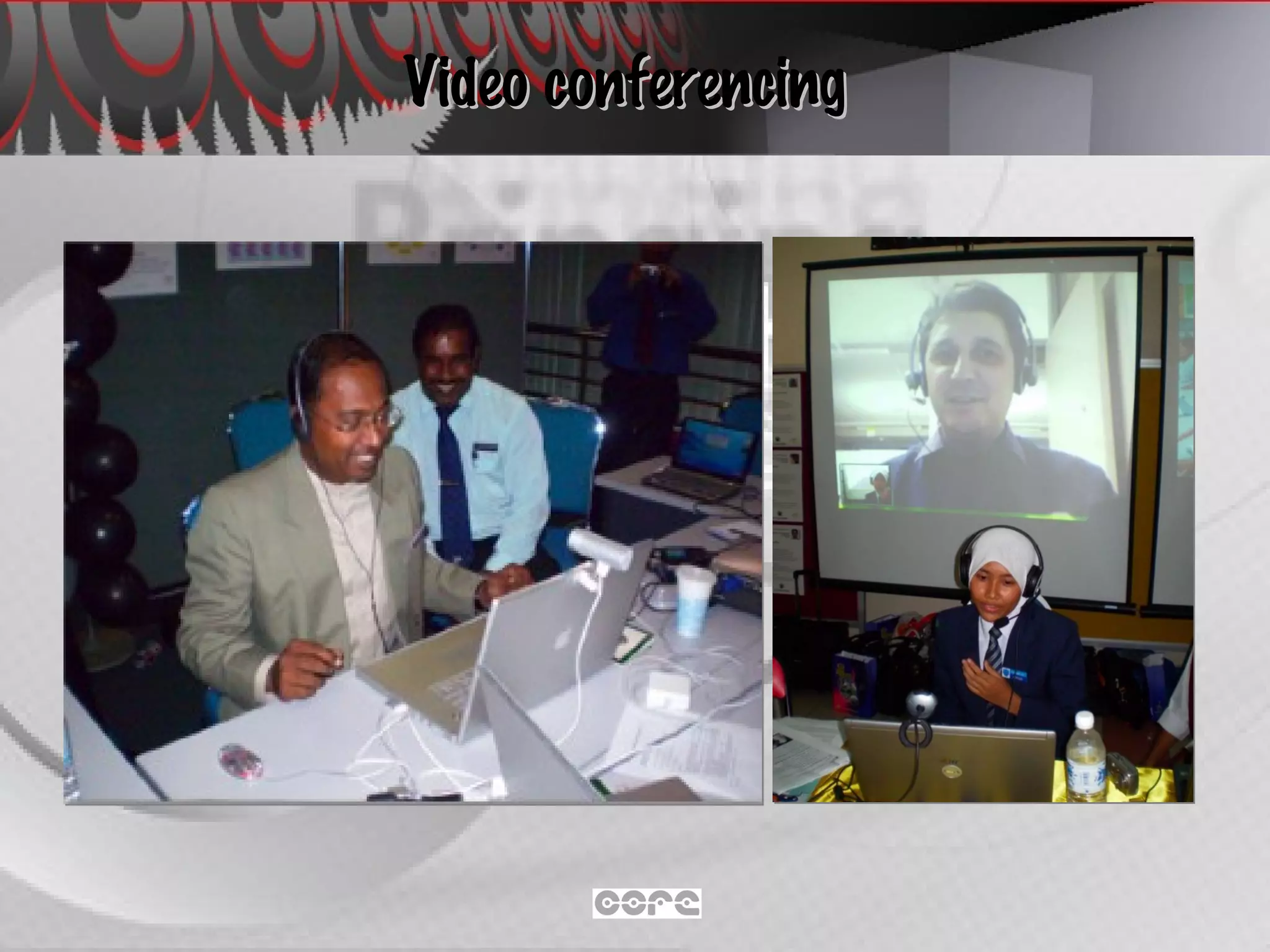
Video conferencing
Participating and Contributing Being actively involved in communities… Blogs Wikis Twitter MySpace Bebo Facebook Shelfari Frappr
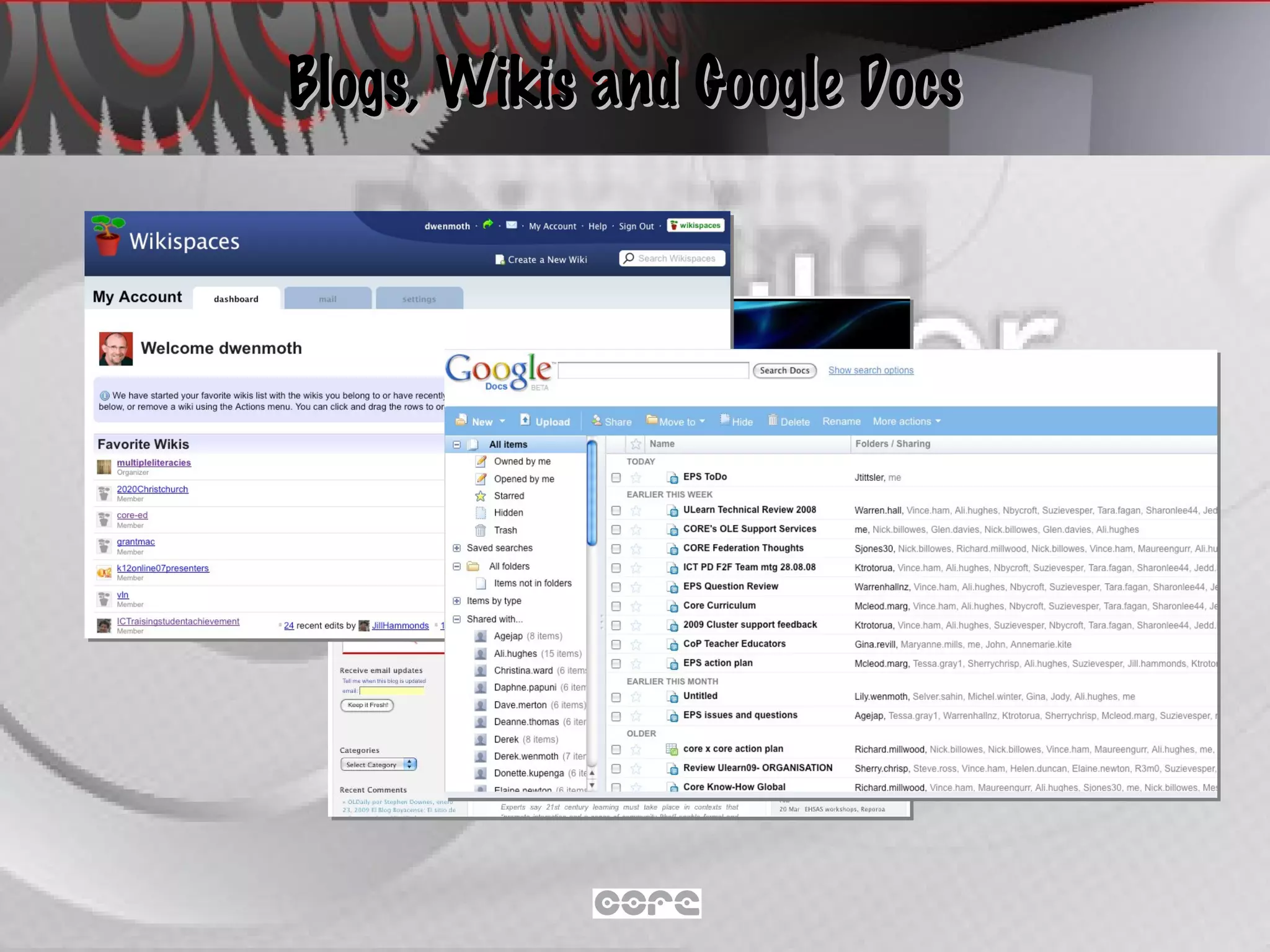
Blogs, Wikis and Google Docs
NZ Edublogs
Ms Wilson’s Wiki
2020 & Beyond… To what extent are we prepared, as a society and as educators, for the massive changes in human capabilities that digital technologies are likely to enable in the next 13 years? To what extent are our future visions for education based upon assumptions about humanity, society and technology that are no longer valid? To what extent can we, as educators, help to shape the developments of technology in order to enhance human development?
Thank you Derek Wenmoth Director, eLearning CORE Education Ltd [email_address] http://blog.core-ed.net/derek   “ The only people who call technology “technology”, are those who were born before it was invented” (Source unknown)

Preparing students for their future

  • 1.
    Derek Wenmoth Director,eLearning Core Education Ltd [email_address] Preparing learners for their future, not our past
  • 2.
  • 3.
  • 4.
    The Digital WorldThink of the communications technologies that are “taken for granted” now that weren’t around when you were at school….
  • 5.
    New Tools PenChalkboard/ Whiteboard Banda Gestetner 16mm projector Slide shows Telephone Fax Library Then Now Next? Txting/Pxting Blogs/Wikis Pod/Vod-casting Data projector LMS IM/SMS Digital cameras iMovie Google Peer2peer networks Virtual reality Wearable computers Ubiquitous identity Voice recognition Agents and avitars Visualisation Miniaturisation Reusable paper Semantic web PLEs Analog Digital Connected Ubiquitous
  • 6.
    New Literacies “Don’t you think that our students need to be literate in terms of multimedia, images and sound… … or they’ll be as disadvantaged as we would have been if we’d left school without being able to read and write?”
  • 7.
    Comment is FreeLess Dickens http://commentisfree.guardian.co.uk/ewan_mcintosh/2008/02/beyond_the_three_rs.html More Dr Kawashima What constitutes ‘text’? novels short stories plays poems comics e-mails films games TV programmes text messages blogs social networking sites
  • 8.
  • 9.
  • 10.
  • 11.
    What we wantfor our young people Confident Positive in their own identity Motivated and reliable Resourceful Enterprising and entrepreneurial Resilient Connected : Able to relate well to others Effective users of communications tools Connected to the land and environment Members of communities International citizens Actively Involved Participants in a range of life contexts Contributors to the well being of NZ Lifelong Learners: Literate and numerate Critical and creative thinkers Active seekers, users and creators of knowledge Informed decision makers
  • 12.
    NZ Key CompetenciesThinking Using language, symbols, and texts Managing self Relating to others Participating and contributing http://nzcurriculum.tki.org.nz/the_new_zealand_curriculum/key_competencies
  • 13.
    Thinking Using creative,critical and metacognitive processes to make sense of information, experiences and ideas Developing understandings Making decisions Shaping actions Constructing knowledge Inquiry is key…
  • 14.
  • 15.
    Inquiry is key…There are over 2.7 billion searches on Google each month To whom were these questions directed before Google?
  • 16.
    Using Language Workingwith and making meaning of the codes in which knowledge is expressed text graphics movies audio games web pages
  • 17.
    New Ways ofReading Interactive books http://www.youtube.com/watch?v=tNMljw0F-aw Magic Paddle
  • 18.
    Managing Self Enterprising,resourceful, reliable and resilient NetVibes PageFlakes MyYahoo iGoogle Flock Del.icio.us Bloglines Tagging
  • 19.
  • 20.
  • 21.
    New ways oforganising information http://www.youtube.com/watch?v=DRNuY_yZEfk
  • 22.
    Relating to OthersInteracting effectively with a diverse range of people in a variety of contexts Skype iChat Twitter 43 things Forums/lists Video conferencing
  • 23.
  • 24.
    Participating and ContributingBeing actively involved in communities… Blogs Wikis Twitter MySpace Bebo Facebook Shelfari Frappr
  • 25.
    Blogs, Wikis andGoogle Docs
  • 26.
  • 27.
  • 28.
    2020 & Beyond…To what extent are we prepared, as a society and as educators, for the massive changes in human capabilities that digital technologies are likely to enable in the next 13 years? To what extent are our future visions for education based upon assumptions about humanity, society and technology that are no longer valid? To what extent can we, as educators, help to shape the developments of technology in order to enhance human development?
  • 29.
    Thank you DerekWenmoth Director, eLearning CORE Education Ltd [email_address] http://blog.core-ed.net/derek “ The only people who call technology “technology”, are those who were born before it was invented” (Source unknown)