SOUND
Objectives
 To understand how sound creates meaning
 To know a range of sound techniques
 Sound is aural rather than visual
 It can provoke an equally
powerful response
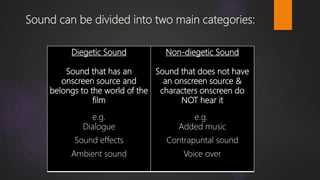
Sound can be divided into two main categories:
Diegetic Sound
Sound that has an
onscreen source and
belongs to the world of the
film
e.g.
Dialogue
Sound effects
Ambient sound
Non-diegetic Sound
Sound that does not have
an onscreen source &
characters onscreen do
NOT hear it
e.g.
Added music
Contrapuntal sound
Voice over
Sound can help create “meaning” by
 Enhancing the audience's emotional experience / providing
emotional focus
 Establishing the mood and atmosphere of a location
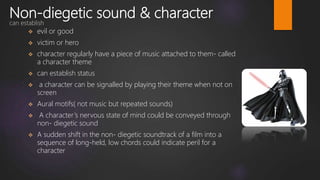
 Identifying characters/character types (e.g. good Vs evil in
Star Wars).
Jaws
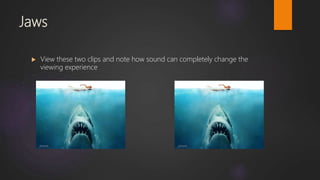
 View these two clips and note how sound can completely change the
viewing experience
Knock! Knock!
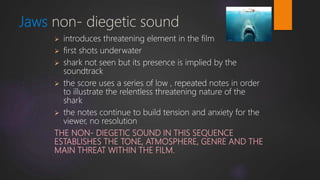
Jaws non- diegetic sound
 introduces threatening element in the film
 first shots underwater
 shark not seen but its presence is implied by the
soundtrack
 the score uses a series of low , repeated notes in order
to illustrate the relentless threatening nature of the
shark
 the notes continue to build tension and anxiety for the
viewer, no resolution
THE NON- DIEGETIC SOUND IN THIS SEQUENCE
ESTABLISHES THE TONE, ATMOSPHERE, GENRE AND THE
MAIN THREAT WITHIN THE FILM.
Non-diegetic sound & character
can establish
 evil or good
 victim or hero
 character regularly have a piece of music attached to them- called
a character theme
 can establish status
 a character can be signalled by playing their theme when not on
screen
 Aural motifs( not music but repeated sounds)
 A character’s nervous state of mind could be conveyed through
non- diegetic sound
 A sudden shift in the non- diegetic soundtrack of a film into a
sequence of long-held, low chords could indicate peril for a
character
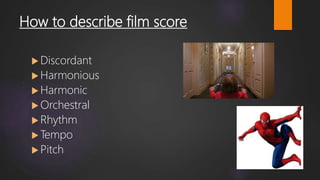
How to describe film score
 Discordant
 Harmonious
 Harmonic
 Orchestral
 Rhythm
 Tempo
 Pitch
Diegetic Sound
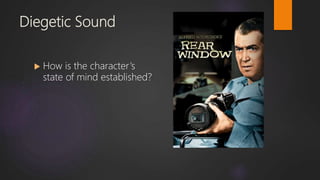
 How is the character’s
state of mind established?
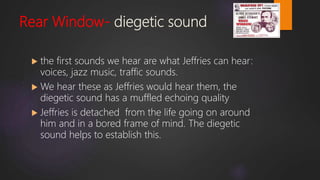
Rear Window- diegetic sound
 the first sounds we hear are what Jeffries can hear:
voices, jazz music, traffic sounds.
 We hear these as Jeffries would hear them, the
diegetic sound has a muffled echoing quality
 Jeffries is detached from the life going on around
him and in a bored frame of mind. The diegetic
sound helps to establish this.
sound & setting
 ambient sounds can give clues about the setting and people in it
 soundtrack can help establish the setting
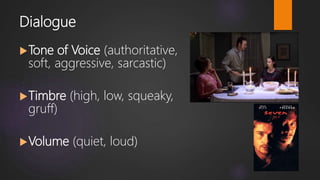
Dialogue
Tone of Voice (authoritative,
soft, aggressive, sarcastic)
Timbre (high, low, squeaky,
gruff)
Volume (quiet, loud)
Contrapuntal and Parallel
Sounds
 Contrapuntal
 Where sounds and visuals are
contrasted
 Sound does not fit the events that
are happening on screen
 Creates confusion and can
disorientate the viewer into thinking
something else
 Sound can be used to create a twist
 Parallel
 Where sounds and visuals match
 Sounds we expect to hear
 Reflects the emotion of the scene
Contrapuntal Sounds
 LISTEN CAREFULLY to this scene
 How do you feel about the police officer? How would you describe him?
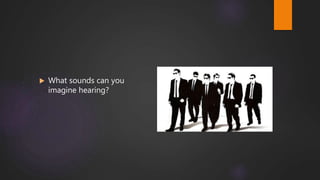
 What sounds can you
imagine hearing?
 Is this what you
expected?
KEY SOUND TERMINOLOGY
 Diegetic sound – any sound that has an onscreen source and
belongs to the world of the film.
 Non-diegetic sound – any sound that does not have an onscreen
source & characters onscreen do NOT hear it e.g. some voiceovers,
music.
 Parallel sound – any sound that fits the visual onscreen
 Contrapuntal – any sounds that contrast or contradict what is seen
onscreen
KEY SOUND TERMINOLOGY
 Score – non-diegetic soundtrack music
 Theme music/tune - a recurrent melody in the film.
 Sound effects - sounds other than dialogue or music made
artificially (Often referred to as Foley Sound)
 Ambient sound - buzz and/or surrounding sounds.
 Dialogue - speech.
ACTIVITY
 Select one of the scenes on the next slide and write
an 800 word analysis of the use of sound to create
meaning
 Think about audience positioning in relation to
characters
 How is the setting established?
Denotation/Connotation
Lesson 3 sound

Lesson 3 sound

  • 1.
  • 2.
    Objectives  To understandhow sound creates meaning  To know a range of sound techniques
  • 3.
     Sound isaural rather than visual  It can provoke an equally powerful response
  • 4.
    Sound can bedivided into two main categories: Diegetic Sound Sound that has an onscreen source and belongs to the world of the film e.g. Dialogue Sound effects Ambient sound Non-diegetic Sound Sound that does not have an onscreen source & characters onscreen do NOT hear it e.g. Added music Contrapuntal sound Voice over
  • 5.
    Sound can helpcreate “meaning” by  Enhancing the audience's emotional experience / providing emotional focus  Establishing the mood and atmosphere of a location  Identifying characters/character types (e.g. good Vs evil in Star Wars).
  • 6.
    Jaws  View thesetwo clips and note how sound can completely change the viewing experience
  • 7.
  • 9.
    Jaws non- diegeticsound  introduces threatening element in the film  first shots underwater  shark not seen but its presence is implied by the soundtrack  the score uses a series of low , repeated notes in order to illustrate the relentless threatening nature of the shark  the notes continue to build tension and anxiety for the viewer, no resolution THE NON- DIEGETIC SOUND IN THIS SEQUENCE ESTABLISHES THE TONE, ATMOSPHERE, GENRE AND THE MAIN THREAT WITHIN THE FILM.
  • 10.
    Non-diegetic sound &character can establish  evil or good  victim or hero  character regularly have a piece of music attached to them- called a character theme  can establish status  a character can be signalled by playing their theme when not on screen  Aural motifs( not music but repeated sounds)  A character’s nervous state of mind could be conveyed through non- diegetic sound  A sudden shift in the non- diegetic soundtrack of a film into a sequence of long-held, low chords could indicate peril for a character
  • 11.
    How to describefilm score  Discordant  Harmonious  Harmonic  Orchestral  Rhythm  Tempo  Pitch
  • 12.
    Diegetic Sound  Howis the character’s state of mind established?
  • 13.
    Rear Window- diegeticsound  the first sounds we hear are what Jeffries can hear: voices, jazz music, traffic sounds.  We hear these as Jeffries would hear them, the diegetic sound has a muffled echoing quality  Jeffries is detached from the life going on around him and in a bored frame of mind. The diegetic sound helps to establish this.
  • 14.
    sound & setting ambient sounds can give clues about the setting and people in it  soundtrack can help establish the setting
  • 15.
    Dialogue Tone of Voice(authoritative, soft, aggressive, sarcastic) Timbre (high, low, squeaky, gruff) Volume (quiet, loud)
  • 16.
    Contrapuntal and Parallel Sounds Contrapuntal  Where sounds and visuals are contrasted  Sound does not fit the events that are happening on screen  Creates confusion and can disorientate the viewer into thinking something else  Sound can be used to create a twist  Parallel  Where sounds and visuals match  Sounds we expect to hear  Reflects the emotion of the scene
  • 17.
    Contrapuntal Sounds  LISTENCAREFULLY to this scene  How do you feel about the police officer? How would you describe him?
  • 18.
     What soundscan you imagine hearing?
  • 19.
     Is thiswhat you expected?
  • 21.
    KEY SOUND TERMINOLOGY Diegetic sound – any sound that has an onscreen source and belongs to the world of the film.  Non-diegetic sound – any sound that does not have an onscreen source & characters onscreen do NOT hear it e.g. some voiceovers, music.  Parallel sound – any sound that fits the visual onscreen  Contrapuntal – any sounds that contrast or contradict what is seen onscreen
  • 22.
    KEY SOUND TERMINOLOGY Score – non-diegetic soundtrack music  Theme music/tune - a recurrent melody in the film.  Sound effects - sounds other than dialogue or music made artificially (Often referred to as Foley Sound)  Ambient sound - buzz and/or surrounding sounds.  Dialogue - speech.
  • 23.
    ACTIVITY  Select oneof the scenes on the next slide and write an 800 word analysis of the use of sound to create meaning  Think about audience positioning in relation to characters  How is the setting established? Denotation/Connotation