Music Technology

  Musical Acoustics
What is Sound?
What is Sound?
Human Aspect of Sound?


Physical Aspect of Sound?
What is Sound?
Human Aspect of Sound?
What is heard


Physical Aspect of Sound?
Pressure disturbances propagating through a
medium, usually air
What is Pitch?
What is Pitch?
Repetition rate in a Sound

Not the same as frequency – a note with given
pitch normally contain many frequencies – what
are these different frequencies called?
What is Frequency?
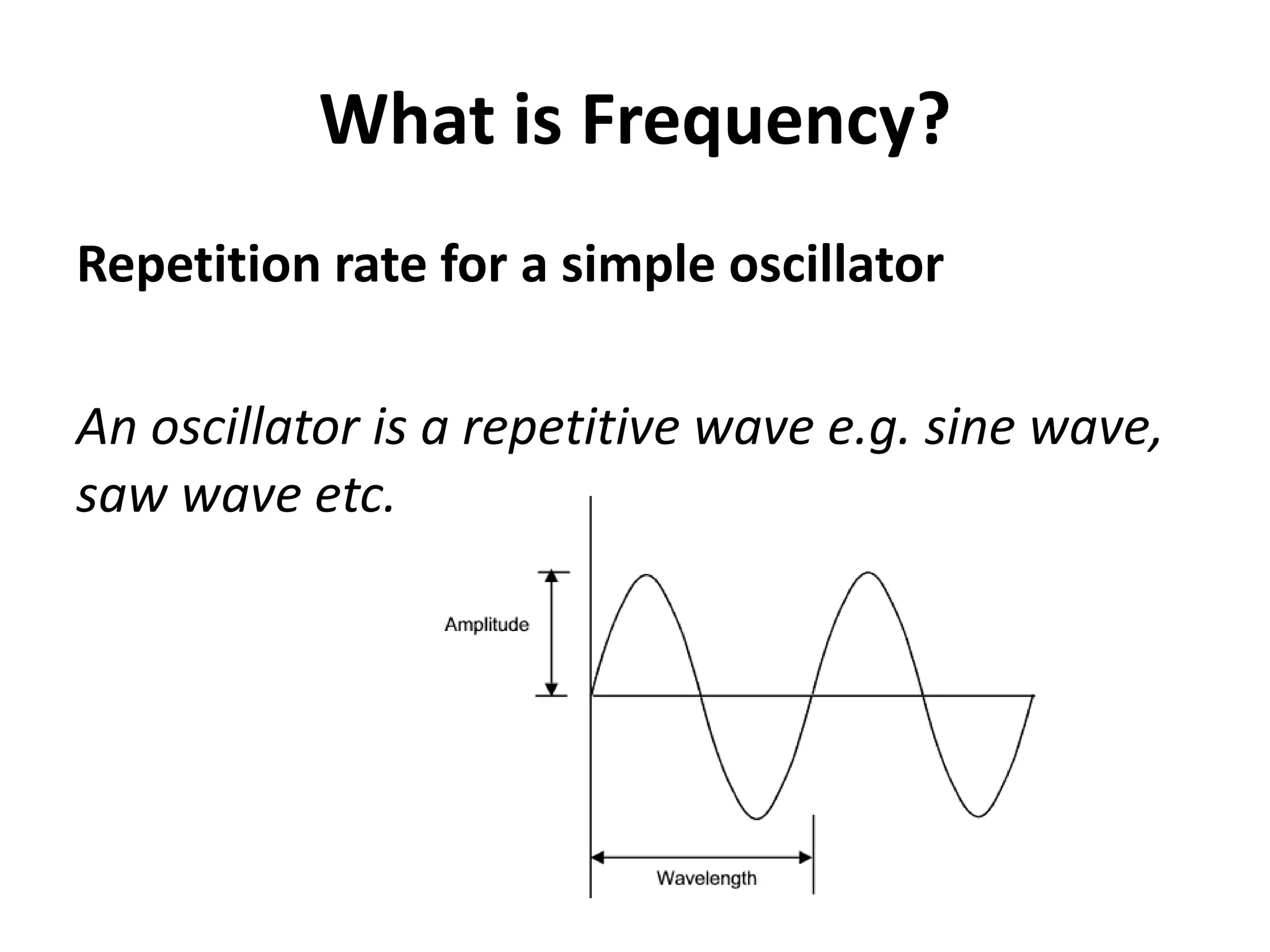
Repetition rate for a simple oscillator

An oscillator is a repetitive wave e.g. sine wave,
saw wave etc.
What is Frequency measured in?


Hertz

Normal hearing range is 30-15,000Hz
Frequencies
The range of pitch of the piano is 30-4,000Hz

The lowest notes are heard almost entirely via
the harmonics present in the tone.
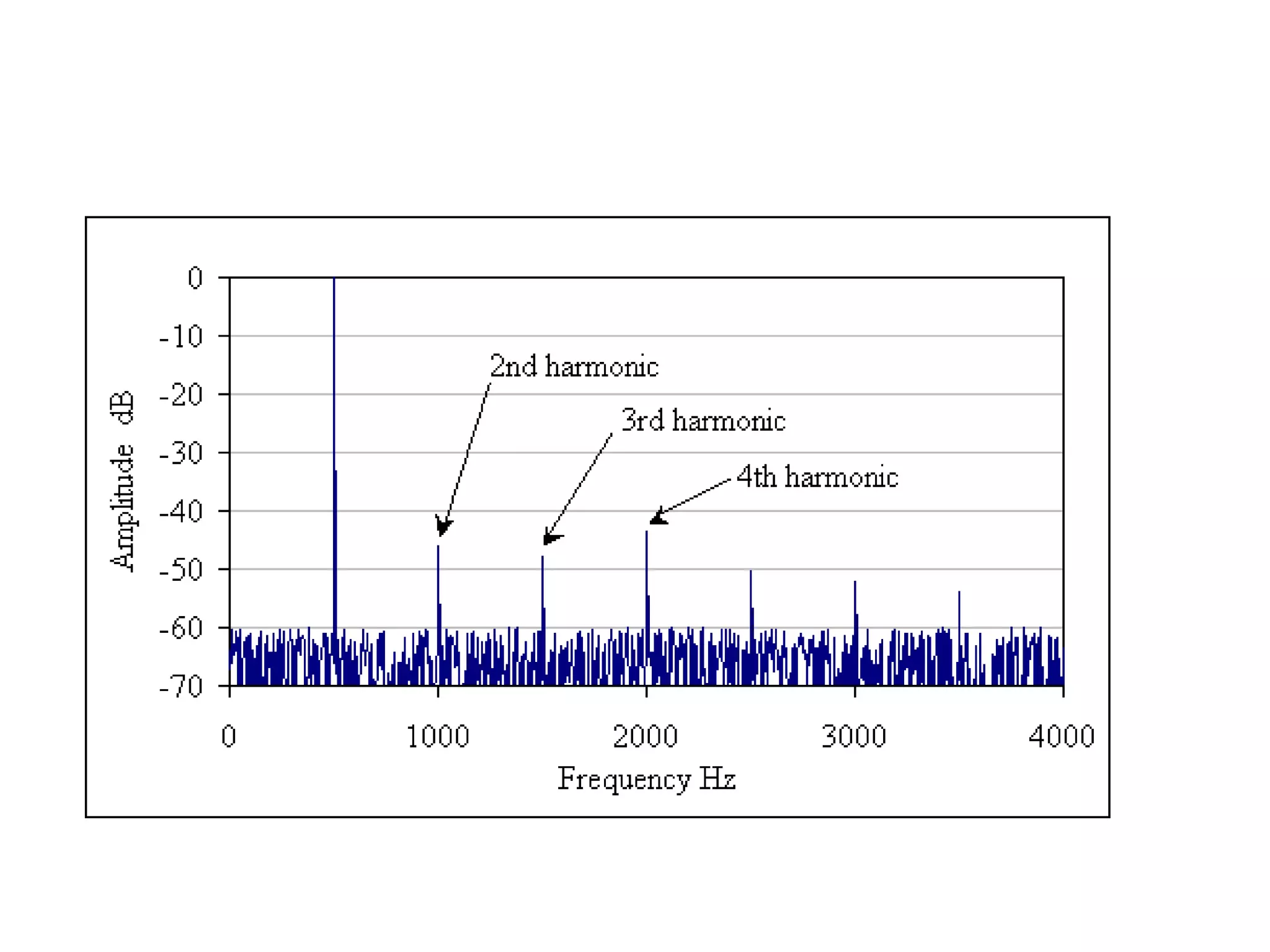
Harmonics
All oscillations contain more than one
frequency. The cluster of all the different
sounding frequencies make the tone of the
sound.

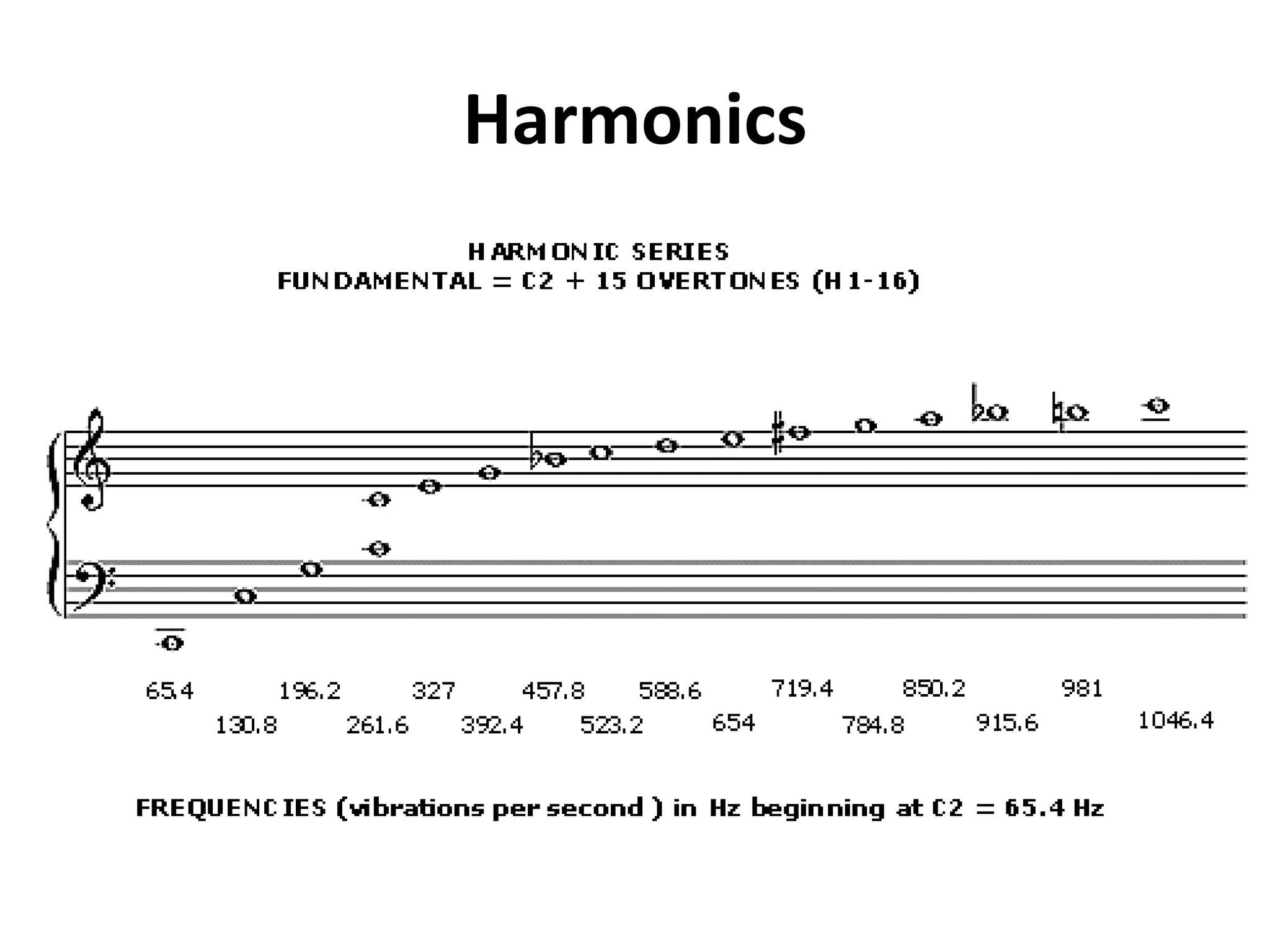
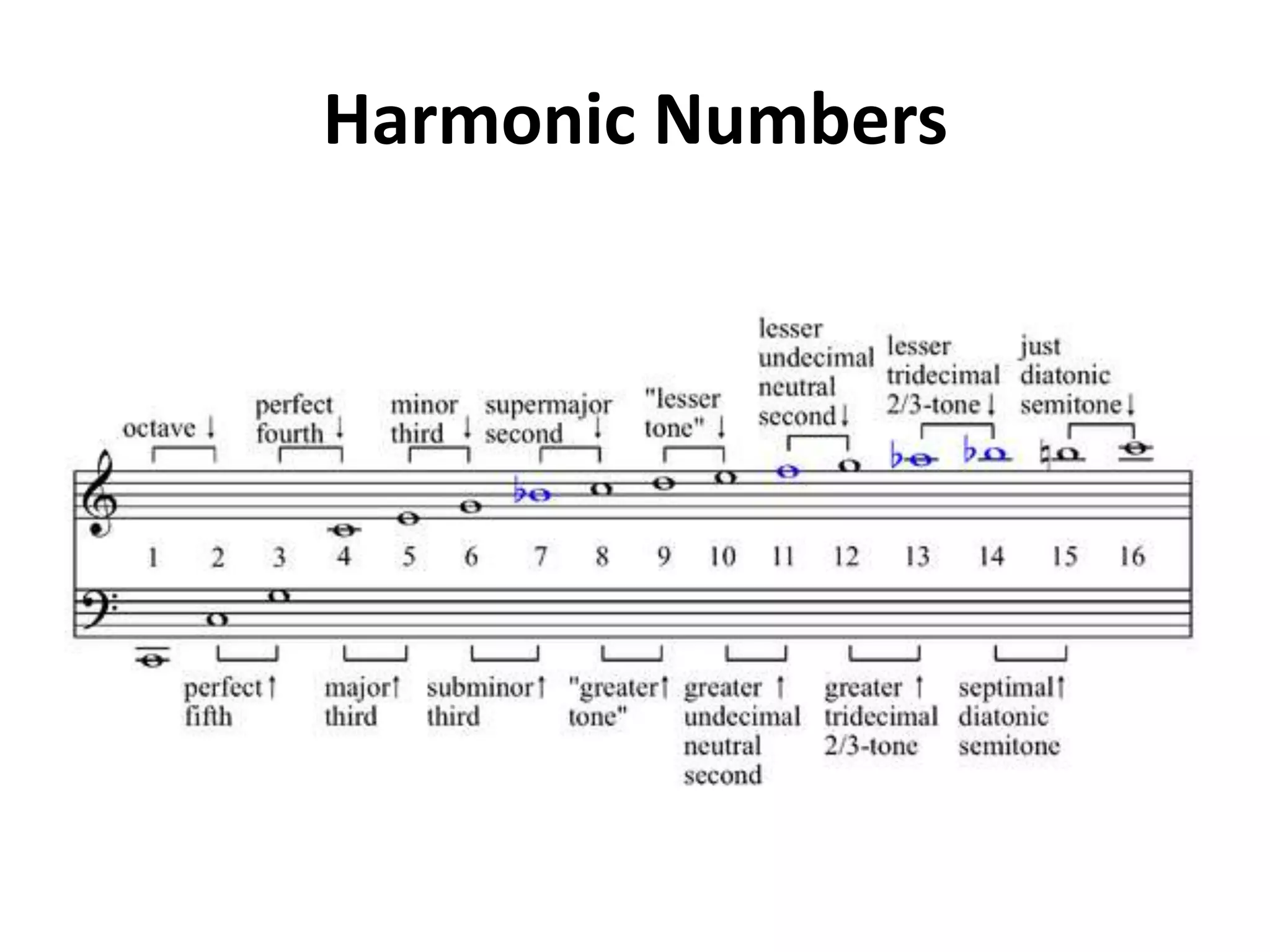
The frequencies are often exact multiples of the
lowest, fundamental frequency, or near to this.
Harmonics
What, therefore, does EQ do?
• Boosts and cuts certain frequencies, which will
  inevitably, take out or increase the dynamic
  volume of some of the harmonics.
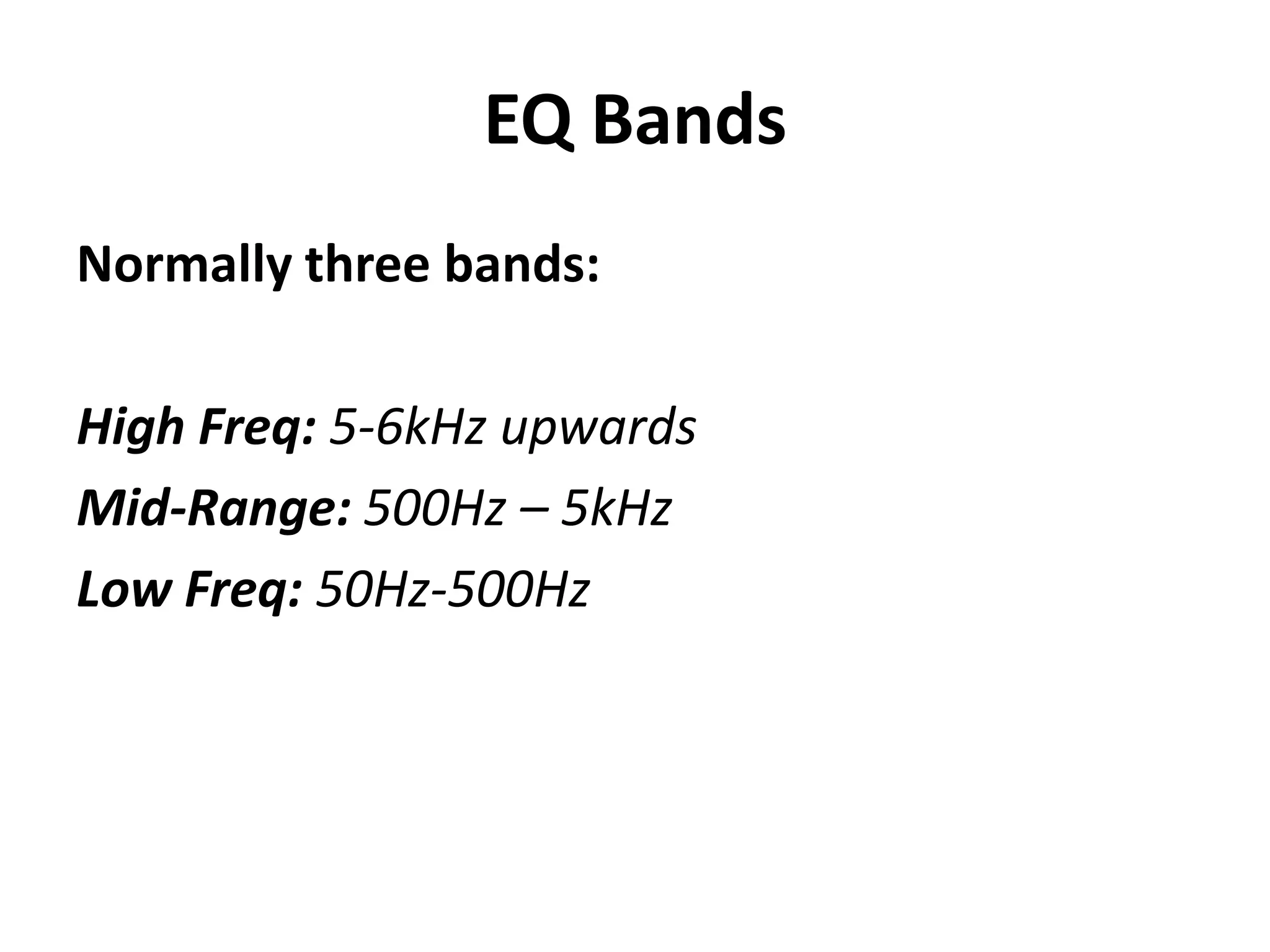
EQ Bands
Normally three bands:

High Freq: 5-6kHz upwards
Mid-Range: 500Hz – 5kHz
Low Freq: 50Hz-500Hz
Why should you use EQ?
• Enhances the balance of the overall sound, by
  altering the tonal qualities of individual
  instruments
• Makes MIDI sounds more realistic
• Removes unwanted frequencies
• Separates mid-range sounds that are similar in
  frequency, helps to give clarity to the mix, and
  stops them blending too much on important parts
• Bring out important melodies
Types of EQ
Shelving EQ
Types of EQ
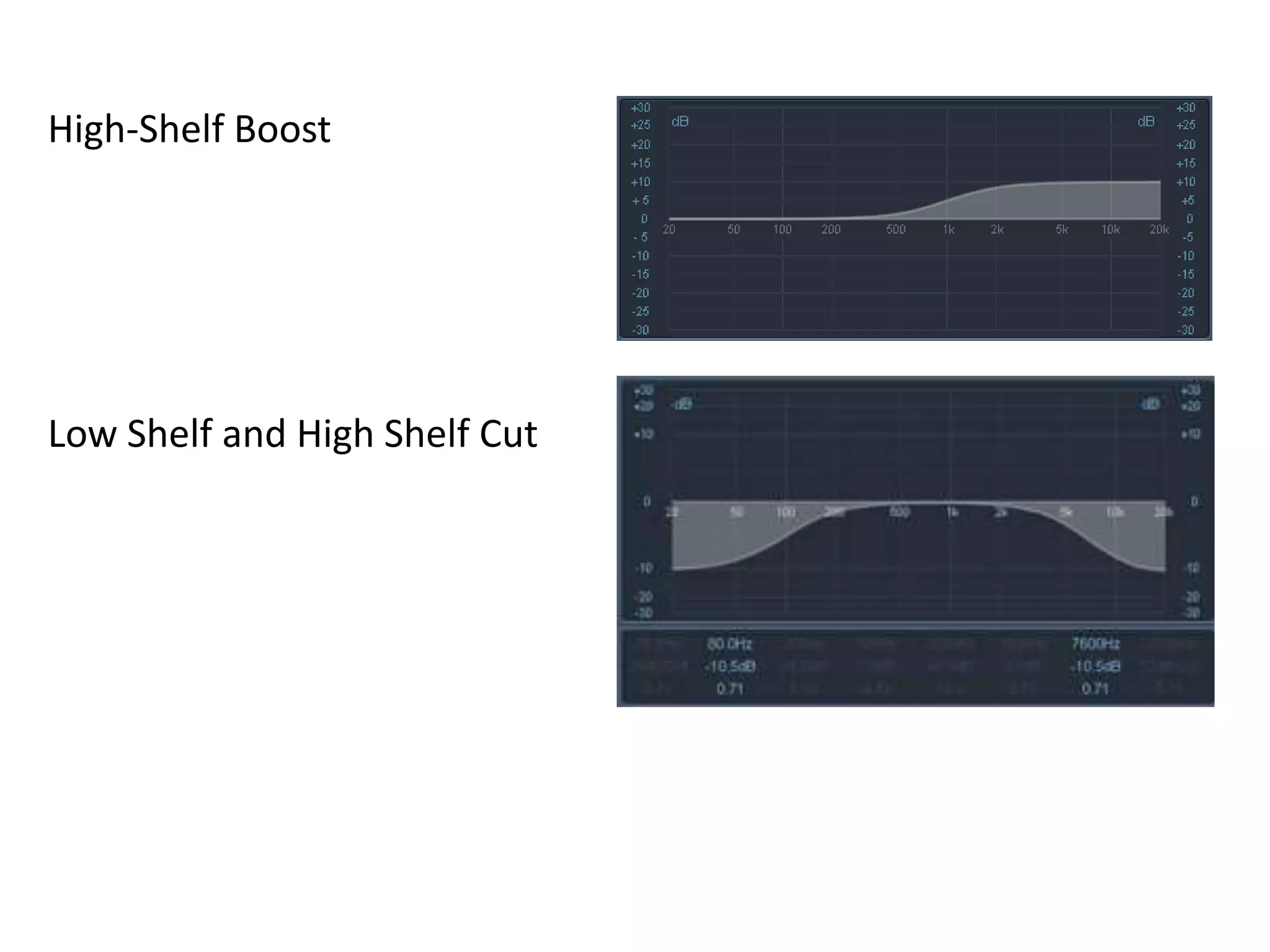
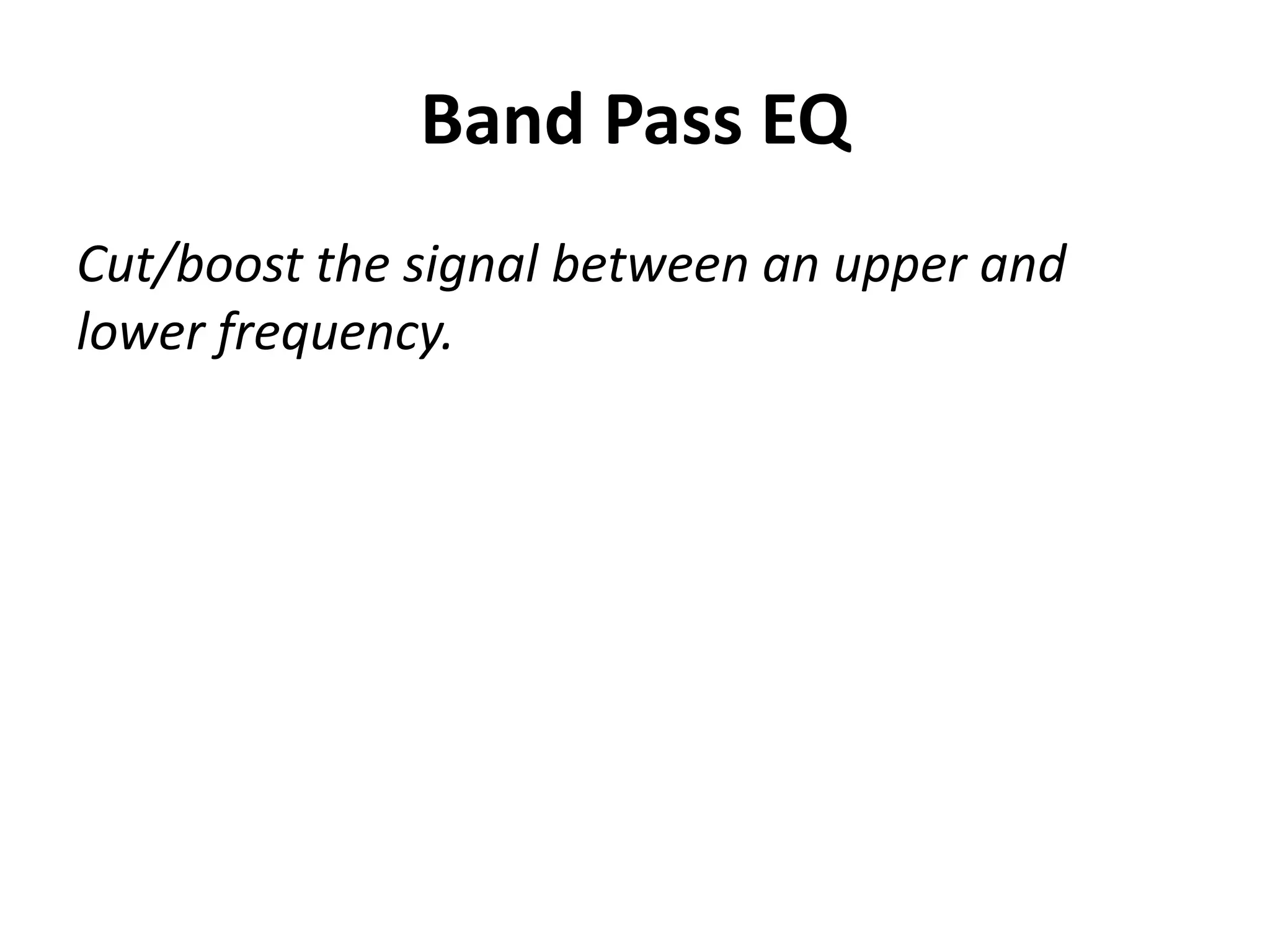
Shelving EQ:

High freq: Cut/boost all the signal above a
certain frequency
Low freq: Cut/boost all the signal below a
certain freq.

Can you draw it?
High-Shelf Boost


Low Shelf and High Shelf Cut
Band Pass EQ
Cut/boost the signal between an upper and
lower frequency.
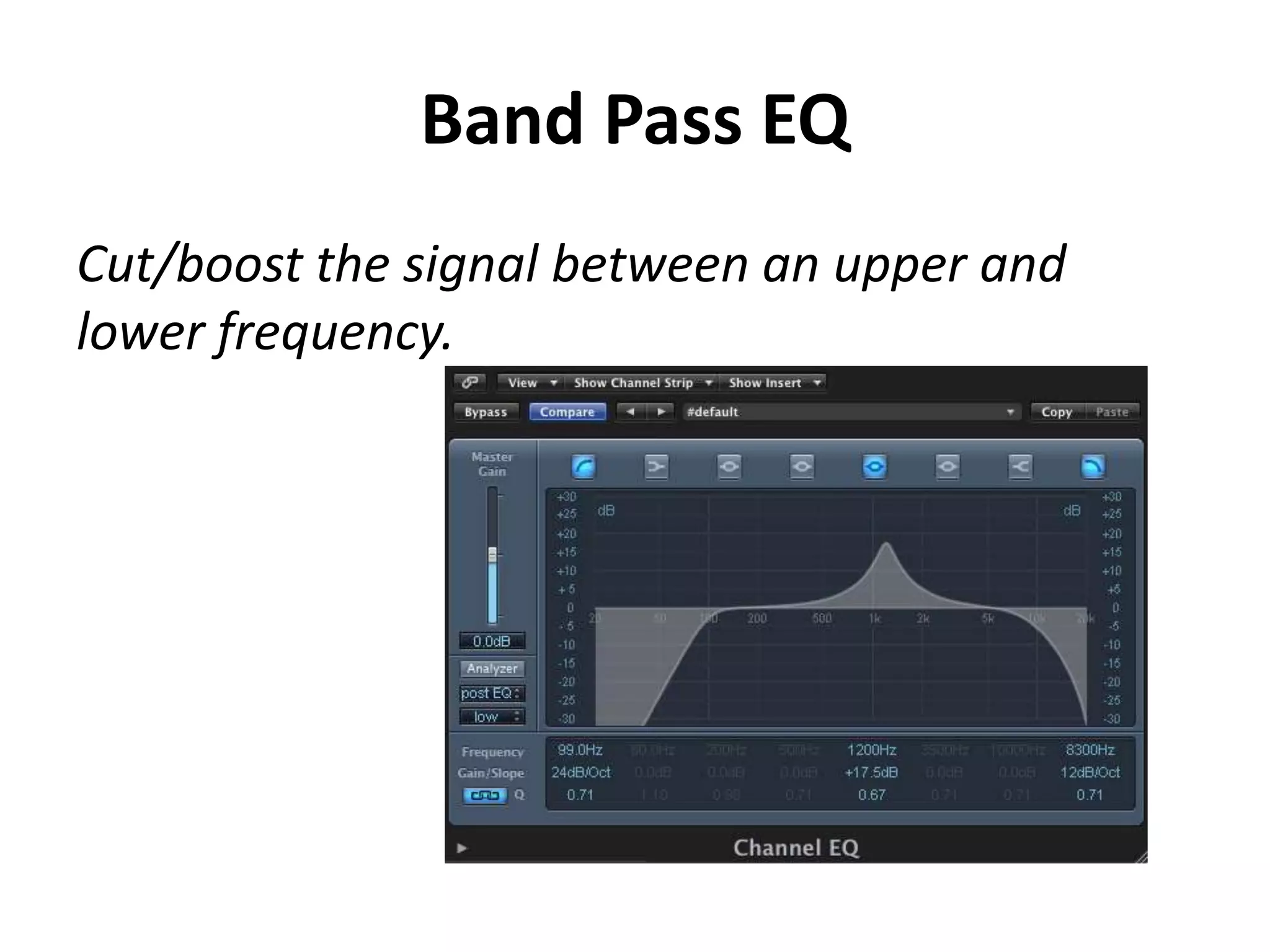
Band Pass EQ
Cut/boost the signal between an upper and
lower frequency.
Sweep EQ
A band-pass EQ with the option of adjusting the
centre frequency around which the signal is
altered.

http://www.youtube.com/watch?v=Gmrve23xR
W8
Parametric EQ
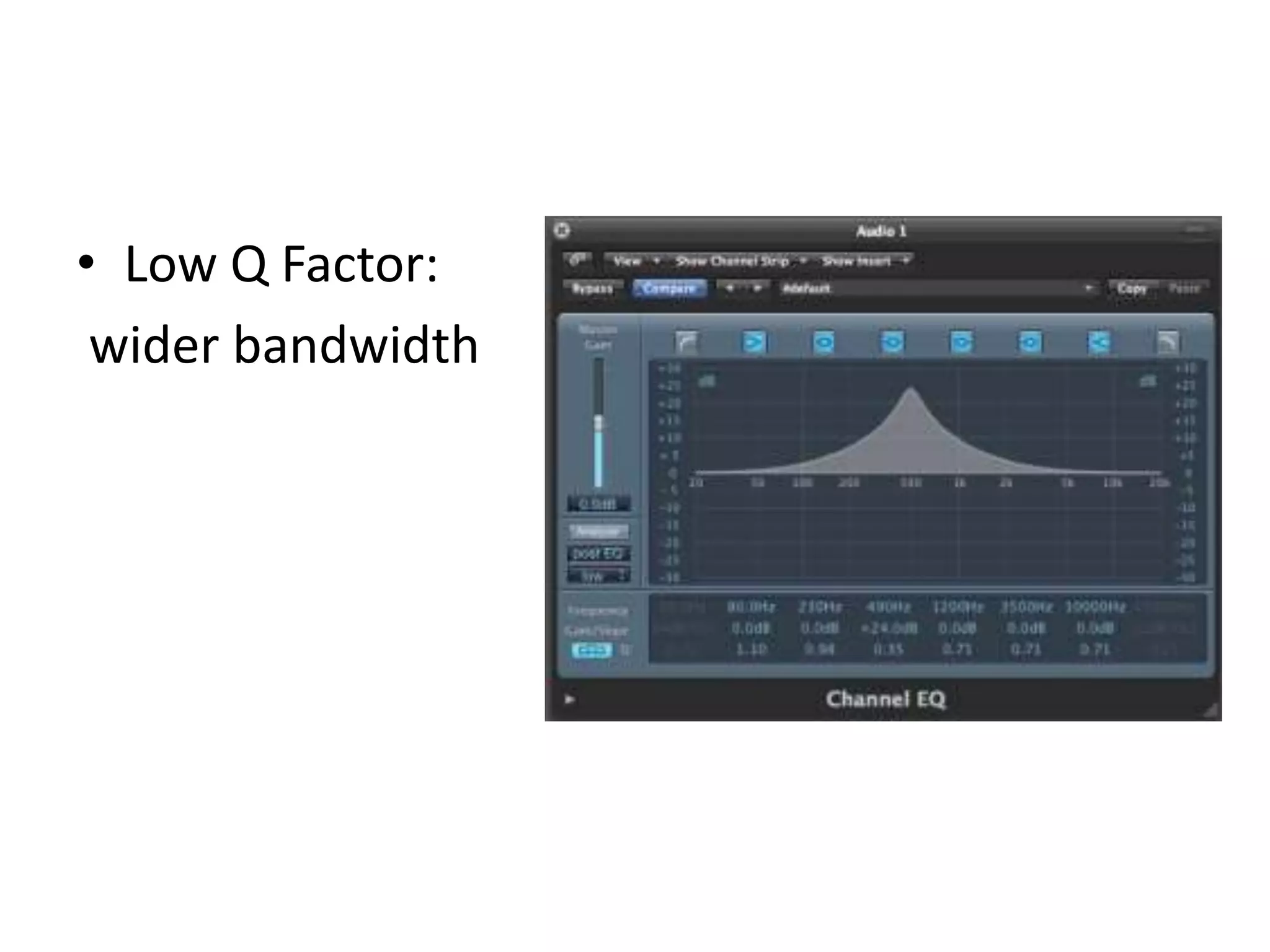
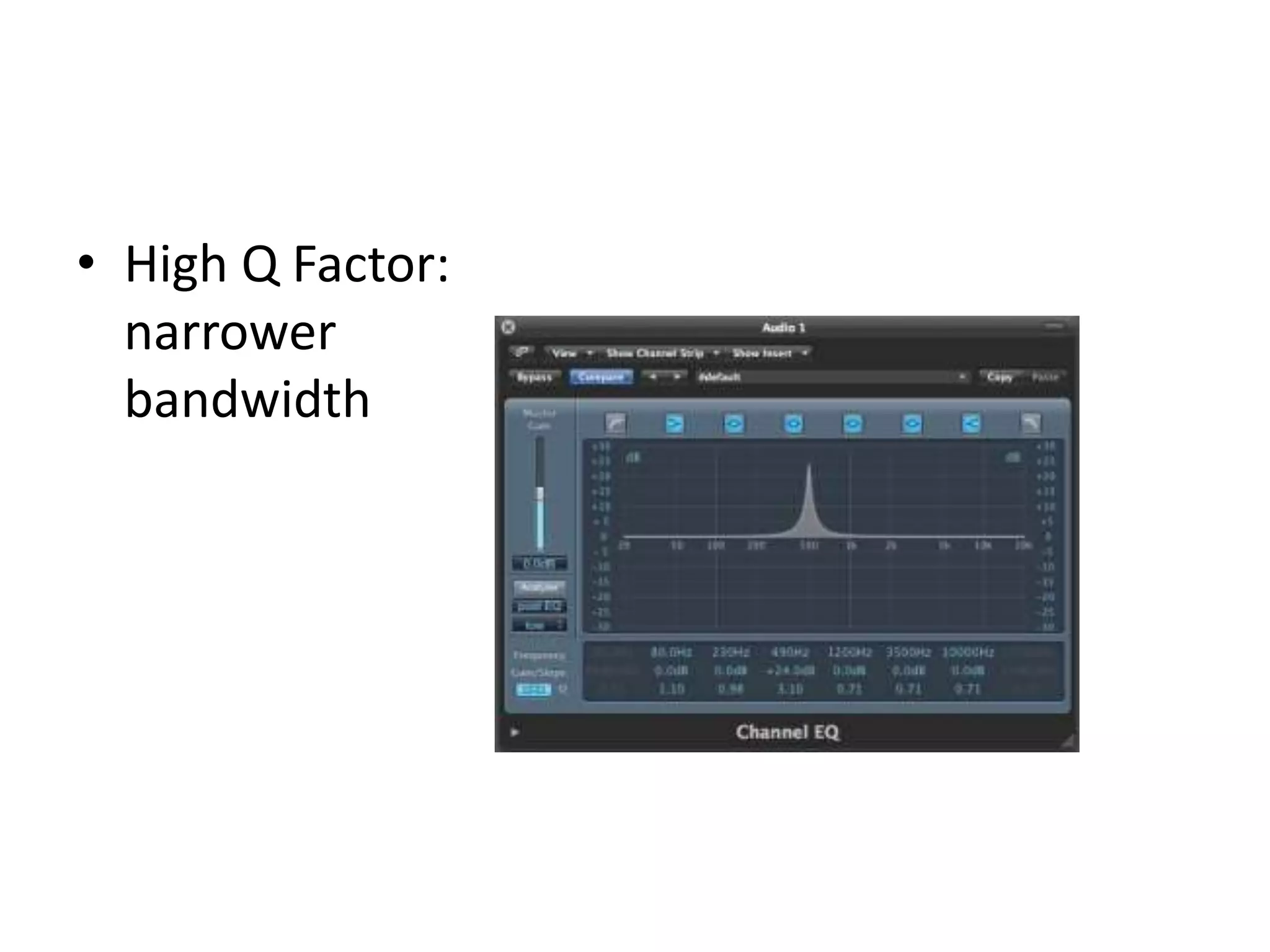
A sweep EQ with the option of adjusting the ‘Q’
(also called resonance). This increases or
decreases the range over which the frequency is
cut or boosted either side of the centre
frequency (increases or decreases the
bandwidth)
• Low Q Factor:
 wider bandwidth
• High Q Factor:
  narrower
  bandwidth
Why is this important?
Important for ALL portfolio

Use music technology keywords in your logbook
to explain your choice of EQ and why.

Making sounds more realistic and fitting Task 1A
better.
Synthesis
What is Synthesis?

How have you currently been creating your
sounds for your instruments?
Synthesis
How are sounds created?
Synthesis
How are sounds created?

An oscillator creates a sound wave which can
then be manipulated to design the sound you
wish
Oscillators
Used to generate a raw repeating signal/wave

Different tyes of oscillators produce a variety of
signals including sine, triangle, sawtooth,
square and random noise waves
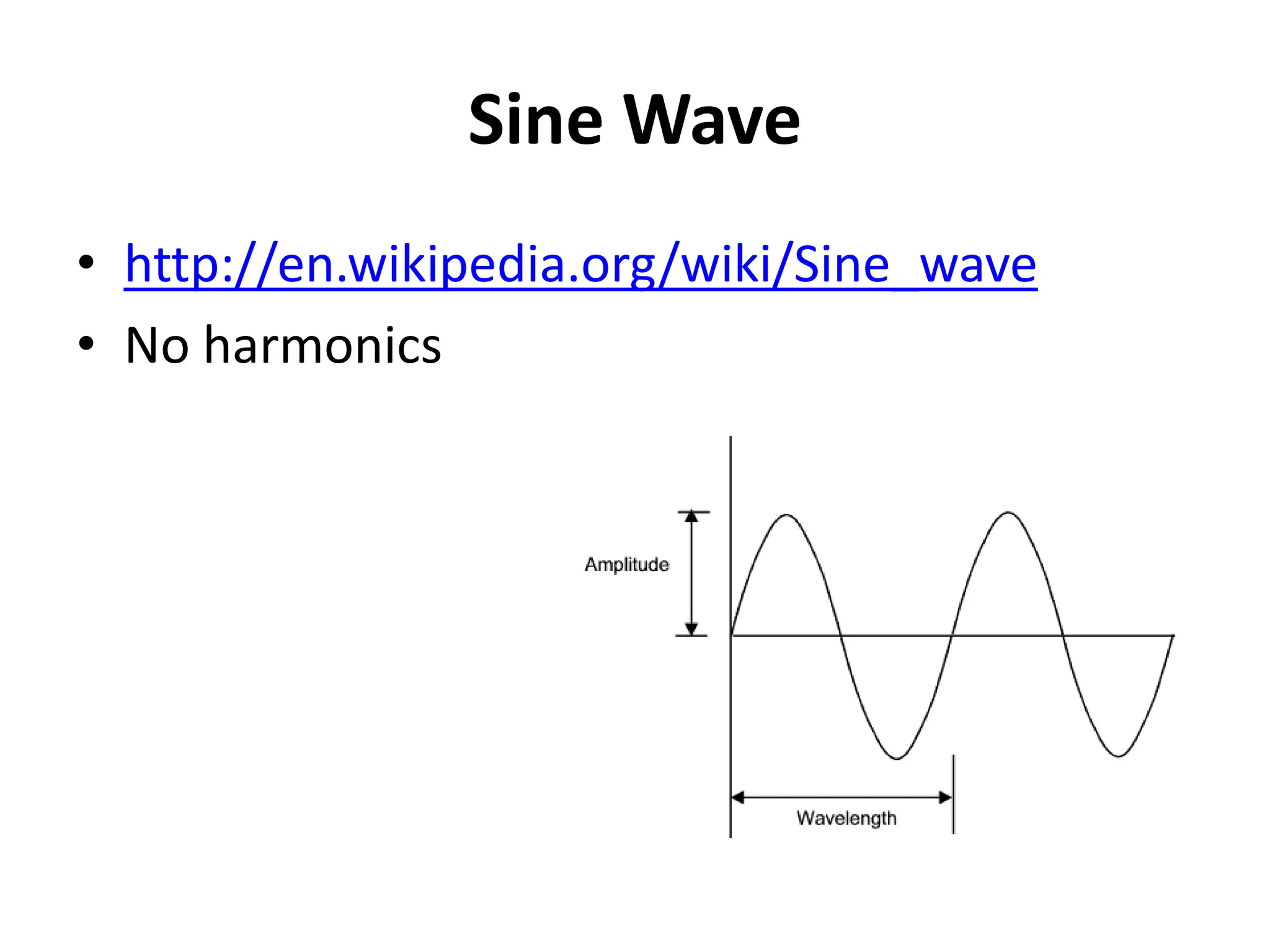
Sine Wave
• http://en.wikipedia.org/wiki/Sine_wave
• No harmonics
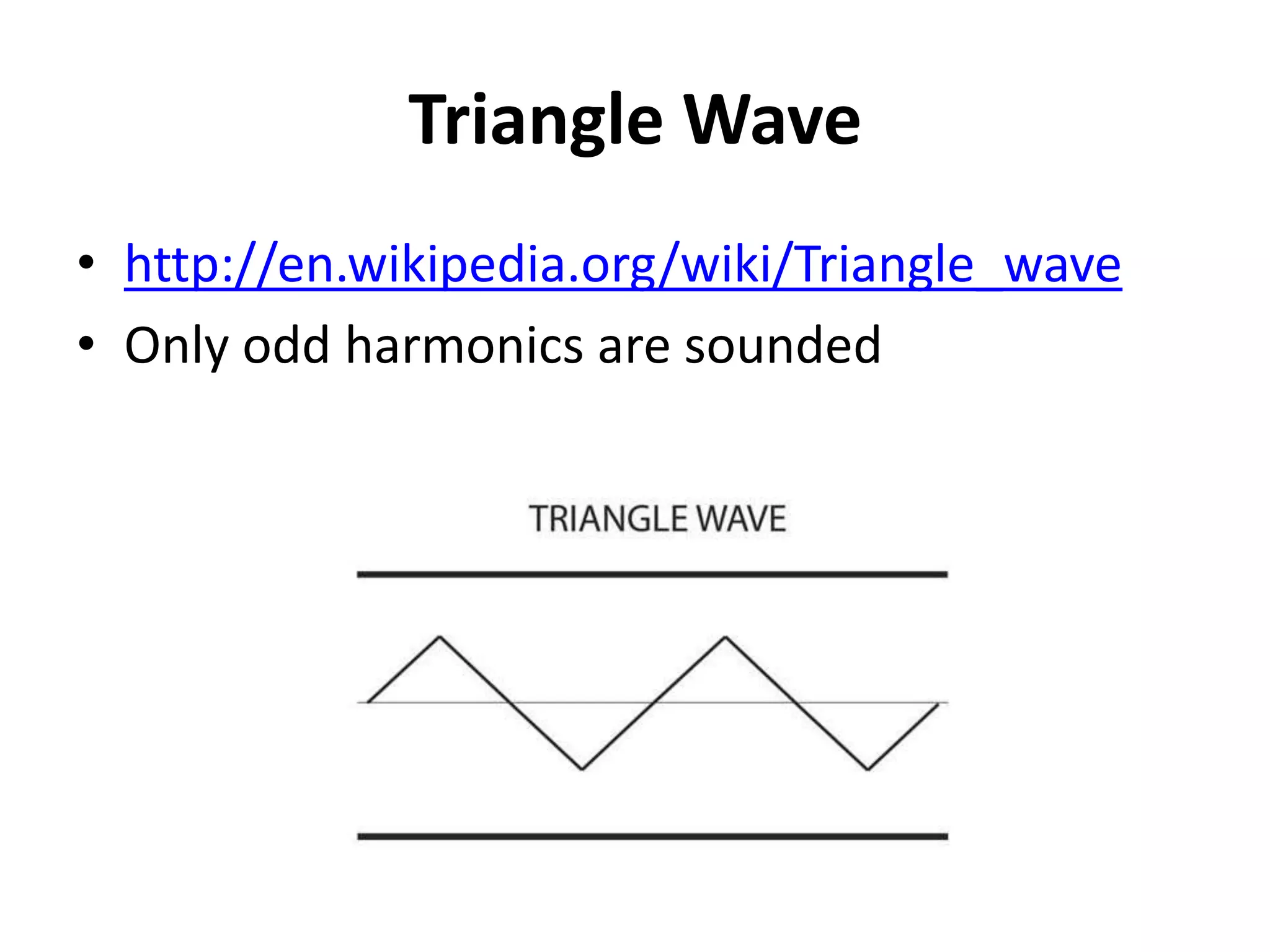
Triangle Wave
• http://en.wikipedia.org/wiki/Triangle_wave
• Only odd harmonics are sounded
Harmonic Numbers
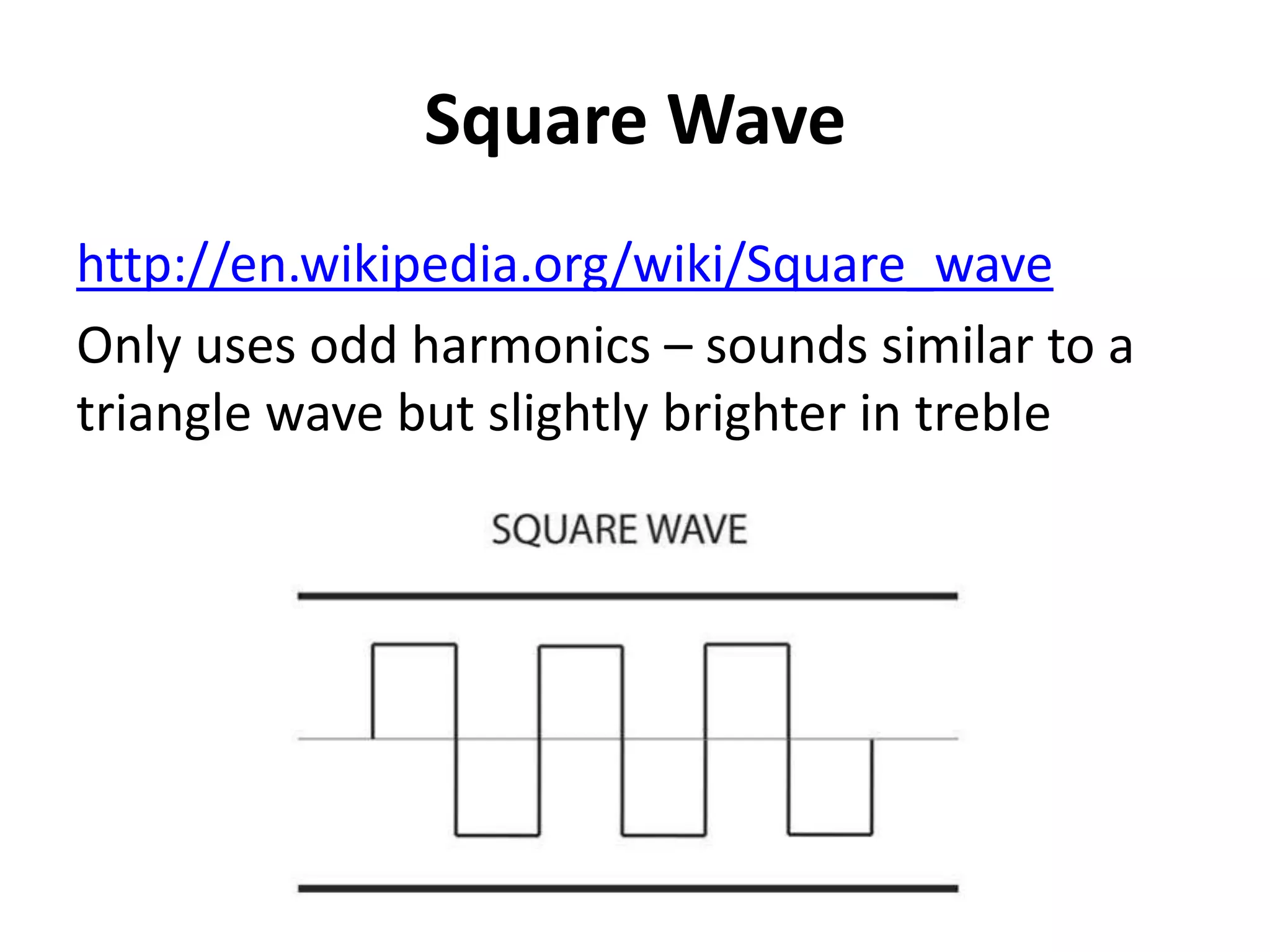
Square Wave
http://en.wikipedia.org/wiki/Square_wave
Only uses odd harmonics – sounds similar to a
triangle wave but slightly brighter in treble
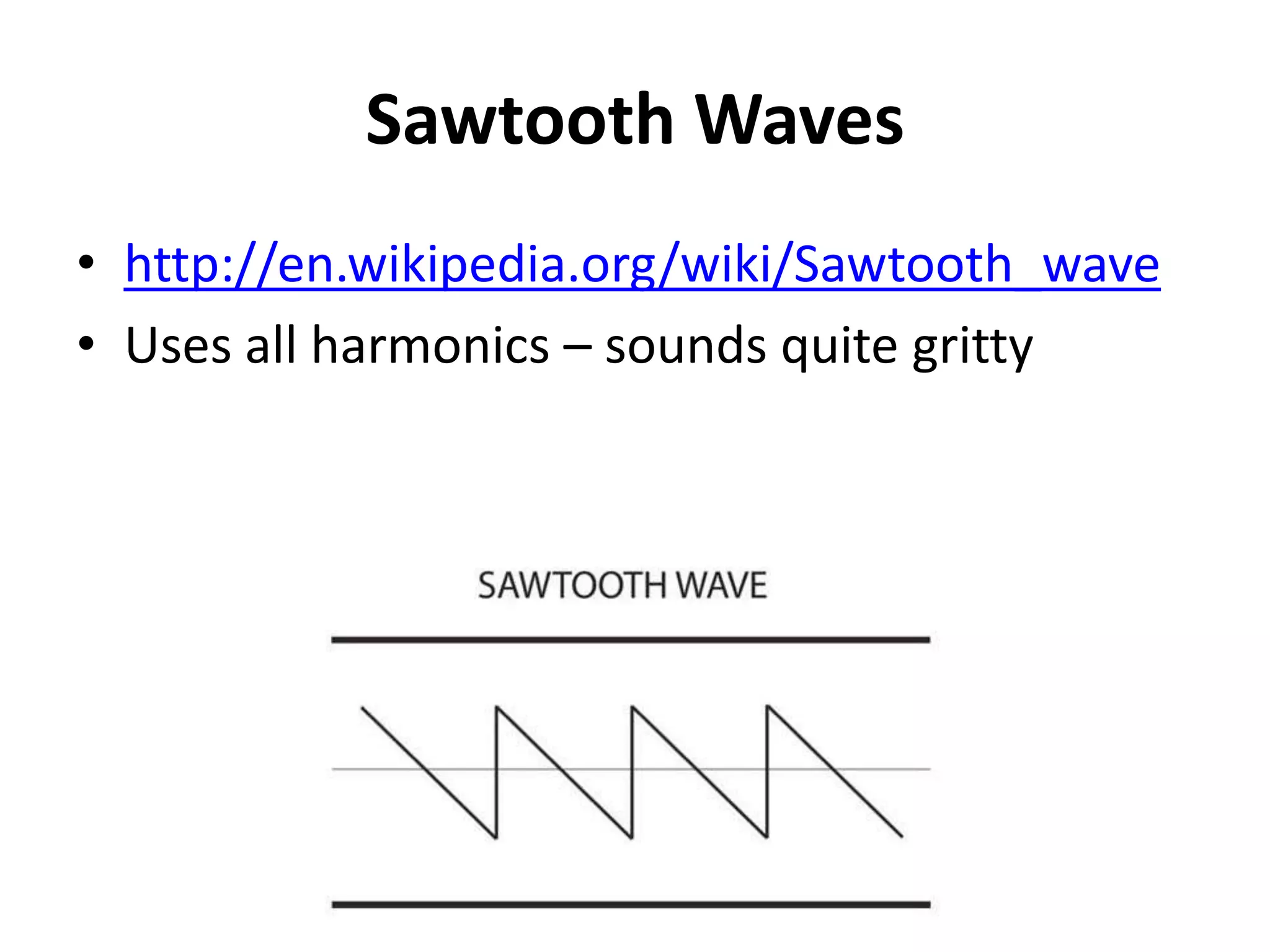
Sawtooth Waves
• http://en.wikipedia.org/wiki/Sawtooth_wave
• Uses all harmonics – sounds quite gritty
Why are these important to you?
You can design your own sounds – very
important!!

Start with a template and then adjust it or start
from scratch if you wish!
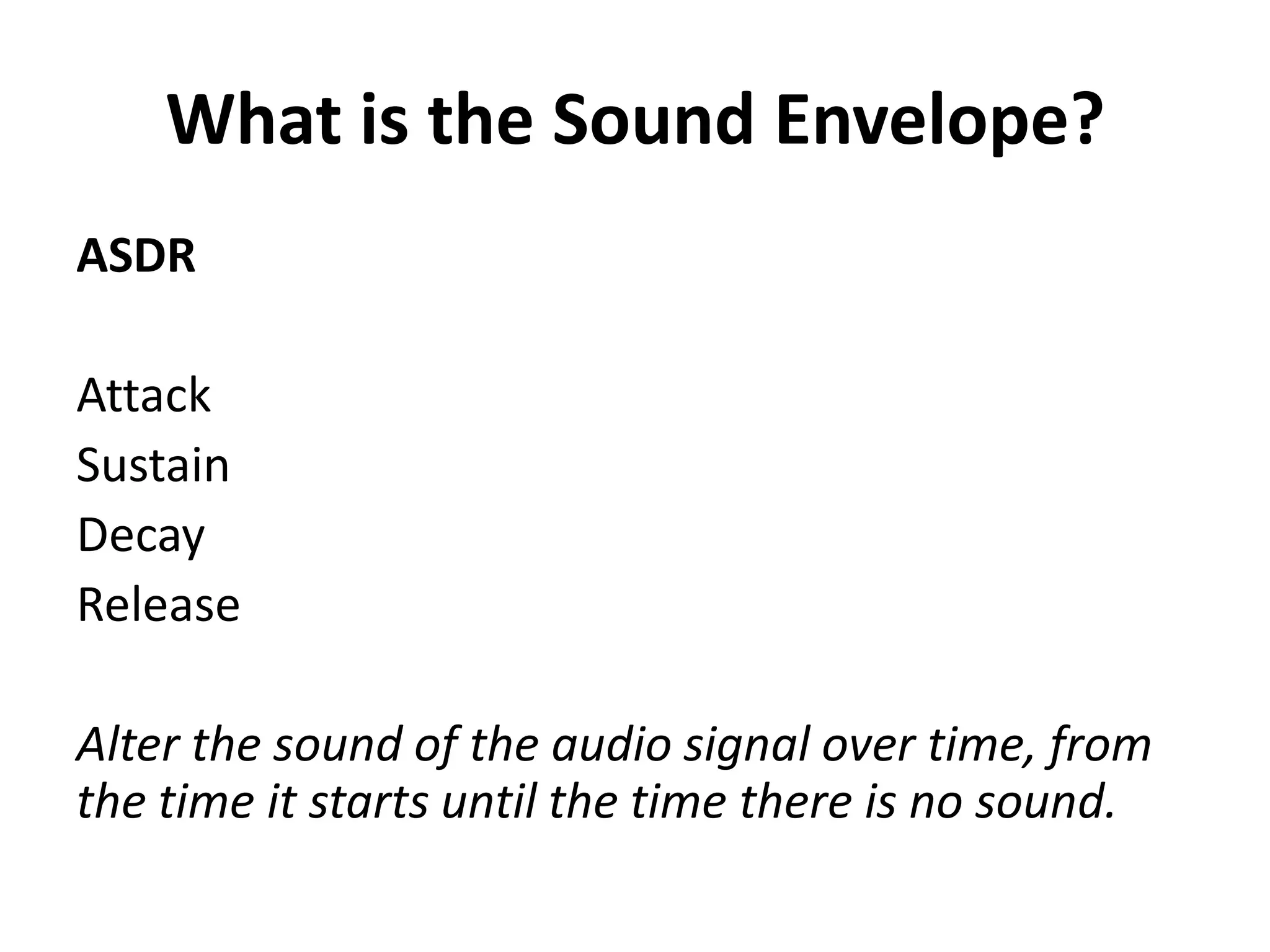
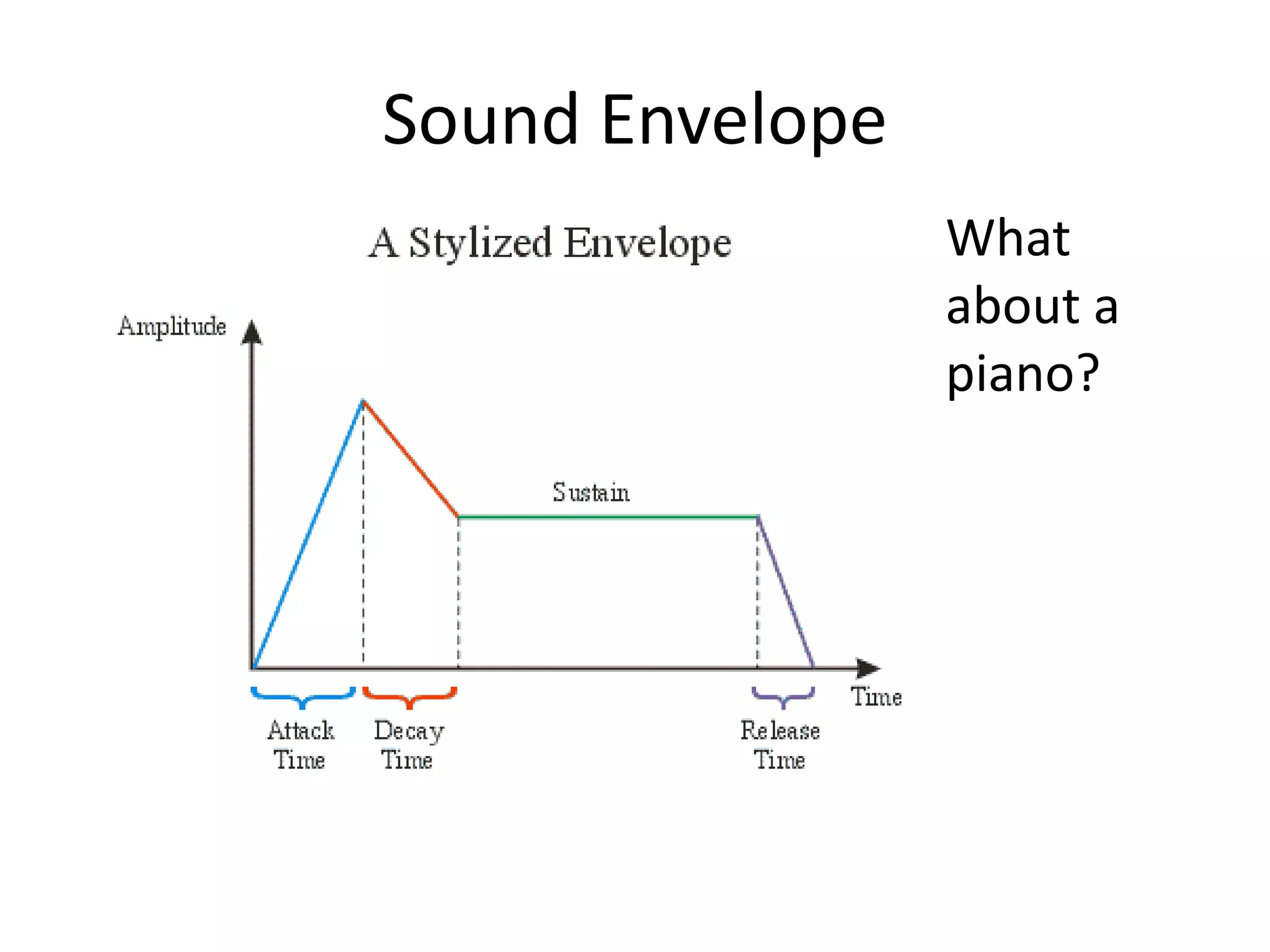
What is the Sound Envelope?
ASDR

Attack
Sustain
Decay
Release

Alter the sound of the audio signal over time, from
the time it starts until the time there is no sound.
Sound Envelope
                 • What
                   about a
                   piano?
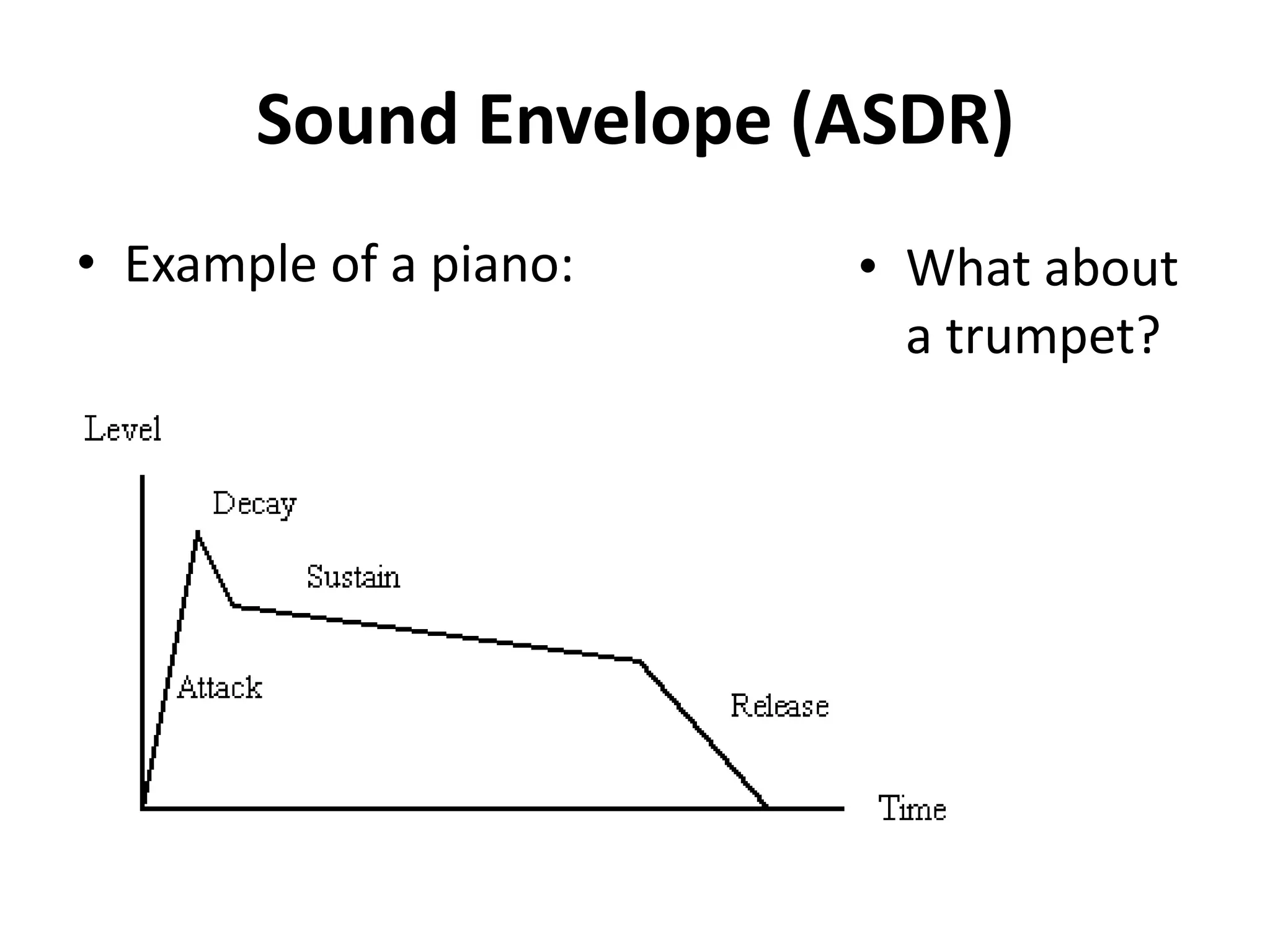
Sound Envelope (ASDR)
• Example of a piano:   • What about
                          a trumpet?
Sound Envelope (ASDR)
How to design your sound using the sound
envelope

http://en.wikiaudio.org/ADSR_envelope
Filters
What do filters do?
Filters
What do filters do?
Modify a signal by cutting/removing a specific
frequency band. Changes the brightness of a
sound.
Filters use a cut-off frequency to define which
frequencies are removed from the signal

Two main types: high-pass and low-pass
Types of filters
Low pass filter – removes frequencies higher than the
cut-off frequency, allowing the lower frequencies to pass
through
High pass filter – removed frequencies lower than the
cut-off frequency, allowing the higher frequencies to pass
through.
Band pass filter – uses combination of both HPF and LPF
to allow only frequencies near the cut-off to pass through
Band-elimination filter – uses both LPF and HPF to
remove only frequencies near the cut off.
Peaking filter – emphasizes frequencies near the cut-off
frequency – also called resonance.
Sound Design and Synthesis
Start with an oscillator and work on the sound you
like
Adjust the envelope (ASDR)
Use EQ and filter to boost/cut the correct
harmonies
Use reverb to complete the sound

Write it all up in your logbook – so important to
show you can design your own sounds!!

Sound, harmonics, frequency and pitch

  • 1.
    Music Technology Musical Acoustics
  • 2.
  • 3.
    What is Sound? HumanAspect of Sound? Physical Aspect of Sound?
  • 4.
    What is Sound? HumanAspect of Sound? What is heard Physical Aspect of Sound? Pressure disturbances propagating through a medium, usually air
  • 5.
  • 6.
    What is Pitch? Repetitionrate in a Sound Not the same as frequency – a note with given pitch normally contain many frequencies – what are these different frequencies called?
  • 7.
    What is Frequency? Repetitionrate for a simple oscillator An oscillator is a repetitive wave e.g. sine wave, saw wave etc.
  • 8.
    What is Frequencymeasured in?
  • 9.
    What is Frequencymeasured in? Hertz Normal hearing range is 30-15,000Hz
  • 10.
    Frequencies The range ofpitch of the piano is 30-4,000Hz The lowest notes are heard almost entirely via the harmonics present in the tone.
  • 11.
    Harmonics All oscillations containmore than one frequency. The cluster of all the different sounding frequencies make the tone of the sound. The frequencies are often exact multiples of the lowest, fundamental frequency, or near to this.
  • 12.
  • 14.
  • 15.
    What, therefore, doesEQ do? • Boosts and cuts certain frequencies, which will inevitably, take out or increase the dynamic volume of some of the harmonics.
  • 16.
    EQ Bands Normally threebands: High Freq: 5-6kHz upwards Mid-Range: 500Hz – 5kHz Low Freq: 50Hz-500Hz
  • 17.
  • 18.
    Why should youuse EQ? • Enhances the balance of the overall sound, by altering the tonal qualities of individual instruments • Makes MIDI sounds more realistic • Removes unwanted frequencies • Separates mid-range sounds that are similar in frequency, helps to give clarity to the mix, and stops them blending too much on important parts • Bring out important melodies
  • 19.
  • 20.
    Types of EQ ShelvingEQ: High freq: Cut/boost all the signal above a certain frequency Low freq: Cut/boost all the signal below a certain freq. Can you draw it?
  • 21.
    High-Shelf Boost Low Shelfand High Shelf Cut
  • 22.
    Band Pass EQ Cut/boostthe signal between an upper and lower frequency.
  • 23.
    Band Pass EQ Cut/boostthe signal between an upper and lower frequency.
  • 24.
    Sweep EQ A band-passEQ with the option of adjusting the centre frequency around which the signal is altered. http://www.youtube.com/watch?v=Gmrve23xR W8
  • 25.
    Parametric EQ A sweepEQ with the option of adjusting the ‘Q’ (also called resonance). This increases or decreases the range over which the frequency is cut or boosted either side of the centre frequency (increases or decreases the bandwidth)
  • 26.
    • Low QFactor: wider bandwidth
  • 27.
    • High QFactor: narrower bandwidth
  • 28.
    Why is thisimportant?
  • 29.
    Why is thisimportant? Important for ALL portfolio Use music technology keywords in your logbook to explain your choice of EQ and why. Making sounds more realistic and fitting Task 1A better.
  • 30.
    Synthesis What is Synthesis? Howhave you currently been creating your sounds for your instruments?
  • 31.
  • 32.
    Synthesis How are soundscreated? An oscillator creates a sound wave which can then be manipulated to design the sound you wish
  • 33.
    Oscillators Used to generatea raw repeating signal/wave Different tyes of oscillators produce a variety of signals including sine, triangle, sawtooth, square and random noise waves
  • 34.
  • 35.
  • 36.
  • 37.
    Square Wave http://en.wikipedia.org/wiki/Square_wave Only usesodd harmonics – sounds similar to a triangle wave but slightly brighter in treble
  • 38.
  • 39.
    Why are theseimportant to you?
  • 40.
    Why are theseimportant to you? You can design your own sounds – very important!! Start with a template and then adjust it or start from scratch if you wish!
  • 41.
    What is theSound Envelope?
  • 42.
    What is theSound Envelope? ASDR Attack Sustain Decay Release Alter the sound of the audio signal over time, from the time it starts until the time there is no sound.
  • 43.
    Sound Envelope • What about a piano?
  • 44.
    Sound Envelope (ASDR) •Example of a piano: • What about a trumpet?
  • 45.
    Sound Envelope (ASDR) Howto design your sound using the sound envelope http://en.wikiaudio.org/ADSR_envelope
  • 46.
  • 47.
    Filters What do filtersdo? Modify a signal by cutting/removing a specific frequency band. Changes the brightness of a sound. Filters use a cut-off frequency to define which frequencies are removed from the signal Two main types: high-pass and low-pass
  • 48.
    Types of filters Lowpass filter – removes frequencies higher than the cut-off frequency, allowing the lower frequencies to pass through High pass filter – removed frequencies lower than the cut-off frequency, allowing the higher frequencies to pass through. Band pass filter – uses combination of both HPF and LPF to allow only frequencies near the cut-off to pass through Band-elimination filter – uses both LPF and HPF to remove only frequencies near the cut off. Peaking filter – emphasizes frequencies near the cut-off frequency – also called resonance.
  • 49.
    Sound Design andSynthesis Start with an oscillator and work on the sound you like Adjust the envelope (ASDR) Use EQ and filter to boost/cut the correct harmonies Use reverb to complete the sound Write it all up in your logbook – so important to show you can design your own sounds!!