Solution Focused Therapy

Course: Working with Families
February 10, 2012
Group Project presented by
Kyle McNair, Linda Ellison and Lesley Smith
Solution Focused Therapy (SFT)
•

Focuses on solutions rather
than on the problems that
brought clients to seek
therapy.

•

Offers a connection between
strategic theories and
language theories

•

Emphasizes the need for
clients to have clear and
concise goals.
Steve deShaver And Insoo Berg
• Co-Developed SFT
• Research for SFT based
from the Brief Therapy
Center in Milwaukee

177
Eve Lipchik
•

Clinician affliated with BFTC

•

Developed a controversial
model for working with
domestic violence

•

Differs from most therapy
models because the batterer
is included in the sessions

Picture: http://www.icfconsultants.com/lipchik.
htm

177
Michelle Weiner-Davis
• Her book, Divorce Busting is
addressed to couples.
• Known for including the
following phrase in therapy:
“Do a one-eighty”
• If what a person is doing is not
working, then he or she is advised
to do the opposite.

Picture: http://www.sideroad.
com/images/michele_davis.jpg
SFT Therapist Optimistic Approach to
Therapy
• Starts session by discussing anything
that is not related to the client’s issues,
(weather, job, school etc..).
• Avoids confrontation or disagreements
• Asks a series of questions designed to
retrieve exceptions to the problem.

Pg. 178
Bill O’Hanlon
•

Hypnotist that combined the ideas
of his teacher, Hypnosist Milton
Erickson with the SFT.

•

Ideas based on the phenomenon,

Naturalistic Trance
•

Uses language that matches the

client’s language
•
•

ex: Client- “I see him failing.”
Therapist- “ It looks bleak to you.”

Pg. 178
Compliments
•

Validation and acknowledgements by the therapist encourages
the client to change his or her way of thinking, while giving the
message that the therapist has been listening and cares(pg. 178).

•

Helps to point out what the client is doing that is working

•

Encourages self compliment by inviting the client to describe
a situation where he or she did something productive to
correct the problem
http://www.psychotherapy.
net/data/uploads/4c6522b7d1927.mp4
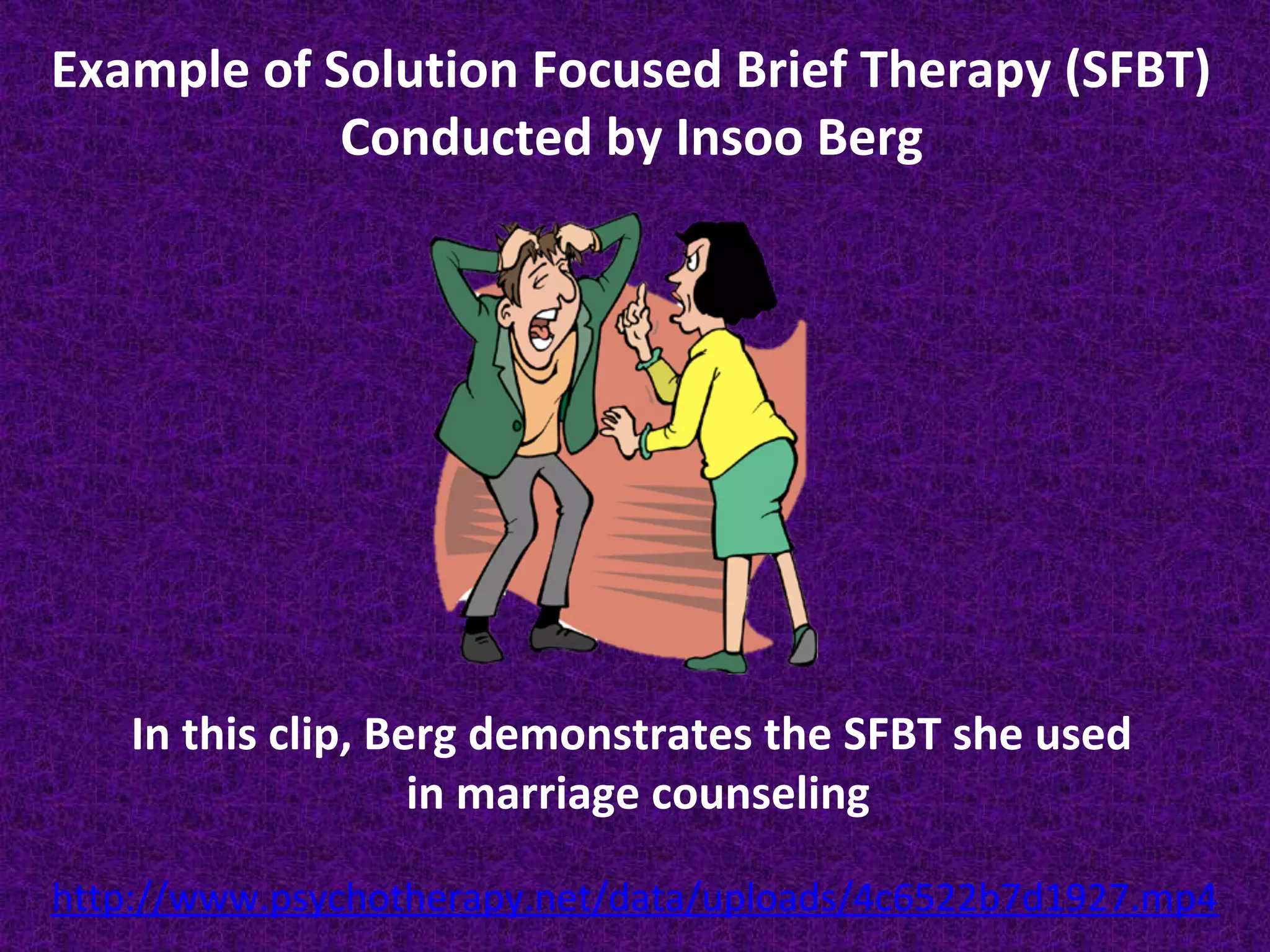
Example of Solution Focused Brief Therapy (SFBT)
Conducted by Insoo Berg

In this clip, Berg demonstrates the SFBT she used
in marriage counseling
http://www.psychotherapy.net/data/uploads/4c6522b7d1927.mp4
Discussion More to Come
• SFT Therapists assigns formula tasks
for married couples to try at home.
Summary
• SFT is factual, cognitive, and easily teachable.
• It is clear, concise and obtains an optimistic
view of people.
•

Refers to the past only to gain insight on
exceptions to the problem

• Therapist praises the client’s accomplishments
and strengths

Solution focused therapy

  • 1.
    Solution Focused Therapy Course:Working with Families February 10, 2012 Group Project presented by Kyle McNair, Linda Ellison and Lesley Smith
  • 2.
    Solution Focused Therapy(SFT) • Focuses on solutions rather than on the problems that brought clients to seek therapy. • Offers a connection between strategic theories and language theories • Emphasizes the need for clients to have clear and concise goals.
  • 3.
    Steve deShaver AndInsoo Berg • Co-Developed SFT • Research for SFT based from the Brief Therapy Center in Milwaukee 177
  • 4.
    Eve Lipchik • Clinician affliatedwith BFTC • Developed a controversial model for working with domestic violence • Differs from most therapy models because the batterer is included in the sessions Picture: http://www.icfconsultants.com/lipchik. htm 177
  • 5.
    Michelle Weiner-Davis • Herbook, Divorce Busting is addressed to couples. • Known for including the following phrase in therapy: “Do a one-eighty” • If what a person is doing is not working, then he or she is advised to do the opposite. Picture: http://www.sideroad. com/images/michele_davis.jpg
  • 6.
    SFT Therapist OptimisticApproach to Therapy • Starts session by discussing anything that is not related to the client’s issues, (weather, job, school etc..). • Avoids confrontation or disagreements • Asks a series of questions designed to retrieve exceptions to the problem. Pg. 178
  • 7.
    Bill O’Hanlon • Hypnotist thatcombined the ideas of his teacher, Hypnosist Milton Erickson with the SFT. • Ideas based on the phenomenon, Naturalistic Trance • Uses language that matches the client’s language • • ex: Client- “I see him failing.” Therapist- “ It looks bleak to you.” Pg. 178
  • 8.
    Compliments • Validation and acknowledgementsby the therapist encourages the client to change his or her way of thinking, while giving the message that the therapist has been listening and cares(pg. 178). • Helps to point out what the client is doing that is working • Encourages self compliment by inviting the client to describe a situation where he or she did something productive to correct the problem http://www.psychotherapy. net/data/uploads/4c6522b7d1927.mp4
  • 9.
    Example of SolutionFocused Brief Therapy (SFBT) Conducted by Insoo Berg In this clip, Berg demonstrates the SFBT she used in marriage counseling http://www.psychotherapy.net/data/uploads/4c6522b7d1927.mp4
  • 10.
    Discussion More toCome • SFT Therapists assigns formula tasks for married couples to try at home.
  • 11.
    Summary • SFT isfactual, cognitive, and easily teachable. • It is clear, concise and obtains an optimistic view of people. • Refers to the past only to gain insight on exceptions to the problem • Therapist praises the client’s accomplishments and strengths