SOLID WASTE MANAGEMENT
CREATED BY
SAMIRAN GOSWAMI
WHAT WE WILL COVER
 INTRODUCTION TO WASTE
 WHAT IS SOLID WASTE
 SOURCES AND EFFECTS OF SOLID WASTE
 MANAGING SOLID WASTE
 3-R CONCEPT
 WASTE DISPOSAL METHODS
INTRODUCTION TO WASTE
 Waste is any substance which is discarded after primary
use, or it is worthless, defective and of no use
 Types of waste:
 Solid waste
 Organic waste
 Recyclable waste
 Disposable waste
 Liquid waste
 Hazardous waste
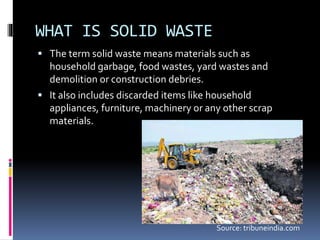
WHAT IS SOLID WASTE
 The term solid waste means materials such as
household garbage, food wastes, yard wastes and
demolition or construction debries.
 It also includes discarded items like household
appliances, furniture, machinery or any other scrap
materials.
Source: tribuneindia.com
SOURCES OF SOLID WASTE
 Residential
 Industrial
 Commercial
 Institutional
 Construction and demolition areas
 Municipal services
 Agriculture
 Bio-medical
EFFECTS OF SOLID WASTE
 Breeding ground for different types of disease
 Cause biological and physiochemical problems to the
environment
 Toxic materials and chemicals may seep into the soil and
pollute the ground water
 Toxic gases have a potential of causing various diseases
including cancer
MANAGING SOLID WASTES
 Solid waste management is a term that is used to refer to
the process of collecting and treating solid wastes.
 It also offers solutions for recycling items that do not
belong to garbage or trash.
 Waste management is all about how solid waste can be
changed and used as a valuable resource.
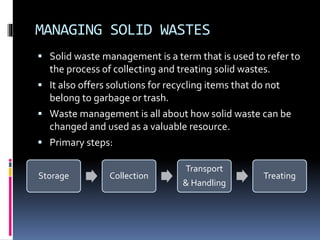
 Primary steps:
Storage Collection
Transport
& Handling
Treating
 Storage:
• Galvanized steel dust bin
• Paper sack
• Public bins
 Collection:
• Door- to- door collection
• Collection from public bins
 Transport and Handling:
• Wastes are transported to a central station
 Treating
• Wastes are treated using various processes
• Recycling or Disposal of wastes
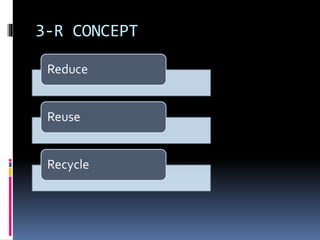
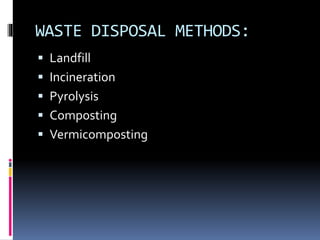
3-R CONCEPT
Reduce
Reuse
Recycle
 Reduce:
• Reduce office paper waste
• Improve product design to use less materials
• Redesign packaging to eliminate excess material while
maintaining strength
• Work with customers to design and implement a packaging return
program
• Switch to reusable transport containers
 Reuse:
• Reuse corrugated moving boxes internally
• Reuse office furniture and supplies, such as interoffice envelopes,
file folders, and paper
• Use incoming packaging materials for outgoing shipments
• Encourage employees to reuse office materials rather than
purchase new ones
 Recycle:
• Recycling refers to the collection and refuse of waste materials
• The materials from which the items are made can be processed
into new products
• Materials for recycling may be collected separately from general
waste using dedicated bins
• Each year we use-
• 25 billion plastic containers
• 30 billion bottles & jars
• 65 billion aluminum cans
• 100 billion pounds of paper
Source: tinleypark.org
WASTE DISPOSAL METHODS:
 Landfill
 Incineration
 Pyrolysis
 Composting
 Vermicomposting
Source: texasdisposal.com
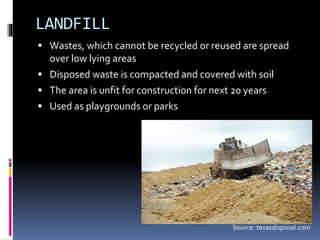
LANDFILL
 Wastes, which cannot be recycled or reused are spread
over low lying areas
 Disposed waste is compacted and covered with soil
 The area is unfit for construction for next 20 years
 Used as playgrounds or parks
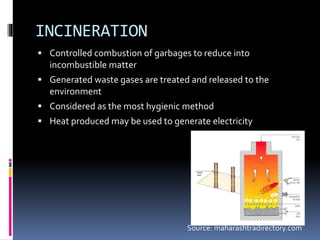
INCINERATION
 Controlled combustion of garbages to reduce into
incombustible matter
 Generated waste gases are treated and released to the
environment
 Considered as the most hygienic method
 Heat produced may be used to generate electricity
Source: maharashtradirectory.com
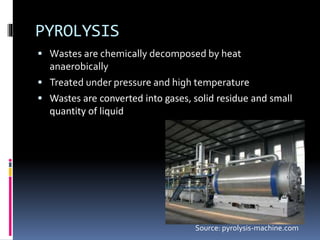
PYROLYSIS
 Wastes are chemically decomposed by heat
anaerobically
 Treated under pressure and high temperature
 Wastes are converted into gases, solid residue and small
quantity of liquid
Source: pyrolysis-machine.com
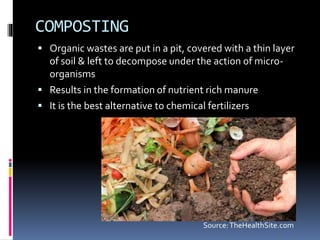
COMPOSTING
 Organic wastes are put in a pit, covered with a thin layer
of soil & left to decompose under the action of micro-
organisms
 Results in the formation of nutrient rich manure
 It is the best alternative to chemical fertilizers
Source:TheHealthSite.com
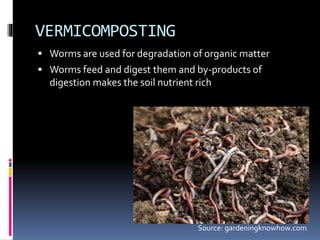
VERMICOMPOSTING
 Worms are used for degradation of organic matter
 Worms feed and digest them and by-products of
digestion makes the soil nutrient rich
Source: gardeningknowhow.com
CONCLUSION
Proper solid waste management is an integral part of
environmental conservation that should be observed by
individuals and companies globally.This will keep
the environment clean and reduce health related issues.
REFERENCE
 www.conserve-enenrgy-future.com
 www.yourarticlelibrary.com
 www.wormfarmingsecrets.com
 www.norcalcompactors.net
 www.slideshare.net
THANK YOU

Solid waste management

  • 1.
  • 2.
    WHAT WE WILLCOVER  INTRODUCTION TO WASTE  WHAT IS SOLID WASTE  SOURCES AND EFFECTS OF SOLID WASTE  MANAGING SOLID WASTE  3-R CONCEPT  WASTE DISPOSAL METHODS
  • 3.
    INTRODUCTION TO WASTE Waste is any substance which is discarded after primary use, or it is worthless, defective and of no use  Types of waste:  Solid waste  Organic waste  Recyclable waste  Disposable waste  Liquid waste  Hazardous waste
  • 4.
    WHAT IS SOLIDWASTE  The term solid waste means materials such as household garbage, food wastes, yard wastes and demolition or construction debries.  It also includes discarded items like household appliances, furniture, machinery or any other scrap materials. Source: tribuneindia.com
  • 5.
    SOURCES OF SOLIDWASTE  Residential  Industrial  Commercial  Institutional  Construction and demolition areas  Municipal services  Agriculture  Bio-medical
  • 6.
    EFFECTS OF SOLIDWASTE  Breeding ground for different types of disease  Cause biological and physiochemical problems to the environment  Toxic materials and chemicals may seep into the soil and pollute the ground water  Toxic gases have a potential of causing various diseases including cancer
  • 7.
    MANAGING SOLID WASTES Solid waste management is a term that is used to refer to the process of collecting and treating solid wastes.  It also offers solutions for recycling items that do not belong to garbage or trash.  Waste management is all about how solid waste can be changed and used as a valuable resource.  Primary steps: Storage Collection Transport & Handling Treating
  • 8.
     Storage: • Galvanizedsteel dust bin • Paper sack • Public bins  Collection: • Door- to- door collection • Collection from public bins  Transport and Handling: • Wastes are transported to a central station  Treating • Wastes are treated using various processes • Recycling or Disposal of wastes
  • 9.
  • 10.
     Reduce: • Reduceoffice paper waste • Improve product design to use less materials • Redesign packaging to eliminate excess material while maintaining strength • Work with customers to design and implement a packaging return program • Switch to reusable transport containers  Reuse: • Reuse corrugated moving boxes internally • Reuse office furniture and supplies, such as interoffice envelopes, file folders, and paper • Use incoming packaging materials for outgoing shipments • Encourage employees to reuse office materials rather than purchase new ones
  • 11.
     Recycle: • Recyclingrefers to the collection and refuse of waste materials • The materials from which the items are made can be processed into new products • Materials for recycling may be collected separately from general waste using dedicated bins • Each year we use- • 25 billion plastic containers • 30 billion bottles & jars • 65 billion aluminum cans • 100 billion pounds of paper Source: tinleypark.org
  • 12.
    WASTE DISPOSAL METHODS: Landfill  Incineration  Pyrolysis  Composting  Vermicomposting
  • 13.
    Source: texasdisposal.com LANDFILL  Wastes,which cannot be recycled or reused are spread over low lying areas  Disposed waste is compacted and covered with soil  The area is unfit for construction for next 20 years  Used as playgrounds or parks
  • 14.
    INCINERATION  Controlled combustionof garbages to reduce into incombustible matter  Generated waste gases are treated and released to the environment  Considered as the most hygienic method  Heat produced may be used to generate electricity Source: maharashtradirectory.com
  • 15.
    PYROLYSIS  Wastes arechemically decomposed by heat anaerobically  Treated under pressure and high temperature  Wastes are converted into gases, solid residue and small quantity of liquid Source: pyrolysis-machine.com
  • 16.
    COMPOSTING  Organic wastesare put in a pit, covered with a thin layer of soil & left to decompose under the action of micro- organisms  Results in the formation of nutrient rich manure  It is the best alternative to chemical fertilizers Source:TheHealthSite.com
  • 17.
    VERMICOMPOSTING  Worms areused for degradation of organic matter  Worms feed and digest them and by-products of digestion makes the soil nutrient rich Source: gardeningknowhow.com
  • 18.
    CONCLUSION Proper solid wastemanagement is an integral part of environmental conservation that should be observed by individuals and companies globally.This will keep the environment clean and reduce health related issues.
  • 19.
    REFERENCE  www.conserve-enenrgy-future.com  www.yourarticlelibrary.com www.wormfarmingsecrets.com  www.norcalcompactors.net  www.slideshare.net
  • 20.