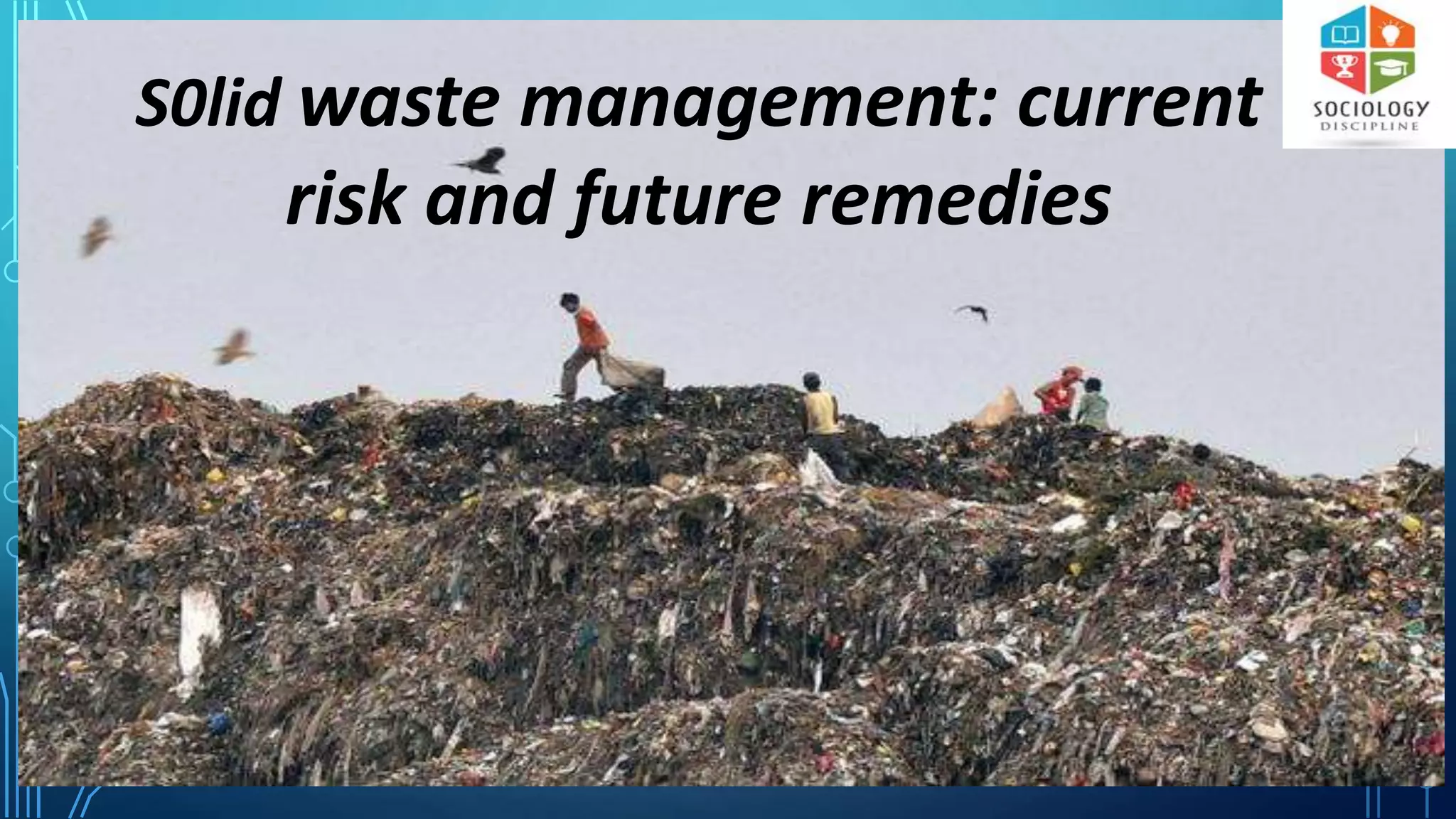
S0lid waste management: current
risk and future remedies
WELCOME TO OUR CLASS
TOPIC DISCUSSIONS
ABU RAYHAN – 171611
MD. TOWFIQUE HASAN - 171645
Outline of presentation
 Introduction to Waste and types
 Solid waste
 Type of solid waste
 Waste management concept
 Concept of 3R
 Solid waste management
 Storage
 Collection
 Waste handling and transport
 Method of disposal
 Zero waste system
 Current Risk
 Future remedies
Waste
• It define as
Waste (also known as rubbish ,trash, refuse ,garbage ,junk ) is any
unwanted are useless materials.
• Oxford Dictionary defined as
(also wastes) unwanted or unusable materials ,
substance, or by- product.
Types of waste :
• Solid waste
• Liquid waste
• Gaseous waste
• Animal by product (ABPs)
• Comical waste
• Commercial waste
• Biomedical waste
• Bulky waste
• Organic waste
• Recyclable waste
Solid waste:
 It is defined as
“non liquid ,non-soluble materials ranging from municipal
garbage to industrial waste that contain complex and sometimes
hazardous substances” .
 Solid waste also include
 Garbage
 Rubbish
 Demolition products
 Sewage treatment residue
 Dead animals
 Manure and other discarded material.
Sources of solid waste
 Agricultural
 Fisheries
 Household
 Commerce and industry
 Technological
Types of solid waste
Broadly there are three types of solid
waste which as:
1. Household waste as municipal waste
2. Industrial waste as hazardous waste
3. Biomedical waste or hospital waste as infectious waste
Effects of Solid Waste
A. Health hazard
• If solid waste are not collected and allowed to accumulate,
they may create unsanitary condition .
• These may lead to epidemic outbreaks .
• Many diseases like cholera, diarrhea, dysentery, plague ,
jaundice, or gastro-intestinal diseases may spread and
cause lose of human lives.
• In addition improper handling of the solid waste, a health
hazards for the workers who comes contract with the
waste.
Contd…
B. Environmental impact
• If the solid wastes are not treated properly
decomposition and putrefaction (decay) may
take place.
• The organic solid waste during decomposition
may generate obnoxious (intolerable odour).
Waste management concept
 The 3Rs ( Reduce, Reuse, Recycle) to be flowed for
waste management.
REDUCE
o Disposable goods: paper plate, paper bowl,
Styrofoam cup, plastic spoon, roll of paper
towels, paper napkin; Durable goods:
ceramic/plastic plate, metal spoon, glass/plastic
drinking cup, dish towel, cloth napkin)
o Recovery of one tonne paper can save 17 trees.
Reuse
 Instead of buying new containers from the
market, use the ones that are in the house.
 Don’t through away the soft drink can or bottle
cover them with home made paper or paint on
them and use them as pencil stands or small
vases.
Recycle
 Use shopping bags made of cloth or jute which can
be used over and over
SOLIDE WASTE MANAGEMENT
Waste management is the
• storage
• collection
• transport and handling
• recycling
• disposal and monitoring of waste materials
Storage: -
• Galvanized steel dust bin
• Paper sack
• Public bins
Collection –
• House-to-house collection
• Collection from the public bins
WASTE HANDLING AND TRANSPORT
• Waste handling and separation involves activities
associated with waste management until the waste
is placed in storage containers for collection.
Handling also encompasses the movement of
loaded containers to the point of collection.
• waste is transferred from a smaller collection
vehicle to larger transport equipment
RECYCLING
• Recycling refers to the collection and refuse of
waste materials such as empty beverage
container.
• The materials from which the items are made
can be processed into new products.
• Materials for recycling may be collected
separately from general waste using dedicated
bins.
METHOD OF DISPOSAL
1. Dumping
2. Controlled Tipping or Sanitary Landfill
3. Incineration
4. Composting
5. Manure pits
6. Burial
OBJECTIVES
• Public hygiene and health.
• Reuse, recovery and recycle
• Energy generation
• Sustainable development
ZERO WASTE SYSTEM
• Zero waste system which was founded by PhD chemist .Paul
parmer in Okland, California.
• It is a philosophy that encourages the redesign of resource
life cycle so that all products reused.
Current Risk
 Unsanitary Condition,
 Low public Health Level By Open
Dumping,
 Open Burning and Scattered Waste
 Air pollution
 Water pollution
RECOMENDETION
 The improvement of people and private sector through
NGOs could improve the efficiency of solid waste
management.
 Public awareness should be created especially at primary
level.
 Littering of solid waste should prohibited in cities towns
and urban areas.
 More over house to house collecting solid waste should be
Contd…..
The collection bins must be have a large enough capacity to
accommodate 20% more than the expected waste generation in the
area.
 Municipal authorities should maintain the storage facilities to
avoid unhygienic & unsanitary condition.
It is advisable to move from open dumping to sanitary land filling
in a phased manner
Reference
 Park, K. (2013). Text book of preventive and social medicine . Jabalpur:
Banarsidas Bhanot Publishers
 John J. Macionis, V. N. (2012). Cities and Urban Life. William Paterson
University.
THANK YOU
ANY QUESTION ……???

Solid waste management current risk and future remedies.

  • 1.
    S0lid waste management:current risk and future remedies
  • 2.
    WELCOME TO OURCLASS TOPIC DISCUSSIONS ABU RAYHAN – 171611 MD. TOWFIQUE HASAN - 171645
  • 3.
    Outline of presentation Introduction to Waste and types  Solid waste  Type of solid waste  Waste management concept  Concept of 3R  Solid waste management  Storage  Collection  Waste handling and transport  Method of disposal  Zero waste system  Current Risk  Future remedies
  • 4.
    Waste • It defineas Waste (also known as rubbish ,trash, refuse ,garbage ,junk ) is any unwanted are useless materials. • Oxford Dictionary defined as (also wastes) unwanted or unusable materials , substance, or by- product.
  • 5.
    Types of waste: • Solid waste • Liquid waste • Gaseous waste • Animal by product (ABPs) • Comical waste • Commercial waste • Biomedical waste • Bulky waste • Organic waste • Recyclable waste
  • 6.
    Solid waste:  Itis defined as “non liquid ,non-soluble materials ranging from municipal garbage to industrial waste that contain complex and sometimes hazardous substances” .  Solid waste also include  Garbage  Rubbish  Demolition products  Sewage treatment residue  Dead animals  Manure and other discarded material.
  • 7.
    Sources of solidwaste  Agricultural  Fisheries  Household  Commerce and industry  Technological
  • 8.
    Types of solidwaste Broadly there are three types of solid waste which as: 1. Household waste as municipal waste 2. Industrial waste as hazardous waste 3. Biomedical waste or hospital waste as infectious waste
  • 9.
    Effects of SolidWaste A. Health hazard • If solid waste are not collected and allowed to accumulate, they may create unsanitary condition . • These may lead to epidemic outbreaks . • Many diseases like cholera, diarrhea, dysentery, plague , jaundice, or gastro-intestinal diseases may spread and cause lose of human lives. • In addition improper handling of the solid waste, a health hazards for the workers who comes contract with the waste.
  • 10.
    Contd… B. Environmental impact •If the solid wastes are not treated properly decomposition and putrefaction (decay) may take place. • The organic solid waste during decomposition may generate obnoxious (intolerable odour).
  • 11.
    Waste management concept The 3Rs ( Reduce, Reuse, Recycle) to be flowed for waste management.
  • 12.
    REDUCE o Disposable goods:paper plate, paper bowl, Styrofoam cup, plastic spoon, roll of paper towels, paper napkin; Durable goods: ceramic/plastic plate, metal spoon, glass/plastic drinking cup, dish towel, cloth napkin) o Recovery of one tonne paper can save 17 trees.
  • 13.
    Reuse  Instead ofbuying new containers from the market, use the ones that are in the house.  Don’t through away the soft drink can or bottle cover them with home made paper or paint on them and use them as pencil stands or small vases.
  • 14.
    Recycle  Use shoppingbags made of cloth or jute which can be used over and over
  • 15.
    SOLIDE WASTE MANAGEMENT Wastemanagement is the • storage • collection • transport and handling • recycling • disposal and monitoring of waste materials
  • 16.
    Storage: - • Galvanizedsteel dust bin • Paper sack • Public bins
  • 17.
    Collection – • House-to-housecollection • Collection from the public bins
  • 18.
    WASTE HANDLING ANDTRANSPORT • Waste handling and separation involves activities associated with waste management until the waste is placed in storage containers for collection. Handling also encompasses the movement of loaded containers to the point of collection. • waste is transferred from a smaller collection vehicle to larger transport equipment
  • 19.
    RECYCLING • Recycling refersto the collection and refuse of waste materials such as empty beverage container. • The materials from which the items are made can be processed into new products. • Materials for recycling may be collected separately from general waste using dedicated bins.
  • 20.
    METHOD OF DISPOSAL 1.Dumping 2. Controlled Tipping or Sanitary Landfill 3. Incineration 4. Composting 5. Manure pits 6. Burial
  • 21.
    OBJECTIVES • Public hygieneand health. • Reuse, recovery and recycle • Energy generation • Sustainable development
  • 22.
    ZERO WASTE SYSTEM •Zero waste system which was founded by PhD chemist .Paul parmer in Okland, California. • It is a philosophy that encourages the redesign of resource life cycle so that all products reused.
  • 23.
    Current Risk  UnsanitaryCondition,  Low public Health Level By Open Dumping,  Open Burning and Scattered Waste  Air pollution  Water pollution
  • 24.
    RECOMENDETION  The improvementof people and private sector through NGOs could improve the efficiency of solid waste management.  Public awareness should be created especially at primary level.  Littering of solid waste should prohibited in cities towns and urban areas.  More over house to house collecting solid waste should be
  • 25.
    Contd….. The collection binsmust be have a large enough capacity to accommodate 20% more than the expected waste generation in the area.  Municipal authorities should maintain the storage facilities to avoid unhygienic & unsanitary condition. It is advisable to move from open dumping to sanitary land filling in a phased manner
  • 27.
    Reference  Park, K.(2013). Text book of preventive and social medicine . Jabalpur: Banarsidas Bhanot Publishers  John J. Macionis, V. N. (2012). Cities and Urban Life. William Paterson University.
  • 28.