Solar Energy

By: Sayef Amin
ID No: 2013020301030
26 th Batch, Section: A










Solar Energy

Definition: radiant light and heat
from the sun that is used and
transformed into different types of
energy.
Most abundant source of
renewable energy on the planet
Production of solar energy uses
heat engines and photovoltaic
The most common way of
collecting solar energy is by use of
solar panels
energy storage methods:
 paraffin wax
 glaubers salt
salts are good
 low cost
 high specific heat levels and
 can deliver the right
temperature heat to
conventional heating systems
Advantages/ Disadvantages




Advantages
 Long lasting
 Can be used anywhere
 Silent and non polluting
 Solar cells can be added
when there is demand for
more energy
 Sunlight that reaches the
earth everyday is 200,000
times the total electrical
energy generated
everyday
 Solar power production is
growing rapidly
 It is a secure type of
energy
Disadvantages





High initial cost
Takes a lot of solar panels to
be efficient initially
Can only generate during the
day
Cost about twice of what
fossil fuels do
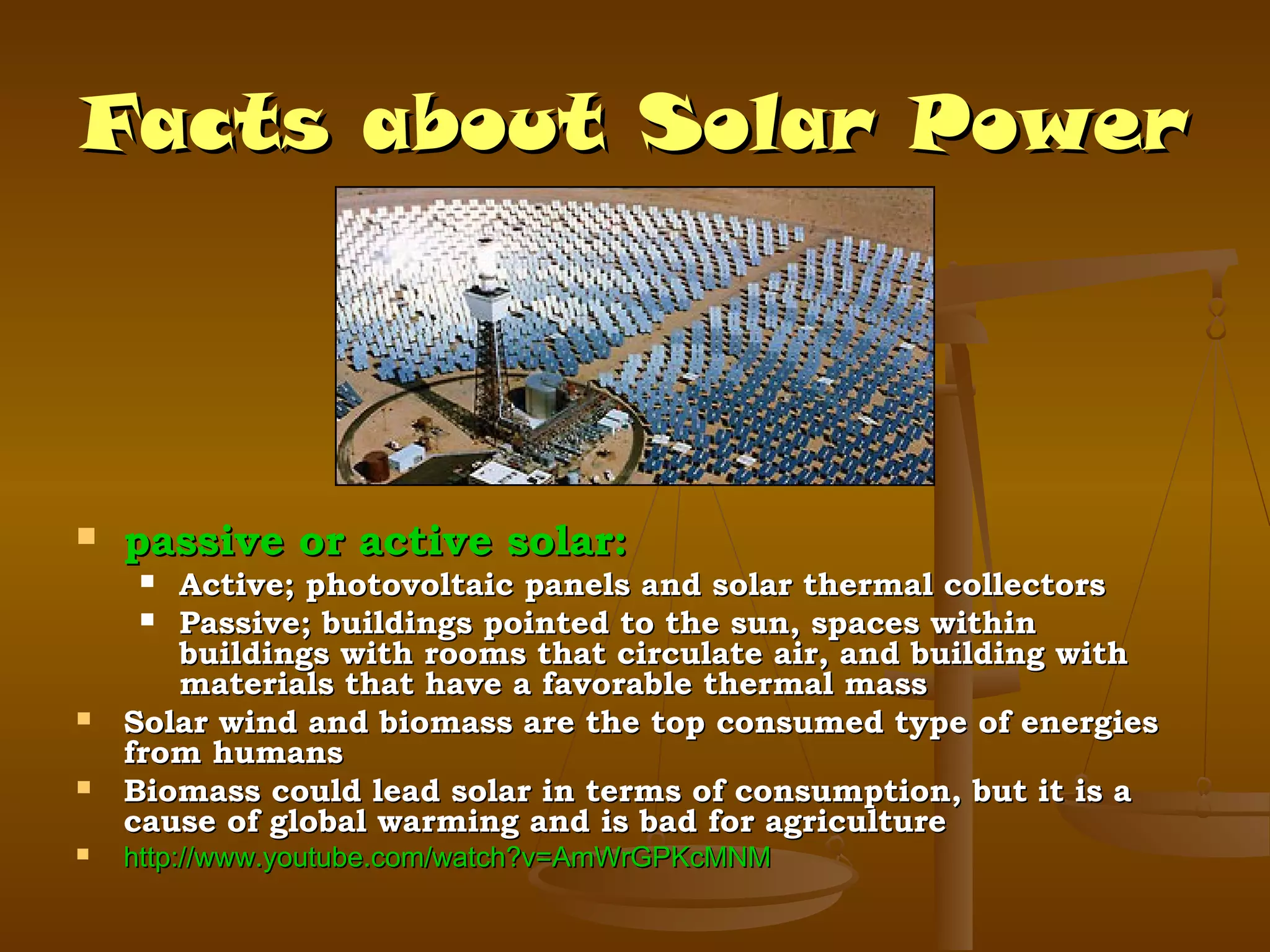
Facts about Solar Power



passive or active solar:

Active; photovoltaic panels and solar thermal collectors
 Passive; buildings pointed to the sun, spaces within
buildings with rooms that circulate air, and building with
materials that have a favorable thermal mass
Solar wind and biomass are the top consumed type of energies
from humans
Biomass could lead solar in terms of consumption, but it is a
cause of global warming and is bad for agriculture






http://www.youtube.com/watch?v=AmWrGPKcMNM
Applications:


Houses:
 solar lighting, heating and
ventilation systems















pumps fans and windows

Use natural solar lighting when
building
Hybrid solar lighting: faces
mirrors track the sun
throughout the day and use
optical fibers to distribute it
Water heating: china and
Cyprus have the most amount
of solar thermal water heaters
Farming:
 greenhouses turn solar
energy to hear
Photovoltaic cells: collect
photons and release electrons
as energy
Made of silicon
 as small as a calculator and
as large as pods in desert
parabolic discs
Solar Energy in Daily Life







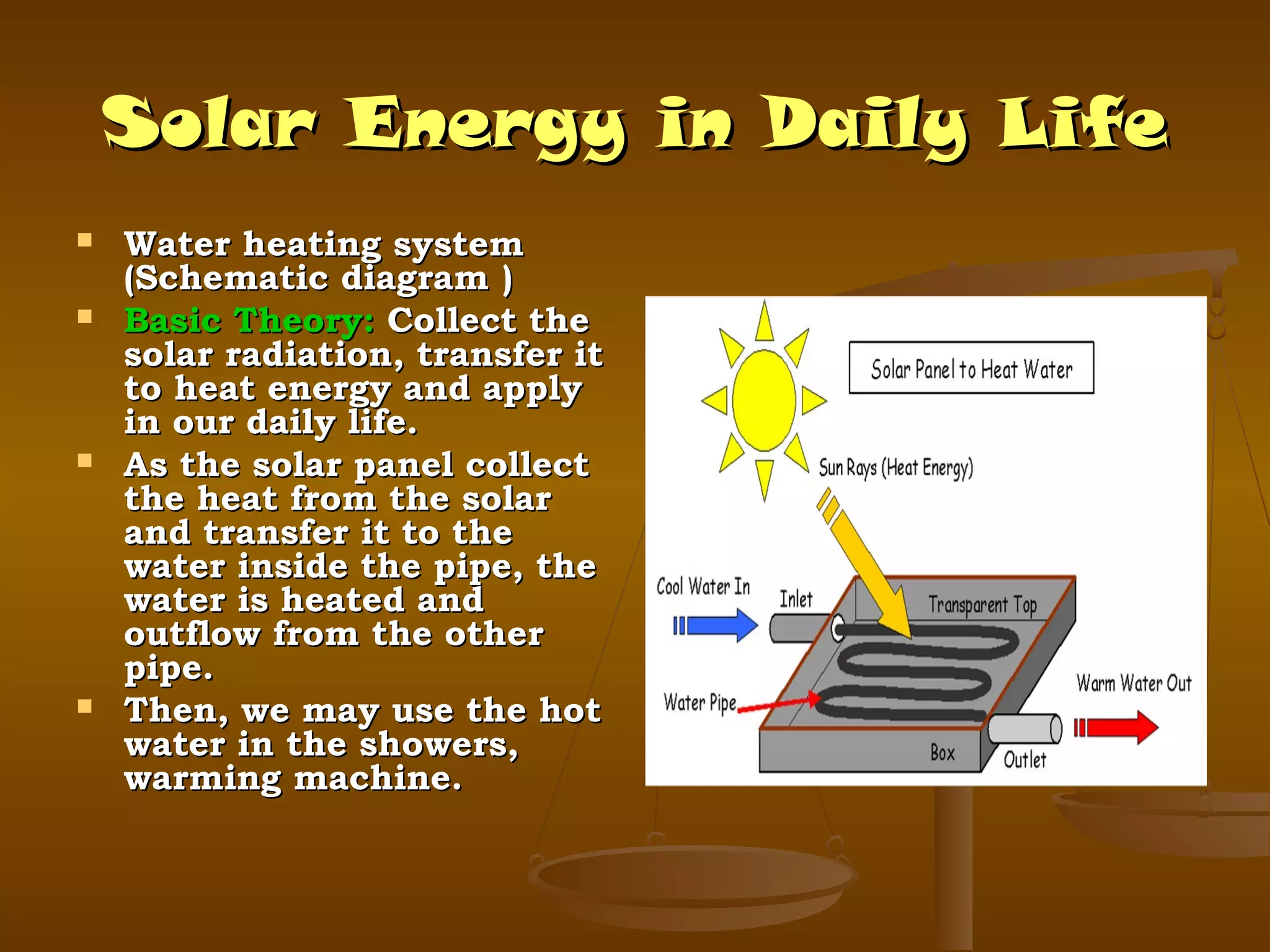
Water heating system
(Schematic diagram )
Basic Theory: Collect the
solar radiation, transfer it
to heat energy and apply
in our daily life.
As the solar panel collect
the heat from the solar
and transfer it to the
water inside the pipe, the
water is heated and
outflow from the other
pipe.
Then, we may use the hot
water in the showers,
warming machine.
Solar Energy for Industrial
Applications


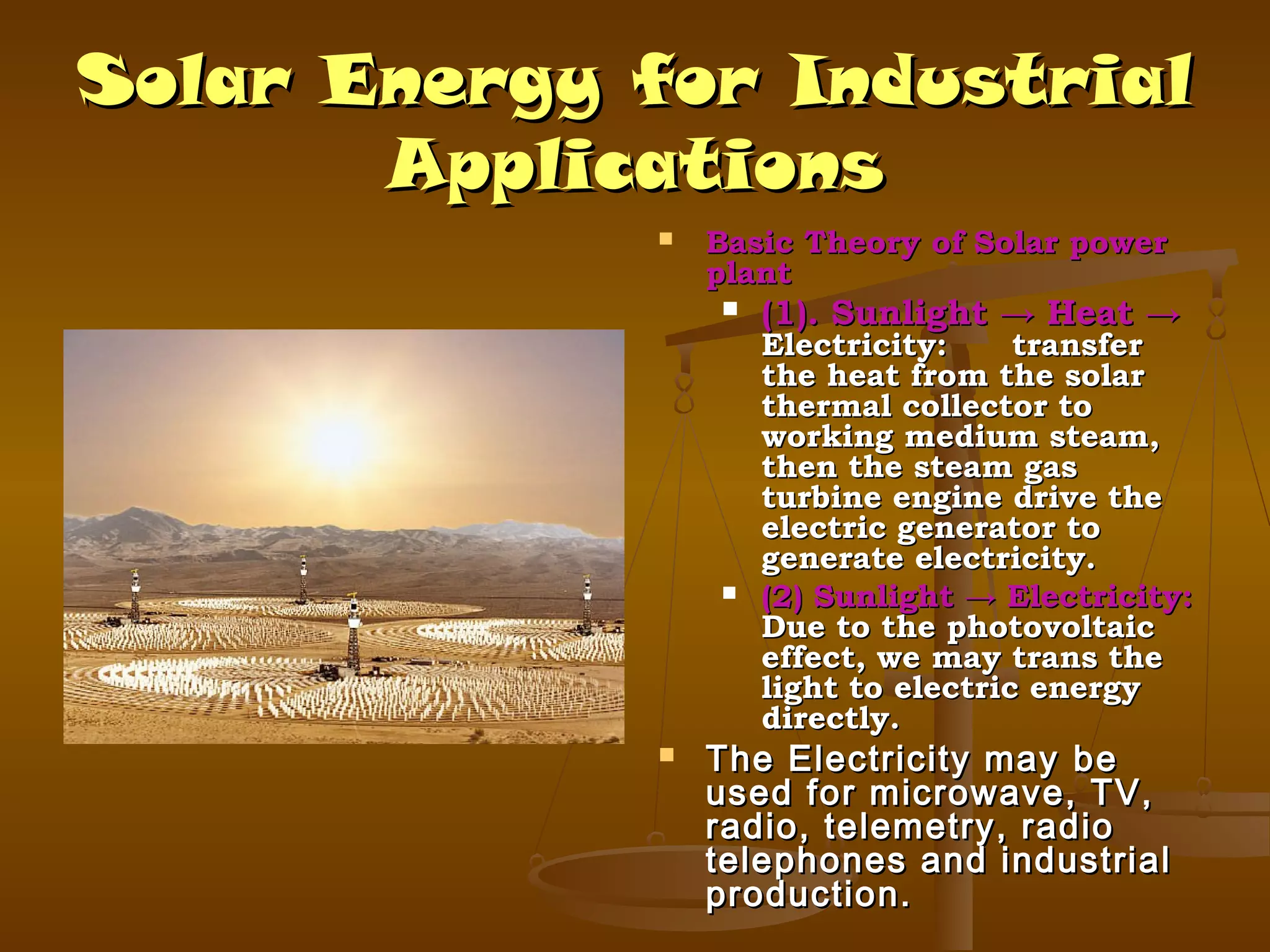
Basic Theory of Solar power
plant






(1). Sunlight → Heat →

Electricity:
transfer
the heat from the solar
thermal collector to
working medium steam,
then the steam gas
turbine engine drive the
electric generator to
generate electricity.
(2) Sunlight → Electricity:
Due to the photovoltaic
effect, we may trans the
light to electric energy
directly.

The Electricity may be
used for microwave, TV,
radio, telemetry, radio
telephones and industrial
production.
Bibliography














Wind Energy:
http://www.clean-energy-ideas.com/articles/advantages_and_disadvantag
Fossil Fuels:
http://library.thinkquest.org/20331/types/fossil/advant.html
Clean Coal Technology:
http://wiki.answers.com/Q/What_are_the_advantages_and_the_disadvanta
Geothermal:
http://wiki.answers.com/Q/What_are_the_advantages_and_disadvan
tages_of_using_geothermal_energy
Hydropower: http://www.technologystudent.com/energy1/hydr2.htm
Nuclear Energy:
http://gvctemp18.virtualclassroom.org/Nenergy/adva.htm
http://science.nasa.gov/headlines/y2002/solarcells.htm
http://zhidao.baidu.com/question/24339788.html?si=5
Movie: http://www.youtube.com/watch?v=AmWrGPKcMNM
Bibliography - Pictures















Reach for sun: http://toolguy.com/solar-powered.jp
wind energy: http://i.treehugger.com/images/2007-215/wind_turbine.jpg
cleancoal:
http://saferenvironment.files.wordpress.com/2008/11/cleancoal.jpg
clean-coal: http://www.inkcinct.com.au/web/cartoons/2007/2007-119clean-coal.jpg
Schematic diagram:
http://saferenvironment.wordpress.com/2009/02/02/solar-power%E2%80%93-sustainable-green-energy-to-protect-our-economy-andenvironment/
Geothermal Energy:
http://academic.evergreen.edu/g/grossmaz/geowells.jpeg
Fossil Fuels:
http://www.globalwarmingimages.net/gallery/category_images/fossil_fu
el.jpg
wind energy2:
http://cdn.content.compendiumblog.com/uploads/user/d741c03c09e5-48e2-8b62-05ae85ffc63d/5359811a-5863-4e70-a91a37d3f2c3b2dd/Image/31d231be57781b93a6cb4a9f760b0773.jpg
geothermal-power-plant: http://www.treehugger.com/geothermal-powerplant-i01.jpg
hydro power plant: http://www.emtindia.net/process/power_plants/img/hydro2.gif
HydropowerLiujiaxiaGorge: http://ahoy.tk-
Bibliography –
Pictures2








Solar_two:
http://upload.wikimedia.org/wikipedia/commons/b/b6/Sol
ar_two.jpg
Solar_Evaporation_Ponds%2C_Atacama_Desert:
http://upload.wikimedia.org/wikipedia/commons/d/df/Sola
r_Evaporation_Ponds%2C_Atacama_Desert.jpg
Array1: http://www.southernviewenergy.com/blog/wpcontent/uploads/2009/10/Array1.jpg
solar_power_molten_salt:
http://greenernews.files.wordpress.com/2009/07/solar_p
ower_molten_salt.jpg
Clouse:

Thank

You

Solar energy presentation(sayef amin 01924122222/01614122222/04475122222)

  • 1.
    Solar Energy By: SayefAmin ID No: 2013020301030 26 th Batch, Section: A
  • 2.
          Solar Energy Definition: radiantlight and heat from the sun that is used and transformed into different types of energy. Most abundant source of renewable energy on the planet Production of solar energy uses heat engines and photovoltaic The most common way of collecting solar energy is by use of solar panels energy storage methods:  paraffin wax  glaubers salt salts are good  low cost  high specific heat levels and  can deliver the right temperature heat to conventional heating systems
  • 3.
    Advantages/ Disadvantages   Advantages  Longlasting  Can be used anywhere  Silent and non polluting  Solar cells can be added when there is demand for more energy  Sunlight that reaches the earth everyday is 200,000 times the total electrical energy generated everyday  Solar power production is growing rapidly  It is a secure type of energy Disadvantages     High initial cost Takes a lot of solar panels to be efficient initially Can only generate during the day Cost about twice of what fossil fuels do
  • 4.
    Facts about SolarPower  passive or active solar: Active; photovoltaic panels and solar thermal collectors  Passive; buildings pointed to the sun, spaces within buildings with rooms that circulate air, and building with materials that have a favorable thermal mass Solar wind and biomass are the top consumed type of energies from humans Biomass could lead solar in terms of consumption, but it is a cause of global warming and is bad for agriculture     http://www.youtube.com/watch?v=AmWrGPKcMNM
  • 5.
    Applications:  Houses:  solar lighting,heating and ventilation systems         pumps fans and windows Use natural solar lighting when building Hybrid solar lighting: faces mirrors track the sun throughout the day and use optical fibers to distribute it Water heating: china and Cyprus have the most amount of solar thermal water heaters Farming:  greenhouses turn solar energy to hear Photovoltaic cells: collect photons and release electrons as energy Made of silicon  as small as a calculator and as large as pods in desert parabolic discs
  • 6.
    Solar Energy inDaily Life     Water heating system (Schematic diagram ) Basic Theory: Collect the solar radiation, transfer it to heat energy and apply in our daily life. As the solar panel collect the heat from the solar and transfer it to the water inside the pipe, the water is heated and outflow from the other pipe. Then, we may use the hot water in the showers, warming machine.
  • 7.
    Solar Energy forIndustrial Applications  Basic Theory of Solar power plant    (1). Sunlight → Heat → Electricity: transfer the heat from the solar thermal collector to working medium steam, then the steam gas turbine engine drive the electric generator to generate electricity. (2) Sunlight → Electricity: Due to the photovoltaic effect, we may trans the light to electric energy directly. The Electricity may be used for microwave, TV, radio, telemetry, radio telephones and industrial production.
  • 8.
    Bibliography          Wind Energy: http://www.clean-energy-ideas.com/articles/advantages_and_disadvantag Fossil Fuels: http://library.thinkquest.org/20331/types/fossil/advant.html CleanCoal Technology: http://wiki.answers.com/Q/What_are_the_advantages_and_the_disadvanta Geothermal: http://wiki.answers.com/Q/What_are_the_advantages_and_disadvan tages_of_using_geothermal_energy Hydropower: http://www.technologystudent.com/energy1/hydr2.htm Nuclear Energy: http://gvctemp18.virtualclassroom.org/Nenergy/adva.htm http://science.nasa.gov/headlines/y2002/solarcells.htm http://zhidao.baidu.com/question/24339788.html?si=5 Movie: http://www.youtube.com/watch?v=AmWrGPKcMNM
  • 9.
    Bibliography - Pictures            Reachfor sun: http://toolguy.com/solar-powered.jp wind energy: http://i.treehugger.com/images/2007-215/wind_turbine.jpg cleancoal: http://saferenvironment.files.wordpress.com/2008/11/cleancoal.jpg clean-coal: http://www.inkcinct.com.au/web/cartoons/2007/2007-119clean-coal.jpg Schematic diagram: http://saferenvironment.wordpress.com/2009/02/02/solar-power%E2%80%93-sustainable-green-energy-to-protect-our-economy-andenvironment/ Geothermal Energy: http://academic.evergreen.edu/g/grossmaz/geowells.jpeg Fossil Fuels: http://www.globalwarmingimages.net/gallery/category_images/fossil_fu el.jpg wind energy2: http://cdn.content.compendiumblog.com/uploads/user/d741c03c09e5-48e2-8b62-05ae85ffc63d/5359811a-5863-4e70-a91a37d3f2c3b2dd/Image/31d231be57781b93a6cb4a9f760b0773.jpg geothermal-power-plant: http://www.treehugger.com/geothermal-powerplant-i01.jpg hydro power plant: http://www.emtindia.net/process/power_plants/img/hydro2.gif HydropowerLiujiaxiaGorge: http://ahoy.tk-
  • 10.
  • 11.