ACTIVE SOLAR
ENERGY
ABU-ALKHAIL MOHAMMAD
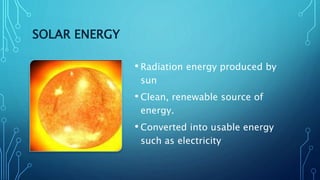
SOLAR ENERGY
• Radiation energy produced by
sun
• Clean, renewable source of
energy.
• Converted into usable energy
such as electricity
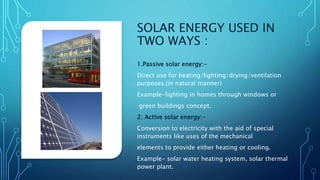
SOLAR ENERGY USED IN
TWO WAYS :
1.Passive solar energy:-
Direct use for heating/lighting/drying/ventilation
purposes.(in natural manner)
Example-lighting in homes through windows or
green buildings concept.
2. Active solar energy:-
Conversion to electricity with the aid of special
instruments like uses of the mechanical
elements to provide either heating or cooling.
Example- solar water heating system, solar thermal
power plant.
ACTIVE SOLAR ENERGY
• In active solar energy the system uses mechanical
equipment such as pumps and blower and other type
of equipment to collect, store and convert solar
energy also use when solar energy is not enough.
• In this type of energy: once the energy from the sun
is absorbed, it is stored for later use.
• Active solar techniques increase the supply of energy.
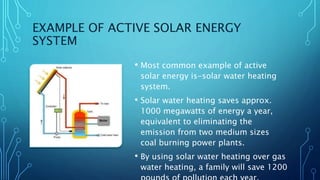
EXAMPLE OF ACTIVE SOLAR ENERGY
SYSTEM
• Most common example of active
solar energy is-solar water heating
system.
• Solar water heating saves approx.
1000 megawatts of energy a year,
equivalent to eliminating the
emission from two medium sizes
coal burning power plants.
• By using solar water heating over gas
water heating, a family will save 1200
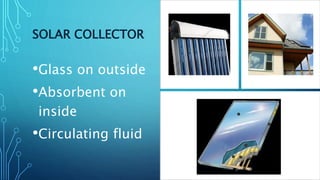
SOLAR COLLECTOR
•Glass on outside
•Absorbent on
inside
•Circulating fluid
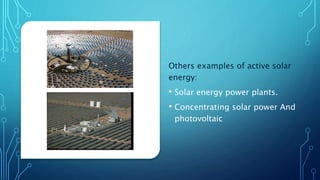
Others examples of active solar
energy:
• Solar energy power plants.
• Concentrating solar power And
photovoltaic
CONCENTRATING SOLAR POWER(CSP)
• Converted sun energy into
high temp. heat energy
• The heat energy used to
generate electricity in a
steam generator.
LARGEST CSP PLANT (CALIFORNIA, UNITED STATES)
• Ivanpah Solar Power Facility
• Location: California, United States
• Commission date: Feb, 2014
• Capacity: 354 megawatts(MWh)
• Generates power for 140,000homes
• The Ivanpah installation reduces carbon dioxide
emissions by over
400,000 tons annually.
CSP PLANT IN
INDIA
•Neemuch, India
•Welspun solar MP project
•Capacity: 150 MWh
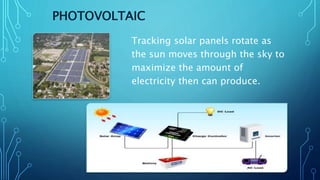
PHOTOVOLTAIC
Tracking solar panels rotate as
the sun moves through the sky to
maximize the amount of
electricity then can produce.
CANAL POWER PROJECT IN
INDIA
ADVANTAGE OF ACTIVE SOLAR
ENERGY:-
• Long term cost effectiveness in colder climates-
-It is very effective in colder climates, where interior heating is necessary
during most of the year.
- Free sunlight can save thousand of dollars a years in utility bills in areas
with long winters.
• Low maintenance-
-Generally , maintenance with solar heating system will involve keeping the
solar panel clean and unobstructed from snow, bird dropping , tree branches
and other debris.
- On average solar heating system require a mere 8 to 16 hours of routine
maintenance per year.
-It is also worth nothing that many grid- tie solar heating systems come with
SILENT
OPERATION
• The silent operation of solar heating systems is due
to minimum presence of moving parts.
• There is absolutely no noise resulting from the some
of solar heating systems.
ENVIRONMENT & HEALTH
ISSUE
Cadmium – Cadmium is used in cadmium telluride solar cells as
a semiconductor to convert solar cells energy into electricity.
- Though used in very small amounts, it is extremely toxic and
can build up in a given ecosystem if it isn't monitored.
Electromagnetic Radiation From Solar Panels
- Modern solar systems use components that radiate high levels
of radio frequency electromagnetic radiation, which
poses health risks to those with electromagnetic hypersensitivity
(EHS).
- some of the symptoms of this health risk are common and
nonspecific,
DISADVANTAGE OF ACTIVE SOLAR
ENERGY
• Space requirement
• Active solar systems rely on the sun to heat liquid. weather the
liquid is water or an antifreeze mixture. To generate enough
hot liquid to be useful, a large space is required.
COST
PROBLEM
THANK YOU

Active solar energy

  • 1.
  • 2.
    SOLAR ENERGY • Radiationenergy produced by sun • Clean, renewable source of energy. • Converted into usable energy such as electricity
  • 3.
    SOLAR ENERGY USEDIN TWO WAYS : 1.Passive solar energy:- Direct use for heating/lighting/drying/ventilation purposes.(in natural manner) Example-lighting in homes through windows or green buildings concept. 2. Active solar energy:- Conversion to electricity with the aid of special instruments like uses of the mechanical elements to provide either heating or cooling. Example- solar water heating system, solar thermal power plant.
  • 4.
    ACTIVE SOLAR ENERGY •In active solar energy the system uses mechanical equipment such as pumps and blower and other type of equipment to collect, store and convert solar energy also use when solar energy is not enough. • In this type of energy: once the energy from the sun is absorbed, it is stored for later use. • Active solar techniques increase the supply of energy.
  • 5.
    EXAMPLE OF ACTIVESOLAR ENERGY SYSTEM • Most common example of active solar energy is-solar water heating system. • Solar water heating saves approx. 1000 megawatts of energy a year, equivalent to eliminating the emission from two medium sizes coal burning power plants. • By using solar water heating over gas water heating, a family will save 1200
  • 6.
    SOLAR COLLECTOR •Glass onoutside •Absorbent on inside •Circulating fluid
  • 7.
    Others examples ofactive solar energy: • Solar energy power plants. • Concentrating solar power And photovoltaic
  • 8.
    CONCENTRATING SOLAR POWER(CSP) •Converted sun energy into high temp. heat energy • The heat energy used to generate electricity in a steam generator.
  • 9.
    LARGEST CSP PLANT(CALIFORNIA, UNITED STATES) • Ivanpah Solar Power Facility • Location: California, United States • Commission date: Feb, 2014 • Capacity: 354 megawatts(MWh) • Generates power for 140,000homes • The Ivanpah installation reduces carbon dioxide emissions by over 400,000 tons annually.
  • 10.
    CSP PLANT IN INDIA •Neemuch,India •Welspun solar MP project •Capacity: 150 MWh
  • 11.
    PHOTOVOLTAIC Tracking solar panelsrotate as the sun moves through the sky to maximize the amount of electricity then can produce.
  • 12.
  • 13.
    ADVANTAGE OF ACTIVESOLAR ENERGY:- • Long term cost effectiveness in colder climates- -It is very effective in colder climates, where interior heating is necessary during most of the year. - Free sunlight can save thousand of dollars a years in utility bills in areas with long winters. • Low maintenance- -Generally , maintenance with solar heating system will involve keeping the solar panel clean and unobstructed from snow, bird dropping , tree branches and other debris. - On average solar heating system require a mere 8 to 16 hours of routine maintenance per year. -It is also worth nothing that many grid- tie solar heating systems come with
  • 14.
    SILENT OPERATION • The silentoperation of solar heating systems is due to minimum presence of moving parts. • There is absolutely no noise resulting from the some of solar heating systems.
  • 15.
    ENVIRONMENT & HEALTH ISSUE Cadmium– Cadmium is used in cadmium telluride solar cells as a semiconductor to convert solar cells energy into electricity. - Though used in very small amounts, it is extremely toxic and can build up in a given ecosystem if it isn't monitored. Electromagnetic Radiation From Solar Panels - Modern solar systems use components that radiate high levels of radio frequency electromagnetic radiation, which poses health risks to those with electromagnetic hypersensitivity (EHS). - some of the symptoms of this health risk are common and nonspecific,
  • 16.
    DISADVANTAGE OF ACTIVESOLAR ENERGY • Space requirement • Active solar systems rely on the sun to heat liquid. weather the liquid is water or an antifreeze mixture. To generate enough hot liquid to be useful, a large space is required.
  • 17.
  • 18.