Like Subscribe
What is Solar Energy ?
Solar energy is radiant light and
heat from the sun.
It is the most important source of
renewable energy.
It is available free of cost and absolutely
non-polluting.
Utilization of Solar Energy
Solar energy can be utilized through two different
routes, as solar thermal route and solar electric
route.
Solar thermal route uses the sun’s heat energy to
produce hot water or air, cook food, drying
materials etc.
Solar electric route uses the sun’s light energy to
produce electricity for lightning home and buildings
and running electric appliances.
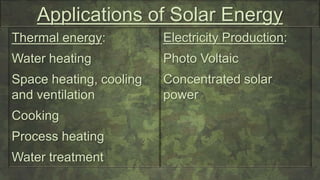
Applications of Solar Energy
Thermal energy:
Water heating
Space heating, cooling
and ventilation
Cooking
Process heating
Water treatment
Electricity Production:
Photo Voltaic
Concentrated solar
power
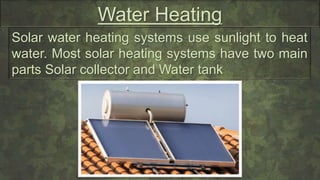
Water Heating
Solar water heating systems use sunlight to heat
water. Most solar heating systems have two main
parts Solar collector and Water tank
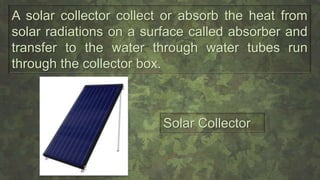
A solar collector collect or absorb the heat from
solar radiations on a surface called absorber and
transfer to the water through water tubes run
through the collector box.
Solar Collector
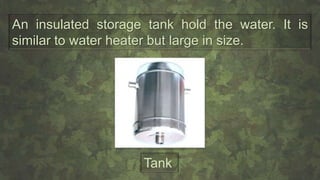
An insulated storage tank hold the water. It is
similar to water heater but large in size.
Tank
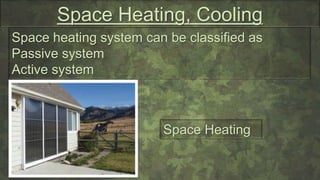
Space Heating, Cooling
Space heating system can be classified as
Passive system
Active system
Space Heating
In passive system all three functions of collection,
storage and distribution of solar energy is done by
natural means.
In active system the solar energy is collected by
water or air. This energy is then stored in storage
materials either in form of sensible heat or latent
heat or in chemical reactions. Then the stored
energy in storage system is distributed into the
space using electrically operated pumps and fans.
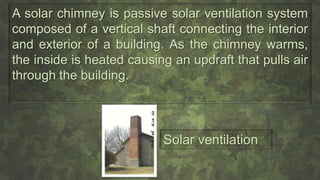
A solar chimney is passive solar ventilation system
composed of a vertical shaft connecting the interior
and exterior of a building. As the chimney warms,
the inside is heated causing an updraft that pulls air
through the building.
Solar ventilation
Cooking
Solar cookers use sunlight for cooking, drying and
pasteurization.
Solar cookers can be grouped into three broad
categories,
Box Cooker
Panel Cooker
Reflector Cooker
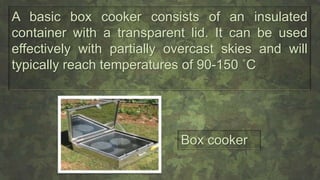
A basic box cooker consists of an insulated
container with a transparent lid. It can be used
effectively with partially overcast skies and will
typically reach temperatures of 90-150 ˚C
Box cooker
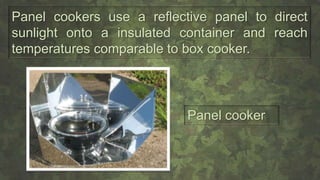
Panel cookers use a reflective panel to direct
sunlight onto a insulated container and reach
temperatures comparable to box cooker.
Panel cooker
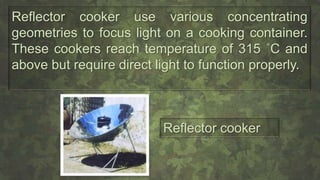
Reflector cooker use various concentrating
geometries to focus light on a cooking container.
These cookers reach temperature of 315 ˚C and
above but require direct light to function properly.
Reflector cooker
Process heating
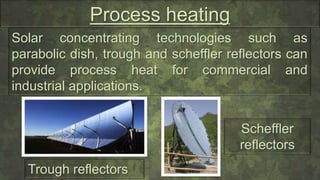
Solar concentrating technologies such as
parabolic dish, trough and scheffler reflectors can
provide process heat for commercial and
industrial applications.
Trough reflectors
Scheffler
reflectors
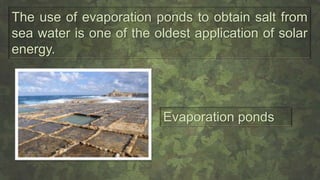
The use of evaporation ponds to obtain salt from
sea water is one of the oldest application of solar
energy.
Evaporation ponds
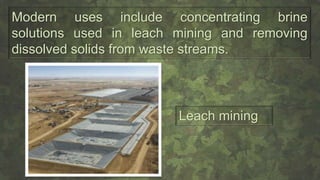
Modern uses include concentrating brine
solutions used in leach mining and removing
dissolved solids from waste streams.
Leach mining
Water treatment
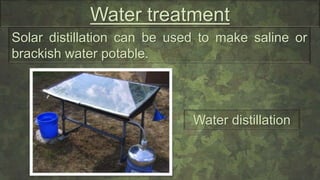
Solar distillation can be used to make saline or
brackish water potable.
Water distillation
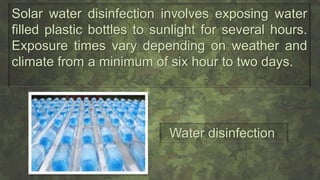
Solar water disinfection involves exposing water
filled plastic bottles to sunlight for several hours.
Exposure times vary depending on weather and
climate from a minimum of six hour to two days.
Water disinfection
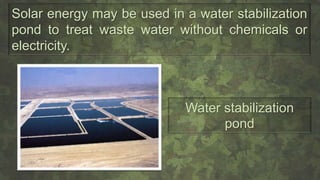
Solar energy may be used in a water stabilization
pond to treat waste water without chemicals or
electricity.
Water stabilization
pond
Electricity production
Sunlight is converted in to electricity either directly
using photo voltaic or indirectly using
concentrated solar power.
Photo voltaic converts sunlight into electric
current using the photo electric effect.
CSP systems use lenses or mirrors and tracking
system to focus a large area of sunlight into a
small beam.
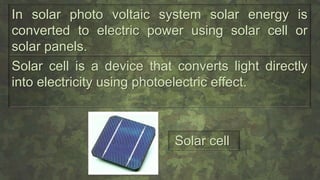
In solar photo voltaic system solar energy is
converted to electric power using solar cell or
solar panels.
Solar cell is a device that converts light directly
into electricity using photoelectric effect.
Solar cell
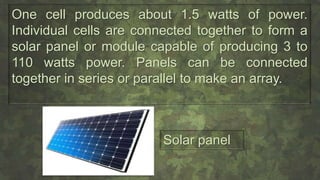
One cell produces about 1.5 watts of power.
Individual cells are connected together to form a
solar panel or module capable of producing 3 to
110 watts power. Panels can be connected
together in series or parallel to make an array.
Solar panel
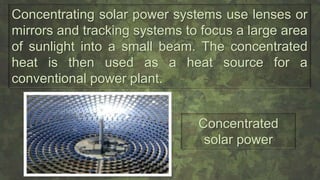
Concentrating solar power systems use lenses or
mirrors and tracking systems to focus a large area
of sunlight into a small beam. The concentrated
heat is then used as a heat source for a
conventional power plant.
Concentrated
solar power
Energy storage methods
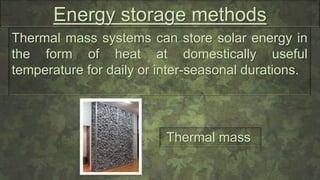
Thermal mass systems can store solar energy in
the form of heat at domestically useful
temperature for daily or inter-seasonal durations.
Thermal mass
Phase change materials such as paraffin wax and
glauber’s salt are another thermal storage
medium.
Paraffin wax Glauber’s salt
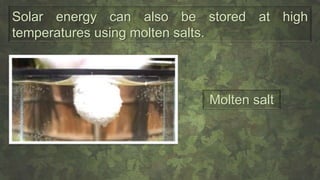
Solar energy can also be stored at high
temperatures using molten salts.
Molten salt
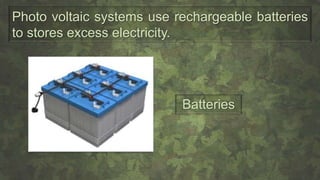
Photo voltaic systems use rechargeable batteries
to stores excess electricity.
Batteries
Advantages of solar energy
It is available in abundance.
It has low operating and maintenance cost.
It is renewable and inexhaustible form of energy.
It is free from pollution.
Many options are available for utilization of solar
energy depending on its applications.
Limitations of solar energy
It is intermittent source of energy since it is not
available at night.
The intensity of radiation is weather dependent.
The average power obtainable is only 1 kW per
m2 area in hottest regions. Therefore large
collection area is required.
The requirement of energy storage devices are
heavy in order to cater the energy during the
hours of non availability of solar energy.
Standby power arrangements are necessary
during unexpected long periods of non sunshine
hours.
In spite of having various limitations
the solar energy provides a vast
potential for use as an alternate
source of energy.
Like Subscribe

Solar_Energy_Overview.pptx

  • 1.
  • 2.
    What is SolarEnergy ? Solar energy is radiant light and heat from the sun. It is the most important source of renewable energy. It is available free of cost and absolutely non-polluting.
  • 3.
    Utilization of SolarEnergy Solar energy can be utilized through two different routes, as solar thermal route and solar electric route. Solar thermal route uses the sun’s heat energy to produce hot water or air, cook food, drying materials etc. Solar electric route uses the sun’s light energy to produce electricity for lightning home and buildings and running electric appliances.
  • 4.
    Applications of SolarEnergy Thermal energy: Water heating Space heating, cooling and ventilation Cooking Process heating Water treatment Electricity Production: Photo Voltaic Concentrated solar power
  • 5.
    Water Heating Solar waterheating systems use sunlight to heat water. Most solar heating systems have two main parts Solar collector and Water tank
  • 6.
    A solar collectorcollect or absorb the heat from solar radiations on a surface called absorber and transfer to the water through water tubes run through the collector box. Solar Collector
  • 7.
    An insulated storagetank hold the water. It is similar to water heater but large in size. Tank
  • 8.
    Space Heating, Cooling Spaceheating system can be classified as Passive system Active system Space Heating
  • 9.
    In passive systemall three functions of collection, storage and distribution of solar energy is done by natural means. In active system the solar energy is collected by water or air. This energy is then stored in storage materials either in form of sensible heat or latent heat or in chemical reactions. Then the stored energy in storage system is distributed into the space using electrically operated pumps and fans.
  • 10.
    A solar chimneyis passive solar ventilation system composed of a vertical shaft connecting the interior and exterior of a building. As the chimney warms, the inside is heated causing an updraft that pulls air through the building. Solar ventilation
  • 11.
    Cooking Solar cookers usesunlight for cooking, drying and pasteurization. Solar cookers can be grouped into three broad categories, Box Cooker Panel Cooker Reflector Cooker
  • 12.
    A basic boxcooker consists of an insulated container with a transparent lid. It can be used effectively with partially overcast skies and will typically reach temperatures of 90-150 ˚C Box cooker
  • 13.
    Panel cookers usea reflective panel to direct sunlight onto a insulated container and reach temperatures comparable to box cooker. Panel cooker
  • 14.
    Reflector cooker usevarious concentrating geometries to focus light on a cooking container. These cookers reach temperature of 315 ˚C and above but require direct light to function properly. Reflector cooker
  • 15.
    Process heating Solar concentratingtechnologies such as parabolic dish, trough and scheffler reflectors can provide process heat for commercial and industrial applications. Trough reflectors Scheffler reflectors
  • 16.
    The use ofevaporation ponds to obtain salt from sea water is one of the oldest application of solar energy. Evaporation ponds
  • 17.
    Modern uses includeconcentrating brine solutions used in leach mining and removing dissolved solids from waste streams. Leach mining
  • 18.
    Water treatment Solar distillationcan be used to make saline or brackish water potable. Water distillation
  • 19.
    Solar water disinfectioninvolves exposing water filled plastic bottles to sunlight for several hours. Exposure times vary depending on weather and climate from a minimum of six hour to two days. Water disinfection
  • 20.
    Solar energy maybe used in a water stabilization pond to treat waste water without chemicals or electricity. Water stabilization pond
  • 21.
    Electricity production Sunlight isconverted in to electricity either directly using photo voltaic or indirectly using concentrated solar power. Photo voltaic converts sunlight into electric current using the photo electric effect. CSP systems use lenses or mirrors and tracking system to focus a large area of sunlight into a small beam.
  • 22.
    In solar photovoltaic system solar energy is converted to electric power using solar cell or solar panels. Solar cell is a device that converts light directly into electricity using photoelectric effect. Solar cell
  • 23.
    One cell producesabout 1.5 watts of power. Individual cells are connected together to form a solar panel or module capable of producing 3 to 110 watts power. Panels can be connected together in series or parallel to make an array. Solar panel
  • 24.
    Concentrating solar powersystems use lenses or mirrors and tracking systems to focus a large area of sunlight into a small beam. The concentrated heat is then used as a heat source for a conventional power plant. Concentrated solar power
  • 25.
    Energy storage methods Thermalmass systems can store solar energy in the form of heat at domestically useful temperature for daily or inter-seasonal durations. Thermal mass
  • 26.
    Phase change materialssuch as paraffin wax and glauber’s salt are another thermal storage medium. Paraffin wax Glauber’s salt
  • 27.
    Solar energy canalso be stored at high temperatures using molten salts. Molten salt
  • 28.
    Photo voltaic systemsuse rechargeable batteries to stores excess electricity. Batteries
  • 29.
    Advantages of solarenergy It is available in abundance. It has low operating and maintenance cost. It is renewable and inexhaustible form of energy. It is free from pollution. Many options are available for utilization of solar energy depending on its applications.
  • 30.
    Limitations of solarenergy It is intermittent source of energy since it is not available at night. The intensity of radiation is weather dependent. The average power obtainable is only 1 kW per m2 area in hottest regions. Therefore large collection area is required.
  • 31.
    The requirement ofenergy storage devices are heavy in order to cater the energy during the hours of non availability of solar energy. Standby power arrangements are necessary during unexpected long periods of non sunshine hours.
  • 32.
    In spite ofhaving various limitations the solar energy provides a vast potential for use as an alternate source of energy.
  • 33.