M A U L I G R O U P O F I N S T I T U T I O N C O L L E G E O F E N G I N E E R I N G A N D
T E C H N O L O G Y
S H E G A O N
D E P A R T M E N T O F E L E C T R I C A L ( E L E C T R O N I C S A N D P O W E R ) E N G G
G U I D E D B Y P R E S E N T E D B Y
P R O F . P I Y U S H S . D O R L E S H U B H A N G I A . B H A T K A R
F I N A L Y E A R ( E L P O )
SOLAR ROADWAY
The Future Transport System
Outline
 Introduction
 Solar Roadway
 Construction
 Illuminated Highway
 Intelligent Highway
 Road Survey Of India
 Features Of Solar Roadways
 Advantages and Disadvantages
 Applications
 Implementation
 Future Scope
 Conclusion
 Reference
Introduction
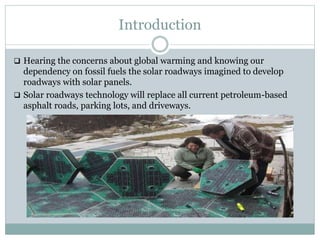
 Hearing the concerns about global warming and knowing our
dependency on fossil fuels the solar roadways imagined to develop
roadways with solar panels.
 Solar roadways technology will replace all current petroleum-based
asphalt roads, parking lots, and driveways.
INVENTORS OF SOLAR ROADWAYS
Julie & Scott Brusaw
Solar Roadways
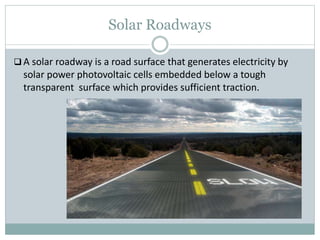
 A solar roadway is a road surface that generates electricity by
solar power photovoltaic cells embedded below a tough
transparent surface which provides sufficient traction.
Solar Road Construction
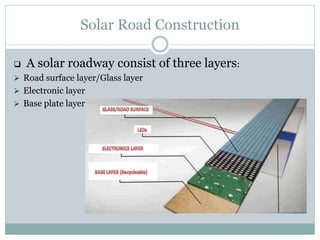
 A solar roadway consist of three layers:
 Road surface layer/Glass layer
 Electronic layer
 Base plate layer
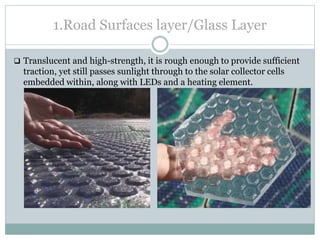
1.Road Surfaces layer/Glass Layer
 Translucent and high-strength, it is rough enough to provide sufficient
traction, yet still passes sunlight through to the solar collector cells
embedded within, along with LEDs and a heating element.
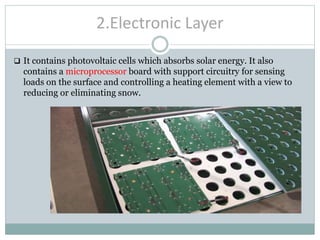
2.Electronic Layer
 It contains photovoltaic cells which absorbs solar energy. It also
contains a microprocessor board with support circuitry for sensing
loads on the surface and controlling a heating element with a view to
reducing or eliminating snow.
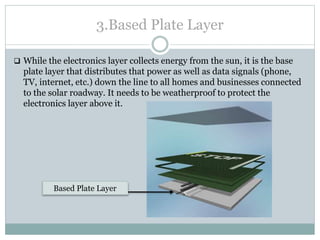
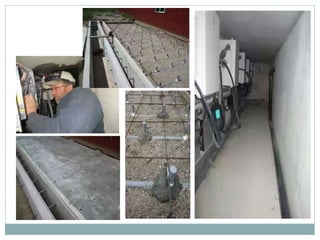
3.Based Plate Layer
 While the electronics layer collects energy from the sun, it is the base
plate layer that distributes that power as well as data signals (phone,
TV, internet, etc.) down the line to all homes and businesses connected
to the solar roadway. It needs to be weatherproof to protect the
electronics layer above it.
Based Plate Layer
Illuminated Highway
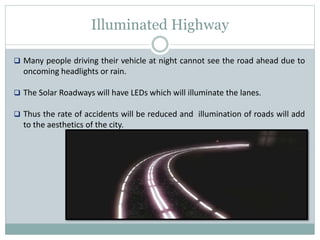
 Many people driving their vehicle at night cannot see the road ahead due to
oncoming headlights or rain.
 The Solar Roadways will have LEDs which will illuminate the lanes.
 Thus the rate of accidents will be reduced and illumination of roads will add
to the aesthetics of the city.
Intelligent Highway
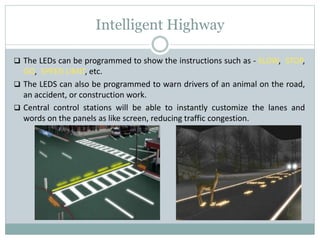
 The LEDs can be programmed to show the instructions such as - SLOW, STOP,
GO, SPEED LIMIT, etc.
 The LEDS can also be programmed to warn drivers of an animal on the road,
an accident, or construction work.
 Central control stations will be able to instantly customize the lanes and
words on the panels as like screen, reducing traffic congestion.
On-The-Go Charging
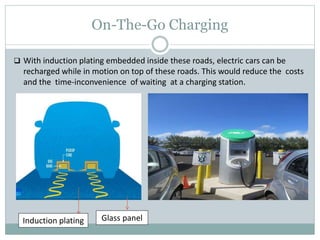
 With induction plating embedded inside these roads, electric cars can be
recharged while in motion on top of these roads. This would reduce the costs
and the time-inconvenience of waiting at a charging station.
Induction plating Glass panel
Road Survey Of India
 India has a road network of over 48,65,000 kilometers in 2014.
 In which national highways and state highways cover 5% of total road
network.
 These highways can produce 450TWh of electricity according to
references when they are surfaced by solar panels.
 But India needs 991TWh of electricity.
 This implies that if 10% of total road network of India is surfaced with
Solar Roadway panels, it would illuminate our nation.
Advantages
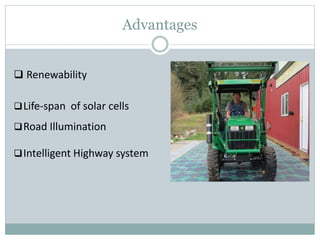
 Renewability
Life-span of solar cells
Road Illumination
Intelligent Highway system
Disadvantages
 Maintenance costs
 Seasonal efficiency
 Needs a town planning
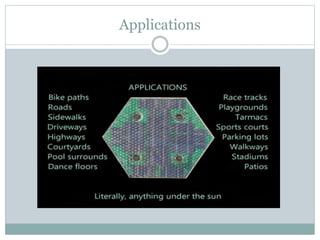
Applications
Implementation
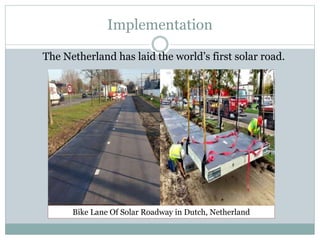
The Netherland has laid the world’s first solar road.
Bike Lane Of Solar Roadway in Dutch, Netherland
Future Scope
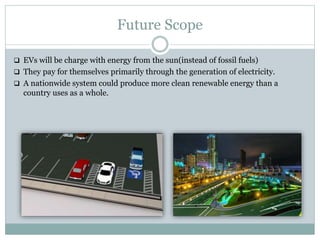
 EVs will be charge with energy from the sun(instead of fossil fuels)
 They pay for themselves primarily through the generation of electricity.
 A nationwide system could produce more clean renewable energy than a
country uses as a whole.
Conclusion
 For roughly the same cost of the current systems (asphalt roads and fossil
fuel burning electricity generation plants), the Solar Roadways can be
implemented.
 No more Global Warming.
 Safer driving conditions.
 Far less pollution.
 A new secure highway infrastructure that pays for itself.
 A decentralized, self-healing, secure power grid.
 No more dependency on foreign oil.
Reference
 Alark A. Kulkarni, Director, Orbit Consultants Pvt. Ltd., Pune
Vol.3,Issue3,may june 2013 Solar Roadways – Rebuilding our
Infrastructure and Economy
 Andrew Northmore, MASc Candidate & Dr. Susan Tighe,
Professor, Dept. of Civil and Environmental Engineering
University of Waterloo. Innovative Pavement Design: Are
Solar Roads Feasible?
 Research & Finding Phases(I &II) of Solar Roadways
Thank You..
“Let’s make things to happen rather than waiting
things to happen”
“It’s better late than never”
“Let’s Go Greener”
Solar Roadway

Solar Roadway

  • 1.
    M A UL I G R O U P O F I N S T I T U T I O N C O L L E G E O F E N G I N E E R I N G A N D T E C H N O L O G Y S H E G A O N D E P A R T M E N T O F E L E C T R I C A L ( E L E C T R O N I C S A N D P O W E R ) E N G G G U I D E D B Y P R E S E N T E D B Y P R O F . P I Y U S H S . D O R L E S H U B H A N G I A . B H A T K A R F I N A L Y E A R ( E L P O ) SOLAR ROADWAY The Future Transport System
  • 2.
    Outline  Introduction  SolarRoadway  Construction  Illuminated Highway  Intelligent Highway  Road Survey Of India  Features Of Solar Roadways  Advantages and Disadvantages  Applications  Implementation  Future Scope  Conclusion  Reference
  • 3.
    Introduction  Hearing theconcerns about global warming and knowing our dependency on fossil fuels the solar roadways imagined to develop roadways with solar panels.  Solar roadways technology will replace all current petroleum-based asphalt roads, parking lots, and driveways.
  • 4.
    INVENTORS OF SOLARROADWAYS Julie & Scott Brusaw
  • 5.
    Solar Roadways  Asolar roadway is a road surface that generates electricity by solar power photovoltaic cells embedded below a tough transparent surface which provides sufficient traction.
  • 6.
    Solar Road Construction A solar roadway consist of three layers:  Road surface layer/Glass layer  Electronic layer  Base plate layer
  • 7.
    1.Road Surfaces layer/GlassLayer  Translucent and high-strength, it is rough enough to provide sufficient traction, yet still passes sunlight through to the solar collector cells embedded within, along with LEDs and a heating element.
  • 8.
    2.Electronic Layer  Itcontains photovoltaic cells which absorbs solar energy. It also contains a microprocessor board with support circuitry for sensing loads on the surface and controlling a heating element with a view to reducing or eliminating snow.
  • 9.
    3.Based Plate Layer While the electronics layer collects energy from the sun, it is the base plate layer that distributes that power as well as data signals (phone, TV, internet, etc.) down the line to all homes and businesses connected to the solar roadway. It needs to be weatherproof to protect the electronics layer above it. Based Plate Layer
  • 11.
    Illuminated Highway  Manypeople driving their vehicle at night cannot see the road ahead due to oncoming headlights or rain.  The Solar Roadways will have LEDs which will illuminate the lanes.  Thus the rate of accidents will be reduced and illumination of roads will add to the aesthetics of the city.
  • 12.
    Intelligent Highway  TheLEDs can be programmed to show the instructions such as - SLOW, STOP, GO, SPEED LIMIT, etc.  The LEDS can also be programmed to warn drivers of an animal on the road, an accident, or construction work.  Central control stations will be able to instantly customize the lanes and words on the panels as like screen, reducing traffic congestion.
  • 13.
    On-The-Go Charging  Withinduction plating embedded inside these roads, electric cars can be recharged while in motion on top of these roads. This would reduce the costs and the time-inconvenience of waiting at a charging station. Induction plating Glass panel
  • 14.
    Road Survey OfIndia  India has a road network of over 48,65,000 kilometers in 2014.  In which national highways and state highways cover 5% of total road network.  These highways can produce 450TWh of electricity according to references when they are surfaced by solar panels.  But India needs 991TWh of electricity.  This implies that if 10% of total road network of India is surfaced with Solar Roadway panels, it would illuminate our nation.
  • 15.
    Advantages  Renewability Life-span ofsolar cells Road Illumination Intelligent Highway system
  • 16.
    Disadvantages  Maintenance costs Seasonal efficiency  Needs a town planning
  • 17.
  • 18.
    Implementation The Netherland haslaid the world’s first solar road. Bike Lane Of Solar Roadway in Dutch, Netherland
  • 19.
    Future Scope  EVswill be charge with energy from the sun(instead of fossil fuels)  They pay for themselves primarily through the generation of electricity.  A nationwide system could produce more clean renewable energy than a country uses as a whole.
  • 20.
    Conclusion  For roughlythe same cost of the current systems (asphalt roads and fossil fuel burning electricity generation plants), the Solar Roadways can be implemented.  No more Global Warming.  Safer driving conditions.  Far less pollution.  A new secure highway infrastructure that pays for itself.  A decentralized, self-healing, secure power grid.  No more dependency on foreign oil.
  • 21.
    Reference  Alark A.Kulkarni, Director, Orbit Consultants Pvt. Ltd., Pune Vol.3,Issue3,may june 2013 Solar Roadways – Rebuilding our Infrastructure and Economy  Andrew Northmore, MASc Candidate & Dr. Susan Tighe, Professor, Dept. of Civil and Environmental Engineering University of Waterloo. Innovative Pavement Design: Are Solar Roads Feasible?  Research & Finding Phases(I &II) of Solar Roadways
  • 22.
    Thank You.. “Let’s makethings to happen rather than waiting things to happen” “It’s better late than never” “Let’s Go Greener”