SOLAR PANEL ROADS
By
S.Chaitanya kumar
15761A0144
CONTENTS
 INTRODUCTION
 FEATURES OF SOLAR ROADWAYS
 DESIGN
 APPLICATIONS
 ADVANTAGES
 DISADVANTAGES
 CONCLUSION
INVENTORS OF SOLAR ROADWAYS
Julie & Scott Brusaw
INTRODUCTION
 A solar roadway is a
road surface that
generates electricity by
solar power using
photovoltaic and
includes solar
panels and LED
signage, that can be
driven on.
 Solar roadways technology
will replace all current
petroleum-based asphalt roads,
parking lots, and driveways.
 Solar Roadways system would
might at present, cost about
three times what it costs to
install an asphalt road.
 World's first solar panel road opens in
Normandy village, france.
 U.S.’s First Public Solar Road Will Roll Out On
Route 66.
FEATURES OF SOLAR ROADWAYS
 Produces more electricity than what is
needed for a country.
(22.96 trillion kilowatt-hours of electricity
per year in US)
 Lighting up of roads with LEDs.
 Provision for snow and ice removal.
 Contributes to traffic rule implementation
and DUI detection.
 Provides a platform for Electric Vehicles.
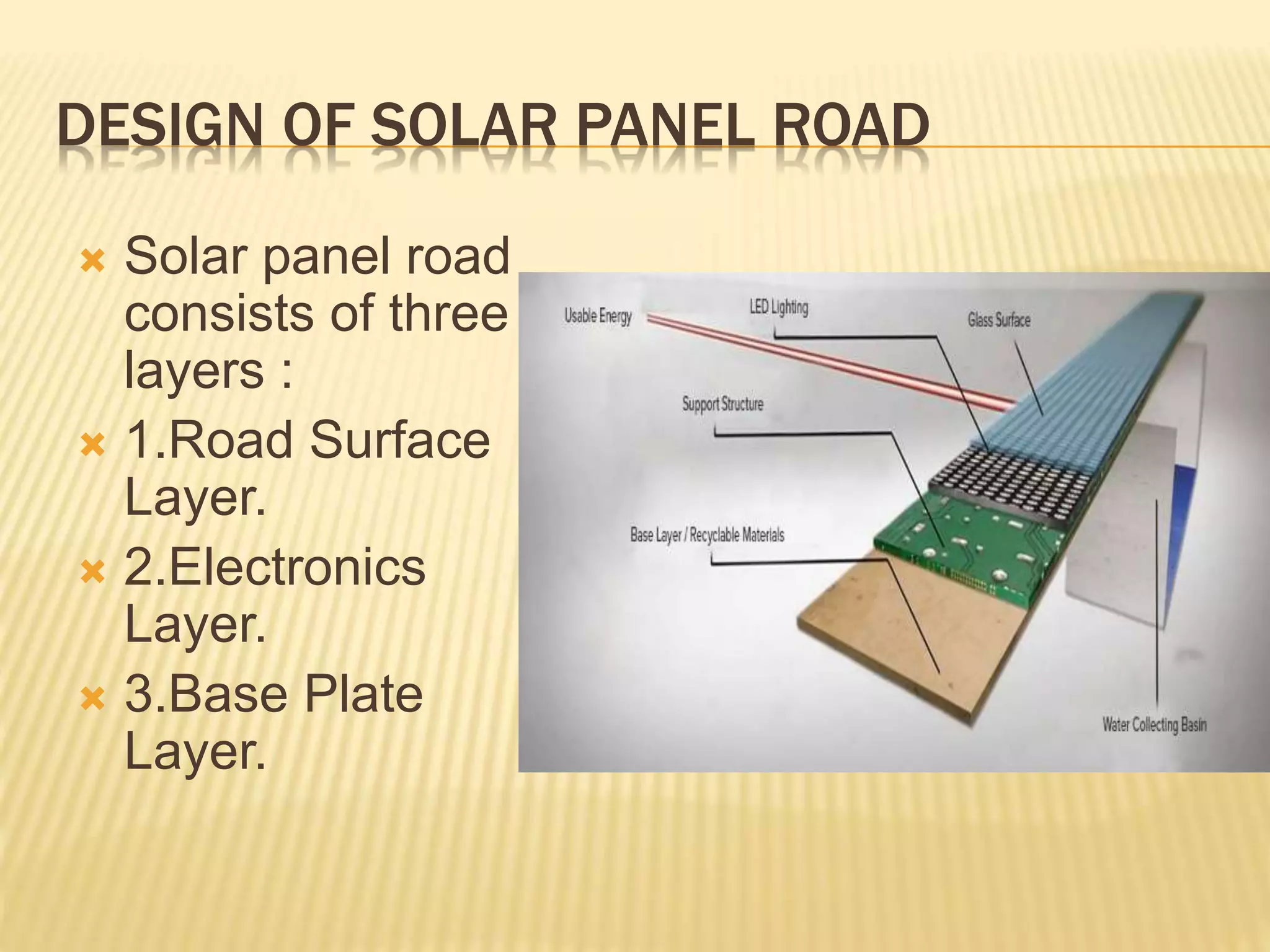
DESIGN OF SOLAR PANEL ROAD
 Solar panel road
consists of three
layers :
 1.Road Surface
Layer.
 2.Electronics
Layer.
 3.Base Plate
Layer.
1. ROAD SURFACE LAYER
 Top most translucent layer.
 Made of extremely durable
textured glass.
 Designed for reduced
skidding chances.
 Waterproof layer.
 Houses the LEDs for
illuminating the roads.
2. ELECTRONICS LAYER
 Middle layer.
 Contains photovoltaic cells.
 Conversion of solar energy
to electrical energy takes
place here.
 Houses the heating element
and microprocessors for
controlling them.
 It also houses the
microprocessors for
controlling lighting LEDs.
3.BASE PLATE LAYER
 Bottom layer.
 Stores the converted
electrical energy.
 Distributes electrical
energy.
 Made weatherproof.
ADVANTAGES
 Renewability
 Life-span – 20-21 years
 Initial Cost
 $16 per square feet – Asphalt road
One panel size 12 ft x 12 ft = 144 sq ft. One
panel costs about $6912
$6912 / 144 sq ft = $48 per sq ft - Solar
road
 Intelligent Highway system
DISADVANTAGES
Huge initial cost. (about $ 3.45
trillion is required in US)
Maintenance cost.
Needs a Town Planning.
Skilled Labour Requirement.
APPLICATIONS
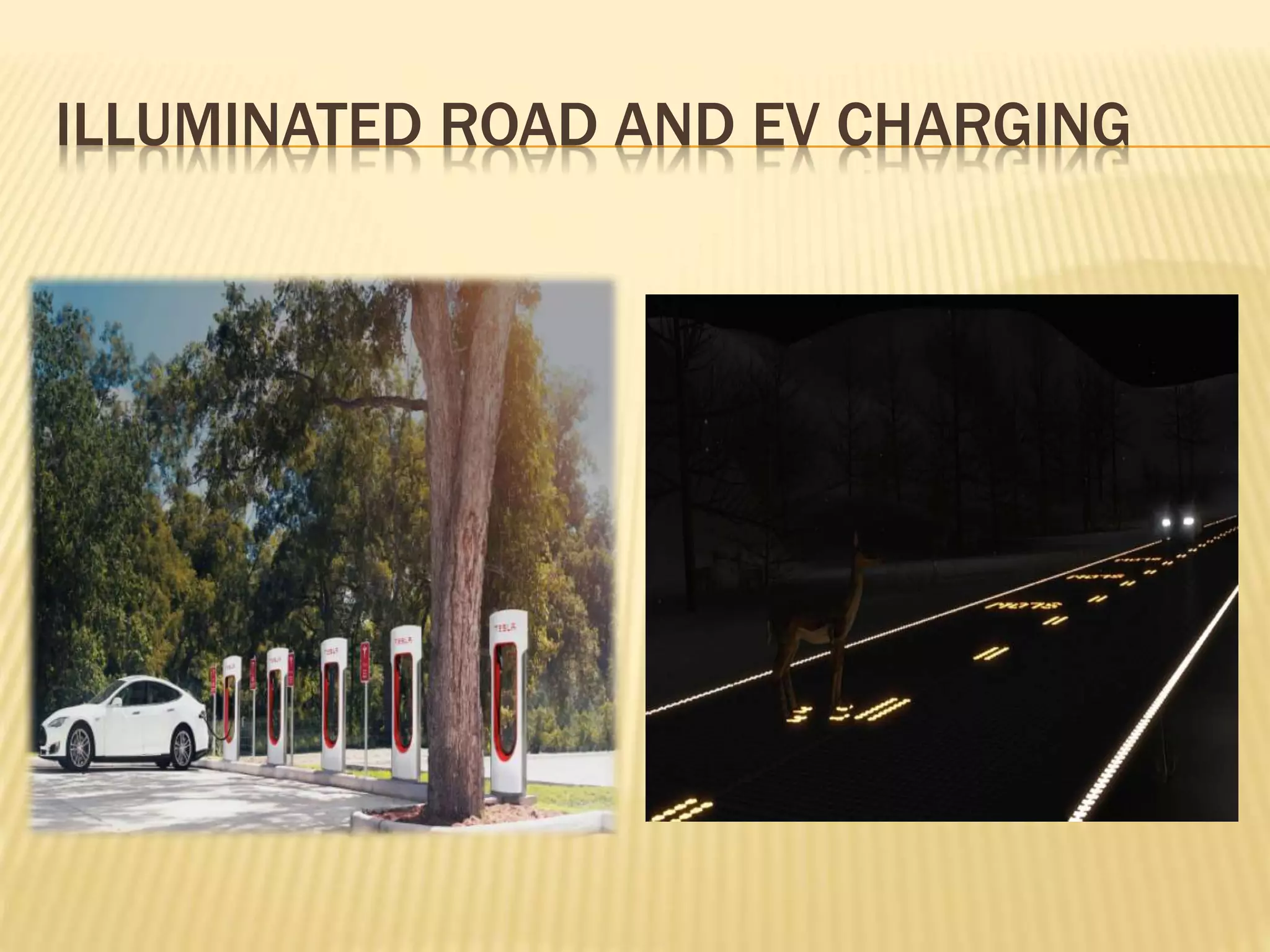
1.Illuminated Roads
LEDs will paint the road surface from
beneath.
Safe and easy night driving.
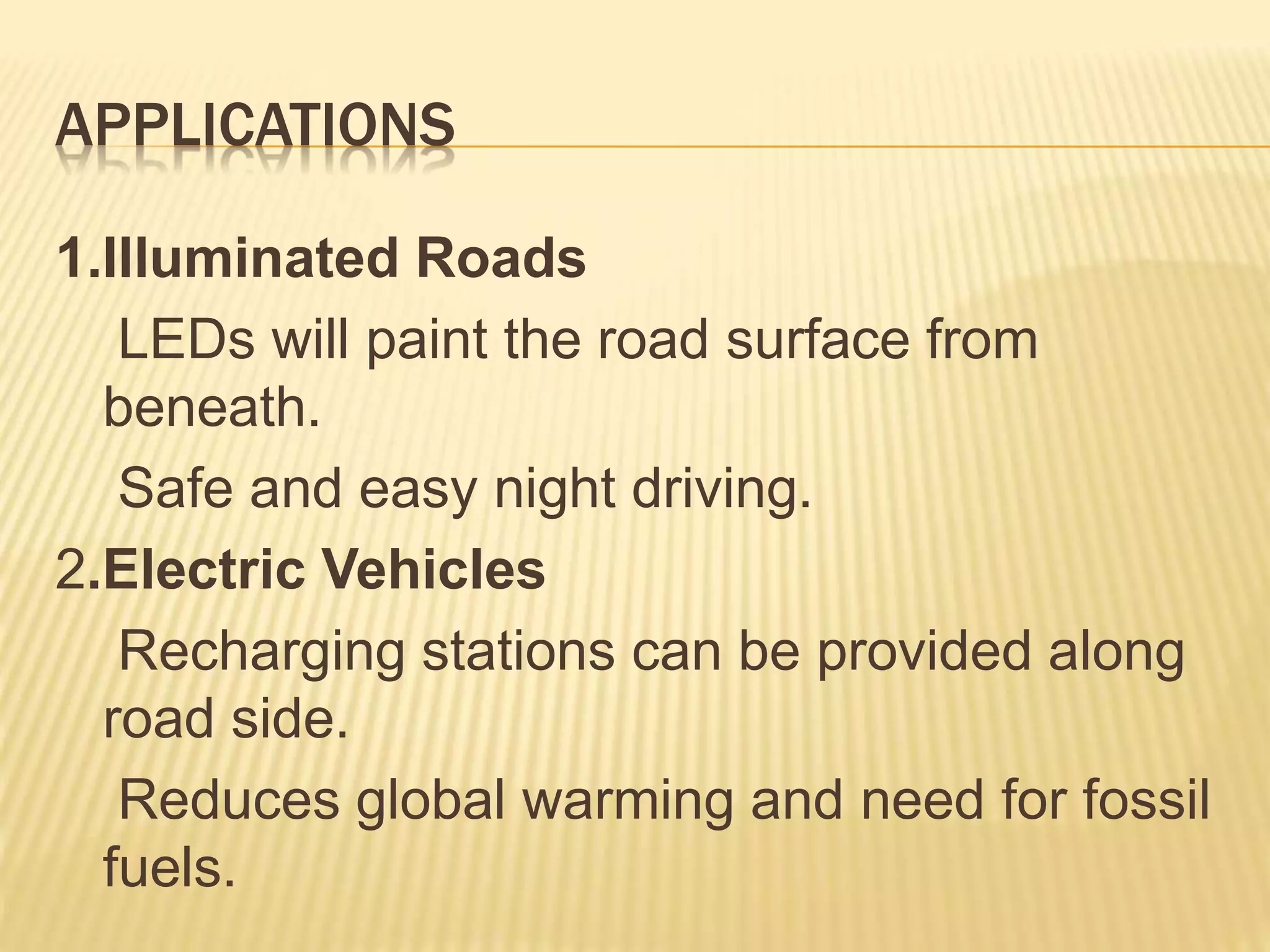
2.Electric Vehicles
Recharging stations can be provided along
road side.
Reduces global warming and need for fossil
fuels.
ILLUMINATED ROAD AND EV CHARGING
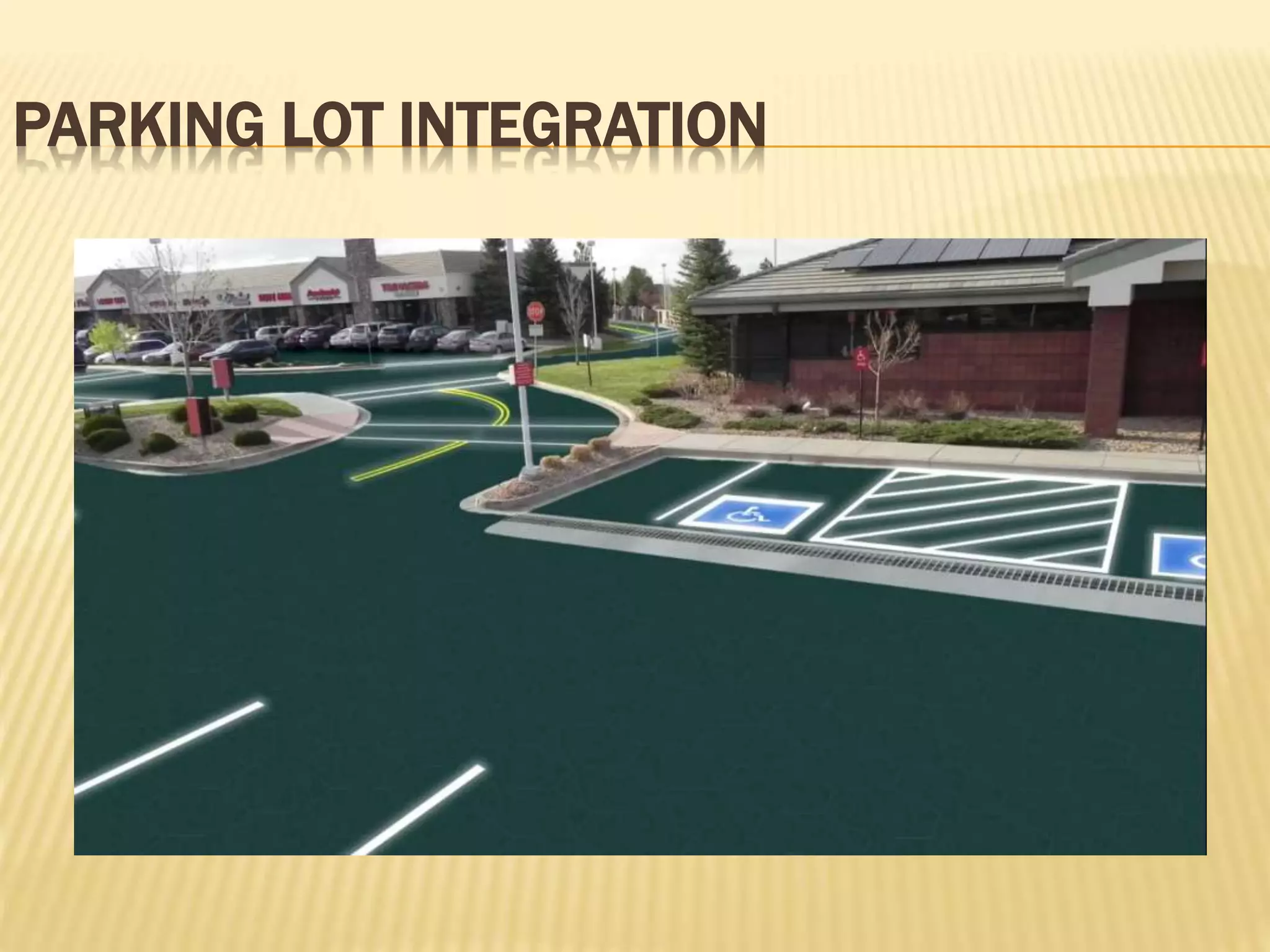
PARKING LOT INTEGRATION
INTELLIGENT HIGHWAY
 The LEDs can be programmed to show the
instructions such as - SLOW, STOP, GO,
SPEED LIMIT, etc.
CONCLUSION
 Even though the initial cost is high, as it is a
system that pays for itself it is a better
choice.
 For under developed and developing
countries, it might seem impractical now. But
it can be adopted in stages, in future.
 With technological upgradation in this field,
jobs, clean energy and a safer transportation
system can be made.
Thank
You

solar panel roads.

  • 1.
  • 2.
    CONTENTS  INTRODUCTION  FEATURESOF SOLAR ROADWAYS  DESIGN  APPLICATIONS  ADVANTAGES  DISADVANTAGES  CONCLUSION
  • 3.
    INVENTORS OF SOLARROADWAYS Julie & Scott Brusaw
  • 4.
    INTRODUCTION  A solarroadway is a road surface that generates electricity by solar power using photovoltaic and includes solar panels and LED signage, that can be driven on.
  • 5.
     Solar roadwaystechnology will replace all current petroleum-based asphalt roads, parking lots, and driveways.  Solar Roadways system would might at present, cost about three times what it costs to install an asphalt road.
  • 6.
     World's firstsolar panel road opens in Normandy village, france.  U.S.’s First Public Solar Road Will Roll Out On Route 66.
  • 7.
    FEATURES OF SOLARROADWAYS  Produces more electricity than what is needed for a country. (22.96 trillion kilowatt-hours of electricity per year in US)  Lighting up of roads with LEDs.  Provision for snow and ice removal.  Contributes to traffic rule implementation and DUI detection.  Provides a platform for Electric Vehicles.
  • 8.
    DESIGN OF SOLARPANEL ROAD  Solar panel road consists of three layers :  1.Road Surface Layer.  2.Electronics Layer.  3.Base Plate Layer.
  • 9.
    1. ROAD SURFACELAYER  Top most translucent layer.  Made of extremely durable textured glass.  Designed for reduced skidding chances.  Waterproof layer.  Houses the LEDs for illuminating the roads.
  • 10.
    2. ELECTRONICS LAYER Middle layer.  Contains photovoltaic cells.  Conversion of solar energy to electrical energy takes place here.  Houses the heating element and microprocessors for controlling them.  It also houses the microprocessors for controlling lighting LEDs.
  • 11.
    3.BASE PLATE LAYER Bottom layer.  Stores the converted electrical energy.  Distributes electrical energy.  Made weatherproof.
  • 12.
    ADVANTAGES  Renewability  Life-span– 20-21 years  Initial Cost  $16 per square feet – Asphalt road One panel size 12 ft x 12 ft = 144 sq ft. One panel costs about $6912 $6912 / 144 sq ft = $48 per sq ft - Solar road  Intelligent Highway system
  • 13.
    DISADVANTAGES Huge initial cost.(about $ 3.45 trillion is required in US) Maintenance cost. Needs a Town Planning. Skilled Labour Requirement.
  • 14.
    APPLICATIONS 1.Illuminated Roads LEDs willpaint the road surface from beneath. Safe and easy night driving. 2.Electric Vehicles Recharging stations can be provided along road side. Reduces global warming and need for fossil fuels.
  • 15.
  • 16.
  • 17.
    INTELLIGENT HIGHWAY  TheLEDs can be programmed to show the instructions such as - SLOW, STOP, GO, SPEED LIMIT, etc.
  • 18.
    CONCLUSION  Even thoughthe initial cost is high, as it is a system that pays for itself it is a better choice.  For under developed and developing countries, it might seem impractical now. But it can be adopted in stages, in future.  With technological upgradation in this field, jobs, clean energy and a safer transportation system can be made.
  • 19.