Downloaded 98 times


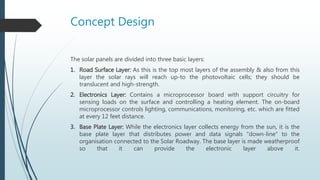
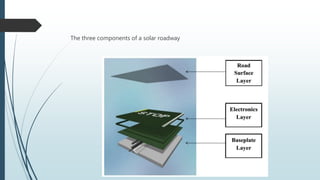
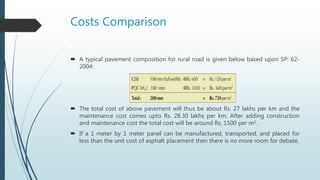
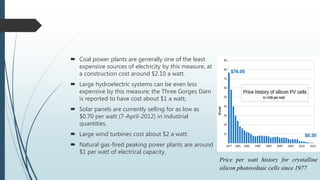
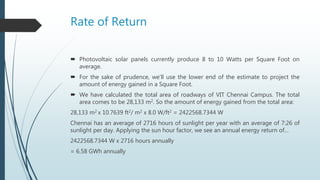
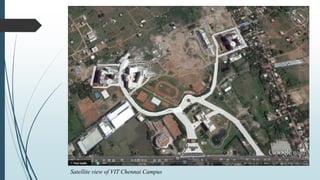


The document discusses solar roadways, which are roads paved with solar panels that can generate electricity. It describes the concept of replacing traditional asphalt roads and parking lots with structured solar panels. Each panel has three layers - a top translucent road surface, a middle electronics layer to control lighting and power distribution, and a bottom base plate to transmit power. The document estimates that covering the roads and parking lots at VIT Chennai Campus with solar panels could generate over 6.5 GWh of electricity annually, offsetting the campus's energy needs. It also discusses challenges like high upfront costs, durability questions, and variability of sunlight, as well as benefits like job creation and reduced environmental impact.


