Soil Properties


Foundation Science 4 Class Code SC22102
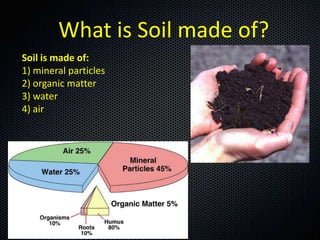
What is Soil made of?
Soil is made of:
1) mineral particles
2) organic matter
3) water
4) air
The Organic Matter in Soil
        is Mostly Humus
When insects, worms, bacteria, and fungi and other
organisms die they decay and form a material called
“humus”.

As more organisms die, the soil becomes more fertile.
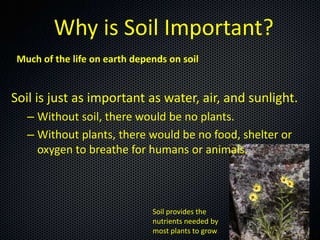
Why is Soil Important?
 Much of the life on earth depends on soil


Soil is just as important as water, air, and sunlight.
   – Without soil, there would be no plants.
   – Without plants, there would be no food, shelter or
     oxygen to breathe for humans or animals.


                               Soil provides the
                               nutrients needed by
                               most plants to grow.
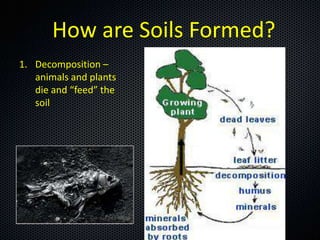
How are Soils Formed?
1. Decomposition –
   animals and plants
   die and “feed” the
   soil
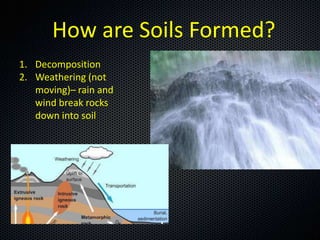
How are Soils Formed?
1. Decomposition
2. Weathering (not
   moving)– rain and
   wind break rocks
   down into soil
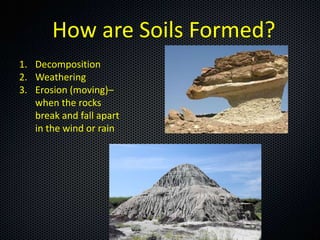
How are Soils Formed?
1. Decomposition
2. Weathering
3. Erosion (moving)–
   when the rocks
   break and fall apart
   in the wind or rain
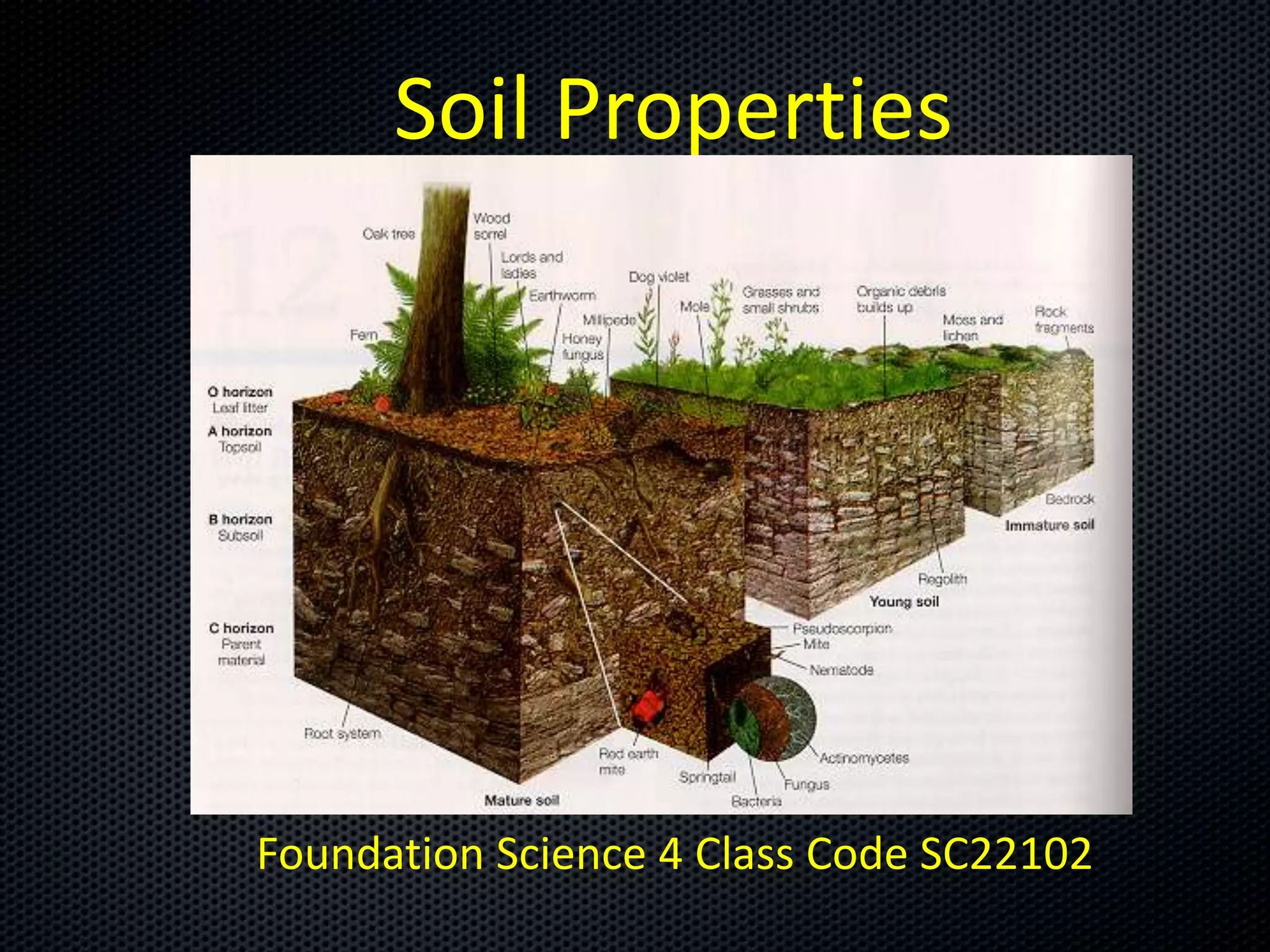
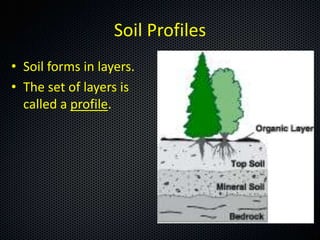
Soil Profiles
• Soil forms in layers.
• The set of layers is
  called a profile.
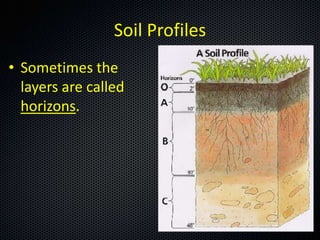
Soil Profiles
• Sometimes the
  layers are called
  horizons.
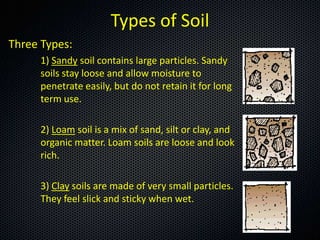
Types of Soil
Three Types:
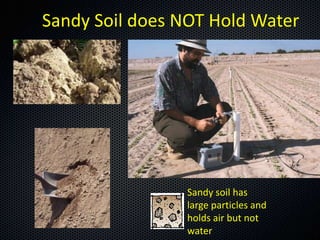
      1) Sandy soil contains large particles. Sandy
      soils stay loose and allow moisture to
      penetrate easily, but do not retain it for long
      term use.

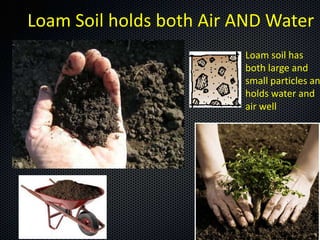
      2) Loam soil is a mix of sand, silt or clay, and
      organic matter. Loam soils are loose and look
      rich.

      3) Clay soils are made of very small particles.
      They feel slick and sticky when wet.
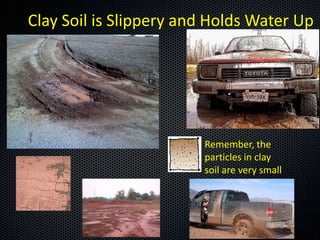
Clay Soil is Slippery and Holds Water Up


                        Remember, the
                        particles in clay
                        soil are very small
Sandy Soil does NOT Hold Water


                Sandy soil has
                large particles and
                holds air but not
                water
Loam Soil holds both Air AND Water
                         Loam soil has
                         both large and
                         small particles an
                         holds water and
                         air well
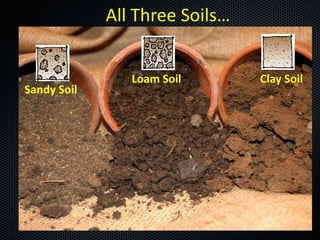
All Three Soils…


                Loam Soil       Clay Soil
Sandy Soil
What do Plants Need to Grow?
  1.   Air
  2.   Water
  3.   Nutrients           Soil responsible for these 3
  4.   Sunlight

So, if soil does not have a lot of air, plants won’t grow well.
This is why clay soils are bad for plant growth.

If soil does not have a lot of water, plants won’t grow well.
This is why sandy soils are bad for plant growth.

Loam soils can hold water and air, and are the best for
plant growth.
Types of Soil Video
Questions
1.    What is soil made of?
2.    What is humus?
3.    What are 2 reasons why soil is important?
4.    How are soils formed?
5.    What is a soil profile ?
6.    What are the 3 types of soil?
7.    Which soil is best for plant growth?
8.    What are the 4 things a plant needs to grow?
9.    A plant needs 4 things to grow, how many does it get from soil?
10.   Why are clay soils bad for plants to grow?
11.   What is sandy soil good at holding?
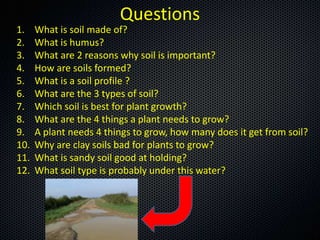
12.   What soil type is probably under this water?

Soil Presentation

  • 1.
  • 2.
    What is Soilmade of? Soil is made of: 1) mineral particles 2) organic matter 3) water 4) air
  • 3.
    The Organic Matterin Soil is Mostly Humus When insects, worms, bacteria, and fungi and other organisms die they decay and form a material called “humus”. As more organisms die, the soil becomes more fertile.
  • 4.
    Why is SoilImportant? Much of the life on earth depends on soil Soil is just as important as water, air, and sunlight. – Without soil, there would be no plants. – Without plants, there would be no food, shelter or oxygen to breathe for humans or animals. Soil provides the nutrients needed by most plants to grow.
  • 5.
    How are SoilsFormed? 1. Decomposition – animals and plants die and “feed” the soil
  • 6.
    How are SoilsFormed? 1. Decomposition 2. Weathering (not moving)– rain and wind break rocks down into soil
  • 7.
    How are SoilsFormed? 1. Decomposition 2. Weathering 3. Erosion (moving)– when the rocks break and fall apart in the wind or rain
  • 8.
    Soil Profiles • Soilforms in layers. • The set of layers is called a profile.
  • 9.
    Soil Profiles • Sometimesthe layers are called horizons.
  • 10.
    Types of Soil ThreeTypes: 1) Sandy soil contains large particles. Sandy soils stay loose and allow moisture to penetrate easily, but do not retain it for long term use. 2) Loam soil is a mix of sand, silt or clay, and organic matter. Loam soils are loose and look rich. 3) Clay soils are made of very small particles. They feel slick and sticky when wet.
  • 11.
    Clay Soil isSlippery and Holds Water Up Remember, the particles in clay soil are very small
  • 12.
    Sandy Soil doesNOT Hold Water Sandy soil has large particles and holds air but not water
  • 13.
    Loam Soil holdsboth Air AND Water Loam soil has both large and small particles an holds water and air well
  • 14.
    All Three Soils… Loam Soil Clay Soil Sandy Soil
  • 15.
    What do PlantsNeed to Grow? 1. Air 2. Water 3. Nutrients Soil responsible for these 3 4. Sunlight So, if soil does not have a lot of air, plants won’t grow well. This is why clay soils are bad for plant growth. If soil does not have a lot of water, plants won’t grow well. This is why sandy soils are bad for plant growth. Loam soils can hold water and air, and are the best for plant growth.
  • 16.
  • 17.
    Questions 1. What is soil made of? 2. What is humus? 3. What are 2 reasons why soil is important? 4. How are soils formed? 5. What is a soil profile ? 6. What are the 3 types of soil? 7. Which soil is best for plant growth? 8. What are the 4 things a plant needs to grow? 9. A plant needs 4 things to grow, how many does it get from soil? 10. Why are clay soils bad for plants to grow? 11. What is sandy soil good at holding? 12. What soil type is probably under this water?