What is Soil Pollution ?
Sources of Soil Pollution –
             Acid Rain
             Solid Waste
             Fertilisers
             Insecticides and   Herbicides


Harmful Effects of Soil Pollution
Prevention of Soil Pollution
              Landfills
              Recycling
              Composting
              Incineration
              Production of

            Biogas and Manure
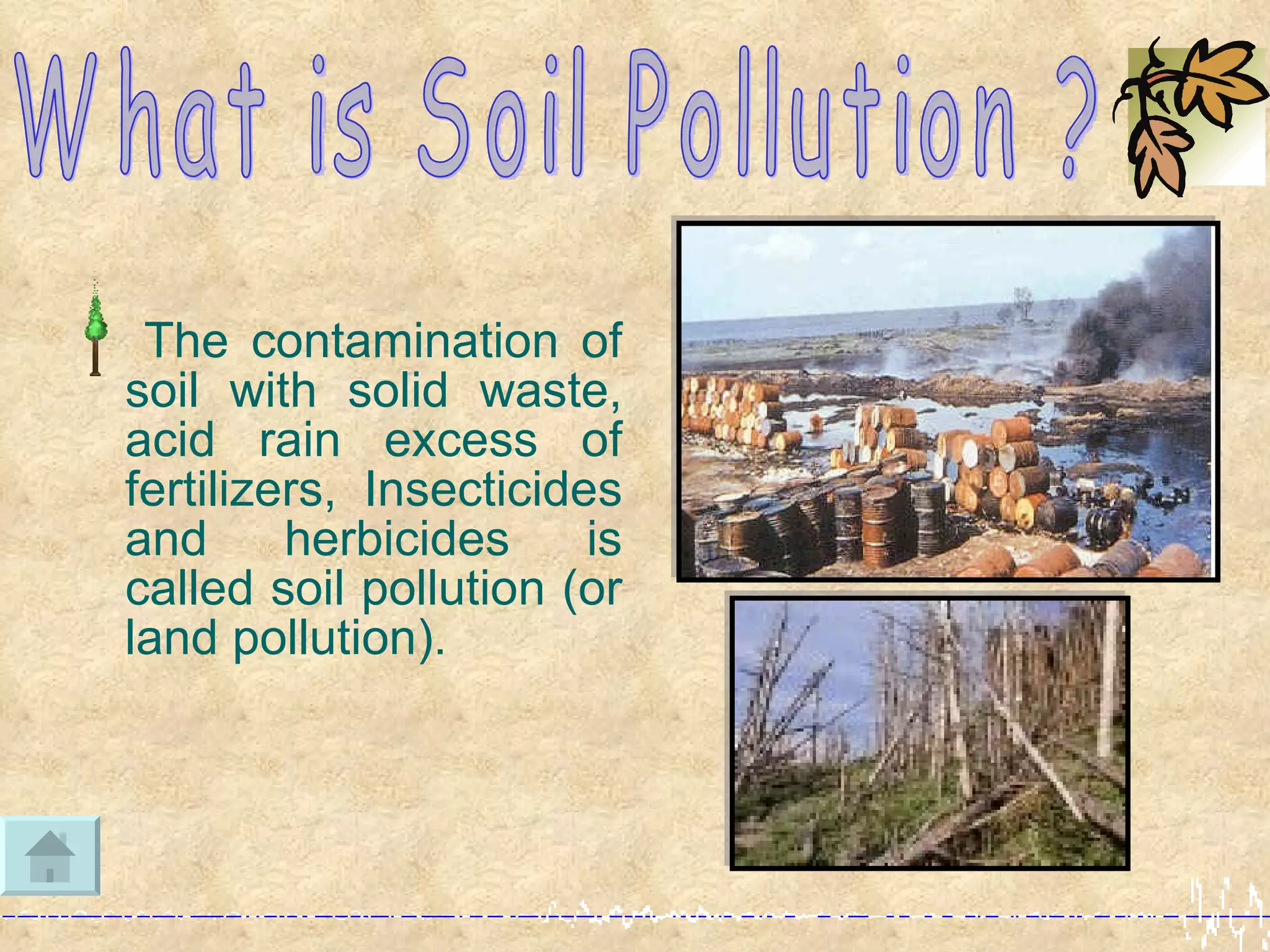
The contamination of
soil with solid waste,
acid rain excess of
fertilizers, Insecticides
and      herbicides     is
called soil pollution (or
land pollution).
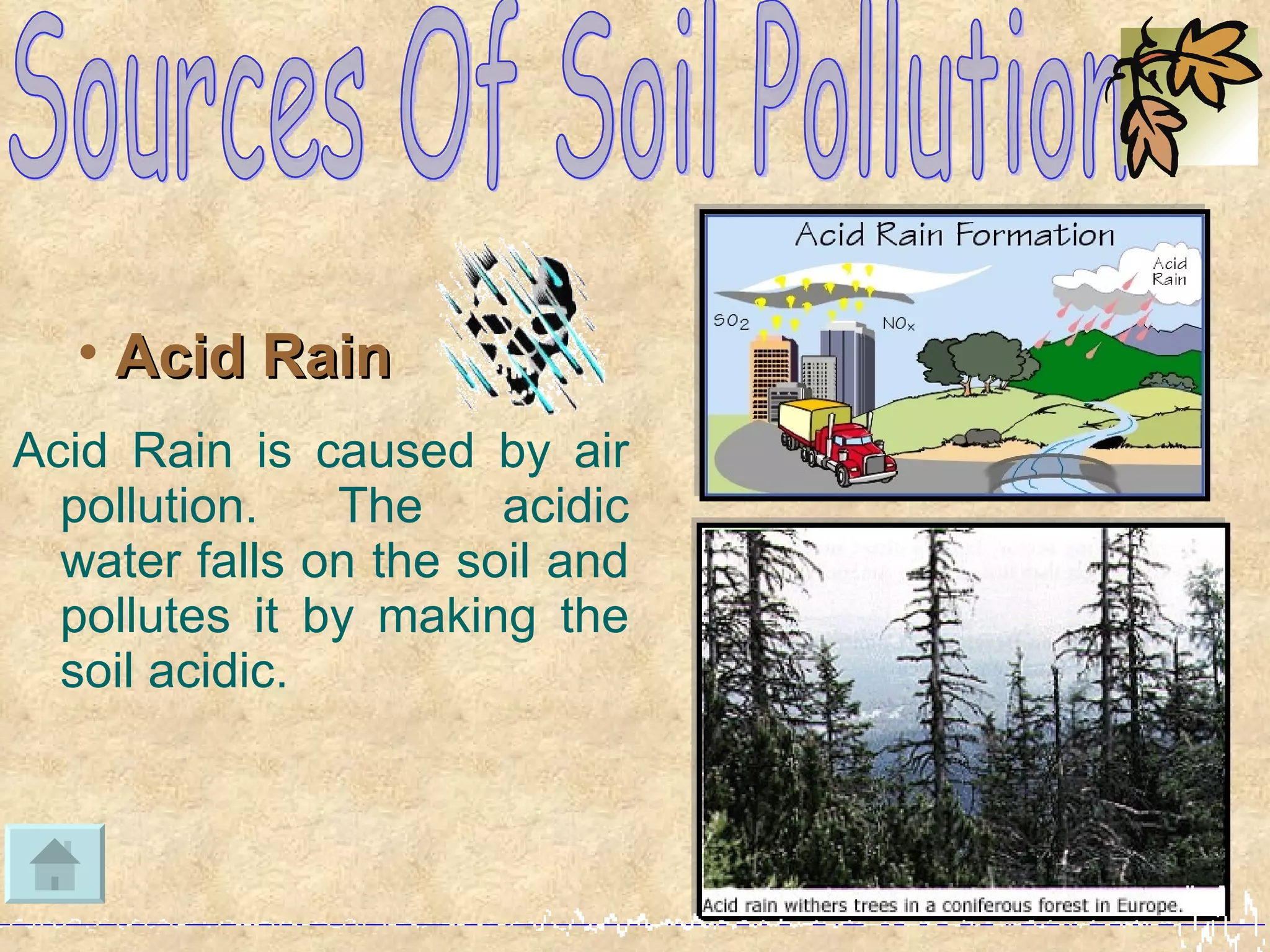
• Acid Rain
Acid Rain is caused by air
  pollution.   The     acidic
  water falls on the soil and
  pollutes it by making the
  soil acidic.
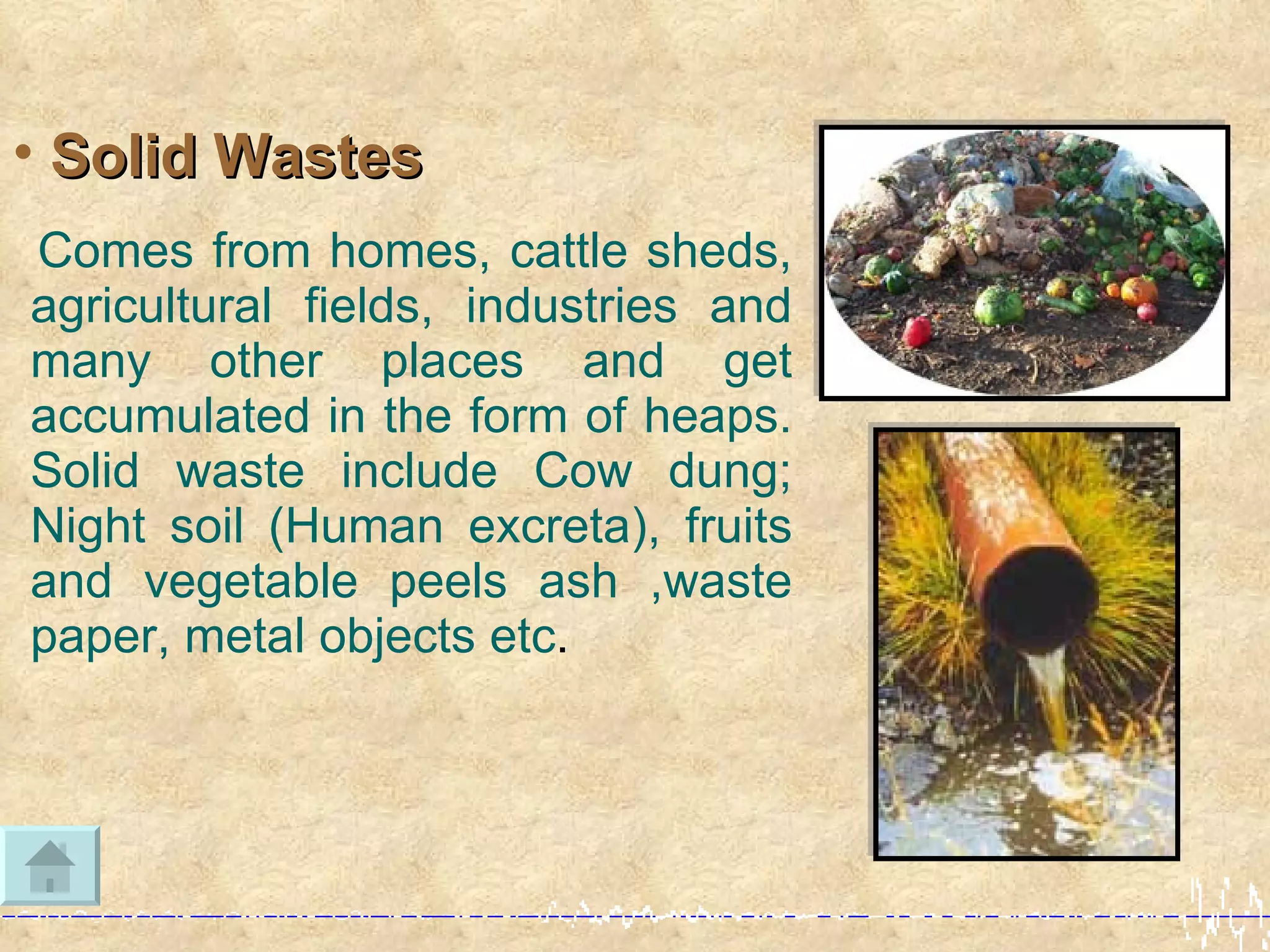
• Solid Wastes
Comes from homes, cattle sheds,
agricultural fields, industries and
many other places and get
accumulated in the form of heaps.
Solid waste include Cow dung;
Night soil (Human excreta), fruits
and vegetable peels ash ,waste
paper, metal objects etc.
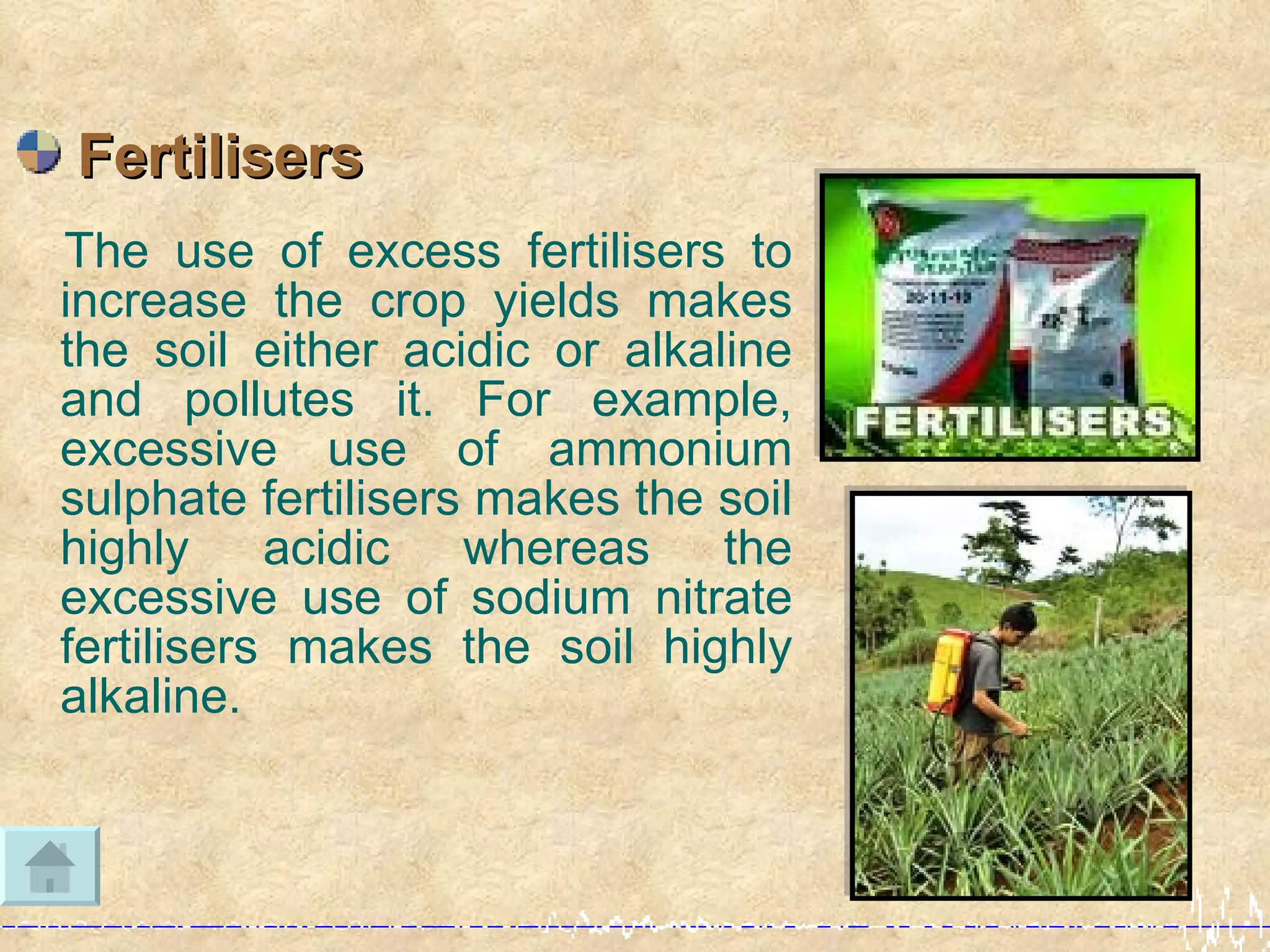
Fertilisers
The use of excess fertilisers to
increase the crop yields makes
the soil either acidic or alkaline
and pollutes it. For example,
excessive use of ammonium
sulphate fertilisers makes the soil
highly acidic whereas the
excessive use of sodium nitrate
fertilisers makes the soil highly
alkaline.
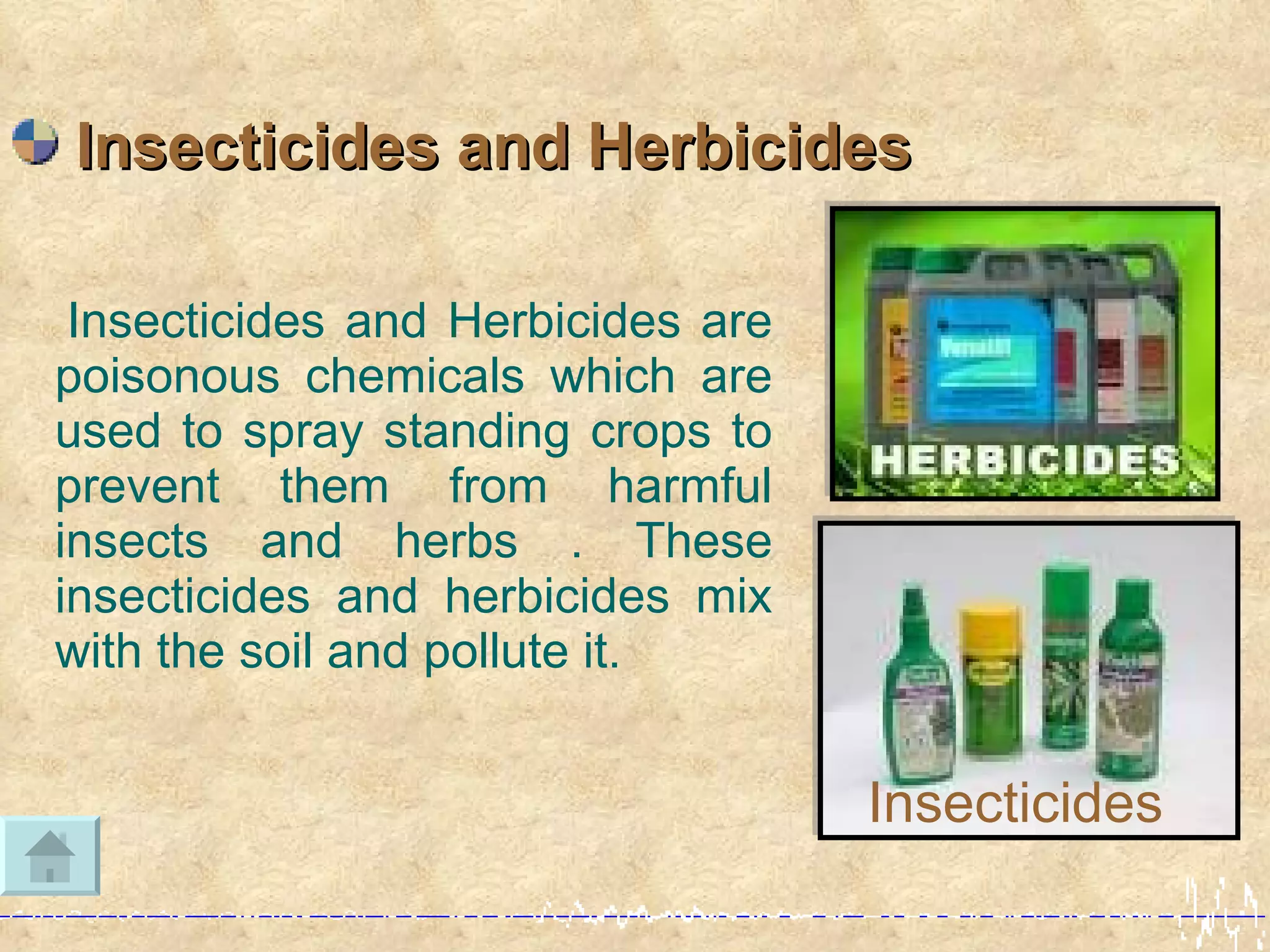
Insecticides and Herbicides

 Insecticides and Herbicides are
poisonous chemicals which are
used to spray standing crops to
prevent them from harmful
insects and herbs . These
insecticides and herbicides mix
with the soil and pollute it.


                                   Insecticides
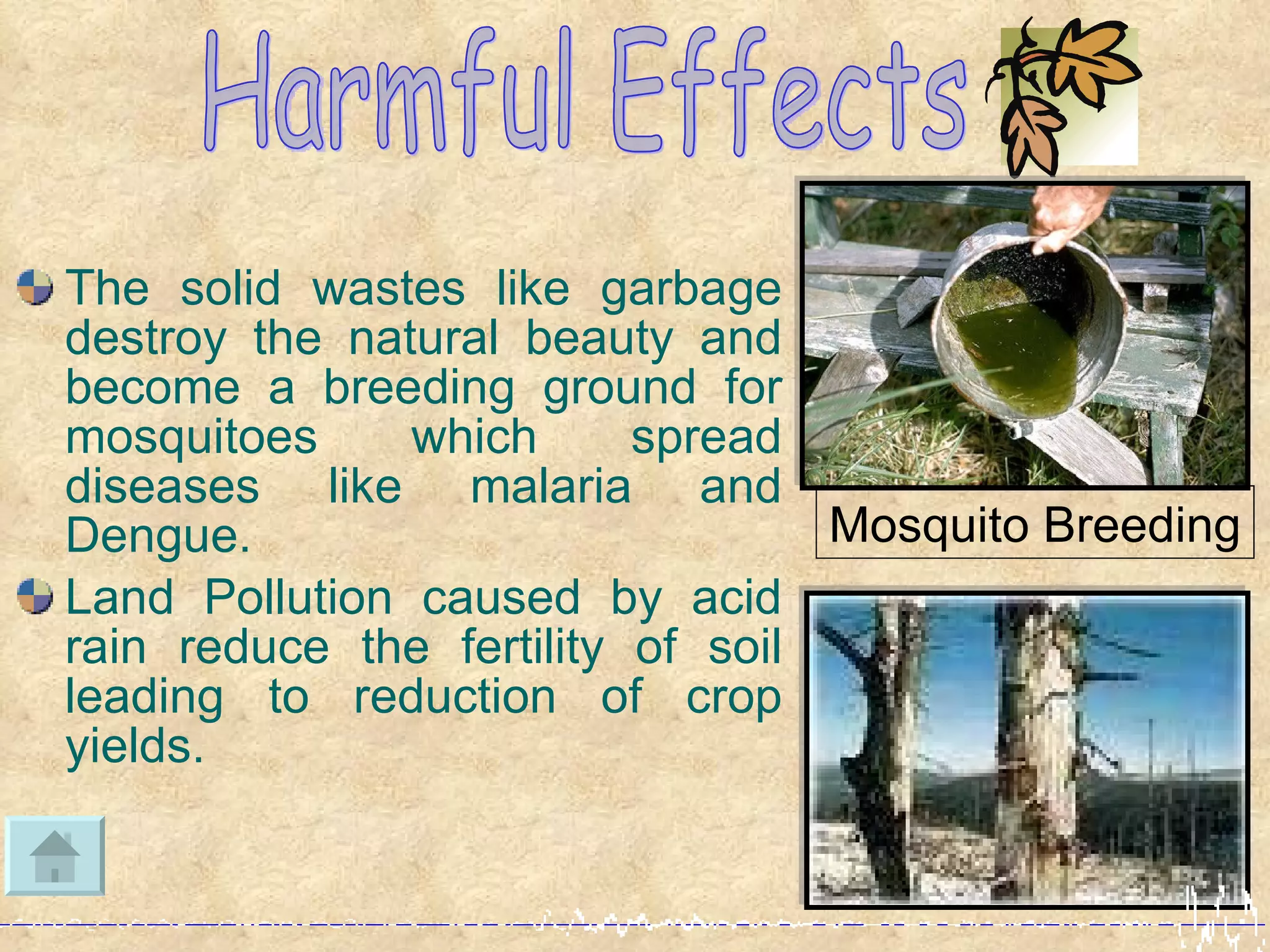
The solid wastes like garbage
destroy the natural beauty and
become a breeding ground for
mosquitoes     which      spread
diseases like malaria and
Dengue.                           Mosquito Breeding
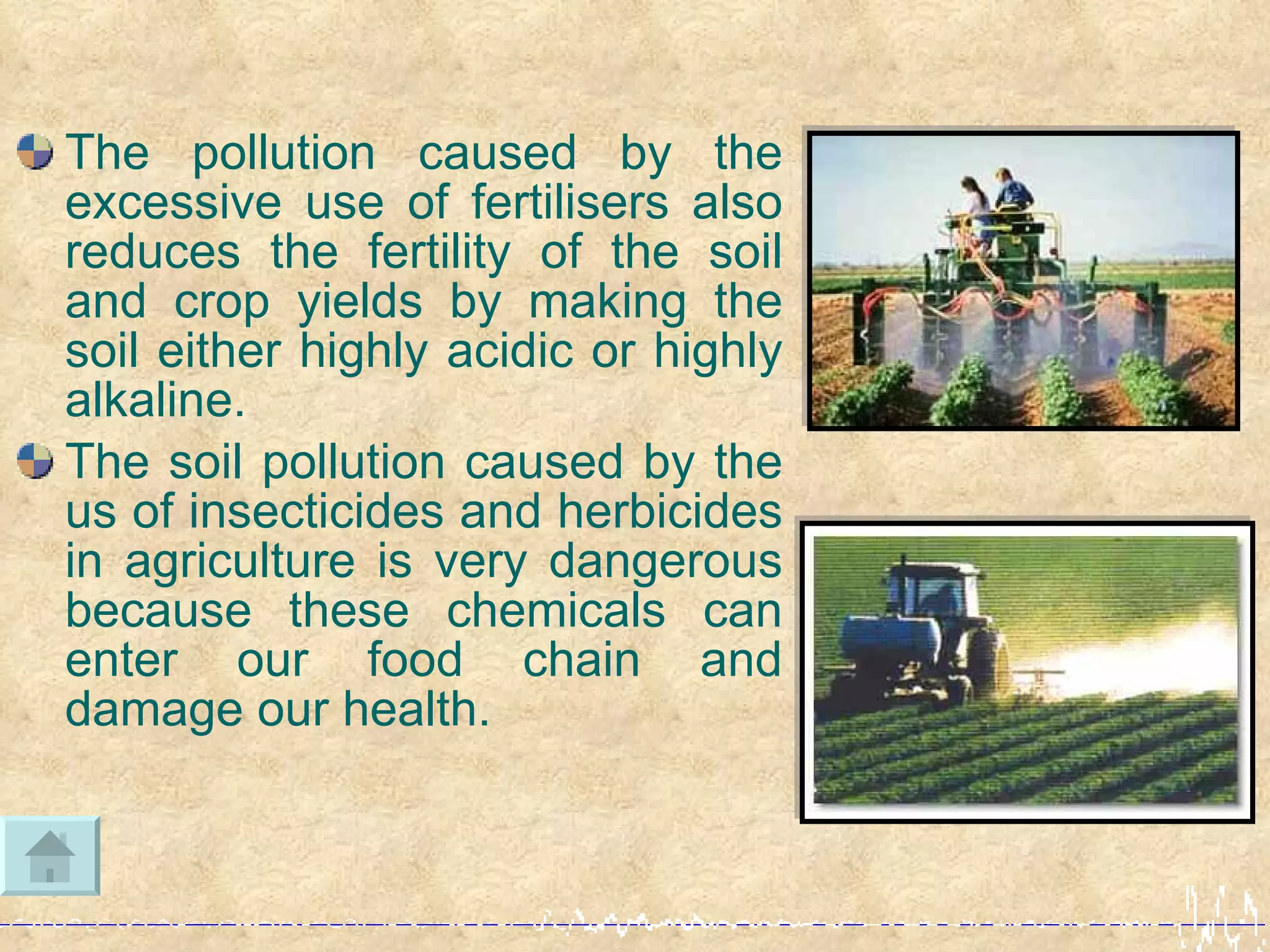
Land Pollution caused by acid
rain reduce the fertility of soil
leading to reduction of crop
yields.
The pollution caused by the
excessive use of fertilisers also
reduces the fertility of the soil
and crop yields by making the
soil either highly acidic or highly
alkaline.
The soil pollution caused by the
us of insecticides and herbicides
in agriculture is very dangerous
because these chemicals can
enter our food chain and
damage our health.
“Disposal of Wastes”-means ‘to get rid of waste’.
 The disposal of waste should be done in a
 scientific way. There are different methods of waste
 disposal. The methods to be used depends on the
 nature of the waste. Some of the important modes
 of waste disposal are:-

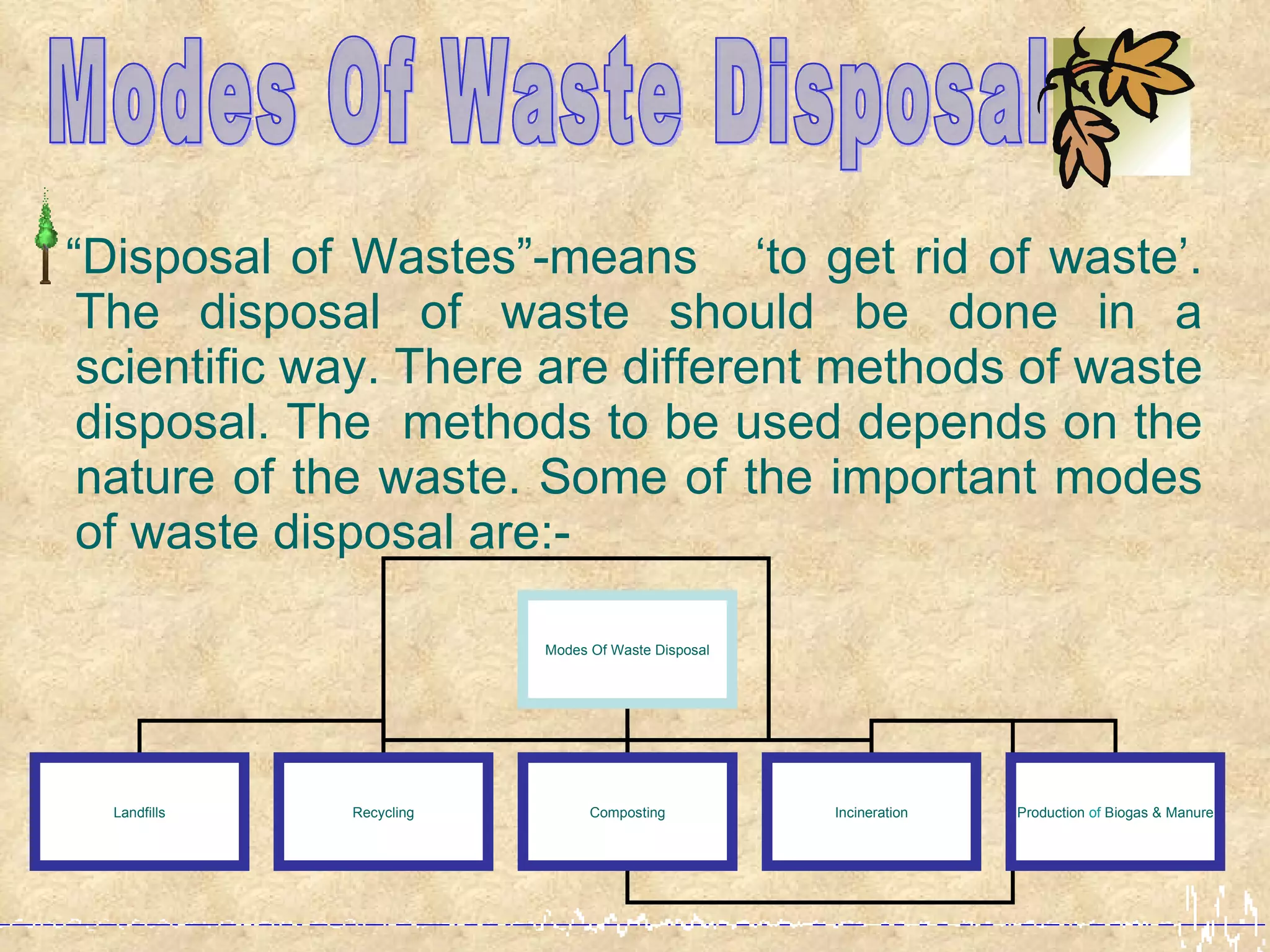
                          Modes Of Waste Disposal


  Landfills   Recycling         Composting          Incineration   Production of Biogas & Manure
Landfills
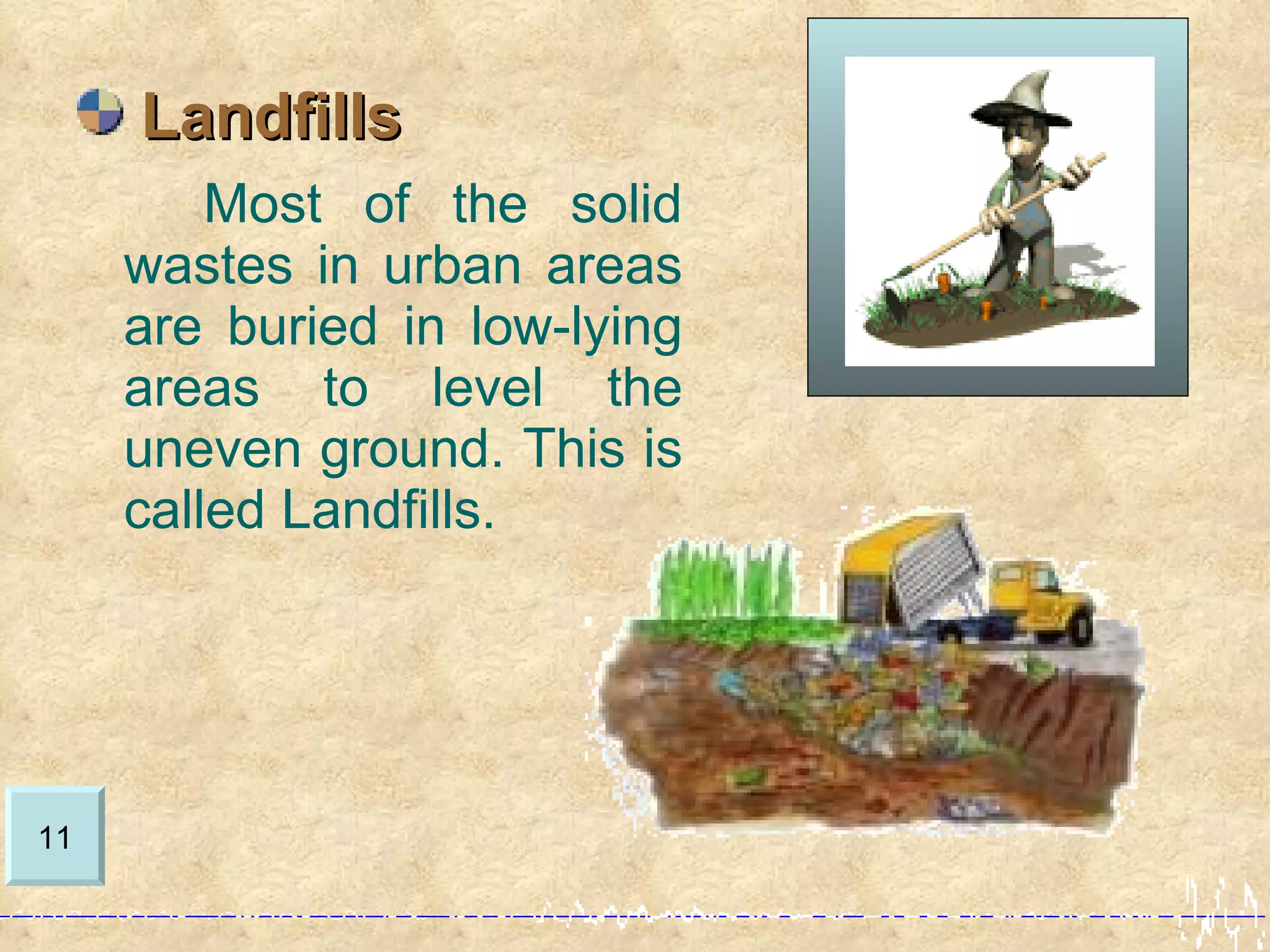
         Most of the solid
     wastes in urban areas
     are buried in low-lying
     areas to level the
     uneven ground. This is
     called Landfills.


11
Recycling
     It is the method of recovery and processing of
     Biodegradable wastes or materials after they
     have been used, which enables them to be
     used. For example, solid wastes like paper,
     plastics and metals, etc., are recycled.
     Industrial wastes are treated in special plants
     and valuable wastes are recycled.

      Composting
     In this method, the domestic waste like fruit and
     vegetable waste, left-over food, leaves of potted
     plants etc., can be converted into compost and
11
     used as manure.
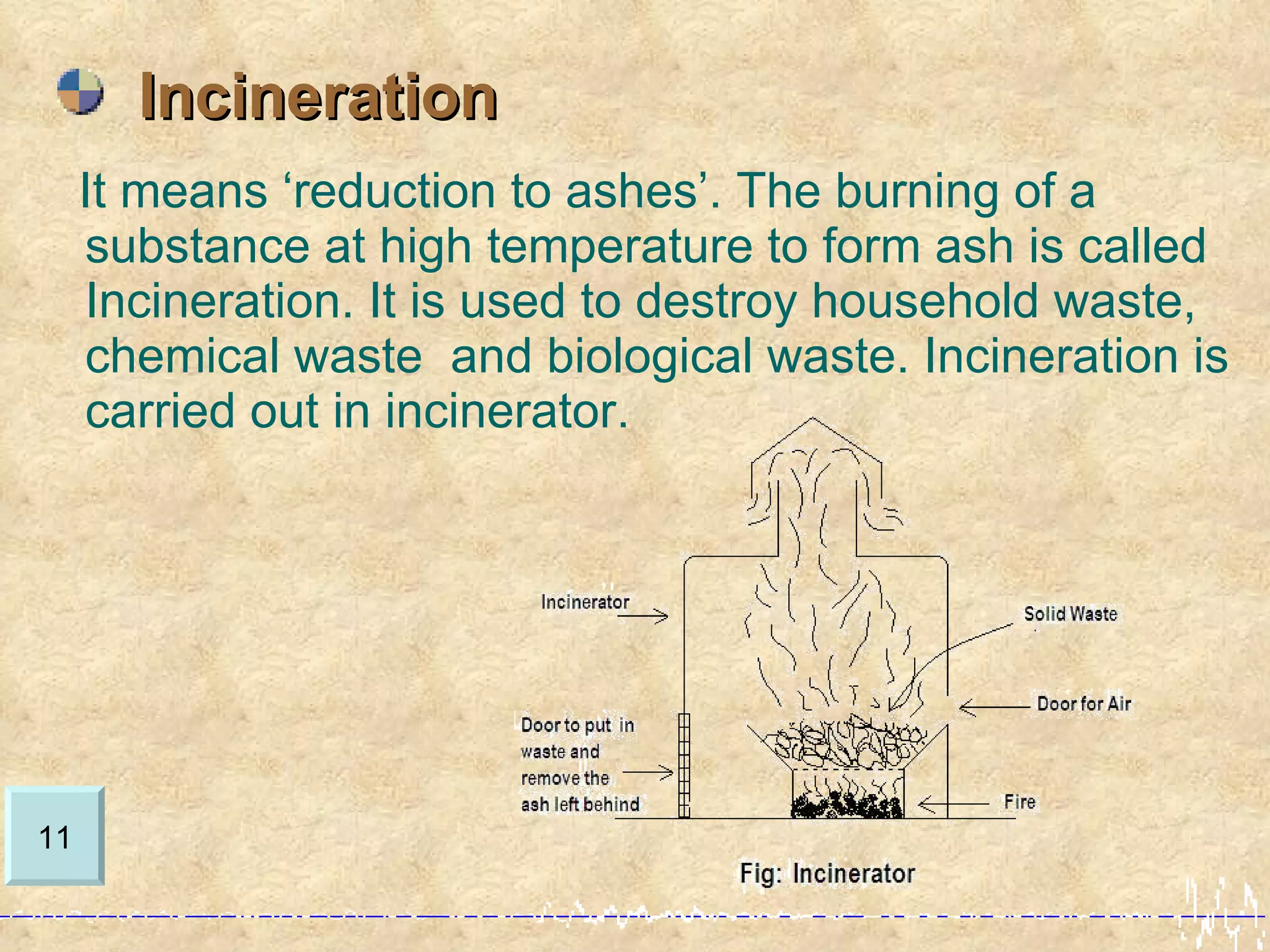
Incineration
     It means ‘reduction to ashes’. The burning of a
     substance at high temperature to form ash is called
     Incineration. It is used to destroy household waste,
     chemical waste and biological waste. Incineration is
     carried out in incinerator.


11
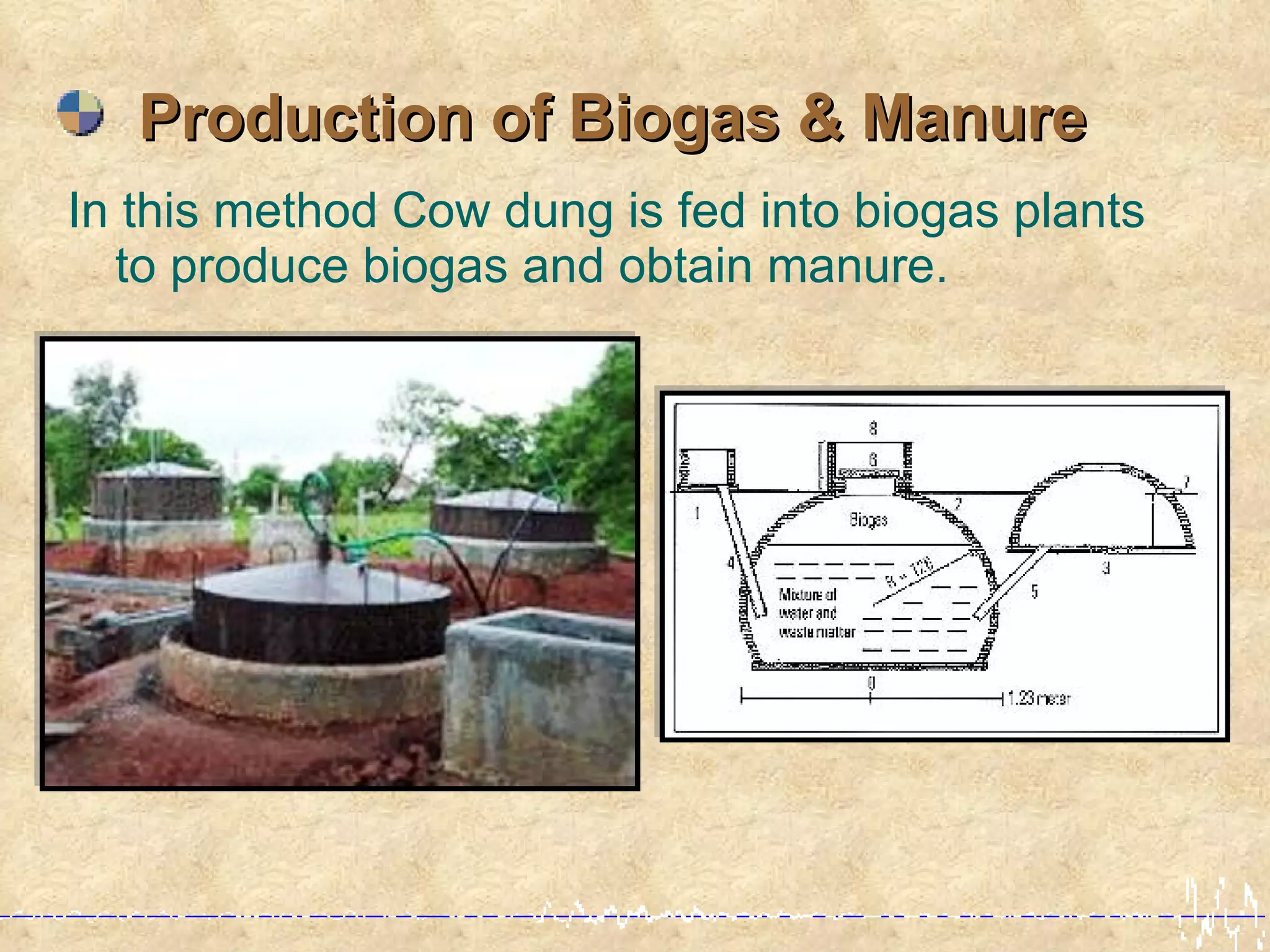
Production of Biogas & Manure
In this method Cow dung is fed into biogas plants
  to produce biogas and obtain manure.
THE   END

Soil Pollution

  • 2.
    What is SoilPollution ? Sources of Soil Pollution – Acid Rain Solid Waste Fertilisers Insecticides and Herbicides Harmful Effects of Soil Pollution
  • 3.
    Prevention of SoilPollution Landfills Recycling Composting Incineration Production of Biogas and Manure
  • 4.
    The contamination of soilwith solid waste, acid rain excess of fertilizers, Insecticides and herbicides is called soil pollution (or land pollution).
  • 5.
    • Acid Rain AcidRain is caused by air pollution. The acidic water falls on the soil and pollutes it by making the soil acidic.
  • 6.
    • Solid Wastes Comesfrom homes, cattle sheds, agricultural fields, industries and many other places and get accumulated in the form of heaps. Solid waste include Cow dung; Night soil (Human excreta), fruits and vegetable peels ash ,waste paper, metal objects etc.
  • 7.
    Fertilisers The use ofexcess fertilisers to increase the crop yields makes the soil either acidic or alkaline and pollutes it. For example, excessive use of ammonium sulphate fertilisers makes the soil highly acidic whereas the excessive use of sodium nitrate fertilisers makes the soil highly alkaline.
  • 8.
    Insecticides and Herbicides Insecticides and Herbicides are poisonous chemicals which are used to spray standing crops to prevent them from harmful insects and herbs . These insecticides and herbicides mix with the soil and pollute it. Insecticides
  • 9.
    The solid wasteslike garbage destroy the natural beauty and become a breeding ground for mosquitoes which spread diseases like malaria and Dengue. Mosquito Breeding Land Pollution caused by acid rain reduce the fertility of soil leading to reduction of crop yields.
  • 10.
    The pollution causedby the excessive use of fertilisers also reduces the fertility of the soil and crop yields by making the soil either highly acidic or highly alkaline. The soil pollution caused by the us of insecticides and herbicides in agriculture is very dangerous because these chemicals can enter our food chain and damage our health.
  • 11.
    “Disposal of Wastes”-means‘to get rid of waste’. The disposal of waste should be done in a scientific way. There are different methods of waste disposal. The methods to be used depends on the nature of the waste. Some of the important modes of waste disposal are:- Modes Of Waste Disposal Landfills Recycling Composting Incineration Production of Biogas & Manure
  • 12.
    Landfills Most of the solid wastes in urban areas are buried in low-lying areas to level the uneven ground. This is called Landfills. 11
  • 13.
    Recycling It is the method of recovery and processing of Biodegradable wastes or materials after they have been used, which enables them to be used. For example, solid wastes like paper, plastics and metals, etc., are recycled. Industrial wastes are treated in special plants and valuable wastes are recycled. Composting In this method, the domestic waste like fruit and vegetable waste, left-over food, leaves of potted plants etc., can be converted into compost and 11 used as manure.
  • 14.
    Incineration It means ‘reduction to ashes’. The burning of a substance at high temperature to form ash is called Incineration. It is used to destroy household waste, chemical waste and biological waste. Incineration is carried out in incinerator. 11
  • 15.
    Production of Biogas& Manure In this method Cow dung is fed into biogas plants to produce biogas and obtain manure.
  • 16.
    THE END