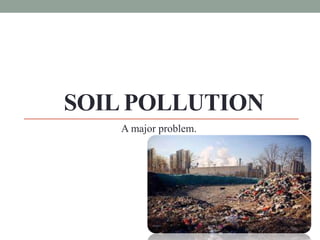
SOIL POLLUTION
A major problem.
What is Soil..??
• Soil is the thin layer of organic and inorganic materials
that covers the Earth's rocky surface.
• Soil is composed of particles of broken rock that have
been altered by chemical and mechanical processes
that include weathering and erosion.
SOIL POLLUTION
• It is defined as the build-up in soils of persistent toxic
compounds, chemicals, salts, radioactive materials, or
disease causing agents, which have adverse effects on
plant growth and animal health.
• Soil pollution is also caused by means other than the
direct addition of xenobiotic (man-made) chemicals such
as agricultural runoff waters, industrial waste materials,
acidic precipitates, and radioactive fallout.
Causes of Soil Pollution
• Domestic Sewage
• Discharge of industrial waste into the soil
• Acid rain
• Rupture of underground storage tanks
• Excess application of pesticides, herbicides or fertilizer
• Hospital wastes with pathogens
• Deforestation and Soil erosion
 Excess application of
pesticides etc.
Excess use & disposal of Plastics and polyethene wastes
 Industrial wastes
 Solid wastes
Effects of soil pollution
• Reduce soil fertility
• Reduce nitrogen fixation
• Larger loss of soil and nutrients
• Reduce crop yield
• Ecological imbalance.
• Release of pollutant gases.
• Reduce vegetation.
Agricultural effects:
Industrial Effects:
Soil pollution due to industrial wastePolluted land with dangerous chemicals
Urbanization effects:
Contamination of soil due to waste
water
Some more effects of soil pollution:
• Pollution runs off into rivers and kills the fish, plants and other
aquatic life.
• Crops and fodder grown on polluted soil may pass the
pollutants on to the consumers.
• Polluted soil may no longer grow crops and fodder
• Soil structure is damaged (clay ionic structure impaired.)
• Corrosion of foundations and pipelines
• May create toxic dusts
• May poison children playing in the area
Some more effects of soil pollution:
Methods to control Soil Pollution
• Reducing chemical fertilizer and pesticide use.
• Recycling is another way to reduce and control soil pollution.
Recycling paper, plastics and other materials reduces the
volume of refuse in landfills, another common cause of soil
pollution.
• Reusing of materials
• De-forestation, the cutting down of trees, causes erosion,
pollution and the loss of fertility in the topsoil. Planting trees--
or re-forestation--helps prevent soil erosion and pollution.
Methods to control Soil Pollution
Prepared by:- Ranjan Raj Dahal

Soil pollution

  • 1.
  • 2.
    What is Soil..?? •Soil is the thin layer of organic and inorganic materials that covers the Earth's rocky surface. • Soil is composed of particles of broken rock that have been altered by chemical and mechanical processes that include weathering and erosion.
  • 3.
    SOIL POLLUTION • Itis defined as the build-up in soils of persistent toxic compounds, chemicals, salts, radioactive materials, or disease causing agents, which have adverse effects on plant growth and animal health. • Soil pollution is also caused by means other than the direct addition of xenobiotic (man-made) chemicals such as agricultural runoff waters, industrial waste materials, acidic precipitates, and radioactive fallout.
  • 4.
    Causes of SoilPollution • Domestic Sewage • Discharge of industrial waste into the soil • Acid rain • Rupture of underground storage tanks • Excess application of pesticides, herbicides or fertilizer • Hospital wastes with pathogens • Deforestation and Soil erosion
  • 5.
     Excess applicationof pesticides etc. Excess use & disposal of Plastics and polyethene wastes
  • 6.
  • 7.
    Effects of soilpollution • Reduce soil fertility • Reduce nitrogen fixation • Larger loss of soil and nutrients • Reduce crop yield • Ecological imbalance. • Release of pollutant gases. • Reduce vegetation.
  • 8.
  • 9.
    Industrial Effects: Soil pollutiondue to industrial wastePolluted land with dangerous chemicals
  • 10.
  • 11.
    Some more effectsof soil pollution: • Pollution runs off into rivers and kills the fish, plants and other aquatic life. • Crops and fodder grown on polluted soil may pass the pollutants on to the consumers. • Polluted soil may no longer grow crops and fodder • Soil structure is damaged (clay ionic structure impaired.) • Corrosion of foundations and pipelines • May create toxic dusts • May poison children playing in the area
  • 12.
    Some more effectsof soil pollution:
  • 13.
    Methods to controlSoil Pollution • Reducing chemical fertilizer and pesticide use. • Recycling is another way to reduce and control soil pollution. Recycling paper, plastics and other materials reduces the volume of refuse in landfills, another common cause of soil pollution. • Reusing of materials • De-forestation, the cutting down of trees, causes erosion, pollution and the loss of fertility in the topsoil. Planting trees-- or re-forestation--helps prevent soil erosion and pollution.
  • 14.
    Methods to controlSoil Pollution
  • 16.